
A BNC port can look correct on the bench and still create problems later.
A common sourcing mistake happens when a BNC adapter is selected only by appearance. The connector mates, the equipment powers on, and the first measurement seems normal. The issue appears when the adapter is used in a different test setup, connected to another cable type, or pushed closer to the upper operating frequency.
A BNC connector adapter is not only a mechanical transition part. It becomes part of the RF path. Interface type, impedance, frequency range, and mating structure all affect whether the connection works as expected.
For engineers and buyers, the key question is not simply “does this BNC adapter fit?” The better question is “does this adapter match the complete RF system?”
How Do BNC Connector Adapters Improve RF Interface Compatibility?
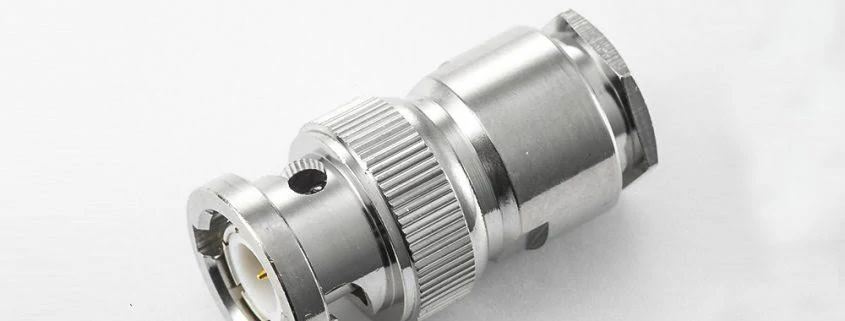
BNC RF adapter used to connect coaxial components with different interface types. The adapter becomes part of the RF signal path, requiring attention to connector type, impedance, and frequency range.
A BNC connector adapter is used when two RF interfaces need to be connected but do not share the same connector configuration. In laboratory environments, communication equipment, and test systems, adapters reduce interface limitations without redesigning the original hardware.
A connector normally becomes part of a cable or device interface. An adapter connects two existing interfaces together.
| Component | Main Function | Typical Use |
| Connector | Provides cable or equipment interface | Cable assembly, PCB, panel |
| Adapter | Links two existing interfaces | Test setup, interface conversion |
| RF Adapter | Provides controlled RF transition | Communication and measurement systems |
This difference matters during procurement. A buyer requesting a “BNC connector” may actually need a BNC adapter because the equipment already has fixed ports and only requires a conversion solution.
A practical example is a measurement system using a BNC output from an instrument and an SMA input on an RF module. The equipment itself does not change. The adapter provides the connection between the two interfaces.
Why Are BNC Adapters Different From General Coax Adapters?
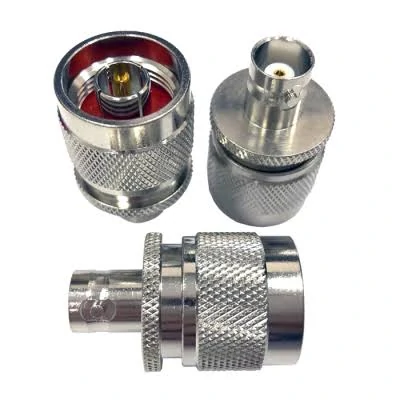
50 ohm BNC adapter with different connector configurations for RF testing, communication equipment, and coaxial cable applications. Proper gender and impedance selection helps maintain RF system compatibility.
The term “coax adapter” is broader than “BNC connector adapter”.
A coax adapter describes a wider category of components used with coaxial transmission systems. A BNC connector adapter specifically includes BNC interface conversion.
The difference becomes important when selecting parts for RF testing.
A BNC adapter used with a low-frequency oscilloscope connection may have different requirements compared with an adapter used in a signal generator or spectrum analyzer setup.
Frequency, impedance, and measurement accuracy should be considered together.
RF Adapter Function Comparison
| Product | Purpose | Typical Application |
| BNC Connector Adapter | BNC interface conversion | Test equipment |
| Coax Adapter | Coax connection matching | Cable systems |
| SMA Adapter | SMA interface conversion | RF modules |
| RF Adapter | General RF transition | Communication systems |
A common mistake is treating all adapters as interchangeable because the mechanical connection looks similar. In RF systems, the interface shape is only one part of the selection process.
How Should Engineers Check BNC Connector Adapter Compatibility?
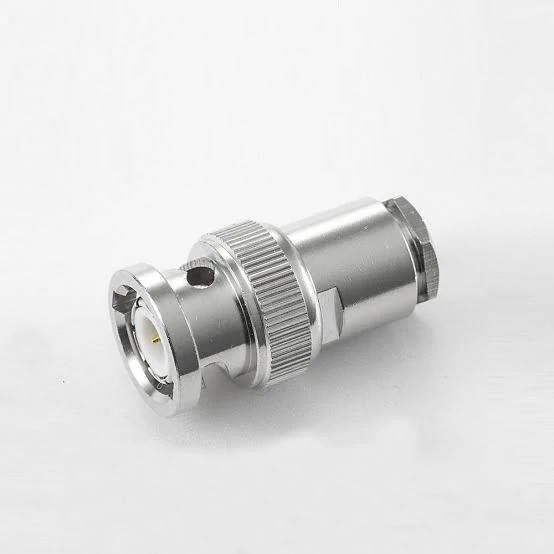
BNC connector adapter designed for RF equipment connection and coaxial interface conversion. It provides a reliable transition between different RF connectors while maintaining stable signal transmission.
The same rule applies when converting between BNC and other RF interfaces. A SMA to BNC adapter and a BNC to SMA adapter may look similar, but the interface arrangement is different.
Engineers should also confirm whether the system uses 50Ω or 75Ω impedance.
A 50Ω BNC system is commonly found in RF communication and measurement equipment. A 75Ω BNC system is more common in video and broadcast applications. Mixing these systems can introduce measurement errors, especially when accurate RF testing is required.
BNC Connector Gender Selection Table
| Adapter Configuration | Application |
| BNC Male Adapter | Connects to BNC female ports |
| BNC Female Adapter | Connects to BNC male ports |
| BNC Male-Female Adapter | Extends or changes connection direction |
| Custom BNC Adapter | Special RF interface requirements |
For production projects, the adapter specification should include more than the connector name.
A useful RF request should include:
- BNC interface type
- Male or female configuration
- Conversion interface
- Impedance
- Frequency range
- Application environment
- Required quantity
This information helps suppliers avoid substitutions that look compatible but do not match the actual RF requirements.
In many sourcing projects, the adapter is a small component with a large influence on the complete system. Confirming the RF path before purchasing prevents repeated sample changes and unexpected test results.
How Do BNC Connector Adapters Support SMA and RF Interface Conversion?
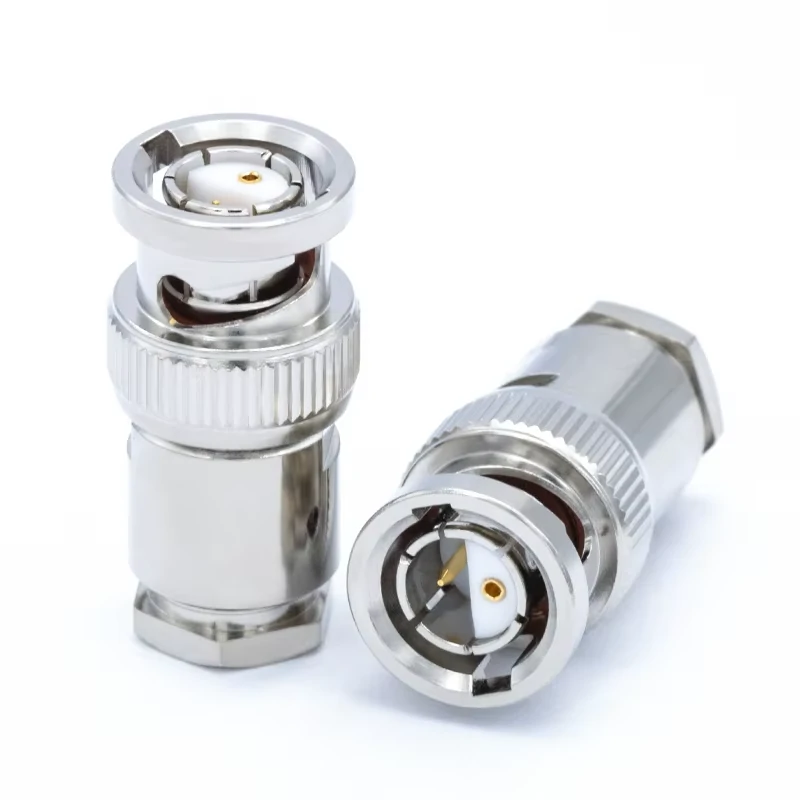
BNC bayonet adapter connector featuring quick locking structure for laboratory instruments, communication systems, and RF testing equipment. Suitable interface matching helps improve connection reliability.
A BNC connector adapter is often purchased when a project is already halfway through development.
The instrument has been selected. The RF module has been designed. The cable assembly may already be fixed. The only problem is that two ports use different connector standards.
This situation appears frequently in laboratories and prototype testing.
For example, an engineer may have a signal generator with a BNC output but the device under test uses an SMA interface. Changing the equipment is unnecessary. A suitable adapter can complete the connection.
However, the adapter should not be treated as a simple mechanical converter.
Every additional connection point becomes part of the RF path.
That means the selection should consider:
- Connector interface
- Gender combination
- Impedance
- Frequency range
- Measurement purpose
A low-frequency bench connection and a microwave test setup may both use BNC adapters, but the requirements are different.
When Should Engineers Use SMA to BNC Adapters?
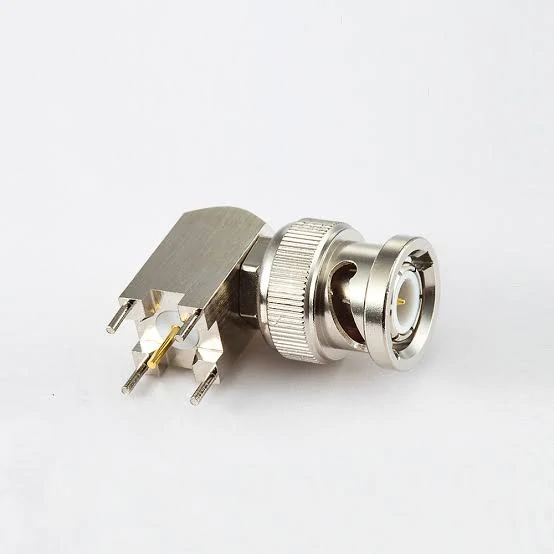
Right angle BNC adapter designed for compact RF equipment and PCB connection applications. The angled structure helps save installation space while maintaining reliable RF connectivity.
An sma to bnc adapter is commonly used when a compact RF device needs to connect with equipment using a BNC interface.
For example:
“SMA to BNC adapter”
still leaves several questions unanswered.
Which SMA?
- SMA male?
- SMA female?
Which BNC?
- BNC male?
- BNC female?
What impedance?
- 50Ω?
- 75Ω?
What frequency range?
Without these details, two adapters may look identical in product photos but cannot replace each other in the same RF application.
The mechanical connection may work. The measurement result may not.
Why Does Adapter Direction Matter During RF Conversion?
Many buyers describe adapters according to the equipment they already have.
For example:
“I need a BNC to SMA adapter for my analyzer.”
This description is understandable, but suppliers still need the actual interface arrangement.
The terms BNC to SMA and SMA to BNC describe the connector transition, not the direction of signal flow.
A passive RF adapter can normally transmit signals in either direction.
The important part is matching the two physical interfaces.
A typical specification should look closer to:
| Item | Example Requirement |
| Interface A | BNC female |
| Interface B | SMA male |
| Impedance | 50Ω |
| Application | RF test equipment |
| Frequency | Required operating band |
This type of information reduces wrong samples and unnecessary replacement cycles.
How Should BNC Adapters Be Matched With Coaxial Cable Systems?
The adapter is only one part of the connection.
The cable behind it also affects the RF result.
A BNC adapter connected to a coaxial cable assembly should be checked together with:
- Cable impedance
- Cable diameter
- Connector termination
- Operating frequency
- Required flexibility
For example, a laboratory setup may use a short coax cable with a BNC adapter and produce acceptable results.
The same adapter combined with a longer cable assembly may show higher loss or different measurement behavior.
The problem is not always the adapter itself.
The complete RF path has changed.
BNC Interface Conversion Matrix
| Connection Type | Common Situation | Check Before Ordering |
| SMA to BNC | RF module connected to test equipment | SMA gender and frequency |
| BNC to SMA | Instrument connected to RF board | Port configuration |
| BNC to Coax | Existing coax system extension | Cable specification |
| Custom RF Adapter | Non-standard equipment | Mechanical drawing |
For engineering projects, adapters should be listed as part of the BOM rather than treated as temporary accessories.
is usually not enough for production purchasing.
How Does Impedance Influence BNC Connector Adapter Selection?
A connector can lock correctly and still be electrically unsuitable.
This happens when impedance is ignored.
That difference affects the RF transmission path.
When Is a 50Ω BNC Adapter Used?
50Ω versions are mainly found in RF and measurement environments.
Common applications include:
- Communication equipment
- RF laboratory testing
- Antenna measurement
- Signal analysis systems
In these applications, engineers usually care about:
- VSWR
- Return loss
- Insertion loss
- Frequency response
A 50Ω adapter is normally selected together with a 50Ω cable and matching equipment port.
The adapter alone does not determine the complete RF performance.
Where Are 75Ω BNC Adapters Commonly Used?
75Ω BNC adapters are more commonly associated with:
- Video systems
- Broadcast equipment
- Coaxial video connections
These systems have different transmission requirements from RF measurement systems.
A common field issue is that a 75Ω connector can physically mate with a 50Ω connector.
The connection appears normal.
The problem may only appear during measurement.
BNC Impedance Selection Guide
| Impedance | Typical Use | Procurement Note |
| 50Ω | RF testing and communication | Specify with RF equipment |
| 75Ω | Video and broadcast | Keep separate from RF test paths |
| Custom | Special applications | Confirm design details |
For purchasing teams, impedance should always be written clearly in the request.
A supplier cannot determine the correct version from “BNC adapter” alone.
How Should Frequency Requirements Be Checked Before Selecting a BNC Adapter?
Frequency is another area where incorrect substitutions happen.
A BNC adapter that works well at one frequency may not provide the same result at a higher band.
Why Is Continuity Testing Not Enough for RF Adapters?
A continuity test confirms that electrical contact exists.
It does not confirm RF performance.
An adapter can pass a basic electrical check and still show problems during:
- VNA testing
- Return loss measurement
- High-frequency signal testing
This difference is important in production.
A sample may pass incoming inspection but fail after integration into the final assembly because the actual RF conditions are different.
For RF test applications, engineers may evaluate:
| Test Item | Purpose |
| Continuity | Confirm electrical connection |
| VSWR | Check impedance matching |
| Return Loss | Evaluate reflected energy |
| Insertion Loss | Check signal attenuation |
The correct adapter choice is therefore based on the entire application, not only the connector label printed on the package.
In practical sourcing, the most reliable approach is to provide the supplier with the complete connection requirement before ordering samples.
How Should BNC Connector Adapters Be Verified Before They Enter a Project?
A BNC adapter can pass a simple incoming check and still create trouble later.
This happens more often than many buyers expect.
The connector arrives, the package label matches the purchase order, and the adapter can be connected to the equipment. From a warehouse perspective, everything looks normal.
The problem appears when the adapter becomes part of an RF measurement path.
A test setup may show unstable readings. A fixture may require repeated adjustment. A production operator may report that the connection feels loose after several mating cycles.
At that point, the question is no longer whether the connector can mate.
The question becomes whether the adapter is suitable for the actual working condition.
For RF applications, inspection usually needs two different viewpoints:
- Does the mechanical structure match the equipment?
- Does the electrical performance match the RF requirement?
Both need attention.
Which Mechanical Details Should Be Checked Before Installation?
The first inspection is still physical.
A supplier and buyer should confirm that the adapter matches the intended connection.
Important items include:
- BNC interface type
- Connector gender
- Locking mechanism
- Housing condition
- Contact alignment
BNC connectors use a bayonet locking structure. The connection process is quick, which is one reason BNC remains popular in laboratory equipment.
However, quick connection does not mean every BNC adapter is suitable for repeated use.
A connector used on a development bench may only be connected several times.
A connector installed on a production test fixture may experience hundreds or thousands of mating operations.
The usage condition changes the requirement.
A simple appearance check cannot reveal every issue. Contact wear, machining tolerance, and mechanical looseness may only become noticeable after repeated operation.
Mechanical Inspection Reference
| Check Item | Why It Matters | Common Problem |
| Interface type | Prevent wrong mating | Similar-looking models mixed together |
| Gender | Match equipment port | Incorrect ordering |
| Locking structure | Maintain stable connection | Loose connection during testing |
| Housing | Protect internal structure | Damage during transport |
| Contact alignment | Maintain electrical contact | Intermittent signal |
For small quantities, visual inspection may be enough.
For production projects, it is better to define the inspection method before mass delivery.
How Can Engineers Confirm RF Performance of BNC Connector Adapters?
A continuity test is useful, but it only answers one question:
“Is there an electrical path?”
RF engineers usually need more information.
A connection can show continuity and still produce unexpected RF results.
The reason is that RF transmission depends on the complete structure inside the adapter.
A general-purpose laboratory connection may not need the same verification level as a production fixture used for RF calibration.
BNC Adapter RF Verification Table
| Test Item | What It Shows | Typical Application |
| Continuity | Electrical connection exists | Incoming inspection |
| VSWR | Impedance matching condition | RF testing |
| Return Loss | Reflected signal level | Precision measurement |
| Insertion Loss | Signal attenuation | RF path evaluation |
A common mistake is assuming the adapter is the only possible source of RF problems.
In practice, the result may also be affected by cable length, connector quantity, cable routing, or the mating interface.
The adapter should be evaluated as part of the complete RF chain.
What Information Should Be Included When Ordering Custom BNC Connector Adapters?
Many purchasing delays happen because the initial request contains only the product name.
A request like:
“Need BNC adapters, 500 pcs.”
does not tell the supplier enough.
There are multiple BNC adapter configurations.
BNC Connector Adapter RF Request Template
| Specification Field | Example |
| Adapter Type | BNC Connector Adapter |
| Interface A | BNC Female |
| Interface B | SMA Male |
| Impedance | 50Ω |
| Frequency | Required operating band |
| Application | RF test system |
| Quantity | Sample / Production |
For OEM and ODM projects, buyers should also consider:
- Drawing requirement
- Packaging method
- Label information
- Inspection standard
These details become important when the same component is purchased repeatedly.
What Should Buyers Consider Before Replacing an Existing BNC Adapter?
Replacement is another area where mistakes happen.
A new supplier may provide a part that looks identical.
The dimensions may appear correct.
The connector may fit.
But replacement is not only a mechanical decision.
Before changing suppliers or models, compare:
| Item | Confirm Before Replacement |
| Interface | Same connector combination |
| Impedance | Same RF system requirement |
| Frequency | Same operating range |
| Structure | Same installation condition |
| Test Result | Similar RF behavior |
This is especially important for test fixtures.
A small change in an adapter can affect the measurement repeatability of the whole fixture.
For engineering teams, keeping the approved specification is usually safer than selecting a visually similar replacement.
FAQ
What does a BNC connector adapter do?
A BNC connector adapter connects equipment or cables that use different RF interfaces.
How do I select a BNC male adapter or BNC female adapter?
Select the adapter according to the connector installed on the equipment or cable. The external appearance alone is not enough because different interface combinations serve different connection purposes.
Can a 50 ohm BNC adapter be used with a 75 ohm system?
The system impedance should be confirmed before selection.
What details should be sent when ordering a custom BNC connector adapter?
A supplier normally needs more than the adapter name.