
RG316 Coaxial Cable Selection & Use Guide
Mar 05,2026
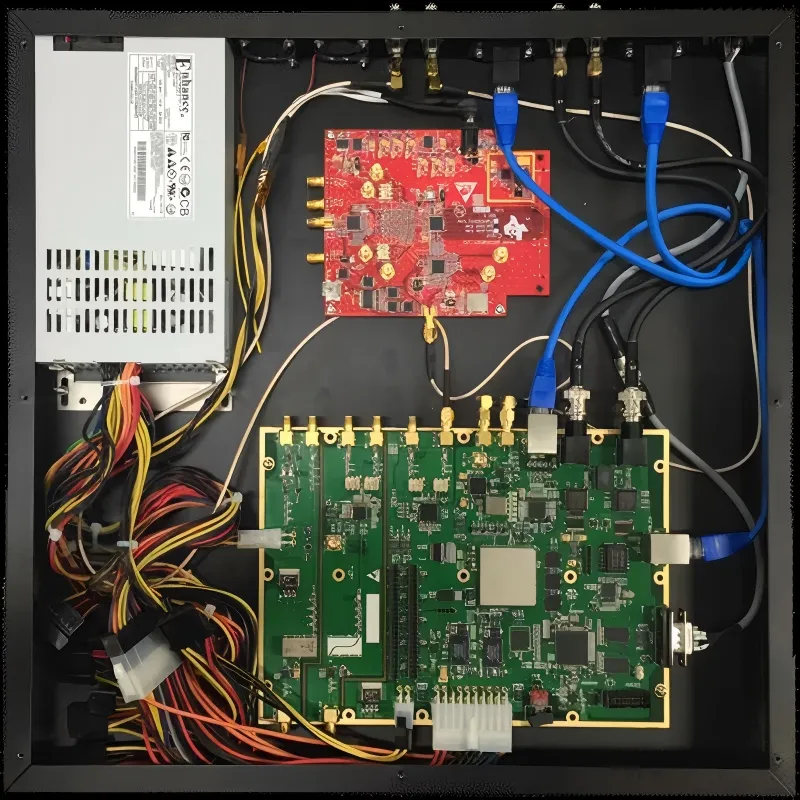
This figure illustrates a typical application of RG316 coaxial cable in a compact RF system. An RF module on a PCB is connected via a short RG316 jumper to a panel-mounted SMA bulkhead, which then interfaces with an external antenna or test equipment. The cable provides mechanical isolation, absorbing stress and vibration that would otherwise affect the module's connector. Its small diameter and flexibility make it ideal for routing inside enclosures where space is limited.
In RF systems, small decisions rarely look dangerous at first. The radio works. The antenna matches. Early tests pass. Then someone adds a short jumper between a module and a panel connector. It’s only 20 or 30 centimeters. What could go wrong?
That jumper is often RG316 coaxial cable.
It’s compact, flexible, heat-resistant, and widely available. Because of that, it quietly becomes the default miniature 50-ohm solution inside enclosures. Yet whether RG316 is truly appropriate depends on frequency, length, environment, and mechanical stress. The right choice preserves margin. The wrong one eats it slowly.
This guide focuses on one practical engineering question:
Is RG316 coaxial cable suitable for my band, routing constraints, and reliability targets—and how do I validate that decision without guesswork?
If you need broader background on coax families first, you can review our overview of RF coaxial cable fundamentals before continuing.
Where does RG316 coaxial cable sit in a real RF signal chain?
Map RG316 between RF modules, panels, and antennas
In most modern systems, RG316 appears in one of three places:
- Internal jumper between RF boards
- Module port to panel bulkhead transition
- Test bench interconnect for compact devices
It rarely serves as the long outdoor feedline. Instead, it bridges delicate device-level connectors to more robust infrastructure interfaces.
A common pattern looks like this:
RF module → short RG316 pigtail → panel-mounted SMA → larger feeder cable → antenna
That “last 30 cm” often determines whether mechanical stress transfers into the module connector or gets absorbed by the enclosure. Engineers sometimes discover this the hard way—after intermittent returns start appearing in the field.
Because RG316 is thin and flexible, it acts as a strain isolator. But flexibility does not mean immunity. Its role is transitional, not structural.
Treat RG316 as a 50 ohm coaxial cable by default
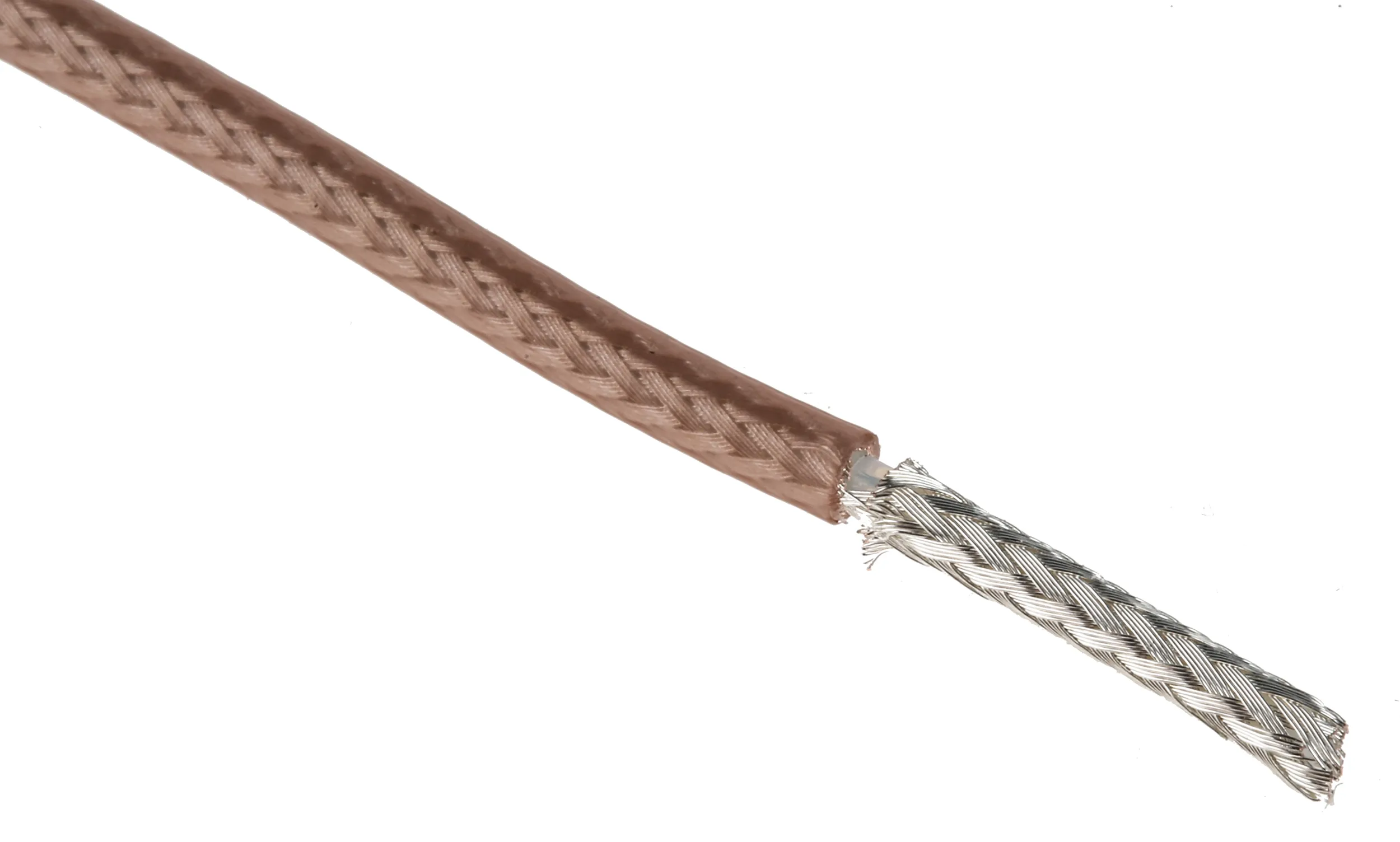
This image provides a detailed view of an RG316 coaxial cable, likely with the layers partially exposed. From the center outward, it shows a silver-plated copper inner conductor, a PTFE dielectric (known for thermal stability and low loss), a braided shield (often silver-plated copper), and a protective outer jacket (typically FEP or similar). This construction balances flexibility with durability, making RG316 a popular choice for internal RF jumpers in applications requiring temperature tolerance and predictable attenuation.
Electrically, RG316 belongs to the 50-ohm ecosystem. That matters.
Most Wi-Fi, cellular, GNSS, and industrial RF modules assume a 50-ohm environment. SMA and N connectors used in these systems are typically designed for 50Ω impedance continuity. Introducing a mismatched cable class—even unintentionally—can raise reflections and insertion loss.
If your system is built around a 50Ω architecture, RG316 maintains impedance consistency when used correctly. If you’re mixing impedance standards (for example, 75Ω video systems), the conversation changes entirely.
For a deeper comparison of 50-ohm system considerations, see our discussion on 50 ohm coaxial cable selection, especially when link margin is tight.
The short version? RG316 keeps you in the 50Ω lane. That’s good—but only if the rest of the chain stays consistent.
Separate bulk RG316 from finished RF coaxial cable assemblies
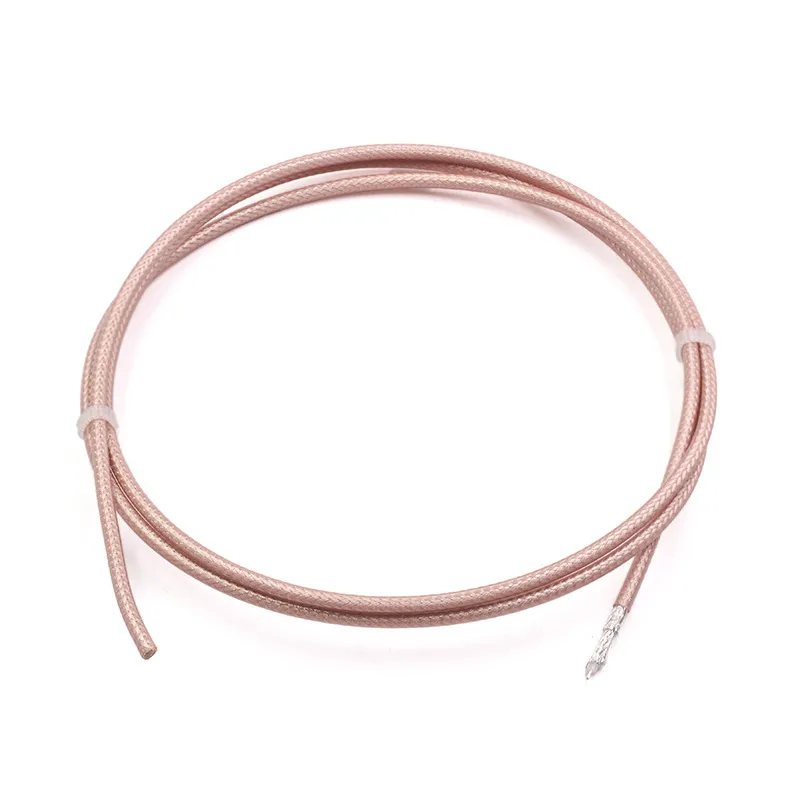
This photograph shows a length of RG316 coaxial cable terminated with connectors on both ends, forming a complete cable assembly. The connectors are likely SMA or another common RF type, with strain relief at the cable-connector junction. Such assemblies are used as internal jumpers in enclosures, test leads, or transition cables between modules and bulkheads. The quality of termination directly affects RF performance and mechanical longevity.
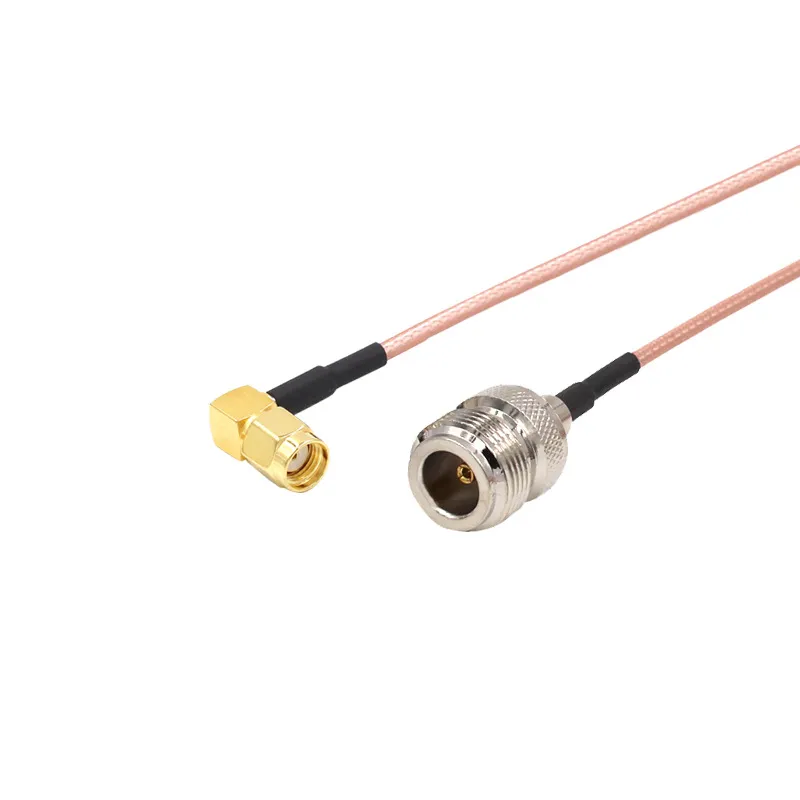
This image depicts a typical RG316-based SMA jumper cable. It has an SMA plug on each end, with a flexible coax section in between. The length is short, typically under a meter, making it suitable for internal routing inside enclosures or for interconnecting benchtop instruments. Such jumpers provide a reliable 50-ohm connection while absorbing mechanical misalignment and vibration.
One subtle mistake I see in procurement reviews is treating bulk cable and finished assemblies as interchangeable decisions.
They aren’t.
Buying raw RG316 spool:
- Focuses on material specification
- Emphasizes impedance and temperature rating
- Leaves termination quality to in-house assembly
Buying a finished assembly:
- Introduces connector orientation constraints
- Requires length tolerances
- May require insertion loss verification
- Demands repeatable crimp or solder processes
A poorly built assembly fails mechanically long before it fails electrically. The braid near the connector root is typically the weak point. That’s where repeated flexing accumulates damage.
If you’re evaluating suppliers, our more detailed RG316 buying and inspection guide walks through acceptance checkpoints you may want to formalize in your PO.
When should you choose RG316 coaxial cable instead of thicker 50Ω coax?
Choose RG316 when routing constraints dominate
There are moments in enclosure design where diameter becomes everything.
RG316’s small outer diameter—typically around 2.5 mm—makes it suitable when:
- Routing clearance is limited
- Sharp internal turns must be avoided
- Board connectors require mechanical isolation
- Weight matters (small UAVs, compact IoT devices)
In these situations, switching to a thicker 50Ω cable class may introduce stiffness that transfers stress directly into the port.
Flexibility is not just convenience. It’s a reliability buffer.
Avoid RG316 when distance and loss dominate
Here’s where many teams push too far.
Attenuation increases with frequency and length. RG316 is not optimized for extended runs. If your link budget is already tight—high band, marginal antenna gain, or regulatory power constraints—adding extra meters of RG316 can quietly erode performance.
In those cases, a better architecture is:
- Short RG316 jumper for flexibility
- Transition to a lower-loss feeder cable for distance
Trying to stretch RG316 into roles meant for larger coax classes usually results in reactive troubleshooting later.
If you’re weighing that tradeoff, compare it with the strategies outlined in our RF cable selection guide. The principle is consistent across families: match the cable class to the job.
Decide “short jumper + low-loss feeder” as a default architecture
Experienced system integrators often adopt a layered approach:
- Module port → short RG316 pigtail
- Panel bulkhead transition
- Lower-loss coax for longer runs
- Outdoor antenna interface
This architecture separates mechanical flexibility from electrical efficiency.
The enclosure absorbs strain.
The feeder cable manages attenuation.
The RG316 jumper protects fragile module connectors.
When implemented properly, this strategy reduces service returns. It also simplifies future upgrades—because the feeder segment can change without redesigning the internal module layout.
How do you pick an RG316 variant without getting misleading specs?
Verify construction and materials
Not all cables labeled “RG316” are identical in practice.
Key construction elements to confirm:
- Conductor material (often silver-plated copper)
- Dielectric material (PTFE is common in true RG316 class cables)
- Shield braid density
- Jacket consistency and diameter tolerance
If the outer diameter deviates significantly from expected values, impedance control may be compromised. That’s not speculation—it’s geometry.
Also confirm whether the dielectric is genuinely PTFE or a substitute. Temperature capability and chemical resistance depend on it.
Confirm temperature rating and environmental fit
Environmental suitability is rarely discussed during early design reviews. Later, it becomes critical.
Consider:
- Proximity to heat sinks
- Automotive compartments
- Industrial cabinets with limited airflow
PTFE-based miniature coax typically tolerates higher temperatures than PVC alternatives. If your routing path crosses warm zones, verify continuous operating temperature ratings, not just peak claims.
Small cables age faster under heat stress. That’s physics, not marketing.
Require traceability when programs demand it
For high-reliability programs—defense, aerospace, regulated industrial sectors—traceability may be mandatory.
That can include:
- Batch documentation
- Defined attenuation values at specified frequencies
- Recorded inspection reports
For standard IoT deployments, full traceability may not be necessary. But you should still document critical electrical assumptions in your internal design file. If performance questions arise later, you’ll want a paper trail.
How can you estimate RG316 loss and length limits at your band?
Let’s get practical. When someone asks, “Can I use RG316 coaxial cable for this run?”, what they usually mean is: will the loss hurt me? The only honest answer is: calculate it.
Start simple. Take the attenuation figure at your operating frequency from the supplier’s data sheet. Multiply by the planned length. That gives you cable loss in dB. No shortcuts. No guessing.
Cable_loss_dB = Attenuation_per_meter × Length_m
That one line prevents most design surprises.
What catches teams off guard isn’t the formula. It’s forgetting that attenuation increases with frequency. A short internal jumper at sub-GHz looks forgiving. Move into multi-GHz territory and the same length eats noticeably more margin. That’s basic transmission line behavior. If you want a quick theory refresher, the Coaxial cable overview explains why conductor and dielectric losses scale the way they do without getting buried in marketing language.
Now pause. Don’t stop at cable loss.
Count the transitions.
Each connector interface introduces insertion loss. SMA, MMCX, N, adapters—none are electrically invisible. The individual loss per interface is usually small, but systems rarely have just one. Two connectors become four. Four become six once adapters enter the chain.
Consider a compact integration example: module MMCX → short RG316 pigtail → panel SMA → SMA-to-N transition → N connector. The cable may be short, yet the cumulative transition loss is no longer trivial. Engineers sometimes discover this only after field range testing comes up short of expectation.
The better framing is not “How long can RG316 run?” It’s “How much loss can my system tolerate?” Once allowed loss is defined, maximum length becomes a derived value, not a guess. That shift in thinking prevents endless debate in design reviews.
If your architecture already assumes a 50-ohm ecosystem—as covered in our 50 ohm coaxial cable selection guide—the math remains consistent across cable families. RG316 doesn’t change the rules. It simply operates within them.
A useful engineering habit is defining functional length tiers instead of chasing one universal maximum. Internal jumper? Mechanical isolation matters more than raw loss. Panel transition? Now both routing and attenuation matter. Extended feed? At some point, RG316 stops being the right tool. The budget tells you where that point is.
How do you route RG316 inside enclosures without reliability surprises?
Electrical loss shows up immediately on a network analyzer. Mechanical fatigue doesn’t. It hides until vibration, temperature cycling, or handling exposes it.
Most intermittent failures I’ve seen with miniature coax don’t happen in the middle of the cable. They happen at the connector root. The first few centimeters near termination experience bending stress. Repeat that motion enough times and shield fatigue follows.
The fix isn’t complicated, but it requires discipline. Secure the cable shortly after termination. Avoid tight bends right at the crimp or solder joint. Respect minimum bend radius as a hard limit, not a suggestion. If the connector carries mechanical load, the design is already compromised.
Heat is the other quiet variable. Many true RG316 constructions use PTFE dielectric, which tolerates higher temperatures than common PVC miniature cables. That doesn’t mean heat is irrelevant. Routing near regulators, power stages, or motor harnesses accelerates aging. Elevated temperature increases dielectric loss and gradually weakens the structure. If your enclosure runs warm, confirm continuous operating temperature, not just peak claims. Organizations like IEEE publish broader electrical reliability frameworks, but on the ground, thoughtful routing decisions matter more than compliance language.
One structural improvement pays for itself quickly: bulkhead transitions. Instead of allowing the RG316 coaxial cable to absorb external strain, mount a panel connector so the enclosure carries the load. The internal jumper then acts purely as an electrical bridge. Service technicians can disconnect external feeders without stressing module connectors. In volume deployments, this small architectural choice reduces return rates more than most teams expect.
How do you build repeatable assemblies using RG316 coaxial cable?
The cable itself is rarely the weak link. The termination process usually is.
Crimped connectors dominate production environments because geometry is controlled by tooling. When tools are calibrated and strip dimensions are consistent, results are repeatable. When tooling wears out, variation creeps in. The difference isn’t always visible to the eye, but it shows up electrically.
Soldered terminations can perform well, but heat control becomes critical. Excess heat can deform dielectric material near the interface. The cable still passes continuity testing, yet impedance at the termination shifts enough to affect return loss. That kind of defect is subtle—and frustrating to diagnose later.
Common assembly mistakes include incorrect strip length, incomplete braid preparation, solder wicking into unintended regions, and improper crimp height. None of these are exotic failure modes. They are process control lapses.
One way to reduce variability is to standardize adapter families built on RG316. Instead of designing custom lengths for every project, define controlled templates—SMA-to-SMA, SMA-to-N, perhaps one right-angle configuration. Standardization reduces SKU chaos and simplifies inspection. Our SMA adapter cable routing guide explores how consistent orientation and routing rules prevent mechanical surprises during installation.
Board-level connectors add another layer of caution. MMCX ports are compact and convenient, but they are not designed for heavy mechanical loading. A short mmcx to sma cable using RG316 can isolate the fragile board connector from external stress. The signal path becomes module MMCX → RG316 pigtail → panel SMA → external feed. That separation protects the module while keeping impedance continuity intact. For more detailed handling considerations, see our MMCX to SMA cable guide.
How should RG316 be used in SMA-to-N systems specifically?
This scenario appears frequently in mixed indoor-outdoor systems. Compact equipment exposes SMA. Infrastructure prefers N connectors. The question becomes whether to use a rigid transition or a flexible cable.
For short internal spans, RG316 works well as a sma to n cable between a device port and a nearby bulkhead. It provides flexibility and protects the SMA interface from stress. Beyond that short distance, lower-loss feeders typically handle extended runs more efficiently.
Choosing between a rigid sma to n adapter and a flexible cable depends less on electrical difference and more on mechanical context. Perfect alignment with no vibration? An adapter may suffice. Misalignment or vibration risk? A cable introduces compliance that protects both connectors. The rigid solution often looks cleaner on the bench. The flexible solution usually survives better in the field.
Our breakdown of SMA-to-N transition strategies compares those mechanical trade-offs in more depth. The takeaway is simple: electrical specs matter, but mechanical stress determines long-term reliability.
A practical serviceability rule many integrators follow is “SMA inside, N outside.” Keep compact interfaces protected within the enclosure. Use more rugged connectors where exposure or repeated handling is expected. In that architecture, RG316 coaxial cable serves as a controlled internal bridge rather than a structural feedline.
Can you turn RG316 selection into a repeatable engineering decision?
Most teams don’t argue about antennas. They argue about “small stuff.” A short jumper. A connector choice. A few centimeters of cable. That’s usually where RG316 coaxial cable enters the discussion.
One engineer says it’s fine. Another worries about loss. Procurement wants something written down.
Instead of debating, formalize it.
A lightweight selection matrix forces clarity. It doesn’t need to be complicated. In fact, the simpler it is, the more likely people will actually use it.
Start with the inputs that matter:
- Operating band (GHz range, not just nominal frequency)
- Planned cable length
- Supplier attenuation value at that band
- Number of RF transitions (connectors + adapters)
- System-level allowable loss
- Minimum bend radius from cable spec
- Planned mechanical routing radius
- Environmental category (indoor rack, vehicle, outdoor enclosure)
From there, calculate two things: total estimated insertion loss and mechanical margin. If both are acceptable, the choice is defensible. If not, you adjust—shorten the run, remove an adapter, or step up to a lower-loss 50-ohm family.
That process aligns with the broader system budgeting logic described in our RF coaxial cable selection guide, but narrows it specifically to RG316 use cases.
The goal isn’t paperwork. It’s repeatability.
Worked example: compact GNSS + Wi-Fi integration
Let’s walk through something realistic.
A small GNSS/Wi-Fi module sits on an internal PCB. It exposes MMCX. The enclosure requires a panel-mounted SMA. In some installations, an external antenna may connect through an N interface.
Signal path: module MMCX → short RG316 pigtail → panel SMA → optional N transition → feeder.
First question: how much loss can the system tolerate? Define that clearly. Not vaguely. Put a number on it.
Second: how long is the internal RG316 segment? Enter that into your worksheet along with attenuation per meter at the operating band. Multiply. Now add estimated transition losses. The total gives you a working approximation of what the jumper contributes to system degradation.
If the remaining margin is comfortable, the design holds. If it’s thin, shorten the jumper or reduce transitions before blaming the antenna later.
Mechanically, check bend radius. Miniature coax doesn’t forgive sharp routing. If the planned enclosure path forces a tighter radius than the cable specification allows, fatigue becomes a matter of time, not possibility.
In compact board-level designs, using a short mmcx to sma cable built on RG316 often makes sense. It isolates the fragile module port and transfers mechanical load to the panel connector. The routing details described in our MMCX to SMA cable guide become especially relevant when space is limited.
The key insight here is simple: calculate electrical margin and validate mechanical margin separately. Both must pass.
How do you turn that matrix into an inspection process?
Selection logic is one half of reliability. Incoming verification is the other.
When finished RG316 assemblies arrive, check what actually matters instead of relying on appearance alone.
Confirm:
- Measured length versus ordered tolerance
- Connector orientation relative to drawing
- Crimp integrity (no visible deformation, no exposed braid)
- Jacket condition and strain relief presence
- Correct part labeling
If the program is margin-sensitive, request insertion loss data at your operating band. Not every IoT product needs full S-parameter documentation. But if your link budget runs tight, measurement beats assumption every time.
Our RG316 buying and inspection guide outlines practical checkpoints that procurement teams can integrate directly into acceptance workflows.
The idea isn’t to create bureaucracy. It’s to prevent surprises six months later.
What external factors could affect RG316 usage going forward?
Most RF engineers focus on performance. Regulatory trends rarely enter early design discussions. That may change.
Many miniature coax constructions rely on PTFE dielectric materials. Broader regulatory conversations around PFAS substances continue in multiple regions. Agencies such as the European Chemicals Agency periodically update guidance affecting certain fluorinated materials. The situation is evolving, and it doesn’t automatically eliminate PTFE use—but global suppliers increasingly provide more detailed material disclosures.
Why does this matter? Because future procurement cycles may require additional compliance documentation. Engineers who document cable construction assumptions early avoid redesign headaches later.
At the same time, compact wireless devices continue expanding across IoT, telematics, GNSS, and small-cell infrastructure. That growth naturally sustains demand for short, flexible 50-ohm assemblies. In that niche, RG316 remains common because it balances manageable attenuation with small diameter and flexibility.
None of this changes transmission line physics. It simply reinforces the importance of understanding what you’re specifying.
Practical RG316 questions engineers still raise
How do I verify an RG316 spec before committing to volume?
At what length does RG316 become a problem at 2.4 or 5.8 GHz?
When is it time to switch to a thicker 50 ohm coaxial cable?
What causes most intermittent RF faults in RG316 assemblies?
Adapter or cable for SMA-to-N transitions?
Are MMCX-to-SMA pigtails on RG316 reliable long term?
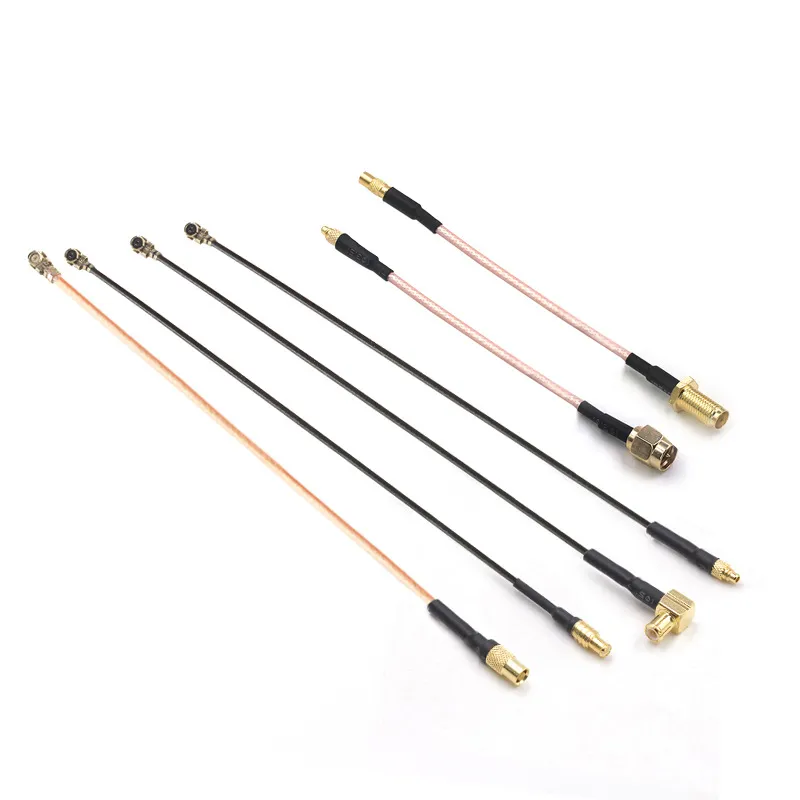
This figure shows a short MMCX to SMA cable assembly, typically constructed with RG316 coaxial cable. One end features a compact MMCX plug (for board-level connections), while the other has a standard SMA plug (for panel mounting or external antenna). The flexible RG316 section acts as a mechanical buffer, protecting the fragile MMCX interface from torque and vibration. Such pigtails are common in GNSS receivers, IoT gateways, and other compact RF devices where space is tight but reliability is required.
Final perspective
RG316 coaxial cable isn’t “good” or “bad.” It’s appropriate or inappropriate depending on context.
Used as a short internal bridge within a well-defined 50-ohm system, it performs predictably. Pushed into long, loss-sensitive, or mechanically aggressive roles, it becomes a liability.
The difference lies in whether the decision was calculated or assumed.
Run the numbers. Validate the routing. Standardize the assembly. Document the margin.
Do that, and RG316 stops being a question mark and becomes just another controlled part of the RF chain.
Bonfon Office Building, Longgang District, Shenzhen City, Guangdong Province, China

A China-based OEM/ODM RF communications supplier
Table of Contents
Owning your OEM/ODM/Private Label for Electronic Devices andComponents is now easier than ever.