
SMA to N Connector Selection & Installation Guide
Mar 03,2026
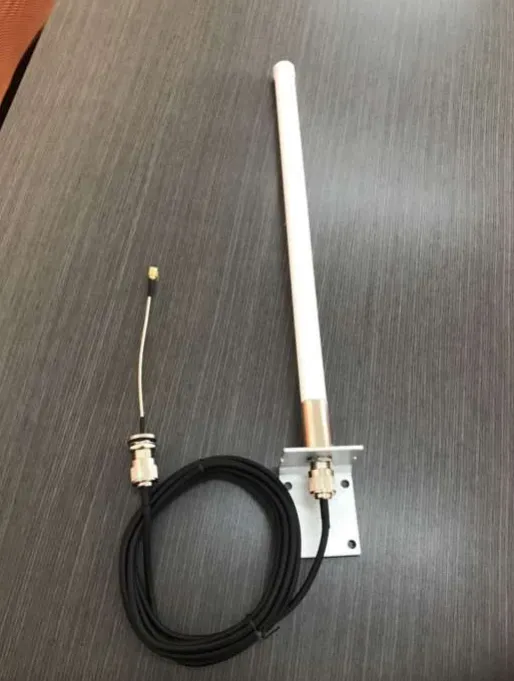
This image shows a typical SMA to N connector, likely a bulkhead or cable-end version. It features an SMA interface on one end (with small threads and center conductor) and an N-type interface on the other (larger threads and robust center pin). The connector body is designed to transfer mechanical stress to the enclosure or cable, making it suitable for permanent installations where the transition must withstand environmental and mechanical loads.
An SMA to N connector looks deceptively simple. Two threads. A center conductor. A mechanical coupling nut. Nothing exotic.
Yet in real RF systems, this small interface often sits at a critical boundary — the line between compact equipment and full-scale infrastructure. When a rooftop antenna underperforms, when a test bench reading drifts, or when a field installation degrades months later, the root cause is frequently hiding inside that transition.
This guide breaks down how to select, install, and evaluate an SMA to N connector properly. We’ll also clarify when you should instead use an SMA to N adapter, an SMA to N cable, or a complete cable assembly — and how to budget loss realistically before you place a purchase order.
How does an SMA to N connector fit into RF systems?
The need for an SMA to N connector rarely appears in isolation. It appears because two ecosystems meet.
SMA dominates device-level interfaces.
N-type dominates infrastructure.
That’s not marketing language — it’s mechanical reality.
Map SMA-side radios to N-type antennas and feeders
In most sub-6 GHz wireless systems, SMA is common at the device edge:
- Wi-Fi radios
- LTE/5G CPE units
- IoT gateways
- Embedded RF modules
- Test equipment
N-type connectors, on the other hand, show up where robustness and outdoor exposure matter:
- Rooftop antennas
- Lightning arrestors
- Long feeder runs
- High-power transmission paths
The SMA to N connector becomes the handshake between those two worlds.
One side connects to compact electronics. The other connects to environmental hardware. If that transition is poorly selected, everything downstream inherits the weakness.
Keep the entire chain as 50 ohm coaxial cable
In RF communication systems, both SMA and N connectors are typically 50 ohm components. That means the entire signal path — connectors, adapters, and 50 ohm coaxial cable — must maintain impedance continuity.
A common mistake is accidentally mixing 75Ω coax (frequently used in television distribution) into a 50Ω RF system. At lower frequencies, that mismatch may appear tolerable. At 2.4 GHz or 5 GHz, it quickly raises return loss and reduces link margin.
If your radio, antenna, and specification sheet say 50Ω, then every component in between must also be 50Ω. No exceptions.
For a broader overview of impedance planning across cable families, see our guide on 50-ohm impedance planning for RF links.
Separate connectors from cable assemblies and adapters
Procurement errors usually begin with category confusion.
Let’s draw clear boundaries:
- SMA to N connector → The connector body itself (bulkhead, PCB mount, or cable-end termination).
- SMA to N adapter → A rigid metal transition with no flexible cable.
- SMA to N cable → A cable assembly with connectors on each end.
- SMA adapter cable → A broader category of cable assemblies used for inter-family transitions.
If you need structural mounting, you’re buying a connector.
If you need flexibility, you’re buying a cable assembly.
If you’re aligning two fixed ports, you’re buying an adapter.
That distinction alone prevents many ordering mistakes.
Should you use a connector, an adapter, or a cable?
Choose a connector when you’re building or repairing a cable or port
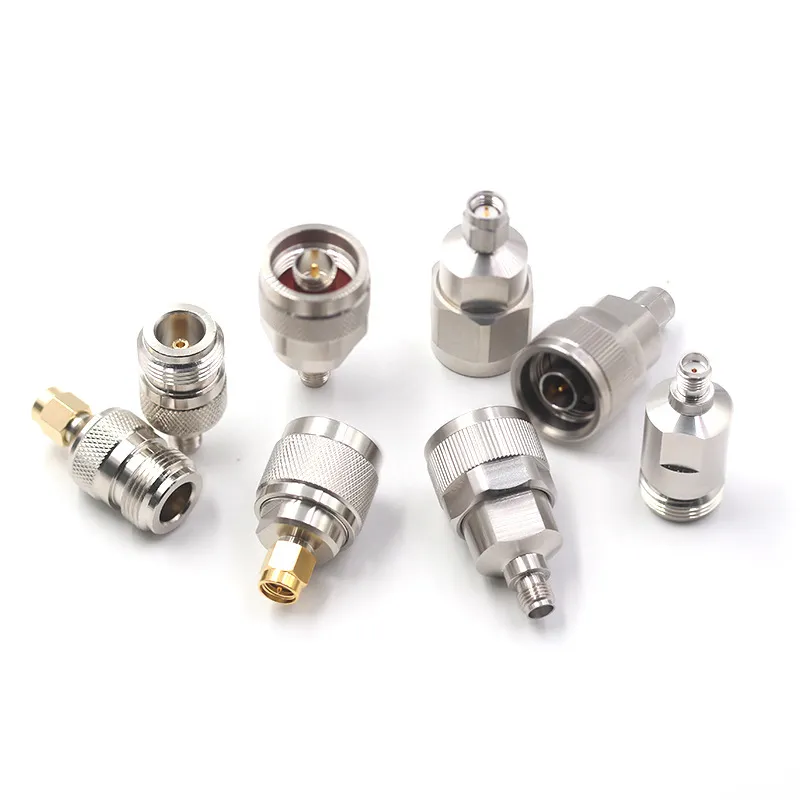
This photograph shows a rigid SMA to N adapter, a short metal component with an SMA connector on one end and an N-type connector on the other. The SMA end is male (center pin, external threads) and the N end is female (center socket, internal threads). Such adapters are useful in fixed, aligned setups like lab benches or racks, but they should not be used where vibration, offset, or cable weight is present, as they transmit all forces directly to the connected ports.
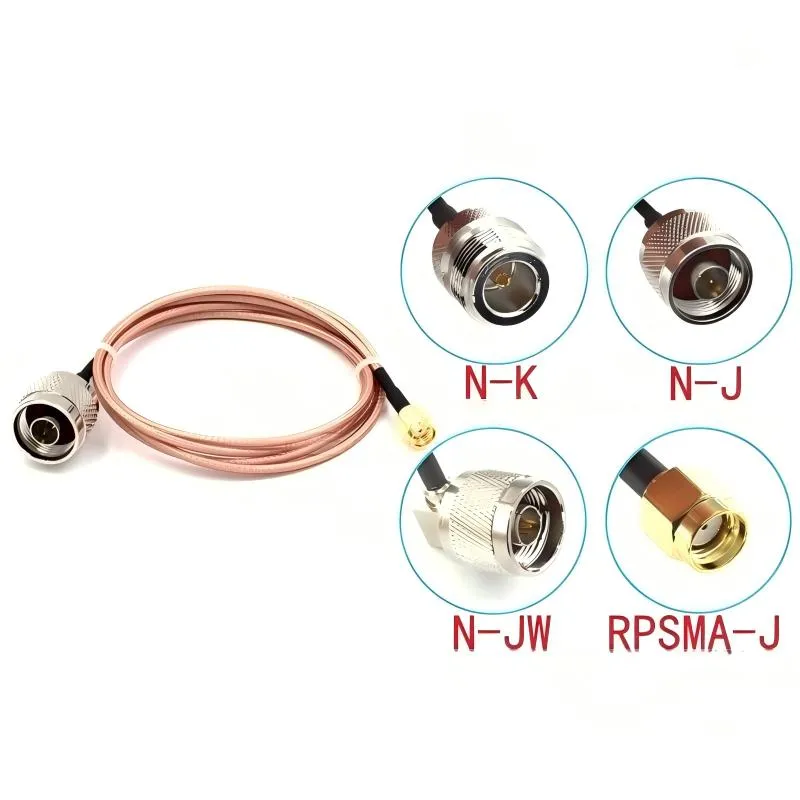
This image depicts a section of RG316 coaxial cable, likely with the layers exposed: a silver-plated copper inner conductor, a PTFE dielectric, a braided shield (often silver-plated copper), and a protective outer jacket (typically FEP or similar). Its small diameter (~2.5 mm) and flexibility make it ideal for routing inside compact enclosures, while its PTFE dielectric ensures stable performance across temperature variations. In SMA to N assemblies, RG316 is often used for short internal pigtails or transition cables.
If you are:
- Terminating raw coax
- Installing a panel feedthrough
- Repairing a damaged feeder
- Modifying an enclosure interface
You need an SMA to N connector, not an adapter.
Connector bodies transfer mechanical stress into the enclosure or cable structure. They’re designed to be part of a permanent assembly.
If you’re building with RG316 coaxial cable, for example, the correct cable-end connector ensures proper braid capture, center conductor engagement, and strain relief. For more details on compact jumper design, see RG316 jumper selection for compact RF wiring.
Adapters don’t provide that structural integration.
Choose an SMA to N adapter for rigid, short, strain-free transitions
Adapters are convenient — sometimes too convenient.
Use an SMA to N adapter when:
- Two ports align directly
- There’s no vibration
- No cable weight pulls on the interface
- The system is inside a rack or lab environment
In controlled indoor test setups, adapters work well. But in vehicle deployments, rooftop installations, or portable systems, rigid adapters often become mechanical stress concentrators.
If you’re evaluating torque and handling best practices, refer to our breakdown of SMA to N adapter torque and installation rules.
Choose an SMA to N cable when offset, vibration, or routing exists
If distance, offset, or mechanical movement exists, a flexible cable wins almost every time.
An SMA to N cable provides:
- Strain relief
- Routing flexibility
- Vibration tolerance
- Improved longevity under mechanical load
In field deployments, cable assemblies outperform rigid adapters in durability. If you’re deciding between rigid and flexible transitions, this article on when an SMA to N cable is safer than a rigid connector walks through real-world tradeoffs.
In short: adapters are neat. Cables survive.
How do you identify the correct SMA and N genders every time?
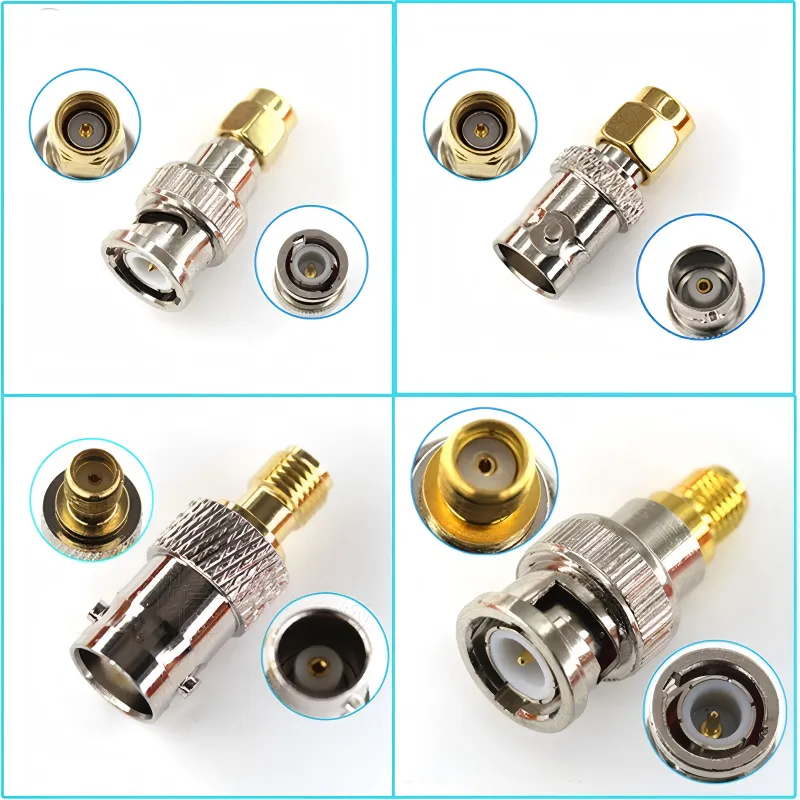
This figure provides a visual reference for distinguishing SMA and N connector genders. For SMA: male has external threads and a center pin; female has internal threads and a center socket. For N-type: male has a rotating coupling nut and a center pin; female has internal threads and a center socket. The image likely shows examples of each, helping engineers and technicians verify gender before installation. It also serves as a reminder to check for reverse-polarity variants (RP-SMA) in Wi-Fi equipment, where the center conductor is swapped.
Gender confusion is one of the most common causes of project delays.
And yes — even experienced teams get this wrong occasionally.
Verify SMA thread and center pin before ordering
For standard SMA:
- External thread + center pin = SMA male
- Internal thread + center socket = SMA female
Simple rule. But always visually confirm both the thread position and the center contact. Some listings mislabel products.
Confirm N-type gender and coupling nut style
For N-type connectors:
- Rotating coupling nut + center pin = N male
- Internal threads + center socket = N female
Don’t rely solely on the presence of a nut. Look at the center conductor.
Manufacturers may vary body shape slightly, but mating geometry remains standardized.
Prevent RP-SMA confusion in Wi-Fi systems
Wi-Fi hardware often uses RP-SMA (reverse polarity). In RP-SMA:
- Thread orientation stays the same
- Center pin and socket are reversed
An RP-SMA male does not mate with a standard SMA female.
Before placing an order, take 30 seconds to visually inspect the device port. That small step avoids weeks of backorder delay.
Which mounting style should you pick for SMA to N connectors?
Select bulkhead styles for panels and enclosures
Bulkhead connectors pass through a panel and secure with:
- Washer
- Lock washer
- Nut
They transfer mechanical force into the enclosure wall rather than into the PCB or cable.
For outdoor antenna enclosures, bulkhead mounting is usually the safest approach.
Choose PCB-mount when the board is the structural reference
PCB-mounted connectors are appropriate when:
- The board is mechanically supported
- Torque is controlled
- The enclosure supports the interface
If torque transfers directly into unsupported PCB traces, micro-cracking and solder fatigue can occur over time.
Designers sometimes underestimate this. Field failures remind them quickly.
Use cable-end connectors when building assemblies
Cable-end SMA to N connectors require proper termination technique.
Critical details include:
- Correct stripping dimensions
- Proper braid fold-back
- Accurate crimp height
- Full seating of center pin
A termination may pass continuity testing yet fail under vibration months later.
Small details matter here.
What electrical specs matter for SMA to N connectors?
On paper, most SMA to N connector listings look similar. Same thread. Same 50Ω rating. Similar frequency range.
In practice, electrical performance varies depending on frequency, return loss targets, and mating consistency.
If your system is forgiving, almost any properly manufactured connector may work. If your system runs tight margin — high data rate, long feeder, multi-stage chain — details start to matter.
Match frequency and VSWR targets to the application
For sub-6 GHz communication systems (Wi-Fi, LTE, private 5G), typical connector frequency ratings are more than sufficient. The bigger question is repeatability.
Check three parameters carefully:
- Rated frequency range
- VSWR specification
- Insertion loss per interface
VSWR becomes increasingly important at higher frequencies. Even small impedance discontinuities raise reflected power. If you need a refresher on how impedance and reflection interact, the overview of coaxial cable theory on Wikipedia provides solid background on signal propagation and mismatch behavior.
In lab calibration chains or measurement setups, the tolerance window narrows. Connectors with tighter machining tolerances and stable plating perform more consistently across repeated mating cycles.
Keep impedance consistent with RF coaxial cable choices
An SMA to N connector is only one segment of the path. Your RF coaxial cable, connectors, adapters, and terminations must all maintain 50Ω continuity.
If you’re transitioning from a compact jumper such as RG316 cable to a long outdoor feeder, verify both cable families share the same impedance class.
For a deeper breakdown of cable families and impedance planning, see our guide on RF coaxial cable families explained.
When mismatch occurs, the connector often gets blamed. In reality, the connector may simply be revealing an upstream inconsistency.
Choose plating and materials based on mating cycles and environment
Material selection influences longevity more than many buyers expect.
- Gold plating reduces contact resistance and supports frequent mating.
- Nickel plating improves corrosion resistance but may not be ideal for high mating frequency environments.
- Stainless steel bodies improve durability in outdoor conditions.
Outdoor N-type connectors especially benefit from corrosion-resistant materials. Moisture intrusion combined with galvanic differences can slowly degrade interface quality.
Over months, that degradation shows up as rising insertion loss — not a catastrophic failure, just a slow decline in link margin.
How do you install SMA to N connectors without damaging ports?
Many field failures aren’t caused by design errors. They’re installation errors.
The connector survived production. It failed during tightening.
Apply correct torque and use the two-wrench technique
Always use two wrenches:
- One to stabilize the fixed body
- One to tighten the coupling nut
Never allow torque to transfer through the cable or into a PCB-mounted SMA port.
Over-tightening is common. Under-tightening is less common but still problematic, especially in vibration environments.
Manufacturers provide torque specifications. Follow them. Don’t guess.
If you’ve ever seen an SMA port twist loose from a small IoT board, you already understand why this matters.
Protect cable strain relief and bend radius
Compact cables such as RG316 coaxial cable are widely used for short internal transitions. They’re flexible, heat-resistant, and compact.
But they are not immune to mechanical fatigue.
Avoid sharp bends directly at the connector root. Maintain proper bend radius. Provide slack so that enclosure assembly does not preload the cable.
Many premature failures trace back to “just one tight bend” installed under time pressure.
If your design relies on short internal jumpers, review best practices in RG316 jumper selection for compact RF wiring.
Weatherproof outdoor N-type connections properly
Outdoor N-type connectors require more than tightening.
Proper outdoor protection typically includes:
- Self-amalgamating tape
- Weatherproof boots
- Mechanical strain fixation
- Drip loop routing
Water ingress doesn’t cause immediate failure. It causes slow corrosion. Months later, the link margin quietly shrinks.
That’s harder to troubleshoot than a clean break.
How can you reduce loss in SMA-to-N transitions?
Cable loss is obvious. Connector loss is subtle.
Ignoring the latter is a common oversight.
Budget connector and adapter loss inside the RF link
Every transition — connector or adapter — adds insertion loss. While exact values depend on frequency and quality, field estimates commonly range from:
0.1 to 0.3 dB per transition.
That number may seem small. But in a chain with multiple interfaces, loss accumulates quickly.
For example:
- SMA port → Adapter
- Adapter → Bulkhead
- Bulkhead → Feeder
- Feeder → Antenna
Four transitions at 0.2 dB each equal 0.8 dB — before cable loss is considered.
Budget it deliberately.
Use RG316 for short internal jumps and low-loss feeders for distance
This figure illustrates a common hybrid cabling strategy. Inside the enclosure, a short RG316 coaxial cable (SMA to N or SMA to SMA) connects the radio module to a bulkhead connector. Outside, a low-loss feeder like LMR-400 carries the signal over distance to an antenna. The image highlights the trade-off: RG316 offers flexibility and easy routing but higher attenuation, while low-loss cables sacrifice flexibility for lower loss over long distances. This segmentation optimizes both mechanical and electrical performance.
Short internal connections often use RG316 coaxial cable because of flexibility and temperature tolerance.
For longer runs, however, cable loss dominates. Switching to lower-loss feeder families significantly reduces attenuation over distance.
This principle is covered in more detail in our comparison of cable families in Best Coaxial Cables: RG & LMR Guide.
As a rule of thumb:
- Use compact jumpers internally
- Use low-loss feeders for length
- Minimize transition count
It sounds simple. In practice, it requires planning.
Avoid stacking unnecessary conversion points
One of the easiest ways to reduce loss is to simplify the mechanical chain.
Avoid configurations like:
Connector → Adapter → Adapter → Cable → Adapter
Instead, select the correct SMA to N connector or use a properly designed SMA to N cable from the start.
Each additional transition increases loss and introduces another potential mismatch point.
In high-frequency systems, fewer transitions almost always means better stability.
Can a selection matrix prevent ordering mistakes?
Yes. And it’s one of the most practical tools you can implement.
Rather than selecting parts based on memory or habit, define parameters explicitly.
Define the matrix fields and formulas
| Field | Example | Purpose |
|---|---|---|
| Use_Case | Outdoor antenna | Defines mechanical needs |
| SMA_Side_Gender | Male | Visual verification |
| N_Side_Gender | Female | Visual verification |
| Mounting_Style | Bulkhead | Panel transfer |
| Frequency_GHz | 2.4 | Performance requirement |
| Cable_Type | RG316 | Internal jumper |
| Cable_Length_m | 0.5 | Measured value |
| Cable_Loss_dB_per_m | 0.6 | From datasheet |
| Conversion_Points | 2 | Count connectors/adapters |
| Allowed_Loss_dB | 2.0 | System budget |
Formulas:
Cable_Loss_dB = Cable_Loss_dB_per_m × Cable_Length_m
Transition_Loss_dB = Conversion_Points × 0.15
Total_Loss_dB = Cable_Loss_dB + Transition_Loss_dB
Margin_dB = Allowed_Loss_dB − Total_Loss_dB
If Margin_dB ≥ 0 → PASS
If Margin_dB < 0 → Redesign
This approach forces clarity. No assumptions. No guesswork.
Walk through a rooftop antenna example
Consider this scenario:
Indoor radio with SMA port → N bulkhead through enclosure → Outdoor feeder → N-type antenna.
Count transitions carefully:
- SMA connector interface
- Bulkhead interface
- Feeder-to-antenna interface
Estimate cable loss based on feeder length and datasheet values. Add transition loss.
If your allowed margin is tight — for example, 1.5 dB — you may discover that stacking adapters consumes most of it.
Better to discover that in Excel than on a rooftop.
Turn the matrix into an incoming inspection checklist
The same matrix doubles as a receiving inspection tool.
Upon delivery:
- Verify connector genders
- Confirm thread type
- Inspect center conductor
- Check plating consistency
- Confirm included hardware (washer, nut)
This reduces return cycles and prevents last-minute installation surprises.
What’s changing in SMA and N connector components and compliance?
Connectors rarely make headlines. Radios do. Antennas do. Chips definitely do.
But the RF interconnect market — connectors, adapters, and cable assemblies — is growing steadily alongside wireless infrastructure.
According to industry analyses summarized by research firms such as Grand View Research, the global RF interconnect market continues expanding through 2030, driven by telecom, IoT, defense, and industrial wireless deployments. That growth affects availability, standardization, and supply chain quality.
More volume means more options. It also means more variation.
Material compliance and dielectric considerations
There has been increased scrutiny around dielectric materials used in connectors. PTFE has long been the standard dielectric in many RF connectors due to its excellent electrical properties and thermal stability.
However, regulatory focus on fluorinated materials has prompted some manufacturers to evaluate alternative dielectric solutions.
If your project requires environmental compliance documentation, confirm:
- Dielectric material type
- Plating composition
- RoHS and REACH declarations
In most communication systems, these material changes do not alter electrical function — but procurement documentation may need updating.
Growing demand for rugged and sealed connectors
Outdoor deployments are increasing — private 5G, industrial IoT, rooftop small cells, rural broadband expansion.
With that growth comes higher demand for:
- Sealed N-type interfaces
- Improved corrosion resistance
- Reinforced coupling structures
- Higher mating cycle durability
IP-rated sealing and environmental robustness are no longer niche requirements. In many deployments, they’re baseline expectations.
If your SMA to N connector bridges indoor electronics to outdoor feeders, environmental planning is part of the selection process — not an afterthought.
Answer common SMA to N connector questions
How do I choose an SMA to N connector vs an SMA to N adapter?
If the transition must support mechanical load, panel mounting, or cable termination, use an SMA to N connector.
If two fixed ports align directly in a controlled, low-stress environment, an SMA to N adapter may be sufficient.
In mobile or outdoor systems, flexible cable assemblies usually outperform rigid adapters in long-term durability.
For comparison scenarios, see when an SMA to N cable is safer than a rigid connector.
How can I confirm SMA and N gender when drawings are missing?
Ignore marketing labels. Inspect the hardware.
For SMA:
- External thread + center pin = male
- Internal thread + center socket = female
For N-type:
- Rotating coupling nut + center pin = male
- Internal thread + center socket = female
If the device is Wi-Fi equipment, verify whether it uses RP-SMA. That single detail prevents expensive mistakes.
What mounting style is safest for outdoor antenna enclosures?
Bulkhead mounting is typically safest because it transfers mechanical stress to the enclosure wall.
Avoid direct PCB torque exposure unless the board is mechanically reinforced.
Outdoor N-type connectors should also include weatherproofing measures and strain relief.
Does swapping connectors change loss enough to matter at 2.4 or 5 GHz?
Yes.
At microwave frequencies, even small discontinuities increase reflection and insertion loss. One additional adapter may not seem significant — but multiple transitions can easily consume 0.5 to 1 dB of margin.
In high-data-rate systems, that difference can impact stability.
If you want a refresher on reflection and return loss fundamentals, the Voltage Standing Wave Ratio (VSWR) overview on Wikipedia explains the relationship between impedance mismatch and reflected power.
What torque mistakes cause SMA port failures in the field?
Common errors include:
- Over-tightening without torque control
- Failing to use a second wrench
- Allowing cable twist during tightening
- Applying torque to PCB-mounted ports
Small embedded devices are especially vulnerable.
When should I switch to an SMA to N cable instead of a rigid connector?
Switch to an SMA to N cable when:
- There is mechanical offset
- Vibration exists
- Cable routing is required
- The installation environment is outdoor or mobile
Rigid adapters are compact, but they do not absorb stress.
Practical engineering takeaways
By this point, the SMA to N connector should no longer feel like a trivial part.
It defines a boundary:
- Device-level RF electronics
- Infrastructure-level antenna systems
Small oversights at this boundary ripple outward.
Here are the practical rules many experienced RF engineers quietly follow:
- Keep impedance consistent across the entire path.
- Minimize transition count.
- Choose mechanical stability over convenience.
- Budget connector loss deliberately — don’t assume zero.
- Inspect gender and thread orientation visually before ordering.
- Apply torque correctly and use two wrenches.
- Weatherproof outdoor N-type interfaces properly.
If the system margin is tight, build a selection matrix before procurement. The few minutes spent calculating loss and verifying configuration often prevent weeks of field troubleshooting.
For broader RF system planning across cable families and connector ecosystems, you may also find value in:
- 50-ohm impedance planning for RF links
- RF coaxial cable families explained
- RG316 jumper selection for compact RF wiring
Each piece addresses a different segment of the same signal chain.
Closing perspective
An SMA to N connector is small. It’s also decisive.
When it’s chosen correctly, installed properly, and integrated into a coherent 50Ω chain, it disappears into the background — exactly what you want from an RF interface.
When it’s selected casually, stacked with adapters, or tightened improperly, it quietly erodes link margin until performance becomes unpredictable.
RF systems rarely fail dramatically. They degrade gradually.
The connector at the boundary often determines which path your system takes.
Bonfon Office Building, Longgang District, Shenzhen City, Guangdong Province, China

A China-based OEM/ODM RF communications supplier
Table of Contents
Owning your OEM/ODM/Private Label for Electronic Devices andComponents is now easier than ever.