
A radio setup can fail for a very ordinary reason: the adapter looked correct in the product photo, but the mating direction was wrong.
The threads fit. The shell size looked familiar. The buyer searched for a “radio antenna adapter” and found something close enough. Then the part arrived, and the SMA side was the opposite gender, or the so-called UHF side did not match the PL259 cable plug already installed on the antenna feed line.
That mistake is common because radio antenna adapters sit between several naming systems. A handheld radio may use SMA. An SDR receiver may use SMA or BNC. A base antenna cable may end in PL259. A radio panel may use SO239. Some buyers call the whole family “UHF,” even when they actually mean a PL259 plug or an SO239 socket.
The adapter is small, but it decides whether the radio, antenna, and coax cable form a usable RF path.
How Do You Choose a Radio Antenna Adapter for Mixed RF Connectors?
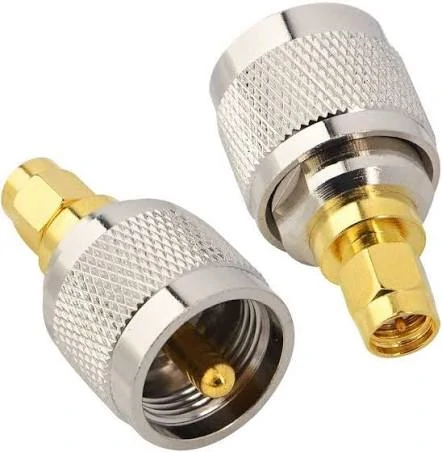
This SMA male to UHF female adapter is designed for radio antenna conversion applications. It provides a direct mechanical connection between SMA equipment ports and UHF-family antenna connectors used in communication systems.
Start with the installed hardware, not the adapter name.
A buyer may search for an antenna adapter, RF adapter, or coax adapter, but those terms are too broad for ordering. The real question is simpler: what connector is on the radio side, and what connector is on the antenna or cable side?
For radio users, the most common mismatch is between compact equipment and older or heavier antenna hardware. SMA appears on handheld radios, SDR receivers, RF modules, small test boards, and portable devices. PL259 and SO239 appear more often around ham radio equipment, CB radios, antenna tuners, base station cables, and legacy RF systems.
The adapter has to bridge those two worlds without creating avoidable mechanical or RF problems.
Match the adapter to the radio, antenna, and coax cable interface
Do not order from the front interface alone. A part described as “SMA to UHF” may still be wrong if the SMA side, UHF side, or polarity is not defined.
A complete adapter description should answer these points:
- What is the connector on the radio or device?
- Is the SMA side male, female, or RP-SMA?
- Is the antenna-side connector PL259 or SO239?
- Is the system 50 ohm?
- Will the adapter support the working frequency band?
- Will a rigid adapter put too much stress on the port?
That last point is easy to ignore. A short SMA adapter on a desk may work fine. The same adapter hanging from a heavy RG213 or LMR cable can become a lever on a small radio port. The RF connection may still pass continuity, but the mechanical load is not acceptable for repeated field use.
Avoid treating every antenna adapter as the same RF part
An antenna adapter is not just a metal coupler that happens to screw together. For a radio antenna path, several details matter at the same time.
The connector family decides whether the part can mate physically. Gender decides whether it can connect in the correct direction. Impedance affects mismatch risk. Frequency range affects whether the adapter remains suitable near the operating band. Contact quality and body fit affect repeatability.
For HF or casual receive-only use, some problems may stay hidden. At VHF, UHF, or higher SDR work, poor adapter selection can show up as weak received signal, unstable SWR, poor return loss, or inconsistent test results.
A rough-looking adapter is not always bad, and a shiny adapter is not automatically good. The inspection needs to match the job. For a buyer, that means asking for the adapter direction, impedance, and application range before comparing price.
Identify the most common radio adapter conversion paths
Most radio antenna adapter requests fall into a few practical paths:
| Conversion Path | Common Use | Main Risk Before Ordering |
| SMA to UHF | Handheld radio or SDR to antenna-side hardware | UHF side may mean PL259 or SO239 |
| SMA to SO239 | SMA radio to PL259 cable plug | SMA gender may be reversed |
| SMA to PL259 | SMA device lead to SO239 radio or antenna socket | Less common direction confusion |
| BNC to UHF | Test gear or older receivers to radio coax | Frequency and fit must be checked |
| N Type to UHF | Outdoor antenna systems or higher-power setups | Mechanical size and power handling |
| Handheld radio to external antenna | Portable radio with base antenna cable | Port stress from heavy cable |
The table is not a substitute for checking the actual connector. It is a way to narrow the mistake. If the cable already has a PL259 plug, the mating adapter side usually needs to be SO239/UHF female. If the panel has an SO239 socket, the mating side usually needs a PL259/UHF male.
That sounds basic until a purchase order says only “SMA to UHF adapter.” Then the supplier has to guess, and guessing is where wrong parts enter the BOM.
How Do SMA, PL259, SO239, and UHF Connectors Work Together?
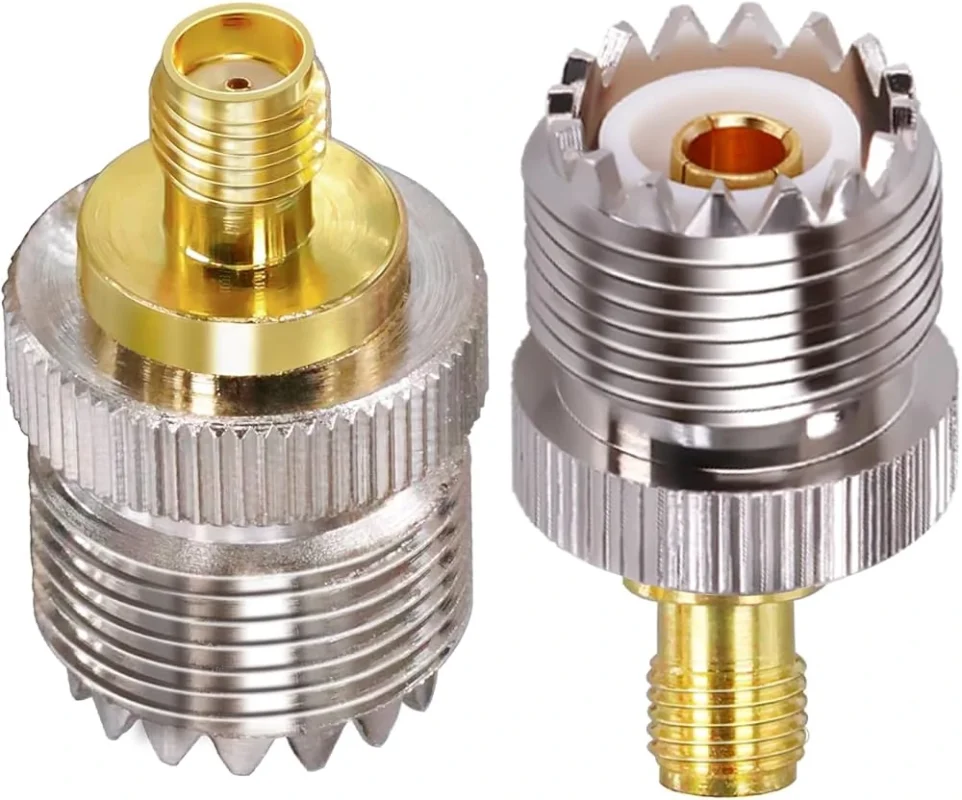
The naming is the first trap.
SMA describes a compact threaded RF connector family. PL259 and SO239 describe two sides of the older UHF connector family used in many radio systems. “UHF connector” is often used as a broad name for that family, but in ordering language it is not precise enough.
A supplier needs to know the actual mating side. A technician in the field may say “UHF connector” and point to a cable plug. A buyer may write “UHF adapter” in the RFQ. The warehouse may stock both PL259-style and SO239-style adapters. Those three people may not be talking about the same physical part.
Use SMA adapters for compact radios, SDRs, and RF modules
SMA is common where space is limited. Handheld radios, SDR receivers, small RF modules, GPS equipment, Wi-Fi test boards, and portable devices often use SMA or RP-SMA ports.
The small size is useful, but it also makes SMA less forgiving when connected directly to large coax. A PL259 cable on RG8X, RG213, or LMR-type cable can be stiff. If it is connected through a short rigid adapter, the SMA port may carry the cable weight.
For a bench test, that may be acceptable. For outdoor use, repeated movement, vehicle installation, or a radio that gets picked up often, a short jumper cable is usually safer than a rigid adapter stack.
Use PL259 and SO239 terms correctly before ordering
PL259 usually refers to the cable-end plug. SO239 usually refers to the mating socket or jack on a radio, panel, antenna tuner, feed point, or adapter body.
That distinction matters because many radio antenna adapter listings use “UHF” loosely. A buyer who needs to connect a PL259 cable plug to an SMA radio usually does not need another PL259 side. The cable plug needs to mate with an SO239/UHF female side.
A clearer requirement would be:
“SMA male to SO239 female radio antenna adapter, 50 ohm, for connecting an SMA female handheld radio to a PL259 coax cable.”
That line gives the supplier enough information to check the front interface, mating direction, and RF path. It also reduces back-and-forth during quotation.
Avoid confusing UHF connector naming with modern UHF frequency performance
The term “UHF connector” is historical. It does not mean the connector is automatically suitable for every modern UHF or microwave application.
For many ham radio, CB, and general antenna systems, UHF-family connectors are still widely used. They are rugged, familiar, and easy to source. But if the project involves higher-frequency SDR work, low-VSWR testing, compact modules, or controlled RF measurement, the connector family and adapter stack deserve closer review.
A part that is fine for one radio installation may not be suitable for another system using a different band, cable length, or inspection requirement.
The safer rule is plain: let the application define the adapter, not the search keyword.
How Should You Select SMA to PL259, SO239, or UHF Adapters?
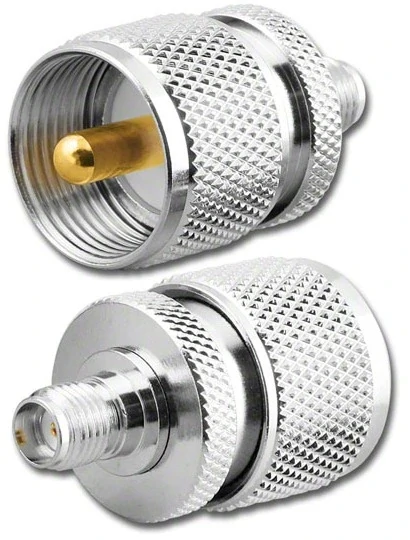
This radio antenna adapter provides a compact connection solution between SMA connectors and UHF-family interfaces such as PL259 and SO239. It is commonly used for ham radio, SDR receivers, antenna systems, and RF equipment requiring connector conversion.
The easiest ordering mistake is to treat “SMA to UHF” as a complete specification.
It is not complete. It may describe the two connector families, but it does not tell the supplier which side has the pin, which side has the socket, or whether the SMA side is standard SMA or reverse-polarity SMA. That is enough uncertainty to create the wrong adapter.
A better way is to start from the fixed parts already in the system. The radio port is fixed. The antenna cable connector is fixed. The adapter only fills the space between them.
Choose SMA to PL259 adapters when the cable side uses a PL259 plug
A PL259 plug is usually found on the end of a radio coax cable. If that cable needs to connect to an SMA radio, SDR receiver, or compact RF device, the adapter must provide the correct mating side for the PL259.
This is where wording becomes important. Some users say they need an “SMA to PL259 adapter” because the cable has a PL259 plug. In many practical cases, the actual adapter needs an SO239/UHF female side so the PL259 plug can mate into it.
Before ordering, check the center contact. Do not rely only on the outer thread. If the installed cable has a center pin, the adapter side must accept that pin. If both sides have pins, the parts will not mate. If both sides have sockets, they will not mate either.
Choose SMA to SO239 adapters when the mating side is an SO239 socket
SO239 is commonly seen on radio panels, antenna tuners, antenna feed points, and some test fixtures. If the installed equipment already has an SO239 socket, the mating adapter side normally needs a PL259/UHF male interface.
This direction is less common in small SDR setups but still appears in repair work, panel conversion, temporary testing, and mixed radio benches. A technician may have a panel with SO239 and a short SMA lead coming from a module or test receiver. In that case, the adapter direction must be written clearly.
A useful RFQ line would be:
“SMA female to PL259/UHF male adapter, 50 ohm, straight body, for connecting an SMA male device lead to an SO239 antenna port.”
That line removes most ambiguity. It defines the SMA gender, the UHF-family mating side, the impedance, and the use case.
Choose SMA to UHF adapters only after confirming the actual UHF side
“UHF adapter” is a convenient search term, not a safe purchasing description.
For casual browsing, it helps users find the connector family. For a purchase order, it is too loose. UHF may refer to a PL259-style male plug, an SO239-style female socket, or a general family of radio connectors. The supplier still needs the physical direction.
Use this matrix before confirming the adapter:
| Installed Side A | Installed Side B | Likely Adapter | Check Before Buying |
| SMA female radio | PL259 cable plug | SMA male to SO239/UHF female | Confirm standard SMA, not RP-SMA |
| SMA male device lead | SO239 antenna port | SMA female to PL259/UHF male | Confirm cable strain and body length |
| SMA handheld radio | SO239 base antenna | SMA to UHF adapter or jumper cable | Check whether rigid adapter is too heavy |
| SDR SMA input | PL259 coax cable | SMA to SO239 adapter | Verify receive band and mechanical support |
| Unknown UHF side | Unknown SMA side | Do not order by keyword only | Inspect pin/socket on both sides |
This table is useful because it starts from installed hardware. That is how real procurement should work. A product title may be shortened for search, but the BOM note should not be shortened the same way.
How Does 50 Ohm Matching Affect Radio Antenna Adapter Choice?
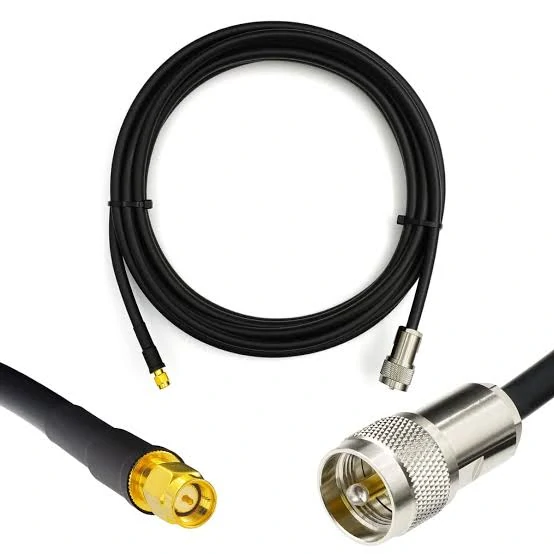
This SMA to PL259 adapter cable is designed for radio antenna applications where flexible connection is required. The cable assembly helps connect compact SMA-equipped devices with larger PL259 coaxial antenna cables while reducing stress on small RF ports.
A radio antenna adapter may look mechanically simple, but it still sits insde the RF path.
Most radio antenna systems use 50 ohm hardware. That means the radio port, adapter, coax cable, antenna feed, and any intermediate jumper should be kept in the same impedance path unless the system has been intentionally designed otherwise.
A random coax adapter from a TV, video, or CATV accessory bin may fit part of the connection but still be the wrong RF part. Many video and broadcast coax products are 75 ohm. Some low-cost adapters do not state impedance at all. That is not a good starting point for an antenna system where SWR or return loss matters.
Keep the antenna, adapter, cable, and radio in one impedance path
The adapter should not be used to hide an unclear system. If the radio is 50 ohm and the antenna system is 50 ohm, specify a 50 ohm adapter. If the coax type is known, include it in the inquiry.
A practical request may look like this:
“SMA male to SO239 female radio antenna adapter, 50 ohm, for VHF/UHF handheld radio connection to PL259 coax cable. Cable side may be RG58 or RG8X. Low mechanical stress preferred.”
That is not long. It gives the supplier much more than a photo or a short keyword.
Avoid using random coax adapters in RF antenna systems
A continuity meter can confirm that the center conductor connects through the adapter. It can also confirm that the shield connects through the adapter and that the center is not shorted to the shield.
That does not prove RF performance.
At low frequency, a marginal adapter may seem acceptable. Near the upper part of a working band, mismatch, contact geometry, loose fit, or excessive adapter stacking can start to matter. A radio user may see high SWR. An SDR user may see weaker signals or unstable readings. A test engineer may see poor return loss on a VNA sweep.
The failure may be blamed on the antenna first. Sometimes the adapter stack is the quieter problem.
| Symptom After Adapter Change | Possible Adapter-Related Cause | Recommended Check |
| SWR increased | Wrong impedance or poor contact | Inspect adapter, retest with known-good part |
| Signal became weak | Loss from stacked adapters or loose shield | Reduce adapter count and check cable |
| Reading changes when moved | Mechanical stress on SMA or UHF side | Use jumper cable or strain relief |
| VNA result looks unstable | Poor repeatability or dirty contacts | Clean contacts and re-sweep |
| Connector will not mate fully | Wrong gender or damaged threads | Compare pin/socket and thread condition |
A single adapter is not automatically a problem. Stacked adapters are more suspicious. Each added interface creates another place for mismatch, loss, loose contact, and handling damage.
Check SWR when changing antenna adapter hardware
For transmit systems, SWR is one of the fastest practical checks after changing adapter hardware. It does not identify every cause, but it can show that the RF path changed.
If SWR rises after installing a new adapter, do not assume the antenna suddenly changed. Check the adapter direction, connector tightness, center contact condition, shield contact, and cable movement. Also check whether the adapter is being pulled sideways by a heavy coax cable.
For receive-only SDR work, return loss may be less critical than in transmit use, but it still affects system behavior. If the receiver is used for comparison testing, repeatability matters. A loose adapter can make one antenna look worse than another when the real problem is the connection.
When Should You Use a Radio Antenna Adapter Instead of a Jumper Cable?
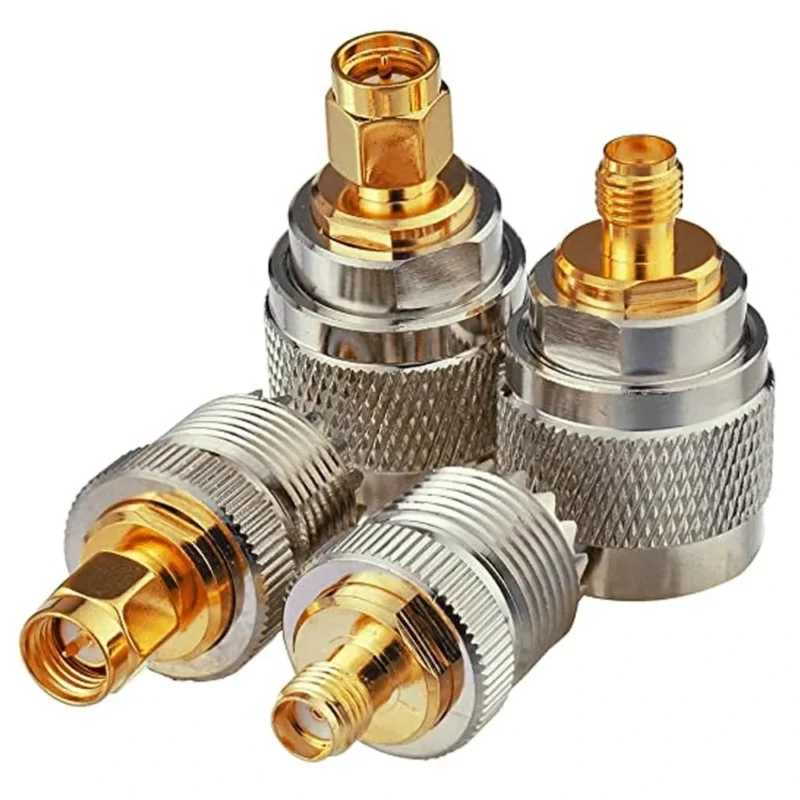
A rigid adapter is useful when the connection is short, straight, and low-stress.
A jumper cable is better when the cable is heavy, the equipment moves, or the connector is small. This is especially true when a large PL259 coax cable must connect to a small SMA handheld radio or SDR input.
The choice is not only about RF loss. It is also about protecting the port.
Use a rigid adapter for short, aligned, low-stress connections
Rigid adapters work well on the bench. They are compact, fast to install, and easy to remove. For temporary testing, a short SDR setup, or a light antenna lead, an adapter can be the cleanest solution.
They also reduce cable clutter. If the radio, adapter, and antenna lead are aligned without side pressure, the mechanical risk is low.
Use a jumper cable when the antenna cable is heavy or stiff
A jumper cable gives the system flexibility. It moves the weight away from the device port and allows the large coax to be supported separately.
This matters for handheld radios, small SDR receivers, portable instruments, and panel-mounted modules. The SMA interface was not meant to carry the leverage of a stiff outdoor coax cable.
| Condition | Better Choice | Reason |
| Handheld radio to large PL259 coax | Jumper cable | Reduces stress on the SMA port |
| SDR receiver on a bench | Rigid adapter | Compact and easy to test |
| Outdoor antenna feed | Jumper cable | Better strain relief and routing |
| Temporary ham radio test | Adapter | Fast conversion with low handling time |
| Repeated field use | Cable assembly | More durable than stacked adapters |
| Unknown connector direction | Inspect first | Avoid ordering the wrong mating side |
A buyer may still choose a rigid adapter for cost, stock availability, or space. That is fine when the mechanical conditions are controlled. For long-term use, a short custom jumper often prevents the more expensive failure: a damaged radio port.
How Do You Match a Radio Antenna Adapter With Coax Cable?
The coax cable often decides whether a rigid adapter is enough or whether a short jumper cable is the safer part.
A light RG58 jumper connected to an SMA radio creates a very different load from a thick RG213 or LMR-type feed line hanging from the same port. Both may end in a PL259 plug. Both may need an SMA-side conversion. Mechanically, they are not equal.
Match adapter choice with RG58, RG8X, RG213, or LMR cable needs
A PL259 cable on RG213, RG8, or LMR400 can pull on a small SMA port. The RF path may still pass continuity, but the connector body can loosen after repeated movement.
| Cable Situation | Better Choice | Reason |
| RG58 short jumper | Rigid adapter may work | Low weight and easier routing |
| RG8X antenna lead | Check case by case | Moderate stiffness |
| RG213 / LMR400 feed line | Jumper cable | Reduces SMA port stress |
| Outdoor antenna feed | Jumper cable | Better strain relief |
| Repeated field use | Cable assembly | More durable than stacked adapters |
The front connector does not tell the full story. A PL259 plug on a short jumper and a PL259 plug on a stiff outdoor cable may need different handling.
Avoid using adapter selection to hide an unclear cable specification
If the cable type, connector gender, radio port, or antenna side is unclear, do not order by photo only. Ask for both mating sides, including the center contact. If possible, confirm the cable marking on the jacket.
For transmit systems, also ask for the operating band. For receive-only SDR setups, ask whether the adapter will be moved often. A stationary SDR bench can accept a simpler adapter than a portable radio kit used outdoors.
How Do Radio Antenna Adapters Compare With Other RF Adapter Families?
A radio antenna adapter is part of the RF adapter family, but its selection logic is more field-oriented.
A lab adapter may be chosen mainly by interface, frequency rating, and return-loss repeatability. A radio antenna adapter also has to deal with cable weight, legacy connector names, and user habits around PL259, SO239, and “UHF” wording.
SMA adapters are common on compact radios, SDR receivers, RF modules, and small test devices. BNC adapters are useful when fast connection and disconnection matter. N Type adapters are more common in larger outdoor or higher-power antenna systems. UHF-family adapters, including PL259 and SO239 sides, remain common in ham radio, CB, antenna tuners, and legacy radio equipment.
The practical rule is simple: use the adapter family that matches the installed hardware, not the name that sounds closest.
How Can You Test a Radio Antenna Adapter Before Field Use?
A radio antenna adapter does not need a full lab report for every casual installation. Still, three checks catch most avoidable problems.
First, inspect the interface. Confirm SMA male or female, standard SMA or RP-SMA if relevant, and whether the UHF-family side mates with PL259 or SO239. Check threads, plating, center contact condition, loose body parts, and contamination.
Confirm center continuity, shield continuity, and center-to-shield isolation. This does not prove RF performance, but it catches opens, shorts, and obvious assembly defects.
Third, test in the real antenna band when the setup is used for transmit or repeatable measurement. For radio systems, check SWR after changing adapter hardware. For engineering or SDR comparison work, a VNA sweep can help verify return loss and repeatability.
Use this simple acceptance checklist when the adapter will be stocked or used repeatedly:
| Item | Record |
| Adapter Direction | SMA / PL259 / SO239 / UHF |
| SMA Side | Male / Female / RP-SMA |
| UHF Side | PL259 / SO239 |
| Impedance | 50 ohm |
| Cable Type | RG58 / RG8X / RG213 / LMR |
| Test Result | SWR / return loss / continuity |
| Mechanical Stress | Low / Medium / High |
| Final Status | Accept / Replace |
A part can pass continuity and still be wrong for the RF path. That is why visual inspection and RF-band testing should not be replaced by a meter check alone.
How Do You Specify the Right Radio Antenna Adapter for Procurement?
A good RFQ is short, but it must not be vague.
“Radio antenna converter” is not enough. “SMA to UHF” is better, but still incomplete. The supplier still needs the actual mating direction.
A stronger request looks like this:
SMA male to SO239 female radio antenna adapter, 50 ohm, for connecting an SMA female handheld radio to a PL259 coax cable.
Another example:
SMA female to PL259 male adapter, 50 ohm, straight body, for connecting an SMA male device lead to an SO239 panel socket.
For procurement, include these fields when possible: SMA gender, standard SMA or RP-SMA, PL259 or SO239 side, impedance, body style, frequency band, cable type, application, quantity, and packaging label requirements.
Packaging labels matter more than many buyers expect. Small RF adapters look similar after unpacking. Clear labels reduce warehouse mix-ups and repeat-order mistakes.
Why Are Radio Antenna Adapters Still Useful for SDR, Ham, and Field Setups?
Radio equipment is mixed by nature. One bench may include an SDR receiver, handheld radio, antenna analyzer, PL259 coax cable, SMA antenna, BNC lead, and N Type outdoor feed.
Adapters keep these systems flexible. They are useful for temporary testing, antenna experiments, emergency kits, and mixed radio benches. For permanent installations, fewer interfaces are usually better. If the coax is heavy or the equipment moves, choose a short jumper cable or custom cable assembly instead.
FAQ
Can I connect an SMA radio to a PL259 antenna cable?
Yes, but confirm the direction. A PL259 cable plug usually needs to mate with an SO239/UHF female side. Also check SMA gender, 50 ohm impedance, and cable strain.
What is the difference between PL259 and SO239?
PL259 usually refers to the cable-end plug. SO239 usually refers to the socket or jack on a radio, panel, tuner, antenna feed point, or adapter.
Should I use an adapter or a jumper cable for a handheld radio?
Use a rigid adapter for short, light, aligned connections. Use a jumper cable when the coax is heavy, stiff, or likely to pull on the SMA port.
Will an antenna adapter change my SWR?
It can. Wrong impedance, loose contact, damaged threads, poor shield contact, or stacked adapters can increase SWR or make readings unstable.
Final Buying Guidance
Order the adapter from the real connection, not from a loose keyword. Check the radio port, antenna cable connector, SMA or RP-SMA polarity, PL259 or SO239 direction, impedance, cable weight, and operating band.
For TEJTE sourcing, send connector photos, cable type, frequency band, quantity, and application. If the connection will be moved often or used with heavy coax, ask whether a jumper cable is safer than a rigid radio antenna adapter.