
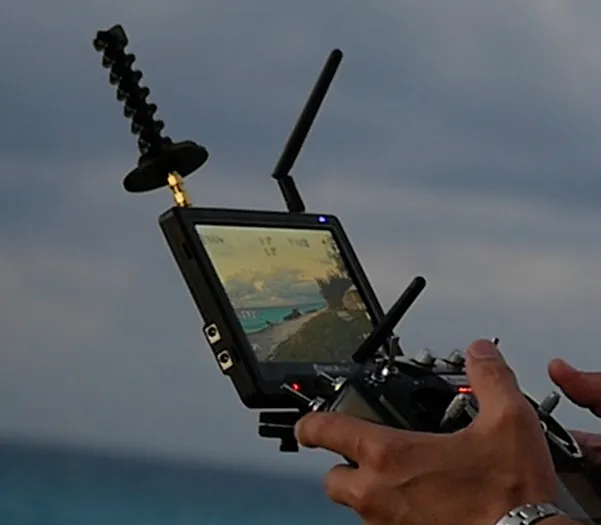
RHCP Antenna for FPV Video Links
Mar 30,2026

This figure shows a small FPV drone resting on a workbench. The video transmitter (VTX) is visible, with a 5.8GHz antenna mounted on it. The image highlights that while the drone appears ready for flight, the antenna is often overlooked during setup. Once the pilot moves away, signal breakup—flicker, noise, or blackouts—often traces back to an antenna mismatch or poor placement rather than the VTX or camera. The scene emphasizes the antenna’s critical role in the real-world RF link.
A quad comes back from a quick test flight.
On the bench, the video looked stable. Clean feed, no obvious breakup.
In the air, though, the image starts tearing the moment the drone yaws past a few buildings.
Nothing else changed. Same VTX. Same goggles. Same channel.
Someone eventually notices the antennas: one marked RHCP, the other LHCP.

This figure shows a small FPV drone resting on a workbench. The video transmitter (VTX) is visible, with a 5.8GHz antenna mounted on it. The image highlights that while the drone appears ready for flight, the antenna is often overlooked during setup. Once the pilot moves away, signal breakup—flicker, noise, or blackouts—often traces back to an antenna mismatch or poor placement rather than the VTX or camera. The scene emphasizes the antenna’s critical role in the real-world RF link.
Start with the link direction before you pick RHCP
The label on the antenna is the last thing that should drive the decision.
What matters first is where that antenna sits in the link.
Map the aircraft side and the receiver side separately
It sounds obvious until you see how often it gets skipped.
The aircraft side is usually constrained by weight, mounting angle, and crash exposure. The receiver side—goggles or ground station—has different priorities: stability, coverage pattern, and sometimes diversity setups.
A stubby RHCP antenna on the drone might be fine.
The same antenna on a ground station might limit range or coverage.
Treat both ends independently before trying to “match” them.
Decide whether you are building for racing, freestyle, whoop, or mid-range flight
Not all FPV setups stress the link the same way.
- Racing builds care about low latency and tight proximity
- Freestyle setups see more orientation changes and obstacles
- Whoops push extreme weight and space limits
- Mid-range flights expose cumulative link weaknesses
The antenna choice follows those constraints more than the polarization label.
Check where RHCP actually solves a problem in FPV video links
RHCP shows up everywhere in 5.8GHz FPV for a reason, but it’s not a universal fix.
It helps in places where linear antennas struggle:
- reflections off buildings
- rapid orientation changes during flips or dives
- mixed signal paths in urban environments
That’s where circular polarization starts to matter. Instead of relying on a fixed alignment, it tolerates rotation and multipath better.
If your link issue isn’t coming from those factors, switching to RHCP alone won’t change much.
Why does RHCP antenna show up so often in FPV setups?
Walk into any FPV group session and most pilots will be running RHCP by default.
That doesn’t mean it’s always the better choice—it just means it avoids a common failure mode.
Compare RHCP with LHCP without turning it into a theory lecture
At a practical level, RHCP and LHCP behave the same when matched.
The difference shows up when they’re mixed.
| Pairing | Result in real FPV use |
|---|---|
| RHCP to RHCP | Expected performance |
| LHCP to LHCP | Same as RHCP when matched |
| RHCP to LHCP | Significant signal loss, unstable video |
The last case is the one that quietly breaks links.
No warning, no obvious hardware failure—just reduced range and inconsistent signal.
Explain how circular polarization helps with reflections and attitude changes
In an FPV flight, the drone rarely stays aligned.
It rolls, yaws, and pitches constantly.
Linear antennas depend on alignment. Circular ones don’t.
That’s the core advantage of circular polarization (circular polarization)—the signal stays usable even when orientation changes.
Reflections behave differently too.
Reflected signals often reverse polarization. A circular antenna can reject some of that unwanted energy, which helps reduce ghosting and noise in analog systems.
Separate “common default” from “always better”
RHCP became the default partly because it reduces coordination problems.
If a group of pilots all use RHCP, they avoid accidental mismatches when sharing goggles or receivers.
That convenience often gets mistaken for technical superiority.
There are cases where LHCP is deliberately chosen—especially in crowded RF environments—but only when the entire link is planned around it.
Match RHCP and LHCP before you compare gain numbers
Spec sheets can distract from the real issue.
People compare gain, bandwidth, or even marketing terms like “long range” before confirming polarization. That sequence leads to expensive mistakes.
Check what happens when the drone uses RHCP and the goggles use LHCP
The link still works—but poorly.
You’ll often see:
- shorter usable range
- sudden signal drops when turning
- inconsistent behavior between flights
This isn’t a subtle effect. It’s a structural mismatch in the RF chain.
Decide when both sides should stay RHCP
Most setups benefit from staying consistent:
- shared goggles across multiple pilots
- standard 5.8GHz analog systems
- general-purpose freestyle builds
RHCP becomes a practical baseline. Not because it’s inherently superior, but because it avoids coordination errors.
Know when LHCP is a deliberate choice instead of a mistake
LHCP isn’t wrong. It’s just less common.
Some teams use LHCP intentionally to separate themselves from nearby RHCP users. But that only works if every part of the link stays consistent.
Mixing them by accident is where problems start.
Read circular polarization specs without over-trusting the label
Not every antenna labeled “RHCP” behaves the same in practice.
The differences are often mechanical before they’re electrical.
Use axial-ratio language only where it changes the buying decision
Axial ratio gets mentioned a lot, but most buyers don’t need to chase decimal points.
What matters is whether the antenna maintains circular behavior across the band you’re using—typically around 5.8GHz.
If that performance falls apart outside a narrow range, the label doesn’t help much.
Check whether the housing and antenna form factor fit compact FPV builds

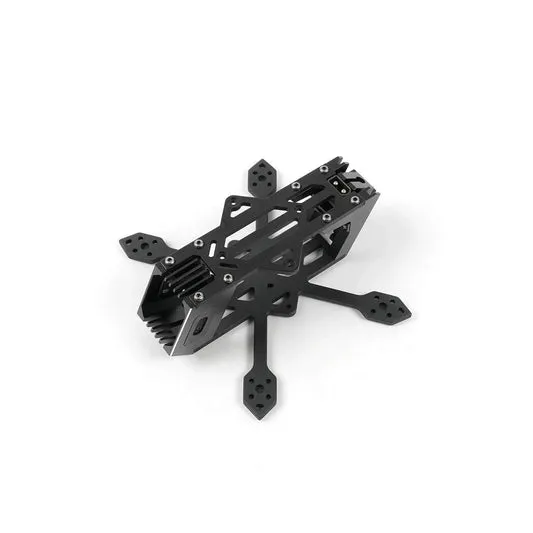
This image shows a close-up of a small FPV drone frame. The antenna is mounted near the camera, and the image highlights the limited space available. The camera tilt angle is indicated, showing how the antenna may lean back into the frame or props if too long. The text notes that a compact omnidirectional antenna is often the most practical choice for such builds because it fits without creating new clearance problems.
This is where real-world constraints show up.
A long exposed antenna might measure well on paper, but:
- it can get clipped by props
- it may flex under airflow
- it often breaks during crashes
Shorter “stubby” designs trade some performance for survivability. In many builds, that trade makes more sense.
Distinguish true FPV circular-polarized designs from generic omni antennas
A common sourcing mistake: buying a generic omnidirectional antenna and assuming it behaves like an FPV antenna.
They may look similar externally, but internally they’re built differently.
If the antenna isn’t designed for circular polarization, labeling alone doesn’t make it suitable for FPV video links.
Verify the connector side before you trust the polarization side
Plenty of RHCP setups fail for a simpler reason: the antenna doesn’t actually match the connector.
Threads fit. The antenna screws on. Everything looks correct.
Then the center contact never mates—or worse, it barely touches and creates an intermittent link.
Polarization doesn’t matter if the RF path is already broken.
Distinguish SMA from RP-SMA in under five seconds
This is still one of the most common sourcing errors in FPV builds.
SMA and RP-SMA look almost identical from the outside. The difference is inside:
- SMA: male = pin, female = socket
- RP-SMA: reversed center contact
A quick visual check usually avoids the mistake:
- If the antenna has a visible pin → check what the VTX expects
- If the port has a pin → the antenna must have a socket
If you need a fast reference, the differences are explained clearly in this SMA vs RP-SMA quick ID for antenna orders guide.
Check center pin and socket details on VTX and goggles
Don’t check just one side.
A typical FPV setup has at least two connection points:
- VTX (on the drone)
- receiver module or goggles
It’s not uncommon to see:
- correct antenna on the drone
- wrong connector on the goggles
That mismatch doesn’t always show up immediately. Sometimes it appears after a crash or after the connector loosens slightly.
Avoid adapters that fix the thread but add new mechanical problems

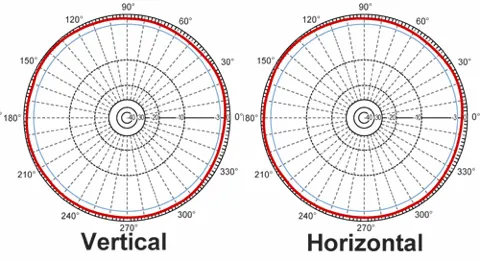
This figure illustrates a typical radiation pattern of a compact omnidirectional antenna. The pattern is mostly spherical but shows small dips or nulls in certain directions. The image is annotated with “98% coverage” and highlights the weak spots. It explains that marketing claims of high coverage can be misleading; in flight, when the drone changes orientation or passes behind obstacles, signal may drop at those angles. The takeaway is to prioritize real-world testing over spec-sheet percentages.

Adapters solve one problem and introduce another.
They help when:
- the connector type is wrong
- the thread standard doesn’t match
But they also:
- add another RF interface (extra loss)
- increase leverage on the connector
- create stress during crashes
A short flexible cable often works better than stacking adapters. If you’ve dealt with connector transitions before, you’ll recognize the same pattern discussed in many RF adapter cables setups—mechanical stability matters as much as electrical continuity.
Choose the antenna shape that fits your airframe, not just your wishlist
Two antennas can share the same RHCP label and behave very differently once installed.
Most of that difference comes from how they sit on the airframe.
Decide when a stubby RHCP antenna is better for a small quad
Stubby antennas don’t win on raw range.
They win on survivability and fit.
On smaller builds:
- less leverage during crashes
- easier to keep within frame profile
- reduced chance of hitting props
That trade-off often makes them the safer choice for whoops and tight freestyle builds.
Check clearance, prop wash, and camera tilt before finalizing the mount
This part usually gets ignored until the first flight.
Then you see:
- props clipping the antenna
- signal fluctuations during throttle changes
- interference from carbon frame elements
Antenna placement is not just about “pointing upward.”
It’s about staying clear of rotating blades, airflow turbulence, and conductive materials.
Use crash exposure and replacement frequency as real selection inputs
In FPV, antennas are consumable parts.
Some builds go through them quickly:
- aggressive freestyle
- tight urban flying
- indoor racing
Others don’t.
That reality changes the buying logic:
| Factor | Low crash exposure | High crash exposure |
|---|---|---|
| Antenna type | Standard RHCP | Stubby / Reinforced |
| Mounting | Semi-rigid OK | Flexible preferred |
| Replacement cost sensitivity | Low | High |
Build a pass-fail RHCP selection sheet
At some point, most RHCP antennas start to look the same.
Same frequency range. Same polarization label. Similar product photos.
That’s where a quick filtering method helps more than another spec comparison.
Score the link fit before you score the product
Instead of comparing antennas directly, evaluate how well they fit your link.
That means checking:
- polarization alignment
- connector compatibility
- mounting constraints
- flight style
Only after that should you compare product-level differences.
Apply a simple red-flag check before you place the order
A few quick checks eliminate most bad purchases:
- mismatch between RHCP and LHCP
- unclear connector type (SMA vs RP-SMA)
- antenna size incompatible with frame
- unrealistic gain claims for compact designs
These aren’t subtle issues. They’re immediate disqualifiers.
RHCP FPV Link Fit Matrix
| Field | Example Input |
|---|---|
| Use case | Freestyle |
| Video band | 5.8GHz |
| Aircraft or receiver side | Aircraft |
| Polarization planned | RHCP |
| Mating side polarization | RHCP |
| Connector family | SMA |
| Center contact | Socket |
| Form factor | Stubby |
| Weight sensitivity | High |
| Crash exposure | High |
| Mount clearance risk | Medium |
| Recommendation | Use |
Fit Score formula:
Fit Score =
Polarization Match (35) +
Connector Match (20) +
Mount Clearance (15) +
Crash Suitability (10) +
Weight Fit (10) +
Flight Style Fit (10)
Interpretation:
- 85–100 → strong fit, low risk
- 70–84 → workable, verify installation
- below 70 → not worth ordering
This kind of scoring avoids a common trap: buying a “better” antenna that doesn’t actually fit the build.
Watch where RHCP FPV antenna design is heading next
The direction isn’t dramatic. No sudden jump in range or a new “must-have” spec.
Most improvements are quiet:
- antennas that survive more crashes before detuning
- housings that don’t loosen after repeated impacts
- lighter builds that don’t affect small quads
- more consistent performance across the 5.8GHz band
That last point matters more than it sounds. A lot of antennas perform well in a narrow slice of the band but degrade outside it. In real FPV use—especially when switching channels—that inconsistency shows up as unpredictable video behavior.
Note the shift toward lighter RHCP/LHCP antennas for micro whoops
Micro whoops pushed antenna design into a different constraint space.
The older approach—just shrink a standard circular antenna—doesn’t hold up well:
- weight becomes a flight penalty
- exposed elements break easily
- mounting becomes awkward
Newer designs move toward:
- integrated structures
- lower-profile housings
- minimal exposed elements
Some sub-1 gram antennas now maintain usable circular polarization without turning into fragile parts.
That doesn’t mean they outperform larger antennas.
They just stop being the weak link in small builds.
Follow research that combines low weight, omnidirectional coverage, and circular polarization

This figure illustrates a typical radiation pattern of a compact omnidirectional antenna. The pattern is mostly spherical but shows small dips or nulls in certain directions. The image is annotated with “98% coverage” and highlights the weak spots. It explains that marketing claims of high coverage can be misleading; in flight, when the drone changes orientation or passes behind obstacles, signal may drop at those angles. The takeaway is to prioritize real-world testing over spec-sheet percentages.

This figure illustrates a typical radiation pattern of a compact omnidirectional antenna. The pattern is mostly spherical but shows small dips or nulls in certain directions. The image is annotated with “98% coverage” and highlights the weak spots. It explains that marketing claims of high coverage can be misleading; in flight, when the drone changes orientation or passes behind obstacles, signal may drop at those angles. The takeaway is to prioritize real-world testing over spec-sheet percentages.
Recent antenna work—especially in compact drone systems—focuses on balancing trade-offs rather than maximizing a single parameter.
You’ll see designs targeting:
- consistent omnidirectional coverage
- acceptable axial ratio across the band
- mechanical durability under vibration
That combination is harder than it sounds.
An antenna that measures well in a controlled environment can behave differently once mounted on carbon fiber, surrounded by electronics, and exposed to prop wash.
This is also where the gap between generic omni antennas and true FPV antennas becomes obvious. If you compare them side by side, as outlined in this how generic omni antennas differ from FPV circular-polarized builds discussion, the internal structure—not just the shape—drives performance.
Where RHCP setups usually go wrong in real builds
Most issues don’t come from the antenna itself.
They come from how it’s used.
Some of these show up immediately. Others only appear after a few flights.
A setup that works on the bench but breaks in the air
Bench testing hides a lot of problems.
- the drone isn’t moving
- orientation stays fixed
- reflections are minimal
Once airborne:
- angles change constantly
- reflections multiply
- weak polarization alignment gets exposed
This is why a mismatched RHCP/LHCP setup can look “fine” on the bench but fail mid-flight.
Connector stress that slowly degrades the link
After a crash, the antenna might still be attached.
That doesn’t mean the connection is healthy.
Common issues:
- center pin slightly bent
- connector loosened
- internal coax partially damaged
These don’t always cause a full failure.
They cause intermittent loss—harder to diagnose, easier to ignore.
Over-specifying the antenna while ignoring the system
Some builds end up with:
- high-gain antenna
- perfect polarization match
- solid connector
…but still poor video.
Because:
- VTX power is limited
- antenna placement is blocked
- receiver side isn’t optimized
The antenna becomes the most optimized part of an otherwise inconsistent system.
That imbalance shows up as unpredictable performance rather than clear failure.
Final pass: what actually matters before you install an RHCP antenna

This figure illustrates a typical radiation pattern of a compact omnidirectional antenna. The pattern is mostly spherical but shows small dips or nulls in certain directions. The image is annotated with “98% coverage” and highlights the weak spots. It explains that marketing claims of high coverage can be misleading; in flight, when the drone changes orientation or passes behind obstacles, signal may drop at those angles. The takeaway is to prioritize real-world testing over spec-sheet percentages.
Before installing, most experienced builders run through a quick mental checklist.
Not formal. Just practical.
- Do both ends use the same polarization?
- Are the connectors actually compatible—not just visually similar?
- Is the antenna shape appropriate for the frame and flight style?
- Will it survive more than a few crashes?
- Is placement clear of props and major obstructions?
If those checks pass, the rest—gain numbers, branding, small spec differences—rarely change the outcome in a meaningful way.
The RHCP label helps—but only inside a system that’s already aligned.
Most problems come from assuming that label alone guarantees performance.
It doesn’t.
What matters is how that antenna fits into the link you’re actually building.
FAQ: RHCP Antenna in FPV Video Links
Can an RHCP antenna improve an FPV link if the receiver side is still LHCP?
Not in any meaningful way.
The link will still “work,” but you’re effectively throwing away a large portion of the signal. In some cases, it feels usable at close range, which is why this mistake goes unnoticed. Once distance or obstacles increase, the weakness shows up quickly.
If only one side is RHCP, changing the other side usually delivers a bigger improvement than upgrading the antenna itself.
Why does an RHCP antenna sometimes feel fine on the bench but fail in flight?
Because the bench removes most of the real variables.
On the bench:
- fixed orientation
- minimal reflections
- short distance
In flight:
- constant rotation
- multipath reflections
- changing signal paths
A weak polarization match or marginal antenna design gets exposed only when those variables come into play.
Can a generic omnidirectional antenna replace an RHCP FPV antenna at 5.8GHz?
It can connect. It won’t behave the same.
Generic omni antennas are usually linearly polarized. That means:
- more sensitivity to orientation
- worse handling of reflections
- less stable video in dynamic flight
They may work for short-range or static setups, but they’re not a direct substitute for FPV circular polarized designs.
Why do connector adapters make RHCP setups harder to trust after a crash?
Because they introduce leverage.
An adapter adds length and rigidity to the connection. During a crash, that extra leverage gets transferred directly into:
- the connector
- the VTX port
- the antenna base
Even if nothing breaks immediately, small shifts can degrade the RF connection over time. A short flexible cable often survives better in repeated impacts.
Is RHCP still the safer default if several pilots share the same goggles?
Yes, in most casual or shared environments.
Standardizing on RHCP avoids accidental mismatches when:
- swapping drones
- sharing goggles
- testing multiple builds
It’s not about RHCP being better—it’s about reducing coordination errors across the group.
Bonfon Office Building, Longgang District, Shenzhen City, Guangdong Province, China
A China-based OEM/ODM RF communications supplier
Table of Contents
Owning your OEM/ODM/Private Label for Electronic Devices andComponents is now easier than ever.
