
RF Adapter Cable Guide for RG316
Feb 22,2026
Map RF adapter cables into your signal chain
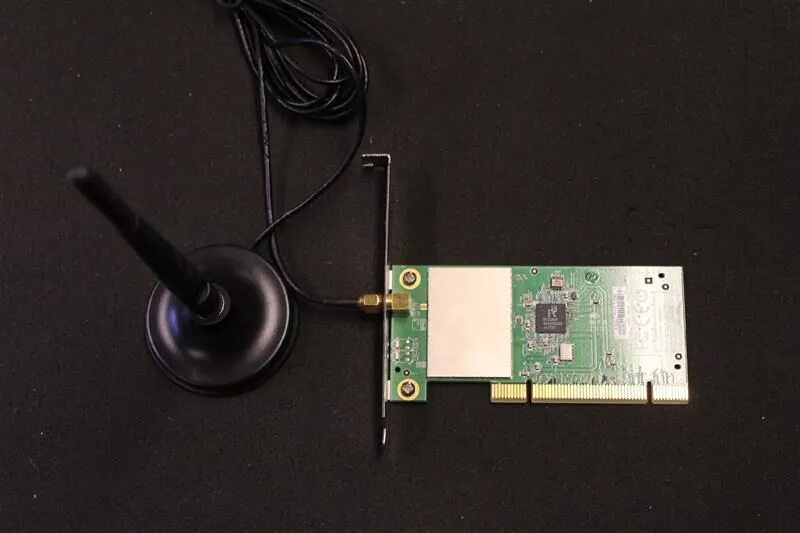
This figure illustrates where an RF adapter cable typically sits in a system: between an RF module and an antenna. It emphasizes that adapter cables are not neutral accessories; they contribute to insertion loss, impedance matching, and long-term stability once installed.
In many RF systems, adapter cables don’t show up on the first schematic. The radio already links. The antenna choice feels “locked.” Early bench tests pass using whatever cable happens to be available. Only later—during enclosure design, regulatory testing, or field deployment—does the rf adapter cable become a conscious decision.
That timing is deceptive. An adapter cable is not neutral hardware. Once installed, it becomes part of the RF signal chain, shaping insertion loss, impedance continuity, and even mechanical reliability over time. Engineers who treat it as a disposable accessory often discover its impact only after numbers start drifting.
This guide treats RF adapter cables the same way experienced RF designers treat filters and connectors: as signal-path elements that deserve to be mapped, not improvised.
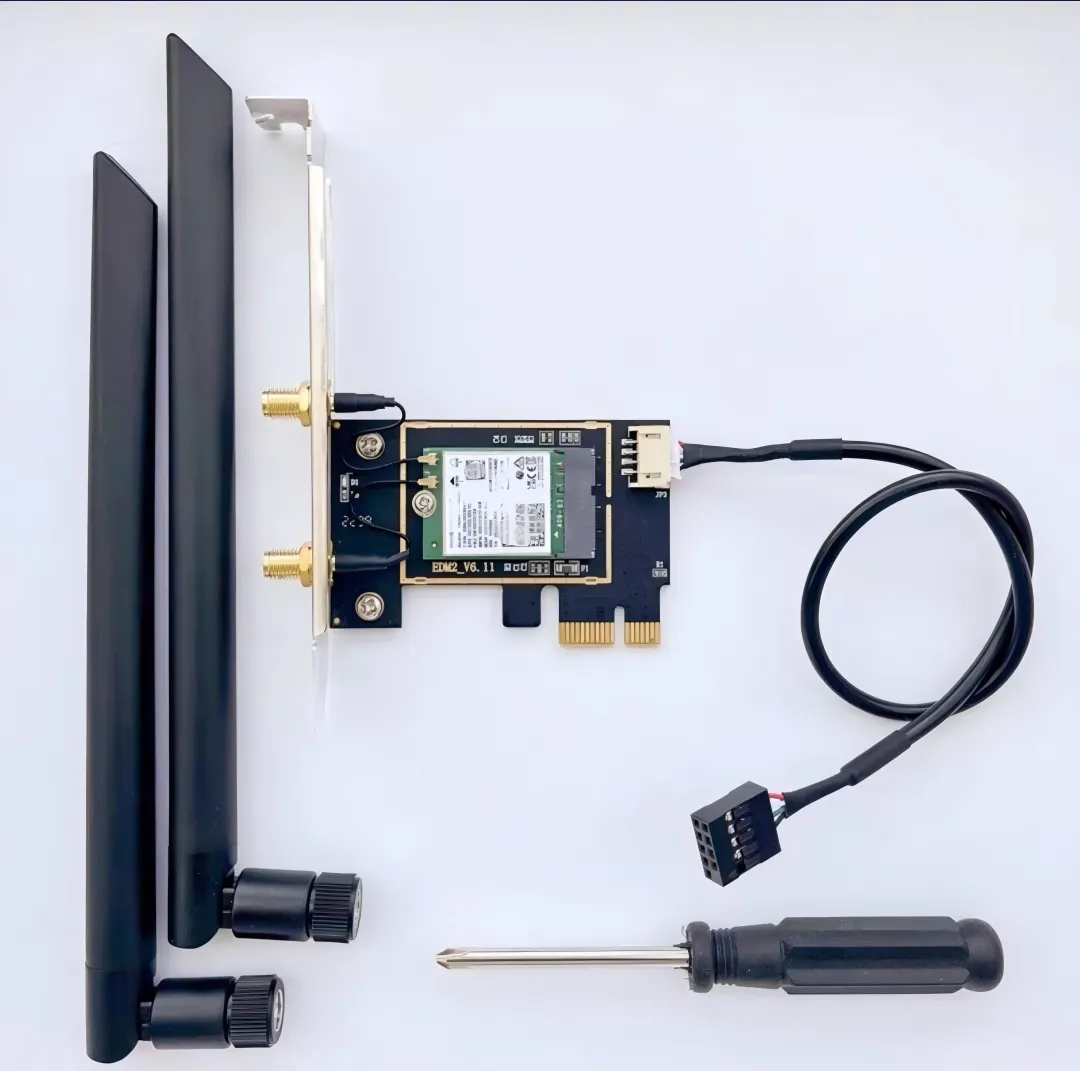
This block diagram shows a practical RF signal chain in embedded and test systems. It highlights the role of the adapter cable as a transition between board-level connectors (often MMCX or MCX) and panel-mounted connectors (typically SMA), where mechanical stress and impedance transitions accumulate.
Clarify where RF adapter cables sit in the RF path
A practical RF signal chain in embedded and test systems usually looks like this:
RF module → board connector → RF adapter cable → panel connector → antenna
The adapter cable sits at the boundary between two worlds. On one side, you have board-level RF interfaces optimized for size and routing. On the other, you have external connectors built for torque, strain relief, and repeated handling.
That boundary role is why adapter cables matter. This is where impedance transitions stack, where mechanical stress accumulates, and where small losses quietly eat into link margin. Once installed, the adapter cable influences system behavior just as much as the antenna feed itself.
If you zoom out and look at the system from a cable-centric perspective—as outlined in our broader RG cable guide—adapter assemblies are simply one way raw coax becomes a usable RF interconnect.
Distinguish adapter cables from bulk RF coax and pigtails
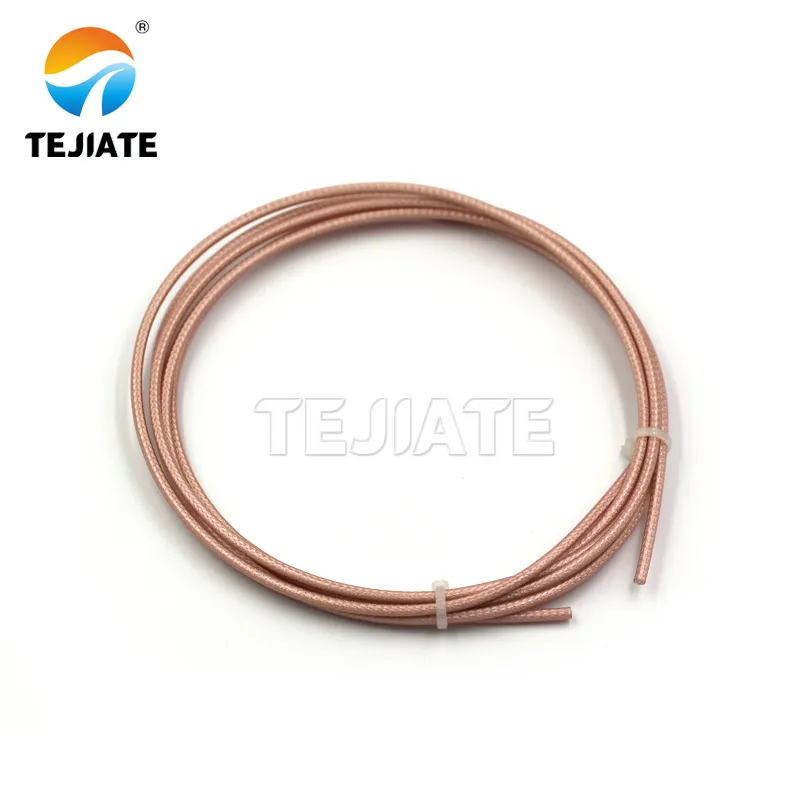
This image shows a section of RG316 coaxial cable, featuring a PTFE dielectric, silver-plated conductors, and braided shielding. Its small diameter (approx. 2.5 mm) and ability to tolerate repeated bending make it a common choice for short adapter runs in labs and compact enclosures.
- Bulk rf coaxial cable
Supplied by the meter or reel, bulk coax is raw material. It’s designed to be cut, stripped, and terminated for harnesses or permanent runs. It offers flexibility in length, but little convenience during iteration.
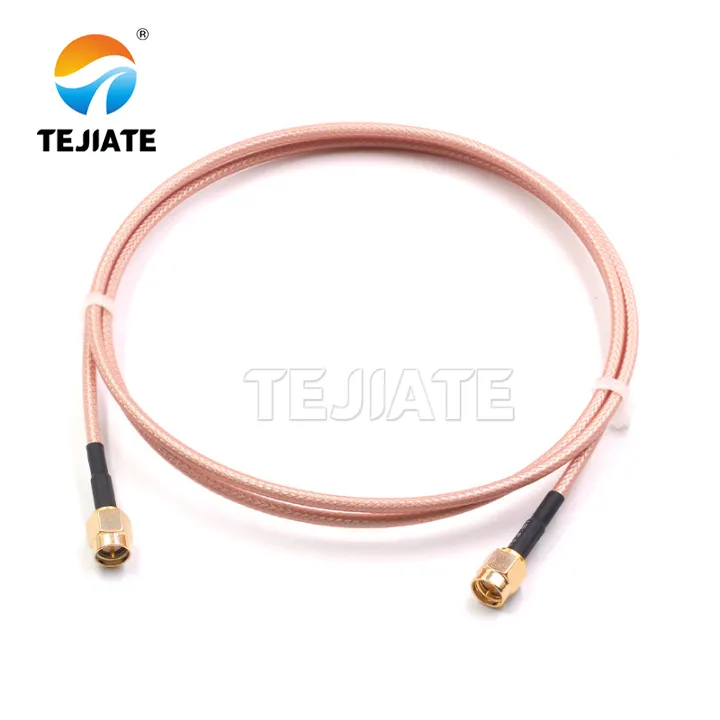
This photograph shows a pre-terminated SMA to SMA jumper cable built with RG316 coaxial cable. Both ends feature male or female SMA connectors, making it a versatile tool for interconnecting RF modules, antennas, and test equipment. Its flexibility and moderate loss suit short to medium runs.
- RF jumper cables
These are pre-terminated assemblies with the same connector on both ends, such as SMA-to-SMA. They dominate lab benches and racks where interfaces are already standardized.
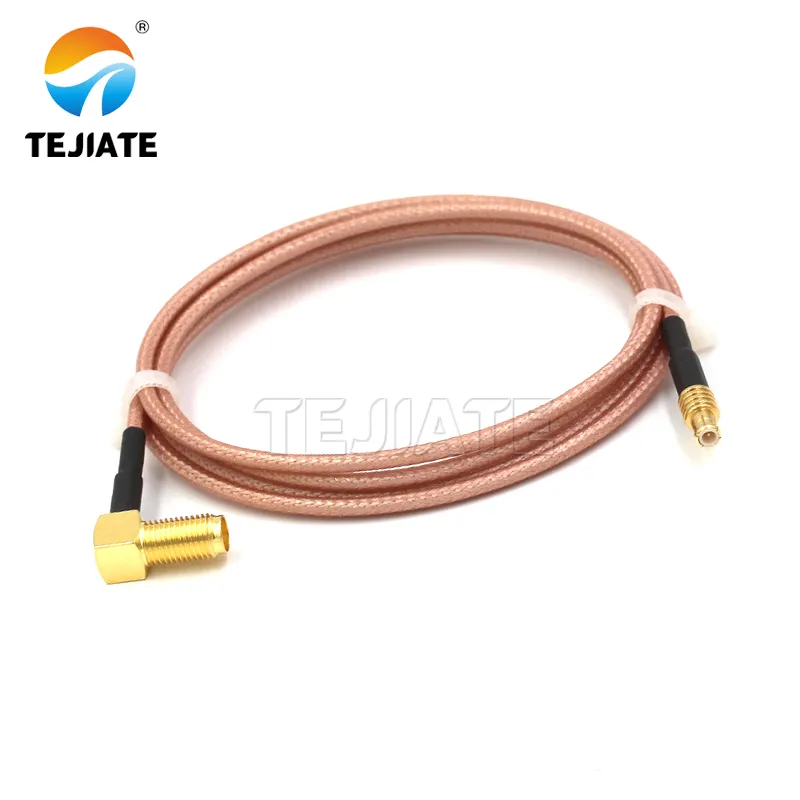
This image shows an MCX to SMA adapter cable using RG316 coax. One end has an MCX connector (often found on small RF modules), the other an SMA connector (common on antennas and test gear). Such cables enable easy integration without PCB redesign, but their mechanical limits—especially at the MCX end—must be respected.
- RF adapter cables
Adapter cables intentionally use different connectors on each end. Examples include SMA-to-BNC, MMCX-to-SMA, or MCX-to-SMA. Their job is to bridge interface mismatches without forcing redesigns.
The distinction matters. Adapter cables exist to preserve momentum during development and deployment. They solve connector problems quickly, but they also introduce new variables that need to be accounted for explicitly.
Summarize core use cases across lab, IoT, and telecom
Across projects, rf adapter cable usage tends to cluster into a few recurring environments.
In the lab, adapter cables convert between instrument standards. It’s common to adapt SMA-based radios to BNC oscilloscopes or signal generators rather than re-terminating every test lead. In these cases, short sma adapter cable assemblies keep setups flexible and repeatable.
In IoT and embedded devices, small RF modules expose connectors like MMCX or u.FL to save space. External antennas, however, almost always expect SMA. A short adapter cable bridges that gap cleanly, avoiding PCB rework. This pattern shows up repeatedly in designs that later scale to volume.
In telecom and infrastructure, adapter cables often support staged upgrades. Legacy connectors coexist with newer interfaces, and adapters keep systems interoperable while hardware transitions happen gradually.
In all three environments, the adapter cable solves a real problem—but only when its electrical and mechanical limits are understood upfront.
When should you use an RF adapter cable?
Solve connector mismatches without redesigning hardware
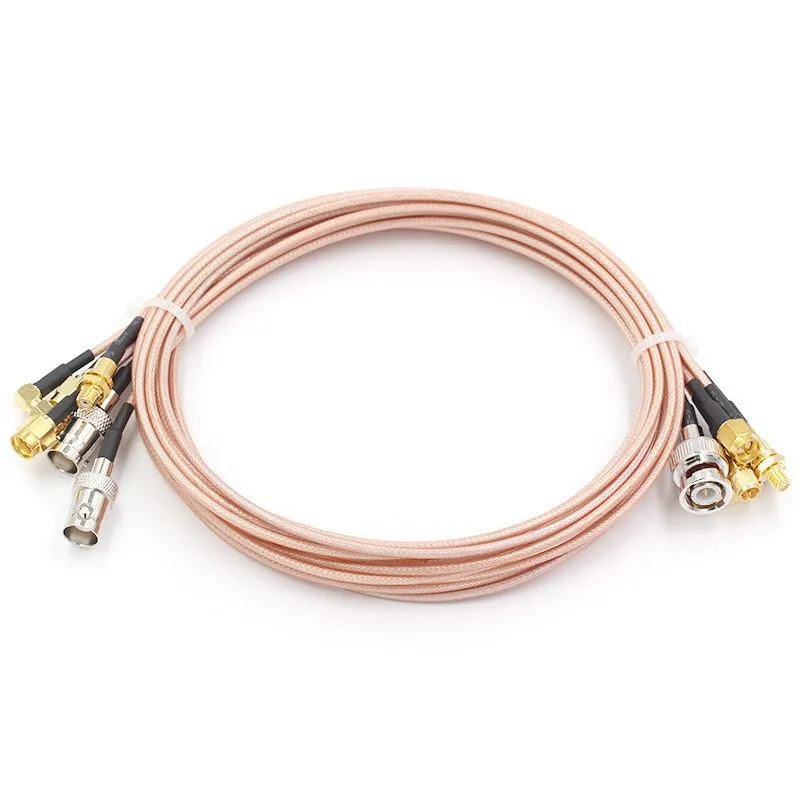
This figure depicts common connector families (SMA, BNC, N-type, MMCX) and shows how RF adapter cables with different end connectors can bridge mismatched interfaces. It serves as a visual reminder that while adapters are convenient, they should be used deliberately—especially in permanent installations—to avoid excessive loss and reliability issues.
The most obvious case is a connector mismatch late in the design cycle. A radio exposes SMA. The antenna uses N-type. A module offers MMCX, while your test setup assumes SMA. In these scenarios, an rf adapter cable is often the least disruptive option.
Compared with respinning a PCB or re-terminating coax, adapter cables are fast and reversible. They’re especially useful when hardware is already certified or deployed, where connector changes would ripple through compliance and documentation.
This is where combinations like sma to bnc cable or sma to n cable are practical tools rather than compromises. If you want to see how these choices affect measurements and handling, our step-by-step SMA to BNC cable selection guide walks through common lab scenarios.
Decide when a new antenna or radio is a better choice
Adapter cables are not free. Each one adds insertion loss, mechanical interfaces, and another potential failure point. In short runs, that cost is negligible. In marginal links, it isn’t.
If an adapter cable becomes long, permanently installed, or exposed to vibration and weather, switching to a radio or antenna with a native connector may be the better move. Fewer interfaces usually mean better repeatability and lower long-term maintenance.
This trade-off comes up frequently in Wi-Fi and cellular designs. Adding a sma adapter cable works well during development. For production, simplifying the connector path often pays off.
See how RF adapter cables enable GPS and asset tracking
Asset-tracking hardware is a textbook example of adapter cable value. Compact GPS modules frequently expose u.FL or MMCX connectors chosen for size, not durability. Field deployments, on the other hand, demand external antennas with SMA connectors and proper strain relief.
A short adapter cable bridges that gap. It allows designers to keep the small module footprint while routing the antenna outside a metal enclosure—without touching the RF layout.
If you’ve worked with MMCX-based modules before, you’ll recognize this pattern immediately. We break down the mechanical and RF implications of those connectors in more detail in our MMCX connector guide for RF modules and cables.
Track new RF adapter cable sets for modular test rigs
In shared lab environments, modularity matters. Sets of RG316-based adapter cables—covering SMA, BNC, MCX, and MMCX—allow teams to reconfigure benches quickly without rebuilding harnesses.
Over time, these adapter sets become part of the lab’s infrastructure rather than one-off accessories. When that happens, treating rg316 cable assemblies as consumables with defined inspection and replacement cycles becomes just as important as choosing the right connectors.
Choose cable types for RF adapter runs
Compare RG316 coaxial cable to RG174, RG58, and RG402
Among small-diameter options, rg316 coaxial cable occupies a useful middle ground. It’s thinner and more flexible than RG58, more rugged and temperature-tolerant than RG174, and far easier to route than semi-rigid RG402.
Here’s a focused comparison for adapter-length runs:
| Cable type | Approx. OD | Flexibility | Typical adapter use |
|---|---|---|---|
| RG316 | ~2.5 mm | High | Short adapter cables, IoT, lab jumpers |
| RG174 | ~2.8 mm | Medium | Lightweight internal links |
| RG58 | ~5 mm | Low | Higher-power bench cables |
| RG402 | ~3.6 mm | Very low | Fixed, semi-rigid paths |
This balance explains why rg316 cable shows up so often in adapter assemblies. It tolerates repeated bending and handling without the bulk of larger coax.
For a deeper technical breakdown—including loss curves and temperature limits—you can reference our RG316 coaxial cable guide.
Keep 50 ohm coaxial cable consistent in the chain
Most RF adapter cables are built around 50 ohm coaxial cable for a reason. Radios, antennas, and RF instruments overwhelmingly expect 50 Ω. Mixing impedances rarely causes immediate failure, but it does introduce reflections that quietly degrade performance.
Seventy-five-ohm coax still appears in video and TV systems. Problems arise when adapter cables bridge those worlds without clear intent. Understanding where rf coaxial cable impedance matters—and where it doesn’t—is essential before combining components from different domains.
Transition from ultra-mini RF1.13 jumpers to RG316
Ultra-mini jumpers like RF1.13 or RF0.81 are excellent on the PCB. They are far less forgiving once a cable leaves the board and starts moving.
A common pattern is to use a short RF1.13 jumper at the module, then transition to an RG316-based rf adapter cable for the external run. This approach keeps fragile connectors protected while giving the rest of the system a more mechanically stable feed.
It’s a small design choice, but one that often improves field reliability dramatically.
Match SMA, BNC, N, and mini RF connectors
Connector choice is where most RF adapter cable problems begin—or quietly end. On paper, many RF connectors look interchangeable. In practice, mechanical format, impedance control, and mating behavior all matter, especially once adapters start stacking up.
This section focuses on how common connector families behave in adapter cable form, not in isolation.
Map common SMA adapter cable patterns
The sma adapter cable family is the most widely used for a reason. SMA connectors are compact, threaded, and electrically stable well into the multi-GHz range. That makes them a natural bridge between lab equipment, embedded radios, and external antennas.
Common patterns include sma to bnc cable assemblies for lab instruments and sma to n cable assemblies for higher-power or outdoor antenna feeds. These combinations allow systems to evolve without forcing immediate connector standardization.
One practical lesson from field experience: SMA works best when it is the anchor connector, not the intermediate one. Adapter chains that start or end with SMA tend to be more stable than those where SMA sits between multiple transitions.
If you routinely adapt between SMA and BNC during testing, the workflow considerations are covered in more detail in our practical SMA to BNC cable usage guide.
Cover MCX to SMA cable and MMCX to SMA cable
Board-level RF modules often expose MCX or MMCX connectors because they save space and tolerate limited misalignment. External antennas and test gear, however, almost never use those formats directly.
That mismatch is where mcx to sma cable and mmcx to sma cable assemblies come in. Electrically, these transitions are straightforward when built with rg316 coaxial cable. Mechanically, they deserve more respect.
MCX and MMCX connectors are rated for fewer mating cycles than SMA. They also react more strongly to cable pull and rotation. Using an adapter cable shifts that stress away from the PCB, which is usually the right trade-off.
For background on why MMCX behaves the way it does—and where its limits really are—the general characteristics are well summarized in the MMCX connector overview.
Avoid risky adapter stacks and mixed impedances
Adapter stacking is tempting. A BNC-to-SMA adapter here, an SMA-to-N cable there, and suddenly everything “connects.” Electrically, though, each interface adds a small discontinuity.
One or two transitions rarely matter. Four or five start to. Return loss degrades, phase stability suffers, and measurements become sensitive to cable movement. The system still works, but margins shrink.
Impedance mismatches compound the problem. Mixing 50 Ω and 75 Ω components doesn’t usually cause a hard failure, but reflections accumulate. If you’re unsure where impedance boundaries lie, the fundamentals of coaxial impedance are clearly explained in the coaxial cable reference.
As a rule of thumb: if an adapter stack starts to feel “creative,” it’s probably time to rethink the interface.
Handle special transitions for Fakra, SMB, SMP, and M5
Automotive and industrial systems introduce additional connector families. Fakra brings color-coded mechanical keys and defined impedance control. SMB and SMP prioritize compactness and blind-mate capability. M5 connectors add vibration resistance in harsh environments.
Adapter cables involving these formats demand careful cable selection and strain relief. RG316 is often chosen because it balances flexibility with shielding, but routing and retention matter just as much as electrical specs.
These transitions are rarely interchangeable with lab-style SMA assemblies. Treat them as system-specific solutions, not generic adapters.
Control loss and power in RG316 adapter leads
Estimate attenuation for RG316 versus other cables
At adapter lengths, rg316 coaxial cable typically introduces modest loss. That’s why it’s so popular. Compared with RG174 and RG58, it offers a workable balance between diameter and attenuation.
Typical trends—not exact numbers—look like this:
| Cable | Relative loss @ 2.4 GHz | Typical adapter role |
|---|---|---|
| RG316 | Moderate | General-purpose adapters |
| RG174 | Higher | Very short internal runs |
| RG58 | Lower | Longer, higher-power links |
Add connector and adapter loss into the RF budget
Each connector interface introduces insertion loss, typically on the order of tenths of a decibel. That seems trivial until several are combined.
An rf adapter cable with two connectors already consumes part of the link budget. Add panel feed-throughs or stacked adapters, and losses accumulate quietly. Including adapter loss in the link budget upfront avoids unpleasant surprises later.
This is especially important in GPS, Wi-Fi 6E, and sub-6 GHz cellular systems where margins can be tight.
Respect power limits for small RF adapter cables
Power handling is often overlooked with small-diameter coax. RG316 handles modest RF power comfortably, but it is not a substitute for larger cables in high-power transmit paths.
At higher frequencies, dielectric heating becomes the limiting factor rather than conductor size. Short bursts may be fine. Continuous duty at elevated power is not.
If an adapter cable sits between a PA and an outdoor antenna, verify both cable and connector ratings explicitly.
Plan lengths and routing for tight enclosures
Set practical minimum and maximum jumper lengths
Very short adapter cables look clean on paper. In practice, they can transmit stress directly into connectors. Allowing a small service loop often improves reliability.
On the other end, long adapter runs add loss and act like unintended antennas inside enclosures. For rg316 cable, keeping adapter lengths purposeful—not arbitrary—helps preserve both electrical and mechanical margins.
Route RF adapter cables away from noise and heat
RF adapter cables don’t exist in isolation. They run past switching regulators, digital buses, and heat sources. Proximity matters.
Routing RG316 away from noisy power stages and hot components reduces coupling and slows material aging. These aren’t theoretical concerns; they show up as slow drift over months of operation.
Design strain relief and panel feed-throughs
Panel connectors are stress concentrators. Without strain relief, the adapter cable absorbs vibration, torque, and repeated handling.
Simple measures—tie-downs, gentle bend radii, and controlled connector torque—dramatically extend service life. In field systems, these details often matter more than the cable datasheet.
Compare RG316 with RG174, RG58, and other options
By the time an adapter cable becomes part of a shipped product or a long-term test setup, the discussion usually shifts. It’s no longer about whether the link closes. It’s about whether results stay stable after the enclosure is closed, reopened, moved, and tested again a month later.
This is where cable choice starts to matter more than connector labels.
Weigh RG316 vs RG174 in dense RF modules
RG174 often looks attractive at first glance. It’s thin, easy to route, and inexpensive. For short, internal runs that never move, it can be perfectly adequate.
The problems show up later. PVC jackets stiffen with heat. Shield coverage varies more than datasheets suggest. After a few enclosure reworks, impedance consistency becomes less predictable.
RG316 cable tends to behave better in these situations. The PTFE dielectric tolerates temperature cycling. The braid holds shape after repeated bends. None of this shows up in early measurements—but it shows up in long-term stability.
In dense RF modules where the adapter cable exits the board or touches the enclosure wall, rg316 coaxial cable is often chosen not because it is “better,” but because it is more forgiving.
Contrast RG316 with RG58 in test adapters
RG58 is familiar. It’s rugged. It handles power well. On an uncluttered bench, it works beautifully.
In practice, modern test benches are rarely uncluttered.
Thicker cables push on connectors. They pull sideways on small devices. Over time, that mechanical load changes how connectors sit, especially on lightweight DUTs.
Short rf adapter cable assemblies built with RG316 reduce that stress. They don’t replace RG58 for main feeds, but they make sense as intermediate adapters between instruments and small devices.
Many teams end up with both: RG58 where power and length matter, RG316 where handling and repeatability matter more.
Build a mini reference table for adapter families
| Cable | Approx. OD | Bend behavior | Typical adapter length | Where it shows up |
|---|---|---|---|---|
| RG316 | ~2.5 mm | Holds shape after bends | 10–50 cm | Lab adapters, IoT enclosures |
| RG174 | ~2.8 mm | Stiffens with heat | <20 cm | Internal jumpers |
| RG58 | ~5 mm | Resists bending | 30–100 cm | Bench feeds |
| RF1.13 | ~1.1 mm | Extremely fragile | <15 cm | Board-level only |
Use an RF adapter cable scorecard
Most adapter cable decisions are made informally. Someone grabs what fits. The system works. Documentation comes later—if at all.
A scorecard doesn’t make the decision perfect. It makes it repeatable.
Create an RF adapter cable selection matrix
This matrix is designed specifically for rf adapter cable decisions, not bulk cable planning.
Project context
- Application
- Frequency_band_GHz
- Environment (Indoor / Outdoor / Automotive / Industrial)
Interfaces
- Connector_A
- Connector_B
- Cable_type
- Required_impedance_ohm
Loss tracking
- Attenuation_dB_per_m
- Length_m
- Cable_loss_dB = Attenuation_dB_per_m × Length_m
- Connector_count
- Connector_loss_dB = Connector_count × 0.15
- Total_loss_dB
System margin
- Allowed_link_loss_dB
- Margin_dB = Allowed_link_loss_dB − Total_loss_dB
Qualitative scores
- Flexibility_score (1–5)
- Ruggedness_score (1–5)
- Cost_score (1–5)
Overall_score
0.4 × Margin_score
+ 0.3 × Flexibility_score
+ 0.3 × Ruggedness_score
This doesn’t replace engineering judgment. It documents it.
Show how to rate loss, flexibility, and ruggedness
Scoring only works if ranges are explicit. Otherwise, everything ends up a “4.”
One example mapping:
- Margin ≥6 dB → 5
- 3–6 dB → 4
- 1–3 dB → 3
- <1 dB → 2
- Negative margin → 1
Flexibility and ruggedness are intentionally subjective. That’s the point. The score reflects how the cable will be treated, not just how it looks on paper.
Walk through a GPS module case step by step
Consider a metal-enclosed GPS tracker using a board-mounted MMCX connector. The antenna must sit outside the enclosure and uses SMA.
An mmcx to sma cable built with RG316 is evaluated.
The length is short. Connector count is low. Loss is well within the link budget. More importantly, the adapter cable shifts mechanical stress away from the PCB connector.
On the scorecard, margin is comfortable. Flexibility is high. Ruggedness is acceptable for the environment. The decision is not dramatic—but it is documented.
That documentation becomes valuable the first time someone asks, “Can we swap this cable?”
Follow reliability rules for lab and field use
Apply torque and mating limits for SMA, BNC, and N
SMA connectors are precise. Over-torque deforms them. Under-torque lets them move.
BNC connectors are fast but less controlled. N-type connectors handle weather and power, but only when properly supported.
These details matter more on adapter cables because adapters are handled more often than fixed feeds.
Set inspection and replacement intervals
In labs, rg316 cable assemblies should be inspected regularly for jacket damage and connector play. In field systems, inspection aligns with maintenance schedules.
Adapter cables are consumables. Treating them that way avoids long troubleshooting sessions later.
Document RF adapter cables in test procedures
Well-run labs document adapter cables explicitly: connector types, lengths, and sometimes even serial numbers.
This avoids silent substitutions—one of the most common causes of inconsistent RF measurements.
Answer practical RF adapter cable questions
Can one RF adapter cable work from DC to 6 GHz?
Is RG316 a good choice for outdoor RF adapter cables?
How many adapters can I chain before performance suffers?
Can I mix 50 ohm and 75 ohm RF adapter cables in one link?
How do RF adapter cables affect 5G and Wi-Fi 6E links?
When should I move from off-the-shelf to custom RF adapter cables?
Bonfon Office Building, Longgang District, Shenzhen City, Guangdong Province, China

A China-based OEM/ODM RF communications supplier
Table of Contents
Owning your OEM/ODM/Private Label for Electronic Devices andComponents is now easier than ever.