
RG316 Cable Selection and RF Design Guide

Feb 12,2026

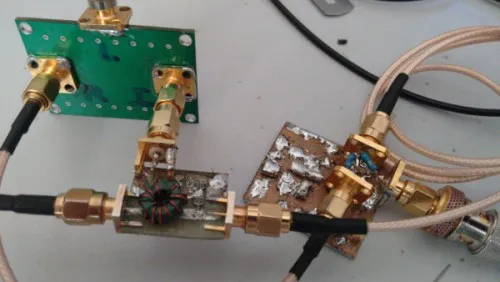
Overview of a typical RG316 coaxial cable assembly

This introductory figure shows a standard RG316 coaxial cable assembly. The surrounding text explains that RG316 is often selected as a fallback—when RG58 is too stiff or semi-rigid is impractical for rework. The cable "does nothing wrong" initially, which is precisely why its limitations (margin erosion, touch sensitivity, post-assembly drift) often go unnoticed until late in the design cycle. The image sets up the guide's core mission: to define where RG316 truly belongs before it becomes an invisible source of risk.
: RG316 Cable

RG316 cable is rarely chosen early.

By the time it appears in a design, the radio already links, the antenna port is fixed, and the enclosure outline is mostly frozen. Someone realizes a short RF connection is needed where RG58 will not bend and semi-rigid will not survive rework. RG316 gets pulled from the shelf.

Nothing breaks. That is the problem.

When RG316 causes issues, it does not announce itself. The system still passes bring-up. Numbers look reasonable. What changes is margin. Touch sensitivity. Repeatability. Behavior after the lid goes on.

This document exists to pin down where RG316 actually belongs—and where it does not—before it becomes invisible.

Where RG316 cable belongs

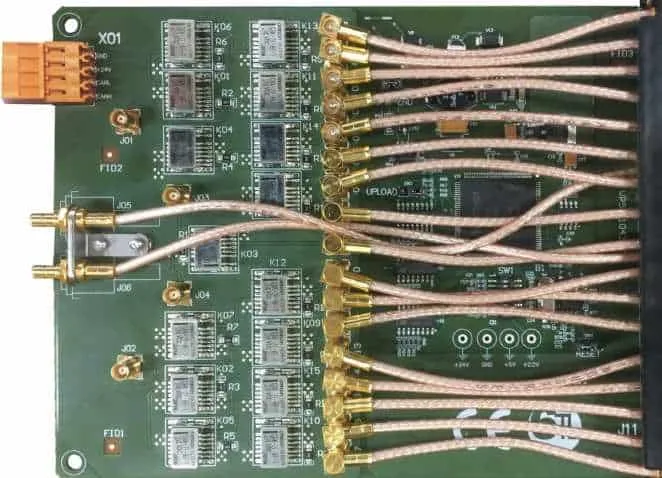
Diagram showing RG316 as an internal interconnect within an enclosure

This figure visually anchors the guide's strongest claim: RG316 belongs inside enclosures, not outside them. It depicts short internal runs—module-to-panel connections, inter-board links, or test interfaces within the chassis. The text emphasizes that if the RF path crosses a panel or leaves the box for any meaningful distance, RG316 is usually the wrong choice. The image helps engineers internalize this boundary condition, which matters far more than any datasheet specification.
RG316's Proper Place: Inside the Box

RG316 is an internal interconnect.

Not a feeder.

Not a long run.

Not a power path.

If the RF path crosses a panel, a module boundary, or a test interface inside the enclosure, RG316 is often appropriate. If the path leaves the box for any meaningful distance, it usually is not.

That boundary matters more than the datasheet.

Relative position among common coax options

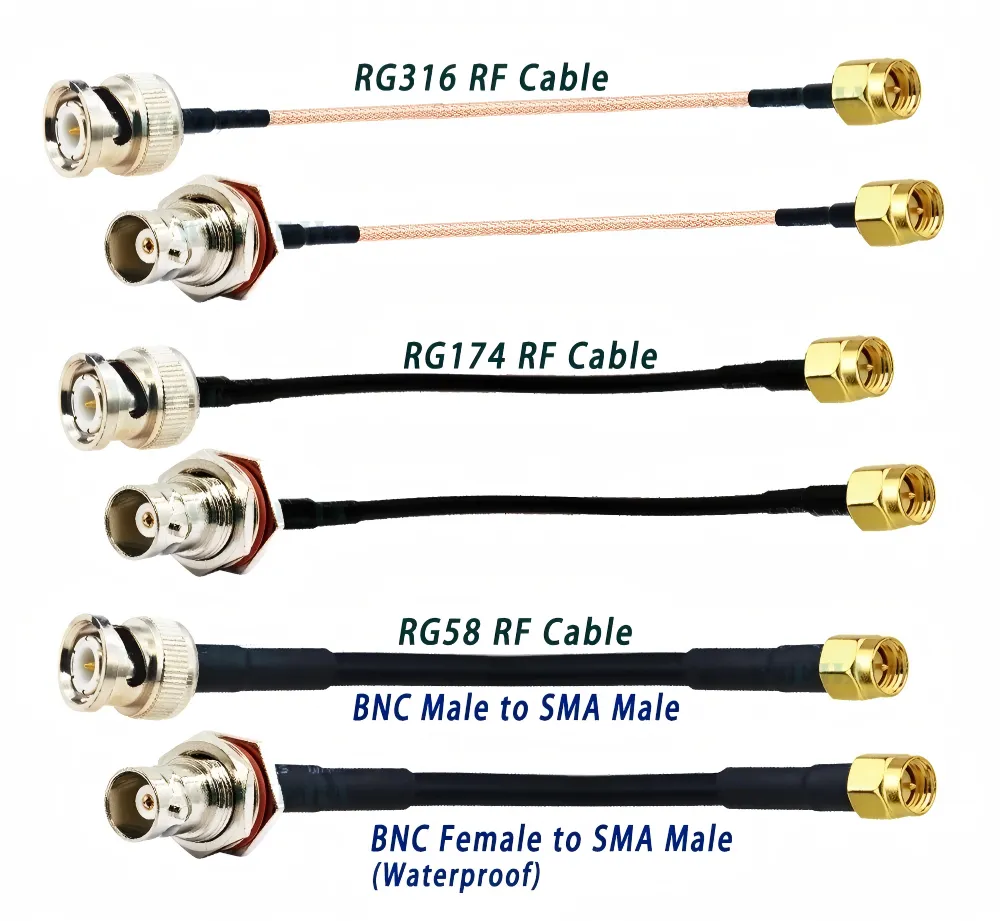
Comparison diagram of RG316, RG174, RG58, and semi-rigid coaxial cables

This figure positions RG316 relative to other common coaxial cables. RG174 is noted for flexibility but PVC insulation limits thermal stability; RG58 offers lower loss but greater bulk; semi-rigid sacrifices flexibility entirely for phase control. RG316, with its PTFE dielectric, is shown as the middle ground—it gives up some loss performance to solve routing geometry problems in dense enclosures. The image makes visible the trade-offs that are often missed when RG316 is selected by habit rather than by requirement.
RG316 in Context: Where It Sits Among Coax Options

RG316 is often compared to RG174 because of diameter. Electrically, that comparison misses the point.

RG316 uses PTFE. It behaves consistently across temperature. It does not soften, creep, or age the way PVC-insulated RG174 variants can. In systems that stay powered or see thermal cycling, this shows up as fewer slow drifts.

RG58 solves a different problem. It trades routing freedom for electrical forgiveness. In dense hardware, RG58 is often excluded before RF is even considered.

Semi-rigid removes flexibility entirely. It exists for repeatability and phase control, not convenience.

RG316 sits between these. It gives up loss performance to solve geometry. That trade is valid only when geometry is the constraint.

For a broader comparison across RG families, see the neutral overview in the site’s RG cable guide. It clarifies quickly why RG316 is not a scaled-down RG58.

Typical RG316 coaxial cable use

In real hardware, rg316 coaxial cable almost always appears in short runs:

  • Instrument jumpers on the bench
  • Module-to-panel connections inside radios and gateways
  • Internal RF routing where vibration or service access exists

Lengths are controlled. Routing is intentional. The cable is not expected to carry system-level loss.

If those conditions are not true, RG316 is probably already being misused.

Where RG316 cable quietly fails

Failures are rarely binary.

Common patterns:

  • Link margin erodes faster than expected as frequency increases
  • Measurements shift when the cable is moved or re-seated
  • Performance changes after enclosure assembly
  • Field units behave differently from lab units

Long antenna runs are the most common cause. High duty-cycle transmit paths are the second. Outdoor exposure without secondary protection follows closely.

None of these are edge cases. They are predictable outcomes of using RG316 beyond its intended role.

Turning RF requirements into RG316 cable decisions

Most RG316 mistakes come from skipping this step.

The cable is selected by habit rather than by requirement. That works—until it doesn’t.

Electrical assumptions that should be written down

RG316 is electrically simple, which makes it easy to underestimate.

Still, certain assumptions must be explicit:

  • 50 Ω impedance is mandatory
  • Frequency determines usable length more than diameter
  • Insertion loss must be part of the full link budget
  • Return loss is usually connector-limited, not cable-limited
  • Shielding quality matters in mixed-signal enclosures

None of these are controversial. Problems arise when they remain implicit.

Mechanical constraints matter more than specs

RG316 survives temperature because of PTFE. It does not survive abuse.

Before committing to it, clarify:

  • Bend radius at connector exits
  • Static vs service-flexed routing
  • Vibration environment
  • Local heating from nearby components

Many RF “instability” reports trace back to strain concentrated where the cable meets the connector.

Standards and compliance are not paperwork

RG316 is commonly referenced under MIL-DTL-17. Even without formal qualification, that reference anchors material expectations and geometry.

This matters when:

  • Multiple suppliers are involved
  • Assemblies are built by third parties
  • Long-term consistency matters more than unit cost

Environmental compliance (RoHS, REACH) should be confirmed early, not after sourcing is locked.

For neutral terminology and construction reference, the general coaxial cable overview remains useful without vendor bias.

How do you plan RG316 cable length and loss for lab and field links?

Most RG316 problems start with length assumptions.

Engineers look at a datasheet number, glance at a per-meter attenuation value, multiply by a short length, and move on. That works at low frequency. It becomes unreliable as frequency climbs or when connector count increases.

RG316 cable is not unforgiving—but it is honest. If the math says margin is thin, the hardware will eventually agree.

Reading RG316 coax cable attenuation curves without lying to yourself

Attenuation curves for rg316 coax cable are usually presented as smooth lines: frequency on one axis, loss per unit length on the other. They look clean. Reality is messier.

Three points that matter in practice:

  1. The curve assumes a straight, uniformly manufactured cable. Real assemblies include bends, transitions, and connector launches.
  2. Datasheet curves are typically measured under controlled conditions. Inside an enclosure, temperature and routing change effective loss.
  3. Connector loss is rarely included, yet often dominates short runs.

The mistake is not trusting the curve. The mistake is trusting it alone.

For reference on how attenuation behavior scales with frequency and geometry across coaxial constructions, the background section on coaxial cable theory#F4920D is still one of the clearer neutral explanations.

A quick loss estimation model that actually survives review

Instead of arguing over exact numbers, it helps to use a simple, defensible estimate. Not because it is perfect, but because it exposes risk early.

Inputs

• Operating frequency f_GHz

• Cable length L_m

• Number of RF connectors N_conn

• Target link margin Margin_target_dB

Reference values

• Attenuation coefficient α(f) from the RG316 datasheet (dB/m)

• Connector loss constant Loss_conn_dB

(commonly 0.1–0.2 dB per interface for small RF connectors when properly assembled)

Estimation

Loss_cable_dB = α(f) × L_m

Loss_conn_dB_total = N_conn × Loss_conn_dB

Loss_total_dB = Loss_cable_dB + Loss_conn_dB_total

Margin_remaining_dB = Margin_target_dB − Loss_total_dB

This model does not replace measurement. What it does is prevent “it should be fine” decisions when margin is already thin on paper.

Acceptable margin expectations across common frequency bands

In practice, many RF teams converge on similar thresholds:

  • ≥ 6 dB remaining margin

Comfortable. Cable choice is unlikely to dominate system behavior.

  • 3–6 dB

Review required. Assembly quality, routing, and connector selection matter.

  • < 3 dB

Redesign territory. Shorten the run, reduce connector count, or move to a lower-loss cable.

As frequency increases, the usable length of RG316 shrinks faster than most engineers expect. What feels trivial at sub-GHz becomes meaningful at 2.4 GHz, and restrictive at 5 GHz.

RG316 Cable Selection & Loss Matrix

This matrix is intended for decision support, not precision prediction.
Field Description
f_GHz Operating frequency
L_m Cable length
N_conn Number of RF connectors
Margin_target_dB Required system margin
α(f) RG316 attenuation coefficient
Loss_cable_dB Cable loss estimate
Loss_conn_dB_total Connector loss estimate
Loss_total_dB Total estimated loss
Margin_remaining_dB Remaining margin
Risk_flag OK / Review / Redesign
Suggested_RG316_config Standard RG316 / Double-shield RG316 / Thicker cable

Decision rules

  • Margin_remaining_dB ≥ 6 → OK
  • 3 ≤ Margin_remaining_dB < 6 → Review
  • Margin_remaining_dB < 3 → Redesign

This table tends to surface problems early, especially in multi-connector lab setups where connector loss quietly outweighs cable loss.

Can RG316 cable handle your power, voltage, and PIM constraints?

Loss is only one dimension. Power, voltage stress, and passive intermodulation show up later—and usually in the field.

RF power handling in real RG316 deployments

RG316 is rarely power-limited in receive paths. Problems appear when it sits in transmit or bidirectional links with sustained duty cycle.

Key factors that matter more than nominal ratings:

  • Operating frequency
  • Duty cycle, not peak power
  • Ambient temperature
  • Whether cables are bundled or isolated

A short RG316 jumper that runs cool in open air may behave very differently once tied into a harness near a heat source.

Peak voltage and dielectric limits of PTFE-insulated RG316

PTFE insulation provides strong dielectric performance and thermal stability. That is one of RG316’s strengths.

Where things go wrong is not bulk breakdown, but local stress:

  • Sharp bends near connectors
  • Poorly supported cable exits
  • Assembly defects that concentrate electric field

These are mechanical issues wearing electrical masks.

Passive intermodulation considerations with RG316 assemblies

RG316 cable itself is rarely the PIM source. Interfaces are.

In multi-carrier or higher-power systems, PIM risk comes from:

  • Connector plating quality
  • Contact pressure consistency
  • Mechanical stability under vibration

This is why RG316 assemblies paired with SMA RF cable interfaces should be evaluated as a system, not as isolated parts. Bench-clean results do not always predict field behavior.

For background on how non-linear junctions generate intermodulation products, the overview sections in materials from organizations like the IEEE provide useful conceptual grounding without vendor bias.

How do connector and assembly choices change RG316 cable behavior?

Most RG316 failures do not start in the middle of the cable. They start at the ends.

Using RG316 cable with SMA cable and SMA RF cable jumpers

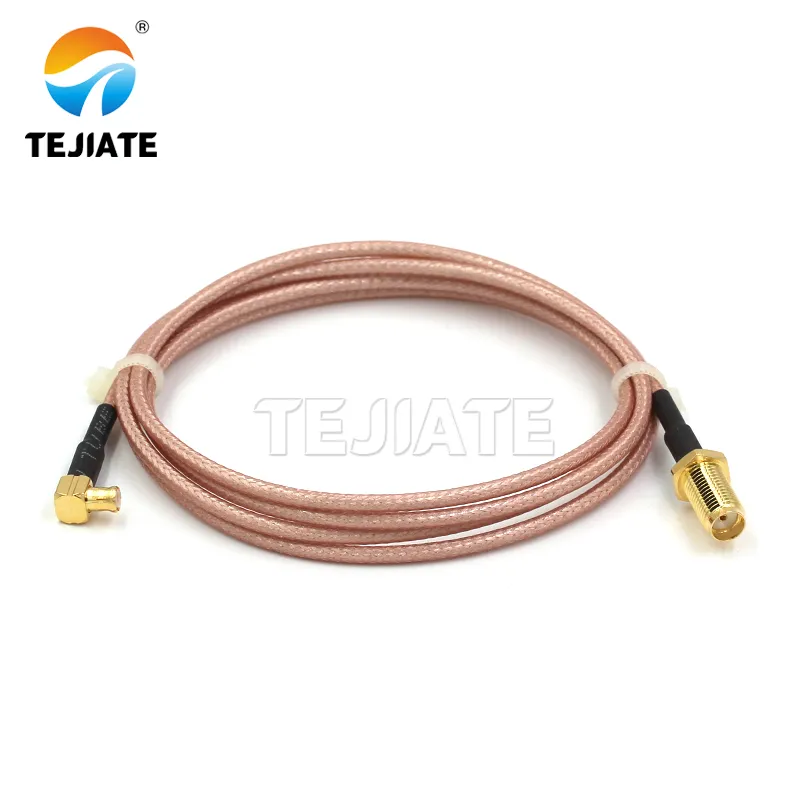
SMA to MCX RF cable jumpers using RG316 coaxial cable

This figure shows RG316 cable assemblies terminated with SMA on one end and MCX on the other. The guide explains that in compact modules, MCX or MMCX terminations often outperform SMA—not electrically, but mechanically. They reduce occupied volume, apply less torque to PCB pads, and tolerate frequent mating cycles better in tight spaces. The image illustrates this practical trade-off, where connector choice matters as much as cable type for long-term reliability in dense designs.
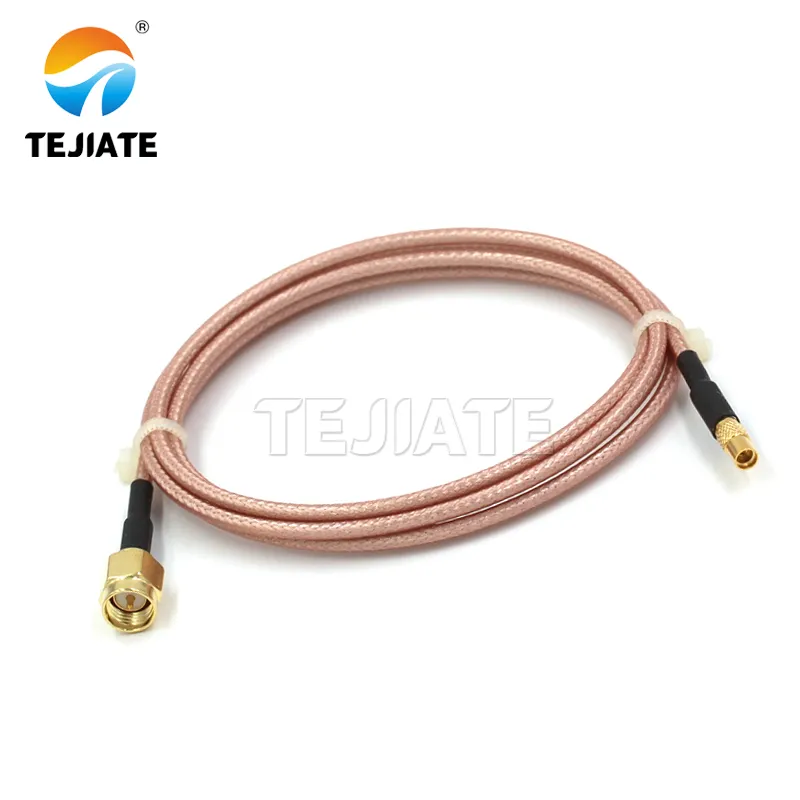
When Smaller Connectors Make Sense: SMA to MCX
SMA to MMCX RF cable jumpers using RG316 coaxial cable

This figure presents RG316 assemblies with MMCX connectors, building on the previous figure's theme. MMCX represents an even more compact alternative for internal RF links where board space is at a premium. The surrounding text notes that while MMCX may introduce slightly higher variability in insertion loss compared to SMA, the mechanical advantages in dense layouts—reduced leverage on PCB mounts, easier routing in tight corners—often justify the trade. The image helps designers visualize this ultra-compact option for space-constrained applications.

SMA to MMCX

RG316 paired with SMA connectors is common because it is convenient and familiar.

What matters in practice:

  • Straight vs right-angle launches
  • Panel-mounted vs free-hanging connectors
  • Torque control during installation

Two RG316 assemblies with identical electrical specs can behave very differently once installed, simply due to mechanical leverage at the SMA interface.

If you want a deeper structural look at how SMA assemblies behave in RF systems, this internal reference on SMA coax cable structure and selection complements RG316 planning well.

When MMCX or MCX connectors on RG316 make more sense

In compact modules, mmcx cable or MCX-terminated RG316 assemblies often outperform SMA—not electrically, but mechanically.

They:

  • Reduce occupied volume
  • Apply less torque to PCB pads
  • Tolerate frequent mating cycles better in tight spaces

The trade-off is reduced power handling and, sometimes, higher variability in insertion loss. In dense designs, that trade is often worth it.

Strain relief and right-angle options are not optional details

Most RG316 field failures trace back to one location: the first few millimeters after the connector.

Right-angle connectors, molded strain relief, or controlled tie-down points dramatically reduce long-term risk. Ignoring these details saves little and costs time later.

Pre-installation checks: what actually matters

Most field issues blamed on RG316 are mechanical.

Electrical symptoms show up later.

Static vs dynamic routing

First decision: will the cable ever move?

  • Static
    • Installed once
    • No service flex
    • Focus: bend radius at connector exit
    • Strain relief mandatory, slack optional
  • Dynamic
    • Lid opens
    • Module swaps
    • Cable flexes during service
    • Slack > aesthetics
    • Tie-downs should limit motion, not eliminate it

Treating a dynamic run as static shortens life. Quietly.

Temperature and local heat

PTFE handles temperature well.

RG316 still fails near heat sources.

Watch for:

  • PA modules
  • DC/DC converters
  • Shield cans trapping heat

Failures rarely occur mid-span.

They occur at the connector exit.

Chemical and UV exposure

RG316 is not an outdoor cable.

PTFE ≠ UV proof.

Connector interfaces remain vulnerable.

If light, oil, solvent, or moisture is present:

  • secondary jacket
  • conduit
  • or redesign

Grounding and shielding reality

RG316 shielding is only as good as its termination.

Common problems:

  • floating panel connectors
  • painted or anodized chassis without proper ground path
  • long parallel runs next to fast digital lines

Mitigation:

  • low-impedance shell grounding
  • avoid parallelism with clocks / high-speed lanes
  • ground continuity > cable spec

How RG316 is actually used in modern systems

RG316 did not disappear.

Its role narrowed.

5G / LTE / IoT hardware

Typical pattern:

  • RF module on PCB
  • antenna connector on enclosure
  • short internal coax

RG316 fits only that gap.

Once the signal leaves the box, RG316 usually stops making sense.

For broader system-level RF expectations in modern wireless equipment, the technical background sections published by organizations such as the 3rd Generation Partnership Project (3GPP) are useful context—not for cable choice directly, but for understanding why internal RF paths keep getting shorter.

Ruggedized variants

Seen in:

  • rail
  • aerospace
  • industrial control

Traits:

  • tighter assembly tolerance
  • phase stability focus
  • low-smoke / halogen-free jackets

Cost ↑

Predictability ↑

Not required for most commercial products.

Bench verification — minimal but sufficient

Trust measurements, not assumptions.

Visual + basic electrical

Always:

  • inspect crimp / solder
  • inspect jacket near connector
  • continuity check
  • insulation resistance (if contamination risk exists)

VNA checks

Two numbers matter:

  • S11 → connector + launch quality
  • S21 → total loss

Red flags:

  • S11 changes after gentle re-routing
  • S21 varies between assemblies of same length

Reference comparison

Fast method:

  • known-good SMA RF cable
  • swap RG316 under test
  • same routing, same setup

Differences usually explain themselves.

Turning requirements into a purchase-ready RG316 spec

Most sourcing problems are self-inflicted.

Fields that must be explicit

  • Cable type: RG316 cable
  • Length + tolerance
  • Connector types (SMA / MCX / MMCX)
  • Orientation (straight / right-angle)
  • Frequency expectation
  • Environment (indoor only / service flex)
  • Test requirement (continuity mandatory, RF optional but defined)

Ambiguity invites substitution.

Example line item

RG316 cable assembly, 200 mm ±10 mm, SMA male straight to MCX straight, 50 Ω, DC–6 GHz, PTFE jacket, 100% continuity test, sample S11 verification.

Nothing fancy.

Nothing missing.

Documentation linkage

RG316 does not stand alone.

It should reference:

  • connector selection notes
  • antenna interface assumptions

For example, linking RG316 assemblies to an internal MMCX connector design guide avoids mismatched mechanical expectations later.

FAQ

How long can RG316 run at 2.4 GHz?

Long enough until margin disappears. Calculate first. Measure second.

When is RG316 the wrong cable?

When length grows, power increases, or the signal leaves the enclosure.

Outdoor use?

Only with protection. Otherwise no.

Phase-critical measurements?

Possible. Not ideal. Use phase-stable assemblies if repeatability matters.

Routing priority in tight enclosures?

Stress control > neatness.

SMA vs MMCX on RG316?

SMA for robustness. MMCX for density. Choose based on access and service cycles.

Supplier qualification?

Assembly consistency beats datasheet claims.

Bonfon Office Building, Longgang District, Shenzhen City, Guangdong Province, China

customer service