
MCX to SMA Cable: Selection and Routing for RF Systems

Feb 23,2026

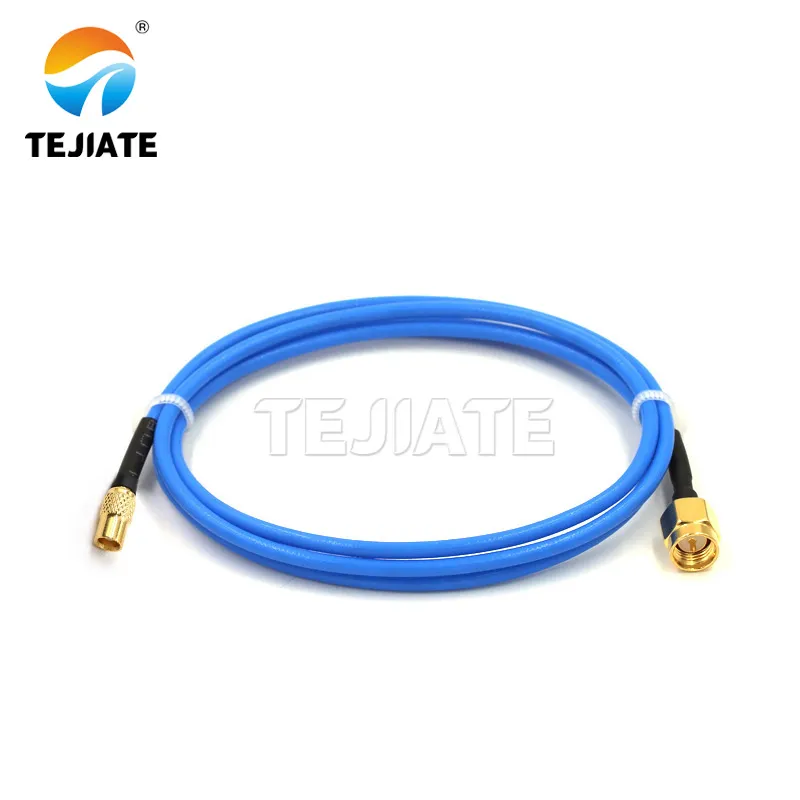
MCX to SMA cable assembly connecting an RF module to an external antenna

This image shows a complete MCX to SMA cable assembly, with an MCX connector on one end and an SMA connector on the other, connected via a flexible coaxial cable (typically RG316). It illustrates how such cables are used to link compact RF modules (with MCX jacks) to enclosure-mounted SMA bulkheads or external antennas. The assembly absorbs mechanical tolerances and protects the module's MCX connector from stress.
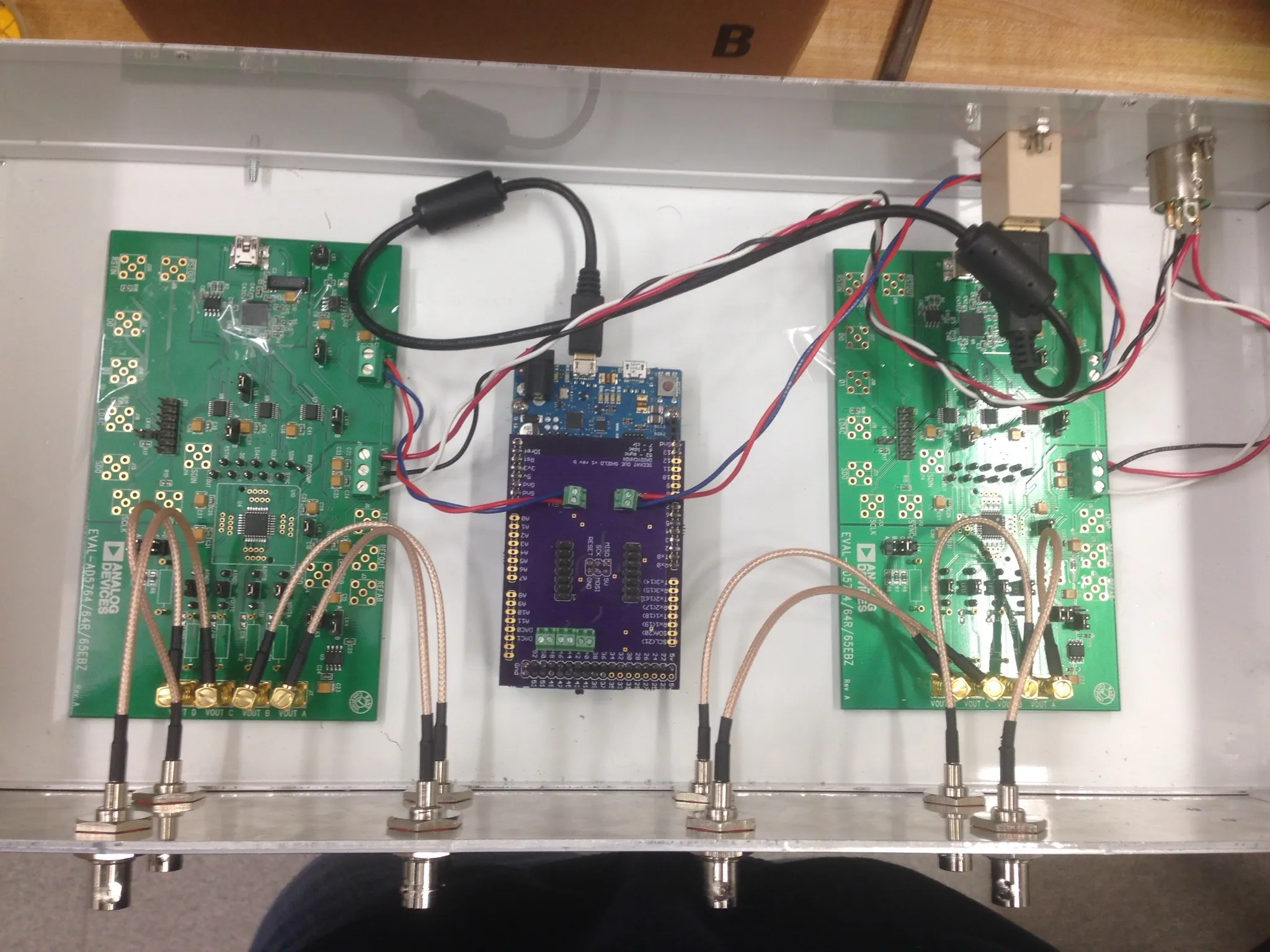
MCX to SMA Cable in a Typical RF System

In many RF projects, the weakest decisions are often the quiet ones.

The radio works. The antenna is specified. Early tests pass. Only later does someone notice that the module exposes an MCX port, while the enclosure and antenna system expect SMA.

That gap is usually closed with an mcx to sma cable.

It feels trivial at first glance—one connector on each end, a short coax in between. But in real systems, this short assembly becomes part of the RF signal path, part of the mechanical load path, and part of the long-term reliability story. Treat it casually, and margin slowly disappears. Treat it deliberately, and it disappears from your problem list altogether.

This guide focuses on how engineers actually use MCX to SMA cable assemblies: where they sit in the system, when they’re the right solution, and how to choose and route them without redesigning half the product.

Position MCX to SMA cables in your RF signal path

Understand how MCX to SMA cables bridge modules and antennas

Block diagram of an RF signal path: RF module → MCX jack → MCX to SMA cable → SMA bulkhead → external antenna

This block diagram illustrates the typical placement of an MCX to SMA cable in a system. It starts from an RF module with an MCX jack, then the cable assembly, followed by an SMA bulkhead mounted on the enclosure, and finally an external antenna or test instrument. Each segment has different mechanical and electrical requirements, and the cable bridges them while absorbing handling and vibration.
RF Signal Path with MCX to SMA Cable

From a system-level view, an mcx to sma cable is not just a convenience adapter.

It’s a boundary element that connects board-level RF to the outside world.

A common signal path looks like this:

  • RF module with an MCX jack
  • MCX to SMA cable assembly
  • SMA bulkhead mounted to the enclosure
  • External antenna or test instrument

Each section of that chain is optimized for a different job.

The MCX interface favors compact footprints and short trace launches. The SMA side favors mechanical robustness, torque control, and repeatable mating. The cable between them absorbs tolerance, vibration, and handling that neither connector wants to see directly.

Thinking of this assembly as part of the RF path—not as an accessory—helps explain why small changes in length, routing, or connector count can move measurements just enough to matter.

Distinguish MCX to SMA cables from bare RF coaxial cable runs

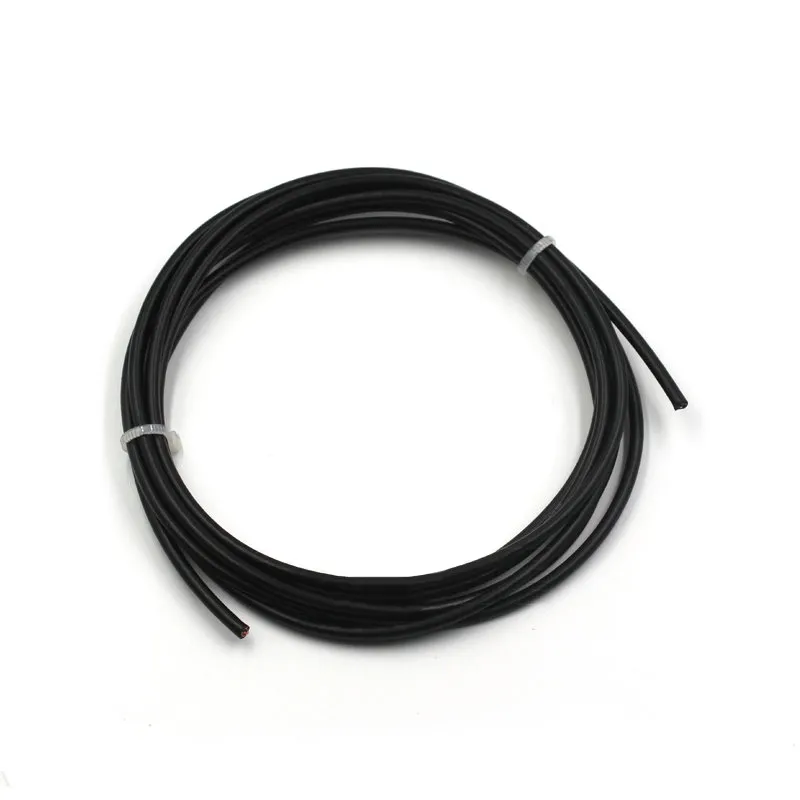
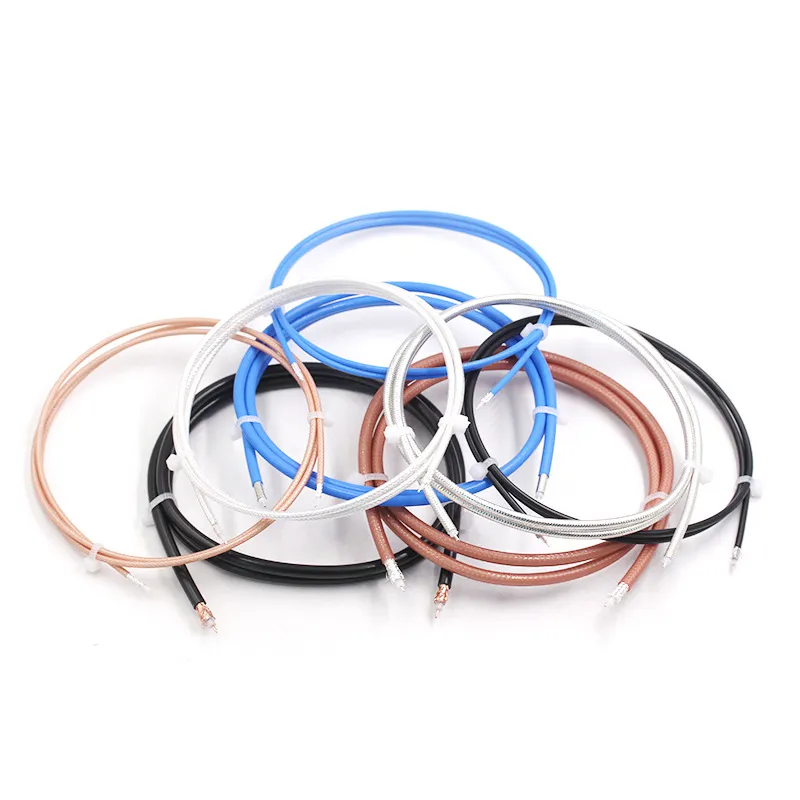
Section of RF coaxial cable, showing dielectric, shield, and jacket

This photograph shows a length of RF coaxial cable, likely RG316, with its layers partially exposed: inner conductor, PTFE dielectric, braided shield, and outer jacket. The quality of these layers directly affects attenuation, impedance stability, and flexibility. Such cable is cut and terminated to create MCX to SMA assemblies.
RF Coaxial Cable Construction
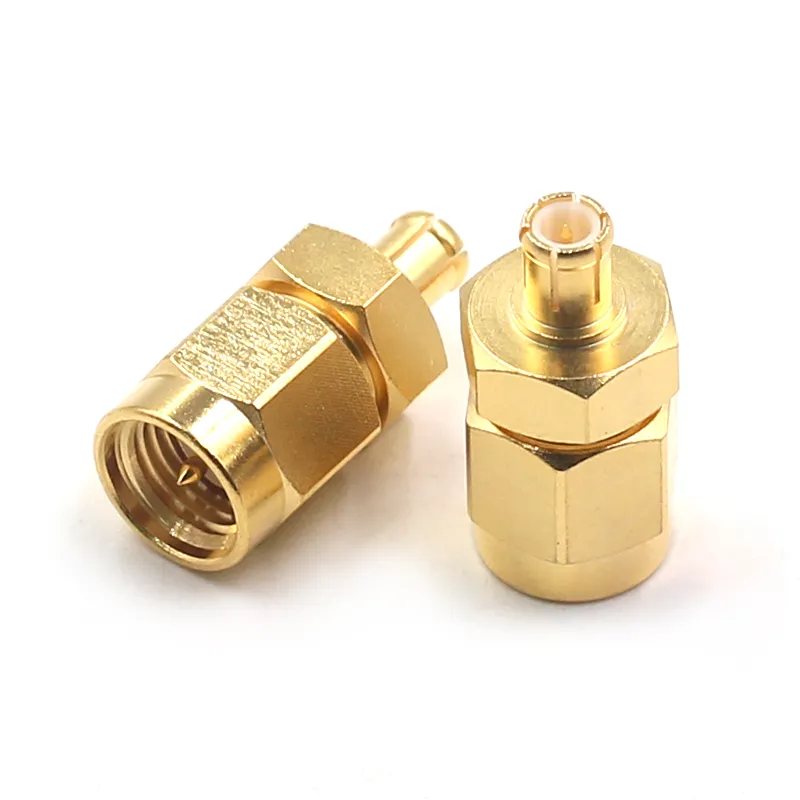
Rigid MCX to SMA adapter, male/female configurations

This image shows a rigid MCX to SMA adapter, a small metal component with an MCX connector on one end and an SMA on the other. It is often used in prototyping or lab setups to quickly connect devices with mismatched connectors. However, because it is rigid, any cable movement or torque applied to the SMA side is transmitted directly to the board-mounted MCX jack, which can lead to long-term reliability issues.
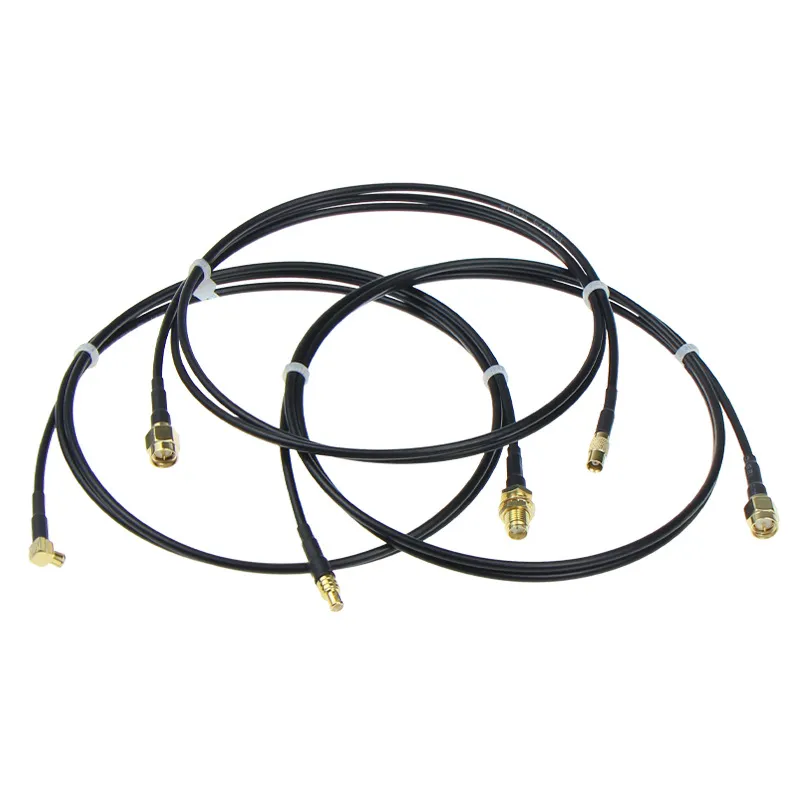
MCX to SMA Rigid Adapter
Flexible MCX to SMA cable assembly with coaxial cable

This photograph shows a finished MCX to SMA cable assembly, consisting of a length of flexible coaxial cable (e.g., RG316) terminated with an MCX plug on one end and an SMA plug or jack on the other. Unlike rigid adapters, the flexible cable isolates the MCX connector from external forces, making it suitable for production and field use. It allows routing around enclosure features and reduces strain on the board interface.
MCX to SMA Flexible Cable Assembly

It’s easy to group everything under “RF cable,” but that shortcut hides important differences.

Loose rf coaxial cable on a reel is raw material.

Board-mounted connectors define electrical launch points.

Rigid adapters solve geometry problems—but transfer stress.

A finished mcx to sma cable combines all of those elements into a controlled, repeatable part.

That difference shows up quickly in production and service environments. Assemblies reduce installation variability, limit accidental bending at the connector, and protect fragile board-level MCX jacks from loads they were never designed to carry.

This is one reason many teams move away from ad-hoc cable builds once a design leaves the lab and enters small-volume or pilot production.

Identify common environments for MCX to SMA links

MCX to SMA connections tend to appear in systems where space constraints meet service requirements:

  • GNSS receiver boards with external antennas
  • SDR dongles and evaluation platforms
  • Industrial telemetry and monitoring nodes
  • Compact wireless devices that still need field-replaceable antennas

In all of these, the MCX connector typically lives close to sensitive RF circuitry, while the SMA interface sits at the enclosure boundary. The cable between them becomes the mechanical buffer and the electrical bridge.

If that buffer is too stiff, too long, or poorly routed, the system may still work—but it becomes fragile.

Decide when MCX to SMA cable is the right choice

Compare MCX to SMA adapters, connectors, and cable assemblies

  • When bridging MCX and SMA, engineers usually consider three approaches:

    1. Rigid MCX-to-SMA adapters
    2. Direct board-mounted SMA connectors
    3. Pre-assembled MCX to SMA cable harnesses

    Rigid adapters are fast and cheap, but they stack mechanical leverage directly onto the MCX jack. Board-mounted SMA connectors are robust, but they often force PCB and enclosure changes late in the design.

    An mcx to sma cable sits in between. It costs more than a single adapter, but it buys flexibility, vibration tolerance, and easier servicing—especially when the RF module footprint is already fixed.

    This trade-off becomes obvious in systems that need to survive transport, installation, or repeated access.

Use MCX to SMA cable to avoid PCB or enclosure redesign

Late RF changes are rarely electrical problems.

They’re mechanical ones.

A cable assembly allows you to relocate the RF exit point without touching the PCB. Hole positions, panel thickness, connector orientation—these can all be solved at the harness level instead of the layout level.

Many teams quietly rely on mcx to sma cable assemblies as a pressure-release valve during enclosure integration. It’s not glamorous engineering, but it prevents last-minute redesigns that ripple through manufacturing and certification.

For projects already using RG316-based assemblies, this approach often pairs naturally with existing cable choices discussed in broader RG cable system planning guides, such as the overview in RG cable selection and application guides.

Avoid overusing rigid adapter stacks between MCX and SMA

MCX → BNC → SMA stacks still show up in labs and prototypes.

They usually “work.” Until vibration, handling, or cable weight enters the picture.

Each rigid transition adds two problems:

a small impedance discontinuity and a mechanical lever arm. The electrical effect often shows up as gradual VSWR drift. The mechanical effect shows up later—sometimes after the product ships.

If more than one transition is unavoidable, a single flexible mcx to sma cable almost always behaves better than a tower of metal adapters.

Choose coax types for MCX to SMA cable assemblies

Match RG316 coaxial cable to compact, high-frequency designs

For many engineers, rg316 coaxial cable becomes the default choice for MCX to SMA assemblies—and not by accident.

RG316 offers a combination that’s hard to replace:

  • Small diameter for dense routing
  • PTFE dielectric for temperature stability
  • Predictable loss into multi-GHz ranges

In compact RF systems where frequency headroom matters, rg316 cable often strikes the best balance between electrical performance and mechanical survivability.

This is why RG316 appears repeatedly in short jumper assemblies, evaluation kits, and GNSS antenna cables. A deeper comparison with other options is often framed against RG316 in practical sourcing and performance discussions, such as those found in detailed RG316 coaxial cable guides.

Keep 50 ohm coaxial cable consistent from MCX to SMA

Most RF modules and antennas assume 50 ohm coaxial cable end to end.

Breaking that assumption—even briefly—introduces reflections that rarely cause outright failure but quietly eat into link margin.

An mcx to sma cable should maintain 50 Ω throughout the entire assembly: the cable core, the MCX termination, and the SMA interface. Mixing unknown adapters or mismatched cable families undermines that consistency.

This isn’t about chasing perfect numbers. It’s about keeping measurements stable when the system leaves the bench and enters real-world use.

Manage loss and power in MCX to SMA RF paths

Estimate insertion loss for typical MCX to SMA cable lengths

Most engineers don’t miscalculate loss.

They just postpone thinking about it.

With an mcx to sma cable, attenuation usually feels irrelevant at first. The run is short. The signal passes. Early measurements look clean enough. That assumption often survives the lab phase.

It starts breaking down later—when frequency creeps up, cable length grows beyond what was originally planned, or a second connector quietly gets added “just for convenience.”

With rg316 coaxial cable, loss increases quickly with frequency. At GNSS, LTE, or 5 GHz-class links, even a meter-long assembly can remove more margin than expected. Nothing catastrophically fails. Sensitivity just slips a little. Then a little more.

Those are the failures that get misdiagnosed as antenna issues or environmental noise.

Add connector transitions into your RF link budget

Cable loss is predictable.

Connector loss is where people get sloppy.

An MCX jack, an SMA bulkhead, and any extra transition each add a small discontinuity. Individually, it looks harmless. In combination, it starts to matter—especially when the link is already tight.

Many engineers still rely on a rough rule of thumb: around 0.1–0.2 dB per RF connector at microwave frequencies. It’s not perfect, but it’s better than pretending the transitions are free.

This is also where impedance continuity matters more than absolute loss. Small reflections stack. The underlying physics isn’t exotic; it’s the same impedance behavior summarized in standard RF references like the overview of impedance matching on Wikipedia. What matters is remembering to apply it to “minor” hardware like short jumpers.

Respect power limits for small-diameter coaxial cables

Power is easy to ignore when you’re working with low-level signals.

Until it isn’t.

Small-diameter cables such as RG316 or LMR-100 handle modest RF power well, but they don’t shed heat efficiently. At higher duty cycles, temperature becomes the real limit—not voltage rating or connector spec.

In GNSS, telemetry, or SDR receive paths, this rarely causes trouble. In transmit-heavy designs, it quietly becomes a reliability issue. The failure mode is frustrating: drift, temperature sensitivity, or performance that collapses only after warm-up.

When power increases, cable choice stops being cosmetic.

Route MCX to SMA cables inside tight enclosures

Set safe bend radius and strain relief for RG316 cable

Most coaxial cables don’t fail where they bend.

They fail where they bend repeatedly.

With rg316 cable, sharp bends distort the dielectric just enough to change local impedance. You won’t always see it immediately. It often shows up after thermal cycling, vibration, or repeated enclosure access.

In practice, slightly longer routing with smooth curves ages better than aggressive shortcuts. Engineers who leave themselves a few extra millimeters of slack tend to see fewer “unexplained” RF issues six months later.

That’s not theory. That’s field behavior.

Keep MCX to SMA cables away from digital noise and heat sources

RF cables behave like antennas when you least want them to.

High-speed digital lines, switching regulators, CPUs, and motor drivers all radiate. Heat accelerates material aging. Put a coax too close to either, and you’re inviting slow degradation.

Routing an mcx to sma cable a little farther away from these elements usually costs nothing during layout—and saves time during debug. Even modest separation reduces coupled noise and stabilizes long-term behavior.

In mixed-signal enclosures, this matters more than connector brand or plating finish.

Protect the MCX jack by anchoring at the SMA bulkhead

MCX connectors were never meant to carry load.

They tolerate mating. Not tension.

One reliable design pattern is to let the SMA bulkhead and enclosure take the mechanical stress. Clamp or route the cable so that pulling, vibration, or cable weight never reaches the board-mounted MCX jack.

Products that survive repeated servicing almost always do this. Products that fail mysteriously after deployment often don’t.

Compare MCX to SMA and MMCX to SMA solutions

Contrast MCX to SMA cable with MMCX to SMA cable

MCX and MMCX are often treated as interchangeable. They aren’t.

MMCX is smaller and rated for higher mating cycles. MCX is slightly larger and generally more tolerant of vibration and handling. Neither choice is universally better. Each reflects a different design priority.

Choosing between an mcx to sma cable and an MMCX-based assembly is usually a mechanical decision disguised as an RF one. Space constraints push designers toward MMCX. Serviceability and ruggedness push them back toward MCX.

For context, the basic intent and geometry of MMCX connectors are outlined in standard references like the MMCX connector entry on Wikipedia, which helps explain why the two families behave differently in the field.

Use MCX to SMA cables in rugged and serviceable equipment

Industrial and semi-rugged systems tend to favor MCX for a reason.

The connector is forgiving. Technicians are less likely to damage it during installation. Combined with proper strain relief, an mcx to sma cable can tolerate vibration profiles that would fatigue smaller interfaces over time.

This is why MCX still appears in GNSS receivers, industrial radios, and modular RF platforms—even when space is available for alternatives.

Reserve MMCX to SMA cables for ultra-dense consumer modules

MMCX earns its place when space becomes the overriding constraint.

Drones, handheld devices, and ultra-compact IoT modules often have no room for anything larger. The cost is reduced mechanical margin and stricter handling requirements.

In those designs, routing discipline matters more than connector choice. There’s no slack to hide mistakes.

Build an MCX–SMA cable planning sheet

Define the key fields in your MCX–SMA planning worksheet

Once teams build more than a few products, informal cable decisions stop scaling.

Many engineering groups formalize mcx to sma cable selection using a simple planning worksheet. It doesn’t replace judgment—it makes trade-offs visible. Electrical loss, bend limits, service access, and connector count all end up in one place.

This approach mirrors broader RF system planning practices often discussed in professional engineering contexts, including guidance promoted by organizations like the IEEE, where repeatability and documentation matter as much as raw performance.

Walk through an MCX to SMA GPS antenna example

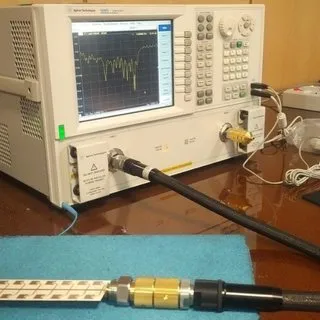
GNSS module with MCX connector connected to an external SMA antenna via an MCX to SMA cable

This figure depicts a practical example: a GNSS receiver module with an MCX output is mounted inside an enclosure. An MCX to SMA cable assembly runs from the module to an SMA bulkhead on the enclosure wall. Outside, an SMA-equipped GPS antenna is attached. The cable allows the antenna to be placed for optimal reception while keeping the module protected. This setup is common in vehicle tracking, surveying, and timing applications.
MCX to SMA Cable in a GPS Application

Take a GNSS module with an MCX output feeding a roof-mounted antenna through an SMA bulkhead.

Filling out a planning sheet quickly shows whether length, loss, or bend constraints dominate. The math isn’t the point. The clarity is. You see early whether you’re spending margin where it matters—or wasting it where it doesn’t.

Use the sheet to standardize RF cable decisions across projects

Once adopted, a shared worksheet becomes a common language between RF, mechanical, and manufacturing teams.

Instead of revisiting the same debates every project, decisions converge faster. Fewer surprises. Fewer late-stage changes.

Track MCX to SMA cable trends and product direction

Follow MCX cable assembly expansion from RF vendors

Over the past few years, MCX cable assemblies have quietly shifted from “special request” items to catalog staples. That change didn’t come from marketing—it came from deployment reality.

More RF vendors now offer pre-qualified mcx to sma cable assemblies with defined length options, jacket materials, and connector variants. The underlying message is simple: engineers are tired of treating short RF jumpers as custom parts.

This trend is especially visible in industrial wireless and GNSS-related hardware, where repeatability matters more than shaving a few cents off a bill of materials. Vendor documentation increasingly treats these assemblies as system components, not accessories—a subtle but meaningful shift in how RF interconnects are viewed.

Note MCX to SMA antenna cables in GNSS ecosystems

GNSS platforms are a good lens for observing real-world cable behavior.

They combine moderate frequencies, long operating lifetimes, and exposure to vibration and temperature cycles.

Many GNSS receivers now standardize on MCX at the module level while expecting SMA antennas externally. The mcx to sma cable becomes the compatibility layer that allows different antennas, mounting options, and vehicle installations without redesigning the RF board.

If you look at how GNSS ecosystems evolve, the cable is rarely mentioned explicitly—but it’s always there, quietly enabling interchangeability. That pattern mirrors what happens in other modular RF systems once they mature.

Watch IP-rated and material-compliance trends in RF cable assemblies

Two requirements show up more often in recent designs: environmental sealing and material compliance.

IP-rated MCX–SMA assemblies are becoming common in outdoor and semi-outdoor equipment. At the same time, material restrictions—such as PFAS-free connector and cable options—are starting to influence sourcing decisions.

These trends don’t usually change electrical performance. They change procurement conversations. Engineers who stay aware of them avoid last-minute substitutions that compromise either compliance or reliability.

Answer MCX to SMA cable design questions (FAQ)

Can one MCX to SMA cable support both GPS and LTE bands?

In many cases, yes.

A properly designed mcx to sma cable using consistent 50-ohm construction can span GPS and LTE frequency ranges without issue. The limiting factor is usually insertion loss, not bandwidth. Shorter lengths and high-quality terminations matter more than the connector family itself.

Problems arise when the cable length grows or when multiple connector transitions are added without being budgeted.

How long can an MCX to SMA cable be before loss hurts performance?

There’s no single cutoff length.

At lower frequencies, a meter or more may be acceptable. As frequency increases, loss accumulates quickly. With rg316 coaxial cable, even modest increases in length can erode margin at multi-GHz bands.

The practical answer is always the same: calculate total path loss, include connector transitions, and compare it to your system’s allowed budget. Guessing tends to fail quietly.

Is an MCX to SMA cable robust enough for in-vehicle GPS units?

Yes—when routed and anchored correctly.

In vehicle installations, vibration and cable movement are more dangerous than frequency or power. If the cable is strain-relieved at the SMA bulkhead and not allowed to load the MCX jack, mcx to sma cable assemblies perform well in automotive GNSS systems.

Most field failures trace back to mechanical stress, not connector electrical limits.

Should I use RG316 or another 50 ohm coaxial cable for MCX to SMA links?

RG316 is often a safe default, but it’s not mandatory.

Use rg316 cable when temperature stability, frequency headroom, and durability matter. Consider alternatives when cost, extreme flexibility, or ultra-small diameter dominate the design constraints.

What matters most is keeping the entire path consistent as a 50 ohm coaxial cable system—connector, cable, and termination included.

When should I choose an MMCX to SMA cable instead of MCX to SMA?

Choose MMCX when space is the overriding constraint and handling is controlled.

MMCX connectors are smaller and support high mating cycles, but they are less forgiving under vibration and mechanical abuse. In dense consumer or airborne platforms, they often make sense. In serviceable or rugged systems, MCX usually ages better.

This distinction is rooted in connector geometry and retention style, which is why general references on coaxial connectors and RF connector families—such as those summarized by standard technical encyclopedias like Wikipedia—remain useful context rather than academic background.

How many connector transitions are acceptable in a single MCX–SMA path?

As few as possible.

Every transition adds loss, reflection, and mechanical risk. One flexible assembly is almost always better than multiple rigid adapters stacked together.

If more than two transitions are unavoidable, it’s usually a signal to reconsider the cable strategy—not to accept the stack and hope for the best.

Closing perspective

Installed MCX to SMA cable in a compact RF enclosure, showing strain relief and routing

This image shows a close-up of an MCX to SMA cable as it would appear in a final product. The cable is neatly routed away from heat sources and digital noise, with a gentle bend radius maintained. The SMA connector is securely panel-mounted, and the cable is anchored near the connector to prevent movement from reaching the MCX jack on the PCB. Such attention to mechanical details transforms a simple cable into a reliable system component.

MCX to SMA Cable Installed in a System

An mcx to sma cable rarely causes immediate failure.

That’s precisely why it deserves attention.

Its influence shows up over time: in drifting measurements, in connectors that loosen, in systems that behave differently in the field than they did on the bench. Engineers who treat this short cable as part of the RF system—electrically and mechanically—tend to ship more stable hardware with fewer late surprises.

The goal isn’t perfection.

It’s predictability.

Bonfon Office Building, Longgang District, Shenzhen City, Guangdong Province, China

customer service