
Start with head movement, not the omni label

A pilot stands still. The quad does not.
The moment the goggles go on, the receive side stops behaving like a fixed station. You turn your head to track a fast pass. You shift your stance without noticing. The aircraft cuts behind you for half a second, then reappears somewhere off-axis. None of that shows up in a spec sheet, but it defines how the link behaves.
That’s where most confusion around an omnidirectional antenna for FPV goggles starts. People compare gain numbers as if the receiver were bolted to a tripod. It isn’t.
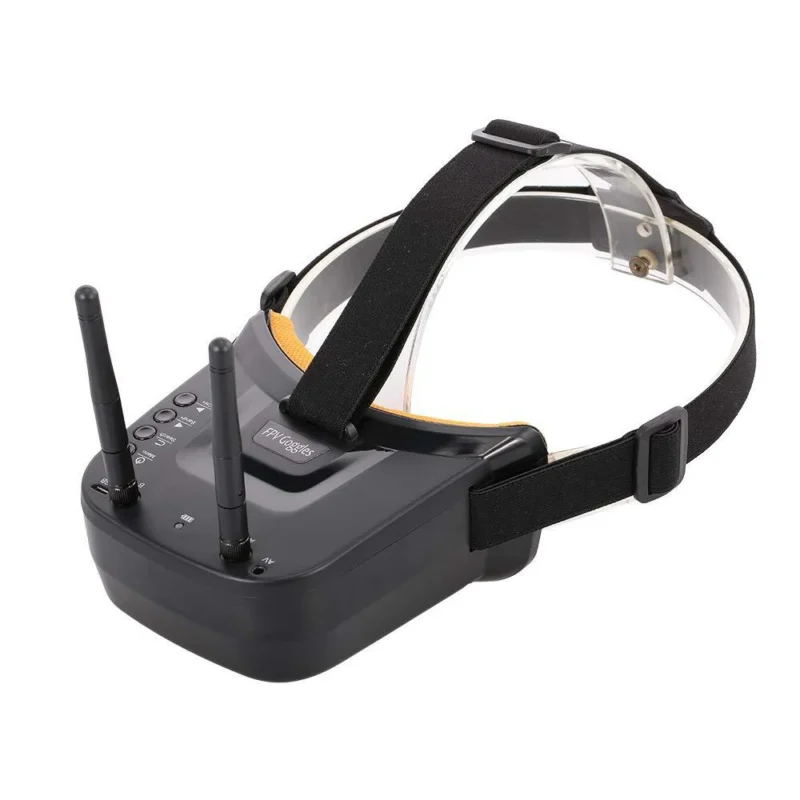
Separate goggle-side receiving from tripod-mounted ground receiving
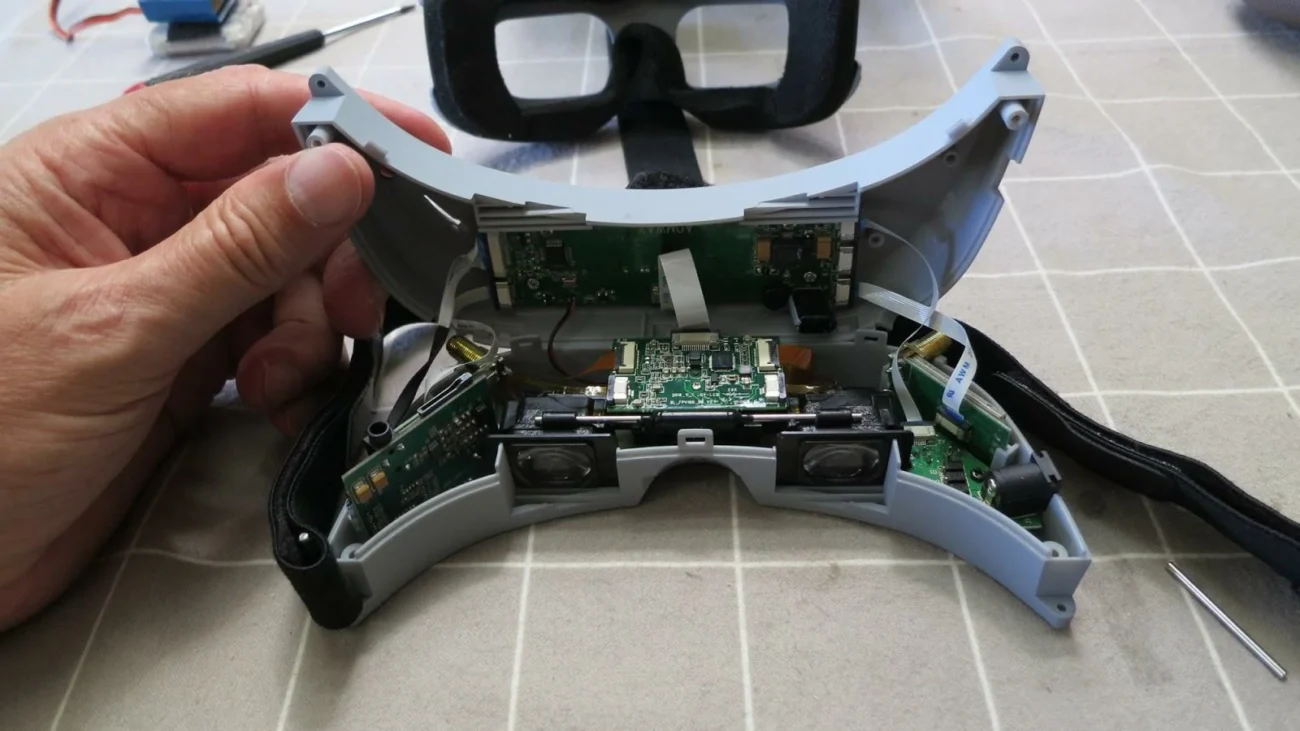
A ground station is predictable. You aim it. You leave it there. You build everything around that fixed geometry.
Goggles are the opposite. The receive axis keeps drifting, sometimes subtly, sometimes fast. That alone breaks the usual “more forward gain is better” logic.
A directional antenna behaves well when the receiver stays pointed. On goggles, that assumption collapses quickly. Even small head turns can push the aircraft outside the main lobe.
That’s why treating goggles like a mini ground station leads to unstable video—even when the antenna looks “stronger” on paper. You can see how fixed setups behave differently in this reference on ground station antenna setups.
Map whether your flying style needs forgiving coverage more than forward gain
Not every flight stresses the same part of the receive pattern.
Freestyle pilots tend to fly around themselves—side passes, quick reversals, brief behind-the-back moments. The signal direction changes constantly.
Racing is more forward-biased, but even then, head tracking isn’t perfectly aligned with the course.
Mid-range and long-range introduce another factor: you’re not always facing the aircraft directly, especially when adjusting position.
So the real question isn’t “how far can this antenna reach?” It’s how tolerant it is when the receive angle drifts.
That’s where an omnidirectional pattern starts to make sense—not as a fallback, but as a way to absorb movement.
Check when the real problem is receiver mobility, not antenna strength
A lot of “weak signal” complaints on goggles trace back to movement, not raw antenna performance.
You’ll see it in practice:
- Bench test looks clean
- Mounted on goggles, dropouts appear
- Swap to a lower-gain omni, stability improves
Nothing magical changed. The coverage shape did.
Higher-gain patterns narrow. On a fixed receiver, that helps. On a moving one, it becomes fragile.
Why does an omnidirectional antenna still make sense on FPV goggles?
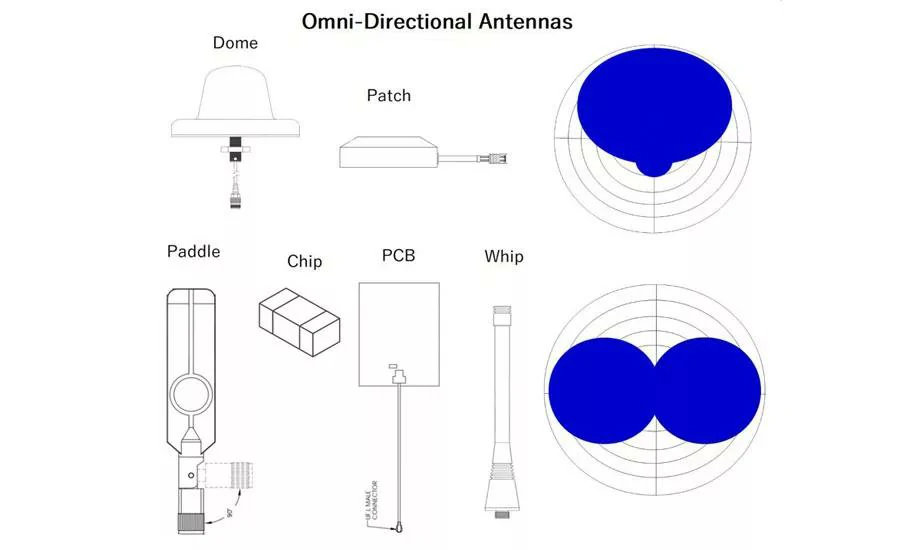
A technical illustration showing common omnidirectional antenna formats, including dome, patch, paddle, chip, PCB, and whip antennas, together with example radiation patterns. It demonstrates that an omni antenna does not radiate equally in every three-dimensional direction.
The label “omnidirectional” gets treated as basic. That’s misleading.
On goggles, direction isn’t controlled. That shifts the priority.
Compare omnidirectional coverage with directional coverage in moving receive positions
A directional antenna assumes alignment. When that alignment holds, the gain works.
But introduce motion, and the trade-off changes.
| Antenna Type | Behavior on Fixed Receiver | Behavior on Moving Receiver | Goggles Outcome |
| Directional (Patch) | Strong forward gain | Angle-sensitive | Drops when head turns |
| Omnidirectional (Circular) | Even coverage | Movement tolerant | More stable video |
That gap becomes obvious once the receiver starts moving with you.
Explain why wider coverage can outperform a stronger forward beam on goggles
A forward beam concentrates energy—but only in one direction.
On goggles, you rarely hold that direction perfectly.
A wider pattern doesn’t win by strength. It wins by staying usable across angles.
This shows up during:
- quick yaw turns
- altitude changes
- flying behind yourself briefly
The signal doesn’t need to peak—it needs to stay continuous.
Separate “more range” from “more usable reception”
Range claims ignore how often the link drops before reaching that distance.
A directional antenna may extend maximum range in ideal alignment. But lose that alignment for a moment, and the advantage disappears.
An omni often delivers less peak distance—but more consistent real-world reception.
If you’ve ever had a setup that “should go farther” but feels unstable, this is usually why.
Match the goggle strategy before you compare omni gain
Once you settle on omni, the next mistake shows up quickly—comparing gain numbers directly.
That rarely tells the full story.
Decide when goggles alone are enough and when a ground station should share the job
Some setups rely entirely on goggles. Others split the receive role.
If goggles handle everything, the antenna must tolerate:
- constant head movement
- changing flight direction
- limited mounting clearance
If a ground station is added, roles shift. The station handles long-range focus, while goggles provide local coverage.
This split becomes clearer when you compare with directional setups like patch antenna ground station designs.
Check when a modest-gain omni fits FPV goggles better than a taller model
Higher gain reshapes the pattern—usually flattening it.
You get more horizontal reach, but less vertical tolerance.
On goggles, that trade-off often hurts more than it helps.
A shorter 2–3 dBi circular omni tends to give more forgiving coverage.
Avoid treating every omni upgrade as a range upgrade
Moving from 2 dBi to 5 dBi doesn’t guarantee improvement.
Sometimes it creates dead zones in angles you didn’t expect.
That’s why upgrades need context. Without matching receive behavior, higher gain can quietly make things worse.
Use directional and patch articles as contrasts, not as defaults
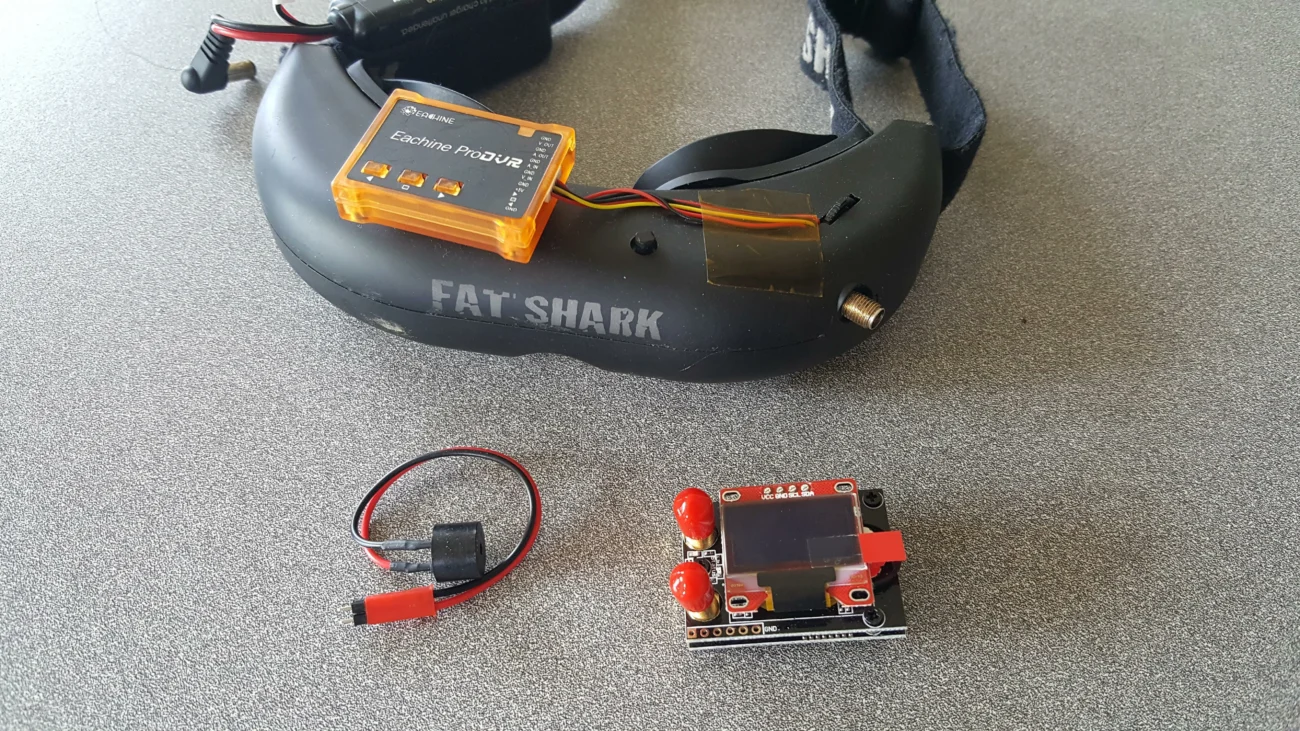
Directional antennas still matter. Just not always on the goggles.
Compare omni and directional roles without forcing a winner
There isn’t a universal “better.”
- Directional: strong when aligned
- Omni: stable when moving
On goggles, movement dominates. On ground stations, alignment is controlled.
That’s the real dividing line.
Check when a patch belongs on the ground station rather than on the goggles
A patch antenna needs stability.
On goggles, it inherits head movement. Its advantage disappears quickly.
On a tripod, it behaves exactly as designed.
If you’re evaluating patch performance, this comparison in directional antenna receiver setups explains why placement matters more than raw gain.
Use omni-plus-directional logic when the receive system is split
A mixed setup often works better:
- Goggles → omnidirectional (coverage + flexibility)
- Ground station → directional (range + focus)
This avoids forcing one antenna to do everything.
It also reduces hidden issues like misalignment losses, which are often mistaken for weak antennas.
Read circular polarization before you trust an FPV omni
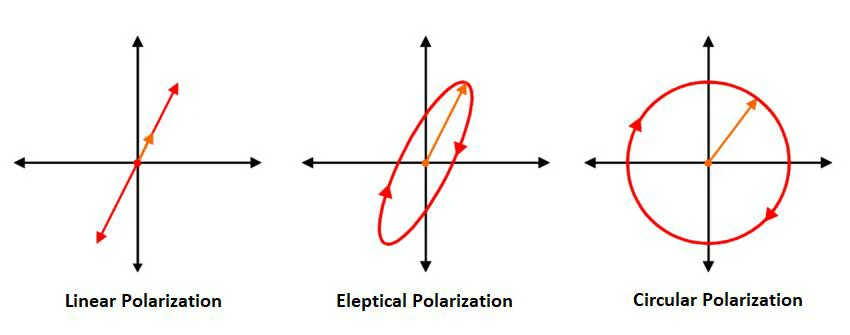
A visual comparison of linear, elliptical, and circular polarization. It helps explain why a circularly polarized FPV antenna can provide more stable reception when the pilot moves or turns their head.
A pilot swaps antennas on the goggles. Same connector, similar shape, slightly different size. On paper, the new one has higher gain. In the air, the signal gets worse.
That kind of result usually points to polarization—not gain.
Check whether the aircraft is RHCP or LHCP before choosing the goggle-side omni
Most FPV video systems rely on circular polarization. But that doesn’t mean any circular antenna will work.
There are two directions:
- RHCP (right-hand circular polarization)
- LHCP (left-hand circular polarization)
They look almost identical. Electrically, they are not compatible.
If the aircraft uses RHCP and the goggles use LHCP, the signal loss isn’t minor. It’s severe enough to override any gain advantage.
That’s why polarization matching sits above gain in the decision order. It’s covered in more detail in circular antenna breakdowns like RHCP vs LHCP antenna behavior.
Decide when circular polarization matters more than another dBi on paper
It’s easy to chase higher dBi numbers. It feels like progress.
But if polarization is wrong, adding gain is like amplifying noise.
Even with correct matching, circular polarization helps reduce multipath interference—reflections from the ground, buildings, or obstacles.
On goggles, where orientation changes constantly, that stability matters more than raw signal strength.
A properly matched circular omni often outperforms a higher-gain linear antenna, even if the specs suggest otherwise.
Avoid calling every rubber-duck omni an FPV-ready antenna
Not all omnidirectional antennas are built for FPV.
Common rubber-duck antennas are usually linearly polarized. They work for general RF use, but they don’t handle reflections the same way.
In an FPV environment—especially at 5.8 GHz—reflections are unavoidable.
Circular polarization helps reject those reflections instead of reinforcing them.
So an “omni antenna” label isn’t enough. It needs to be circularly polarized, and it needs to match the aircraft.
Use 5.8GHz behavior to judge whether the omni advantage will survive the chain
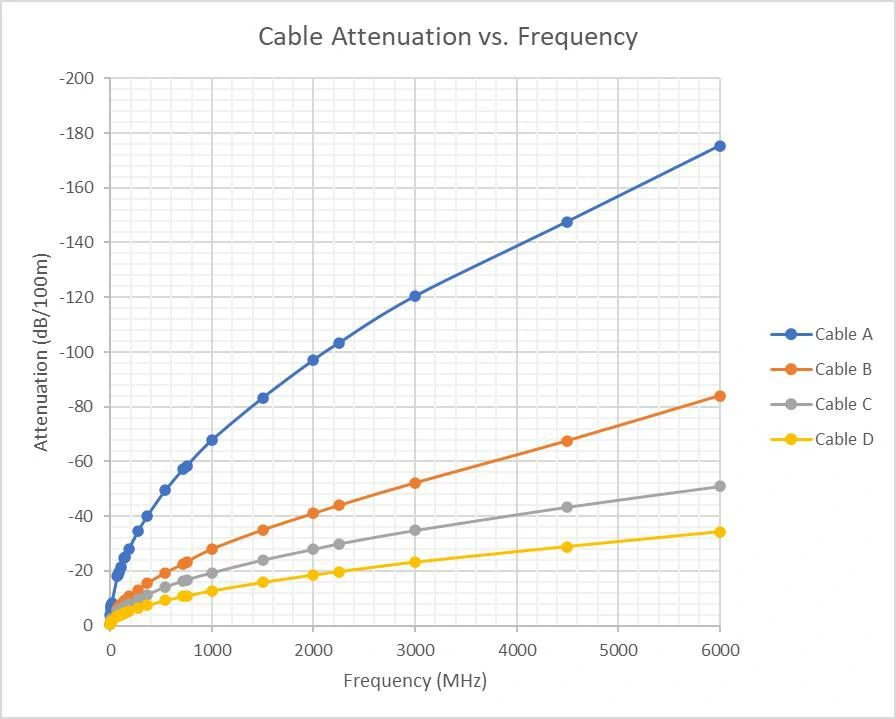
A comparison chart showing how attenuation changes as frequency increases across four coaxial cable types. The chart illustrates why short, low-loss feedlines and fewer adapters are important when connecting an omnidirectional antenna to FPV goggles.
At lower frequencies, small mistakes stay small.
At 5.8 GHz, they stack quickly.
A well-chosen 5.8GHz omnidirectional antenna can still underperform if the rest of the chain isn’t clean.
Check whether feedline loss is already canceling the omni benefit
Every connector, adapter, and short extension adds loss.
On paper, it looks small—fractions of a dB. In a chain, it accumulates.
A typical setup might include:
- antenna → adapter → extension → receiver module
Each interface introduces loss. At 5.8 GHz, even short cables matter.
If the system already sits near its limit, that extra loss can cancel the benefit of a better antenna.
This is why system-level thinking matters. You can explore how loss builds up across components in this coaxial cable guide.
Decide when a cleaner mount beats a higher-gain omni
Mounting often gets ignored.
But on goggles, placement affects:
- clearance from the head and body
- interference from nearby electronics
- bending stress on connectors
A clean, direct mount—short path, no unnecessary adapters—often performs better than a higher-gain antenna connected through extra hardware.
Less loss. Fewer variables.
Sometimes the simplest setup is the most stable.
Avoid blaming the omni when the real problem is cable, connector, or DVR module matching
Not every signal issue starts at the antenna.
Common hidden causes include:
- SMA vs RP-SMA mismatch
- loose connector interfaces
- poor-quality extension cables
- internal receiver module limitations
These problems can mimic antenna failure.
Before replacing the omni, check the chain.
A well-matched antenna can’t compensate for a poor connection path.
Build an FPV goggle omni pass-fail sheet before you buy
At this point, the decision shouldn’t rely on specs alone.
You need a quick way to evaluate whether an antenna actually fits your setup.
Score the receive behavior before you score the antenna
Start with how you fly, not what you buy.
Below is a simplified FPV Goggle Omni Fit Matrix designed for real-world selection:
| Factor | Option | Impact on Fit |
| Flight profile | Freestyle / Racing / Long-range | Defines movement pattern |
| Receiver platform | Goggles only / Hybrid | Determines antenna role |
| Receive movement | Low / Medium / High | Affects coverage tolerance needed |
| Frequency | 5.8 GHz | Higher loss sensitivity |
| Polarization | RHCP / LHCP | Must match aircraft |
| Antenna type | Circular omni / Linear omni | Circular preferred |
| Gain | 2 / 3 / 5+ dBi | Higher ≠ always better |
| Connector | SMA / RP-SMA | Must match physically |
| Feedline | Direct / Adapter / Extension | More interfaces = more loss |
| Mount clearance | Low / Medium / High | Affects real performance |
You can treat this as a checklist, or score it more formally.
A simple scoring model works like this:
- Coverage tolerance → 25
- Polarization match → 20
- Movement fit → 20
- Loss control → 15
- Connector match → 10
- Form factor → 10
If the total falls below a practical threshold, the antenna may not behave as expected—no matter how strong it looks on paper.
Apply a red-flag check before you finalize the field kit
Before committing to a setup, check for common failure points:
- polarization mismatch (RHCP vs LHCP)
- unnecessary adapters or long extensions
- incorrect connector gender (SMA vs RP-SMA)
- oversized antenna causing mechanical stress
- high-gain omni used in high-movement scenarios
These issues show up frequently—and they’re easy to miss during buying.
Watch where FPV goggle omni setups are moving next
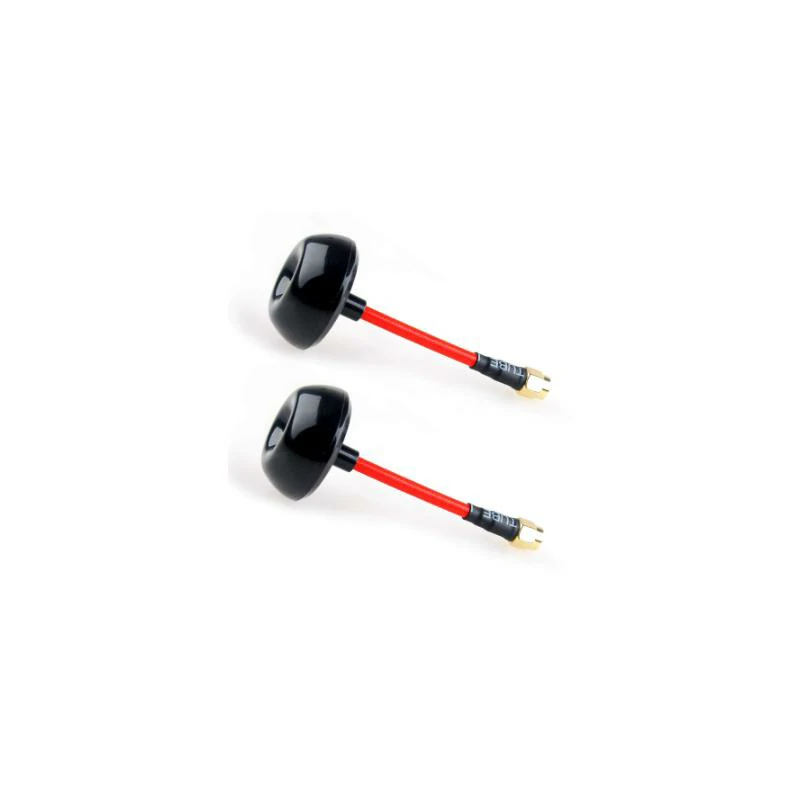
A pair of compact mushroom-style circularly polarized FPV antennas. These antennas are commonly selected for FPV goggles because their wide coverage and circular polarization can improve reception during head movement and help reduce multipath interference.
The trend isn’t toward bigger antennas.
It’s toward better behavior.
Track the move from “bigger omni” thinking to “more forgiving receive behavior”
Larger antennas used to signal better performance.
That thinking is shifting.
Pilots now focus more on:
- consistent reception
- reduced dropouts
- tolerance to movement
That naturally favors moderate-gain, circular omni designs.
Not because they’re simpler—but because they match how the system actually moves.
Follow how compact circular omni designs remain useful on moving receiver platforms
Short, robust omni antennas are staying relevant for a reason.
They:
- reduce mechanical stress on connectors
- simplify mounting
- maintain stable coverage in motion
On goggles, those advantages often outweigh theoretical range gains from larger designs.
The pattern is consistent: better system fit beats bigger numbers.
Build an FPV goggle omni pass-fail sheet before you buy
At this point, most of the obvious mistakes are already visible.
What’s left tends to be the subtle ones—the kind that don’t show up until the system is in the air. That’s why a quick pass-fail structure helps more than another spec comparison.
You’re not trying to find the “best” omnidirectional antenna. You’re trying to avoid the wrong one for how your goggles actually behave.
Score the receive behavior before you score the antenna
Start with the flight geometry and receiver movement, then move down to hardware.
Here’s a working FPV Goggle Omni Fit Matrix you can use during selection:
| Field | Options | What to Watch |
| Flight profile | Freestyle / Racing / Mid-range / Long-range | Determines direction variability |
| Receiver platform | Goggles only / Goggles + Ground station | Defines antenna role |
| Receive movement | Low / Medium / High | High movement favors wider coverage |
| Flying-area spread | Narrow / Moderate / Wide | Wide area needs forgiving pattern |
| Frequency band | 5.8 GHz / others | Higher frequency = higher sensitivity to loss |
| Polarization plan | RHCP / LHCP / Linear | Must align with aircraft |
| Aircraft-side polarization | RHCP / LHCP / Linear | Mismatch kills link efficiency |
| Antenna family | Circular omni / Linear omni / Rubber duck | Circular preferred for FPV |
| Gain range | 2 / 3 / 5+ dBi | Higher gain narrows pattern |
| Connector family | SMA / RP-SMA / MMCX | Physical mismatch is common |
| Feedline type | Direct / Adapter / Extension | More interfaces = more loss |
| Mount clearance risk | Low / Medium / High | Tight mounting affects performance |
| Recommendation | Use / Use with caution / Avoid | Final decision output |
This isn’t a datasheet. It’s a filter.
You’re checking whether the antenna matches the behavior of your setup—not just whether it “performs well.”
Apply a red-flag check before you finalize the field kit
Before committing, run a quick elimination pass:
- RHCP / LHCP mismatch between aircraft and goggles
- stacked adapters instead of direct connection
- long or low-quality extension cables at 5.8 GHz
- oversized antenna stressing the goggle connector
- assuming higher dBi automatically improves range
If two or more of these show up, the system will likely feel unstable even if individual parts look fine.
A lot of these issues are covered in broader system-level discussions like how system loss shapes RF behavior, where small mismatches accumulate into noticeable degradation.
FAQ
Why can an omnidirectional antenna work better than a patch on FPV goggles even when the patch has more gain?
Because the receiver moves.
A patch antenna depends on alignment. On goggles, alignment drifts constantly. The gain advantage disappears once the aircraft leaves the main beam.
An omni keeps working across angles, which often results in smoother video even if peak strength is lower.
Should I improve the goggle-side omni before changing anything on the ground station?
Not always.
If you’re already running a hybrid setup, the ground station usually carries the long-range role.
Upgrading goggles first only makes sense if:
- you rely on goggles alone
- you experience frequent dropouts during movement
- polarization or connector issues exist
Otherwise, system balance matters more than upgrading one side.
Can a short adapter or extension quietly cancel the benefit of a better omni antenna on goggles?
Yes, especially at 5.8 GHz.
Each connector interface adds loss. A short extension cable may seem harmless, but combined with adapters, it can offset the gain improvement from a better antenna.
If possible, keep the connection direct.
When is a compact circular omni the smarter choice than a taller omni on FPV goggles?
When receiver movement is high.
Freestyle and general flying benefit from wider, more forgiving coverage. A compact 2–3 dBi circular omni often delivers more stable reception than a taller 5 dBi model.
How do I know whether my goggle-side issue is coverage shape, polarization, or feedline loss?
You can isolate it step by step:
- Swap to a known matched RHCP/LHCP antenna → checks polarization
- Remove adapters/extensions → checks feedline loss
- Compare different gain levels → checks coverage shape
If the issue disappears after removing adapters, it wasn’t the antenna.
Why do many pilots keep an omni on goggles even after adding a patch-based ground station?
Because roles are different.
The ground station handles focused, long-range reception. Goggles still need to handle:
- close-range flying
- movement-based angle changes
- fallback reception
An omni remains useful even in advanced setups.
Can an omni antenna help if the aircraft antenna is still a poor polarization match?
Not effectively.
Polarization mismatch introduces major signal loss. Fixing that mismatch usually improves performance more than upgrading the omni itself.
If the aircraft antenna isn’t aligned, start there.