
Ground Station Antenna for FPV Reception
Apr 03,2026
Start with the receive side, not the drone side
This figure depicts an FPV drone flying near a tree line, with a ground station antenna mounted on a tripod at a low height. Signal waves are shown breaking before reaching the receiver. The image emphasizes that the weak link is often on the ground side—poor mounting height, aiming, or antenna choice—not the aircraft. It introduces the concept that upgrading the ground station antenna can fundamentally change the link behavior.
A pilot swaps antennas on the quad, bumps VTX power, and heads back out. The video still breaks at the same tree line. Same angle. Same distance. Nothing really changes.
That pattern shows up more often than people expect.
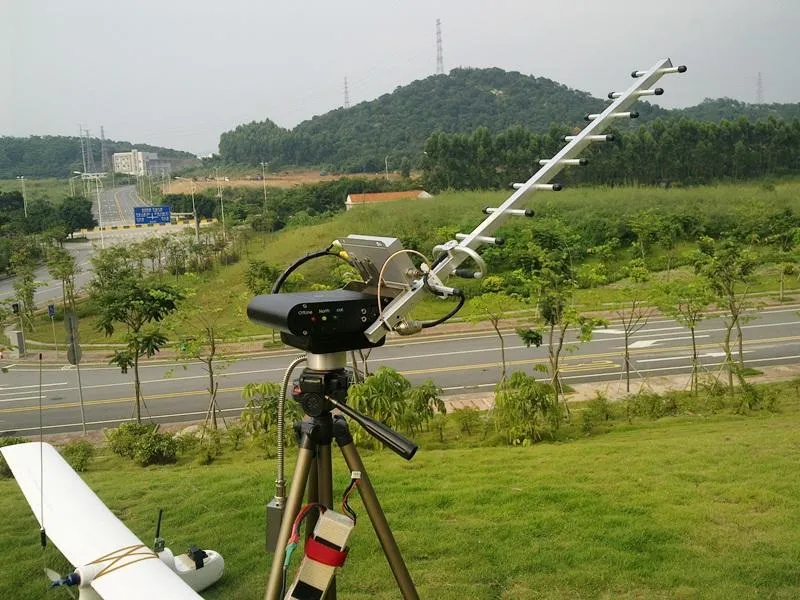
At that point, the aircraft is usually doing its job. Stable output. Clean enough radiation. The weak spot isn’t in the air—it’s on the ground. Low mounting height. Poor aiming. A receiver antenna that never had a clear shot in the first place.
That’s where a ground station antenna stops being an upgrade and starts acting like the decision point of the whole link.
Separate the aircraft antenna job from the ground-station antenna job
The aircraft antenna lives in motion. It has to deal with rotation, tilt, reflections, and constantly changing orientation. Its job is simple: keep signal alive no matter how the drone moves.
The ground station plays a different game.
It doesn’t rotate with the aircraft. It doesn’t need to stay compact. It can be positioned, elevated, and aimed with intent. That changes everything.
- Aircraft side → survival under motion
- Ground side → controlled reception
Mixing those roles leads to bad decisions. Treating them separately opens up better ones.
Check when goggles are enough and when a ground station makes sense
There are plenty of cases where goggles alone are enough. Short-range freestyle, open environments, unpredictable flight paths—these don’t demand precision on the receive side.
But certain conditions push the system beyond what head-mounted antennas can handle:
- long-range directional flying
- terrain blocking parts of the signal path
- fixed pilot position with wide flight coverage
- need for higher gain structures that are too bulky for goggles
That’s when a ground station antenna makes sense—not as an upgrade, but as a shift in how the system works.
Decide whether your limitation is receive geometry, not transmit power
Increasing VTX power feels like progress. It’s measurable. It’s easy to change.
But if the issue shows up at specific angles or locations, power isn’t the root problem.
Typical signs:
- signal drops at the same direction repeatedly
- video improves when the pilot slightly changes orientation
- higher power adds noise but not usable range
Those are geometry issues.
Height, line-of-sight, and antenna direction define the receive side far more than raw transmit power once the basics are covered.
Why does ground station antenna choice change the whole FPV system?
Compare ground-based reception with head-mounted reception in real flying conditions
Goggles impose limits.
They restrict antenna size, balance, and placement. Even directional antennas mounted on goggles are compromised by how the pilot moves.
A ground station removes those limits.
- larger antennas become practical
- aiming becomes intentional
- mounting becomes stable
- diversity setups become easier to use properly
It’s not about better components. It’s about giving those components a fair working condition.
Explain how height, line-of-sight, and aiming affect received video quality
Small changes in ground setup can reshape the entire link.
Raising the antenna even slightly can:
- reduce ground reflections
- clear partial obstructions
- improve signal consistency
Aiming matters just as much.
Directional antennas don’t “boost everything.” They focus reception in a specific direction. If that direction is off, performance drops quickly.
That’s where many setups quietly fail—not because of bad hardware, but because of poor positioning.
Separate better reception from simply buying a stronger antenna
Higher gain doesn’t automatically mean better results.
A narrow beam antenna pointed slightly wrong can perform worse than a moderate omni. A large antenna mounted too low can behave unpredictably.
Reception improves when:
- antenna pattern matches flight path
- placement supports line-of-sight
- aiming is realistic to maintain
Not when numbers simply increase.
Match the receiver strategy before you choose between directional antenna and omni
Decide when an omni on the receiver side is still enough
Omnidirectional antennas still make sense when:
- flight direction changes constantly
- range is moderate
- simplicity matters more than optimization
They don’t require aiming. They don’t create sharp blind spots.
That flexibility is valuable, especially for freestyle flying.
Check when a directional antenna solves more than a higher-power VTX
Directional antennas become useful when the flight path stabilizes.
- long-range runs
- exploration in a consistent direction
- situations where the receiver can be aimed once and left alone
In those cases, a directional antenna often improves link quality more effectively than increasing transmit power.
The idea of focusing energy into a defined pattern is fundamental to how a Directional antenna behaves. It’s not about more power—it’s about where that power is used.
Use diversity logic when one antenna cannot cover the whole mission
A single antenna rarely covers every situation well.
That’s why many ground station setups use diversity—two antennas with different roles.
| Role | Antenna Type | Advantage | Limitation |
|---|---|---|---|
| Primary | Directional / patch | Focused reception, longer reach | Requires aiming |
| Secondary | Omni | Full coverage | Lower gain |
The receiver switches between them based on signal quality.
This approach avoids the “all-or-nothing” problem of relying on a single antenna type.
Read patch antenna claims in the context of ground-station use
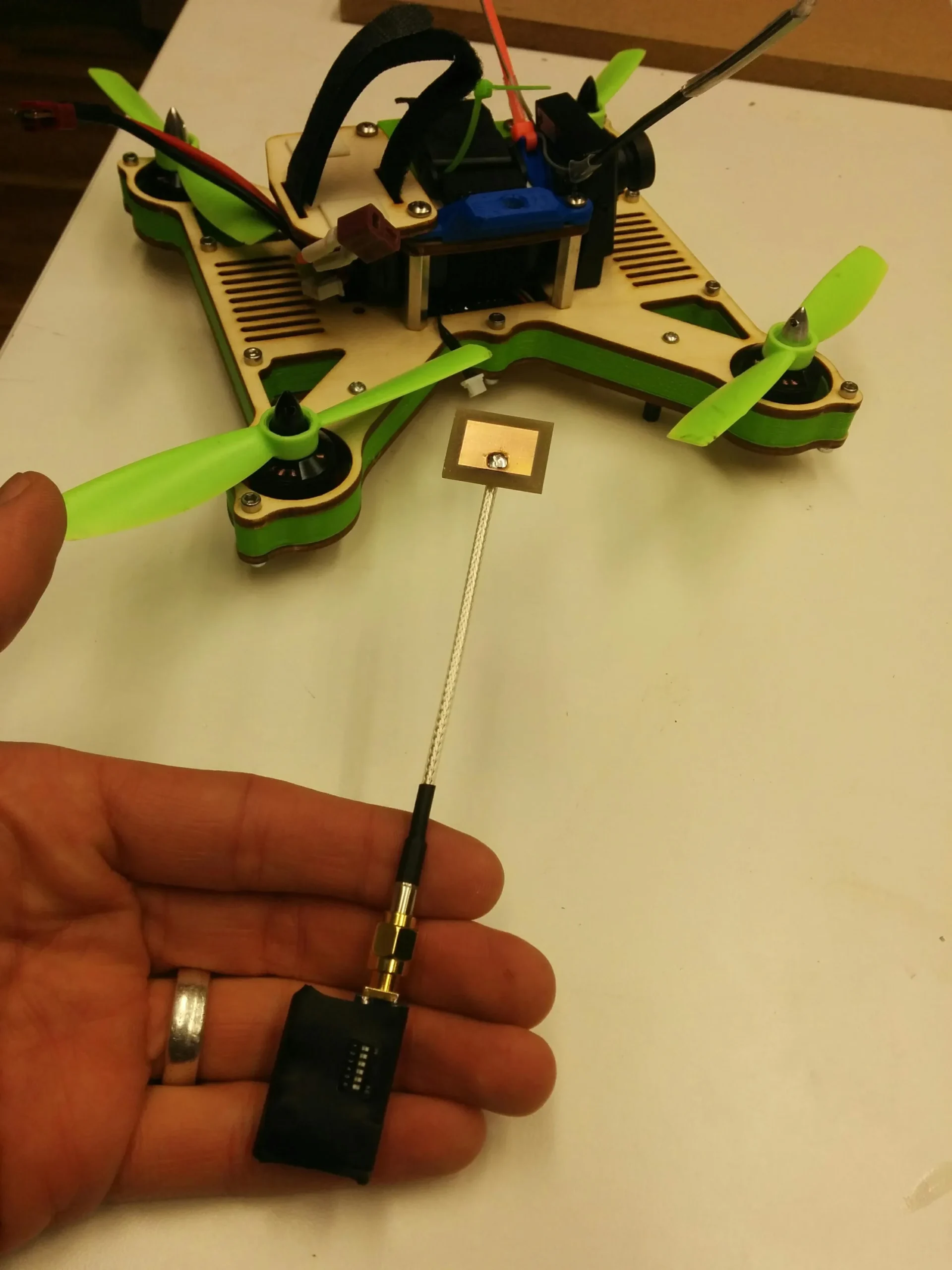
This figure shows a compact patch antenna, likely with a flat rectangular panel, mounted on a small tripod or bracket. Radiation lobes are illustrated as a forward-focused cone. The image highlights that patch antennas provide useful gain without the bulk of larger directional arrays, and their beamwidth is forgiving enough for moderate aiming errors. This makes them a practical choice for many FPV setups.
Patch antennas are everywhere in FPV setups. Compact, directional, easy to mount.
But they’re often misunderstood.
Compare patch antennas with broader directional options without flattening the differences
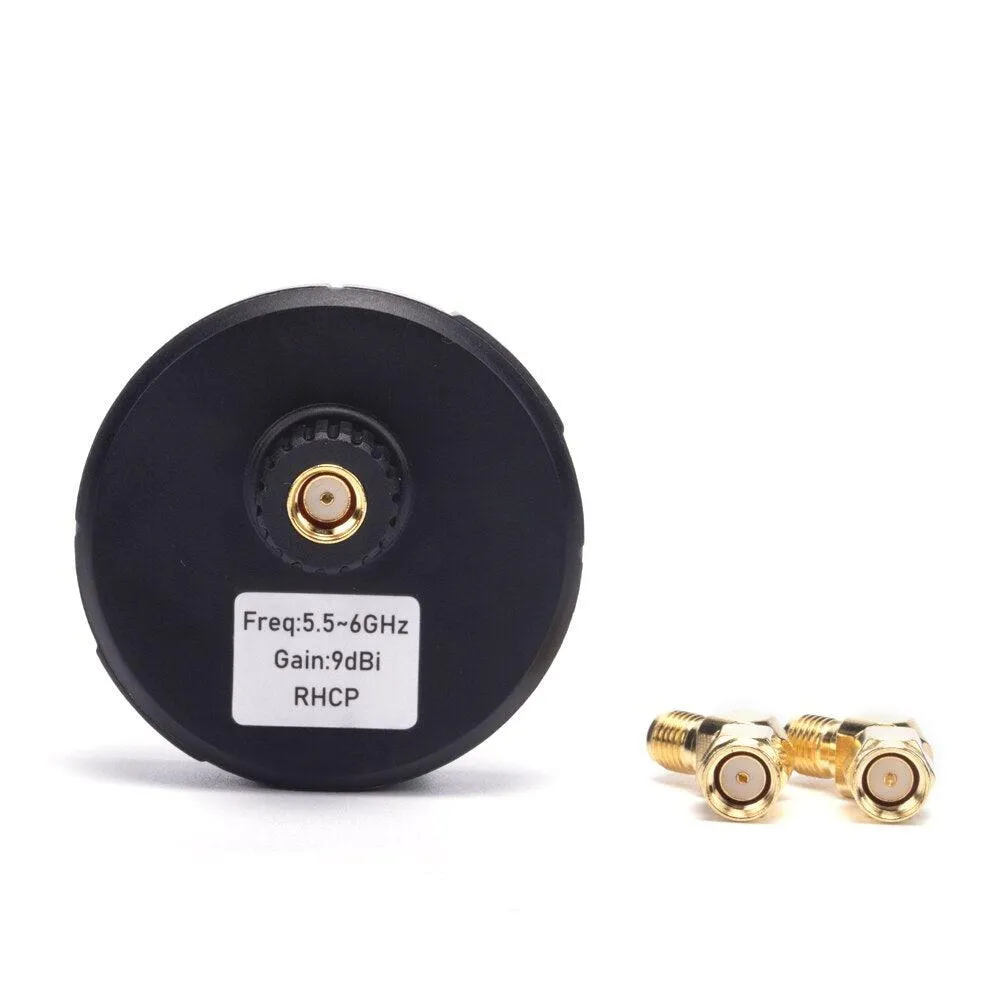
This figure presents two radiation patterns side by side. On the left, a patch antenna shows a moderately wide forward lobe (e.g., 60–80 degrees). On the right, a high-gain directional antenna (e.g., helical or large Yagi) shows a very narrow beam (e.g., 20–30 degrees). The image illustrates the trade-off: higher gain comes with narrower coverage, which requires precise aiming. For ground stations that must handle moderate movement or quick setup, a patch antenna’s wider beam is often more practical.
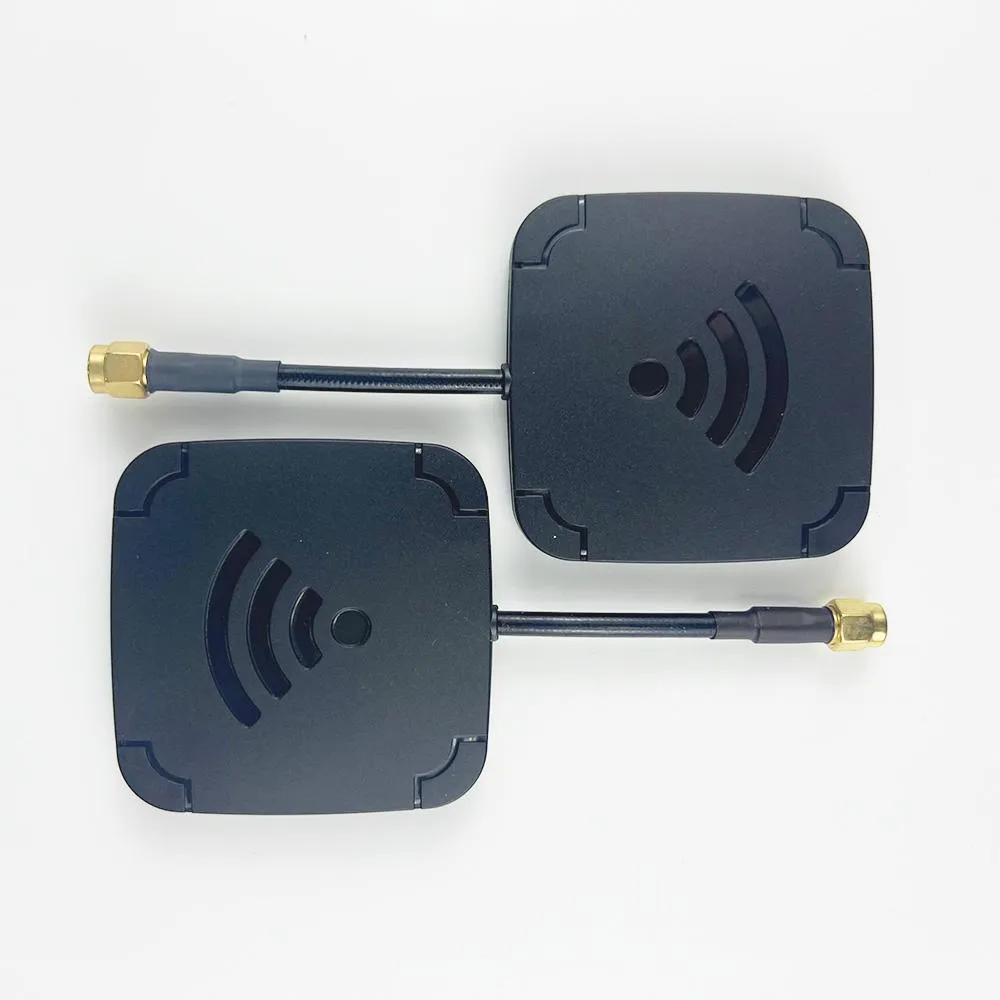
This image shows a realistic field setup: a tripod holding a patch antenna at chest height or higher, pointed toward the flight area. The background shows an open field with a drone in the distance. The figure emphasizes that physical placement—height, orientation, and clearance from obstructions—directly affects received signal quality. Even a good patch antenna will underperform if mounted too low or aimed incorrectly.
A patch antenna is part of a larger directional category.
Compared to larger directional builds:
- easier to carry
- faster to deploy
- less sensitive to small aiming errors
But also:
- lower peak gain
- wider beam compared to high-gain arrays
That balance is why they show up so often in real setups.
Check beam shape, not just dBi, before you mount a patch on a tripod
Gain alone doesn’t define performance.
Beamwidth determines how forgiving the antenna is in real use.
A moderate patch antenna often provides a usable forward cone—wide enough to tolerate small aiming errors, narrow enough to improve range.
Ignoring beam shape leads to setups that look impressive but behave inconsistently.
Decide when a compact patch is better than a larger directional build
Bigger antennas bring trade-offs:
- harder to transport
- more sensitive to misalignment
- less practical in dynamic environments
A compact patch often wins simply because it’s easier to use correctly.
And in RF systems, correct use almost always matters more than theoretical advantage.
Use polarization matching to avoid wasting receiver-side gain
A pilot upgrades the ground station. Bigger antenna. Cleaner mount. Better height. The signal improves—but not as much as expected.
That gap usually isn’t random.
It’s often polarization.
Check whether the aircraft is RHCP antenna or LHCP antenna before shopping for the receiver side
This is where small details quietly break otherwise solid setups.
If the aircraft transmits RHCP and the receiver is set up with LHCP, the system starts with a built-in loss. No amount of gain fully recovers it. The antenna might look “strong,” but the link behaves weak.
That mismatch doesn’t show up in product photos or quick specs. It shows up in flight.
- unstable video even with good line-of-sight
- inconsistent performance across distance
- unexpected dropouts at moderate range
The fix isn’t adding gain. It’s matching the system.
Decide when circular polarization matters more than added receiver gain
Circular polarization isn’t just about preference. It directly affects how signals behave under movement and reflection.
In FPV:
- aircraft orientation constantly changes
- reflections from ground and obstacles are common
- linear polarization becomes unreliable quickly
That’s why circular polarized setups dominate.
A correctly matched circular system often outperforms a higher-gain but mismatched setup. The gain number looks smaller, but the usable signal is stronger.
Avoid mixing polarization plans across shared FPV sessions
Multi-pilot environments introduce another layer of complexity.
If different pilots run different polarization types on the same frequency band, things get messy fast:
- signal leakage between systems
- inconsistent receiver behavior
- unexpected interference patterns
Keeping polarization consistent across a session avoids these issues. It also simplifies troubleshooting when something goes wrong.
Verify connectors and feedlines before blaming the antenna
This photograph shows two RF connectors side by side: one SMA male (center pin visible) and one RP-SMA male (center socket visible). Arrows highlight the internal contact difference. The image serves as a quick identification guide for FPV pilots setting up ground stations. It notes that assuming compatibility by thread alone leads to mismatches that degrade signal—often mistaken for antenna problems.
A ground station antenna gets mounted on a tripod. Everything looks clean. Then the performance feels underwhelming.
At that point, attention usually goes to the antenna.
But the issue often sits one step earlier—in the connection path.
Distinguish SMA and RP-SMA on ground receivers in under five seconds
SMA and RP-SMA look almost identical. That’s where mistakes happen.
A quick check:
- look at the center pin, not just the threads
- confirm both sides before tightening anything
- don’t rely on labeling alone
A mismatch doesn’t always prevent connection—it just creates a bad one.
That kind of issue is easy to miss and frustrating to diagnose later.
If you need a deeper breakdown of connector differences, a comparison like SMA vs BNC vs N-Type helps clarify how connector families behave in real RF setups.
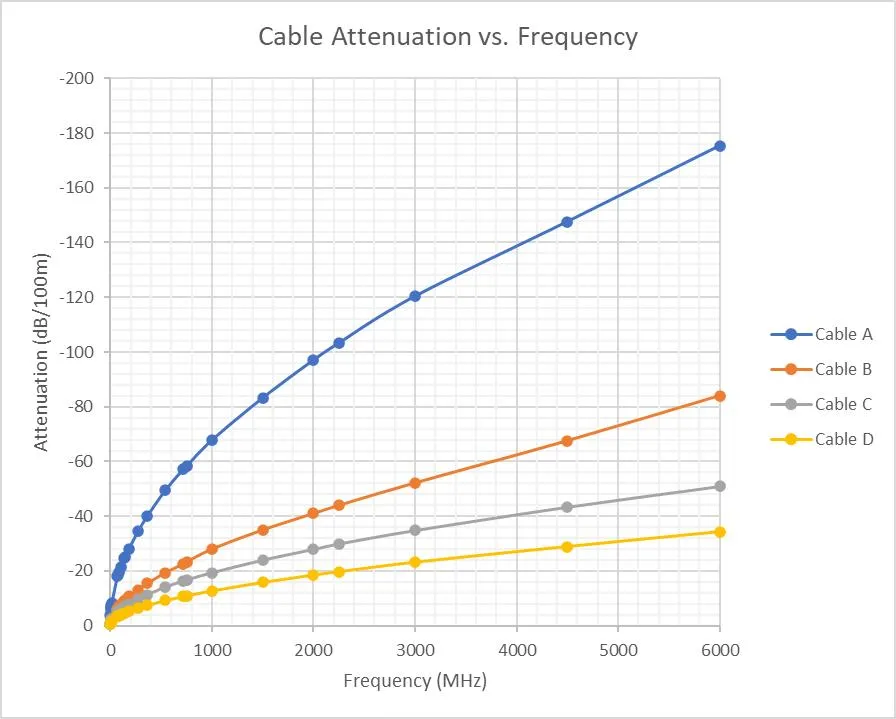
Check whether your extension cable is quietly eating the benefit of the receiver antenna
Ground stations often use extension cables to move the antenna away from the receiver.
That’s practical. It also introduces loss.
A longer cable:
- adds attenuation
- introduces more connection points
- increases the chance of mismatch
Short, high-quality coax works well. Long, generic cables can quietly cancel out the gain from a better antenna.
The issue doesn’t show up as a clear failure. It shows up as “less improvement than expected.”
Avoid adapter stacks that fix mounting but add loss and fragility
Adapters solve mechanical problems quickly.
They also stack electrical compromises:
- each interface adds small loss
- mechanical stability drops
- stress shifts toward the weakest connector
A single clean connection is usually better than multiple quick fixes.
If mounting requires too many adapters, the layout itself probably needs rethinking.
Build a ground-station pass-fail sheet before you buy
Most buying decisions focus on the antenna itself.
That’s not enough.
A ground station works as a system. The antenna only performs well if everything around it supports it.
Score the receive strategy before you score the product
Before choosing hardware, define the use case:
- how the aircraft moves
- how the receiver will be positioned
- how much aiming is realistic
Once that’s clear, the antenna choice becomes easier—and more accurate.
Apply a red-flag check before you finalize the field kit
Some setups fail before they’re even powered on.
Typical red flags:
- polarization mismatch
- excessive cable length
- unstable mounting
- unrealistic aiming requirements
Catching these early avoids chasing problems later.
Ground Station Antenna Fit Matrix
| Field | Option | Notes |
|---|---|---|
| Flight profile | Freestyle / Racing / Mid-range / Long-range | Defines movement pattern |
| Receiver setup | Goggles / Ground station / Diversity | Determines system complexity |
| Receive role | Directional / Omni / Hybrid | Strategy choice |
| Frequency band | 5.8GHz / other | Affects antenna size and loss |
| Polarization planned | RHCP / LHCP / Linear | Must match aircraft |
| Aircraft polarization | RHCP / LHCP | Critical match point |
| Antenna family | Patch / Directional / Omni | Functional category |
| Connector family | SMA / RP-SMA / MMCX | Check compatibility |
| Feedline type | Direct / Short / Long | Impacts loss |
| Feedline length | cm | Longer = more loss |
| Mount height | Low / Medium / High | Affects line-of-sight |
| Beam aiming | Low / Medium / High | Practical constraint |
| Interference level | Low / Medium / High | Environment factor |
| Recommendation | Use / Caution / Avoid | Final decision |
Fit Score Formula:
Fit Score =
Receiver Strategy Fit (25) +
Polarization Match (20) +
Aiming Suitability (15) +
Feedline Loss Control (15) +
Connector Match (10) +
Field Geometry Fit (15)
Interpretation:
- 85–100 → strong match
- 70–84 → usable with adjustments
- below 70 → likely to underperform
This isn’t a spec sheet. It’s a filter.
Watch where FPV ground-station antenna setups are heading next
The direction is shifting quietly.
Less focus on a single “best antenna.” More focus on how the system is divided between air and ground.
Track the shift toward system-level receive planning instead of single-antenna thinking
Older setups often treated the antenna as the upgrade.
Newer approaches treat the system as a whole:
- aircraft handles coverage
- ground station handles focus
- diversity handles transitions
That separation leads to more predictable performance.
Older setups often treated the antenna as the upgrade.
Newer approaches treat the system as a whole:
- aircraft handles coverage
- ground station handles focus
- diversity handles transitions
That separation leads to more predictable performance.
Despite new designs, compact patch antennas keep showing up.
They sit in a practical range:
- directional enough to improve range
- wide enough to remain usable without constant adjustment
- small enough to deploy quickly
That balance keeps them relevant, even as more advanced designs appear.
Watch where FPV ground-station antenna setups are heading next
The direction isn’t about finding a single antenna that solves everything. It’s moving toward dividing roles cleanly between the aircraft and the ground side.
A lot of recent builds don’t try to “max out” one component anymore. They spread responsibility.
- the aircraft keeps coverage stable under movement
- the ground station handles direction and selectivity
- the receiver logic decides which signal path is usable at any moment
That approach doesn’t look dramatic on a spec sheet. In the field, it tends to behave more predictably.
Track the shift toward system-level receive planning instead of single-antenna thinking
There’s a visible change in how experienced pilots build their setups.
Instead of asking, “Which antenna has the highest gain?” the question shifts to:
- where will the aircraft spend most of its time?
- how much aiming can I realistically maintain?
- what happens when the aircraft leaves the main beam?
That leads to setups where:
- a directional antenna is assigned as the primary receive path
- an omni acts as a fallback when alignment breaks
- mounting height and placement are adjusted before hardware is swapped
It’s a quieter kind of optimization. Less about parts, more about placement and roles.
You can see this thinking reflected in how directional patterns are used in broader RF systems, not just FPV. The principle behind a Directional antenna is the same—focus where it matters, ignore where it doesn’t.
Follow how compact patch options remain popular in FPV receiver builds
Even with more advanced directional designs available, compact patch antennas still show up in a lot of real-world kits.
That’s not accidental.
They sit in a workable middle ground:
- directional enough to improve link quality
- wide enough to tolerate imperfect aiming
- small enough to mount quickly on a tripod or mast
Larger directional builds can outperform them in controlled setups. In actual flying conditions—uneven terrain, time pressure, shifting positions—the compact patch often ends up being easier to use correctly.
That difference matters more than raw gain.
FAQs
Should you upgrade the ground station antenna before changing the drone antenna?
This comes up often, especially when the link starts to feel unreliable.
If the aircraft already has:
- a stable circular polarized antenna
- reasonable placement away from interference sources
- no obvious mechanical issues
Then the ground side is usually the better place to look first.
Upgrading the aircraft antenna can help, but it doesn’t fix:
- poor receive angle
- low mounting height
- polarization mismatch on the receiver
- loss introduced by cables and adapters
A ground station antenna changes how the system receives the signal. That tends to have a broader effect than changing what the aircraft transmits—assuming the aircraft side isn’t already compromised.
Why can a high-gain patch antenna perform worse than an omni at close range?
This looks counterintuitive until you see it in practice.
A high-gain patch narrows its beam. That’s how it achieves higher sensitivity in a specific direction.
At close range:
- the aircraft moves quickly across angles
- the beam becomes harder to track
- signal can drop when the aircraft exits the main lobe
An omni doesn’t have that problem. It trades reach for coverage.
So in short-range or highly dynamic flying, an omni can feel more stable even if it’s technically “weaker.”
Can a long extension cable quietly erase the benefit of a better ground station antenna?
This figure illustrates two scenarios. On the left, a patch antenna is connected directly to a receiver with a very short coax (minimal loss). On the right, the same antenna is connected via a long extension cable (e.g., 5+ meters). Signal waves are shown strong on the left but weak and broken on the right. The image explains that at 5.8GHz, cable attenuation is significant, and a long extension can silently erase the benefit of a ground station antenna upgrade. Keeping the feedline short is critical.
Yes. And it happens more often than people expect.
Every additional length of coax introduces attenuation. At 5.8GHz, that loss builds quickly.
A simple comparison helps illustrate the trade-off:
| Cable Setup | Typical Result | Hidden Cost |
|---|---|---|
| Direct mount | Best signal integrity | Less flexible placement |
| Short extension | Good balance | Minor loss |
| Long extension | Easier mounting | Noticeable attenuation |
The problem is subtle. The antenna upgrade looks correct, but the system gain doesn’t show up fully.
Keeping the feedline short—and appropriate for the frequency—matters just as much as the antenna itself.
For deeper context on how cable loss accumulates in RF systems, this coaxial cable guide breaks down the behavior across different cable types.
When does a ground station make more sense than using goggle-mounted antennas alone?
The shift usually happens when the flight pattern stops being local and unpredictable.
A ground station becomes practical when:
- the aircraft spends time far from the pilot
- the flight path is mostly directional
- terrain or structures interfere with line-of-sight
- higher gain antennas are needed but not wearable
It’s less about range in absolute terms, and more about how the signal arrives at the receiver.
How do you know whether your receive-side issue is aiming, polarization, or feedline loss?
The symptoms overlap, but a few patterns help separate them.
Aiming issue:
- signal drops when the aircraft moves laterally
- improves when you adjust antenna direction
Polarization mismatch:
- signal feels weak even with clear line-of-sight
- doesn’t improve much with aiming
Feedline loss:
- upgrades show less improvement than expected
- performance degrades gradually with longer cable runs
Breaking the problem down this way avoids random upgrades.
Is a compact patch antenna enough for freestyle, or only for longer-range flying?
It depends on how the freestyle is flown.
- tight, constantly shifting movement → omni still makes more sense
- wider arcs, semi-directional flying → patch can help
Some pilots use a hybrid setup even for freestyle:
- patch for forward direction
- omni as fallback
That keeps coverage flexible without giving up directional advantage entirely.
Why do multi-antenna ground stations still fail if the polarization plan is wrong?
Because diversity doesn’t fix fundamental mismatch.
If both antennas in a diversity setup are misaligned in polarization relative to the aircraft, the receiver is just switching between two weak signals.
That creates:
- unstable switching behavior
- inconsistent video quality
- reduced effective range
Diversity improves coverage. It doesn’t correct configuration errors.
Final thought: the ground side decides more than it looks like
In many FPV setups, the aircraft gets most of the attention. It’s visible, it’s moving, it feels like the active part of the system.
But once the basics are in place, the receive side quietly becomes the limiting factor.
A well-placed, properly matched ground station antenna doesn’t just extend range. It stabilizes the link. It reduces randomness. It makes the system behave in a way that feels predictable instead of fragile.
That shift doesn’t come from a single spec or upgrade.
It comes from treating the ground side as the place where decisions are made.
Bonfon Office Building, Longgang District, Shenzhen City, Guangdong Province, China

A China-based OEM/ODM RF communications supplier
Table of Contents
Owning your OEM/ODM/Private Label for Electronic Devices andComponents is now easier than ever.