
MMCX to SMA Cable Selection & Use Guide
Mar 15,2026
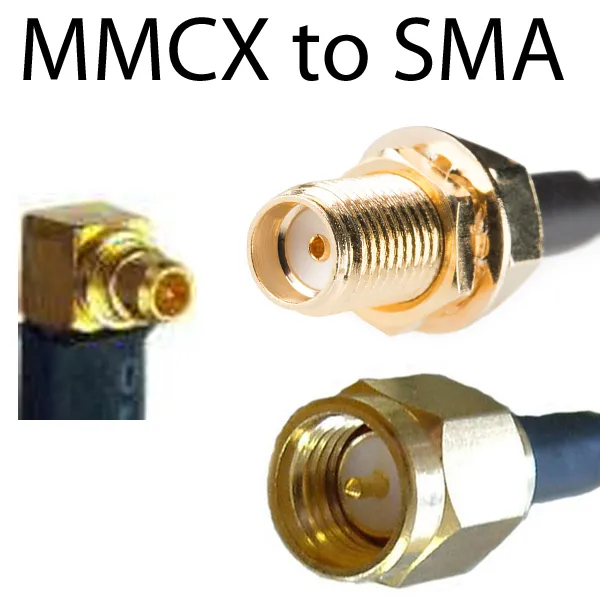
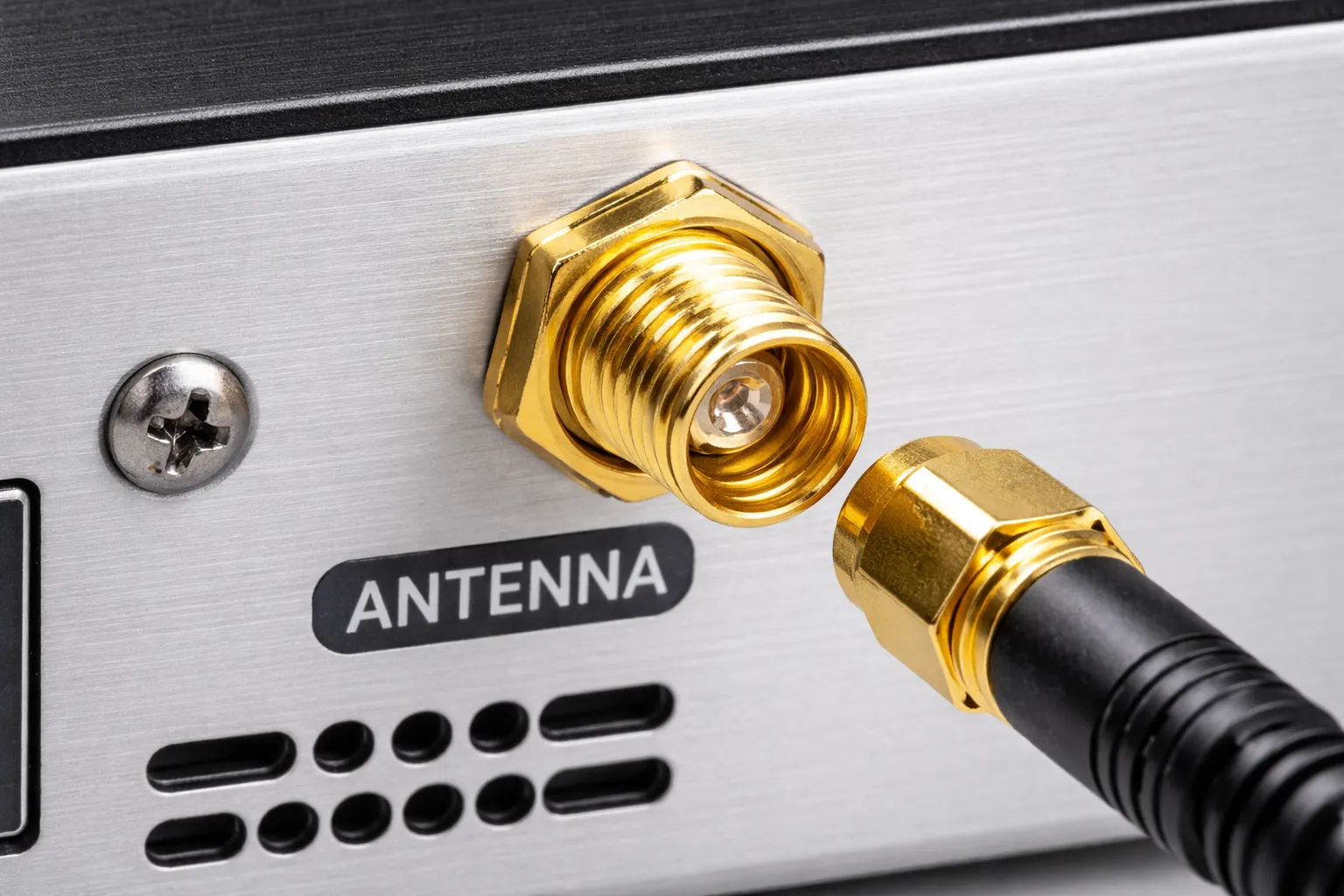
This figure illustrates a typical MMCX to SMA cable assembly, consisting of a short length of coaxial cable (often RG316) terminated with an MMCX plug on one end and an SMA plug on the other. It is used to connect RF modules with miniature MMCX connectors to panel-mounted SMA bulkheads or external antennas. The assembly absorbs mechanical stress and protects the module's MMCX connector from torque and vibration, ensuring long-term reliability.
RF engineers rarely start a design conversation with cables.
Radios usually get the spotlight. Antenna placement becomes a long debate. Sometimes firmware timing even enters the discussion. The small coaxial jumper connecting the RF module to the outside world? That component tends to appear much later—often when the enclosure is already being designed.
That’s where a MMCX to SMA cable usually enters the picture.
In compact wireless hardware, the RF port on the board is frequently an MMCX connector. External antennas, measurement tools, and most off-the-shelf RF accessories rely on SMA connectors instead. A short cable assembly becomes the practical bridge between those two interfaces.
On paper it looks trivial. A short piece of RF coaxial cable, two connectors, done.
In practice, that small transition determines where mechanical stress ends up, how predictable the RF path remains, and how serviceable the device will be after deployment. In other words, it’s not just a cable—it’s a design decision.
Where does an MMCX to SMA cable belong in a real RF system?
Before discussing cable types or loss numbers, it helps to place the MMCX to SMA cable in context.
In most RF products it isn’t part of the antenna feedline. It’s something slightly different.
Think of it as a transition element inside the RF chain.
Map MMCX board ports to SMA panels, antennas, and test ports
Compact RF modules often expose MMCX connectors directly on the PCB. That choice isn’t about electrical performance. It’s mostly about physical space.
MMCX connectors are small enough to fit on densely populated boards. They also work well with automated assembly processes.
You’ll commonly see them on:
- GNSS receiver modules
- Wi-Fi or Bluetooth radios
- cellular IoT boards
- SDR development platforms
The outside world looks different. Antennas, spectrum analyzers, and coax extension cables almost always use SMA connectors.
So a typical RF path might look like this:
| System location | Connector |
|---|---|
| RF module | MMCX |
| internal jumper | MMCX to SMA cable |
| enclosure panel | SMA bulkhead |
| external antenna | SMA |
That small jumper cable relocates the RF interface from the PCB to the enclosure panel.
Without it, technicians would be connecting antennas directly to the board-level connector. That’s rarely desirable.
Treat MMCX to SMA cable as a short RF transition, not a feeder
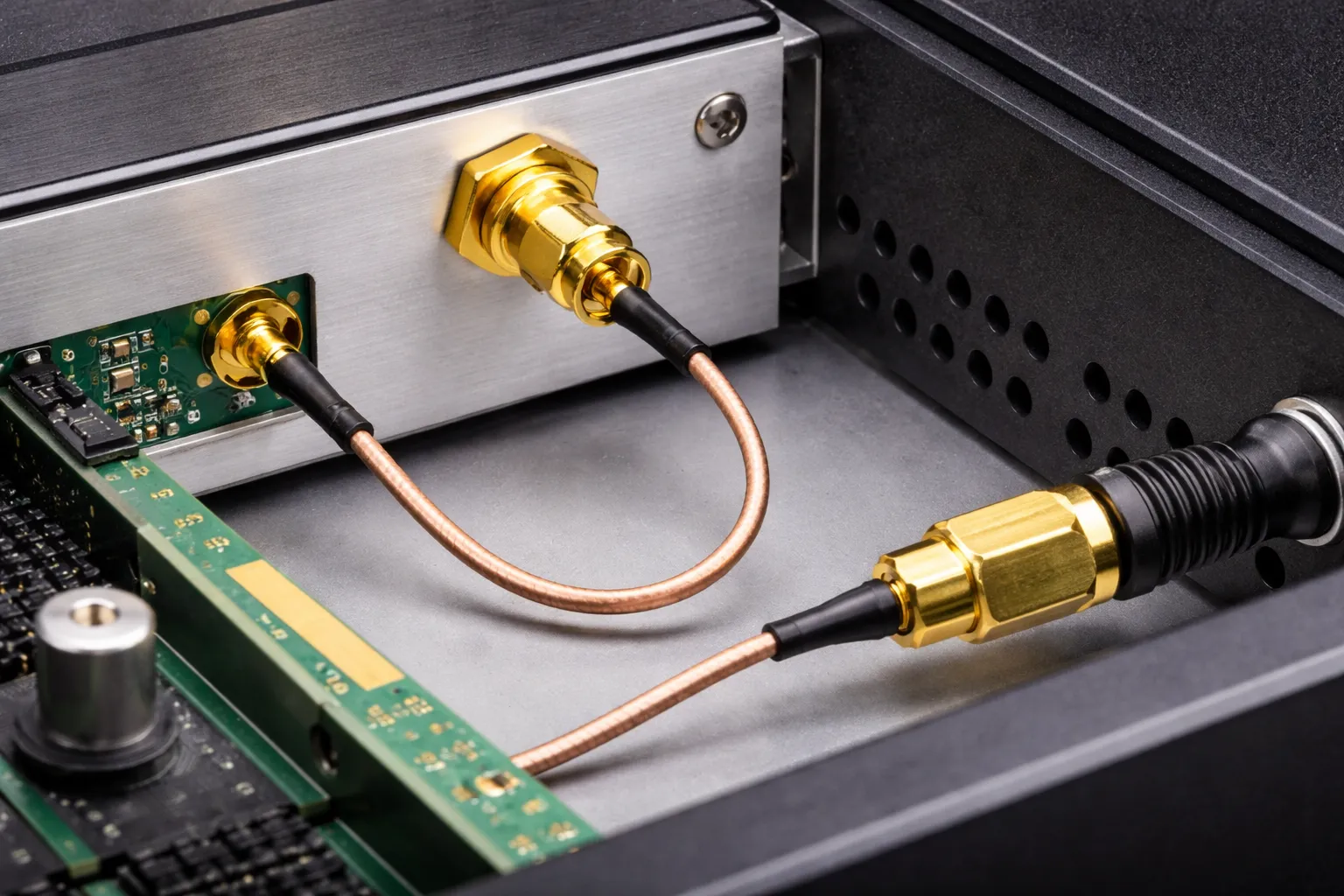
This figure emphasizes the proper role of an MMCX to SMA cable in an RF system. It shows a board-mounted MMCX connector connected via a short jumper to a panel-mounted SMA bulkhead. The cable is intentionally kept short (typically under 300 mm) to minimize loss and mechanical stress. Longer cable runs should transition to standard 50-ohm coaxial cable after the SMA interface. This architecture protects the fragile board connector and improves serviceability.
It’s tempting—especially during early prototypes—to treat the MMCX to SMA cable as a general-purpose RF cable.
That assumption usually works on the bench.
Later, it becomes problematic.
The cable should really be viewed as a short transition link, not a long feedline. Its job is to move the RF connection away from the board so that a more robust interface can take over.
Typical lengths are fairly short:
| Application | Typical length |
|---|---|
| board jumper | 50–100 mm |
| panel transition lead | 100–200 mm |
| compact enclosure routing | up to 300 mm |
Once the signal reaches the SMA connector, longer 50 ohm coaxial cable runs can continue toward the antenna.
Keeping the MMCX section short improves several things at once:
- lower insertion loss
- less mechanical stress on the PCB connector
- fewer impedance disturbances in the RF path
If a system needs a longer cable run, it’s usually better to transition to SMA first and continue from there.
Connect MMCX to SMA cable to the RG316 coaxial cable family
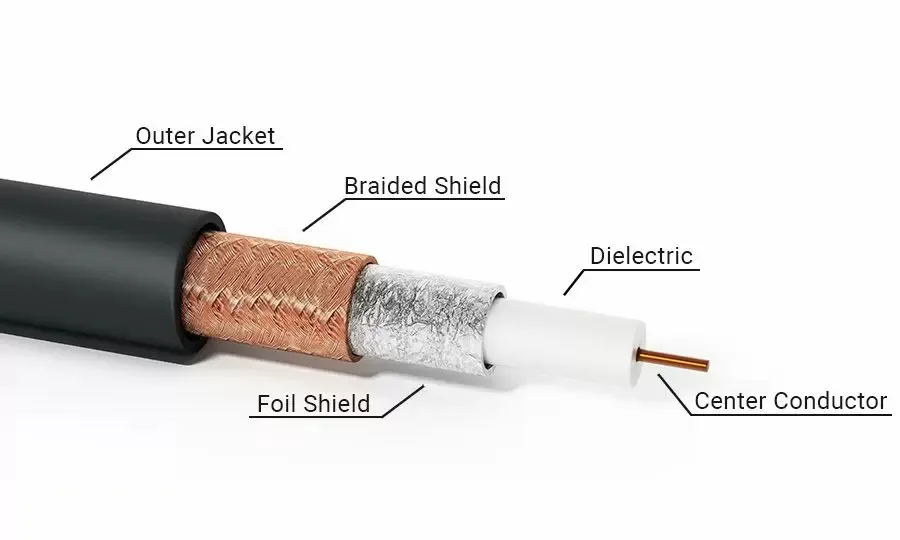
This image provides a detailed view of an RG316 coaxial cable, likely with layers partially exposed. From center to outer: a silver-plated copper conductor, a PTFE dielectric (providing stable impedance and high temperature tolerance), a braided shield (often silver-plated copper for low loss), and an FEP outer jacket. With an outer diameter of approximately 2.5 mm, RG316 balances flexibility with durability, making it the most common choice for short MMCX to SMA jumpers in compact RF devices.
A MMCX to SMA cable isn’t a special cable type by itself. It’s simply an assembly built from a standard miniature coax.
In many designs that coax is RG316 coaxial cable.
RG316 has been around for decades, and for good reason. It balances flexibility, shielding, and temperature tolerance in a small diameter package.
Typical properties look like this:
| Parameter | Typical value |
|---|---|
| impedance | 50 Ω |
| outer diameter | ~2.5 mm |
| dielectric | PTFE |
| shielding | silver-plated braid |
| temperature capability | up to ~200°C |
Those characteristics make RG316 cable especially useful in compact RF hardware.
You’ll see it used in:
- GPS antenna leads
- drone telemetry systems
- embedded wireless devices
- RF test jumpers
Many miniature cable assemblies referenced in guides such as RG coaxial cable guide rely on RG316 precisely because it behaves predictably across a wide frequency range while remaining flexible enough for tight enclosures.
When engineers specify a MMCX to SMA cable, RG316 is often the default assumption unless space constraints require something thinner.
Why do engineers use MMCX to SMA cable instead of direct board connectors?
Use MMCX when the board needs a compact RF port
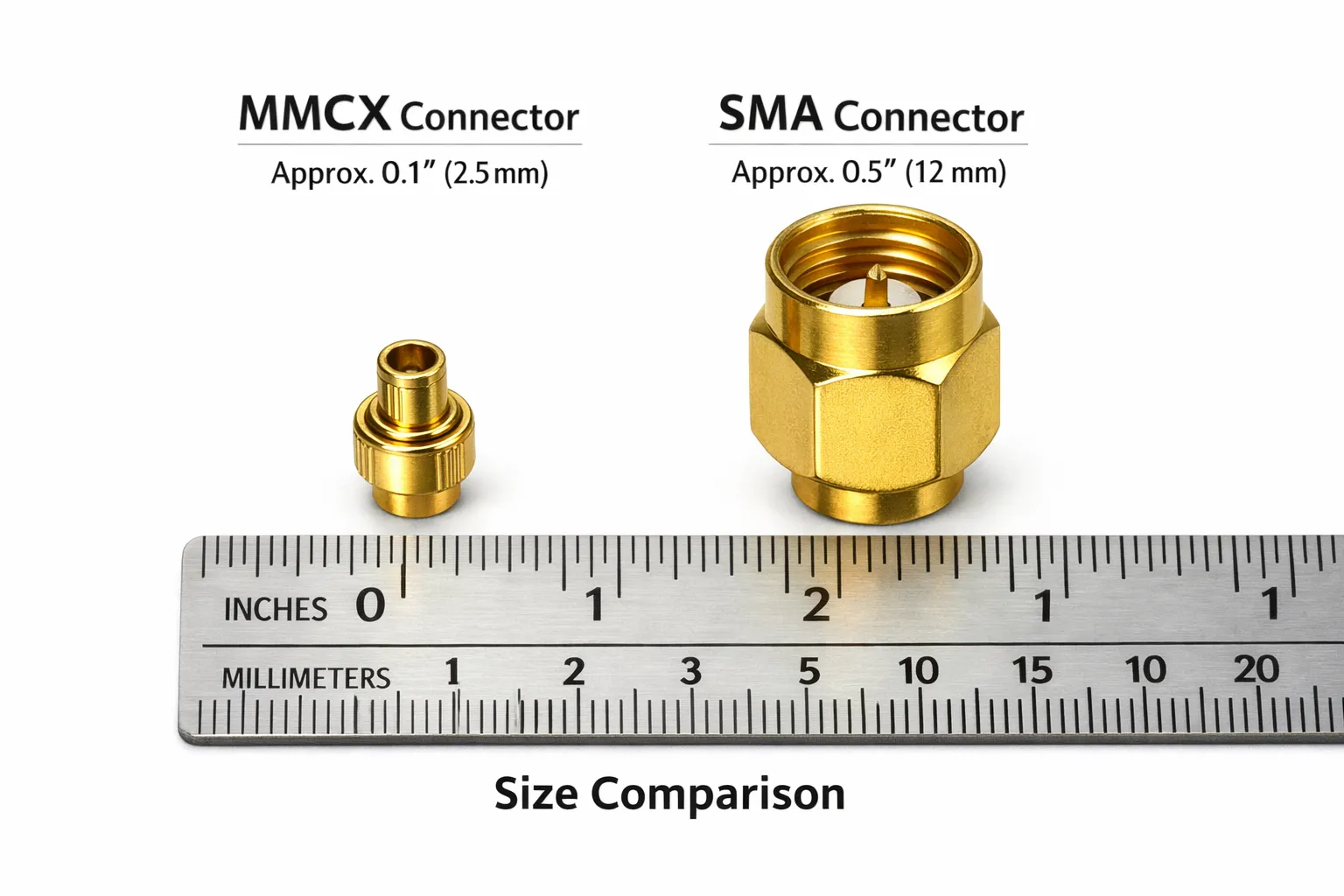
This figure shows a visual comparison between an MMCX connector and an SMA connector. The MMCX is approximately 3.5 mm in diameter with a snap-on coupling, while the SMA is about 6.35 mm with threaded coupling. The size difference explains why MMCX is preferred for dense board layouts, while SMA dominates external interfaces. The image reinforces the need for an MMCX to SMA cable to transition from the compact board connector to a rugged panel-mounted SMA.
Physical space inside wireless devices is rarely generous.
An SMA connector requires a relatively large footprint on the PCB. The threaded body and ground tabs take up space that small modules simply don’t have.
MMCX connectors solve that problem.
| Connector | Coupling style | Approx diameter |
|---|---|---|
| MMCX | snap-on | ~3.5 mm |
| SMA | threaded | ~6.35 mm |
That difference might seem minor. On a dense RF board, however, it can determine whether the antenna interface fits at all.
Another benefit is speed during production testing. Snap-on connectors allow engineers to connect measurement cables quickly without threading connectors repeatedly.
For manufacturing environments, that convenience matters.
Decide when MMCX becomes a mechanical liability
Another reason engineers introduce a MMCX to SMA cable is mechanical reliability.
MMCX connectors are small, and the snap-fit coupling mechanism does not tolerate large side loads particularly well.
Problems often appear when cables experience:
- repeated pulling
- vibration
- heavy coax assemblies hanging from the connector
In those situations, routing the signal through a short jumper to a panel-mounted SMA connector makes the system more robust.
The SMA connector becomes the service interface. The board connector simply anchors the internal transition.
That architectural change may seem small, but it often prevents long-term connector failures.
How do you choose the right cable construction for MMCX to SMA assemblies?
Once the connector transition is defined, attention usually shifts to the coax itself. That part often gets less discussion than it deserves.
A MMCX to SMA cable might be only a few centimeters long, but the coax inside the assembly still determines how the RF path behaves—both electrically and mechanically. In small wireless devices, the mechanical side often matters just as much as the RF performance.
Engineers who have debugged intermittent antenna failures already know this lesson.
The cable rarely fails in the middle. Problems almost always appear near the connector or where the cable is forced to bend.
Choosing the right coax construction early tends to prevent those headaches later.
Start with RG316 coaxial cable for stable miniature jumpers
In many RF designs, RG316 coaxial cable becomes the default option for a simple reason: it behaves predictably.
RG316 sits in a comfortable middle ground. It’s flexible enough to route inside compact enclosures, yet robust enough to survive moderate mechanical stress. The PTFE dielectric also tolerates higher temperatures than many PVC-based cables, which can matter when cables pass near regulators or RF amplifiers.
Typical specifications look roughly like this:
| Parameter | Typical value |
|---|---|
| Characteristic impedance | 50 Ω |
| Outer diameter | ~2.5 mm |
| Dielectric material | PTFE |
| Shielding | silver-plated braid |
| Temperature capability | up to about 200 °C |
Those characteristics make RG316 cable a very common choice for short RF jumpers.
You’ll see it inside GNSS receivers, cellular gateways, drone radios, and a lot of test equipment. Many compact cable assemblies referenced in the RF coaxial cable guidealso rely on RG316 for similar reasons—it offers a stable compromise between size, flexibility, and electrical performance.
For a short MMCX to SMA cable, engineers often start with RG316 unless something in the mechanical design prevents it.
Use thinner micro-coax only when space forces the decision
Occasionally, even RG316 feels too large.
That usually happens in extremely compact devices: asset trackers, handheld radios, or very small telemetry boards. When enclosure volume becomes the main constraint, designers sometimes move to thinner micro-coax cables.
These cables can shrink the diameter to around 1–2 mm, which helps with tight routing paths.
But the trade-offs become noticeable.
Compared with RG316 coaxial cable, thinner cables typically introduce:
- higher attenuation
- less shielding margin
- more fragile connector terminations
None of these problems are catastrophic on their own. Still, they do reduce design margin.
For that reason, many RF engineers treat micro-coax as a packaging solution rather than a default electrical choice. If space allows RG316, they usually stay with it.
Frequency, bending, and lifetime all interact
Cable choice rarely depends on just one parameter.
In practice, several constraints show up at the same time. Frequency might push the design toward lower-loss cable. Mechanical routing might require tighter bends. Service life might demand more durable construction.
Those factors interact in ways that are not always obvious.
| Design factor | Practical consequence |
|---|---|
| Operating frequency | higher frequencies increase attenuation |
| Cable length | loss accumulates along the conductor |
| Bend radius | tight bends can disturb coax geometry |
| Product lifetime | repeated movement stresses connectors |
In a very short MMCX to SMA cable, electrical loss usually stays manageable. Mechanical reliability tends to dominate the decision instead.
That’s one reason many engineers review enclosure routing before locking in a cable specification.
How do you estimate loss before ordering an MMCX to SMA cable?
Short RF jumpers often look insignificant when compared with the rest of the antenna system.
Because of that, designers sometimes skip loss calculations entirely.
In many cases that’s harmless. But it’s still useful to estimate the contribution the cable makes to the RF path.
Use datasheet attenuation values as a rough guide
Coaxial cable datasheets normally provide attenuation numbers expressed in dB per meter at several frequencies.
For RG316 cable, the approximate ranges commonly look like this:
| Frequency | Typical attenuation |
|---|---|
| 1 GHz | ~0.6 dB/m |
| 3 GHz | ~1.1 dB/m |
| 6 GHz | ~1.8 dB/m |
If a MMCX to SMA cable measures about 0.2 m, the estimated cable loss at 3 GHz becomes:
0.2 × 1.1 ≈ 0.22 dB
Not a large number, but not zero either.
Engineers who want a deeper explanation of why coax attenuation behaves this way can find a good technical overview in Coaxial cable.
Don’t forget the connector transitions
Cable attenuation is only part of the story.
Every connector transition also contributes a small insertion loss. In well-manufactured RF connectors such as MMCX or SMA, the value often falls somewhere around 0.1–0.3 dB.
A simple MMCX to SMA cable therefore includes three main loss elements:
| Element | Estimated loss |
|---|---|
| Cable segment | ~0.22 dB |
| MMCX connector | ~0.15 dB |
| SMA connector | ~0.15 dB |
Total loss might approach 0.5 dB, depending on frequency and assembly quality.
For many embedded wireless devices, that amount remains perfectly acceptable. Still, knowing the number helps keep the RF budget realistic.
Internal jumper length should stay short
Another issue appears when engineers start extending the cable length.
A MMCX to SMA cable is usually intended as a short internal jumper rather than a full antenna feedline.
Typical ranges look something like this:
| Application | Typical length |
|---|---|
| module jumper | 50–100 mm |
| enclosure panel lead | 100–200 mm |
| compact internal routing | up to 300 mm |
Once the signal reaches the panel SMA connector, longer 50 ohm coaxial cable runs typically take over.
Separating those two cable roles—internal jumper versus external antenna cable—keeps the RF architecture simpler.
How do you protect MMCX ports from cable-induced failures?
Many RF reliability issues eventually trace back to mechanical stress.
Interestingly, the cable itself usually survives. The connector is where failures appear first.
MMCX connectors are small. That makes them convenient for compact boards—but also somewhat vulnerable.
Move cable load away from the PCB connector
One practical rule shows up repeatedly in RF hardware design:
the board connector should not carry the cable weight.
Instead, the cable should be anchored shortly after it leaves the connector.
Engineers typically use:
- adhesive cable clips
- molded strain-relief brackets
- internal mounting points
Once the cable is secured to the enclosure, mechanical loads bypass the PCB connector entirely.
That small step dramatically improves long-term reliability.
Protect the first bend behind the connector
When a coax assembly eventually fails, the damage rarely appears in the middle.
Most failures occur right behind the connector body.
That first bend point is where stress accumulates.
A practical guideline for RG316 cable is:
minimum bend radius ≈ 10 × cable diameter
For a 2.5 mm cable, that suggests roughly a 25 mm radius.
Maintaining that margin helps protect both the electrical geometry and the mechanical termination.
Let the SMA connector handle the outside connections
This figure illustrates a recommended mechanical arrangement: the MMCX connector is on the PCB, the MMCX to SMA cable runs internally, and the SMA connector is panel-mounted on the enclosure wall. This design isolates the board connector from external handling, as technicians interact only with the SMA port. The cable is anchored near the SMA bulkhead to transfer mechanical loads to the chassis. This architecture significantly improves long-term reliability and is widely used in GNSS receivers, IoT gateways, and other compact RF equipment.
From a maintenance perspective, the safest arrangement is simple.
Technicians interact with the SMA connector, not the board connector.
The MMCX to SMA cable remains inside the enclosure where it’s protected from repeated mating cycles.
Once you start noticing this design pattern, it appears almost everywhere—from wireless gateways to GPS receivers and laboratory instruments.
It’s a quiet little engineering habit that prevents a lot of connector failures.
How does an MMCX to SMA cable fit into SMA adapter cable workflows?
In many RF systems, a MMCX to SMA cable is not the final cable in the signal path. Instead, it acts as the first transition between a compact board connector and the rest of the RF infrastructure.
Looking at the design this way helps clarify its role.
Rather than thinking of it as a standalone cable, it often makes more sense to treat it as a specialized SMA adapter cable.
Treat MMCX to SMA as a specialized SMA adapter cable
RF interconnects frequently require transitions between different connector ecosystems.
For example:
| Adapter type | Typical use |
|---|---|
| SMA to BNC cable | instrument connections |
| SMA to N cable | outdoor antenna systems |
| MMCX to SMA cable | board-to-panel transitions |
All of these assemblies belong to the broader category of SMA adapter cable solutions.
The difference is simply the environment in which the transition occurs.
Most SMA adapter cables operate between external RF components. A MMCX to SMA cable, by contrast, usually sits inside the enclosure and links a board-level connector to a panel interface.
If you look at the entire RF path, the MMCX cable is simply the first step.
Use MMCX to SMA cable before longer 50-ohm cable runs
Once the RF signal reaches the panel SMA connector, longer cables typically take over.
Those external cables might include:
- antenna extension cables
- test instrument leads
- outdoor feedlines
In these cases the MMCX to SMA cable remains the shortest segment in the system.
Keeping that internal jumper short has several advantages:
- reduced insertion loss
- less mechanical stress on the PCB connector
- simpler cable routing inside the enclosure
After the SMA panel transition, engineers usually switch to a more conventional 50 ohm coaxial cable assembly.
The internal cable performs the transition. The external cable handles the distance.
Decide when the transition chain should stop
Connector transitions accumulate quickly in RF systems.
A signal path that begins with MMCX → SMA might continue with additional adapters if engineers are not careful. For example:
MMCX → SMA → BNC → N
Every extra transition introduces more insertion loss and more mechanical interfaces.
A useful engineering guideline is simple:
if the system already reaches SMA, avoid unnecessary adapter chains.
SMA connectors already support a wide range of RF cables and antennas. In many cases, continuing beyond that interface only complicates the signal path.
Can a planning matrix reduce bad MMCX-to-SMA decisions?
RF cable decisions often happen quickly during hardware development.
An engineer may select a cable type based on familiarity or convenience. Later, the design team discovers that the chosen assembly introduces unexpected loss or mechanical strain.
One way to prevent those situations is to formalize the decision process.
A small planning matrix can help.
Walk through a simple module-to-panel example
Consider a small wireless gateway.
The RF module exposes an MMCX connector. The enclosure includes an SMA bulkhead connector for the antenna.
Design assumptions might look like this:
| Parameter | Value |
|---|---|
| Cable type | RG316 |
| Cable length | 0.15 m |
| Frequency | 3 GHz |
| Connector count | 2 |
Using approximate RG316 attenuation (~1.1 dB/m at 3 GHz):
Cable loss ≈ 0.15 × 1.1 ≈ 0.17 dB
Connector loss ≈ 0.3 dB
Total ≈ 0.47 dB
For most embedded RF systems, that loss remains well within acceptable limits.
The important part is that the estimate happens before the cable is ordered.
What trends are influencing MMCX-to-SMA cable decisions?
Although MMCX to SMA cable assemblies are relatively small components, they sit inside a rapidly growing industry.
Wireless hardware continues to expand across several sectors.
RF interconnect demand continues to grow
Industry market analyses show consistent growth in RF interconnect hardware.
Research reports suggest that the global RF interconnect market could expand significantly over the next decade, driven by growth in wireless infrastructure, satellite communications, and IoT hardware.
As wireless devices become more compact, demand for miniature cable assemblies—including MMCX to SMA cable transitions—also increases.
Even small cable assemblies become important components in that ecosystem.
Material compliance is becoming more visible
Connector manufacturers have also begun introducing RF components designed to comply with evolving environmental regulations.
For example, recent connector releases emphasize PFAS-free materials in RF connectors and adapters.
This trend affects cable assemblies as well. If connectors adopt new material standards, cable manufacturers must ensure compatibility across the entire assembly.
In other words, future MMCX to SMA cable designs may be influenced not only by electrical performance but also by material compliance requirements.
Higher frequencies increase pressure on jumper design
Wireless systems continue moving toward higher frequencies and more compact form factors.
As that trend continues, miniature cable assemblies face tighter constraints.
Short jumpers must maintain:
- consistent impedance
- stable shielding
- reliable mechanical routing
Small cables that once seemed insignificant now receive more careful engineering attention.
Common questions about MMCX to SMA cable assemblies
When should I use an MMCX to SMA cable instead of a direct board connector?
A MMCX to SMA cable is useful when the board requires a compact RF connector but the external interface must support repeated antenna connections.
The cable moves the service interface away from the PCB and protects the board connector from mechanical stress.
How long can an MMCX to SMA cable be before loss becomes noticeable?
Loss depends on cable type and operating frequency.
For RG316 coaxial cable, attenuation may reach roughly 1–2 dB per meter at several GHz. Because most MMCX jumper cables remain under 0.2 meters, their contribution typically stays below 0.5 dB.
Is RG316 the best default cable for MMCX jumpers?
In many situations, yes.
RG316 cable offers a practical combination of flexibility, shielding, and temperature tolerance. For short jumper assemblies, it remains one of the most widely used miniature RF coaxial cable options.
Can MMCX to SMA cable be part of a longer RF chain?
Yes.
In many systems, the MMCX to SMA cable forms the first segment of the RF path. After the signal reaches the panel SMA connector, longer 50 ohm coaxial cable runs can extend toward antennas or measurement equipment.
Bonfon Office Building, Longgang District, Shenzhen City, Guangdong Province, China

A China-based OEM/ODM RF communications supplier
Table of Contents
Owning your OEM/ODM/Private Label for Electronic Devices andComponents is now easier than ever.