
A wire connector looks like a small part in the bill of materials, but it can decide whether a wiring job is stable, serviceable, and safe after installation. Many connection failures are not caused by the wire itself. They come from a connector that was selected by shape only, installed with the wrong tool, or used in an environment it was never designed to handle.
That is why choosing wire connector types should start with the job the connection must do. Is it carrying power or signal? Will it sit inside a dry enclosure, under a vehicle, near heat, or outdoors? Does the connection need to be opened later, or should it stay permanent for the life of the assembly? Those questions matter more than the connector name.
For buyers and engineers, the practical goal is simple: match the connector to the wire, the circuit, the environment, and the installation process. A connector that is easy to buy is not always easy to inspect. A connector that looks strong may still fail if the wire gauge is wrong or the crimp is poor.
How Do You Choose Wire Connector Types by Application?
Start with application, not catalog category. The same two wires can be joined by a twist-on connector, push-in connector, crimp splice, terminal connector, waterproof plug, or automotive housing. They may all “connect” the wires, but they do not solve the same problem.
A dry control box values speed and service access. A vehicle harness values vibration resistance and locking. Outdoor lighting values sealing. A power cable values current capacity and low contact resistance. A sensor wire values stable contact and clean routing. Once the use case is clear, the connector family becomes easier to narrow down.
Match the connector to power, signal, control, or automotive wiring
Power wire connectors need enough contact area and current margin. If the contact point is loose or too small, heat can build at the connection even when the cable size is correct.
Signal wire connectors are usually smaller, but that does not mean they are less important. A weak connection on a low-current sensor line may not burn, but it can create unstable readings or intermittent faults. For control signals, sensors, and small equipment wiring, terminal housings, push-in connectors, plug-in terminal blocks, or compact crimp terminals are often used.
Automotive electrical connectors add another layer of requirements. They must handle vibration, movement, temperature change, and sometimes moisture. A connector used inside a dashboard does not face the same conditions as one near a motor, lamp, battery, or exterior sensor. Locking structures, terminal retention, sealing plugs, and strain relief are often more important than the connector’s appearance.
For outdoor and wet areas, waterproof wire connectors should be considered early. Adding tape or heat shrink after choosing the wrong connector is not the same as selecting a sealed connector system. Moisture can enter through the wire exit, the crimp barrel, the housing seam, or damaged insulation.
Check voltage, current, wire gauge, insulation, and environment
The minimum specification should include wire gauge, conductor type, voltage, current, insulation diameter, operating temperature, and installation environment.
Wire gauge is often the first hidden problem. A connector may be listed for 18–22 AWG, but the actual conductor may be fine-stranded, tinned, or have thicker insulation than expected. Solid wire, stranded wire, fine-stranded wire, and copper-clad aluminum wire do not always behave the same under a clamp or crimp.
Current rating should include margin. If a connector is rated close to the actual working current, the design may still be weak in a hot enclosure or tightly bundled harness. Buyers should avoid treating current rating as a single absolute number. Connector body material, contact material, plating, wire size, and ambient temperature all affect real performance.
Voltage rating is another basic check. Low-voltage DC wiring, equipment wiring, and building electrical wiring may use different connector standards and insulation requirements. A connector used safely in a 12 V lighting harness should not automatically be moved into a higher-voltage application.
Environment is where many low-cost substitutions fail. Dry indoor wiring allows more options. Wet, vibrating, high-temperature, outdoor, or vehicle-mounted wiring needs tighter selection. In those conditions, sealing, locking, plating, strain relief, and inspection method become part of the connector decision.
When should you use removable vs permanent wire connections?
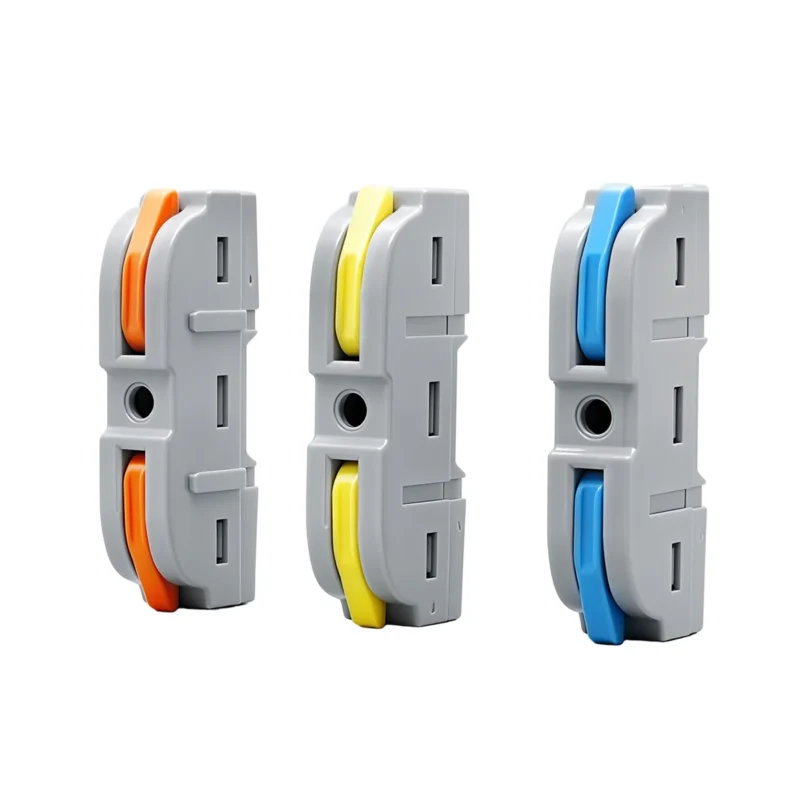
Use removable wire connectors when maintenance, replacement, testing, or future service is expected.
The trade-off is not difficult, but it is often skipped. Removable connections are easier to service. Permanent connections usually reduce accidental disconnection and can be more compact. If the product will be opened by a technician, removable may be worth the extra space. If the connection will be buried inside a harness, permanent and sealed may be safer.
A good purchasing request should describe this clearly. “Need wire connectors” is too vague. “Sealed crimp butt connector for 18 AWG stranded copper wire, outdoor lighting harness, production crimping required” gives the supplier a real target.
Which Wire Connectors Are Used for Basic Wire Joining?
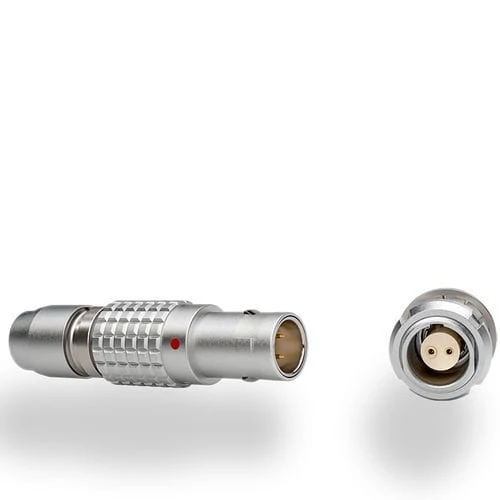
This industrial wire connector features a compact push pull locking design, providing reliable connection performance for control equipment, electrical systems, and cable assembly applications.
Basic wire joining connectors are used when the job is simply to connect conductors without a complex plug housing. They appear in maintenance wiring, lighting, appliances, control cabinets, repair work, and low-voltage equipment. They are simple parts, but simple does not mean universal.
Twist-on wire connectors for building and maintenance wiring
Twist-on wire connectors are widely used for joining conductors in building and maintenance work. They are fast, inexpensive, and easy to recognize. The installer strips the wires, inserts them into the cap, and twists until the conductors are held together.
The main risk is using the wrong size or wire combination.Mixed conductor materials also need care, especially where aluminum or copper-clad aluminum is involved.
Twist-on connectors are best kept in applications they are designed for. They are usually not the first choice for vibration-heavy equipment, compact electronic harnesses, or exposed outdoor wiring unless the exact connector type is rated for that condition.
Push-in wire connectors for fast tool-free installation
Push-in wire connectors are popular because they reduce installation time. Many designs allow the wire to be stripped and inserted without a crimp tool. Transparent housings can also help installers confirm that the wire reached the correct depth.
They work well in lighting, control wiring, service panels, and equipment where repeatable installation speed matters. Some versions are designed mainly for solid wire. Others use lever or spring structures that accept stranded wire more reliably.
This is where buyers need to be careful. “Push-in” does not automatically mean suitable for every conductor. Fine-stranded wire may need a ferrule. Stranded wire may not hold correctly in a connector intended only for solid wire. Strip length also matters. Too short creates weak contact; too long exposes bare conductor outside the housing.
Splice connectors for extending or repairing conductors
Splice connectors are used to extend wires, repair damaged conductors, or join two harness sections. Butt splice connectors are the most common. They may be insulated, non-insulated, heat-shrink sealed, or fully waterproof depending on the structure.
For production assemblies, crimped splices are easier to standardize than hand-twisted joints. A proper crimp can be checked by pull test, visual inspection, and sometimes crimp height measurement. For outdoor or automotive repair, adhesive-lined heat-shrink butt connectors are often preferred because they protect the crimp barrel from moisture.
The splice should not become a stiff breaking point. If the wire bends repeatedly right at the connector edge, the conductor can fatigue. Good harness routing and strain relief still matter, even when the connector itself is correct.
How Do Crimp Connectors Compare with Wire Terminal Connectors?
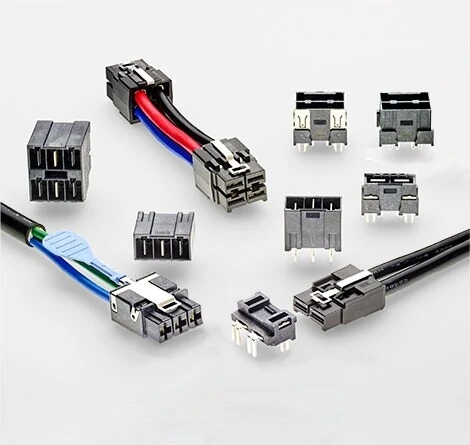
Different electrical wire connector types are shown for cable assembly applications, including housing connectors and terminals designed for secure and efficient wiring solutions.
Crimp connectors and wire terminal connectors are often discussed together, but they are not exactly the same thing. “Crimp connector” describes how the wire is attached to the connector. “Terminal connector” usually describes the connection shape: ring, fork, spade, butt, blade, tab, bullet, pin, socket, and so on.
This difference matters in sourcing. A buyer may ask for a terminal connector but forget to mention whether it should be crimped, soldered, screw-clamped, insulated, heat-shrink sealed, or installed into a plastic housing. That missing detail can lead to samples that look close but do not fit the assembly process.
Crimp wire connectors for vibration-resistant cable assemblies
Crimp wire connectors are widely used in cable assemblies because a good crimp forms both electrical contact and mechanical retention. The conductor is compressed inside the terminal barrel so the metal strands and terminal body create a stable contact area. When the crimp is done correctly, the joint can perform well under vibration and movement.
This is why crimping is common in automotive harnesses, appliances, industrial controls, power leads, and custom wire connector assemblies. It is faster and more repeatable than hand soldering in many production environments.
The weakness is not the crimp concept. The weakness is poor process control. A crimp connector installed with the wrong die, wrong wire size, or wrong strip length may pass a quick continuity test but fail under pull force, current load, or vibration.
For batch production, the crimp tool should be part of the specification. The terminal, wire, die set, crimp height, and pull force requirement should match each other. If the supplier cannot explain the crimp method, the connector shape alone does not mean much.
Ring, fork, spade, butt, and quick-disconnect terminals
Ring terminals are used where the wire connects to a stud or screw. Because the ring fully surrounds the fastener, it is harder for the terminal to slip off. This makes ring terminals common for grounding, battery wiring, power distribution, and equipment connections where loosening would create a serious fault.
Fork terminals are also used under screws, but they can be installed or removed without fully removing the screw. That saves service time. The trade-off is lower retention compared with a ring terminal, especially in vibration-heavy areas. If fork terminals are used, screw torque and locking method should be checked.
Spade terminals and quick-disconnect terminals are used where fast connection and disconnection are needed. They are common in appliances, control wiring, switches, relays, and serviceable modules. The mating force should not be ignored. A loose quick-disconnect terminal can create intermittent faults that are difficult to trace.
Butt connectors join two wire ends directly. They are useful for repairs, extensions, and harness production. For wet or outdoor locations, heat-shrink butt connectors are usually safer than simple insulated butt connectors.
Bullet terminals, pin terminals, and socket terminals are often used inside connector housings. The terminal itself may look small, but its retention inside the housing is critical. If the terminal backs out during mating, the connector may appear assembled while the circuit is actually open.
How to match terminal size with AWG and stud size
Terminal sizing has two sides: wire side and connection side.
On the wire side, the terminal barrel must match the conductor gauge and construction. A barrel that is too large will not compress the wire correctly. A barrel that is too small can cut strands or prevent full insertion. If the wire is fine-stranded, tinned, or has thick insulation, check the terminal datasheet instead of guessing by color.
On the connection side, ring and fork terminals must match the stud or screw size. A ring hole that is too large can shift under the screw head. A hole that is too small will not install correctly. Spade and quick-disconnect terminals must match tab width and thickness. Multi-pin terminals must match the exact housing series.
Color-coded insulated terminals are convenient, but color should not be the only selection rule. Different manufacturers may use similar colors for different wire ranges. For production purchasing, write the AWG range, stud size, insulation type, terminal material, plating, and tool requirement into the request.
Why crimp quality matters more than connector shape
Two terminals with the same shape can perform very differently after assembly. The metal thickness, barrel design, plating, insulation sleeve, and tool compatibility all affect the result. Still, the biggest difference often comes from crimp quality.
Under-crimping leaves air gaps and weak contact. In production, pull testing and visual standards should be used before approving a batch.
For TEJTE sourcing work, it helps to provide photos, wire gauge, cable length, terminal style, current, voltage, and the working environment together. That allows the supplier to recommend a practical connector structure instead of guessing from a single product image. For custom wiring and connector products, buyers can start from TEJTE’s connector category or cable assembly support page: custom wire connector assemblies.
Choose Waterproof Wire Connectors for Wet or Outdoor Areas
Waterproof wire connectors should be selected before the wiring layout is finalized. If moisture reaches the conductor, the failure may not appear immediately. The connection may work during installation and then become unstable weeks or months later.
Water can enter through the wire exit, crimp barrel, housing gap, damaged insulation, or an incomplete seal. Once copper starts to oxidize, resistance increases. The result may be flickering lights, voltage drop, intermittent power, heat at the joint, or a complete open circuit.
When should you use sealed wire connectors?
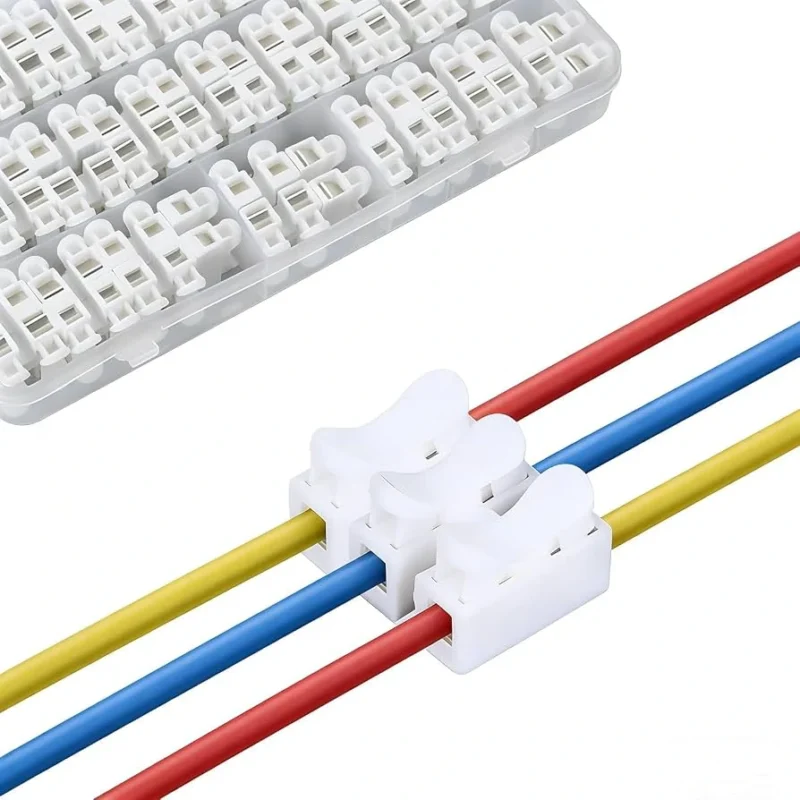
Use sealed wire connectors when the wiring may face rain, splash, condensation, washing, road spray, salt mist, or high humidity. Outdoor lighting, vehicle wiring, marine equipment, garden equipment, agricultural machines, and exposed sensors usually need better protection than a standard insulated terminal.
Sealed connectors are also useful in places that are hard to inspect after installation. If a splice is buried inside a harness, mounted under equipment, or installed in an outdoor box, later repair costs can be much higher than the cost of using a better connector at the start.
Indoor wiring does not always need waterproof connectors. In dry cabinets or protected control boxes, normal terminal blocks, push-in connectors, or insulated crimp terminals may be enough. But if the area has condensation, washdown cleaning, refrigeration, or chemical exposure, sealing should be reconsidered.
IP67, gasket, heat-shrink, gel-filled, and molded sealing options
Waterproof electrical connectors use different sealing methods.
IP-rated connector housings use gaskets, O-rings, rubber seals, or molded sealing structures. IP67 is commonly used for dust protection and short-term water immersion, but the exact datasheet should still be checked. Not every “waterproof” listing means the same test condition.
Heat-shrink crimp connectors seal around the wire after heating. Adhesive-lined heat shrink is especially useful because the adhesive flows around the insulation and helps block moisture from entering the crimp barrel.
Gel-filled connectors are often used in low-voltage outdoor wiring. The gel surrounds the conductor and helps protect the connection from moisture. They are common in lighting and landscape wiring.
Molded cable connectors provide stronger sealing and strain relief because the cable exit and connector body are formed together. They are a good option when the design is stable and the cable assembly will be repeated in volume.
No sealing method can rescue a bad electrical joint. If the wire is loose, the crimp is weak, or the conductor is damaged, waterproofing may only delay the failure.
Waterproof electrical connectors for vehicles, marine, lighting, and outdoor equipment
Vehicle wiring needs sealing plus mechanical retention. A connector under a vehicle or near a lamp may face water spray, vibration, dust, and temperature cycling. Locking housings and sealed cavities are usually safer than simple taped splices.
Marine wiring has an additional corrosion problem. Salt and humidity can attack exposed copper quickly. Tinned wire, sealed terminals, and corrosion-resistant plating are often preferred.
Outdoor lighting connectors must balance installation speed with moisture protection. Heat-shrink butt connectors, gel-filled wire connectors, and sealed plug connectors can all work, depending on whether the connection needs to be removable.
Outdoor equipment also needs strain relief. A waterproof connector can still fail if the wire bends sharply at the seal edge. Cable routing, tie points, and bend radius should be checked together with connector selection.
Failure signs: corrosion, green copper, moisture inside insulation
Common warning signs include green copper, blackened strands, soft insulation, flickering output, voltage drop, intermittent operation, and heat near the joint. Sometimes the outside of the connector looks fine, but moisture has traveled inside the insulation.
For failure analysis, cut open the sample. Check the crimp barrel, conductor color, seal position, and wire entry point. If several failures appear in the same harness area, inspect the routing path as well. The problem may be direct spray, poor drainage, repeated bending, or a connector installed facing the wrong direction.
How Should Automotive Electrical Connectors Be Selected?
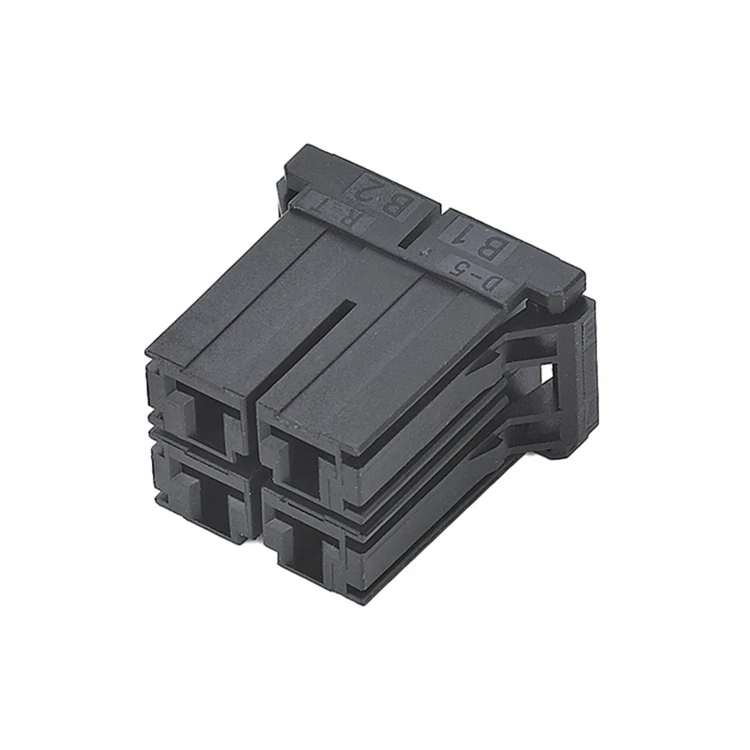
Automotive wire connector types with multi-pin housings provide organized cable management, secure terminal retention, and reliable connections for vehicle electrical applications.
Automotive electrical connectors should be selected by circuit function first, then by environment. A connector used for an interior switch does not need the same structure as a connector near a motor, battery, lamp, or exterior sensor. The housing may look similar, but the stress level is different.
In vehicle wiring, the connector has to survive more than current flow. It may face vibration, heat, moisture, dust, oil, service handling, and repeated temperature change. A poor connection may not fail on the bench. It may fail after the harness is tied into the vehicle and exposed to movement.
Choose by circuit function: sensor, lighting, battery, control, antenna, or motor
Sensor circuits usually carry low current, but contact stability is critical. A small contact problem can create unstable readings or intermittent faults.
Lighting circuits often need higher current margin and sealing, especially for exterior lamps. Moisture around a lamp connector is common, so a basic indoor terminal is usually not enough.
Control circuits may use multi-pin connector housings to organize several wires into one locked interface. This reduces assembly mistakes and makes service easier.
Antenna and RF-related wiring should not be treated like ordinary DC wiring. If the cable carries RF signal, impedance, shielding, insertion loss, and VSWR become part of the connector decision.
Motor wiring needs vibration resistance and current margin. Inrush current, movement, and heat can expose weak terminal retention quickly.
Check vibration resistance, locking structure, temperature, and current rating
Vibration resistance is one of the main reasons automotive connectors use locks and terminal retention features. A connector should not depend only on friction. Housing latches, secondary locks, cavity seals, and strain relief all help keep the connection stable.
Temperature rating should match the real mounting area. Cabin wiring, engine-area wiring, battery wiring, and exterior wiring can have very different temperature exposure.
Current rating should be checked with margin. Do not choose a terminal only because it fits the wire. If the circuit runs near the terminal limit, heat can build at the contact point.
Service access also matters. If technicians must disconnect the connector later, the latch must be reachable. If the connector will be buried inside a harness, retention and sealing may be more important than quick release.
When to use multi-pin connector housings instead of single terminals
Use multi-pin housings when several wires connect to the same module, sensor, lamp, motor, or control unit.
For purchasing, a multi-pin connector request should include pin count, wire gauge for each cavity, terminal material, plating, seal type, lock direction, temperature rating, and mating connector requirement.
EV and service equipment connections are also receiving closer attention in electrical code discussions. NFPA identifies the National Electrical Code as NFPA 70, and project teams working around EV-related equipment should check the current official NEC reference instead of relying on old notes: NFPA NEC reference.
What Specs Should You Check Before Buying Wire Connectors?
A connector quote without specifications is not a real approval basis. Two electrical wire connectors can look almost identical but differ in conductor compatibility, plating, insulation material, flame rating, crimp tool requirement, and certification status.
Conductor material: copper, aluminum, or copper-clad aluminum
Copper wire is common and usually straightforward to terminate. Aluminum wire needs more care because oxidation and mechanical behavior are different. Copper-clad aluminum wire may look similar to copper at first glance, but it should not be treated as the same conductor.
If mixed conductor materials are involved, use connectors specifically approved for that combination. Guessing here can cause overheating, loosening, or long-term reliability problems.
Wire range: solid, stranded, fine-stranded, or tinned wire
Wire gauge is only part of the selection. Solid wire, stranded wire, fine-stranded wire, and tinned wire behave differently under spring pressure or crimp compression.
Some push-in connectors are designed mainly for solid wire. Some lever connectors accept stranded wire. Fine-stranded conductors may need ferrules in certain terminal blocks. Tinned wire can improve corrosion resistance, but crimp behavior should still be checked with the exact terminal.
Use a Wire Connector Selection Matrix
A simple matrix helps buyers compare connector options before ordering samples.
Wire Connector Selection Matrix
| Connector type | Best application | Tool | Waterproof level | Vibration resistance | Reworkability | Main risk |
| Twist-on connector | Indoor joining | Hand | Low | Low | Medium | Loose wire range |
| Push-in connector | Fast cabinet or lighting wiring | Usually tool-free | Low | Medium | High | Wrong wire type |
| Butt splice connector | Wire repair or extension | Crimp tool | Medium to high | High | Low | Poor crimp |
| Ring terminal | Stud, ground, power point | Crimp tool | Depends on sleeve | High | Medium | Wrong stud size |
| Quick-disconnect terminal | Serviceable modules | Crimp tool | Low | Medium | High | Loose mating force |
| Sealed connector housing | Outdoor or vehicle wiring | Crimp tool | High | High | Medium | Seal damage |
| Multi-pin automotive connector | Sensors, lamps, control units | Crimp and housing assembly | Medium to high | High | Medium | Wrong pin position |
Selection score formula
Connector Fit Score = Application Match + Wire Gauge Match + Current Margin + Environment Protection + Installation Reliability – Rework Risk
Score each positive item from 0 to 2.
| Total score | Decision |
| 9月10日 | Recommended |
| 6月8日 | Usable with checks |
| ≤5 | Not recommended |
This score is not a replacement for testing. It is a quick way to stop weak choices before samples are ordered.
How Do You Inspect Wire Connectors After Installation?
Inspection should match the connector type. Continuity alone is not enough. A weak crimp can pass continuity and still fail under pull force, heat, or vibration.
Pull test, visual crimp check, insulation check, and continuity test
For crimped terminals, check conductor insertion, barrel forming, insulation support, and pull strength. The wire should not slide out of the terminal. The strands should not be cut at the crimp edge.
For sealed connectors, check the seal position, heat-shrink recovery, adhesive flow, cavity plugs, and housing lock. A waterproof connector is only waterproof if every entry point is controlled.
Field acceptance checklist for purchasing and QC teams
| Check item | Acceptance point |
| Connector type | Matches application |
| Wire gauge | Within datasheet range |
| Current rating | Has margin |
| Sealing | Matches environment |
| Tooling | Correct die and crimp tool confirmed |
| Crimp quality | No loose wire or cut strands |
| Housing lock | Fully seated |
| Documents | Datasheet and certification needs confirmed |
Reject a sample before batch assembly if the wire pulls out, the seal is loose, the terminal backs out, the connector overheats, or the supplier cannot confirm the basic rating.
FAQ
Are crimp wire connectors better than push-in wire connectors?
Crimp connectors are usually better for vibration and permanent harness work. Push-in connectors are better for fast installation and service access.
How do I know which wire connector type to buy?
Don’t choose only by the photo. First check the wire size, current, voltage, and where the connector will be used. A connector inside a dry control box is different from one used under a vehicle or in outdoor lighting. If the joint may move, get wet, or need later repair, write that clearly before asking for a quote.
Do indoor projects need waterproof wire connectors?
Most dry indoor wiring does not need them. But if the area has condensation, cleaning water, refrigeration, humidity, or vibration, a sealed connector may still be worth using. The important point is not “indoor or outdoor” only, but whether moisture can reach the contact area.
What should I tell a supplier before ordering wire connectors?
Send the wire gauge, conductor type, current, voltage, cable insulation diameter, working environment, and whether the connection must be removable. If it is a crimp connector, also confirm the crimp tool or die. These details help avoid samples that look right but do not fit the actual wiring job.
Why does a crimp connector fail even when it looks normal?
A bad crimp can look acceptable from the outside. The wire may not be inserted deep enough, the crimp tool may not match the terminal, or the barrel may be pressed too much or too little. That is why pull testing and visual crimp checks are more useful than only doing a continuity test.