
What is an RP-SMA Connector? Types, Antennas & Uses
Aug 23,2025
Introduction
The image introduces the RP‑SMA connector commonly found on Wi‑Fi routers and access points, setting up the context for connector identification in the article.
If you’ve ever tried swapping out a WiFi antenna on your home router and wondered why the new one wouldn’t screw in, you’ve likely met the puzzle of the RP-SMA connector. At first sight, it looks exactly like the standard SMA type—same diameter, same threaded shell. But when you line them up, the center contact doesn’t match. That tiny difference is what leaves so many users scratching their heads.
This small twist in design isn’t an accident. RP-SMA, short for Reverse Polarity SMA, was introduced in the wireless industry to control antenna compatibility. Over the years, it became the default choice for most routers, access points, and even IoT modules. If you’ve opened the back of a WiFi-enabled device recently, chances are you’ve seen an RP-SMA female jack waiting for an antenna.
Why does this matter? Because buying the wrong part—say, a standard SMA antenna instead of an RP-SMA antenna—means wasted time, money, and frustration. For engineers, hobbyists, and network installers alike, knowing the distinction saves a lot of headaches.
In this guide, we’ll break down everything you need to know: what an RP-SMA connector actually is, how it differs from SMA, how to tell male from female, and where these connectors show up in the real world. By the end, you’ll have the clarity to choose the right connector every time.
What is an RP-SMA Connector?
An RP-SMA connector—short for Reverse Polarity SubMiniature version A—is a variation of the standard SMA design that flips the traditional gender assignment of the center contact. While the outside threads look nearly identical to SMA, the center portion tells a different story.
In a regular SMA system:
- An SMA male has a pin in the middle and external threads.
- An SMA female has a socket inside and internal threads.
With an RP-SMA connector, that relationship is reversed:
- An RP-SMA male still has external threads, but instead of a pin, it contains a socket.
- An RP-SMA female comes with internal threads, yet it houses a pin in the center.
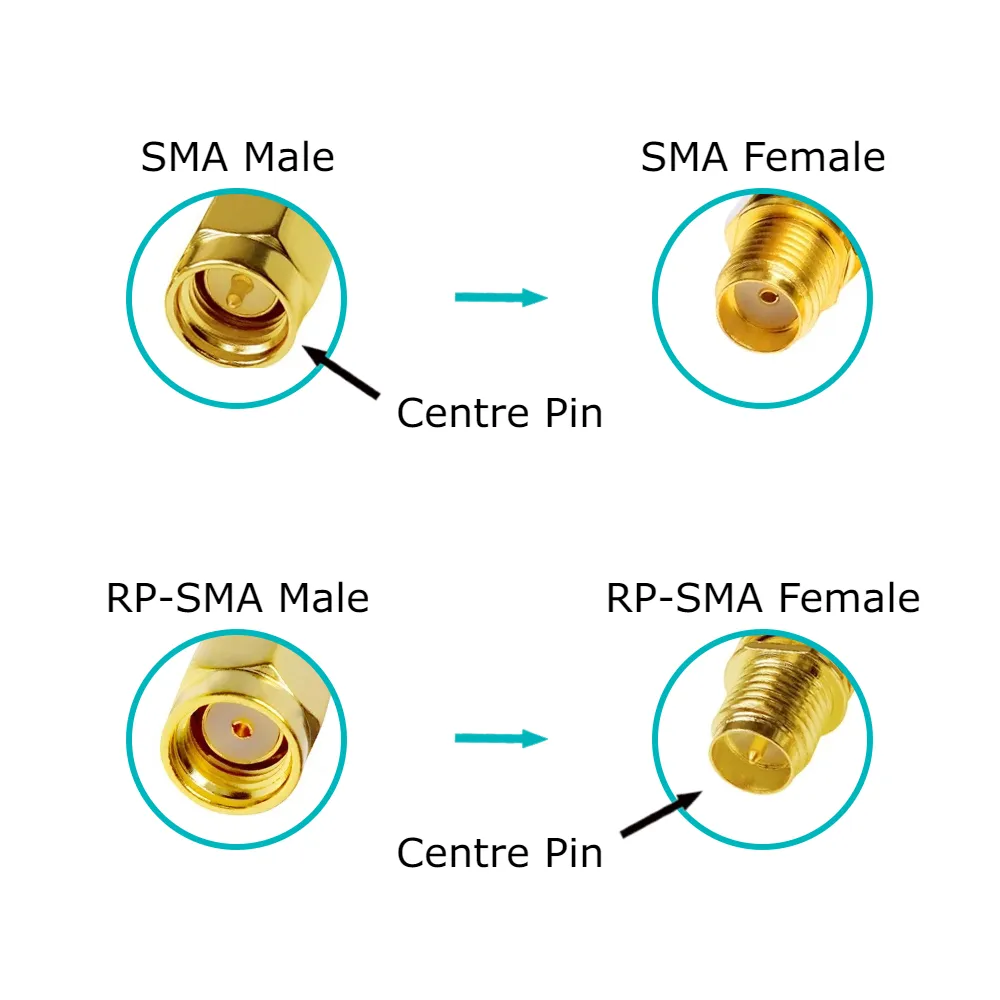
This reversal is why the term “reverse polarity” is used—it refers to the gender of the electrical contact, not electrical polarity itself. It’s easy to see why first-time buyers get confused. From the outside, RP-SMA and SMA connectors look nearly identical, which has led to countless mix-ups when purchasing antennas or adapters online.
Originally, WiFi manufacturers adopted RP-SMA connectors to prevent users from attaching unauthorized high-gain antennas. Regulations at the time required limiting antenna changes for consumer gear. But as the years passed, RP-SMA became a de facto standard for routers, access points, and even IoT modules. Today, if your wireless device has a detachable antenna, odds are it uses an RP-SMA female jack paired with an RP-SMA male antenna plug.
RP-SMA Male vs RP-SMA Female
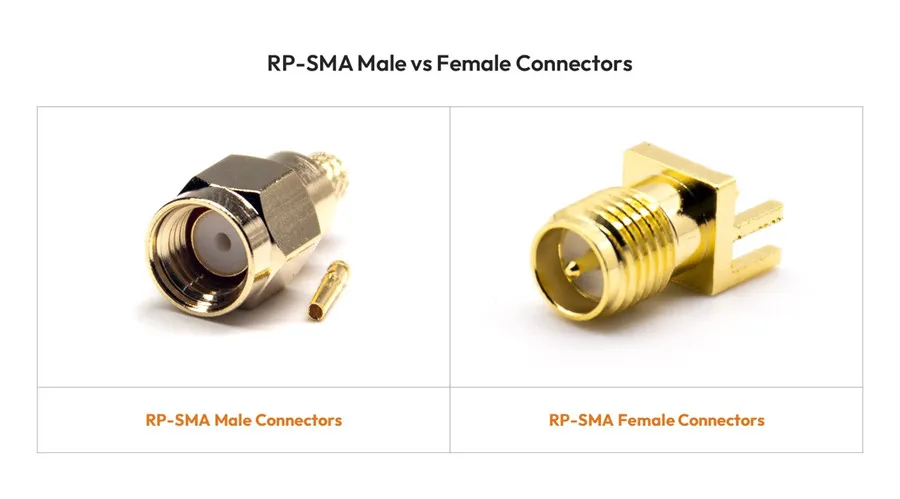
The figure clarifies that RP‑SMA uses reversed polarity at the center contact, helping readers avoid mismatches when selecting antennas and cables.
One of the trickiest parts about working with RF gear is telling RP-SMA male and RP-SMA female apart. The names sound straightforward, but the reversed design often misleads people. Many assume “male” always equals a pin in the middle. With RP-SMA, that rule doesn’t hold.
Here’s the breakdown:
| Feature | RP-SMA Male | RP-SMA Female |
|---|---|---|
| Thread Type | External (outside threads) | Internal (inside threads) |
| Center Contact | Socket (no pin) | Pin |
| Typical Use | Found on Wi-Fi antennas, extension cables, pigtails | Found on routers, PCIe Wi-Fi cards, access points |
| Keyword Reference | rp-sma male, sma male rp | rp-sma female |
The important detail: in RF terminology, the gender is defined by the threads, not the presence of a pin. That’s why an RP-SMA male, even without a pin, is still called “male.”
Think of it this way: the outer shell is the “handshake” that defines the role. The pin or socket inside doesn’t always follow the same convention as in standard SMA connectors. Once you get used to checking threads first, identifying connectors becomes second nature.
For practical examples, most WiFi routers on the market today use an RP-SMA female port on the chassis. The detachable antenna that screws into it? That’s an RP-SMA male plug. If you buy the wrong type, the connector simply won’t mate, no matter how hard you try twisting it.
RP-SMA vs SMA: Key Differences

The chart shows why SMA and RP‑SMA are not interchangeable, aligning with the text’s guidance on choosing the correct connector for radios and antennas.
At first glance, it’s almost impossible to tell an SMA connector from an RP-SMA connector. The shells share the same size, the same ¼”-36 threading, and even the same hex nut dimensions. To the untrained eye, they’re interchangeable. But the catch is in the center conductor.
Here’s how they differ:
- SMA Male → Has a pin in the center, plus external threads.
- SMA Female → Has a socket, plus internal threads.
- RP-SMA Male → Has external threads but a socket instead of a pin.
- RP-SMA Female → Has internal threads but a pin inside.
RP-SMA vs SMA Connector Comparison
| Connector Type | Thread Style | Center Contact | Typical Devices | Notes |
|---|---|---|---|---|
| SMA Male | External threads | Pin | RF test equipment, lab gear | Standard SMA design |
| SMA Female | Internal threads | Socket | Radios, analyzers, measurement gear | Matches SMA male |
| RP-SMA Male | External threads | Socket | Wi-Fi antennas, extension cables | Common source of confusion |
| RP-SMA Female | Internal threads | Pin | Routers, PCIe Wi-Fi cards, APs | Most common in consumer Wi-Fi gear |
This small reversal makes the two families incompatible. Try connecting an SMA antenna to an RP-SMA router port, and you’ll end up with pin-to-pin contact—or worse, no connection at all. That’s why so many customers order antennas online only to discover they don’t fit.
In everyday use, most WiFi routers ship with RP-SMA female jacks on the device, and the bundled antennas come as RP-SMA male plugs. Meanwhile, standard SMA connectors are more common in test equipment, RF modules, or professional-grade hardware.
The key takeaway? RP-SMA vs SMA may look like a minor distinction, but it determines whether your gear actually works together. A quick inspection of the pin vs socket before buying can save you the headache of returns and mismatched parts.
Applications of RP-SMA Connectors
The image groups common use cases of RP‑SMA, supporting the article’s section on choosing proper connectors for home/office wireless deployments.
The RP-SMA connector shows up in far more places than most people expect. If you’ve ever swapped antennas on a router or tinkered with IoT gear, you’ve already used one—probably without realizing it. Here are a few of the spots where RP-SMA quietly does its job:
1. WiFi & Routers
This is where almost everyone first meets RP-SMA. Most home routers and access points with detachable antennas use RP-SMA female jacks on the chassis. The matching RP-SMA male plug is built into the antenna itself. It’s a simple setup, but it prevents mixing with standard SMA parts, which was the whole point when manufacturers adopted it.
2. IoT & Wireless Modules
From Zigbee hubs to LoRa gateways, IoT hardware often includes an RP-SMA port. Why? Because engineers and hobbyists want the flexibility to attach a stronger or directional rp sma antenna if range becomes an issue. I’ve seen countless DIY smart-home setups where changing just the antenna solved stubborn connection drops.
3. Adapters & Converters
There are times when you need to connect two worlds. A type F female to RP-SMA female adapter, for example, lets a TV-style coaxial cable feed into a WiFi card. It’s not something you’ll use every day, but in lab work or custom networking projects, these little adapters can be lifesavers.
4. Outdoor / Weatherproof Gear
Standard connectors don’t last long outside. That’s why you’ll find weatherproof coaxial cable connectors with RP-SMA ends on outdoor WiFi bridges, surveillance systems, and even farm IoT nodes. The seals keep out water and dust, so the RF link stays reliable through rain and heat.
Put simply, the RP-SMA connector isn’t just for home routers—it’s a backbone for modern wireless systems, spanning everything from a simple WiFi upgrade to industrial IoT deployments in the field.
Where RP-SMA Connectors Are Used
| Device Type | Connector on Device | Matching Connector on Cable/Antenna | Example Use Case |
|---|---|---|---|
| Wi-Fi Router | RP-SMA Female (pin + internal thread) | RP-SMA Male (socket + external thread) | Home/office Wi-Fi |
| PCIe Wi-Fi Card | RP-SMA Female | RP-SMA Male | Desktop PC wireless upgrade |
| IoT Gateway (LoRa, Zigbee) | RP-SMA Female | RP-SMA Male | Smart-home hubs, IoT networks |
| Outdoor Wi-Fi Bridge | Weatherproof RP-SMA Female | RP-SMA Male with weatherproof seal | Long-range outdoor links |
RP-SMA Antennas
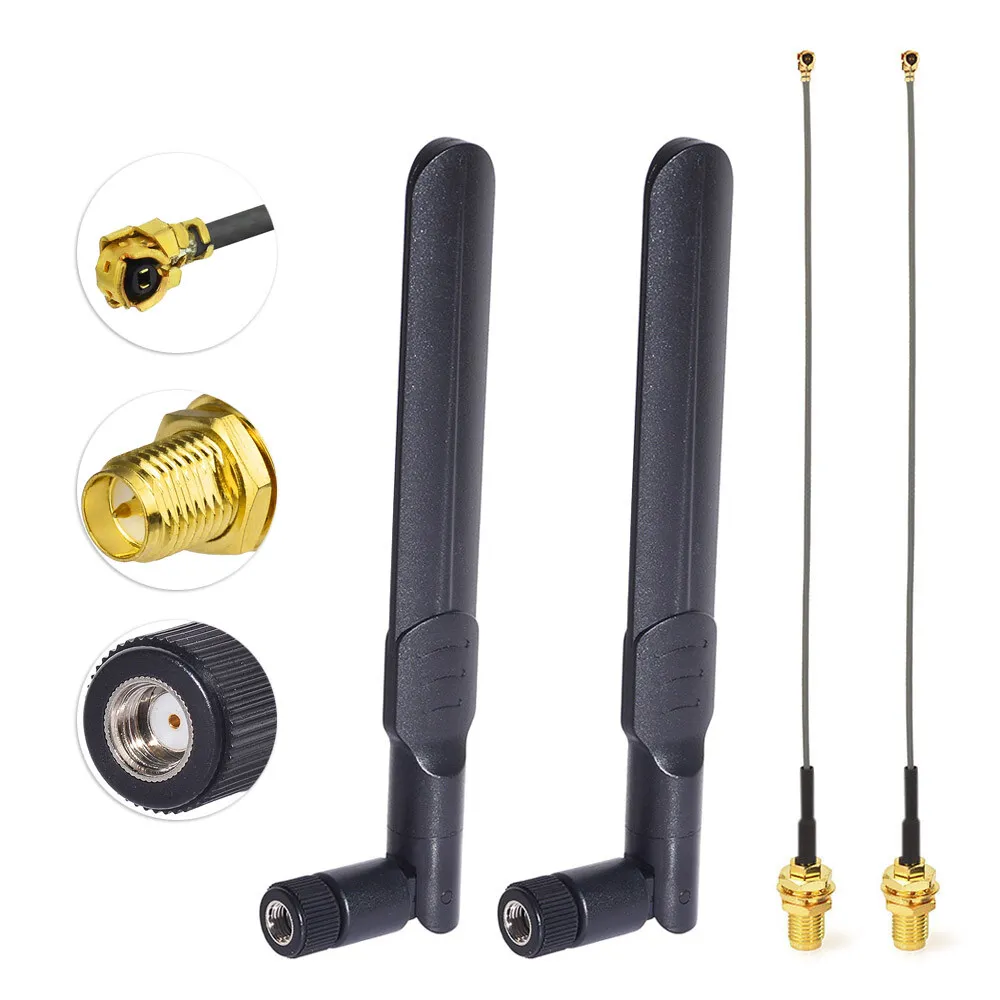
The figure illustrates common RP‑SMA antenna options referenced in the text, guiding readers to select antennas by band (2.4/5 GHz) and gain.
Once you realize your router or IoT device has an RP-SMA connector, the next question is obvious: which antenna should I buy? That’s where things get messy, because antennas come in different shapes and each has its quirks.
Standard WiFi antennas (2.4 GHz)
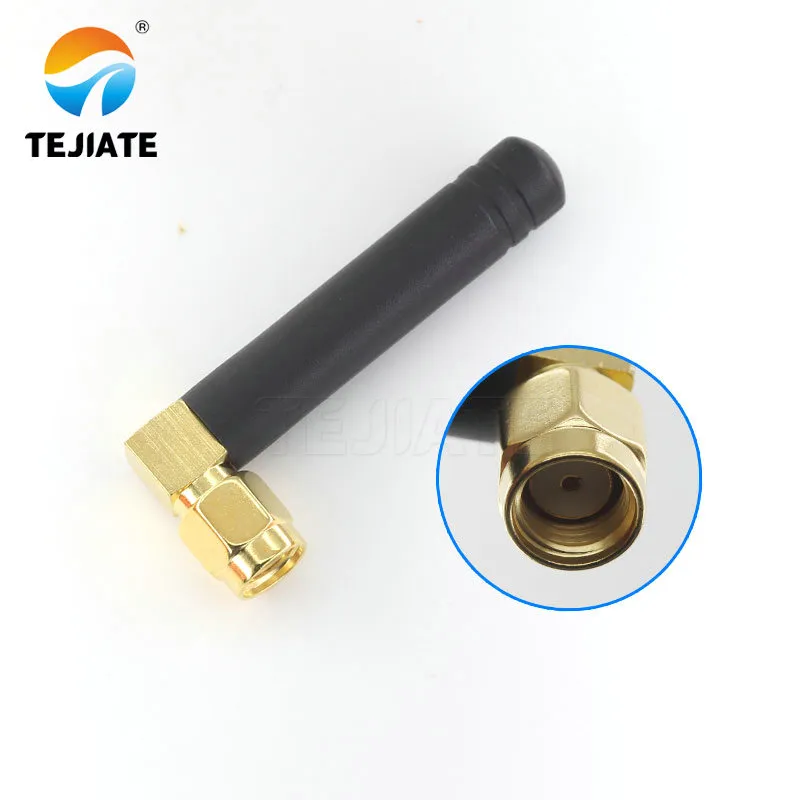
These are the plain black “rubber duck” sticks you see on almost every router. They’re usually rated around 5 dBi. Nothing fancy, but they’re cheap, reliable, and cover a small apartment just fine.
Dual-band antennas (2.4 + 5 GHz)
If you own a modern router or a mesh WiFi system, this type is the safer choice. It handles both frequency bands so you don’t need to keep switching antennas.
Bluetooth & Zigbee antennas
These are smaller, sometimes just a stubby stick with an RP-SMA male plug. You’ll find them on USB dongles or smart hubs. They don’t push the strongest signal, but for short-range IoT gadgets, they’re more than enough.
Directional antennas
Instead of spraying WiFi in every direction, these focus the signal like a flashlight beam. They’re handy for connecting two buildings or aiming a stable signal at an outdoor camera.
A quick buying note
Most routers have an RP-SMA female port, which means you’ll need an RP-SMA male antenna. Don’t just trust the listing title—photos showing the pin/socket are your best friend here.
And remember, more gain isn’t always better. A high-gain antenna might cover the backyard but leave dead spots right next to the router. Sometimes the smaller stock antenna does the job best.
How to Identify and Avoid Mistakes
It’s surprisingly easy to buy the wrong rp-sma connector if you’re not careful. From the outside, SMA and RP-SMA look the same, and the naming conventions often confuse newcomers. So how do you make sure you’re getting the right fit?
The simplest trick is this: look at the threads first, then check the center contact.
- External threads + socket → RP-SMA Male
- Internal threads + pin → RP-SMA Female
- External threads + pin → Standard SMA Male
- Internal threads + socket → Standard SMA Female
That quick check will tell you whether you’re holding an RP-SMA or SMA, and whether it’s male or female.
Here are the most common mistakes people make:
- Assuming “male” always means “with pin.” In RP-SMA, that’s not true. An rp-sma male connector has no pin—it has a socket.
- Buying a standard SMA antenna for a WiFi router that actually needs an rp-sma antenna. They’ll never mate properly.
- Trusting poorly labeled online listings. Some sellers confuse sma male rp with regular SMA male, which can lead to mismatched adapters.
From experience, one of the best ways to avoid errors is to keep a reference photo or diagram handy when ordering parts. If you’re unsure, compare your device port to an image of an rp-sma female jack before placing the order. That extra minute of checking saves time, money, and a lot of frustration later.
TEJTE RP-SMA Connector Solutions
Picking the right RP-SMA connector isn’t just about finding something that screws on—it’s about making sure your wireless setup keeps working month after month. At TEJTE, we’ve seen how often people run into trouble with mismatched connectors, so we built a product range that actually solves those problems.
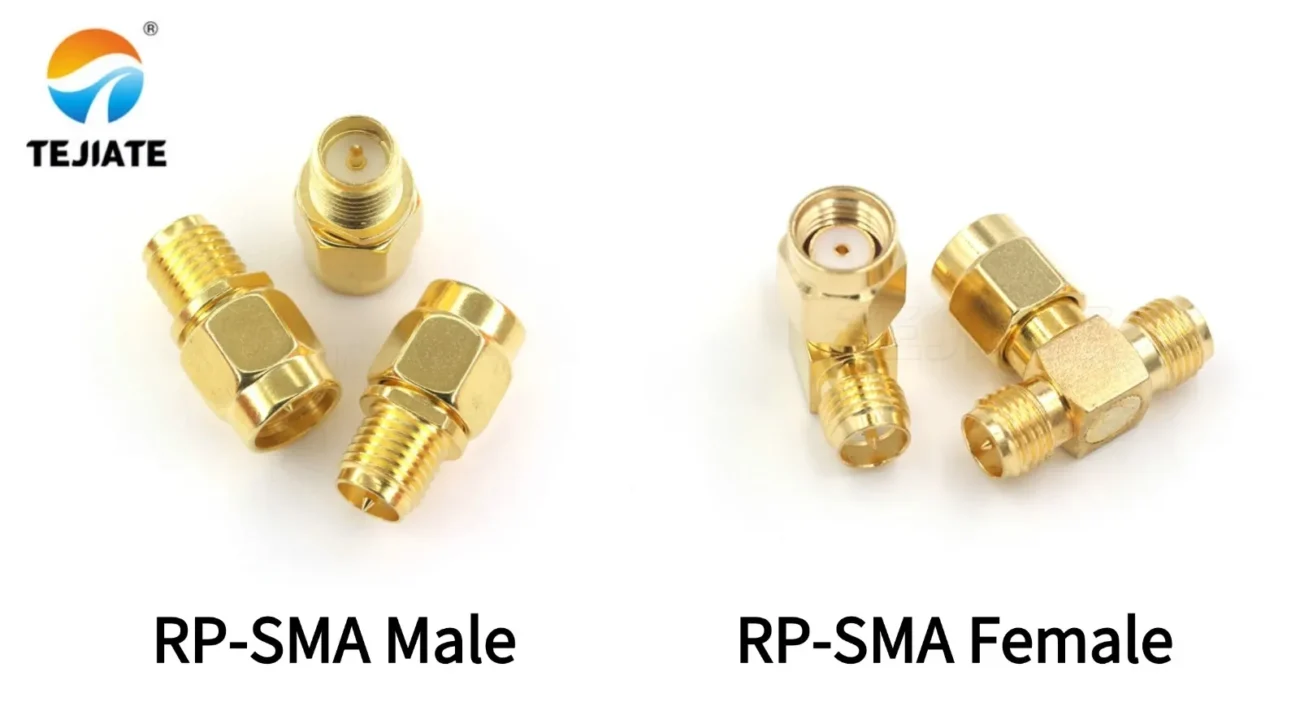
- RP-SMA Male and Female Connectors – Whether you need a simple rp-sma female jack on a router board or a cable-mounted rp-sma male plug, we make sure the machining and finish are solid, so you don’t fight with loose fits.

The image summarizes commonly used RP‑SMA adapters (e.g., RP‑SMA↔SMA, RP‑SMA↔N), supporting the text’s advice on safe interfacing without stressing ports.
- Adapters and Converters – From SMA ↔ RP-SMA converters to handy gender changers, and even special cases like a type F female to RP-SMA female adapter, these little parts save a lot of headaches when different systems need to talk to each other.

The lineup reflects the article’s guidance to choose antennas by environment and link budget—short indoor links vs. longer directional outdoor links.
- RP-SMA Antennas – Our rp-sma antenna lineup ranges from basic 2.4 GHz whips to higher-gain dual-band types. Perfect for boosting a weak router signal or extending coverage in an IoT network.

The image supports the outdoor best‑practice notes—use weather boots and self‑amalgamating tape at RP‑SMA junctions to maintain signal integrity over time.
- Weatherproof RP-SMA Connectors – Outdoor jobs need more than just metal threads. These versions include seals against rain, dust, and sunlight, so you can mount them on cameras, base stations, or rooftop WiFi gear without worrying about corrosion.
What really makes a difference at TEJTE is that we don’t just throw parts in a catalog—we also share diagrams and specs so you know exactly what you’re buying. That way, you won’t end up ordering an SMA connector when you really needed RP-SMA.
Browse our full RP-SMA range here—whether you’re replacing a single antenna or wiring up a bigger wireless project, you’ll find what you need without the guesswork.
FAQ: RP-SMA Connectors Explained
What is an RP-SMA connector used for?
An RP-SMA connector is most commonly used in WiFi routers, access points, and IoT devices to attach detachable antennas. You’ll also find it in Zigbee hubs, Bluetooth gateways, and LoRa modules where users may want to swap or upgrade antennas. Since most routers ship with rp-sma female jacks, they pair with rp-sma male antennas. The secure threaded design makes them durable for everyday use while maintaining a strong RF connection.
Is RP-SMA the same as SMA?
No. RP-SMA vs SMA is all about the center contact. Both have the same size threads, but SMA connectors follow the standard male = pin, female = socket rule. In contrast, RP-SMA connectors reverse that arrangement. This means they aren’t interchangeable. For example, an SMA male antenna won’t mate with an RP-SMA female port on your router. You’ll need a proper adapter if you want to bridge SMA and RP-SMA devices.
How do I know if I need RP-SMA male or female?
The best way to tell is by checking your device’s port. A router or WiFi card usually has an rp-sma female jack (internal threads + center pin). That means you’ll need an rp-sma male antenna plug (external threads + socket) to fit. Remember, don’t judge by the pin alone—look at the threads first. If you’re uncertain, compare your connector to a clear reference image before ordering.
Can I use SMA and RP-SMA together?
Not directly. Although the housings look the same, the pin/socket mismatch prevents SMA and RP-SMA connectors from making proper electrical contact. If you need to connect devices with different standards, the safe option is to use an SMA ↔ RP-SMA adapter. These adapters are inexpensive and prevent damage to your equipment. For permanent setups, always buy the correct connector type rather than relying on improvised fittings.
Are WiFi antennas SMA or RP-SMA?
Most consumer WiFi antennas on the market today are RP-SMA male, since routers typically use rp-sma female jacks. Some professional networking gear, test instruments, or RF modules may still use standard SMA, so it’s always worth checking before buying. If you’re upgrading antennas, confirm whether your device needs an rp sma antenna or a standard SMA version. A quick check avoids the common frustration of ordering the wrong part.
Are RP-SMA connectors weatherproof?
Standard RP-SMA connectors are not inherently weatherproof, which makes them unsuitable for direct outdoor exposure. But manufacturers offer weatherproof coaxial cable connectors with RP-SMA ends. These include seals or protective boots to guard against moisture, dust, and UV damage. If you’re setting up an outdoor WiFi bridge, security camera, or IoT gateway, choosing a weatherproof RP-SMA solution will greatly extend equipment life and reduce maintenance.
Conclusion
The RP-SMA connector may look like just another threaded plug, but in the world of WiFi and IoT, it plays a critical role. By reversing the center contact arrangement from standard SMA connectors, RP-SMA became the go-to choice for routers, access points, and countless wireless modules. It’s a small design twist with big consequences—especially if you buy the wrong antenna.
The key to avoiding mistakes is simple: check the threads first, then the center contact. An rp-sma male has external threads and a socket, while an rp-sma female has internal threads with a pin. Once you know that rule, it becomes second nature to identify the right part.
For most consumers, the practical takeaway is that routers usually have rp-sma female jacks, and antennas are almost always rp-sma male plugs. If you’re shopping for an upgrade, look for an rp sma antenna designed to match that standard. For outdoor or industrial projects, consider weatherproof coaxial cable connectors to ensure long-term reliability.
Whether you’re setting up a home WiFi system, experimenting with IoT hardware, or managing professional installations, understanding RP-SMA means fewer mismatches, smoother projects, and stronger connections. And if you need trusted solutions, TEJTE offers a complete line of RP-SMA connectors, adapters, and antennas to keep your wireless systems performing at their best.
Bonfon Office Building, Longgang District, Shenzhen City, Guangdong Province, China

A China-based OEM/ODM RF communications supplier
Table of Contents
Owning your OEM/ODM/Private Label for Electronic Devices andComponents is now easier than ever.