
What Is mmWave? Complete Millimeter Wave Frequency Guide

Aug 11,2025

Introduction to mmWave technology with 5G and radar applications

This image introduces millimeter wave (mmWave) technology, highlighting its use in 5G small cells, WiGig, and 77 GHz automotive radar. It represents the extremely high frequency (EHF) range of 30–300 GHz with wavelengths from 1–10 mm.
What Is mmWave and Its Applications

From 5G small cells to 77 GHz automotive radar, millimeter wave (mmWave) is the slice of radio spectrum powering today’s fastest wireless links and most precise sensors. In this in-depth guide—modeled on a proven SEO research framework—you’ll learn what mmWave is, how it behaves, where it’s used, how it compares to other bands, and how to test it reliably with mmWave test adapters like those offered by TEJTE

What Is mmWave and How Was It Defined?

mmWave generally refers to radio frequencies with wavelengths from 1–10 mm, corresponding to the Extremely High Frequency (EHF) band of 30–300 GHz per the ITU. In telecom practice, “5G mmWave” is a subset called FR2, currently standardized from 24.25–52.6 GHz. In everyday use, you’ll also see named windows like V-band (~57–71 GHz), E-band (71–76/81–86 GHz), and radar allocations around 77–81 GHz.

Historically, these frequencies were limited to defense, satellites, and specialized research because of propagation challenges and hardware cost. Advances in semiconductor processes, antennas, and packaging brought mmWave into 5G, WiGig (802.11ad/ay), and compact automotive radar devices you can buy today.

Where mmWave Sits Among Related Bands

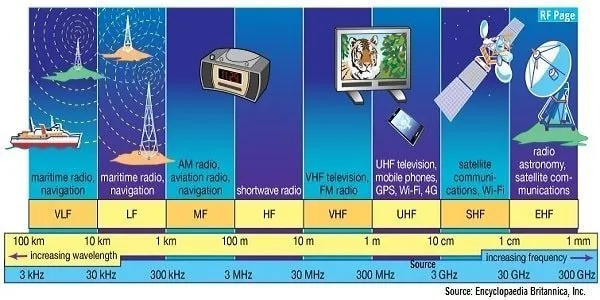
Radio spectrum bands from VHF to THF with typical uses

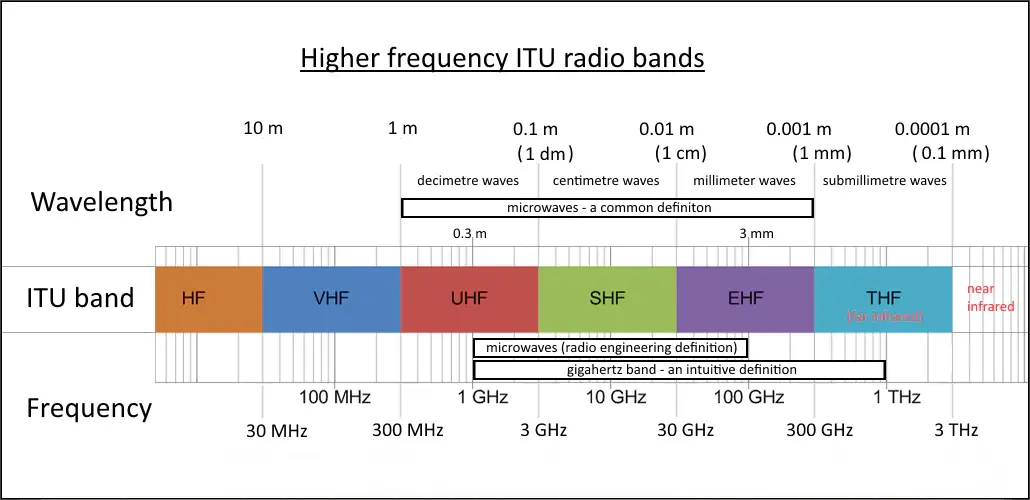
This chart places mmWave within the broader radio spectrum, comparing its frequency range and uses with other bands like VHF, UHF, SHF, and THF. It shows how mmWave is used for 5G FR2, WiGig, and radar.
Radio Spectrum Context from VHF to mmWave

To ground the terms you see in search (VHF, UHF, SHF, EHF, THF), here’s how they line up and how they’re used.

Table 1 — Radio spectrum context (typical definitions & uses)

Band Abbrev. Frequency Range Typical Uses
Very High Frequency VHF 30–300 MHz FM radio, TV, aviation
Ultra High Frequency UHF 300 MHz–3 GHz Mobile, Wi-Fi 2.4 GHz
Super High Frequency SHF 3–30 GHz Microwave backhaul, Wi-Fi 5/6
Extremely High Frequency EHF / mmWave 30–300 GHz 5G FR2, WiGig, V/E-band backhaul, radar
"Tremendously" High Frequency THF (sub-THz) 300 GHz–3 THz Research, emerging 6G links

Notes: ITU defines SHF and EHF ranges; THF is commonly used in literature for sub-THz.

Common mmWave Bands and Uses

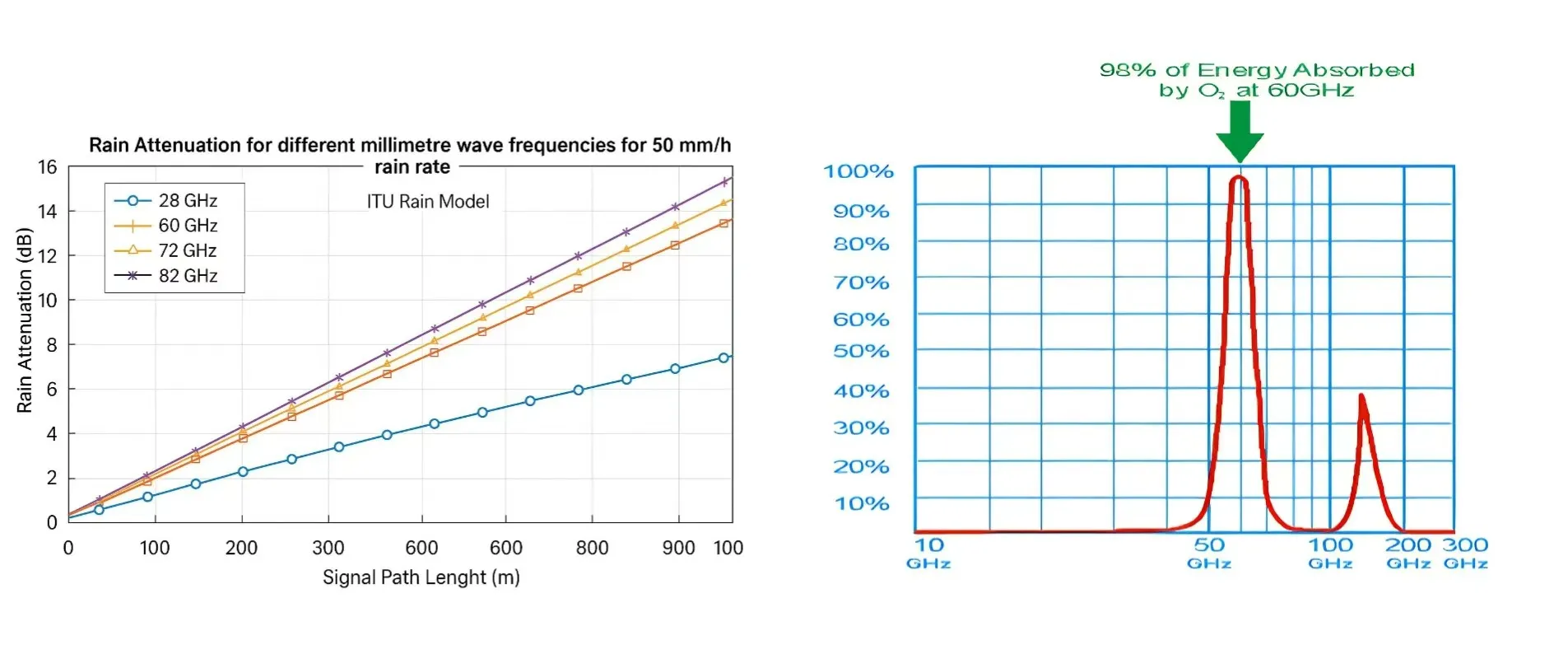
V-band (57–71 GHz) is prized for huge unlicensed bandwidth (varies by region). It underpins WiGig / 802.11ad/ay and short-range backhaul. Oxygen absorption near 60 GHz reduces interference and range—useful for dense deployments.

E-band (71–76 & 81–86 GHz) offers lightly licensed, multi-gigabit backhaul with longer reach than V-band but higher rain fade. It’s now mainstream for 5G transport, with industry guidance on link budgets and availability.

5G FR2 (24.25–52.6 GHz) includes bands n257, n258, n260, n261 and others. FR2 enables multi-Gbps mobile broadband with beamforming, while small cells mitigate short range. Some regions also discuss spectrum to 71 GHz for future extensions.

Automotive radar (77–81 GHz) is standardized globally for ADAS functions like adaptive cruise control and blind-spot detection, replacing 24 GHz UWB allocations in many markets.

How mmWave Propagates

Advantages and limitations of mmWave technology

The image highlights mmWave’s key strengths such as multi-Gbps speeds and narrow beams, along with challenges like short range, blockage issues, and rain fade—important factors for deployment planning.

mmWave Pros and Cons at a Glance

Shorter wavelengths allow narrow, high-gain beams with compact antenna arrays. Beamforming improves link budgets but demands precise alignment and tracking.

Higher free-space loss and limited penetration through walls and foliage constrain coverage. Oxygen absorption peaks around 60 GHz, and rain attenuation increases with frequency, especially in E-band. These effects are predictable and inform link design and siting.

In practice, these characteristics favor line-of-sight, short-to-medium hop links, and indoor tether-less docking (WiGig). For mobility, operators densify cells and use hybrid FR1/FR2 strategies to balance reach and capacity.

Advantages & Limitations of mmWave

Advantages

  • Massive bandwidth for multi-Gbps data and ultra-low latency.
  • Tight spatial reuse thanks to narrow beams and oxygen absorption near 60 GHz.
  • Small antennas enable compact devices and arrays.

Limitations

  • Shorter range and line-of-sight dependence due to path loss and blockage.
  • Weather sensitivity, notably rain fade in E-band; careful fade margins are required.
  • Complex RF design & test, with connectors, fixtures, and calibration impacting accuracy.

mmWave vs. Sub-6 GHz vs. WiGig & Radar

Table 2 — Technology trade-offs by band

Attribute Sub-6 GHz (FR1) 5G mmWave (FR2) WiGig (802.11ad/ay) Automotive Radar (77-81 GHz)
Frequency < 6 GHz 24.25–52.6 GHz 60 GHz 77–81 GHz
Bandwidth Narrow-to-moderate Very wide Very wide Moderate (radar chirps)
Range / Penetration Long / good Short / poor LOS Short / line-of-sight Short-to-medium
Typical Use Coverage, IoT, small cells Hotspots, FWA Wireless docks / VR ADAS sensing
Key Constraint Spectrum scarcity Blockage, alignment Oxygen absorption Regulation, safety design

Connectors & Test Adapters

Common precision RF connector families for mmWave applications

This image compares precision RF connectors by size and frequency capability, critical for achieving low VSWR and reliable measurements in mmWave testing.
Precision RF Connectors for mmWave

At mmWave, precision connectors and low-VSWR adapters dramatically influence measurement repeatability. Typical connector families and practical maximum frequencies are:

Table 3 — Common precision RF connector families and indicative frequency limits

Connector Colloquial Name Typical Max Frequency Notes
3.5 mm 26.5 GHz Precision version mates with SMA; common in legacy VNAs.
2.92 mm K 40 GHz Mode-free to 40 GHz; widely used for FR2 testing.
2.4 mm 50 GHz IEC 61169-40; robust for repeated matings.
1.85 mm V 67 GHz Popular for E-band prototypes and radars.
1.0 mm W 110 GHz For sub-THz and W-band measurements.

Choosing Bands & Use Cases

  • If you need short, secure, high-capacity links with minimal interference, evaluate V-band (60 GHz) where unlicensed rules apply; oxygen absorption limits spillover and enables dense reuse. Pair with WiGig when you need device-level docking or VR.
  • For carrier-grade backhaul beyond ~1 km with high availability, design in E-band and budget for rain fade per regional rain zones. Use dual-band or adaptive modulation for resilience.
  • For mobile broadband, combine FR1 for coverage and FR2 for capacity. Beam management and site density are key to user experience.
  • For sensing/ADAS, align with 77–81 GHz allocations and safety regulations. Antenna placement and radome effects matter.

Deployment, Test & Maintenance

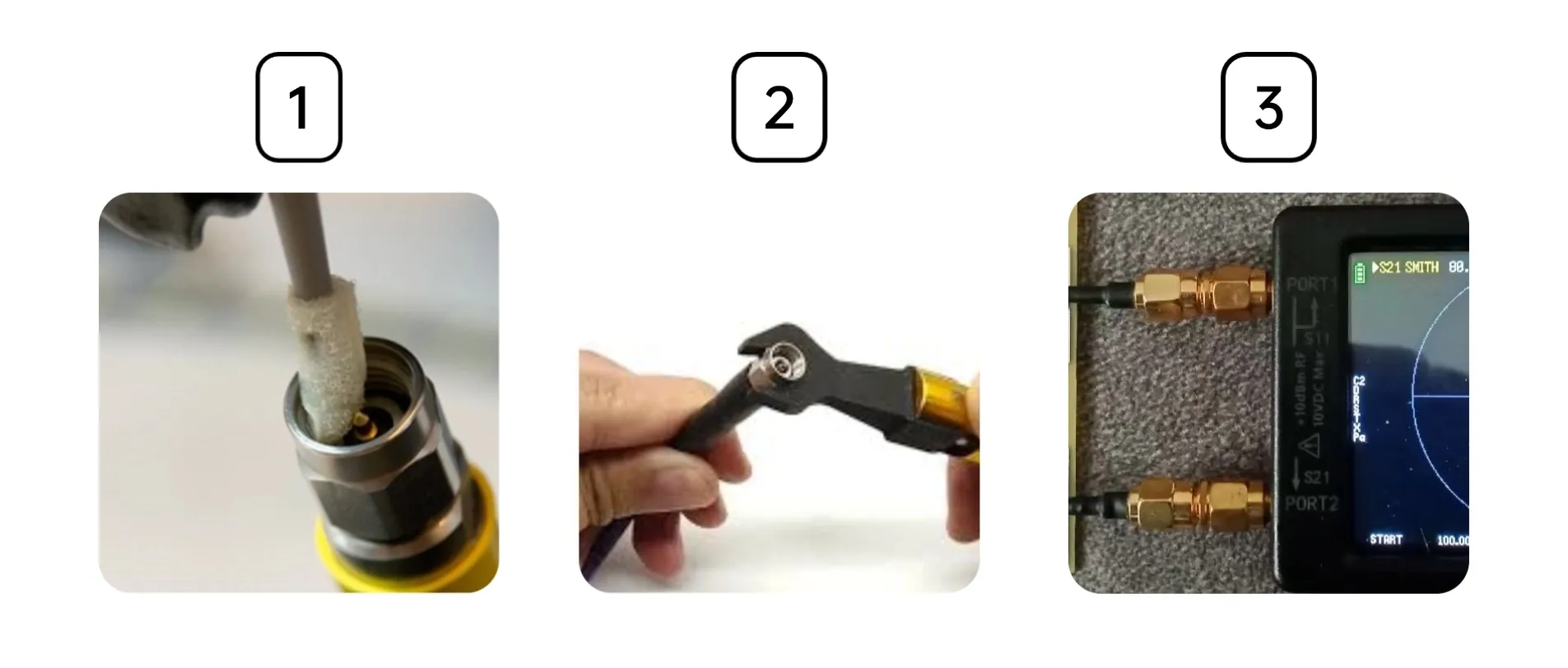
Best practices for mmWave testing and calibration

This graphic outlines practical steps for reliable mmWave testing, including maintaining connector cleanliness, using correct torque, performing close DUT-plane calibration, and managing cable strain relief.
mmWave Deployment and Test Best Practices

Connector hygiene & torque: At mmWave, microscopic contamination raises VSWR and insertion loss. Use lint-free swabs, nitrogen air, and calibrated torque wrenches per the connector’s spec sheet. Replace worn adapters proactively.

Calibration discipline: Perform SOLT/TRL calibrations close to the DUT plane. Use precision test adapters (e.g., 2.92 mm to 3.5 mm, N to 2.92 mm) only when necessary and characterize them in your error model when accuracy is critical. TEJTE’s portfolio includes the common transitions seen in mixed-era labs.

Cables & strain relief: Choose low-phase-stable cables rated to your highest frequency, route with generous bend radii, and secure strain relief at the VNA port. Re-verify after moving fixtures.

Environmental factors: For over-the-air testing, document temperature, humidity, and rain/oxygen absorption expectations to correlate field performance with lab data.

Safety & Exposure: Is mmWave Safe?

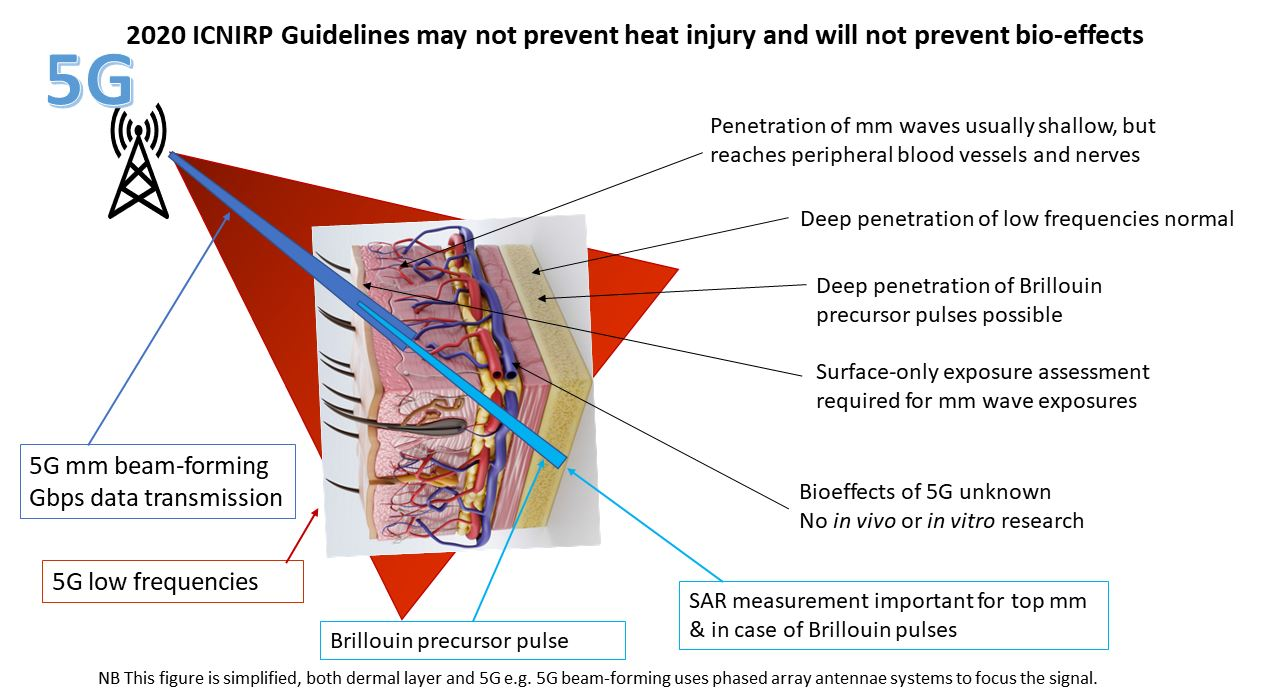
mmWave safety exposure guidelines from ICNIRP and FCC

The image explains that mmWave is non-ionizing RF and shows the ICNIRP 2020 and FCC limits designed to prevent excessive heating, ensuring public safety in 5G and WiGig deployments.
mmWave Safety and Exposure Standards

mmWave is non-ionizing RF. International bodies publish exposure limits to protect against excessive tissue heating. The ICNIRP 2020 guidelines cover 100 kHz–300 GHz and are used globally; the FCC provides complementary US guidance and SAR/MPE limits. Network equipment and devices must meet these limits before sale.

In practice, public exposures from commercial 5G and WiGig equipment are designed to sit well below these thresholds, with averaging areas and time windows specified in the standards. If you deploy transmitters, follow installation manuals and local regulations, and verify compliance as required.

mmWave vs. Other Fabrics

Table 4 — mmWave versus lower microwave bands

Factor Lower Microwaves
(e.g., 6–42 GHz backhaul)
mmWave V/E-band
Channel width Tens to hundreds of MHz Up to multi-GHz
Antenna size Larger Very compact
Range & fade Longer, less rain fade Shorter; higher rain/oxygen loss
Licensing Mostly licensed Mix of unlicensed (V) & light-license (E)
Typical use Long hops, rural Urban short hops, dense reuse

Industry and GSMA guidance reflect the shift to V/E-band for urban 5G backhaul while retaining lower bands for long rural spans.

FAQs

What is the difference between 5G and mmWave?

5G is a cellular standard. mmWave is a portion of spectrum some 5G uses (FR2: 24.25–52.6 GHz). 5G also runs on FR1 (<6 GHz) for broad coverage; devices combine both to balance speed and reach.

Is mmWave the same as microwave?

mmWave is the upper end of the microwave region, specifically EHF (30–300 GHz). Lower microwaves (e.g., SHF 3–30 GHz) behave differently—less rain/oxygen loss, longer range.

Is a millimeter wave safe?

Yes, mmWave is non-ionizing, and deployments must meet ICNIRP and FCC exposure limits designed to prevent excessive heating. Manufacturers and operators certify compliance before service.

What do millimeter waves mean?

They’re radio waves with wavelengths of 1–10 mm in the 30–300 GHz band. The short wavelength enables small antennas and narrow beams.

What is extremely high frequency used for?

Backhaul (V/E-band), 5G FR2, WiGig (60 GHz), automotive radar (77–81 GHz), satellite links, and emerging sub-THz research.

What is considered very high frequency?

VHF is 30–300 MHz, primarily used for broadcast and aviation—not to be confused with EHF mmWave.

What does a very high frequency do?

At VHF/UHF, longer wavelengths travel farther and diffract better; at EHF/mmWave, shorter wavelengths allow huge bandwidth and tight beams but require line-of-sight and careful planning.

What is the highest frequency possible?

In RF engineering, practical test/connectivity now reaches 110 GHz with 1.0 mm connectors, and research pushes well into sub-THz. Above that, you’re in infrared/optical regimes with very different hardware.

WiGig at 60 GHz (802.11ad/ay): Where It Fits

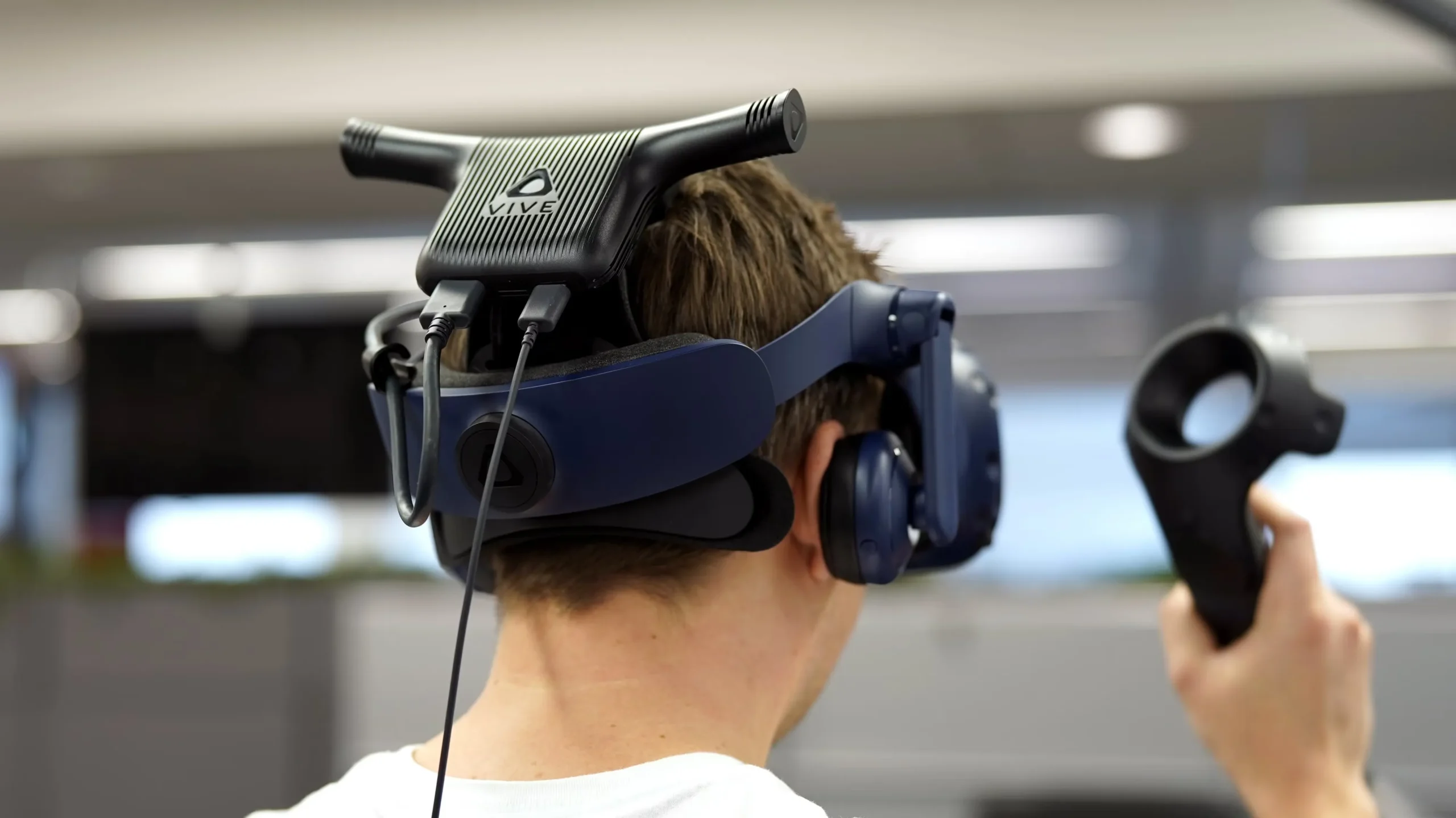
mmWave technology application in VR headset wireless connectivity

This image shows how mmWave enables ultra-low-latency, high-bandwidth wireless connections between VR headsets and computing devices. By operating in the 60 GHz band, mmWave eliminates cable constraints and enhances user mobility, delivering an immersive VR experience without compromising visual quality.
mmWave for Low-Latency VR Headset Communication

WiGig (802.11ad) runs at 60 GHz for multi-gigabit, short-range links (docks, VR). 802.11ay extends range and throughput via channel bonding and MIMO. Both sit squarely in V-band, benefiting from high spectrum availability and reduced co-channel interference.

Designing for Weather & Oxygen Loss

  • Oxygen absorption near 60 GHz is well-documented; expect roughly 10–15 dB/km specific attenuation at sea level, which limits long hops but helps frequency reuse.
  • Rain attenuation scales with frequency and rain rate; E-band links need adequate fade margin, often guided by regional rain zone charts.

How TEJTE Helps: Reliable mmWave Test Adapters for Labs & Lines

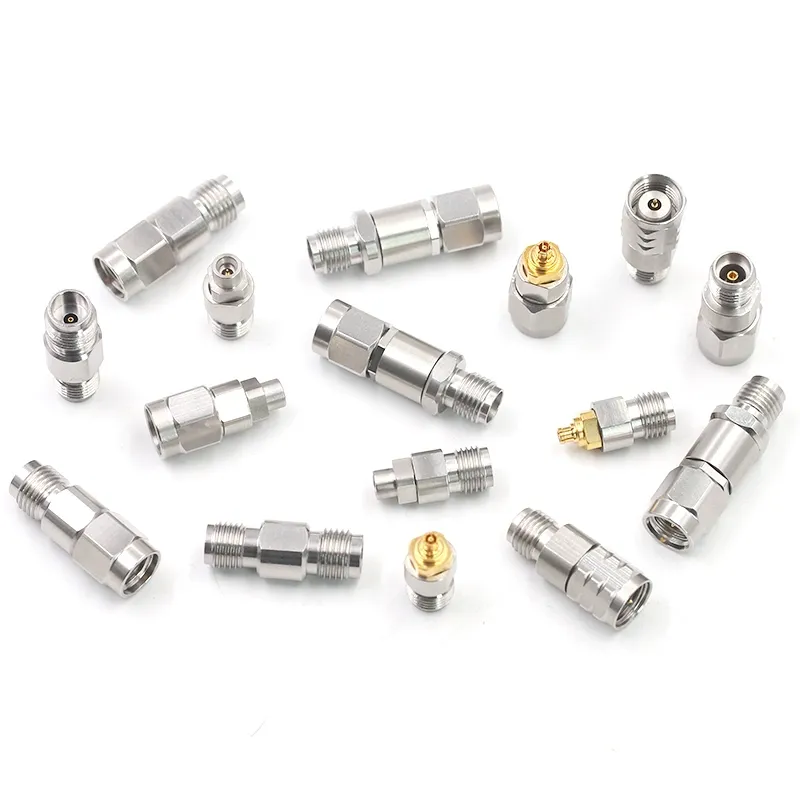
TEJTE mmWave test adapters for lab and production use

This product image shows TEJTE’s range of mmWave test adapters, including 3.5 mm, 2.92 mm (K), 2.4 mm, 1.85 mm, and N-type transitions, designed for high-frequency precision testing in labs and production environments.

TEJTE mmWave Test Adapter Solutions

Whether you’re characterizing a 28 GHz FR2 radio, validating an E-band backhaul chain, or tuning a 77 GHz radar fixture, repeatable interconnects are the backbone of your data. TEJTE provides custom mmWave test adapters across 3.5 mm, 2.92 mm (K), 2.4 mm, 1.85 mm, and N-to-mmWave transitions, with options like four-hole flange mounts (KFKG), bulkhead feedthroughs with O-ring (KYKG), low-VSWR/low-loss designs, and VNA vector test heads (JJG/JKG/KKG)—ideal for standardizing lab kits and customer-facing demos.

  • 3.5 mm ↔ 3.5 mm & SMA/3.5/2.92: M-M / F-F / M-F, JJG/JKG/KKG heads, DC–26.5 GHz; flange-mount and low-VSWR variants available.
  • 2.92 mm (K) family: 2.92↔2.92 DC–40 GHz (partial through-wall KYKG up to 50 GHz), and 2.92↔3.5 (DC–30 GHz), 2.92↔2.4 (DC–40 GHz).
  • 2.4 mm family: 2.4↔2.4 (M-M / F-F / M-F), vector mesh with double-pass and stainless steel double-pass heads, DC–50 GHz.
  • 1.85 mm breakouts: 1.85↔3.5 (DC–26.5 GHz), 1.85↔2.92 (DC–40 GHz), 1.85↔2.4 (DC–50 GHz), covering common transitions between radar fixtures and high-frequency jigs.
  • SSMP/SMP ↔ 2.92 mm: Compact DC–40 GHz solution for dense jigs and production fixtures.
  • N-type transitions: N↔3.5 / 2.92 / 2.4 (DC–18 GHz), used for low-loss transition from production lines and system ports to mmWave benches.

Explore TEJTE’s

Millimeter Wave Test Adapter

Conclusion

mmWave is not “just faster 5G.” It’s a distinct engineering regime—short wavelengths, narrow beams, and weather-sensitive links that reward careful planning and meticulous test practice. Use V-band for dense, short hops and docking; choose E-band for high-capacity metro backhaul; rely on 77–81 GHz for precise sensing; and pick the right connectors and test adapters so your lab data truly reflects field performance. When you’re ready to standardize interconnects or white-label accessories, TEJTE can tailor mmWave test adapters to your exact spec.

Bonfon Office Building, Longgang District, Shenzhen City, Guangdong Province, China

customer service