
V-Band (40–75 GHz) Guide: 60 GHz mmWave WiGig & Backhaul
Aug 12,2025
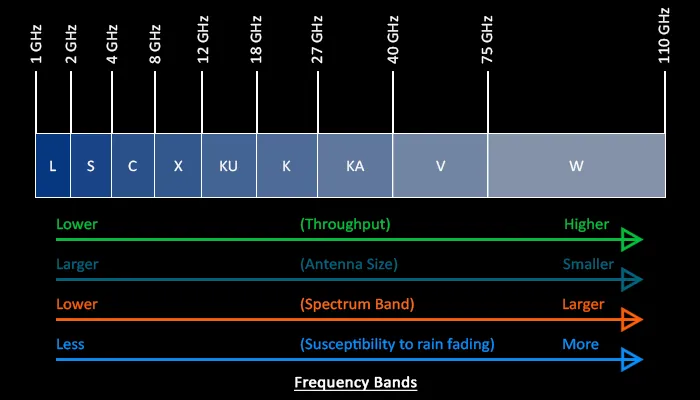
This image provides a complete view of the RF spectrum from 1 GHz to 110 GHz, highlighting key communication and radar bands, including microwave, millimeter-wave, and sub-THz ranges, with their typical applications.
Think of V-Band (40–75 GHz) as the express lane of the millimeter-wave spectrum — ultra-wide, lightning-fast, but only for those close enough to the action. Covering frequencies from 40 GHz to 75 GHz, with the famous 60 GHz WiGig right in the middle, this band delivers fiber-like wireless speeds for applications like short-range backhaul, high-capacity links, and precision RF testing with 1.85 mm V connectors and WR-15 waveguides.
In this guide, we’ll break down V-Band’s advantages, limitations, and key use cases, and compare it with E-Band and other mmWave ranges. You’ll also get a closer look at the hardware — from compact high-gain antennas to custom waveguide adapters
— that makes V-Band work in real-world deployments.
(Perfect for engineers, network planners, or anyone curious why 60 GHz is the Wi-Fi nobody can steal from next door.)
What is V-Band (40–75 GHz)?
The V-Band — sometimes called “vee-band” — covers 40 to 75 GHz and is defined by IEEE as part of the millimeter-wave spectrum. If you want a full breakdown of what mmWave is and how it fits into the RF spectrum, check our Millimeter Wave Frequency Guide. That puts it squarely inside the Extremely High Frequency (EHF) portion of the spectrum, where wavelengths shrink to just a few millimeters. For example, at 40 GHz, the wavelength is about 7.5 mm, while at 75 GHz, it’s closer to 4 mm.
In the past, V-Band lived mostly in specialized radar labs and research facilities. High costs, limited component availability, and tricky propagation kept it out of mainstream use. But that’s changing fast. With 60 GHz WiGig bringing multi-gigabit wireless into living rooms, and WR-15 waveguide systems enabling efficient high-frequency backhaul, the V-Band is now powering everything from short-range point-to-point links to inter-satellite communications.
One key reason: spectrum availability. In the United States, the 57–71 GHz block inside V-Band is unlicensed, offering a massive 14 GHz of contiguous bandwidth — far beyond what you get at 2.4 GHz or 5 GHz Wi-Fi. The trade-off is range: V-Band signals suffer high free-space path loss and strong oxygen absorption around 60 GHz. That means they demand clear line-of-sight and are best for short distances. Ironically, that’s also what makes them secure and interference-resistant — your neighbor’s WiGig won’t bleed into your network, and vice versa.
Advantages of V-Band Frequencies
While the V-Band isn’t a “cover-the-city” frequency range, it has some killer advantages for the right jobs. Think of it as the Ferrari of wireless — not for hauling furniture, but unbeatable in a short, clean sprint.
Top 5 Advantages
| Advantage | V-Band (40-75 GHz) Impact | Example Use |
|---|---|---|
| Massive Bandwidth | Up to 14 GHz unlicensed spectrum (57–71 GHz in the U.S.) | 60 GHz WiGig delivering 7–20 Gbps+ |
| Unlicensed Access | No license fees, faster deployment | Urban wireless backhaul |
| High Security | Oxygen absorption & short range = minimal leakage | Military satcom crosslinks |
| Small High-Gain Antennas | 5 mm wavelength enables compact directional arrays | WR-15 waveguide-fed panel antennas |
| Low Interference | High frequency reuse in dense areas | Multiple rooftop links in one block |
Detailed Breakdown:
Massive Bandwidth for High Data Rates
The unlicensed 57–71 GHz slice in V-Band offers a whopping 14 GHz of spectrum — compare that to ~500 MHz in typical Wi-Fi. That’s why 802.11ad/ay WiGig can hit multi-gigabit speeds, rivaling fiber for short hops.
Unlicensed Spectrum = Rapid Deployment
ISPs can roll out V-Band backhaul without waiting for licenses. In cities, this means connecting a new building in days, not months.
Security by Physics
Oxygen molecules at ~60 GHz absorb energy, limiting range to a few hundred meters outdoors. This keeps links private and resistant to interception — ideal for secure point-to-point setups.
Compact Yet Powerful Antennas
A 10 cm dish at 60 GHz can provide 35 dBi gain. With WR-15 waveguides and phased arrays, designers get high directivity without bulky hardware.
Spectrum Cleanliness
Unlike crowded 2.4 GHz and 5 GHz bands, V-Band’s narrow beams and rapid signal decay prevent interference, even with multiple links in close quarters.
Limitations of V-Band (Challenges)
The V-Band (40–75 GHz) can push staggering data rates, but physics has the final say on where and how you can actually use it. If you’re thinking about a 60 GHz WiGig or mmWave link, a few realities might change your plan.
Technical realities to keep in mind:
- Range isn’t endless – In clear weather, outdoor point-to-point V-Band links may stay rock-solid for a few hundred meters, maybe up to a kilometer if you’re lucky and alignment is perfect. Indoors? 60 GHz WiGig is usually a one-room game.
- Walls are the enemy – At these frequencies, almost anything solid will stop the signal cold. Even a colleague walking between two antennas can make the link hiccup.
- Weather matters a lot – Rain, fog, or high humidity will eat into your link margin. Heavy rain in particular can knock down range dramatically — classic rain fade.
- Hardware isn’t cheap – Precision parts like WR-15 waveguides, 1.85 mm V connectors, and phased-array modules need exact manufacturing, and the price reflects that.
- Power rules are strict – In most regions, unlicensed V-Band gear has tight transmit power limits, so if you want distance, you’ll be leaning heavily on high-gain antennas.
Performance Snapshot: V-Band vs E-Band
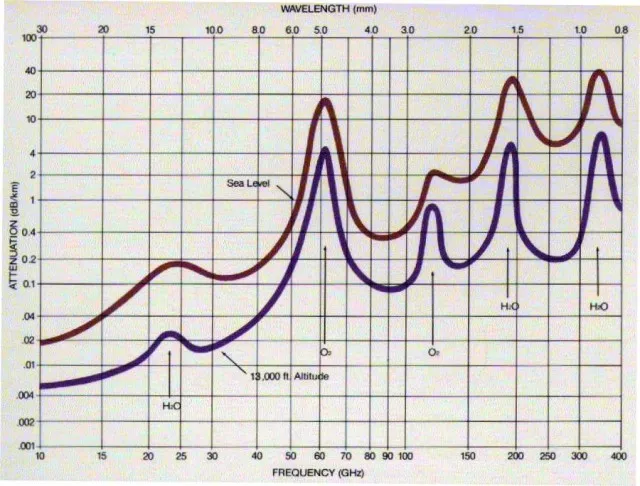
This image presents a performance comparison of V-Band and E-Band for high-capacity wireless backhaul. It highlights V-Band’s unlicensed operation and oxygen absorption advantage for interference reduction, versus E-Band’s longer range and higher throughput potential under licensed spectrum.
| Parameter | V-Band (60 GHz) | E-Band (70/80 GHz) |
|---|---|---|
| Typical Outdoor Range | 0.2–1 km | 1–5 km |
| License Status (U.S.) | Unlicensed (57–71 GHz) | Lightly licensed (71–76 / 81–86 GHz) |
| Oxygen Absorption Peak | Strong (~15 dB/km at 60 GHz) | Weak (~0.3 dB/km at 70 GHz) |
Applications of V-Band (40–75 GHz)
The V-Band is a specialist’s tool in the RF spectrum. Unlike low-frequency bands that aim for wide-area coverage, V-Band thrives in short-range, high-capacity, and interference-sensitive scenarios. Its unique propagation properties — oxygen absorption, short wavelength, and wide available spectrum — make it ideal for certain applications where other bands would either waste resources or introduce interference problems.
1. 60 GHz WiGig (IEEE 802.11ad/ay) – Cable-Free Multi-Gigabit Links

This image illustrates a WiGig-powered indoor setup where a laptop streams ultra-high-definition content to a VR headset without cables. Operating in the unlicensed 60 GHz band, WiGig enables low-latency, multi-gigabit data rates ideal for immersive gaming, design visualization, and real-time simulation.
WiGig uses the unlicensed 57–66 GHz range to provide multi-gigabit throughput for in-room connectivity. With channels up to 2.16 GHz wide (and up to 8.64 GHz with channel bonding in 802.11ay), WiGig can deliver 7–20+ Gbps in practical setups.
Typical applications include:
- Wireless docking stations for laptops, replacing HDMI and USB cables
- VR/AR headsets needing high-bandwidth, low-latency video links
- Instant file sync between devices in the same room
Technical Note: The short range (often <10 m) is actually beneficial in dense apartment or office environments, as it reduces interference between users. Beamforming antennas integrated into chipsets keep the link stable even if devices move.
2. Short-Range Wireless Backhaul – Fiber Speeds Without Trenching

This image shows the allocation and usage of V-Band and E-Band in high-capacity wireless backhaul and 5G FR2 deployments, emphasizing their ability to deliver multi-gigabit throughput over short to medium distances with low interference.
In dense city centers, running fiber between rooftops can take months due to permits and roadwork. V-Band backhaul offers a faster path: rooftop units with WR-15 waveguide-fed antennas or compact dishes can deliver 1–10 Gbps over several hundred meters, sometimes close to a kilometer.
Why operators choose V-Band backhaul:
- Rapid deployment — often completed in a single day
- 60 GHz directional beams reduce interference from nearby links
- Lightweight gear fits on lamp posts, building ledges, or poles
Example: One provider linked two office buildings across a six-lane road using a 60 GHz rooftop link. Oxygen absorption at this frequency acted like an invisible shield, isolating their connection from surrounding wireless noise.
3. Satellite and Aerospace Links – Secure High-Bandwidth Crosslinks
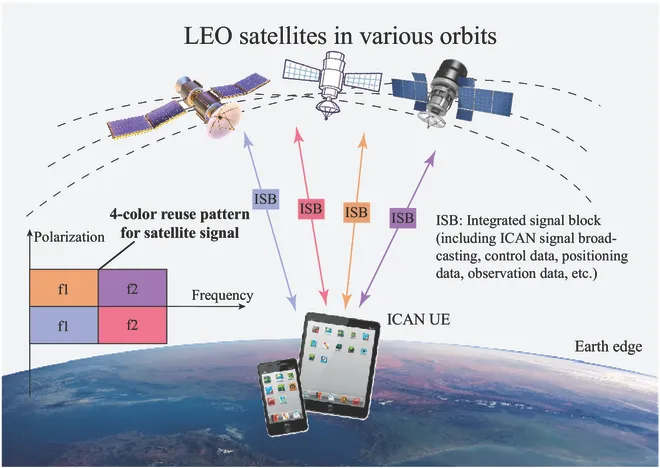
This image outlines the role of W-Band and D-Band in cutting-edge applications such as automotive imaging radar, atmospheric sensing, and experimental sub-terahertz communications, which demand high frequency precision and bandwidth.
Certain LEO satellite constellations are testing V-Band for spacecraft-to-spacecraft data transfer and selected gateway links. The oxygen absorption peak near 60 GHz makes it extremely difficult for ground-based receivers to intercept inter-satellite traffic.
Benefits in aerospace applications:
- Wide spectrum availability for large data payloads
- Lower interception risk from terrestrial sources
- Compact, high-gain antennas suited to smallsat platforms
Challenges: Heavy rain can affect ground links, and in orbit, precise antenna alignment is essential to maintain a stable link when both endpoints are moving at high speed.
4. High-Resolution Radar & Sensing – Millimeter Accuracy

This image shows V-Band radar technology capable of millimeter-level accuracy, supporting gesture recognition, short-range security scanning, and automation sensors, similar to 77 GHz automotive radar.
The 60–75 GHz range supports fine-resolution radar imaging. Short wavelengths enable detection of small movements, making it suitable for:
- Gesture recognition (e.g., Google’s Project Soli)
- Short-range security scanning
- Industrial automation sensors
At adjacent 77 GHz, automotive radar shows similar capabilities, confirming that mmWave in this range is well-suited for detailed motion detection.
Summary Table – V-Band Applications
| Application | Range | Data Rate | Typical Hardware |
|---|---|---|---|
| 60 GHz WiGig | < 10 m (in-room) | 7–20+ Gbps | Phased-array antennas |
| Backhaul Links | 200 m – 1 km | 1–10 Gbps | WR-15 waveguide dishes |
| Satellite Crosslinks | 100s–1000s km (space) | Multi-Gbps | High-gain dish antennas |
| Radar & Sensing | < 100 m | N/A (radar) | Horn or array antennas |
V-Band Compared to Other mmWave & Microwave Bands
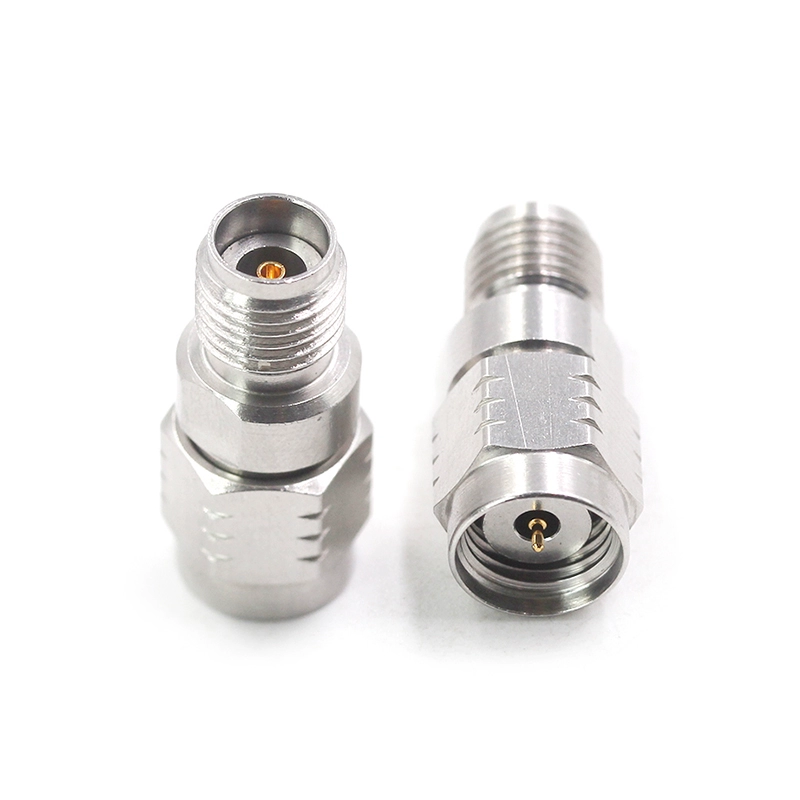
This image displays essential V-Band hardware such as 1.85 mm connectors, WR-15 and WR-19 waveguides, coax-to-waveguide adapters, and compact high-gain antennas, all critical for reliable 60 GHz deployment.
When engineers weigh up options for high-frequency links, the choice isn’t just about finding unused spectrum. Every band behaves differently in the air, has its own regulatory story, and comes with a unique set of antennas and radios. In real-world planning, V-Band (40–75 GHz) often sits alongside E-Band (70/80 GHz), W-Band (75–110 GHz), and satellite-friendly Ka-Band in the decision matrix.
At-a-Glance Frequency Band Comparison
| Band Category |
Frequency Range |
U.S. License | Practical Range |
Common Applications |
Advantages | Limitations |
|---|---|---|---|---|---|---|
| V-Band | 40–75 GHz (57–71 GHz WiGig) |
Unlicensed (57–71 GHz) |
~200 m to 1 km | WiGig, metro backhaul, automotive radar | Huge bandwidth, very compact antennas, low interference footprint | Short reach, rain fade, line-of-sight needed |
| E-Band | 71–76 / 81–86 GHz | Light-license regime | 1–3 km | Carrier backhaul, 5G transport | Greater distance than V-Band, high capacity | License process required, slightly higher gear cost |
| W-Band | 75–110 GHz | Licensed / Trial use | < 0.5 km | Defense comms, high-resolution radar | Massive spectrum availability, precision sensing | Very high equipment cost, heavy propagation loss |
| Ka-Band (satellite) |
26.5–40 GHz | Licensed | Tens of km | Satcom, broadband delivery | Balanced reach and bandwidth, mature satcom hardware | Crowded band, rain attenuation in heavy storms |
V-Band vs E-Band
Engineers often weigh E-Band as the next step up from V-Band when projects need a little more distance. Under clear skies, E-Band can stretch toward 3 km thanks to lower oxygen absorption, making it handy for longer rooftop-to-rooftop backhaul.
The trade-off? A light-license process in most regions, meaning more paperwork before deployment. In dense cities, it’s common to see V-Band for short, high-capacity urban hops, while E-Band handles the “slightly out of reach” sites without jumping to heavier microwave bands.
V-Band vs W-Band
On paper, W-Band looks like an engineer’s dream: up to 35 GHz of contiguous spectrum and extremely high resolution for sensing.
In practice, it’s a niche tool — propagation loss is even worse than V-Band, and sourcing commercial hardware can be a headache. Military and research labs value W-Band for secure radar or experimental satellite links.
For commercial deployments, V-Band’s mature ecosystem — from WR-15 waveguides to 1.85 mm connectors — keeps it in the lead for cost and availability.
V-Band vs Ka-Band
Ka-Band dominates satellite broadband, sitting lower in frequency at 26.5–40 GHz. Its reach in space links can span tens of kilometers, but it can’t match V-Band’s multi-gigahertz channel widths.
For point-to-point fiber-like capacity, V-Band is the clear winner. For blanket coverage over continents, Ka-Band remains unmatched. Many hybrid systems mix the two: Ka-Band for the big picture, V-Band for high-speed local nodes.
Takeaway
If you want maximum capacity over short, interference-controlled paths, V-Band is hard to beat.
- E-Band buys you extra distance.
- W-Band serves the experimental edge.
- Ka-Band keeps the satellites talking.
Real-world networks often mix them, picking the right tool for each link rather than betting on a single band.
V-Band Hardware: Connectors, Waveguides, and Antennas
If you’ve ever worked above 40 GHz, you’ll know there’s no room for sloppy hardware. In the V-Band (40–75 GHz), even a barely bent flange or a bit of dust inside a connector can ruin an otherwise solid link. Over the last few years, the 60 GHz ecosystem has matured, so engineers now have access to precision connectors, low-loss waveguides, and compact high-gain antennas that make deployment more predictable.
1. Connectors – Why 1.85 mm Rules Here
Ask anyone setting up a high-frequency test bench, and they’ll probably mention the 1.85 mm connector, sometimes called the V connector. It’s the go-to choice for coaxial interconnects deep into the V-Band range.
- Handles DC up to ~67 GHz if assembled correctly.
- Mates safely with 2.4 mm connectors for work under ~50 GHz.
- Shows up on precision RF modules and test equipment ports all the time.
The secret is its air dielectric design and tight machining tolerances, which keep VSWR low. The downside? Treat it roughly, and you’ll wreck the threads. In pro labs, torque wrenches and lint-free gloves aren’t optional — they’re survival gear.
2. Waveguides — WR-15 and WR-19 for V-Band Links
Once you push past ~50 GHz, coax starts to feel like a liability. That’s when waveguides step in.
- WR-15: Internal aperture ~0.148 × 0.074 in; perfect for 57–71 GHz unlicensed links.
- WR-19: A touch larger, running 40–60 GHz for the lower end of V-Band.
They’re rigid, they’re low-loss, and they don’t mind a bit of temperature swing. Outdoor radios often have a short WR-15 run between the transceiver and the antenna, with flanges like UG-385/U ensuring tight seals and minimal leakage.
3. Coax-to-Waveguide Adapters
In test setups, most instruments still speak coax, so a good coax-to-waveguide adapter is a must-have.
A common setup is 1.85 mm female to WR-15 flange, using a probe or loop to launch the coax mode into the waveguide cleanly. The best ones keep insertion loss under 1 dB and return loss over 20 dB across multiple gigahertz of bandwidth.
If you need something tailored, TEJTE builds custom millimeter-wave adapters for WR-15 and 1.85 mm that are designed to survive both the RF and mechanical demands of high-performance radar, satellite, and wireless links.
4. Antennas – Small Size, Big Punch
At 60 GHz, the wavelength is short enough that high-gain antennas are surprisingly compact:
- Parabolic dishes (10–30 cm) hitting 30–40 dBi for point-to-point backhaul.
- Horn antennas with 15–25 dBi gain for test ranges and radar work.
- Planar phased arrays that can sweep beams electronically — a must for WiGig and some 5G mmWave deployments.
A lot of gear now integrates the antenna directly into the RF front-end, cutting down on loss and sealing out moisture.
5. Mechanical V-Band Clamps — Non-RF Uses and Design Insights
Outside RF circles, “V-band” can also mean a clamp that locks pipes or exhaust flanges together. It’s a different world, but some quick-release clamp ideas have made their way into lower-frequency waveguide systems. At 60 GHz, though, the precision is too critical — bolted flanges still rule.
Conclusion & Deployment Tips
The days when V-Band was only for lab experiments are gone. With precision 1.85 mm connectors, WR-15 waveguides, and mature antenna options, you can now design short-range links that rival fiber without touching a trenching machine.
From experience, here’s what makes or breaks a deployment:
- Sightlines matter — check your link path, because a tree branch or even a passing delivery truck can take you offline.
- Weather eats margin — rain fade at 60 GHz is real, so don’t skimp on fade budget.
- High-gain antennas cut noise, but demand accuracy — a few degrees off, and your link budget collapses.
- Hardware quality counts — cheap connectors cost you in dB; invest in precision parts that match your frequency.
- Test it before you bolt it down — lab calibration catches misalignment and connector wear before it’s 30 m up on a tower.
For teams stepping into V-Band, working with a partner who knows both RF behavior and mechanical precision will save you time and headaches. TEJTE specializes in this space, offering both standard and custom assemblies to help you build links that stay solid for years.
Bottom line: V-Band gives you fiber-class speed without the digging — but only if you respect its precision demands.
Bonfon Office Building, Longgang District, Shenzhen City, Guangdong Province, China

A China-based OEM/ODM RF communications supplier
Table of Contents
Owning your OEM/ODM/Private Label for Electronic Devices andComponents is now easier than ever.