
In many RF systems, connector selection is decided after the main circuit design has already been completed. At that stage, engineers are usually not looking for a connector that simply fits the port. They need a connection that can maintain stable electrical performance after installation, testing, and long-term operation.
The TNC connector is one example of a connector designed for this type of requirement.
Unlike quick-lock RF connectors, TNC uses a threaded coupling structure.
This is one reason TNC connectors continue to be used in wireless communication equipment, antenna systems, and industrial RF applications.
When selecting a TNC solution, the connector itself is only part of the decision.
For engineers working on RF cable assemblies, checking cable characteristics before connector selection is also important. Resources such as RF connector guide and RG316 coaxial cable guide are often useful when comparing different connection approaches.
How Should You Select a TNC Connector for an RF Application?
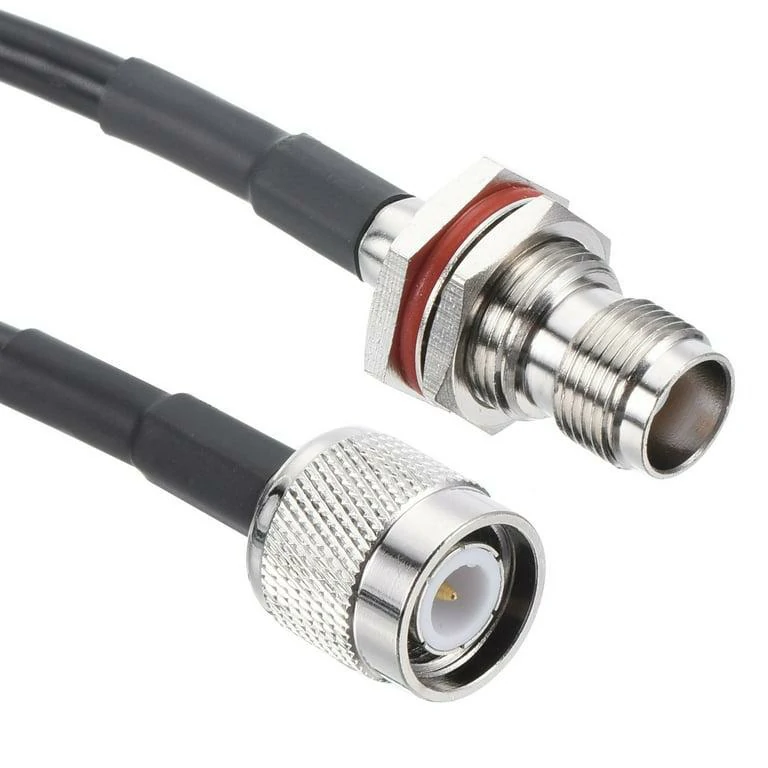
A custom coaxial cable assembly featuring a TNC male connector and a TNC female bulkhead connector. It is suitable for equipment panels, antenna systems, communication devices, and industrial RF installations.
A TNC connector is normally chosen according to the working conditions of the RF system.
For a design engineer, several questions usually need to be answered first:
- Is the system using a 50 ohm RF path?
- What frequency range will the connector operate in?
- Will the connection remain installed for a long period?
- Does the cable need flexibility or higher mechanical strength?
- Is the connector mounted on equipment or used on a cable assembly?
These details are more important than the external appearance of the connector.
For example, two connectors with the same interface size may show different VSWR results when tested because of differences in internal dimensions and manufacturing tolerance.
Consider the Application Environment Before Choosing TNC
A connector used inside a laboratory and a connector installed on outdoor equipment may have completely different requirements.
In a test environment, technicians may connect and disconnect cables many times each day. A convenient interface can save operation time.
In outdoor communication equipment, the priority usually changes. The connection may remain untouched for months or years, so mechanical stability becomes more important.
TNC connectors are commonly considered for applications such as:
- Antenna feeder connections
- Wireless communication equipment
- RF measurement systems
- Industrial communication devices
- Navigation equipment
The final choice should match the actual working condition rather than only the connector specification sheet.
How Do TNC Male and Female Connectors Connect?
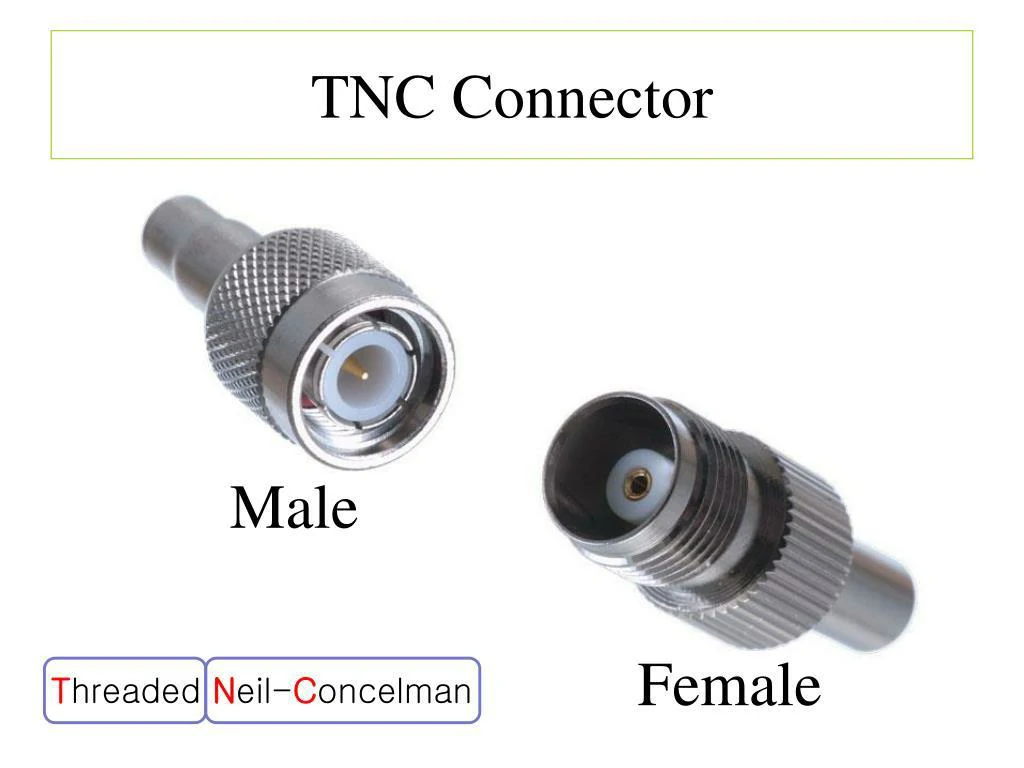
Illustration identifying TNC male and female connector interfaces. TNC stands for Threaded Neill–Concelman and uses a threaded coupling structure to provide a secure RF connection.
Before ordering a TNC connector, confirming the connector gender is one of the basic but important steps.
A tnc male connector uses a pin contact at the center, while a tnc female connector uses a socket contact designed to receive that pin.
Although this seems simple, incorrect gender selection is one of the common mistakes during cable assembly purchasing.
A wrong interface can result in:
- Connector mismatch
- Additional adapter requirements
- Installation delays
- Unnecessary redesign work
How Does a TNC Male Connector Work?
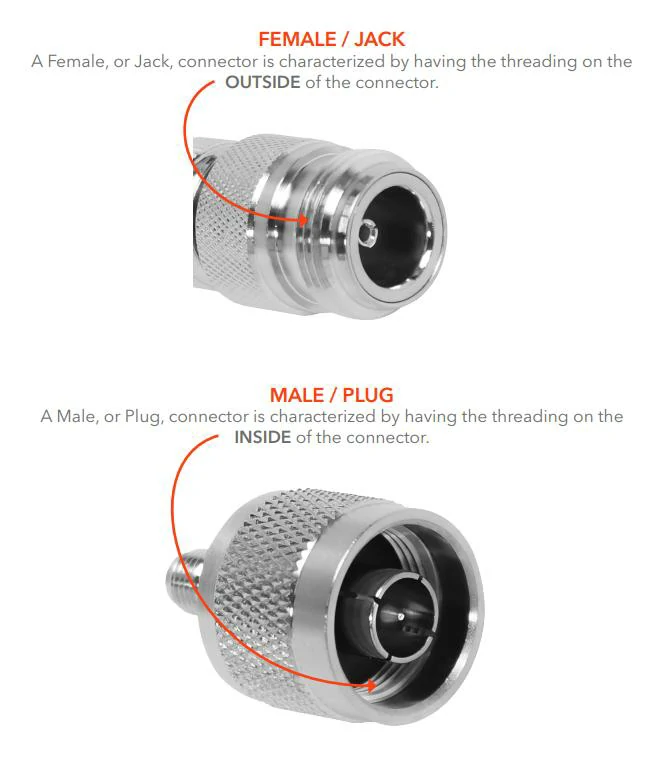
Diagram showing the difference between TNC male and female connectors. The TNC male connector has internal coupling threads and a center pin, while the female connector has external threads and a center socket.
The male version is commonly used on cable ends.
Its main structure includes:
- Center pin contact
- Threaded coupling nut
- Outer conductor body
- Cable termination section
During assembly, the connector must match the cable construction.
For example, RG316, RG174, and RG58 cables have different outside diameters and internal structures. A connector designed for one cable type may not properly terminate another cable.
This is why cable compatibility should be confirmed before mass production.
How Does a TNC Female Connector Work?
The female connector provides the receiving interface.
It is commonly installed on:
- RF equipment panels
- Antenna ports
- Communication devices
- Test instruments
The socket contact must maintain reliable contact pressure with the male pin while keeping the RF path consistent.
In precision RF systems, mechanical connection quality and electrical performance are closely related.
TNC Male vs Female Selection Table
| Item | TNC Male | TNC Female |
| Center Contact | Pin | Socket |
| Common Installation | Cable assembly | Equipment interface |
| Connection Role | Signal output/input end | Device connection port |
| Main Check Point | Cable compatibility | Equipment interface matching |
Why Is TNC Still Used Between BNC and SMA Applications?
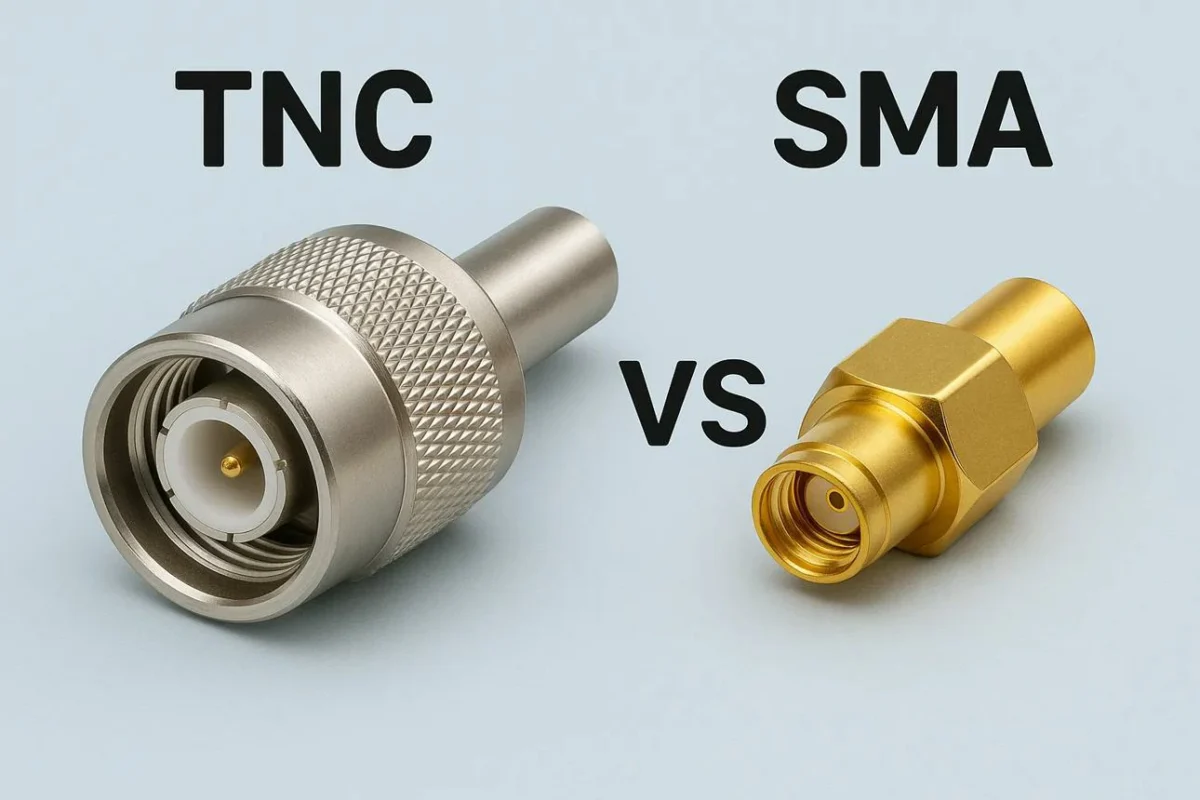
TNC is sometimes described as a connector positioned between BNC and SMA.
The reason is not only size or frequency capability. The three connector families were developed with different priorities.
BNC focuses on quick connection.
SMA focuses on compact RF applications.
TNC focuses on maintaining a secure connection while keeping practical installation convenience.
Why Does TNC Threaded Locking Matter in Long-Term RF Installations?
When a cable assembly is tested on a workbench, most connectors can appear reliable. The real difference often shows after the equipment has been installed and operated for a period of time.
A communication cabinet placed outdoors, a vehicle-mounted antenna, or an industrial wireless device may experience vibration every day. Small movements at the connection point can gradually affect contact stability.
This is one of the reasons many RF designers consider a TNC connector when the connection needs to remain secure after installation.
The threaded interface does not rely on a simple push-fit connection. The coupling nut locks the two sides together and maintains the mechanical position of the mating parts.
For a fixed RF link, this design brings a practical advantage: once the connector is tightened correctly, the possibility of accidental movement is reduced.
Why Is TNC Different From BNC in Actual Use?
TNC and BNC connectors are sometimes compared because both are common 50 ohm RF interfaces.
The difference is mainly related to how the connection is maintained.
A BNC connector is designed around speed. The threaded connection requires more rotation during installation, but the interface becomes more stable after tightening.
In a laboratory environment, the faster operation of BNC can be valuable.
In an outdoor antenna system, the priority is usually different. The cable may stay connected for a long time, and mechanical stability becomes a more important factor.
| Situation | Connector Characteristic |
| Frequent connection changes | Fast locking is preferred |
| Permanent installation | Strong mechanical retention is preferred |
| Equipment vibration | Threaded connection has advantages |
| Field maintenance | Easy access may be more important |
The choice between TNC and BNC is not about which connector is better in every situation.
It depends on how the RF system will actually be used.
A test engineer changing cables every day may prefer BNC.
A communication system installed in a vehicle or outdoor enclosure may benefit from the locking structure of TNC.
How Should TNC Connectors Be Selected With RF Cable Assemblies?
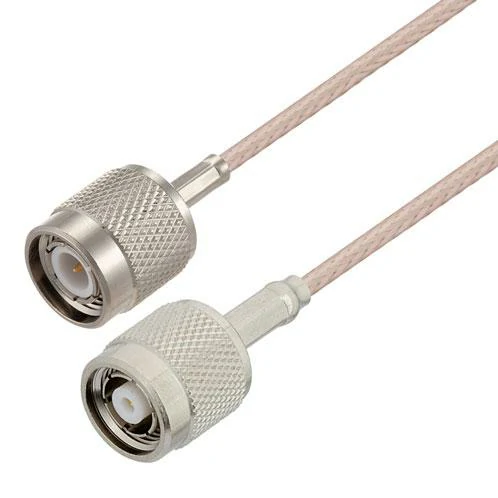
A coaxial cable assembly terminated with TNC connectors at both ends. This type of RF cable is commonly used in communication equipment, antenna systems, test fixtures, and industrial wireless devices.
In many projects, the connector is selected first because it appears on the equipment specification.
However, during production, the cable often determines whether the connector can actually be used.
A TNC connector designed for one cable size cannot always be installed correctly on another cable type.
The reason is simple: coaxial cables are not identical.
Different cables have differences in:
- Outer diameter;
- Shield structure;
- Dielectric thickness;
- Center conductor size;
- Flexibility.
These differences affect both assembly and final RF performance.
For custom orders, it is better to confirm the cable model together with the connector model instead of selecting them separately.
Why Is RG316 Commonly Used With TNC Assemblies?
Typical situations include:
- Internal equipment connection;
- RF jumper cables;
- Communication modules;
- Test fixtures.
When a system requires repeated bending or installation in a narrow area, RG316 is often considered before larger coaxial cables.
For projects comparing cable options, the RG316 coaxial cable guide can help understand cable construction and application differences.
When Should RG174, RG58, or RG142 Be Considered?
Different cable types solve different problems.
RG174 is mainly selected when the available installation space is limited.. Its construction provides better temperature resistance and mechanical stability compared with many flexible cable types.
There is no single “best” cable for every TNC application.
The suitable choice depends on:
- Installation space;
- Cable length;
- Operating environment;
- Required RF performance.
TNC Cable Compatibility Reference
| Cable Type | Common Reason For Selection |
| RG174 | Compact installation and flexible routing |
| RG316 | Small diameter RF jumper applications |
| RG58 | General RF connection with stronger structure |
| RG142 | Higher temperature and stability requirements |
| Low Loss Coax | Longer transmission distance |
How Should TNC Connector Frequency Capability Be Evaluated?
A frequency specification is usually one of the first numbers people check when selecting an RF connector.
However, the connector frequency rating is only part of the final result.
A completed cable assembly is affected by the whole transmission path.
A connector may perform differently after being assembled with:
- Different cable materials;
- Different cable lengths;
- Different termination processes;
- Different manufacturing tolerances.
This is why experienced RF teams normally evaluate the complete assembly rather than only reviewing the connector datasheet.
Which Measurements Are Important After Assembly?
A finished TNC cable assembly is commonly checked through several RF measurements.
VSWR
Used to evaluate impedance matching.
A mismatch between components can cause reflected signal energy.
Return Loss
Used to describe the amount of reflected power in the RF path.
It is closely related to impedance matching quality.
Insertion Loss
Used to check how much signal is reduced when passing through the assembly.
For longer cables, attenuation from the cable itself becomes increasingly important.
What Information Should Be Confirmed Before Custom TNC Cable Production?
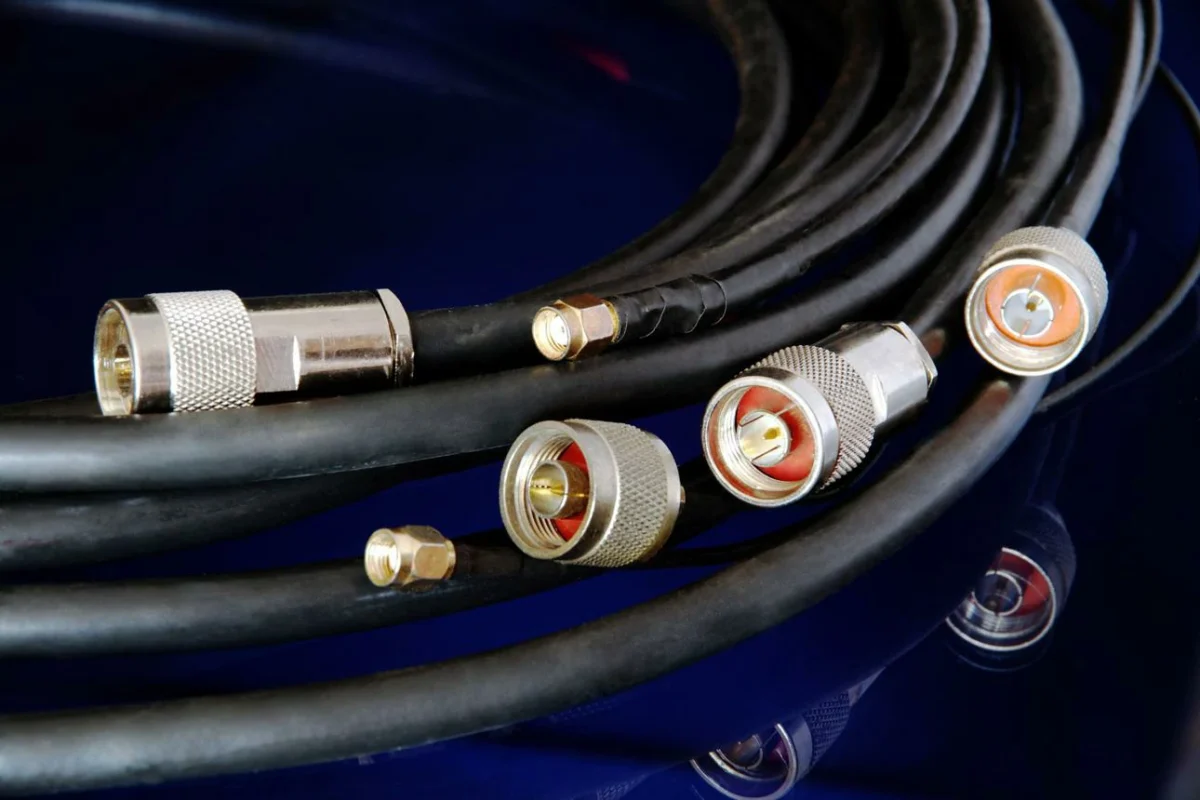
A large percentage of cable assembly problems come from incomplete specifications rather than manufacturing issues.
Before production, the basic information should normally include:
- TNC male or female;
- Straight or right-angle structure;
- Cable model;
- Cable length;
- Frequency requirement;
- Impedance;
- Required RF testing items.
For special projects, additional details may also be required:
- Operating temperature;
- Plating requirement;
- Mounting method;
- Test report format.
A clear specification allows the supplier to select the correct connector structure and avoid changes after production begins.
Where TNC Connectors Fit in Practical RF Projects
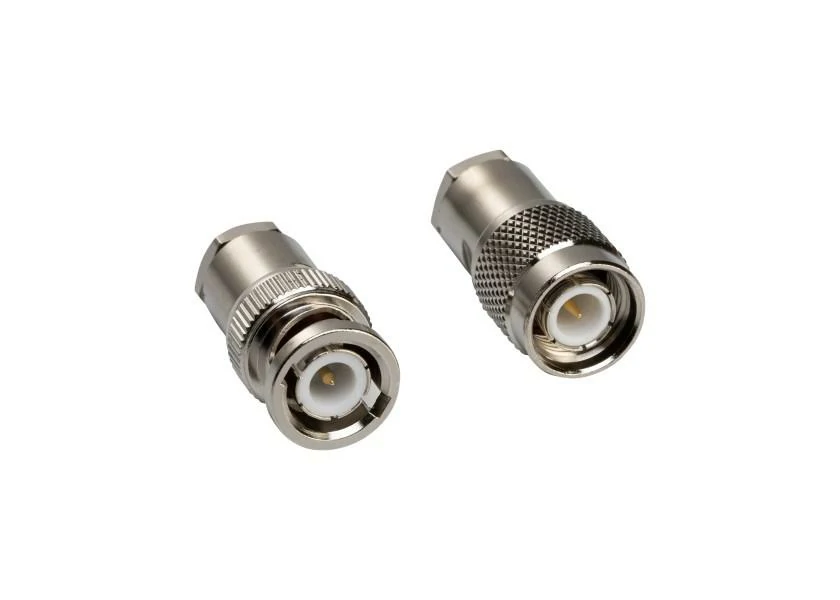
Close-up view of TNC male and female coaxial connectors. The male interface uses a center pin, while the female interface uses a socket contact to receive the pin.
When selecting an RF connector, the first question from customers is often related to interface compatibility.
A cable may need to connect to an antenna port, a communication module, or a test instrument. The connector type is usually determined by the equipment interface that already exists.
For TNC, the reason it remains in use is relatively simple.
Some systems need a connection that can stay fixed after installation.
A connector on a laboratory table may be connected and removed many times.
A connector behind an antenna or inside communication equipment may not be touched after installation.
These two situations require different designs.
The threaded structure of TNC gives the connection stronger mechanical retention, which is useful for equipment exposed to movement or vibration.
Why Do Some RF Systems Still Choose TNC Instead of SMA or BNC?
TNC, SMA, and BNC are all common RF connector families, but they are usually selected for different reasons.
SMA is popular in compact RF and microwave applications.
BNC is convenient when operators need quick connection.
TNC sits between these two choices.
It keeps the threaded connection concept while providing a larger mechanical structure that is easier to handle in many communication applications.
| Connector | Common Reason For Selection |
| SMA | Compact size and higher-frequency applications |
| BNC | Fast connection and frequent operation |
| TNC | Stable connection for installed systems |
During product selection, replacing one connector type with another is not always practical.
The equipment port, cable assembly, mounting space, and electrical specifications all need to match.
A simple adapter may solve the mechanical connection, but it also introduces another interface into the RF path.
For some systems, a direct cable assembly is a cleaner solution.
How Are Custom TNC Cable Assemblies Prepared?
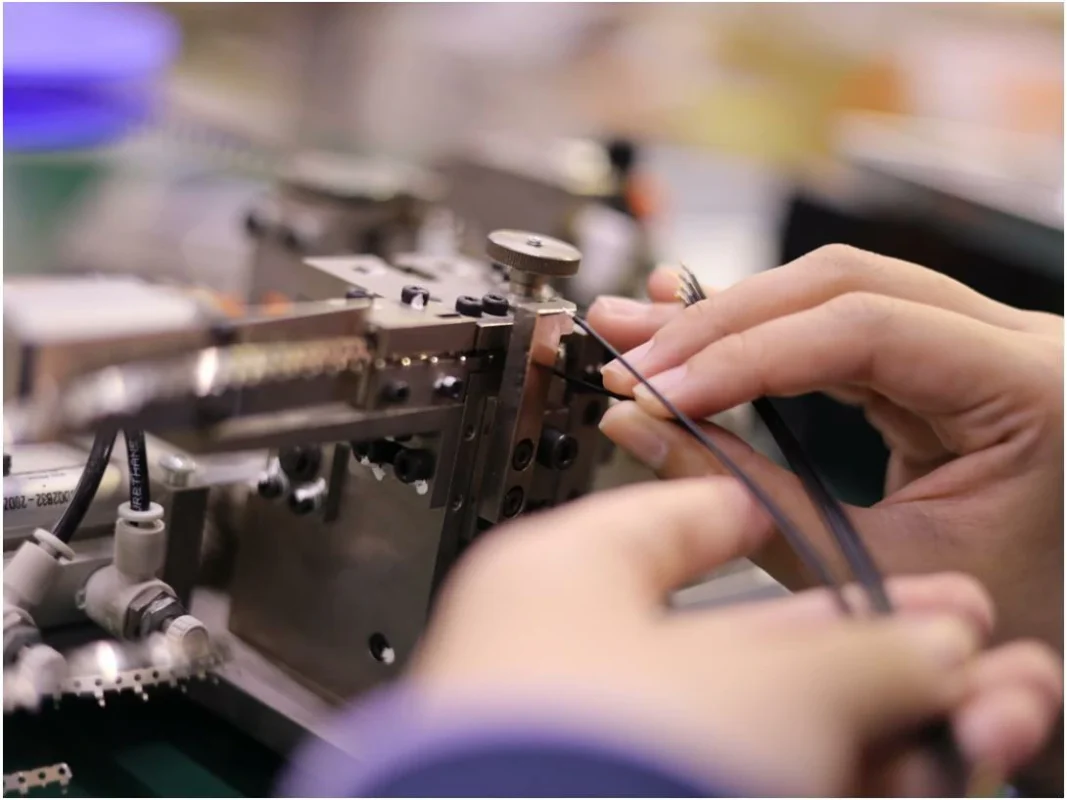
A large number of TNC requests are not for standalone connectors.
Customers often need a finished cable assembly.
A typical inquiry may include:
“TNC male to TNC female cable, 500mm length.”
For production, this information is only the starting point.
The supplier still needs to confirm:
- Cable series;
- Cable diameter;
- Bend requirement;
- Operating frequency;
- Connector direction;
- Test standard.
Different cables create different assembly conditions.
RG174 is often selected where space is limited.
RG316 is commonly used for flexible RF jumpers.
RG58 is preferred when a stronger cable structure is needed.
RG142 is considered when temperature resistance and mechanical stability are more important.
The connector and cable should be matched before production begins.
For flexible RF jumper applications, customers may also compare options through the RG316 coaxial cable guide.
How Is TNC Connector Quality Checked?
A finished RF cable assembly normally needs more than appearance inspection.
The connector may look correct, but internal contact conditions still affect the final result.
Quality checks usually include two parts.
The first part is mechanical inspection:
- Connector model;
- Thread condition;
- Contact appearance;
- Cable termination.
The second part is electrical verification.
What Should Be Included in a TNC Connector Specification?
For standard TNC products, the ordering process is straightforward.
For customized products, a clear specification saves time on both sides.
The information normally required includes:
- TNC male or female;
- Cable type;
- Cable length;
- Connector orientation;
- Frequency range;
- Impedance.
For more complicated projects, customers may also provide:
- Product drawing;
- Existing sample;
- Test report requirement;
- Installation environment.
A complete specification allows the supplier to prepare the correct manufacturing process before production starts.
Custom TNC Order Information
| Required Information | Example |
| Connector Type | TNC |
| Gender | Male / Female |
| Cable | RG316 / RG174 / RG58 |
| Length | Customer size |
| Impedance | 50Ω |
| Testing | VSWR / Return Loss |
FAQ
Can TNC and BNC connectors be exchanged directly?
No. Their mechanical interfaces are different. A suitable adapter or cable solution is required.
Can TNC cable assemblies be customized?
Yes. Cable length, connector type, and assembly requirements can be adjusted according to the application.
Final Thoughts on TNC Selection
A suitable RF connector is not selected only by looking at the connector name.
The actual application decides the better solution.
For equipment requiring a secure connection, TNC provides a practical balance between mechanical stability and RF performance.
When the connector, cable, and testing requirements are confirmed together, the final RF assembly is easier to manufacture and more predictable in operation.