
SMA to TNC Adapter: 50Ω Straight & Right-Angle Picks
Sep 25,2025
Introduction

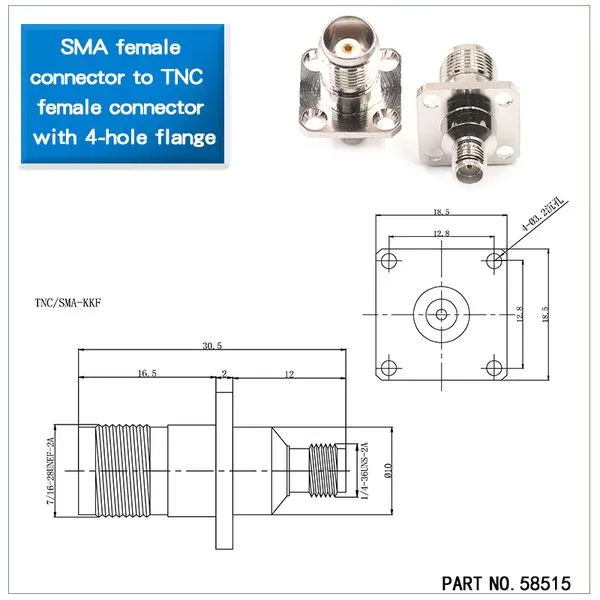
This image is shown in the document introduction as a detailed dimension diagram of a specific TEJTE SMA female to TNC female flange-mount adapter. It annotates key mounting dimensions like flange hole spacing and thread specs. Combined with the text, this adapter combines precision machining with rugged protection, suitable for scenarios demanding high reliability like lab setups and outdoor antenna installations.
How do you verify series, gender, and 50-ohm matching before purchase?

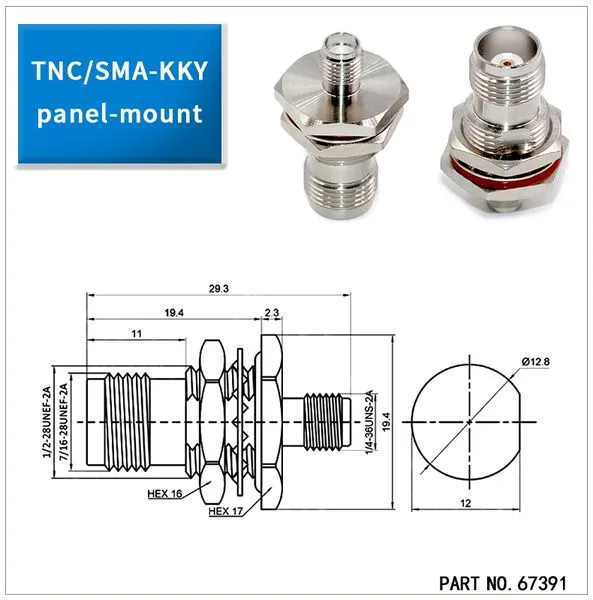
This image appears in the "Verify series, gender, and 50-ohm matching" section, showing the specific dimensions of another panel-mount adapter model. The diagram emphasizes the importance of confirming mechanical compatibility (e.g., thread type, mounting dimensions) before purchase to avoid installation issues.
Step one: don’t confuse SMA with RP-SMA. Reverse polarity looks almost identical but swaps the pin and socket. Even experienced installers have grabbed the wrong one in a hurry. If you’re wiring a smart-home hub or connecting a computer adapter cable, a simple mistake means nothing mates.
Next, confirm impedance. A tnc to sma adapter needs to match the system: 50Ω for telecom and RF gear, 75Ω for video or broadcast setups. TEJTE’s SMA-to-TNC adapters are specifically tuned for 50Ω and tested with insertion loss under 0.2 dB at 2.4 GHz and VSWR kept to ≤1.2. That small detail keeps power transfer efficient and test results clean.
Finally, gender mapping. The right choice might be an sma male to tnc female adapter if you’re linking to a radio, or a tnc male to sma female adapter if your instrument has a TNC jack. Quick tip from the field: shine a small flashlight into the port—if you see a pin, you’ll need the mating female; if it’s a socket, order the male. That thirty-second check often saves days of return shipping.
Which direction fits your ports—SMA-M to TNC-F or TNC-M to SMA-F?
Getting the direction wrong is one of the easiest ways to end up with adapters gathering dust in a drawer. A typical chain might look like this: radio with an SMA-F port to sma male to tnc female adapter to TNC cable to antenna. If you accidentally order the reverse gender, the entire chain stops working.
TEJTE’s SMA-F to TNC-F flange design (Part No. 58515) illustrates why direction matters. With its 18.5 mm square flange and four M2.5 mounting holes, it installs securely into telecom racks, radar testing setups, or other enclosures where stability is crucial. Once in place, the adapter ensures tight electrical contact while keeping mechanical stress low.
Map common chains without guesswork
- Wi-Fi module (SMA-F) to SMA-M to TNC-F to coax to outdoor antenna
- Measurement gear (TNC-F) to tnc male to sma female adapter to SMA jumper to DUT
- Security camera (TNC-F) to TNC-M to SMA-F block to SMA lead to router
Pro tip: always check the device datasheet or port label before placing an order. If documentation is unclear, a quick visual inspection—pin vs socket—usually tells you what you need. For more background on connector families and direction issues, see our RF connector overview. It covers SMA, TNC, and other common RF series with diagrams that help avoid mix-ups.
Should you choose straight or 90° right-angle to solve clearance?

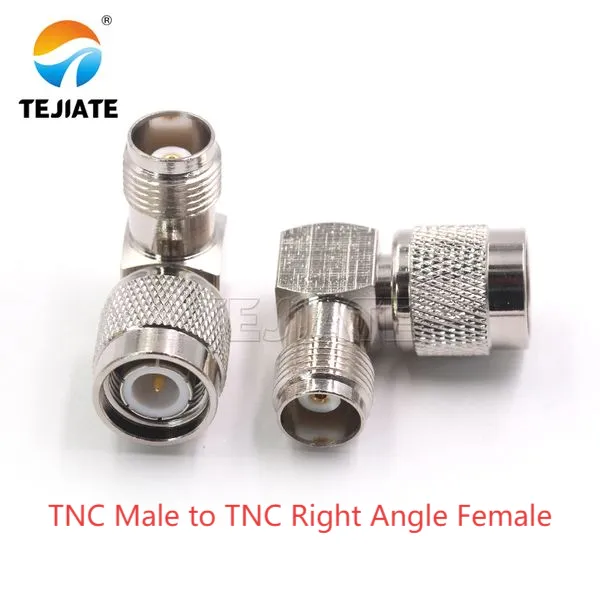
This image is used to illustrate the advantage of right-angle adapters in solving space constraints. Although straight adapters have lower loss, in cramped spaces like inside racks or near PCBs, the right-angle option can avoid interference with heat sinks or enclosure walls by redirecting the cable sideways, thereby protecting delicate SMA ports from mechanical stress.
At first glance, a straight sma to tnc adapter seems like the obvious pick. It’s compact, low-loss, and easy to source. But once you start working inside a tight rack or next to a crowded PCB, that straight block can become a lever that bends or even damages the port.
That’s where a right-angle option pays off. By redirecting the cable sideways, it prevents interference with nearby heatsinks or enclosure walls. It also reduces the stress that a rigid extension can place on delicate SMA jacks. Service techs often prefer right-angles because the sideways exit makes cables easier to swap during maintenance.
From a performance perspective, the numbers are close. Straight adapters typically measure 0.1–0.15 dB insertion loss, while right-angles add only about 0.05–0.1 dB more. In practice, especially for outdoor IoT gateways or telecom cabinets, the mechanical relief is worth the fractional dB difference.
Tip from the field: keep both types in stock. Straight units are perfect for open benches, while right-angles save the day in cramped housings. For a deeper dive into how angles affect installation, check our SMA Right Angle Adapter guide.
Will a short RG316/LMR pigtail outperform a rigid adapter block?
Rigid adapters are tidy and ultra-low loss, but they don’t forgive accidents. A bump on the cable translates directly into the port, and that stress can crack solder joints or loosen a PCB-mounted SMA jack. For anyone using costly instruments, that risk outweighs the 0.1 dB you might save.
That’s why many engineers swap a rigid sma to tnc adapter for a short coaxial jumper:
- RG316: thin, flexible, works well up to 6 GHz with about 0.5–0.6 dB loss per 10 cm.
- LMR-200: slightly stiffer, but lower attenuation—around 0.25–0.35 dB per 10 cm.
- Rigid block: lowest loss (0.1–0.2 dB), yet provides no strain relief.
A real-world example: when linking TEJTE’s SMA-F to TNC-F flange adapter (Part No. 58515) to an RG58 feeder cable, installers often add a 10–15 cm RG316 jumper. The added loss is minor, but the port lasts longer.
Hands-on tip: if your device costs more than the entire batch of adapters, always add the jumper. It’s cheaper than a repair ticket. For more insights into cable choices and loss trade-offs, see our RF coaxial cable guide.
Do outdoor installs require IP-rated or weatherproof adapters?

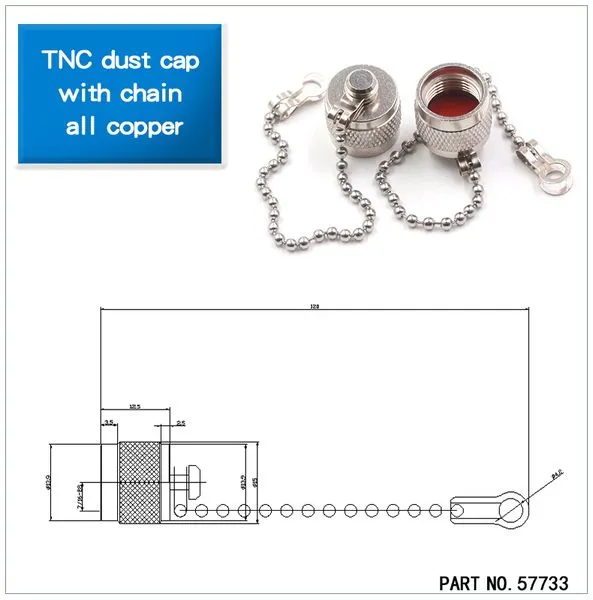
This image appears in the discussion about whether outdoor installations require IP-rated adapters. Dust caps are simple yet effective accessories for protecting connectors and preventing corrosion, especially critical for outdoor equipment interfaces potentially exposed to harsh environments, serving as a supplementary protection beyond waterproof sealing.
If your setup is going outside, the answer is almost always yes. Even a sealed box can fail at its weakest link—the connector. An ip rated sma to tnc adapter with O-rings or gasket seals blocks moisture, dust, and corrosion before they creep into your RF chain.
TEJTE’s adapters rated IP67 are built for telecom base stations, radar systems, and outdoor IoT gear. They use brass gold-plated contacts for stable electrical performance and nickel or stainless housings for strength against weather. In salt-spray tests, stainless holds up longer, but gold plating provides excellent conductivity for repeatable connections.
Without sealing, you’ll often see condensation build up inside the port. That tiny bit of water can shift VSWR, raise insertion loss, and gradually turn a strong signal into a noisy one. Engineers who have pulled down mast antennas after only three months of exposure can confirm: skipping waterproofing usually means a second installation trip.
For more on connector sealing and outdoor reliability, see TEJTE’s RF connector product range. It explains how IP67 and other protective features extend adapter life in real deployments.
Do materials matter—brass gold-plated or stainless for durability?
The material of an sma to tnc adapter does more than set the price tag. It shapes how long the adapter lasts and how well it performs under stress.
- Brass gold-plated: Known for excellent conductivity and smooth mating cycles. TEJTE’s gold-plated models are widely used indoors, in labs, and in smart-home hubs where oxidation resistance and stable return loss matter more than brute strength.
- Stainless steel: Much tougher mechanically, and far more resistant to corrosion in salt-spray or outdoor conditions. That’s why telecom and marine engineers often specify stainless when the adapter will face rain, humidity, or vibration.
At frequencies like 5.8 GHz or 18 GHz, the RF difference is tiny. What really matters is how the adapter behaves after hundreds of connections or months outdoors. Gold plating keeps electrical stability high, while stainless threads resist wear even under repeated torque.
Field tip: if you’re constantly swapping test leads on a bench, stainless may be worth the cost. But for indoor gear that rarely moves, brass gold-plated versions offer a more economical solution. You can browse both options in TEJTE’s RF adapter lineup, where material and finish are listed side by side.
Will your frequency target (6/18/26.5 GHz) change the adapter choice?

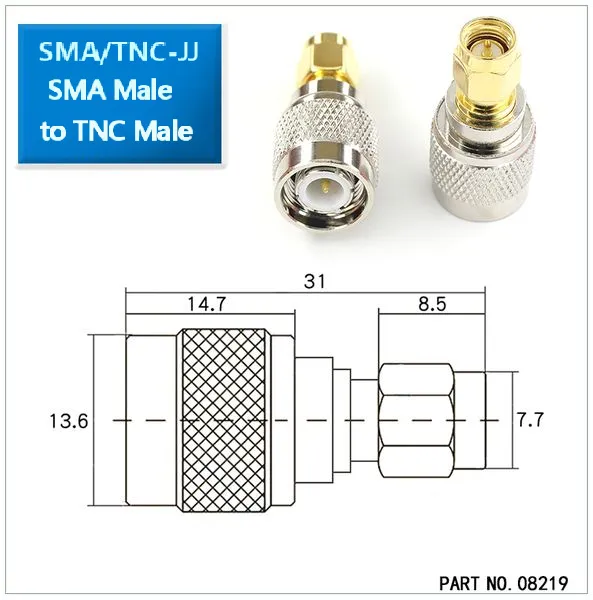
This physical photo shows the appearance of an SMA male to TNC male adapter. Combined with the text discussion on frequency targets, it reminds users that when selecting an adapter, in addition to gender and impedance, its frequency rating (e.g., 6 GHz, 18 GHz, 26.5 GHz) must also be considered to ensure suitability for specific application bands (e.g., Wi-Fi, 5G, radar testing).
Yes—it makes a real difference. Many entry-level sma to tnc adapters are only rated up to 6 GHz. That’s fine for Wi-Fi or LTE applications, but it quickly becomes a bottleneck if you’re testing radar, satellite, or high-band 5G signals.
Here’s how to think about it:
- 6 GHz adapters: Reliable for Wi-Fi (2.4 / 5.8 GHz) and most smart-home devices.
- 18 GHz adapters: The go-to for telecom labs and RF analysis gear.
- 26.5 GHz adapters: Premium choice for aerospace calibration, spectrum sweeps, and future-proof test benches.
TEJTE’s IP67-rated flange adapter (Part No. 58515) is tuned for 50Ω systems and keeps insertion loss low across a wide band, which means it won’t choke your measurement chain at higher frequencies.
Engineer’s note: If your lab plans to expand into 5G NR or Ka-band testing, buying the higher-frequency version now saves you from a costly reorder later. For more context on how frequency ratings tie into cable and connector choice, see TEJTE’s Ultimate RF Cable Guide.
Install and torque the adapter without detuning the port
Even a high-quality sma to tnc adapter can underperform if it’s installed incorrectly. Too much torque risks cracking a PCB-mounted SMA jack, while too little torque can raise return loss and cause unstable readings.
Here’s a safe sequence many engineers follow:
- Hand-thread first so the connector doesn’t cross-thread.
- Tighten with a torque wrench—for brass gold-plated adapters, TEJTE recommends around 0.45–0.56 N·m. Stainless housings tolerate slightly higher torque, but don’t overdo it.
- On the TNC side, push and twist the bayonet until it locks firmly.
- If the setup is critical, double-check VSWR once everything is connected.
Field tip: Some technicians keep a small logbook to record torque values during installation. It sounds obsessive, but when you’re troubleshooting later, knowing the exact torque applied can explain a lot about unexpected return-loss shifts.
For more detail on SMA mechanical specs—thread size, nut flats, or bulkhead cutouts—check TEJTE’s SMA connector dimensions guide. It’s a practical reference for anyone working with panel mounts or custom enclosures.
Calculate mismatch, clearance, and torque before you order
Before ordering a batch of sma to tnc adapters, it pays to double-check the basics. Small details—like impedance, clearance, or torque—often decide whether the adapter works flawlessly or causes a headache later.
Start with the direction. Do you need an sma male to tnc female adapter to link a radio module, or the opposite tnc male to sma female adapter for a test instrument? Ordering the wrong gender is the fastest way to end up with parts that don’t fit.
Then confirm impedance. Stick to 50Ω on both sides whenever possible. If you mix 50Ω with 75Ω, reflections appear. The penalty may only be ~0.2 dB of mismatch loss at 2.4 GHz, but in precise measurements, that’s enough to skew return-loss results.
Clearance also matters. TEJTE’s IP67 SMA-F to TNC-F flange type (Part No. 58515) extends 30.5 mm from the panel. If your enclosure wall or heatsink doesn’t have that space, the problem won’t be electrical—it’ll be mechanical.
And don’t forget torque. For brass gold-plated models, aim for 0.45–0.56 N·m on the SMA side; stainless housings tolerate a little more. Too loose, and return loss jumps; too tight, and you risk damaging the port.
Here’s a quick planner you can use before you order:
| Checkpoint | Recommended Value / Action | Why it matters |
|---|---|---|
| Direction | SMA-M to TNC-F / TNC-M to SMA-F | Avoids gender mismatch |
| Impedance | 50 Ω to 50 Ω preferred | Prevents reflections |
| Mismatch loss | ~0.2 dB if 50 Ω to 75 Ω @ 2.4 GHz | Skews test accuracy |
| Insertion loss | <0.2 dB @ 2.4 GHz (TEJTE flange) | Keeps efficiency high |
| Clearance | 30.5 mm protrusion | Check panel space |
| Torque | 0.45–0.56 N·m (brass) | Protects SMA port |
| Outdoor use | IP67 with O-rings | Blocks moisture & corrosion |

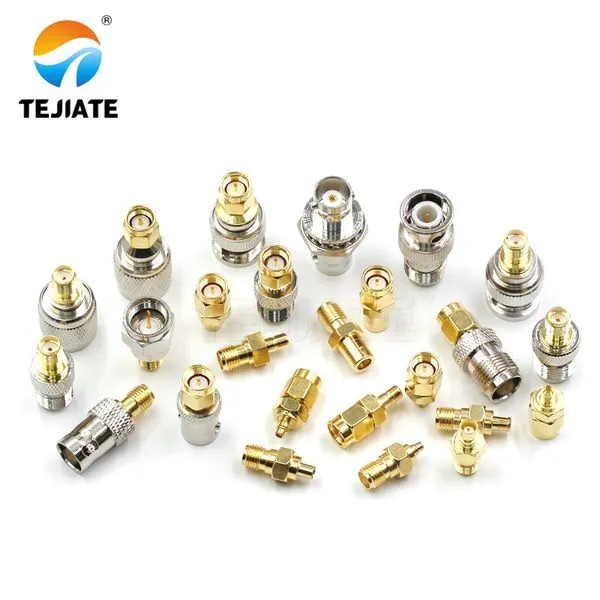
This product collection image, located after the critical "Calculate mismatch, clearance, and torque before you order" section, serves as a visual summary, intuitively showing users the extensive product line offered by TEJTE. The image likely presents side-by-side straight and right-angle adapters, different gender combinations (e.g., male-to-male, male-to-female), and various models like flange-mount or panel-mount types. Its purpose is to help users quickly identify and select the most suitable specific product model for their application scenario based on the technical considerations discussed in the preceding section (e.g., space, stress, sealing requirements). Key models mentioned in the document, such as the IP67 flange-mount type (Part No. 58515), might be featured.

FAQs
How do I confirm whether I need SMA-M to TNC-F or TNC-M to SMA-F without opening the chassis?
Start with the datasheet or the port label. If it isn’t clear, shine a small light into the port—if you see a pin, you’ll need a female counterpart; if you see a socket, order the male. This quick check often saves you from ordering the wrong tnc to sma adapter.
Is a right-angle sma to tnc adapter safer than a straight block for crowded panels?
Yes. Right-angles relieve strain and make cable routing easier. A straight piece works fine on open benches, but in a rack with heatsinks nearby, a right-angle keeps your SMA jacks from bending. For examples, see TEJTE’s SMA Right Angle Adapter guide.
Do I really need an IP-rated adapter outdoors if my enclosure is sealed?
Definitely. Moisture usually enters through the connector, not the box. An ip rated sma to tnc adapter with O-rings, such as TEJTE’s IP67 flange model, prevents corrosion and avoids signal loss. More details on outdoor sealing are available in TEJTE’s RF connector product range.
Will a 50to75-ohm sma to tnc mismatch skew readings?
Yes. Even if the connectors physically mate, a mismatch adds reflection loss. Expect skewed return-loss or power readings, especially in precision tests. If you can’t avoid it, calculate the mismatch loss and log it alongside your measurements.
Does brass gold-plated measure differently from stainless over time?
Electrically, both perform nearly the same at 5.8 or 18 GHz. The difference shows up in durability. Gold-plated brass stays smooth and conductive, while stainless resists corrosion and survives more torque cycles. Engineers working in marine environments often favor stainless for this reason.
When is a short jumper like RG316 or LMR better than a rigid block?
When protecting the port matters more than shaving 0.2 dB of loss. A 10 cm jumper might add ~0.5 dB, but it absorbs stress that could otherwise damage your SMA jack. More on jumper trade-offs can be found in TEJTE’s RF coaxial cable guide.
What torque should I apply on the SMA side?
For brass gold-plated versions, aim for 0.45–0.56 N·m. Stainless steel housings tolerate slightly higher values. Using a torque wrench prevents guesswork and keeps return loss stable.
Conclusion
Choosing the right sma to tnc adapter is more than just picking something that fits. You need to think about direction, impedance, angle, sealing, and material—because each of those details can decide whether your link works flawlessly or becomes a maintenance problem.
TEJTE’s portfolio reflects that balance. From the IP67 flange-mounted SMA-F to TNC-F adapter (Part No. 58515) to rugged stainless versions for outdoor use, every option is designed to minimize insertion loss and keep ports safe. Engineers often say that the adapter is “the cheapest insurance” for their entire RF chain—because one failed connector can bring down a whole system.
If you’re still mapping out your build, don’t guess. Start with resources like TEJTE’s RF connector guide and our SMA adapter overview. They’ll help you choose the right geometry, sealing, and frequency rating for your environment.
Final tip: keeping a small stock of straight, right-angle, and IP-rated adapters will save you more than once—whether it’s an urgent lab test or a field repair in the rain.
Bonfon Office Building, Longgang District, Shenzhen City, Guangdong Province, China
A China-based OEM/ODM RF communications supplier
Table of Contents
Owning your OEM/ODM/Private Label for Electronic Devices andComponents is now easier than ever.
