
SMA Female to Female Adapter: Inline, Bulkhead & Waterproof Guide
Sep 20,2025
Introduction
The image introduces SMA female to female adapters, widely used in WiFi, SDR, and outdoor antenna systems, designed for 50Ω impedance with low insertion loss.
Finding the right sma female to female adapter is more important than it looks at first glance. Whether you’re extending coaxial runs in a WiFi setup, linking SDR modules on the bench, or sealing connections through an outdoor panel, choosing the right coupler affects both performance and reliability.
These adapters, standardized under IEC 60169-15, operate on a 50Ω impedance system with fine 1/4-36 UNS threads. Depending on design, they can support frequencies up to 18 GHz or 26.5 GHz, with insertion loss typically around 0.1–0.15 dB. Housing materials also matter—brass with gold plating offers affordability, while stainless-steel adds durability and corrosion resistance.
In this guide, we’ll walk through how to identify SMA vs RP-SMA, decide between inline and bulkhead couplers, weigh couplers against short coaxial pigtails, and know when to use waterproof versions. Along the way, we’ll reference real-world parameters from TEJTE’s SMA product line and highlight common mistakes to avoid at checkout.
Identify SMA vs RP-SMA and confirm your F-F fit
The image highlights how SMA female has a socket, while RP-SMA female has a pin, preventing mismatched installations in routers and IoT devices.
When choosing an sma female to female adapter, the very first task is checking connector gender and polarity. On paper, it sounds simple, but in practice it’s where most mistakes happen. SMA connectors are defined under the IEC 60169-15 standard, built around a 50Ω impedance and the familiar 1/4-36 UNS thread. A true SMA female carries inner threads with a center hole; the male version shows outer threads and a solid pin. RP-SMA looks almost identical but swaps the pin and hole, which is why so many WiFi users end up with mismatched parts. A quick trick: don’t just look at the thread, always confirm the center contact.
Why does this matter? Many consumer routers and IoT devices use RP-SMA female ports. If you try a regular sma f to f coupler, it simply won’t mate. TEJTE’s SMA-KK and SMA-KKG adapters clearly mark gender and plating details—most often beryllium-copper with gold finish for conductivity, paired with stainless-steel or brass shells for long-term stability. Paying attention to those details protects fragile jacks on SDR units, test gear, and compact antenna modules.
From experience, even seasoned engineers keep both SMA and RP-SMA couplers in their toolkit. When swapping antennas in a lab, it’s surprisingly easy to grab the wrong type. A quick flashlight check before tightening the nut saves ports and avoids frustration. If you’d like a broader view of connector families and how they differ, the RF connector guide is a solid next read.
Decide: inline coupler or bulkhead feedthrough for your enclosure
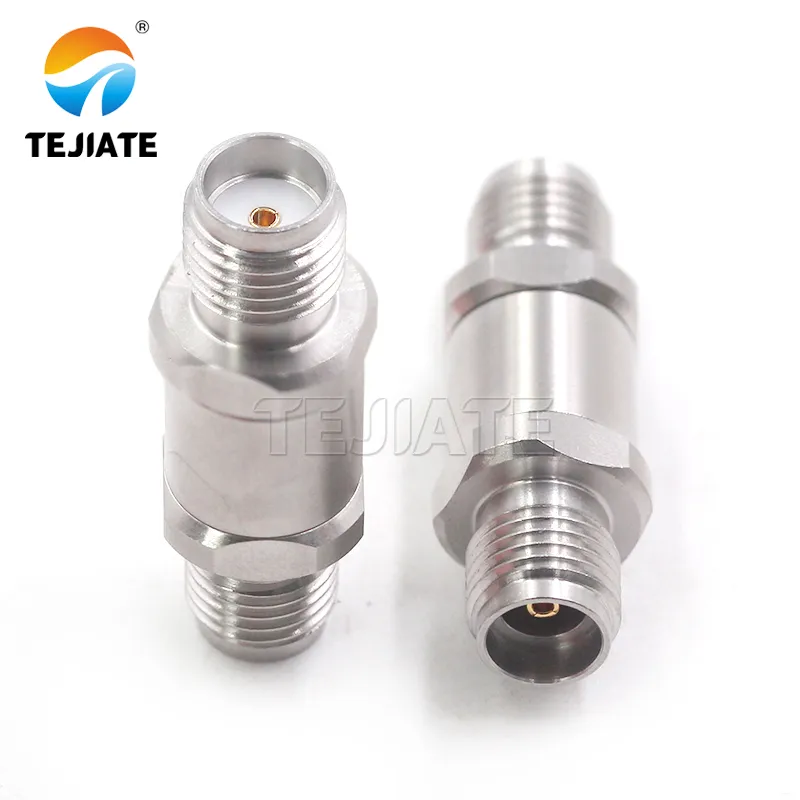
Not every sma female coupler is designed with the same use case in mind. The inline barrel type—such as TEJTE’s SMA-KK series—works perfectly when all you need is to join two coaxial cables on a bench or inside a rack. Compact and easy to handle, these couplers usually offer insertion loss ≤0.15 dB up to 6 GHz and maintain VSWR around 1.2. If your work involves high-frequency testing, the upgraded SMA-KKG model supports DC–26.5 GHz while still keeping losses impressively low.
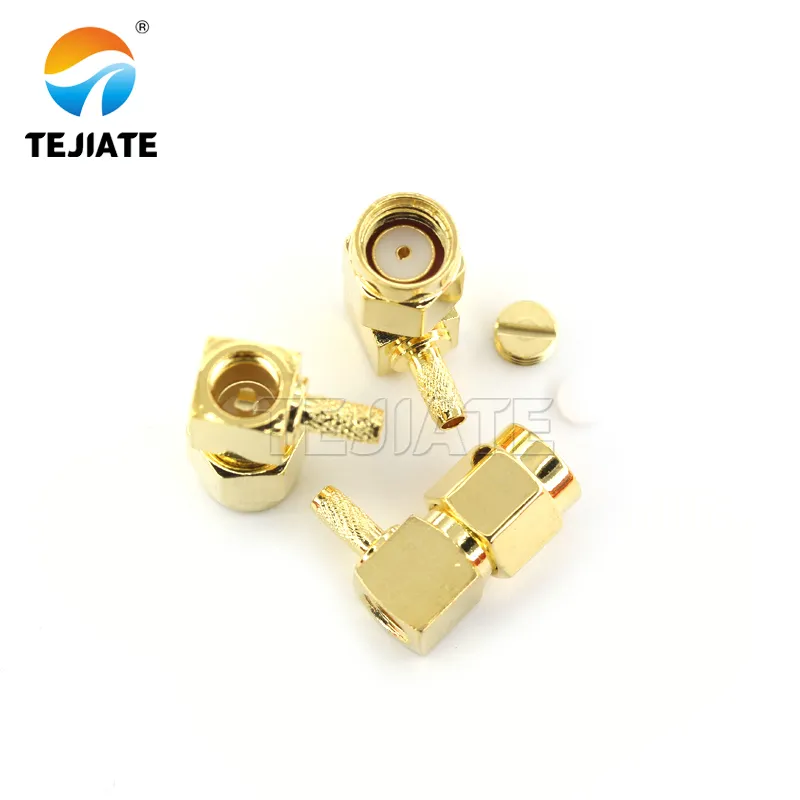
But once an enclosure or panel enters the picture, things shift. A bulkhead feedthrough coupler becomes the smarter choice. With longer threads and O-rings, these adapters secure tightly to panels, adding both stability and sealing. TEJTE’s stainless-steel bulkhead SMA-KK is rated from –55 °C to +165 °C, making it dependable in outdoor cabinets or rooftop boxes. Brass housings are lighter and often cheaper, which is why they’re preferred for indoor networking equipment.
One small but important note: check that the panel thickness and washer stack don’t exceed the coupler’s thread length. If the nut can’t bite enough threads, stability suffers. It’s a detail many overlook during prototyping, only to face loose connections later. For a deeper breakdown of flange shapes and sealing methods, the SMA bulkhead connector guide is a handy reference.
Will an SMA F-F coupler hurt signal more than a short pigtail?
The image compares rigid SMA couplers with pigtail jumpers, showing loss differences and mechanical stress considerations in WiFi and IoT setups.
This question comes up often in RF labs: is a rigid sma f to f adapter worse than using a short jumper cable? The truth is, both options have trade-offs. A quality sma inline coupler introduces very little loss—typically 0.1 to 0.2 dB at 2.4 GHz. For example, TEJTE’s SMA-KK series lists insertion loss at ≤0.15 dB up to 6 GHz, with 500–1000 mating cycles guaranteed. For most WiFi or IoT applications, that loss is negligible.
Short pigtails, however, add not just connector loss but also coaxial attenuation. Take RG174 cable: at 400 MHz, it already loses about 30 dB per 100 m, and losses climb steeply at higher frequencies. Even a small 10 cm jumper can be noticeable. RG316 coaxial cable performs better, with about 1.46 dB/m at 2.4 GHz; so a 0.2 m jumper would add roughly 0.3 dB. For those who want even lower attenuation, LMR-200 cables are the go-to, offering stronger shielding and lower loss across 0–6 GHz.
So which should you choose? If space is tight and mechanical strain is low, a rigid coupler is the cleanest fix. But if your adapter will support an antenna or anything under tension, a short pigtail spreads out the stress and prevents cracked ports. From experience, many engineers keep both in their toolbox—using couplers for clean lab setups and jumpers when gear is mounted on routers or panels. You can compare options like TEJTE’s custom SMA pigtail assemblies to rigid couplers to see which matches your build best.
Choose the right frequency rating: 18 GHz or 26.5 GHz?
The image shows SMA female to female couplers with different frequency ratings, covering WiFi, LTE, 5G, and Ku-band testing applications.
Not every sma coupler is built to the same frequency rating, and this is where many buyers get tripped up. A standard SMA-KK female to female adapter usually supports DC–18 GHz with a VSWR around 1.25:1. That already covers everyday use cases: WiFi at 2.4 or 5.8 GHz, LTE links, and most Sub-6G 5G gear. For consumer and networking projects, 18 GHz is plenty.
But the story changes in a lab or test environment. High-performance analyzers, radar modules, or microwave circuits often demand adapters that can keep up with Ku-band frequencies. That’s when a 26.5 GHz sma female coupler, like TEJTE’s SMA-KKG with stainless-steel housing and gold-plated beryllium-copper contacts, becomes the right tool. These models maintain insertion loss under 0.2 dB even at the top of their range, giving engineers confidence in their S-parameter measurements.
So how do you decide? Think about your loss budget and your actual use case. If your chain never exceeds 6 GHz, an 18 GHz coupler saves cost without compromise. But if you occasionally test at higher bands, it’s smarter to buy once and avoid the limits later. Many engineers regret saving a few dollars when their adapters fall short in the lab. For background on how cables and couplers behave across frequency bands, check the RF coaxial cable guide.
Avoid gender changers and barrel mix-ups at checkout
A common pitfall is mixing up an sma f to f adapter with a gender changer. They may look alike, but their jobs are different. A female-to-female coupler is designed to link two SMA male cables, while a gender changer flips the connector from male to female or the other way around. Order the wrong one and you’ll end up with a barrel that doesn’t solve your problem.
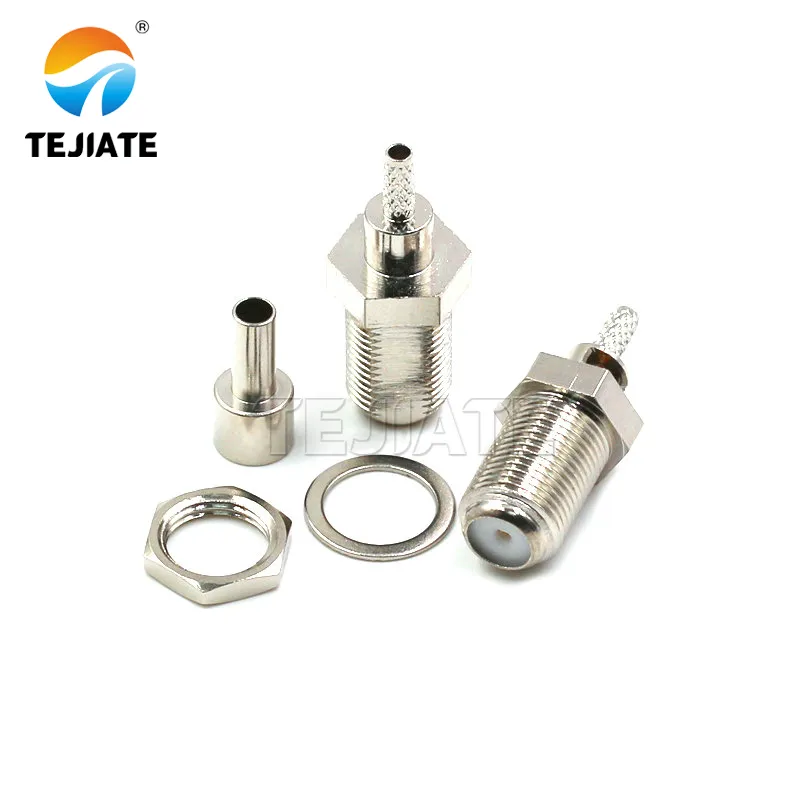
Confusion also creeps in when buyers accidentally compare SMA barrels with connectors from other families. For example, an SO-239 barrel used in ham radio rigs won’t ever thread into an SMA port, no matter how similar the size seems. TEJTE avoids this issue by using clear part labels: “SMA-KK” for inline couplers, “SMA-KK bulkhead” for feedthrough versions, and so on. The safe move is to confirm three things before checkout—thread type (1/4-36 UNS), connector gender, and polarity.
From experience, it’s worth keeping a simple checklist handy:
- Match SMA vs RP-SMA polarity carefully.
- Decide if you need an inline barrel or a bulkhead coupler.
- Confirm frequency rating: 18 GHz or 26.5 GHz.
- Pick housing: brass for cost savings, stainless steel for long-term durability.
If you’d like to see how couplers fit into the bigger picture of SMA accessories, the SMA adapter guide lays out the family side by side. That way, you’ll avoid the frustration of buying the wrong barrel for your RF drawer.
Do you actually need a waterproof SMA coupler outdoors?
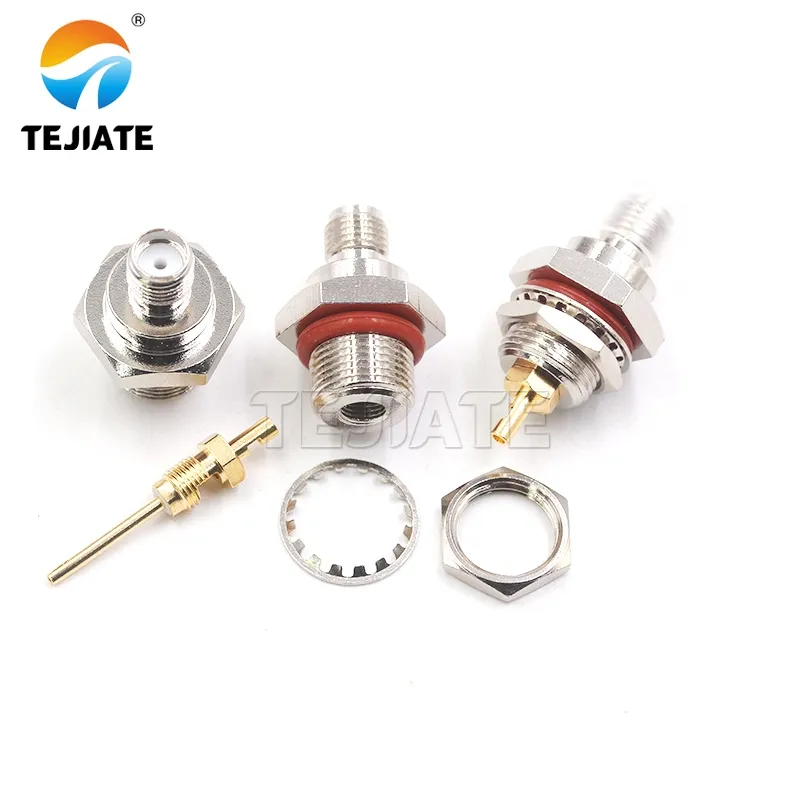
The image presents a waterproof SMA coupler with O-ring sealing, designed for outdoor routers, CPEs, and CCTV systems to resist moisture and corrosion.
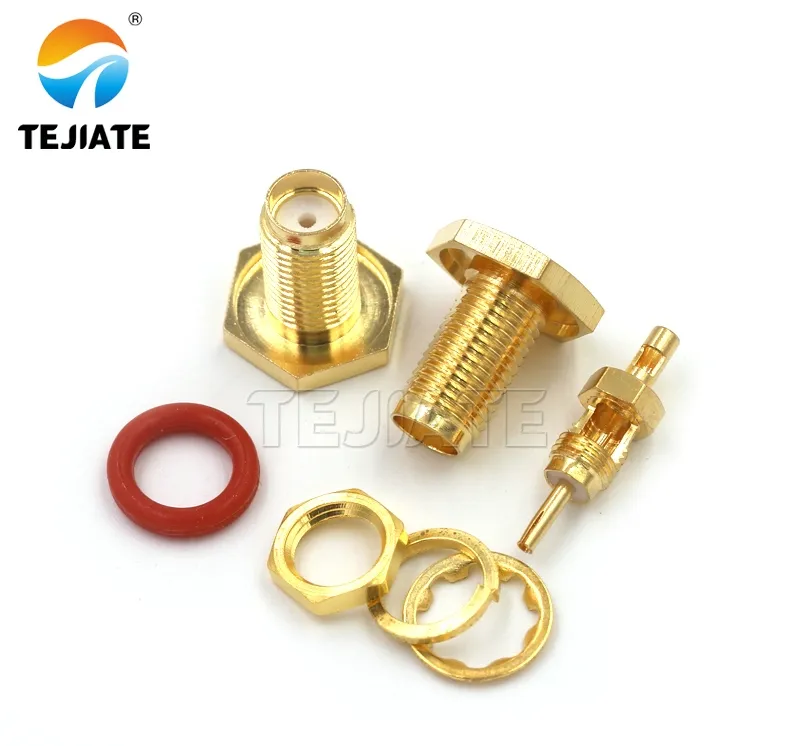
Indoors, a standard sma inline coupler usually does the job with no issues. But once you take equipment outside—whether it’s a CCTV pole, a CPE router on a rooftop, or a WiFi bridge mounted on a mast—the game changes. Weatherproofing becomes essential. A true waterproof sma coupler uses O-rings or gaskets that compress against the panel to keep moisture out. TEJTE’s bulkhead couplers, built with silicone or PEI insulators and rated from –55 °C to +165 °C, are designed to handle that level of exposure.
Without sealing, rain or condensation can creep into the threads. Over time, that corrosion increases contact resistance and raises VSWR, leading to unstable links or outright failures. Some installers try to wrap non-waterproof couplers with electrical tape, but in practice, that’s a short-term fix at best. A properly sealed bulkhead with a gasket is far more reliable.
One practical tip: always check that the thread length of the coupler is long enough to account for the panel thickness plus any coatings and washer stack. If it’s too short, the O-ring won’t compress fully, and the seal will fail. For robust outdoor builds, TEJTE provides both SMA bulkhead couplers and custom outdoor-rated assemblies that integrate sealing hardware from the start. For more background on why weatherproofing matters, the WiFi antenna extension cable guide is a useful reference.
Size thread length and gasket stack for feedthroughs
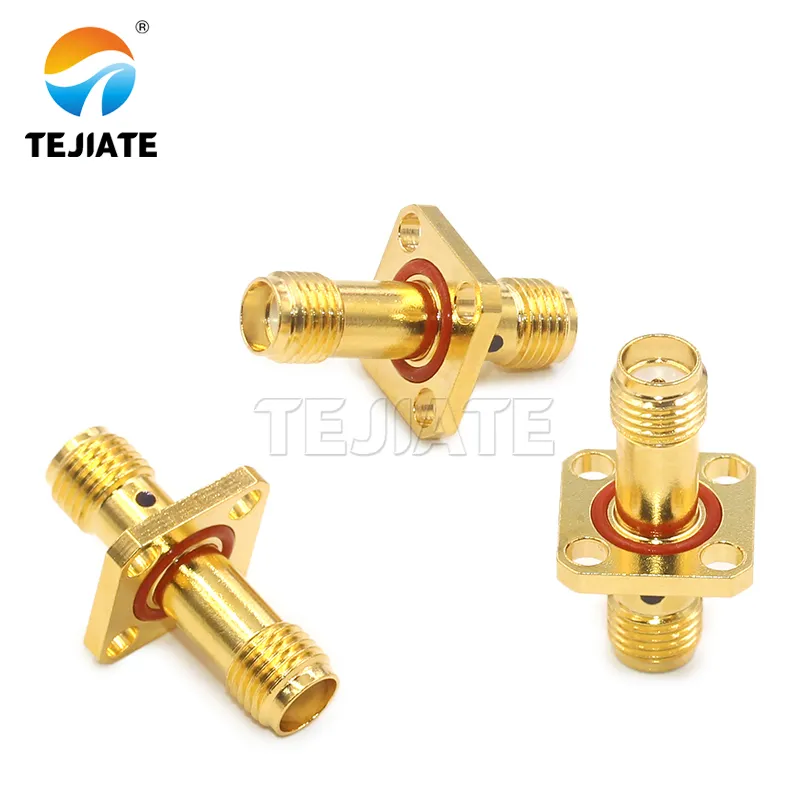
The image shows a waterproof SMA 4-hole flange bulkhead connector designed for outdoor telecom, CPE, and CCTV equipment. Its O-ring ensures IP67 sealing, providing both mechanical stability and RF reliability.
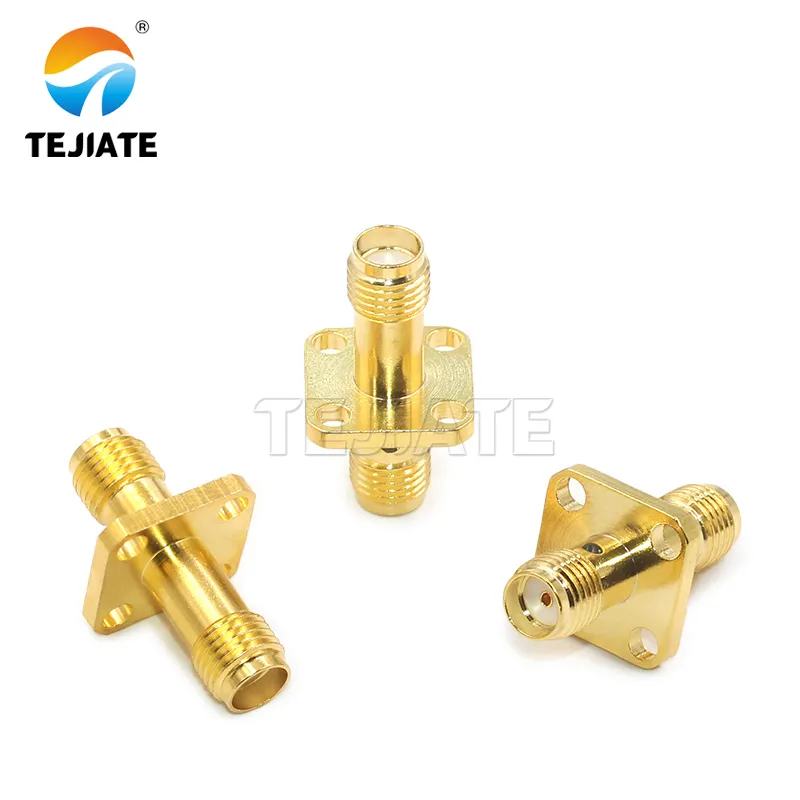
The image presents a standard SMA 4-hole flange bulkhead connector, commonly used in telecom housings and networking equipment. The flange design distributes torque evenly, preventing loosening under vibration.
When you’re mounting a sma bulkhead coupler through an enclosure, “close enough” doesn’t cut it. Panels have their own thickness, plus paint, powder coat, washers, and gaskets that all add up. If the stack exceeds the coupler’s thread length, the nut won’t fully engage, and you’ll be left with a weak mount or a failed seal. TEJTE’s stainless-steel bulkhead adapters are designed with threads up to 22.2 mm, long enough for most telecom panels and outdoor housings.
Here’s a simple formula worth remembering:
Panel thickness + finish layer + washer stack + O-ring compression ≤ thread length.
If this holds true, your connection will be both secure and sealed. If not, you risk loose fittings, higher VSWR, or even water ingress. Couplers rated for –55 °C to +165 °C and tested for 500+ mating cycles can last for years, but only if they’re mounted correctly.
From experience, installers often underestimate coating thickness or skip the washer count, leading to under-engaged threads. Double-checking the math before tightening avoids those headaches. For step-by-step mounting tips, see the SMA bulkhead connector guide. For verified specs on thread dimensions and sealing options, TEJTE’s RF connector catalog is a reliable source.
How do SMA F-F couplers compare with SO-239 barrels?
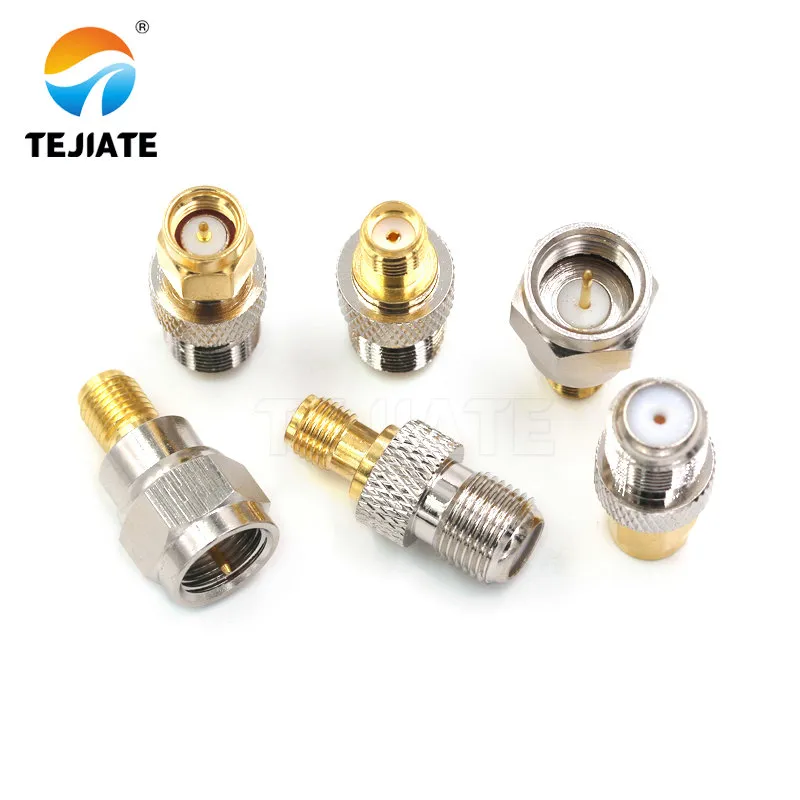
The image compares SMA female to female adapters with SO-239 barrels, showing SMA’s precision 50Ω design for GHz frequencies versus SO-239’s HF/VHF limitation below 300 MHz.
A question that pops up often—especially from ham radio enthusiasts—is whether an sma female to female adapter can stand in for an SO-239 barrel. The short answer is no. These connectors were built for very different worlds. SMA is a precision 50Ω system, commonly rated for DC–18 GHz or even 26.5 GHz, with VSWR kept at ≤1.25:1 when manufactured to spec. By contrast, SO-239 (used with PL-259 plugs) is a coarser-threaded connector that works well for HF and VHF, but rarely beyond a few hundred megahertz.
That difference means an sma coupler can handle WiFi, LTE, or microwave test signals with almost no extra loss, while an SO-239 barrel is practical only for CB radios or amateur rigs running below 300 MHz. They aren’t just different in bandwidth—they’re physically incompatible too. SMA uses fine 1/4-36 UNS threads, while SO-239 barrels use a much larger thread standard, so they won’t mate under any circumstance.
For mixed setups, the safe path is using a dedicated SMA-to-UHF adapter designed for the crossover. Trying to improvise with the wrong coupler risks damaging both ports. For more detail on how SMA adapters stack up against other connector families, the SMA adapter guide offers side-by-side comparisons that can help avoid costly mistakes.
Install and torque an SMA F-F coupler the right way
Even the best sma inline coupler won’t perform as expected if it’s installed carelessly. Start with the basics: inspect the threads for burrs or dirt, and make sure any O-ring is seated in place. Always hand-tighten first—forcing the threads can damage both the coupler and the port. Once aligned, finish with a torque wrench set to 0.45–0.56 Nm, which is the IEC-recommended range for SMA connectors.
Going beyond that torque doesn’t make the connection “tighter”; it stresses the dielectric and may actually detune the interface. On the other hand, leaving it too loose allows micro-movements that raise VSWR over time. TEJTE’s SMA-KK and SMA-KKG adapters are tested for 500–1000 mating cycles, but that durability assumes correct torque and handling.
A quick sweep with a vector network analyzer (VNA) after installation is always a smart step—think of it as a health check for your link. In outdoor setups, double-check gasket compression so the seal holds through weather cycles. From experience, using a short pigtail when the adapter is under mechanical stress is a lifesaver; it prevents cracked jacks on sensitive boards. If you want a more detailed walk-through, the how to use SMA connectors guide explains torque values and inspection practices in depth. For builds needing strain relief, TEJTE’s custom SMA adapter cables are a reliable option.
Coupler Selector & Loss Estimator
Choosing between an sma female to female adapter, a bulkhead feedthrough, or a pigtail jumper often comes down to numbers. A simple estimator can help you confirm both the electrical and mechanical fit before you commit to an order.
Here’s how the key fields line up:
- Port_A_Type / Port_B_Type: Identify whether each port is SMA or RP-SMA. Mixing them up is the most common cause of failed installs.
- Mounting: Decide if you need an inline barrel coupler for cable-to-cable connections, or a bulkhead feedthrough coupler for panel installs.
- Freq_Target (GHz): The operating frequency of your system.
- Freq_Rating (GHz): Adapter capability, typically 18 GHz or 26.5 GHz. If your target exceeds this, you’ll see signal degradation.
- Material/Plating: Brass with gold plating is cost-effective; stainless steel adds durability and corrosion resistance.
- IL_Coupler (dB): Insertion loss of the coupler itself, often 0.1–0.15 dB up to 6 GHz for TEJTE’s inline SMA-KK series.
- Cable_Type and Cable_Length (m): If using a pigtail, select coax type (e.g., RG174, RG316, or LMR200) and length.
- α(f) (dB/m): The cable’s attenuation per meter at your target frequency. Example: RG316 ≈ 1.46 dB/m at 2.4 GHz, RG174 ≈ 30 dB/100m at 400 MHz.
- IL_Total = IL_Coupler + α(f) × L: The combined loss budget.
- VSWR_Max: TEJTE couplers are typically specified ≤1.25:1.
- Env (Environment): Indoor or outdoor. Outdoor always requires O-ring sealing.
- Decision: Inline coupler / bulkhead feedthrough / short pigtail, depending on the pass/fail checks.
Decision rules simplified:
- If Freq_Target ≤ Freq_Rating, you’re safe on bandwidth.
- If IL_Total ≤ your loss budget (say ≤1 dB), the link is acceptable.
- Outdoor use? Then you must choose a coupler with gasket or O-ring compression.
- For enclosures, confirm the thread stack:
Panel thickness + finish + washer + O-ring compression ≤ thread length.
(Example: TEJTE stainless bulkhead couplers offer 22.2 mm thread length, enough for coated telecom panels.)
This quick check prevents overspending on lab-grade parts you don’t need—or worse, underestimating your loss budget. For verified specs, the RF connector catalog lists TEJTE’s inline and bulkhead couplers with frequency, VSWR, and thread dimensions.
Frequently Asked Questions (FAQ)
Are SMA F-F couplers interchangeable with SO-239 barrels for antennas?
Not at all. An sma female to female adapter is a precision 50Ω part designed for frequencies up to 18 or 26.5 GHz, while SO-239 barrels (used with PL-259 plugs) are intended for HF/VHF bands below 300 MHz. They are not just electrically different but physically incompatible—SMA uses 1/4-36 UNS fine threads, whereas SO-239 has a much larger thread. If you really need to cross families, the safer option is a dedicated SMA-to-UHF adapter, explained further in the SMA to UHF adapter guide.
How much insertion loss should I expect from a quality SMA F-F at 2.4/5.8 GHz?
For a well-made sma coupler, insertion loss is typically ≤0.15 dB up to 6 GHz. At 2.4 or 5.8 GHz, that level of loss is negligible compared with the overall system budget. TEJTE’s SMA-KK series also keeps VSWR ≤1.25:1, so you won’t see unwanted reflections in your WLAN or IoT setup.
When is a bulkhead feedthrough better than an inline barrel coupler?
Whenever your system involves an enclosure, panel, or outdoor housing. A sma bulkhead coupler provides extended threads, O-rings, and secure panel sealing that inline barrels simply can’t match. For details on mounting practices, see the SMA bulkhead connector guide.
Do stainless-steel SMA couplers change VSWR compared with brass-gold parts?
Functionally, both hold tight tolerances, so the VSWR difference is minimal. The real distinction is durability: stainless steel handles corrosion and repeated torque better, while brass with gold plating is lighter and more affordable, ideal for indoor setups.
Should I choose an 18 GHz or a 26.5 GHz coupler for lab test setups?
If your test chain never exceeds 6 GHz, an 18 GHz sma female coupler is sufficient and more cost-effective. But if your analyzer or DUT occasionally goes higher, choosing 26.5 GHz avoids surprises. Think of it as future-proofing.
Do I need a waterproof coupler, or is taping the joint enough outdoors?
A waterproof sma coupler with O-ring compression is the proper solution. Wrapping a non-sealed barrel in tape may last a few months, but eventually moisture creeps in and corrodes the contacts. For long-term outdoor stability, sealed bulkhead couplers or outdoor-rated pigtails from the RF connector catalog are the better investment.
What’s the correct hand-tightening or torque approach to avoid detuning?
Always start by hand-snugging the coupler. Then finish with a torque wrench at 0.45–0.56 Nm, the IEC recommendation for SMA. Over-torquing stresses the dielectric; under-torquing leaves the joint vulnerable to micro-movement and higher VSWR. For a step-by-step guide, check the how to use SMA connectors article.
Conclusion
An sma female to female adapter might look like a tiny piece of hardware, but in RF systems, the details matter. Choosing between inline couplers, bulkhead feedthroughs, or waterproof options isn’t just about convenience—it directly affects stability, insertion loss, and long-term reliability. Inline couplers are the cleanest solution for quick bench connections, bulkhead versions give you sealing and mechanical stability through panels, and short pigtails relieve stress where rigid couplers would otherwise crack delicate ports.
When selecting, always confirm your loss budget, VSWR target, and thread stack-up against the real-world environment. That small bit of preparation saves rework, prevents damaged jacks, and keeps your RF chain clean. Many engineers treat couplers not as disposable add-ons but as precision links worth matching carefully to their frequency and environment.
If you want to compare couplers with other SMA accessories, the SMA adapter guide is a good place to start. If you’re deciding between rigid couplers and flexible jumpers, the SMA extension cable guide breaks down length and loss trade-offs. And for buyers ready to source, TEJTE’s RF connector catalog includes SMA couplers, bulkheads, and waterproof variants, while the custom adapter cable section covers tailored pigtails.
In RF work, details accumulate quickly. Getting them right from the start means fewer headaches and cleaner signals later on. A well-matched coupler isn’t just a barrel—it’s the small but vital bridge that holds your system together.
Bonfon Office Building, Longgang District, Shenzhen City, Guangdong Province, China

A China-based OEM/ODM RF communications supplier
Table of Contents
Owning your OEM/ODM/Private Label for Electronic Devices andComponents is now easier than ever.