
SMA Bulkhead Connector Guide: Panel Mount & IP67 Flange
Sep 10,2025
Introduction
Think about a Wi-Fi router sitting on your desk or a GPS receiver mounted in a car dashboard. Both rely on antennas that must live outside their housings. The bridge between those enclosed electronics and the external antenna is the SMA bulkhead connector. By threading through a panel wall, this small yet essential part allows the RF signal to exit the device cleanly, while still maintaining shielding and grounding integrity.
This guide explores the practical details that engineers and installers often ask about: what exactly an SMA bulkhead connector does, how to choose between 11 mm and 13 mm thread lengths, and why an IP67 waterproof bulkhead is often critical for outdoor gear. We’ll also look at flange and right-angle versions that help when space is limited or vibration resistance is a priority.
To keep the discussion grounded, examples are taken directly from TEJTE’s stocked bulkheads—rated for DC–6 GHz operation, 335 V working voltage, 1000 V withstand voltage, 500+ mating cycles, and -65 °C to +165 °C temperature range. Those numbers aren’t just data sheet filler; they come from standard IEC and MIL testing that ensures long-term reliability in harsh environments.
If you’ve ever tightened a nut on a bulkhead only to find the O-ring pinched, or discovered your connector threads were too short for a coated panel, you’ll see why these details matter. By the end of this guide, you’ll know which panel-mount SMA bulkhead is the best fit for your router, IoT gateway, or telecom cabinet—and avoid the pitfalls that even seasoned technicians occasionally stumble into.
What Is an SMA Bulkhead Connector?
This diagram illustrates the basic components of an SMA bulkhead connector, including the housing, center pin, washer, O-ring, and nut, used for panel feed-through in RF applications.
An SMA bulkhead connector is essentially a 50 Ω coaxial interface designed for panel feed-through. It passes through a drilled hole in the housing, secured by a washer, an O-ring, and a nut. This setup allows RF signals to travel from internal circuits to an external antenna, while the outer shell maintains shielding and grounding. In short, it’s the gateway that links what’s inside your device to the outside world without compromising performance.
You may see different names—SMA bulkhead jack, SMA bulkhead plug, or SMA panel mount. Though the terms vary, the purpose is the same: to provide a rugged, repeatable connection point on a chassis. TEJTE’s SMA-KKY bulkhead connector (23 mm overall length) is a good example. It supports DC–6 GHz, offers VSWR ≤1.2, keeps insertion loss ≤0.15 dB at 6 GHz, and guarantees insulation resistance ≥5000 MΩ. These numbers aren’t just marketing—they reflect IEC and MIL-standard testing, which also checks vibration endurance (Method 213) and sealing with silicone rubber O-rings.
A quick tip: if you’re planning to use a bulkhead in outdoor gear, don’t ignore the role of the O-ring. A poorly seated seal can undo the best specs on paper. For readers who want to understand more about SMA standards, TEJTE’s SMA connector guide provides additional background on male vs female identification and why this detail matters during mating.
SMA vs RP-SMA for Panel Mount

Image shows an RP-SMA bulkhead connector with reversed polarity center contact, commonly used in Wi-Fi routers and consumer devices.

Standard SMA bulkhead connector with male center pin, typically used in GPS, IoT, and telecom equipment for reliable RF signal transmission.
It’s surprisingly easy to mix up an SMA bulkhead connector with an RP-SMA bulkhead connector, because at first glance, they share the same threaded outer body. The real difference lies inside. In a standard SMA male bulkhead, you’ll see a center pin in the plug. In an RP-SMA bulkhead (reverse polarity), the pin arrangement is swapped—yet the outer thread remains identical.
This design tweak doesn’t change how the connector grounds. The shell still bonds tightly to the panel, ensuring proper shielding and EMI control. What it does change, however, is compatibility with antennas. For instance, most Wi-Fi routers ship with RP-SMA female bulkheads to connect detachable antennas, while GPS receivers, IoT gateways, and 4G/5G modems nearly always stick to the standard SMA bulkhead.
Here’s the catch: if you mismatch them, the connectors will screw together, but no signal will pass through. It’s a common pitfall—even experienced installers sometimes overlook it when working in the field. A simple rule of thumb: always match your device’s port with the correct bulkhead type and antenna cable.
At TEJTE, both SMA and RP-SMA bulkheads share the same brass housing, gold plating, and IP67-rated O-ring seal, meaning durability and waterproofing are identical. The only thing that changes is the center conductor. Think of it this way: the threads tell you how it mounts, but the pin tells you whether it actually works with your antenna.
Mechanical Stack-Up
Mounting an SMA bulkhead connector isn’t just a matter of sliding it through a panel hole and twisting on a nut. There’s a mechanical sequence that ensures the connection is secure, grounded, and sealed against the environment. Typically, the assembly includes a washer, a silicone O-ring, and a hex nut. Each part has its role: the washer distributes pressure, the O-ring provides waterproofing, and the nut locks everything in place.
In TEJTE’s assemblies—such as the SMA-SMA-KKF flange bulkhead—these components are tested for 500+ mating cycles and vibration resistance under MIL Method 213. That means they can handle not only lab conditions but also real-world stress, whether it’s on a router inside a home or a telecom device mounted outdoors.
A small detail worth noting: torque matters. For SMA threads, a safe tightening range is 0.45–0.6 Nm. Over-tightening can slice into the O-ring or strip the brass housing, while under-tightening leaves the connector loose, risking poor grounding or water ingress.

Diagram shows the mechanical assembly sequence of an SMA bulkhead connector, emphasizing proper sealing and grounding through washer, O-ring, and nut.
Thread Length Selection: 11 mm vs 13 mm vs KWE Short
Selecting the right bulkhead thread length isn’t just a detail—it determines whether your connector will sit firmly or cause trouble later on.
- 11 mm thread is considered the standard for light-duty enclosures and thin panels, usually between 0.5–2 mm thick. It’s often seen in consumer devices such as Wi-Fi routers or compact IoT gateways.
- 13 mm thread gives extra reach, making it the safer option when you’re dealing with thicker housings, powder-coated panels, or when extra hardware like star washers is required for grounding. That extra length ensures the nut engages fully and maintains stable contact.
- KWE short thread bulkheads are a special option for very compact builds. By keeping the protrusion minimal, they’re perfect in applications where clearance behind the panel is limited, such as ultra-small IoT devices or modules packed tightly into industrial controllers.
A quick calculation helps avoid mistakes:

Visual comparison of 11mm and 13mm thread lengths for SMA bulkhead connectors, helping users choose based on panel thickness and coating.
Panel thickness + washer + O-ring compression ≈ required thread length.
For example, a 2 mm anodized aluminum housing plus an O-ring may need close to 12 mm of engagement. In that case, an 11 mm SMA bulkhead connector might be too short, and the 13 mm thread provides the margin needed for reliable sealing.
From TEJTE’s stocked lineup, SMA bulkheads are tested up to 1000 V withstand voltage and keep insulation resistance ≥5000 MΩ. Those specs aren’t just numbers—they’re the assurance that even when humidity or coating layers complicate things, the connector won’t let you down.
Tip from the field: if you’re unsure, always choose the longer thread length. It’s easier to add a washer to adjust spacing than to salvage an installation where the nut barely catches the threads.
Panel Requirements: Hole Size & Panel Thickness
The panel itself isn’t just a piece of metal or plastic—it’s part of the RF system. An SMA bulkhead connector needs the right environment to work as intended. One of the first checks is the panel hole size. Most designs call for a 6.3–6.5 mm opening. Drill too small, and you’ll scrape off plating or deform the connector while forcing it in. Go too large, and the O-ring won’t seat properly, leaving gaps that compromise waterproofing.
Panel thickness is the next variable. Standard SMA bulkheads are built to handle 0.5–4 mm panels, which covers most router housings and IoT enclosures. But once coatings, anodizing, or powder paint are added, the effective thickness increases. That extra layer can block proper grounding unless you address it. Installers often solve this by adding a star washer that bites through the coating, or by carefully removing paint around the hole to expose bare metal. Both methods ensure the connector shell bonds tightly to the chassis.
For rugged builds—like a 4G or 5G antenna bulkhead mounted in an outdoor cabinet—choosing a 13 mm thread SMA bulkhead with an O-ring is usually the safer choice. It provides enough engagement even when the panel is thicker than expected or covered with protective coating.
Pro tip: when machining panels, always deburr the hole edges. A sharp edge not only makes O-ring sealing harder but can also damage the coax during assembly. For more design insights, TEJTE’s SMA connector selection guide explains how panel thickness and finishing layers affect both EMI performance and long-term sealing.
Sealing & IP Rating: O-Ring, IP67 Waterproof

Cross-section view showing how a silicone O-ring provides IP67-rated sealing in an SMA bulkhead connector for outdoor and harsh environments.
When SMA bulkheads are used outdoors, sealing becomes just as important as electrical performance. A waterproof SMA bulkhead rated at IP67 uses a silicone O-ring compressed between the connector flange and the panel wall. This small detail is what keeps rain, dust, and humidity from creeping into sensitive electronics. TEJTE’s bulkheads employ silicone rubber 6146, which stays elastic across -65 °C to +165 °C—a wide range that covers harsh winters and scorching summers alike.
That said, sealing isn’t only about material choice. The panel surface finish plays a big role. If the panel is rough or uneven, the O-ring won’t compress evenly, and small gaps can form. On the other hand, if you torque the nut too tightly, the O-ring may split or flatten, losing its ability to spring back. Both under-tightening and over-tightening can ruin the seal.
For equipment that lives outdoors—say, a GPS receiver enclosure or a 5G antenna cable bulkhead on a telecom cabinet—it’s a good idea to recheck the connection after vibration or temperature cycling. Materials expand and contract differently, and an O-ring that seemed snug in the lab may loosen after weeks of weather exposure.
Installer tip: always run a quick spray or immersion test after assembly. A few minutes of verification can prevent months of troubleshooting later. For additional insights, TEJTE’s connector mounting tips explain how proper sealing practices extend the lifespan of outdoor assemblies.
Mounting Styles: Two-Hole / Four-Hole Flange, Right-Angle
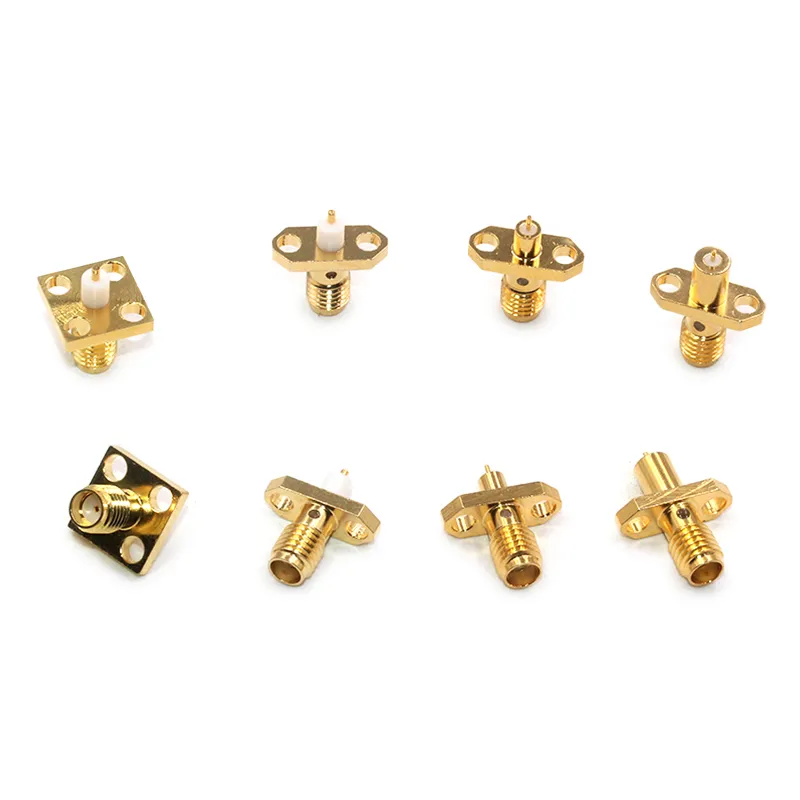
Illustrates two-hole and four-hole flange-mounted SMA bulkhead connectors, designed for enhanced vibration resistance in telecom and industrial applications.
Not every installation relies on the standard single-nut bulkhead. In environments where vibration or torque resistance is critical, flange-mounted SMA bulkhead connectors provide extra stability.
- Two-hole flange SMA connectors are compact and resist rotation better than single-threaded mounts. They’re often used in compact enclosures where space is limited but reliability is still required.
- Four-hole flange SMA connectors spread the stress more evenly, giving them the edge in telecom base stations, industrial cabinets, or outdoor housings exposed to constant vibration. TEJTE’s SMA-SMA-KKF flange bulkhead, for example, is tested to VSWR ≤1.2 up to 6 GHz, while maintaining waterproofing with a silicone O-ring.

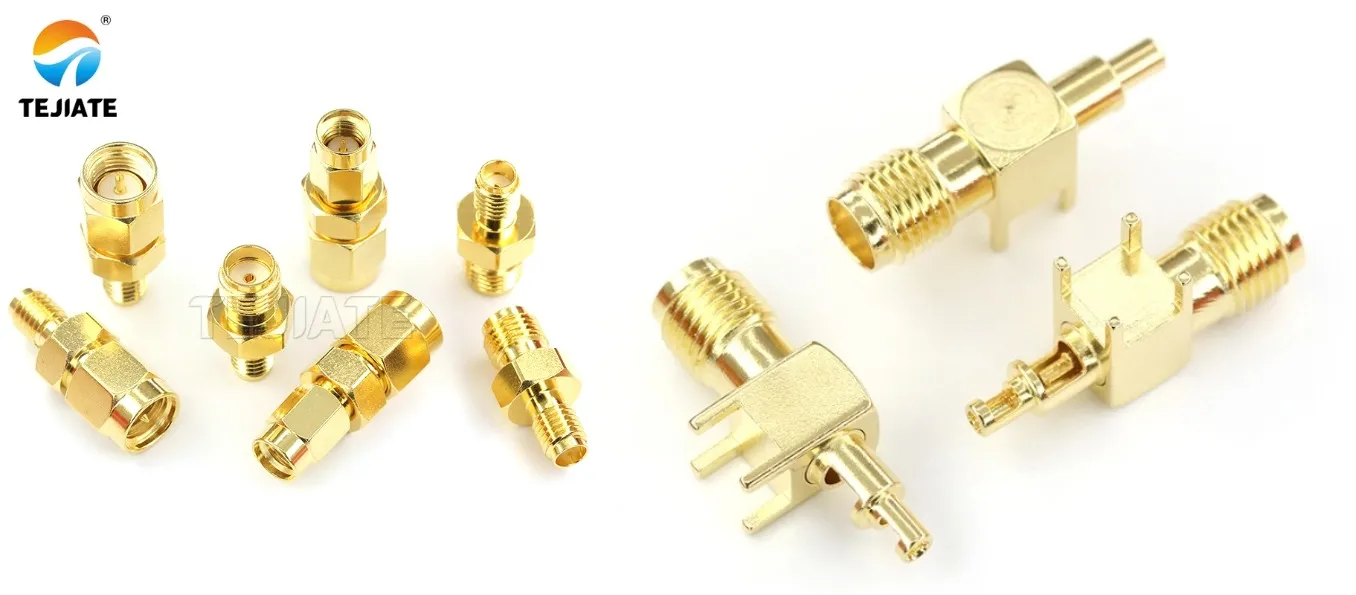
Right-angle SMA bulkhead connector ideal for tight spaces, reducing cable bend radius and strain in compact enclosures.
- A right-angle SMA bulkhead takes a different approach: instead of routing coax straight back, it bends the exit path 90°. This saves clearance in shallow housings and can reduce cable strain. The trade-off? A slightly higher insertion loss, though in short cable runs it’s usually negligible.
Choosing between these styles depends on your design priorities. Need compactness? Go with a two-hole flange. Fighting vibration in telecom gear? The four-hole flange bulkhead is worth the extra panel space. Tight on clearance? A sma right-angle bulkhead could simplify cable routing.
Practical note: if you’ve ever struggled with cables bending too sharply inside a small enclosure, switching to a right-angle bulkhead can solve the problem without sacrificing connector durability. For more comparisons, TEJTE’s SMA vs BNC vs N-Type guide shows how different connector bodies adapt to varying mechanical requirements.
Cable Pairings & Pigtail Builds
An SMA bulkhead connector is only half the story—the coaxial cable it’s paired with determines how well the assembly performs. Different builds suit different scenarios, and choosing the wrong one can mean higher losses or premature failure.
- RG178 bulkhead assemblies: Built with silver-plated copper and Teflon FEP insulation, this coax offers excellent heat resistance (-55 °C to +200 °C) and strong shielding with 92% braid coverage. It’s often the go-to choice for a GPS antenna cable, where long-term stability matters more than extreme flexibility.
- RF0.81 coax: With just a 0.81 mm outer diameter, it’s the slimmest option. Losses are higher—around 8.5 dB/m at 6 GHz—but in ultra-compact IoT devices where space is scarce, that trade-off is worth it.
- RF1.13 coax: A popular middle ground, measuring 1.13 mm OD. Its attenuation is lower (≤5.69 dB/m at 6 GHz) while still being flexible enough for cramped housings. This makes it common in Wi-Fi antenna cables for routers and gateways.
- RF1.37 coax: Slightly thicker, offering a balance between flexibility and lower attenuation. It’s well-suited to 4G/5G antenna cables in outdoor gear where signal loss needs to stay under control without sacrificing mechanical robustness.
Installer tip: keep pigtails as short as possible. Every extra centimeter adds loss, especially above 2.4 GHz. For example, replacing a 30 cm 1.13 coax with a 10 cm length can reduce insertion loss by nearly 1 dB—a noticeable improvement in Wi-Fi or LTE performance.
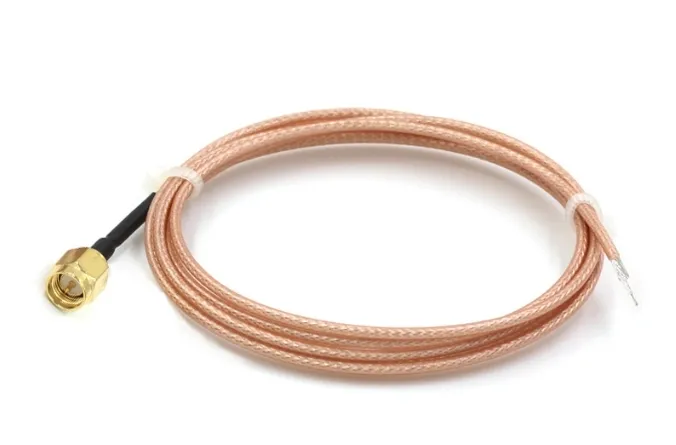
Examples of SMA bulkhead connectors paired with various coaxial cables (e.g., RG178, RF1.13) for applications like GPS, Wi-Fi, and 5G antennas.
Grounding & EMI
An SMA bulkhead connector isn’t only about passing RF signals—it also plays a key role in grounding and shielding. The outer conductor of the connector bonds with the panel, creating a low-impedance path that suppresses electromagnetic interference (EMI) and keeps the signal stable.
TEJTE’s bulkheads are designed with brass housings, gold plating, and insulation resistance ≥5000 MΩ, ensuring proper isolation while maintaining solid ground continuity. In practice, though, panel finishes complicate things. If the panel hole size is drilled into a powder-coated or anodized surface, the coating can prevent metal-to-metal contact. That’s why many installers rely on a star washer to cut through the coating, or they carefully remove paint around the hole. Either method helps guarantee that the bulkhead shell bonds directly to the chassis ground.
If these steps are skipped, the consequences aren’t always obvious at first. You might see Wi-Fi packets dropping intermittently, a GPS receiver that struggles to keep lock, or a 5G link with unexplained throughput dips. These issues often trace back to grounding failures rather than faulty devices.
Practical tip: after mounting an SMA or RP-SMA bulkhead, it’s worth using a multimeter to check continuity between the connector shell and the chassis. A quick five-second test can save hours of debugging later. For more details on connector selection and grounding practices, TEJTE’s SMA connector guide explains how design choices affect both EMI and long-term reliability.
Selector Table: Quick Reference
| Panel Thickness | Bulkhead Thread Length | Seal / IP Rating | Mount Style | Cable Pairing | Typical Use Case |
|---|---|---|---|---|---|
| 0.5-2 mm | 11 mm thread | Indoor (no seal) | Standard bulkhead | RF1.13 coax | Wi-Fi router antenna feed-through |
| 2-4 mm(coated) | 13 mm thread | O-ring, IP67 SMA bulkhead | Standard bulkhead | RG178 bulkhead | Outdoor 4G/5G CPE with thicker housing |
| ≤1 mm | KWE short thread | Indoor only | Right-angle bulkhead | 0.81 coax | Compact IoT gateway where space is tight |
| 3-5 mm | 13 mm thread | O-ring + flange sealing | Four-hole flange | 1.37 coax | Base station panel or telecom rack |
The table isn’t just theoretical—it reflects real-world installation needs. For instance, a coated 3 mm telecom panel almost always calls for a 13 mm thread SMA bulkhead with an O-ring. On the other hand, a slim IoT device board might benefit from a KWE short thread paired with 0.81 coax, keeping the build compact without sacrificing signal continuity.
Installer insight: if you’re unsure which row fits your build, err on the side of the longer thread. It’s easier to add a washer for fine adjustment than to risk threads that don’t fully engage. For more on coax performance in these pairings, TEJTE’s RF coaxial cable guide provides attenuation data and comparison charts for 0.81, 1.13, and 1.37 mm cables.
This illustration serves as a visual aid for the selector guide, likely summarizing in a flowchart or diagrammatic form how to choose the correct SMA bulkhead connector (11mm/13mm thread, flange type, right-angle, etc.) based on panel thickness, application, and sealing requirements.
Installation Steps & Common Pitfalls
Installing an SMA bulkhead connector looks simple, but the small details decide whether the connection holds up for years or fails after a few weeks. Following a consistent checklist can prevent most issues:
- Drill the panel hole size to 6.3–6.5 mm, making sure it matches the datasheet.
- Deburr the edges. Sharp burrs can slice into the O-ring or damage the coax during assembly.
- Insert the connector, stacking washer, O-ring, and nut in the correct order.
- Tighten the nut to 0.45–0.6 Nm torque—enough to compress the O-ring without crushing it.
- Verify continuity between the connector shell and chassis ground with a multimeter.
- For outdoor gear, check sealing. A quick spray or immersion test confirms that the IP67 waterproof SMA bulkhead is seated properly.
Even experienced installers can run into pitfalls:
- Choosing the wrong bulkhead thread length, leaving the nut with only a few turns of engagement.
- Over-tightening, which strips threads or cuts the silicone O-ring.
- Forgetting to clear paint or coating around the hole, leading to grounding failures.
- Skipping re-torque after vibration or temperature cycles, which can loosen the assembly over time.
Field tip: if you’ve ever had a waterproof connector leak after the first heavy rain, chances are the O-ring wasn’t compressed evenly or the panel edge had burrs. Spending an extra two minutes on prep can save hours of rework later. For more practical mounting advice, TEJTE’s U.FL to SMA cable guide highlights how assembly details directly influence long-term reliability.
FAQs
What is an SMA bulkhead connector?
An SMA bulkhead connector is a 50 Ω coaxial connector designed for panel mounting. It lets signals pass through a chassis wall while maintaining shielding and grounding. You’ll find it in routers, GPS receivers, and 5G gateways. For more detail, TEJTE’s SMA connector guide explains how male and female jacks are defined and why it matters during assembly.
Can the RP-SMA bulkhead connector be grounded?
Yes. Even though the rp-sma bulkhead uses reverse polarity for the pin, the outer shell still bonds to the panel, providing proper grounding and EMI suppression.
What panel hole size do I need for an SMA bulkhead?
Most designs require a 6.3–6.5 mm hole. Undersized holes risk damaging the plating; oversized ones compromise O-ring sealing.
Which thread length should I choose: 11 mm vs 13 mm?
Pick the 11 mm thread for panels under ~2 mm. For thicker or coated housings, go with a 13 mm thread bulkhead to ensure full nut engagement.
What is KWE short thread and when should I use it?
A KWE short thread SMA bulkhead is for very thin panels or compact devices with little clearance behind the wall.
How do I achieve IP67 sealing with an O-ring?
Use the proper torque (0.45–0.6 Nm), check that the panel surface is smooth, and make sure the O-ring compresses evenly. For outdoor installs, recheck after vibration testing.
Two-hole vs four-hole flange — which is better for vibration?
Both improve torque resistance, but the four-hole flange bulkhead is the more robust option for telecom cabinets and high-vibration sites.
Does a right-angle bulkhead add noticeable loss or PIM risk?
A sma right-angle bulkhead introduces slightly more loss, but in short pigtails it’s negligible. For test setups at high GHz ranges, straight types are still preferred.
Which cable should I pair: RG178 vs 1.13 vs 0.81 vs 1.37?
- RG178 bulkhead: durable, heat-resistant, ideal for a gps antenna cable.
- 0.81 coax: ultra-thin, best in compact IoT boards.
- 1.13 coax: flexible, common in wifi antenna cables.
- 1.37 coax: balanced performance, used for 4g/5g antenna cables outdoors.
Can I mount an RP-SMA in place of SMA on the same panel hole?
Yes, the hole is the same. But check polarity—the pin mismatch will stop the connection from working.
How thick can the panel be before I need longer threads?
Above ~3 mm (especially with coatings), a 13 mm thread bulkhead is strongly recommended.
References
Reliable performance isn’t just about good practice—it’s also about meeting standards. SMA bulkheads are governed by several international specifications:
- IEC 61169-15 – Defines mechanical dimensions and RF performance for SMA screw-coupling connectors.
- MIL-STD-348B – U.S. military standard for RF connector interfaces and durability.
- NIST RF guidelines – Cover impedance measurement and attenuation verification.
For further practical reading, TEJTE’s RF coaxial cable guide and antenna extension cable overview show how SMA bulkheads interact with different coax types in real-world assemblies.
Conclusion
The SMA bulkhead connector may be small, but its impact on system reliability is anything but minor. From choosing the correct 11 mm or 13 mm thread to ensuring IP67 sealing with an O-ring, every detail affects performance. Whether you’re dealing with a simple wifi antenna cable in a router or a rugged 4g/5g antenna bulkhead in outdoor telecom gear, the right choice prevents signal loss, EMI issues, and costly rework.
Pairing the bulkhead with the proper coax—RG178, 1.13, 0.81, or 1.37 mm—lets you balance flexibility with attenuation, ensuring stable performance for gps antenna cables, IoT gateways, or 5G base stations.
Final tip: treat each bulkhead as both a connector and a structural component. Done right, it will not only carry your RF signal but also provide sealing, grounding, and peace of mind. For more product options and design resources, TEJTE’s RF connector catalog and technical blog library are reliable places to start.
Bonfon Office Building, Longgang District, Shenzhen City, Guangdong Province, China

A China-based OEM/ODM RF communications supplier
Table of Contents
Owning your OEM/ODM/Private Label for Electronic Devices andComponents is now easier than ever.