
RG58 Cable: Specs, Loss & Outdoor Routing
Oct 16,2025
Preface
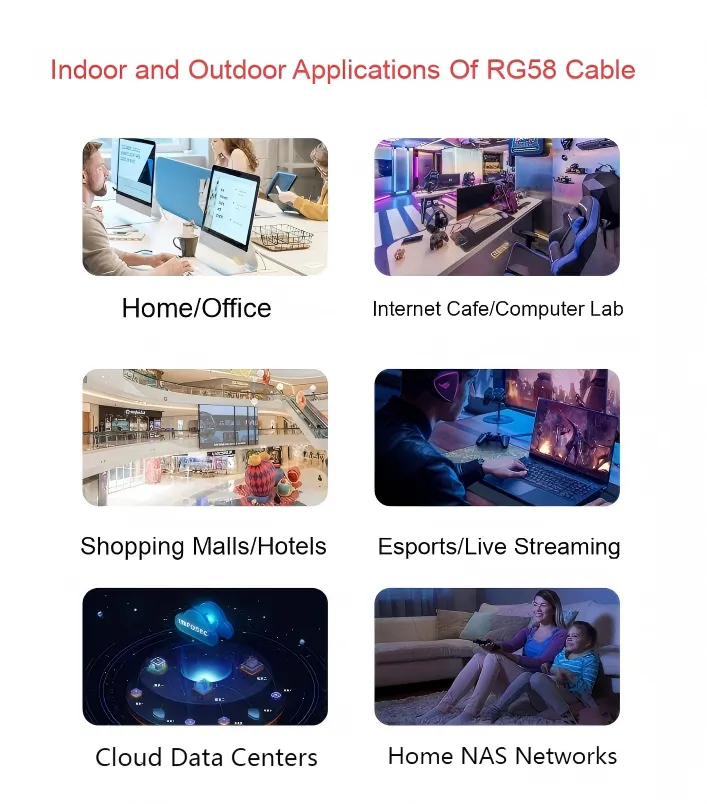
he image shows TEJTE RG58 cable connecting indoor routers, hotel repeaters, and outdoor IoT gateways. Its 50 Ω impedance and stable 6 GHz bandwidth make it a universal RF transmission choice.
When setting up a reliable RF communication line — whether in a smart home, a hotel network, or an outdoor IoT gateway — the cable often becomes the unsung hero. A 50 ohm coax cable like RG58 bridges your antennas, routers, and modules, carrying signals from DC to 6 GHz with minimal compromise. But “minimal” depends on how far you run it, how you terminate it, and what environment you expose it to.
At TEJTE, we’ve seen RG58 cables thrive in everything from office networks and gaming rooms to outdoor Wi-Fi repeaters and vehicle installations. Yet many engineers and buyers still ask: Where does RG58 stop making sense, and when should you move to RG316 or LMR-240? Let’s break that down with hard data — not marketing slogans.
Should you pick RG58 or RG316 for this run?
| Parameter | RG58 | RG316 |
|---|---|---|
| Structure | Bare copper inner, PE insulation, Al tape + CCA braid, PVC jacket | Silver-plated copper (7×0.175 mm), PTFE insulation, silver braid, FEP jacket |
| Attenuation (dB/100 m) | 7.66 @ 100 MHz, 21.2 @ 400 MHz, 43.2 @ 900 MHz, 105.2 @ 3 GHz | 0.29 @ 100 MHz, 0.88 @ 900 MHz, 1.46 @ 2.4 GHz, 2.34 @ 6 GHz |
| Power (CW, 25 °C) | Peak 1.8 kW | 78 W @ 2.4 GHz |
| Min. Bend Radius | 50 mm | 15 mm |
| Temperature Range | -20 ~ +70 °C | -55 ~ +150 °C |
| Screening Effectiveness | ≥ 90 dB | High (Silver braid) |
| Outer Diameter | 5.0 mm | 2.5 mm |
If you’re routing cables inside racks or vehicle panels, RG316 wins on flexibility and thermal stability. Its PTFE dielectric and FEP jacket allow tighter bends and stable impedance in hot environments like engine bays or base-station enclosures.
But if your build emphasizes lower loss and higher power handling, RG58 still offers superior performance for fixed indoor or semi-outdoor setups. At 2.4 GHz, RG58 loses about 0.21 dB/m, compared to RG316’s 0.29 dB/m — a measurable gap when you’re running multiple meters.
At 5–6 GHz, the trade shifts: RG316’s smaller dielectric keeps loss predictable, while RG58’s PVC jacket may drift slightly under temperature rise. As a rule of thumb:
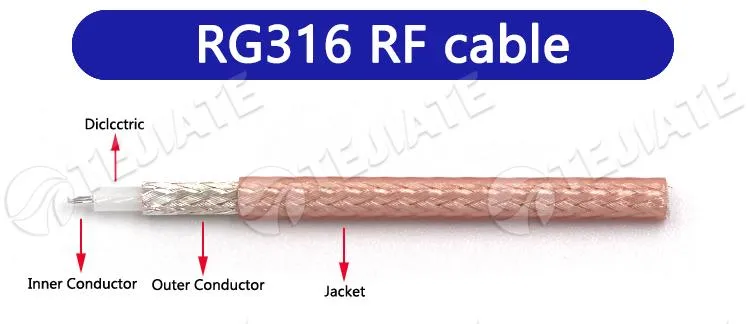
The image illustrates the layered construction of TEJTE’s RG316 coaxial cable — featuring a silver-plated copper inner conductor, solid PTFE dielectric, tinned copper braid, and a brown FEP jacket. This structure offers high temperature tolerance (–65°C to +165°C) and stable 50-ohm impedance.
- For short patch leads (< 2 m) inside devices or test setups → RG316 is ideal.
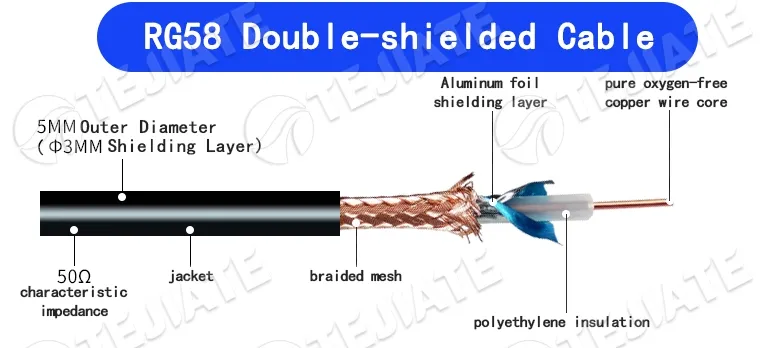
The image demonstrates RG58’s role as a medium-length feeder between routers and antennas. At 5 GHz, its 0.33 dB/m loss makes it ideal for access points requiring stable 50 Ω impedance and flexible routing.
- For antenna feeders (> 3 m) or SMA to SMA extensions in access points → RG58 gives you cleaner margins.
You can explore both versions directly under TEJTE’s RF Coaxial Cable Guide — where RG58 and RG316 are benchmarked side by side with frequency-loss curves.
How does RG58 stack up against LMR-200 / LMR-240 for long outdoor routes?
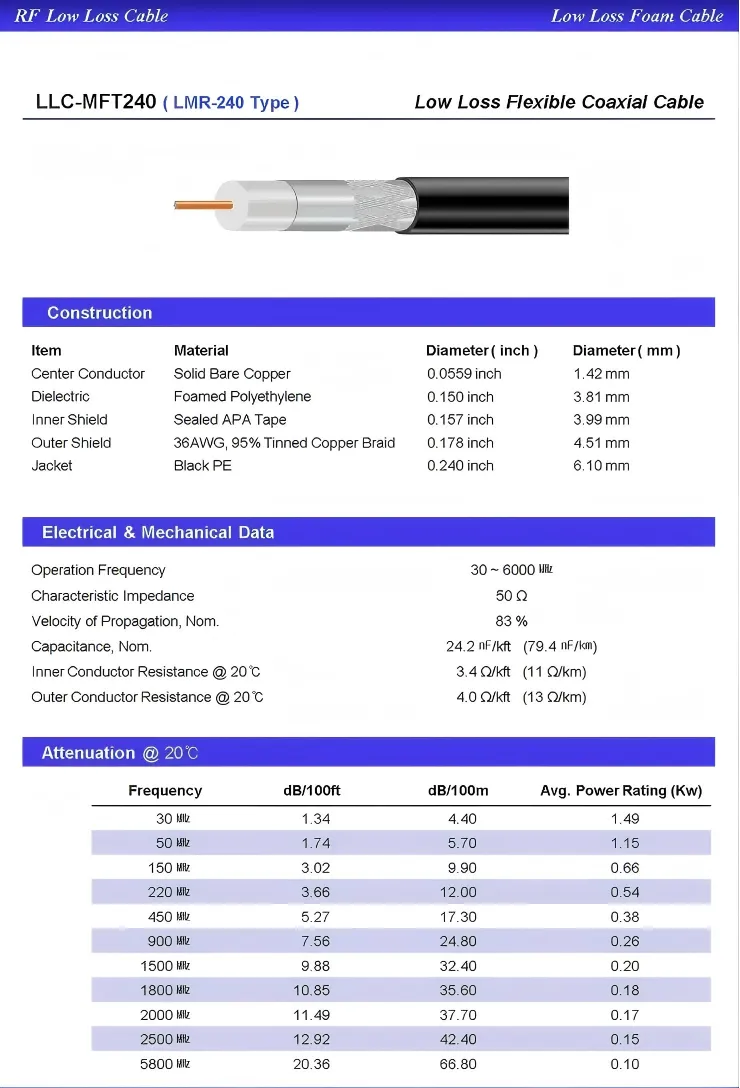
The image shows TEJTE’s LMR240 coaxial cable, featuring a solid copper conductor, foam PE dielectric, and double-shielded braid for excellent signal retention. It’s ideal for long-run antenna feeders, ensuring minimal loss at 2.4/5 GHz and outdoor durability under UV exposure.
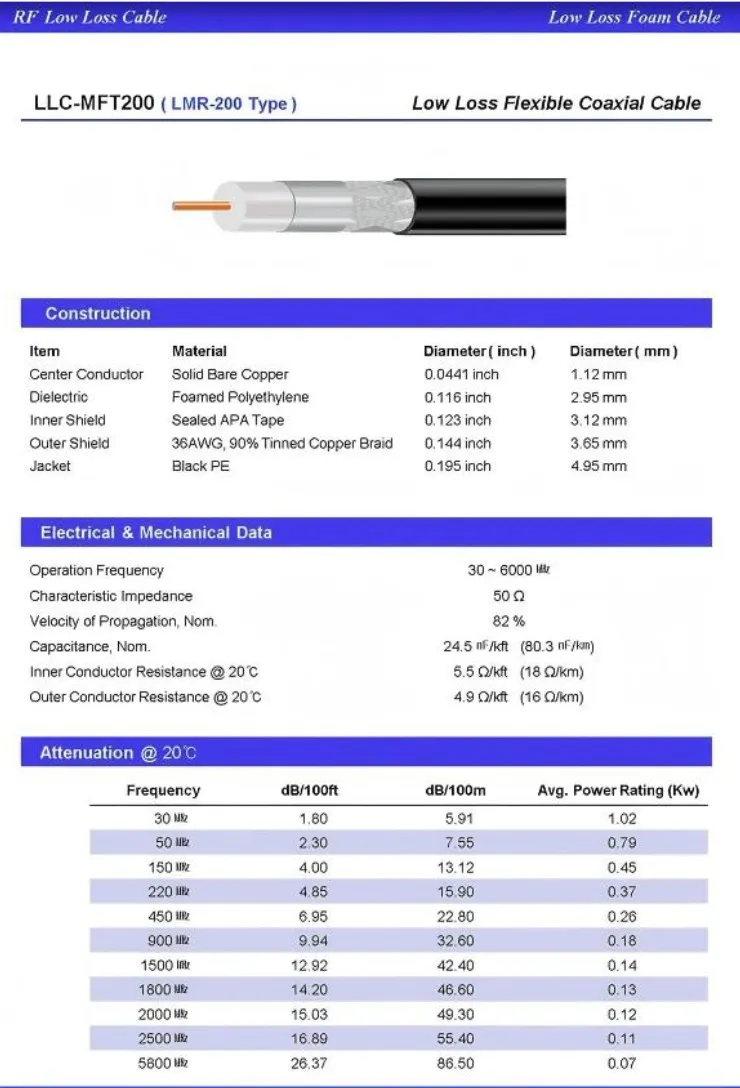
The image presents TEJTE’s LMR200 coax cable, built with a stranded copper core and PE foam dielectric. It provides low attenuation (≈0.27 dB/m @2.4 GHz) while retaining bend flexibility, making it an excellent choice for router-to-antenna or CPE installations.
| Parameter | RG58 | LMR-200 | LMR-240 |
|---|---|---|---|
| Dielectric | Solid PE | Foam PE | Foam PE |
| Outer Diameter | 5.0 mm | 5.0 mm | 6.1 mm |
| Attenuation (dB/100 m @ 2.4 GHz) | 21 | 15 | 12 |
| Attenuation (dB/100 m @ 5 GHz) | ~ 33 | 23 | 19 |
| Power Rating (@ 2.4 GHz) | 160 W | 200 W | 240 W |
| Min. Bend Radius | 50 mm | 25 mm (static) | 30 mm |
| Jacket | PVC | PVC (black) | PVC (black) |
| Temperature Range | -20 ~ +70 °C | -20 ~ +80 °C | -20 ~ +80 °C |
When you route feeders on rooftops or poles, every decibel counts. For a 10 m line at 5 GHz:
- RG58 ≈ 3.3 dB total loss
- LMR-200 ≈ 2.3 dB
- LMR-240 ≈ 1.9 dB
That 1.4 dB difference may sound small, but it translates to nearly 30% higher power reaching your antenna — a decisive factor in point-to-point links or long Wi-Fi bridge runs.
Budget and handling also come into play. LMR-240 is heavier and stiffer (6.1 mm diameter), so for portable or curved runs around walls, RG58 still wins on manageability. But for permanent outdoor feeders, LMR-240’s dual shield and UV-resistant jacket are worth the small cost bump.
From an installation standpoint, TEJTE supplies compatible N-type to SMA adapter cables and weather-sealed RG58 assemblies (see RG58 N-to-SMA 5 m cable) that help bridge mixed-connector systems without stacking multiple barrel adapters — keeping VSWR below 1.25.
Practical tip: If your route exceeds 15 m at 5 GHz, jump from RG58 to LMR-240. Below that, RG58 is economical, flexible, and performs adequately for APs, routers, and IoT relays in semi-outdoor setups.
How long can an RG58 cable be before link-budget loss gets risky?
Cable length is the silent signal killer in RF systems. Whether you’re connecting a router to an external antenna or chaining SMA extension cables, every meter of RG58 coax introduces loss that adds up faster than many expect.
Using your real TEJTE attenuation data (20 °C, sea level):
| Frequency (GHz) | Loss (dB/m) | 3 m | 5 m | 10 m |
|---|---|---|---|---|
| 2.4 | 0.21 | 0.63 | 1.05 | 2.10 |
| 5.0 | 0.33 | 0.99 | 1.65 | 3.30 |
| 6.0 | 0.40 | 1.20 | 2.00 | 4.00 |
Add roughly 0.1–0.3 dB per connector or adapter (SMA/N) depending on quality.
For example, a 5 m RG58 SMA-SMA line with two terminations can lose ≈ 2 dB @ 5 GHz, which is already 37% signal reduction.
To plan conservatively, engineers often set a total path-loss budget:
Loss_total = Cable Loss + Connector Loss ≤ RSSI Target − SNR Margin
Say your access point needs −65 dBm RSSI for stable throughput and your noise floor sits at −90 dBm. You can afford ~25 dB total path loss, including antenna gain and cable attenuation. With RG58, that limit typically equates to ≤ 8 m at 5 GHz or ≤ 12 m @ 2.4 GHz before you risk performance drops.
If your design pushes beyond that — like outdoor repeaters or vehicle antennas — move to LMR-200 or LMR-240, which cut insertion loss nearly in half.
You can find more practical loss estimations and comparison charts in TEJTE’s RF Cable Guide, which details real-world data on SMA, BNC, and N-type assemblies.
Will your RG58 survive the environment — what temperature rating and jacket do you need?
Outdoor installations expose RG58 cables to far harsher conditions than lab setups ever see. The standard PVC jacket on TEJTE’s 50 ohm coax cable is durable enough for most indoor and semi-sheltered environments — think smart home routers, café Wi-Fi, or hotel repeater systems — but long exposure to UV or wide temperature swings can alter performance.
According to TEJTE’s verified specs, RG58 operates reliably between −20 °C and +70 °C. This range comfortably covers most temperate climates, but in rooftops or desert sites, it’s wise to add UV-resistant boots or cable sleeves (UV/IP boots for SMA/N connectors) to prevent jacket degradation. The screening attenuation ≥ 90 dB also means the cable resists EMI from nearby power lines or Wi-Fi clusters — a quiet but vital contributor to signal stability.
In contrast, RG316 and LMR-series cables employ FEP or PE jackets with broader thermal margins (−55 °C to +150 °C for RG316). If you expect direct sun or sub-zero frost, consider RG58 cables with black PVC or FEP jacketing as an upgrade path.
Temperature rating ranges, UV/abrasion resistance, and drip-loop practice
Small routing habits make big differences outdoors:
- Always form a downward “drip loop” before connectors to keep moisture from seeping into SMA or N-type joints.
- Use rubber grommets or strain boots at wall entries — TEJTE supplies purpose-built grommets for SMA/N assemblies that maintain seal compression even after hundreds of flexes.
- Avoid prolonged contact with metal conduits in hot climates; radiant heat can lift the outer jacket temperature above its +70 °C rating.
For installations that blend indoor and outdoor sections, many engineers combine RG58 feeders with short RG316 jumpers to handle high-heat zones — a flexible, low-cost hybrid that keeps both reliability and manageability in check.
You’ll find more environmental layout visuals and case studies inside TEJTE’s SMA Extension Cable Outdoor Setup Guide.
Do you need N-type to SMA or straight SMA ends for your chain?
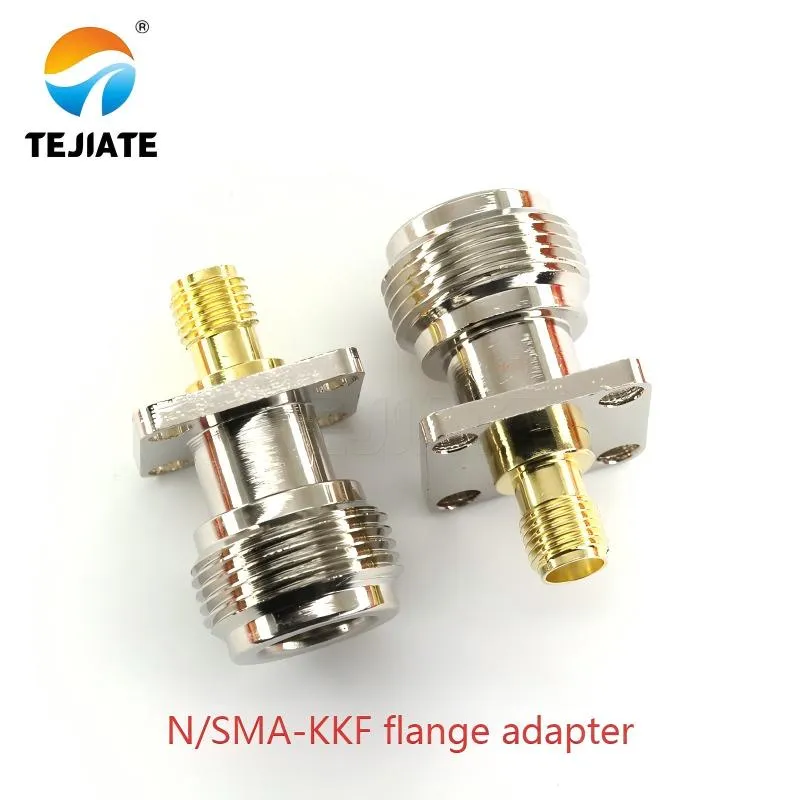
The image shows a TEJTE N-to-SMA flange connector, featuring a four-hole mount design for bulkhead panels or weatherproof enclosures. It guarantees a 50 Ω impedance match and low VSWR (≤1.20) across 6 GHz RF applications.
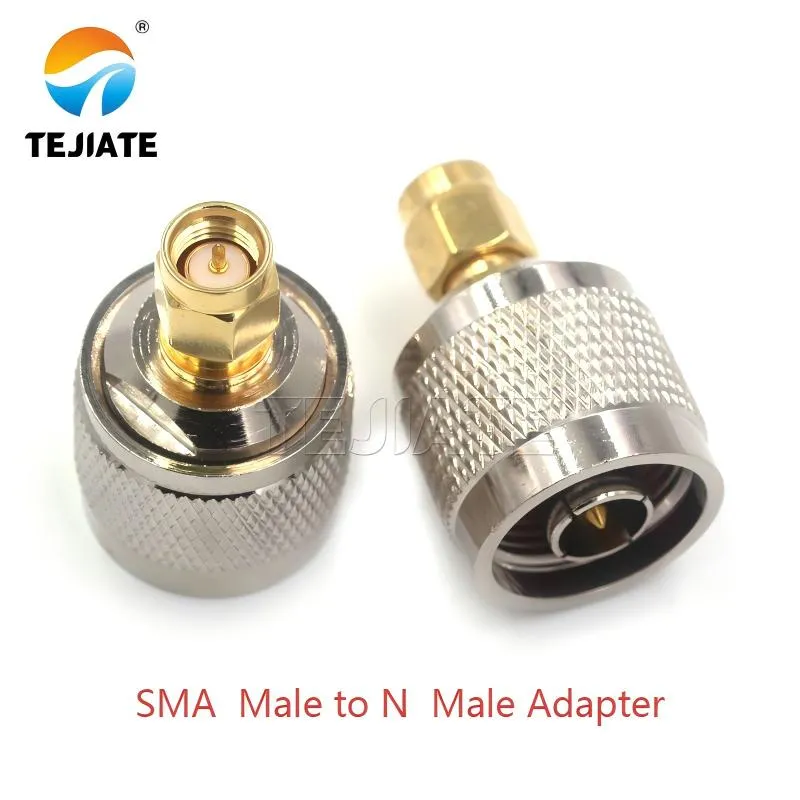
The product image displays an SMA male to N male adapter used for test instruments, base stations, and outdoor antennas. TEJTE’s precision-machined brass body ensures secure mating, low insertion loss, and corrosion resistance for long-term use.
| Connector Type | Impedance | Frequency Range | VSWR | Temperature Range | Durability |
|---|---|---|---|---|---|
| SMA-JJ (SMA male to SMA male) | 50 Ω | DC – 6 GHz | ≤ 1.25 | -45 °C ~ +125 °C | ≥ 500 cycles |
| N/SMA-KKF (N female to SMA female, 4-hole flange) | 50 Ω | DC – 6 GHz | ≤ 1.20 | -45 °C ~ +125 °C | ≥ 500 cycles |
Pick N-type to SMA adapter cable vs barrel adapters to minimize VSWR
When chaining multiple segments — say, an N-type antenna to an SMA-based modem — always favor a factory-terminated N-to-SMA coax cable over stacking adapters. Each extra joint adds ~0.1 – 0.3 dB of loss and slight phase ripple. Using a pre-terminated RG58 N-to-SMA 5 m cable from TEJTE’s RF Cable line avoids that cumulative degradation and reduces connector strain under vibration.
Male-to-male vs male-to-female ends by device/antenna patterns
- Male-to-male (SMA-JJ): Common for signal analyzer or rack interconnects where both ports are female.
- Male-to-female (SMA-JF): Typical in antenna feeder lines, routers, and repeaters.
- N-male to SMA-female: The outdoor classic — fits heavy-duty base antennas while feeding lighter SMA gear indoors.
For anyone building modular chains, refer to TEJTE’s SMA to N Adapter Selection Guide — it details torque values, sealing tips, and IP67 mounting practices tailored to RG-series cables.
How do you install and test RG58 without hurting connectors or return loss?
- Choose pigtails (U.FL to SMA) for internal RF modules, typically 10–30 cm.
- Use jumpers (SMA-M to SMA-M) between instruments; they handle repeated cycles (> 500).
- For enclosures, the panel feed-through SMA bulkhead provides sealing with nuts + washers and can be upgraded to IP67 boots – see TEJTE’s SMA bulkhead guide.
How do you terminate and strain-relieve RG316 to SMA cleanly?
Torque, ESD, bend-radius discipline and connector care
For SMA connectors, always apply torque between 0.56 – 0.79 N·m (5 – 7 in-lb) — enough to seat the threads without deforming the pin. TEJTE’s engineers recommend using a dedicated SMA torque wrench (SMA/N torque tools) instead of finger-tightening, especially in vibration-prone setups.
Keep the minimum bend radius at or above 50 mm for RG58 (25 mm for RG316). One common rule: if the cable bends tighter than a bottle cap, it’s too much.
During assembly:
- Avoid routing near power transformers or motor drivers to preserve the 90 dB shielding margin.
- Ground both ends during handling to prevent ESD discharge through the center conductor.
- Use strain-relief boots and zip-ties with rubber sleeves to distribute tension evenly.
Quick acceptance: continuity + spot RF cable loss / SMA cable loss check
Post-installation testing shouldn’t require a full lab bench. A simple continuity check (multimeter or TDR) verifies no open or short circuits, while a handheld RF power meter or VSWR tester confirms the run’s integrity.
Typical benchmarks:
- Insertion loss ≤ 2 dB @ 5 m, 5 GHz (including connectors)
- VSWR ≤ 1.25 for SMA-terminated lines
- No connector heating after 10 minutes of TX at 5 GHz under 10 W
Order in one pass: which RG58 cable SKU matches your use case?
| Ends | Frequency (GHz) | Length (m) | Estimated Loss (dB) | Min Bend Radius | Outdoor Rating | Suggested TEJTE P/N |
|---|---|---|---|---|---|---|
| SMA-M to SMA-M | 2.4 / 5 / 6 | 1 / 2 / 3 | 0.25 / 0.50 / 0.75 @ 2.4 GHz 0.35 / 0.70 / 1.05 @ 5 GHz |
50 mm | Indoor PVC | RG58-SMA-M/M-3M |
| SMA-M to SMA-F | 2.4 / 5 / 6 | 5 / 10 | 1.05 / 2.10 @ 2.4 GHz 1.65 / 3.30 @ 5 GHz |
50 mm | PVC or FEP | RG58-SMA-M/F-5M |
| N-M to SMA-F | 2.4 / 5 / 6 | 5 / 10 / 30 | 1.05 / 2.10 / 6.30 @ 2.4 GHz 1.65 / 3.30 / 9.90 @ 5 GHz |
60 mm | UV black PVC | RG58-N/M-SMA/F-10M |
These values derive from TEJTE’s measured attenuation (0.21 dB/m @ 2.4 GHz, 0.33 dB/m @ 5 GHz, 0.4 dB/m @ 6 GHz) plus a 0.2 dB allowance per connector.
For indoor use — routers, gaming rooms, or office racks — the 3 m SMA-SMA variant keeps loss under 1 dB while staying flexible. For longer outdoor feeders, the N-to-SMA RG58 10 m cable combines weather resistance with consistent impedance.
In many IoT or smart-home installations, engineers mix RG58 feeders with short RG316 jumpers to handle temperature transitions. You can find detailed cross-application examples in TEJTE’s RF Cable Guide and SMA Extension Cable Setup.
Can RG58 handle your power — how do you verify rating and derating?
Power handling defines the line’s ceiling. At 25 °C, RG58 50 ohm coax cable safely carries around 160 W @ 2.4 GHz and 100 W @ 5 GHz, with a rated VSWR ≤ 1.20.
However, power capacity declines with temperature rise and duty cycle. TEJTE recommends using the following field formula:
Power & Derating Calculator
[P_{allow} = P_{25°C} × [1 – 0.005 × (T_{amb} – 25)] × Duty_{factor}]
| Input | Typical Values | Result / Advisory |
|---|---|---|
| P_in | 100 W | |
| Duty Cycle | 80% | |
| Ambient Temp | 60 °C | |
| P_allow | ≈ 80 W | → Safe margin |
| If Pin > Pallow | — | Shorten run or upgrade to LMR-240 |
That 0.5 % per °C derating curve matches real-world field observations: in summer rooftops at +70 °C, effective power capacity drops nearly 25 %.
Field cues: connector warmth, intermittent VSWR spikes, and when to stop
During continuous transmission, gently touch the SMA nut — if it becomes noticeably warm, the inner dielectric may be heating. Rising return-loss ripples or sudden VSWR spikes on a handheld analyzer often indicate over-stress. Reduce power, verify torque, or switch to a thicker LMR-series cable.
For high-power, long-duty RF tasks — like FM transmitters or repeater feeds — RG58 performs best below 100 W. Above that, the foam-PE LMR family offers safer margins.
You can explore TEJTE’s technical comparison of RG58 vs RG316 vs LMR240 inside our coaxial cable blog cluster, which consolidates attenuation tables, jacket ratings, and VSWR test data.
FAQs
Q1. How much power can RG58 carry compared with RG316 at Wi-Fi bands?
At 2.4 GHz, RG58 handles ≈ 160 W continuous, while RG316 caps near 78 W. The thicker copper core dissipates heat better, so RG58 is preferable for routers or access points running 24/7.
Q2. Which cable has a higher power rating — RG58 or RG316 — and when should I move to LMR-240?
Use RG58 up to 8 m and < 120 W. Beyond that, attenuation compounds; LMR-240 halves the loss and supports > 200 W continuous.
Q3. How long can RG58 run before loss forces relocation of the radio or a switch to LMR?
At 5 GHz, a 10 m RG58 run loses ≈ 3.3 dB (33 %), while LMR-240 loses ≈ 1.9 dB. If your link budget exceeds 25 dB loss headroom, switch cables.
Q4. What jacket and temperature rating should I choose for rooftop or vehicle installs?
Select black PVC RG58 (−20 ~ +70 °C) for standard outdoor use, or FEP RG58 (−45 ~ +125 °C) for heat-exposed zones. Pair with UV-boots and grommets from TEJTE’s connector series.
Q5. When is an N-to-SMA adapter cable better than stacking barrel adapters?
Every extra adapter adds 0.2–0.3 dB loss and can raise VSWR. Choose a single N-to-SMA RG58 assembly to keep return loss low and maintain mechanical stability.
Q6. How do I verify RF cable loss and return loss on a new RG58 run without lab gear?
Check continuity and use a handheld SWR meter or spectrum analyzer. Typical readings: ≤ 1.25 VSWR and ≤ 2 dB loss for a 5 m SMA extension cable.
Q7. What bend-radius and strain-relief rules keep RG58 alive in vibration or wind?
Maintain ≥ 50 mm radius and use soft tie-downs every 30 cm. Avoid tight U-loops behind antennas; they cause micro-cracks in the PE dielectric.
Closing Note
The RG58 cable remains one of the most balanced and widely used 50 ohm coax cables in RF engineering — bridging affordability, power capacity, and ease of termination. From home IoT to commercial networks, its performance scales when paired with proper connectors, correct length planning, and sound installation habits.
For a deeper technical dive, schematics, and accessory matching, visit TEJTE’s RF Cables and Connectors hub and the TEJTE Blog on Coax and SMA Assemblies.
Bonfon Office Building, Longgang District, Shenzhen City, Guangdong Province, China

A China-based OEM/ODM RF communications supplier
Table of Contents
Owning your OEM/ODM/Private Label for Electronic Devices andComponents is now easier than ever.