
RG316 Coaxial Cable Guide: Specs, Loss & Use

Sep 16,2025

How can you identify RG316 coaxial cable specifications?

At first glance, many coaxial cables look almost the same, which makes it tricky to tell them apart. So how can you identify RG316 coaxial cable specifications with certainty?

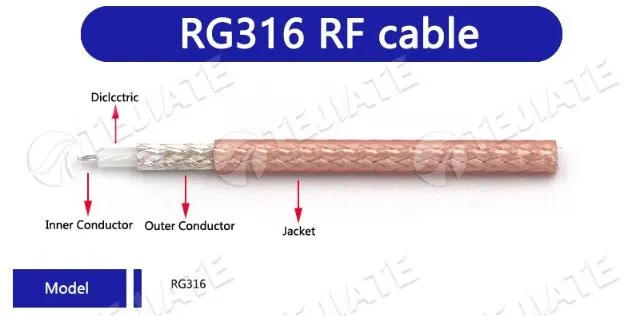
The easiest way is to look at how the cable is built. Inside you’ll find a seven-strand silver-plated copper conductor, with each strand measuring about 0.175 mm. This conductor is wrapped in a PTFE dielectric layer roughly 1.53 mm thick, giving the cable excellent insulation and keeping signals stable. Over the dielectric sits a silver-plated copper braid of about 1.95 mm, which serves as the shield. Finally, everything is protected by a brown FEP jacket, bringing the overall diameter to approximately 2.50 mm and giving the cable solid resistance to heat and chemicals.

Quick breakdown:

RG316 coaxial cable structure breakdown diagram showing inner conductor, dielectric, outer conductor, and jacket

This image visually breaks down the physical construction of the RG316 coaxial cable, annotating key dimensions (e.g., inner conductor 7x0.175mm, dielectric 1.53mm, OD 2.50mm), used to help readers identify RG316 cable and its double-shielded (silver-plated copper braid) construction per MIL-C-17 standards and high-temperature jacket properties.
RG316 Cable Structure
  • Inner conductor: silver-plated copper, 7 × 0.175 mm
  • Dielectric: PTFE, 1.53 mm
  • Outer conductor: silver-plated copper braid, 1.95 mm
  • Jacket: FEP, 2.50 mm

Practical note: many engineers check the jacket feel to distinguish RG316. Its slim and slightly stiff brown coating is different from softer jackets on lower-grade coaxial cable types. For a wider overview of cable structures, TEJTE’s coaxial cable guide offers useful context.

Electrical properties (50Ω, loss, delay, withstand voltage)

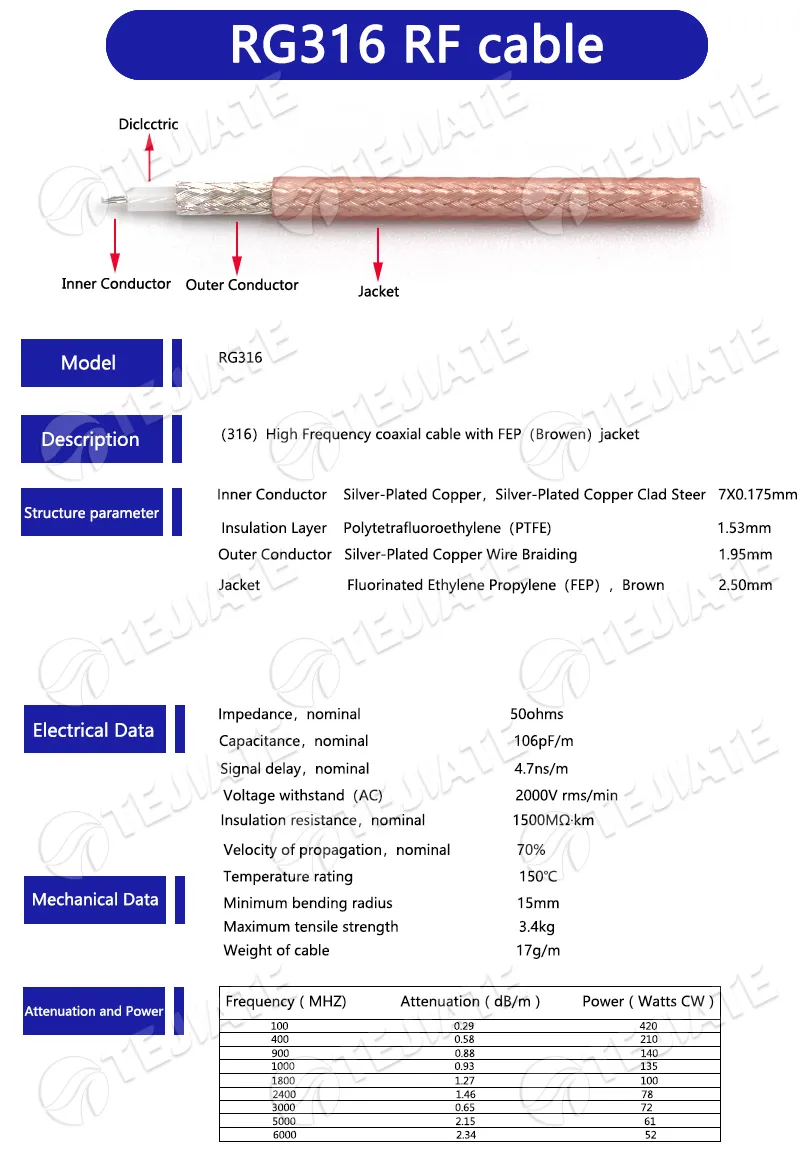
The performance of RG316 coaxial cable comes down to its electrical profile. With a 50-ohm impedance, it matches the global standard for RF and wireless systems, from Wi-Fi modules to GPS receivers.

Core specifications:

  • Impedance: 50 ± 2 Ω
  • Capacitance: ~106 pF/m
  • Signal delay: 4.7 ns/m
  • Velocity of propagation: ~70% of light speed
  • Voltage withstand (AC): 2000 Vrms/min
  • Insulation resistance: 1500 MΩ·km
  • Temperature rating: up to 150 °C

These numbers translate directly into performance. A withstand voltage of 2000 Vrms means it can ride out electrical surges without breakdown. The +150 °C rating keeps it reliable inside hot housings or automotive dashboards where weaker cables would fail.

When planning system design, engineers usually consult the rg316 loss chart. It shows that at 100 MHz the loss is about 0.29 dB per meter, but by 2.4 GHz the figure rises to around 1.46 dB. That kind of data helps determine whether RG316 will suffice for your run length, or if a thicker cable like RG58 (see RG58 coax comparison) is better suited.

Tip from experience: don’t overlook capacitance and delay. With ~106 pF/m and ~70% velocity factor, RG316 maintains timing consistency, which is especially important for GPS and high-frequency IoT devices.

RG316 coaxial cable detailed specifications table and attenuation chart

This image is a detailed datasheet listing all key specifications for RG316 cable, including construction parameters (conductor, dielectric, shield, jacket types and sizes), electrical characteristics (impedance, capacitance, delay, withstand voltage, insulation resistance, velocity of propagation, temperature rating, min bend radius, weight) and, most importantly, the attenuation (dB/m) and power handling (W) values at different frequencies (from 100 MHz to 6000 MHz). This table provides the core data for engineers to select cables and calculate link budgets.
RG316 Electrical Specs & Attenuation Table

What makes RG316 meet MIL-C-17 double shield standards?

Another reason RG316 is widely trusted is its compliance with MIL-C-17 double shield standards. Instead of one protective layer, it combines a silver-plated copper braid with an additional shield, which gives it reliable protection against electromagnetic interference.

Take the case of routing a GPS antenna cable inside a vehicle. Between ignition lines, infotainment systems, and wireless modules, there’s plenty of electrical noise. In this situation, comparing rg316 vs rg174 makes the choice clear: RG174, with its single shield and +70 °C limit, often struggles. RG316, by contrast, with PTFE dielectric, FEP jacket, and double shielding, keeps the navigation signal steady.

The trade-off between rg316 vs rg58 is a bit different. RG58 handles long runs with less attenuation, but it’s thicker and less flexible. RG316 is slimmer and better at handling heat, making it the preferred option in aerospace, defense, and compact IoT devices where reliability and space-saving are critical.

Field tip: if your equipment documentation specifies “double-shielded RG316,” it’s not a suggestion—it means the device will operate in an environment with heavy interference. For detailed comparisons of cable families, TEJTE’s coaxial cable types guide is a reliable resource.

Which connectors are compatible with RG316 coaxial cable?

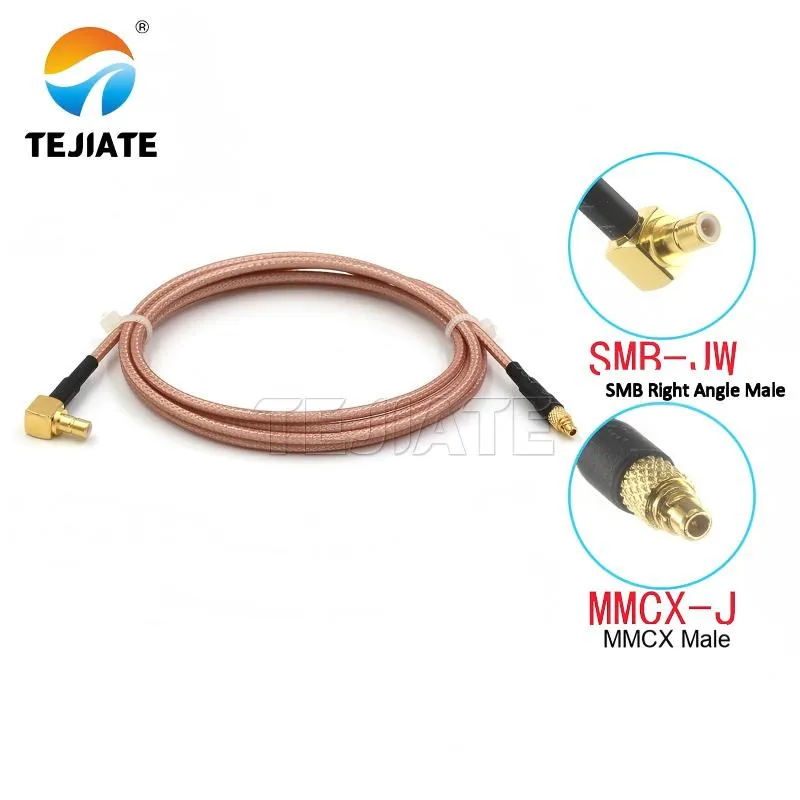
SMB right-angle male and MMCX male connectors compatible with RG316 cable

This image shows two types of small connectors commonly used with RG316 cable: SMB (snap-on, shown as a right-angle male) and MMCX (even smaller snap-on connector, shown as male). Combined with the context, this image illustrates RG316's compatibility with various compact connectors due to its slim outer diameter (2.5mm), making it suitable for space-constrained applications (e.g., lab equipment, internal GPS module connections).
SMB & MMCX Connectors
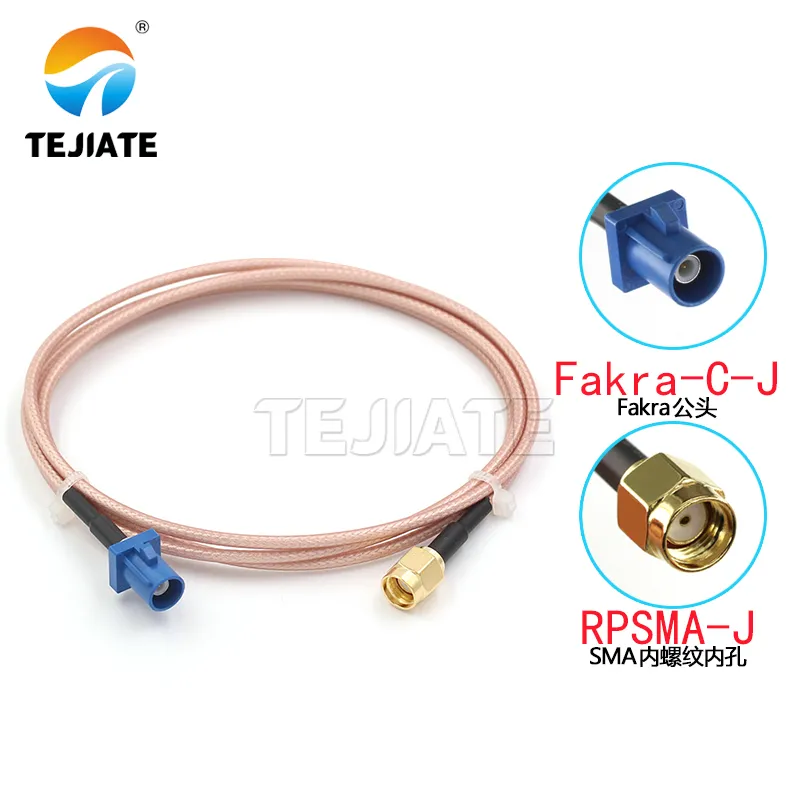
FAKRA and RP-SMA connectors compatible with RG316 cable

This image showcases two specific types of connector products: FAKRA (often with blue housing, keying, and locking mechanism, commonly used in automotive GPS and telematics systems) and RP-SMA (Reverse Polarity SMA, frequently found on consumer wireless routers and access points). Combined with the context, this image emphasizes RG316 cable's compatibility with these specialized connectors. FAKRA connectors are preferred in the automotive industry for their foolproof keying and vibration resistance, while RP-SMA is a common antenna interface in consumer Wi-Fi equipment, requiring careful attention to its reversed polarity compared to standard SMA to avoid mating errors.
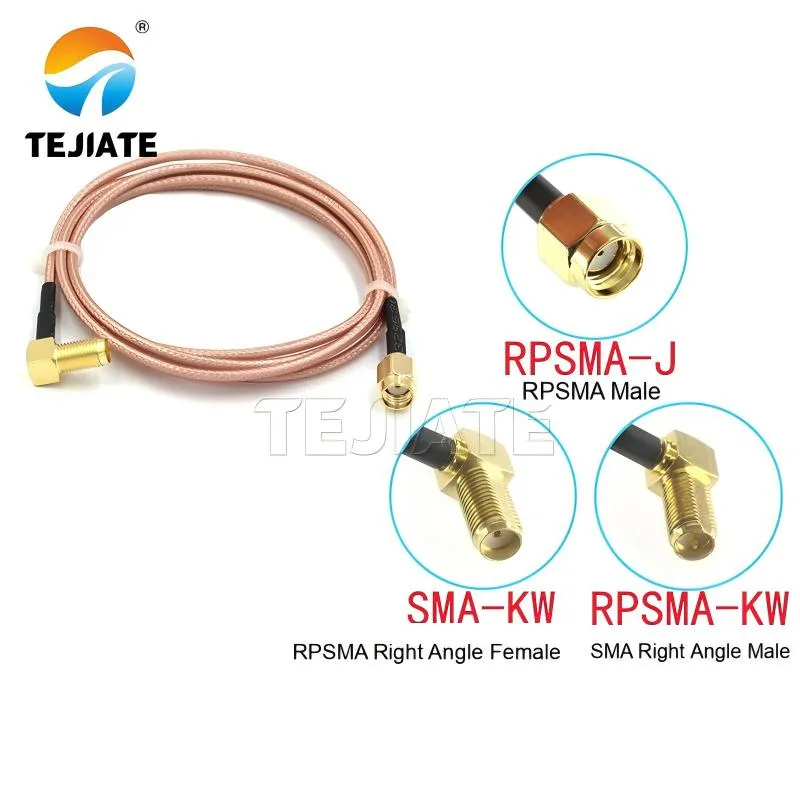
FAKRA & RP-SMA Connectors

One of the main advantages of RG316 coaxial cable is its versatility with connectors. With its slim 2.50 mm diameter, the cable fits neatly into compact assemblies without compromising on electrical performance.

The most common options are:

  • SMA and RP-SMA – the standard choice for Wi-Fi cards, routers, and RF modules. You’ll often find RP-SMA female to coaxial pigtail RG316 cables used in networking gear.
  • BNC – a preferred connector in lab instruments and short HD-SDI video patch cables.
  • MCX/MMCX – miniaturized connectors widely used for GPS antenna assemblies.
  • SMB – a snap-on style connector that makes quick installation possible.
  • Fakra – common in the automotive sector, especially for GPS and telematics systems.

Each connector type serves a specific role. A BNC RG316 jumper might fit best in a broadcast rack, while a Fakra-to-RG316 cable is designed to withstand vibrations behind a car dashboard. If you’d like a broader overview of connector families and their trade-offs, TEJTE’s guide on coaxial connectors breaks it down in detail.

A quick tip from practice: always double-check whether your device requires SMA or RP-SMA. They look almost identical, but the pin-and-hole layout differs. Mixing them up is one of the most common mistakes in RF projects—and it’s easy to avoid if you confirm the spec before ordering.

How to pick between straight vs right-angle SMA jumpers?

Comparison of straight vs right-angle SMA connectors for RG316 jumper cables

This image shows examples of straight SMA male and right-angle SMA male/female connectors. Combined with the surrounding text, this image is used to illustrate how to choose between straight jumpers (lowest loss, preferred when space allows) and right-angle jumpers (space-saving, reduces cable stress in cramped areas like inside routers, automotive dashboards) based on the physical layout constraints of the equipment.

Straight vs Right-Angle SMA Connectors

When choosing SMA to SMA RG316 jumpers, one common question is whether to use a straight or a right-angle type. The answer depends less on theory and more on the physical layout of your setup.

A straight jumper provides the cleanest path. It introduces the least insertion loss and works best when there’s enough room around the port. If you’re connecting test equipment on a bench or wiring inside an enclosure with plenty of space, straight is usually the right call.

A 90-degree SMA jumper, by contrast, comes into play when space is tight. It reduces stress on board-mounted ports and keeps the cable from being forced into a sharp bend. Many engineers prefer right-angle jumpers when building compact routers, IoT modules, or automotive dashboards, where clearance is limited.

Here’s a tip from real-world installs: don’t bend a straight jumper sharply just to make it fit—it can deform the PTFE dielectric and shorten the cable’s life. If your layout is cramped, it’s safer to order a factory-made sma to sma 90 degree rg316 jumper cable than to risk damaging the port or connector.

How do you select the right RG316 jumper cable length?

When it comes to RG316 jumper cables, length isn’t just a convenience detail—it’s a key factor in performance. Every extra centimeter adds measurable attenuation, and at higher frequencies that loss builds up quickly. That’s why engineers often measure twice before ordering.

10cm/30cm/1m common use cases

  • 10 cm jumpers are widely used for short internal links, such as connecting a PCB-mounted MMCX to a panel SMA bulkhead.
  • 30 cm assemblies are common for router antenna extensions or GPS pigtails where flexibility is needed without heavy signal loss.
  • 1 m or longer lengths appear in test labs and automotive systems, but at this point you’ll already see over 1.4 dB loss at 2.4 GHz.

From practical experience: ordering “just a bit longer, in case” can backfire. That extra slack might cost you more signal power than you expect.

Why shorter lengths minimize RF loss?

The math is simple: the longer the run, the higher the loss. At 2.4 GHz, a 1 m RG316 coaxial jumper cable loses around 1.46 dB, or about 30% of signal strength. Cut that length down to 30 cm, and the loss drops to roughly 0.44 dB—almost negligible in real-world use.

That’s why many RF engineers advise: make the jumper only as long as your layout truly requires. If your project needs longer runs, a thicker cable such as RG58 coax is often a better choice (see the RG58 coax comparison).

Can RG316 coaxial cable support HD-SDI and GPS applications?

Collage of RG316 cable application scenarios: smart home, in-car navigation, rail transport, smart bus stops, etc.

This collage illustrates the diverse application scenarios for RG316 cable, including smart homes (power monitoring, network comms), in-car navigation, rail transport, and smart bus stops. Combined with the context, this image aims to demonstrate that RG316, with its stable 50Ω impedance, good shielding (against interference), high-temperature resistance (FEP jacket, 150°C), and moderate flexibility, finds wide application in Wi-Fi modules, GPS antenna assemblies, vehicle systems, IoT gateways, and short-run HD video transmission.

RG316 Application Scenarios
RG316 coaxial cable isn’t just for Wi-Fi modules or IoT boards. Thanks to its stable 50 Ω impedance and strong shielding, it also works in professional video systems and GPS assemblies—as long as the cable runs stay short.

Broadcast & video (BNC-HD SDI examples)

In broadcast racks, space is often cramped, and bulky cables can be a nightmare to route. This is where BNC RG316 HD-SDI video coaxial cable finds its niche. Its slim 2.5 mm profile makes it easier to patch gear together without blocking airflow or access.

That said, there’s a catch. RG316 is best for short HD-SDI patching. For longer studio lines, thicker cables like RG58 or RG59 still win with lower attenuation. For a more complete breakdown of cable choices, you can check TEJTE’s RF cable guide.

GPS antenna pigtails (SMA/MMCX/Fakra use cases)

Automotive and navigation systems rely heavily on RG316. It’s commonly paired with SMA, MMCX, or Fakra connectors in GPS antenna assemblies. The cable routes smoothly through dashboards and holds up even in summer heat, thanks to its +150 °C FEP jacket rating.

A quick installer’s tip: avoid bends tighter than the 15 mm minimum radius. Keeping the curve gentle helps maintain impedance and signal strength. For more antenna-specific advice, TEJTE’s GPS antenna guide offers practical placement and cabling insights.

IoT and smart home integration

RG316 also shows up in smart home devices and IoT gateways. Its mix of flexibility, shielding, and moderate loss makes it a safe bet for embedded Wi-Fi, Zigbee, or Bluetooth modules. Open up a smart thermostat or a compact router, and the slim brown coax inside is often RG316.

Manufacturers stick with it not just for size, but because double shielding helps resist interference from nearby electronics. That stability is key in environments where multiple devices are fighting for bandwidth.

What should buyers check before ordering RG316 cables?

At first glance, buying RG316 coaxial cable may feel straightforward—pick the length and connector, and you’re done. But anyone who’s dealt with mismatched connectors or overheating cables knows how easily mistakes can derail a project. That’s why engineers usually walk through a short checklist before ordering.

Length, connector type, shielding, bend radius 【Checklist】

Parameter What to Verify
Connector Confirm SMA, RP-SMA, BNC, MCX, or Fakra to match the device port.
Length Keep it as short as possible for high-frequency applications; measure routing paths first.
Shielding Ensure dual braid (MIL-C-17 standard) if interference is expected.
Jacket Choose FEP for high-temp or outdoor use; check if flame-retardant or custom color is needed.
Temperature Verify the +150 °C rating if gear runs hot or sits in vehicles.
Application Fit Map cable choice to Wi-Fi, GPS, SDI video, or IoT devices.
Skipping even one of these steps can create problems later. For example, it’s surprisingly common to mix up SMA and RP-SMA—the threads look the same, but the pin layout is different. Getting that wrong means your cable won’t even connect. For a broader overview of how different RF cable types are applied, see TEJTE’s RF cable guide.

OEM & Amazon sourcing options

If you’re sourcing for production, OEM assemblies are often the safest path. Custom cables give you consistent impedance and proper shielding, and you can specify exactly the connector combination you need. TEJTE, for example, supplies OEM RG316 jumper cables for industries ranging from IoT and GPS to 5G modules, where reliability isn’t optional.

For smaller jobs—like prototyping, lab work, or one-off repairs—platforms such as Amazon or distributor catalogs can get you going quickly. Just be careful: quality control on mass-market listings can vary a lot. If your project is critical or long-term, paying for a vetted supplier will usually save more trouble than it costs.

How do you maintain and test RG316 coaxial cables?

Even though RG316 coaxial cable is built to handle heat and interference, it still needs proper care. Without it, even the best-made jumper can fail early—usually because of bending, overheating, or poor storage. A little maintenance goes a long way.

Basic continuity and impedance tests

The simplest test starts with a multimeter. A continuity check quickly shows whether the inner conductor and shield are intact. But for RF work, you’ll want more than that. A vector network analyzer (VNA) or a time-domain reflectometer (TDR) can confirm the cable is still sitting close to its rated 50 Ω impedance.

These quick checks don’t take long, but they can save hours of frustration later. Many engineers make it a routine step to test their RG316 jumper cables before plugging them into sensitive equipment.

Storage and environmental care (heat, moisture, bending)

How you handle RG316 outside of use is just as important as testing. Always coil it loosely; avoid kinks or bends sharper than its 15 mm minimum radius. While the FEP jacket can tolerate up to +150 °C, leaving coils next to heaters or in direct sunlight will shorten its lifespan.

In humid or corrosive areas, keep cables in sealed bags with desiccants. For outdoor setups, using waterproof bulkheads or sealed connectors helps protect the assembly. TEJTE’s antenna extension cable guide covers similar tips on bend radius and weatherproofing that apply to RG316 as well.

A small tip from installers: most failures don’t come from the spec itself but from rough handling. Treat RG316 with care, and it will keep your RF links stable for years.

FAQs about RG316 Coaxial Cable

Does RG316 coaxial cable work well for 5.8 GHz FPV drones?

Yes, but keep it short. At 5.8 GHz, even 30 cm of cable introduces noticeable loss. Many FPV pilots prefer RG316 for its flexibility and shielding, but if you need longer runs, a thicker option like RG58 is usually better.

How flexible is RG316 compared to RG174 in tight enclosures?

RG316 is slightly stiffer because of its PTFE dielectric, but it still bends well for compact enclosures. Its minimum bend radius is about 15 mm. By comparison, RG174 bends more easily but can’t handle high temperatures. For more details, see TEJTE’s coaxial cable types guide.

Can RG316 handle outdoor use in high-temperature environments?

Yes. Its FEP jacket withstands up to +150 °C, making it suitable for automotive dashboards and outdoor IoT housings. Just remember to use proper sealing if the setup faces moisture or rain.

Which RG316 connector is best for GPS antennas?

It depends on the application. SMA and MMCX are common in consumer GPS units, while Fakra connectors are favored in automotive telematics because they lock securely. TEJTE offers GPS antenna solutions that highlight connector options and placement tips.

How much signal loss occurs in a 1 m RG316 cable at 2.4 GHz?

Expect about 1.46 dB of loss, or roughly 30% of signal power. For short IoT or GPS jumpers this is acceptable, but if distance is unavoidable, consider lower-loss cables such as RG58.

Is RG316 suitable for carrying SDI video signals over BNC?

For short patching, yes. A BNC RG316 HD-SDI video cable works well in cramped studio racks. For longer video lines, however, RG59 or RG58 will keep loss under control.

What jacket color or material options are available for RG316 cables?

Standard RG316 comes with a brown FEP jacket. For OEM or bulk orders, suppliers like TEJTE can customize the jacket color or material to meet project requirements—for example, flame-retardant coatings or specific identification colors.

Bonfon Office Building, Longgang District, Shenzhen City, Guangdong Province, China

customer service