
RG316 Cable Selection & Buying Guide
Mar 17,2026
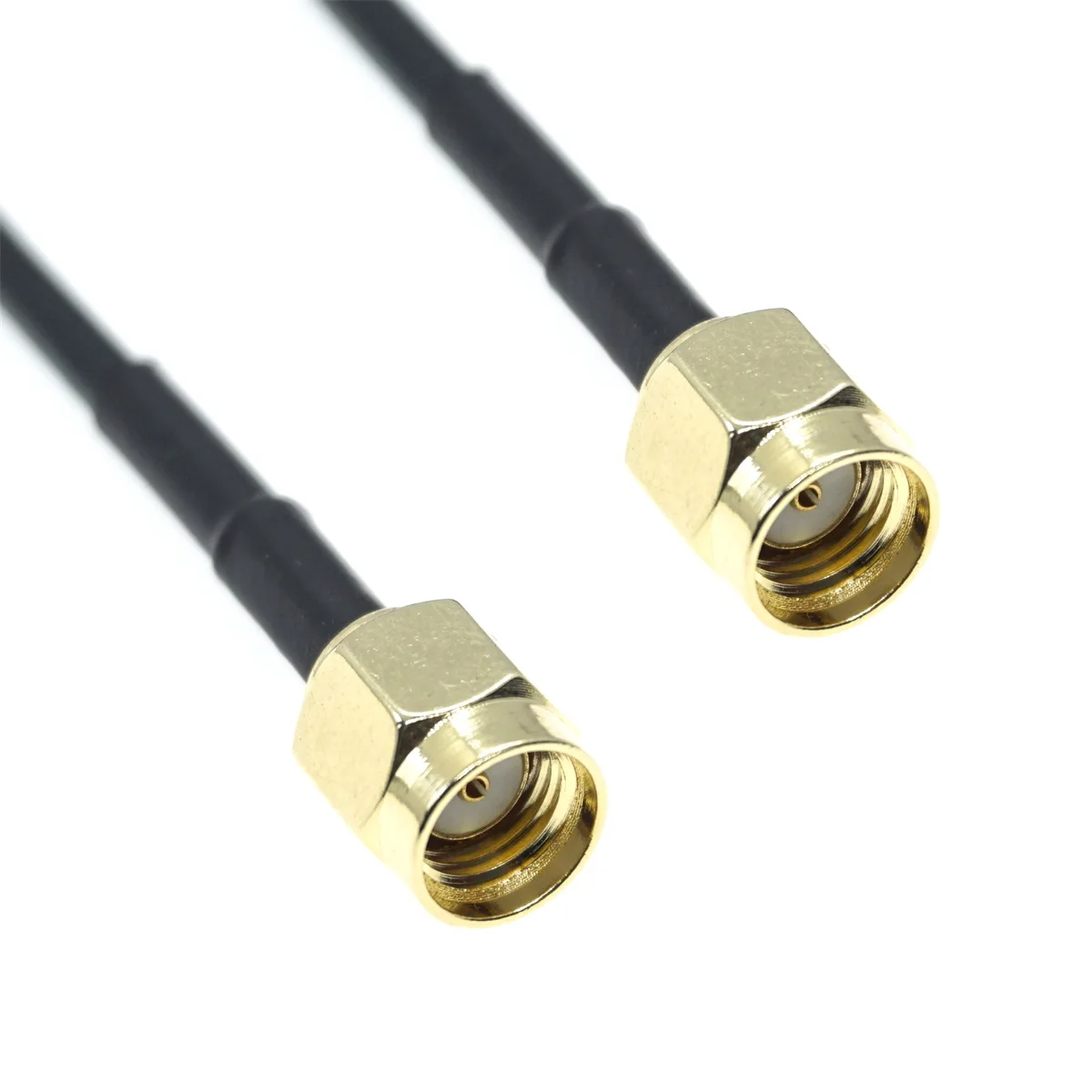
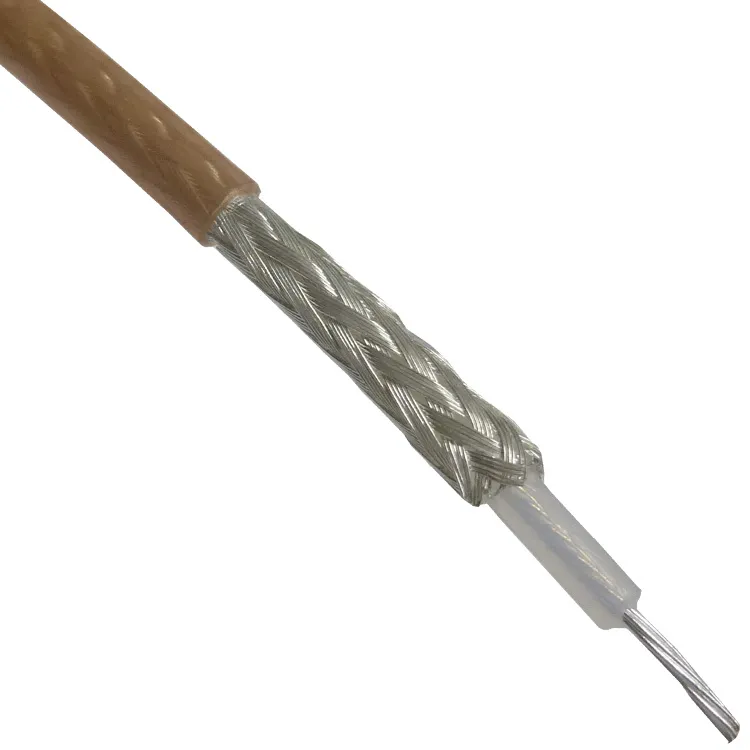
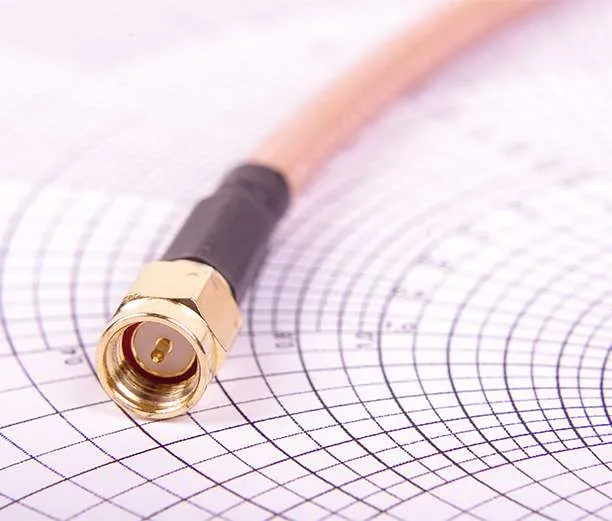
This image shows a typical RG316 coaxial cable, likely with a portion of the outer jacket removed to reveal the inner conductor, PTFE dielectric, and braided shield. It represents the cable that engineers often treat as a passive component but which becomes critical once integrated into the RF path. Its small diameter (~2.5 mm) and temperature stability make it ideal for short internal jumpers in compact enclosures, connecting modules to panel connectors or test ports.
Where does RG316 cable actually fit in an RF product build?
In many RF projects the cable is not the first component engineers worry about.
The radio module gets selected early. Antenna options are debated. Link budgets are calculated. Firmware timing sometimes becomes the suspected cause of every measurement drift. The short coax between those elements rarely receives the same attention.
At the prototype stage that assumption often looks reasonable. A module sits on the bench. A short coax jumper connects it to an antenna or a spectrum analyzer. Measurements appear stable and the system behaves as expected.
Only later—when the device moves into a real enclosure or a field installation—does the cable start to matter.
Tighter routing paths, temperature changes, repeated service cycles, and connector stress all begin to affect the signal chain. At that moment the small jumper inside the device is no longer just a piece of wire. It becomes part of the RF system design.
In compact hardware, that jumper is very often RG316 cable.
Not because it is the lowest-loss option. Not because it is the newest cable design. It appears repeatedly for a simpler reason: it balances size, flexibility, temperature tolerance, and predictable RF behavior.
Understanding that role helps engineers and buyers decide whether RG316 really belongs in a design—or whether it was chosen simply because “it’s what everyone uses.”
Map RG316 cable from RF modules to panels, adapters, and test ports
When engineers mention RG316 coaxial cable, they usually mean a short internal jumper rather than a transmission line running across a building or mast.
In practice the cable shows up in three recurring places inside RF equipment.
The first is the module-to-panel connection. Many RF modules expose miniature connectors such as MMCX or U.FL directly on the PCB. External antennas, meanwhile, typically connect through a panel-mounted SMA port. A short RG316 jumper bridges that distance while allowing the enclosure to be assembled and serviced.
Another common location is panel transition wiring inside rack equipment. Instruments often place their RF circuitry several centimeters away from the front panel. A flexible coax lead connects the board-level hardware to the external connector.
Then there are test patch leads. Engineers build short measurement cables from RG316 because the cable is easy to route around instruments and fixtures. These cables may only be twenty or thirty centimeters long, but they get plugged and unplugged hundreds of times during development.
Across all of these scenarios the cable is performing the same task: a short mechanical and electrical transition between two RF interfaces.
It is not meant to act as the primary feedline of the system.
Treat RG316 cable as a 50-ohm coaxial cable by default
This figure likely illustrates the characteristic impedance of RG316 coaxial cable, emphasizing its 50-ohm rating. It may show a comparison with other 50-ohm components such as SMA and BNC connectors, reinforcing that maintaining consistent impedance throughout the signal path is critical for low reflection and stable RF performance. The visual helps engineers understand that RG316 is not a special case but a standard 50-ohm transmission line element.
From an RF perspective, RG316 cable belongs to the standard 50-ohm coaxial cable family.
That single detail determines most of its compatibility.
Nearly all modern RF modules, test equipment ports, and common connectors operate in a 50-ohm environment. SMA, MMCX, BNC, and N-type connectors are designed around that impedance. When they are connected through a cable with the same characteristic impedance, the signal path remains continuous.
If the cable, connectors, and devices all maintain that 50-ohm structure, reflections remain low and the system behaves predictably.
The cable itself therefore rarely becomes the limiting factor—unless something breaks that impedance path.
Connector assembly mistakes can do it. Poor crimping can do it. Even tight bending near the connector body can slightly distort the geometry of the cable and increase reflections.
Those problems show up most often in small jumpers, which is exactly where RG316 is typically used.
For engineers, treating RG316 simply as another 50-ohm RF coaxial cable helps frame the design problem correctly. The cable is not a special case. It is one element in a continuous transmission line.
Separate bulk RG316 cable from finished RF assemblies
Procurement teams often talk about “buying RG316 cable” as if that were a single category. In reality there are two very different products hiding under that name.
One is bulk cable.
Bulk RG316 arrives on spools and is used by manufacturers to build custom assemblies. When evaluating bulk cable, engineers typically check material details: conductor plating, dielectric composition, braid coverage, and jacket material. These properties determine whether the cable truly behaves like RG316 or simply resembles it.
The other product category is assembled RF cable.
Once connectors are installed, the cable becomes a finished component. At that point the electrical performance depends just as much on assembly quality as on the cable itself. Connector alignment, solder joints, crimp quality, and strain relief all influence how the assembly performs.
Two cables built from identical RG316 stock can behave very differently if their connectors were installed by different processes.
That distinction matters during purchasing.
Bulk cable specifications tell you what the material is supposed to be. Assembly specifications tell you how well the finished cable will perform inside the system.
Mixing those two discussions often leads to purchasing confusion—and occasionally to cables that meet the label but fail in real equipment.
Why do buyers choose RG316 cable instead of other small coax options?
At first glance RG316 does not look particularly unique.
The market contains many small coaxial cables with similar diameters. RG174, RG178, and several miniature RF cables appear almost identical when viewed from a distance. In many catalogs they sit on the same page.
Yet engineers still reach for RG316 cable in certain situations.
The reason is rarely about achieving the lowest attenuation. Instead it usually comes down to how the cable behaves in compact equipment.
Use RG316 cable when heat resistance and compact routing matter together
Small RF devices tend to run hotter than their size suggests.
Power amplifiers, switching regulators, and digital processors can all raise the internal temperature of an enclosure. When RF jumpers run through that environment they experience more thermal stress than a cable mounted in open air.
RG316 survives those conditions fairly well because of its material structure.
The cable typically uses a PTFE dielectric surrounded by a silver-plated braid and an FEP outer jacket. This combination tolerates temperatures that would quickly degrade many PVC-based coaxial cables.
The outer diameter is also small—roughly two and a half millimeters—making the cable easy to route through crowded enclosures.
These two characteristics together explain why RG316 appears so frequently inside RF equipment. Engineers can route it through tight spaces without worrying that the cable will stiffen, melt, or crack during extended operation.
It is not the lowest-loss coax available. But it often becomes the most practical choice when space and temperature constraints appear at the same time.
Avoid RG316 cable when feeder loss becomes the real bottleneck
This figure likely presents a graph of attenuation per meter versus frequency for RG316 coaxial cable, showing a steep increase at higher frequencies (e.g., above 1 GHz). It reinforces the message that while RG316 works well for short internal connections, it should not be used as a long feeder cable where lower loss is required. The visual serves as a practical reminder to transition to larger 50-ohm coax for longer runs.
There is a limit to where RG316 works well.
As cable length increases, attenuation becomes harder to ignore. At higher frequencies the loss rises quickly enough that long runs can significantly reduce signal strength.
That is why RG316 almost never acts as the main feeder cable in RF infrastructure.
Imagine a wireless device mounted inside an equipment cabinet. The internal module might connect to a panel SMA port using a short RG316 jumper. From that panel connector the signal must then travel several meters to reach an external antenna.
If the entire path used RG316, the link margin could shrink noticeably.
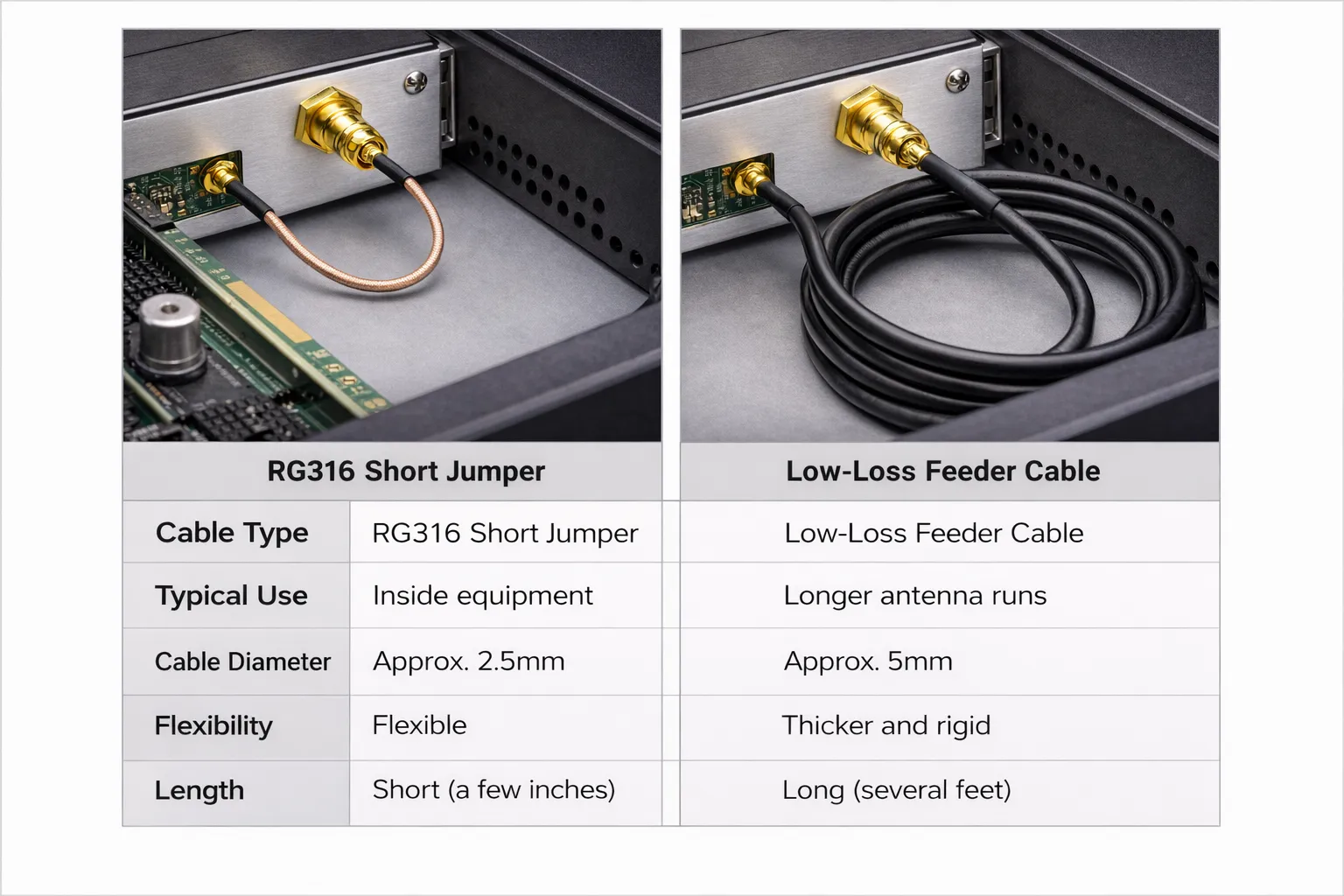
Most systems therefore split the cable roles.
A short RG316 jumper inside the device provides flexible routing. Outside the enclosure, a thicker low-loss coaxial cable carries the signal across the longer distance.
This arrangement appears so often in RF hardware that many engineers treat it as the default architecture.
Decide when “short RG316 + lower-loss feeder” becomes the safer architecture
When RF systems grow beyond a single enclosure, cable strategy usually becomes layered.
Short flexible jumpers handle the internal connections between modules, adapters, and panel connectors. Once the signal leaves the equipment boundary, a larger feeder cable takes over.
This approach solves several problems at once.
Internal assemblies remain compact and easy to route. External cables maintain better signal integrity across distance. Maintenance becomes simpler because field technicians can replace feeder lines without disturbing internal wiring.
From a purchasing perspective the separation also makes specifications clearer.
Instead of searching for a single cable that solves every routing and loss problem, engineers can optimize each section of the RF path independently.
In many systems that practical compromise is exactly where RG316 cable fits best.
How do you verify that an RG316 cable spec is real before ordering?
One of the quiet risks in RF purchasing is that “RG316” is often treated like a guaranteed specification.
In reality it’s closer to a category.
Two suppliers can both label a product RG316 cable and still deliver cables built with slightly different conductors, braid coverage, or jackets. The cable may function normally in simple continuity tests, yet behave differently once it is part of a real RF path.
Most of the time the differences are small. Occasionally they become the reason a system loses a few dB of margin and nobody immediately knows why.
That’s why experienced buyers rarely rely on the name alone.
Instead they verify a few construction details before committing to large orders.
Check conductor, dielectric, braid, and jacket materials
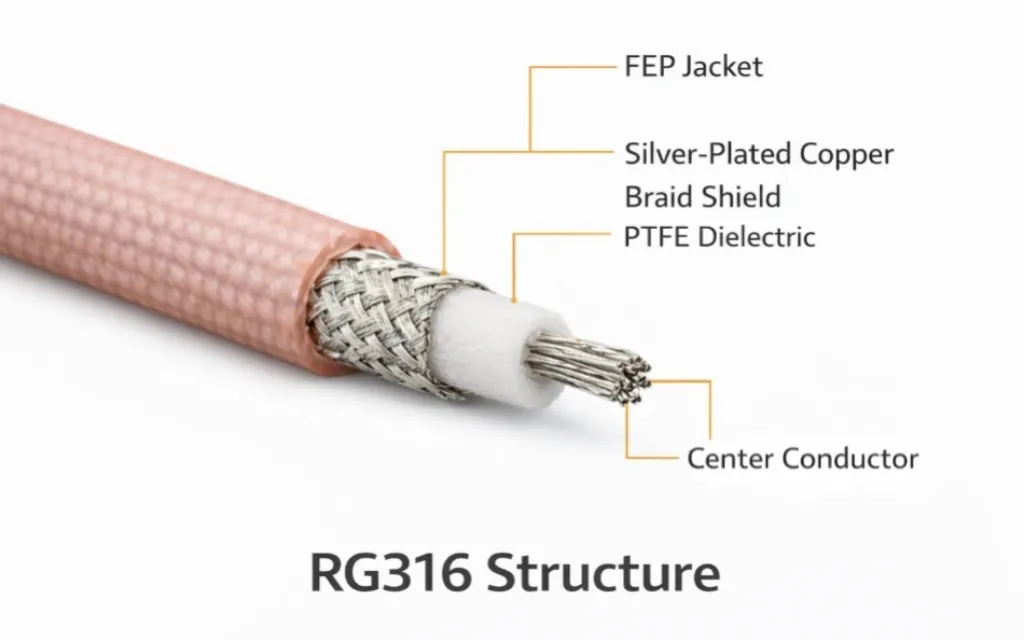
This image provides a detailed view of an RG316 coaxial cable, likely with a section of the jacket removed to reveal the inner conductor, PTFE dielectric, and braided shield. With an outer diameter of approximately 2.5 mm, RG316 is flexible and heat-resistant, making it ideal for routing inside compact enclosures. It is frequently used as short jumpers between RF modules and panel connectors, or as the core of adapter cables such as SMA to BNC assemblies where flexibility and moderate frequency performance are required.
The internal structure of RG316 cable is not complicated, but it is fairly specific.
Typical constructions include a silver-plated copper center conductor, a PTFE dielectric, a braided shield, and an FEP outer jacket. Those materials are the reason the cable tolerates relatively high temperatures compared with many PVC-based coax options.
If any of those layers change, the cable may still look identical from the outside. The electrical behavior, however, can shift slightly.
Shield coverage is a good example. A lower braid density may reduce shielding effectiveness. In low-power systems this rarely causes immediate failure, but in dense RF environments it can allow unwanted coupling between nearby cables.
Buyers who request a simple construction sheet from the supplier can usually detect these differences quickly.
It is a small step, yet it prevents many of the “same cable, different behavior” situations that appear later during system testing.
Confirm impedance, outer diameter, and temperature range
Material descriptions alone do not fully define the cable.
A practical verification step is checking the measurable specifications.
Impedance comes first. A proper RG316 coaxial cable should maintain the same 50-ohm impedance used by most RF connectors and modules. If that number drifts too far, reflections increase and return loss begins to degrade.
Outer diameter provides another useful clue. RG316 is normally around 2.5 mm. A noticeably thicker or thinner cable may indicate a different internal geometry.
Temperature ratings matter as well. Because RG316 uses PTFE and FEP materials, the cable is normally rated for relatively high operating temperatures. If a supplier lists unusually low limits, the cable construction may not match the expected design.
None of these checks require specialized RF equipment. They simply confirm that the cable resembles the structure engineers expect when they specify RG316.
Require traceability when the project cannot tolerate variation
Some industries cannot afford uncertainty in cable construction.
Aerospace and defense programs often demand traceability all the way down to the batch level. Even commercial industrial systems sometimes follow similar practices when equipment must operate for many years without service.
In those environments buyers typically add several requirements to the purchase order:
- cable construction documentation
- batch identification or lot numbers
- material declarations
- assembly verification reports for finished cables
These steps may look excessive for small jumper cables. Yet they exist for a reason.
Small variations inside RF interconnects can accumulate across large installations. Traceability simply ensures that future replacement cables behave the same as the original ones.
How do you estimate RG316 cable loss before it becomes a field problem?
Early prototypes rarely worry about cable loss.
A radio module sits on the bench. The jumper between the board and the antenna might be ten centimeters long. The signal appears healthy, so everyone assumes the cable is harmless.
That assumption usually survives until the system grows.
More adapters appear. The cable gets slightly longer. Test fixtures introduce additional connectors. Suddenly the signal path contains several small losses that were never added together.
Individually they seem insignificant. Combined, they sometimes reduce link margin enough to matter.
Estimating cable loss early prevents that slow accumulation from becoming a surprise later.
Use attenuation data rather than guessing from cable length
Every coax cable has an attenuation curve.
Even miniature cables like RG316 follow the same physics as larger transmission lines: loss increases with frequency and length. A short jumper may only introduce a fraction of a decibel, but that number changes as frequency climbs.
Engineers normally take the attenuation value from the datasheet and multiply it by the planned cable length. The result is rarely dramatic, yet it establishes a realistic expectation for the signal path.
Ignoring the calculation often leads to vague assumptions such as “the cable is short so it probably doesn’t matter.”
Most of the time that guess is correct. Occasionally it hides a small but important margin reduction.
Remember that connectors and adapters add loss too
This figure likely shows a simple RF path with a cable, two connectors, and an adapter, with annotations indicating that each interface adds a small amount of loss (e.g., 0.1-0.3 dB). It emphasizes that when estimating total signal loss, engineers must account for both cable attenuation and connector/adapter contributions. This is especially important in short jumper assemblies where connector loss can be comparable to cable loss.
Cables rarely connect two devices directly.
In real systems there are always transitions: connectors, adapters, sometimes even bulkhead fittings. Each one introduces a small amount of insertion loss.
That means the cable itself is only part of the RF path.
Consider a typical development setup. An RF module might connect to an instrument through a short cable assembly. That assembly may look like a simple jumper, yet it could contain two connectors and an adapter before the signal reaches the instrument.
A good example is the small SMA adapter cable used in many test benches. The cable itself may be RG316, but the RF path includes the connectors and adapter geometry as well.
The same situation appears when miniature connectors transition to larger interfaces. Assemblies such as an MMCX to SMA cable are common in RF modules, and measurement setups frequently add a SMA to BNC cable to reach legacy instruments.
Each transition is small. None of them dominate the signal path individually. But they belong in the same RF budget as the cable itself.
Treat jumpers, patch cables, and test leads as different categories
Not every RG316 cable serves the same purpose.
Inside a product enclosure the cable may only be a short jumper connecting a module to a panel connector. Flexibility matters more than attenuation in that case.
Laboratory patch cables are different. They may run half a meter or more between instruments. The cable needs to remain flexible but also maintain stable RF performance through repeated use.
Test leads form another category entirely. Engineers carry them between labs, connect them to different fixtures, and sometimes extend them beyond the lengths originally intended.
Grouping these use cases together often leads to confusion.
A jumper inside a device can tolerate different constraints than a patch cable used every day on a measurement bench. Recognizing those categories helps teams choose the right assembly instead of assuming every RG316 cable behaves identically.
How do you decide whether RG316 cable is enough for your frequency and environment?
Selecting RG316 rarely involves chasing the best specification.
Instead engineers ask a simpler question: is this cable appropriate for the job it will perform?
Sometimes the answer is obvious. In compact RF hardware, a short flexible jumper is exactly what RG316 was designed to be.
Other situations require more caution.
Match RG316 cable to compact RF modules and short internal links
Many modern wireless devices rely on small RF modules mounted directly on circuit boards.
These modules often expose miniature connectors that are not ideal for repeated external connections. Designers therefore route a short coax jumper to a stronger connector mounted on the enclosure.
This is where RG316 excels.
The cable bends easily through tight spaces, tolerates moderate heat inside equipment, and maintains stable electrical characteristics across common wireless frequency bands.
It is particularly common in applications such as:
- GNSS receivers
- Wi-Fi modules
- embedded cellular devices
- compact IoT hardware
In these designs the cable acts as a mechanical bridge rather than a transmission line.
Reconsider RG316 when the cable begins acting like a feeder
Problems start when the cable takes on a different role.
If the cable must carry RF energy across several meters—perhaps from an indoor device to an outdoor antenna—the attenuation of RG316 becomes harder to ignore.
The cable was never intended to behave like a long feeder.
Most RF systems solve this by separating the cable roles. A short RG316 jumper connects the internal hardware to a panel connector. From there, a thicker coaxial feeder handles the longer run.
That simple boundary—internal jumper versus external feeder—prevents many link budget surprises.
Let the environment decide, not habit
Engineers often choose RG316 simply because they have used it before.
Familiarity helps, but it should not replace evaluation.
A few practical questions usually reveal whether the cable still makes sense:
Is the enclosure temperature unusually high?
Will the cable experience frequent bending or vibration?
Does the frequency band push attenuation limits?
Is the cable only bridging a short mechanical gap?
If the answers remain within RG316’s comfortable range, the cable is often a safe and convenient choice.
If not, it may be time to look at a different coaxial option instead of forcing the design to fit a familiar cable.
How should you route RG316 cable so it survives assembly and service?
Most RF failures blamed on “cable problems” are not electrical problems.
They’re mechanical ones.
The cable itself may meet every specification in the datasheet. Impedance is correct. Loss is within expectations. Connectors look properly installed. Yet several months after deployment the RF link begins behaving strangely. Signal strength fluctuates. Sometimes a measurement improves when someone simply moves the cable.
That pattern usually points to routing stress rather than RF design.
Small coax like RG316 tolerates bending well, but the cable assembly still has weak points. The most sensitive area is where the flexible cable meets the rigid connector body. Once that region experiences repeated mechanical load, internal geometry can slowly change.
The result is rarely a complete failure. More often it appears as unstable RF performance.
Understanding how to route the cable prevents most of these issues before the device ever leaves the production line.
Protect the first bend near the connector
Look closely at almost any failed coax assembly and the damage appears in the same place.
Right after the connector.
When a cable exits a connector body, the internal structure transitions from a rigid termination to a flexible cable. If the cable immediately bends at that point, the stress concentrates on the internal solder joint and dielectric interface.
Repeated bending gradually weakens that area.
It doesn’t always break the cable. Instead the center conductor may shift slightly or the dielectric compresses unevenly. In RF systems that small change can alter impedance locally.
A simple routing habit solves much of the problem: allow a short straight section before the cable bends.
It does not need to be long. Even a small straight segment reduces mechanical stress dramatically.
Keep RG316 away from sharp edges and hot components
Inside most devices, cable routing is rarely elegant.
Cables snake around shielding cans, power regulators, mounting brackets, and heatsinks. In dense hardware there may be very little space to guide the coax smoothly.
That environment introduces two slow failure mechanisms.
One is abrasion. If the cable jacket rubs repeatedly against a metal edge during vibration or servicing, the outer layer can eventually wear through. The braid beneath remains conductive, which may introduce noise pickup or unexpected grounding points.
The other risk is heat exposure.
RG316 handles higher temperatures than many small coax cables, but prolonged contact with hot components can still age the jacket material. Over time the cable becomes stiffer, and stiffness increases stress on the connector terminations.
Neither issue usually appears during early testing.
They show up later—often long after the system has been installed.
Let the enclosure carry the load, not the RF port
One of the more subtle assembly mistakes happens during final installation.
Technicians connect a cable between two RF ports and tighten the connectors. If the cable is slightly too short or routed tightly, the tension transfers directly into the connector on the device.
Small RF connectors mounted on circuit boards are not meant to carry structural force. They exist to maintain an electrical interface, not to hold the weight of a cable harness.
Good RF hardware design shifts that load elsewhere.
Panel connectors, cable clips, or harness guides allow the enclosure to absorb mechanical stress while the RF connector only maintains electrical contact.
Engineers who want a deeper look at the limits of miniature jumpers often refer to the routing discussion in RG316 engineering limits and routing rules, which explores these installation problems in more detail.
How does RG316 cable become real assemblies and jumpers?
Most engineers never purchase RG316 cable by the spool.
They order assemblies.
Once connectors are attached and lengths are defined, the cable stops being a raw material and becomes a finished RF component. At that point the performance of the assembly depends just as much on connector installation as on the cable itself.
Different RF environments produce different styles of RG316 assemblies. A few patterns appear again and again.
SMA adapter cables are the most common RG316 format
In compact RF hardware the SMA connector appears almost everywhere.
Laboratory instruments use it. Antennas use it. Development boards use it. Because the connector is so common, many small cable assemblies simply connect one SMA interface to another.
These are often referred to as SMA adapter cables.
They appear in development labs, production fixtures, and embedded RF products. The cable itself is usually short—sometimes less than thirty centimeters—but the assembly becomes part of the RF path.
The details of these assemblies are explored in the guide on SMA adapter cable selection and routing, where connector orientation and routing practices start to matter as much as cable choice.
MMCX to SMA cables show how RG316 bridges miniature RF ports
Modern RF modules frequently use extremely small connectors.
MMCX is a good example. The connector occupies very little PCB space and allows compact module layouts, but it is not ideal for repeated external connections.
Designers therefore extend the module port outward.
A short cable connects the MMCX interface on the board to a more robust connector on the enclosure. SMA is the usual choice. That assembly becomes an MMCX to SMA cable.
RG316 works well here because it bends easily and fits through tight internal spaces without excessive stress.
The practical considerations behind this transition are described in the article on MMCX to SMA cable selection and use.
BNC transitions appear frequently in test environments
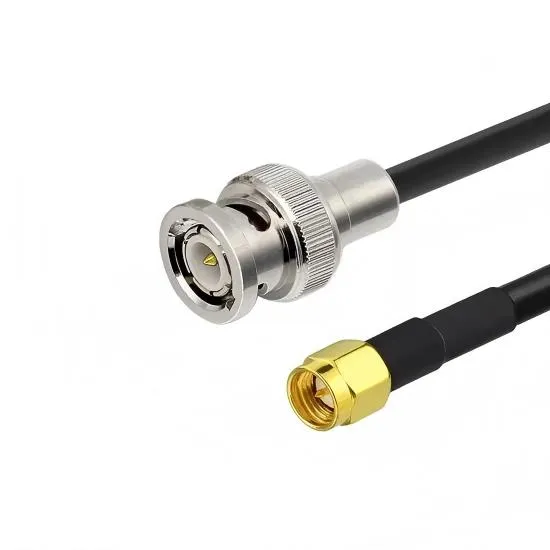
This image shows a short SMA to BNC cable assembly, typically built with RG316 coaxial cable. One end has an SMA plug (for connection to modern RF modules), and the other has a BNC plug (for connection to older oscilloscopes, signal generators, or spectrum analyzers). Such cables are common in RF labs where equipment from different eras must coexist. The flexible RG316 section provides strain relief and routing convenience, while the connectors ensure mechanical and electrical compatibility.
RF development labs often combine equipment from different eras.
Modern RF modules and antennas usually expose SMA connectors. Older measurement instruments, however, may still rely on BNC interfaces.
Connecting the two requires a short cable assembly rather than a rigid adapter.
A SMA to BNC cable solves that problem while preserving the 50-ohm transmission path. In other situations engineers use the opposite configuration, a BNC to SMA cable, to connect legacy equipment to modern RF devices.
These assemblies rarely attract attention, yet they become permanent fixtures in many RF laboratories.
Can a selection matrix prevent bad RG316 cable choices?
Cable selection discussions often bounce between engineering and procurement.
Engineers think in terms of link margin, impedance, and routing space. Buyers think about cost, supplier stability, and lead time. Without a common reference point the conversation can become vague.
A simple decision matrix solves that problem.
Instead of describing cables informally—“short jumper,” “standard RG316,” “normal connector”—the matrix converts the choice into measurable parameters.
Typical fields include:
Use case
Frequency band
Cable length
Cable attenuation
Connector count
Estimated connector loss
Total signal loss
Minimum bend radius
Planned routing radius
From these values engineers can estimate the RF impact of the cable assembly.
Cable loss = length × attenuation
Connector loss = connector count × estimated connector loss
Total loss = cable loss + connector loss
Margin = allowed system loss − total loss
The calculation itself is simple.
The value comes from forcing both engineering and purchasing teams to look at the same parameters before ordering cable assemblies.
Example: module-to-panel jumper
Imagine a wireless module mounted inside a small device enclosure.
The module connects to a panel-mounted SMA connector through a short RG316 jumper roughly fifteen centimeters long. The operating frequency sits in the multi-gigahertz range.
Running that scenario through a simple matrix usually reveals something interesting.
The cable attenuation remains relatively small because the length is short. Connector transitions often contribute a similar amount of loss as the cable itself.
That observation explains why connector quality and assembly consistency matter so much in miniature RF cables.
Turning the matrix into an inspection checklist
Once the matrix exists, it can serve another purpose.
Incoming inspection.
Instead of simply verifying that a cable “looks correct,” procurement teams can check measurable parameters against the design assumptions:
outer diameter
cable length
connector type
connector orientation
visible workmanship
When required, RF measurements such as insertion loss or return loss can also be compared with the expected values from the design matrix.
Using the same parameters during design and inspection helps prevent incorrect assemblies from quietly entering production.
What trends should RG316 cable buyers watch?
RF interconnect technology evolves slowly, but the industry around it does not.
Wireless infrastructure continues expanding. Satellite communication, IoT devices, and high-frequency wireless systems all rely on reliable RF connections between modules, antennas, and test equipment.
Market research groups such as Grand View Research estimate that the global RF interconnect market will continue growing steadily through the end of the decade.
That growth affects not only large feeder cables but also the small assemblies built from cables like RG316.
Another development worth watching involves material regulations.
Many RG316 constructions rely on PTFE and FEP materials. Environmental regulations in several regions are beginning to examine PFAS-related materials more closely. Some connector manufacturers have already introduced PFAS-free alternatives, and similar discussions may eventually influence cable production.
For buyers this does not mean RG316 is disappearing.
It simply means documentation and compliance requirements may become more detailed in future procurement cycles.
Common questions when buying RG316 cable
How can I confirm an RG316 cable specification before purchasing?
How long can RG316 run before attenuation becomes noticeable?
When should a design move to thicker 50-ohm cable?
What assembly problems cause intermittent RF behavior?
Bonfon Office Building, Longgang District, Shenzhen City, Guangdong Province, China

A China-based OEM/ODM RF communications supplier
Table of Contents
Owning your OEM/ODM/Private Label for Electronic Devices andComponents is now easier than ever.