
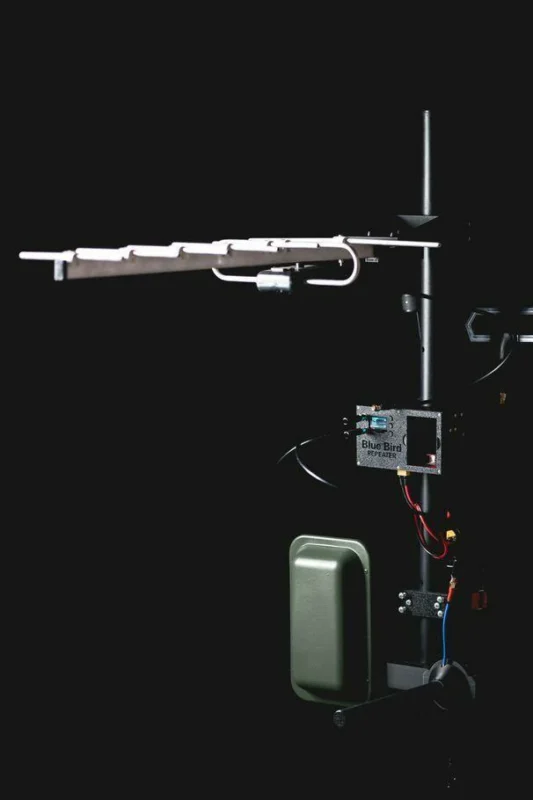
A pilot sets up at the edge of a long dirt road cutting through open terrain. Goggles powered, receiver stable, everything looks clean. The quad pushes forward—video is solid, even at distance. Then a quick bank to the left, drifting behind a small structure, and the feed breaks harder than expected.
Nothing changed on the aircraft. Power output stayed the same. Antenna orientation didn’t shift much.
The ground station did.
A compact patch antenna sat fixed on a tripod, aimed down the road. It worked exactly as designed—until the flight path didn’t.
That’s where most patch antenna decisions quietly go wrong. Not in the specs. In the geometry.
Start with the flight corridor, not the patch label
The antenna itself isn’t the starting point. The airspace is.
A patch antenna only works as intended when the flight behavior stays predictable. If the aircraft remains inside a forward sector, the antenna reinforces that pattern. If not, it exposes every deviation.
Map whether the mission stays inside a predictable forward sector
Long-range flights tend to follow structure—roads, coastlines, valleys. The aircraft moves forward, not randomly.
In those cases, a patch antenna becomes an extension of that predictability. It doesn’t create range. It concentrates it.
Once the flight spreads outside that sector—even briefly—the signal starts to feel uneven rather than weak.
Separate freestyle roaming from forward-biased or long-range routes
Freestyle breaks directional logic.
The quad moves behind you, above you, across angles that change every few seconds. A patch antenna doesn’t fail here—it just stops being useful most of the time.
This is where many setups feel “worse” after upgrading to a patch. The antenna is working correctly. The flight style isn’t aligned with it.
Check whether your real bottleneck is receive geometry, not transmitter power
Power is often blamed first.
But many FPV video issues are tied to how the receiver “sees” the aircraft. A misaligned receive pattern can create dropouts even at short range.
A patch antenna makes this visible faster than an omni. It doesn’t hide geometry problems—it amplifies them.
If you’ve worked through RF system loss before, the same logic shows up in antenna behavior. The way signal moves through a system—explained in this coaxial cable guide—applies just as much to airspace as it does to cables.
Why does a patch antenna help some FPV ground stations and disappoint others?
The same antenna can feel like an upgrade in one setup and a downgrade in another.
That’s not inconsistency. It’s context.
Compare patch coverage with omnidirectional coverage in real FPV receiving
A patch antenna focuses energy forward. An omnidirectional antenna spreads it around.
The difference isn’t just range—it’s behavior.
| Antenna Type | Coverage Behavior | Strength | Limitation | Typical Use |
| Patch antenna | Forward directional beam | Higher gain in one direction | Narrower coverage | Long-range, corridor flights |
| Omnidirectional antenna | 360° coverage | Consistent signal around pilot | Lower peak gain | Freestyle, racing |
The patch sharpens one direction. The omni smooths everything else.
Explain why a stronger forward beam does not guarantee easier flying
More signal in front doesn’t help when the aircraft moves out of that zone.
A patch antenna makes straight runs look great. It makes turns feel fragile.
That trade-off shows up quickly in real flights.
Separate “more range in one direction” from “more forgiving reception”
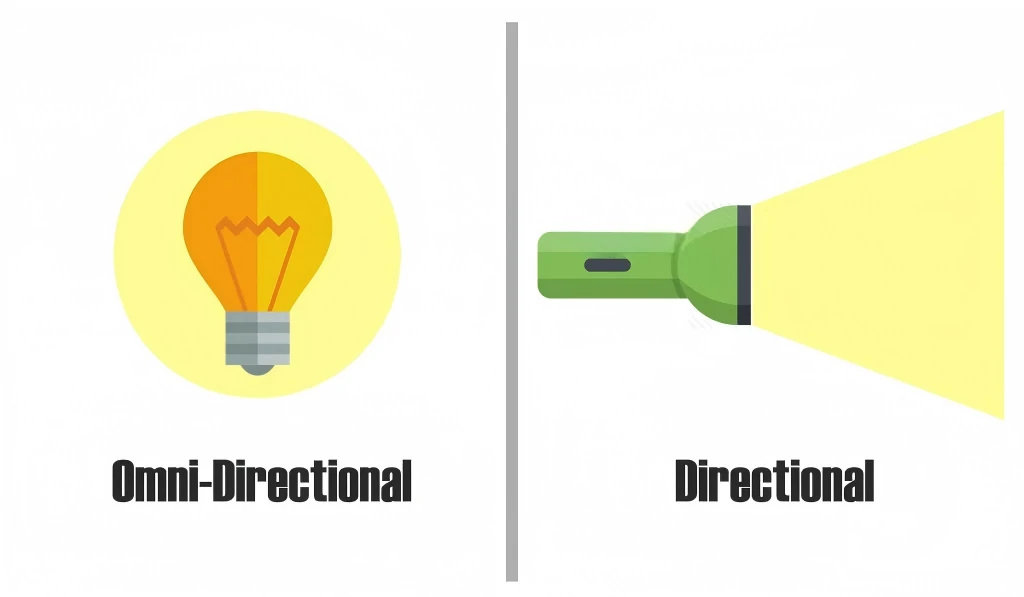
This diagram explains how a directional antenna concentrates reception in one forward sector, while an omnidirectional antenna offers wider coverage for roaming FPV flights.
These are not the same goal.
A patch antenna extends reach in a narrow sector. An omni keeps the link stable across movement.
If your flying constantly crosses angles, forgiveness matters more than peak distance.
Match the ground-station strategy before you choose the patch
The antenna is only one part of the receive system.
The way you deploy it matters more than the model you pick.
Decide when goggles alone are enough and when a ground station changes the outcome
Short-range flying doesn’t always need a full ground station.
But once distance increases, or obstacles start to matter, moving the receiver off your head and onto a tripod changes things.
Height improves line-of-sight. Stability improves alignment.
That shift often matters more than upgrading antennas alone.
Check when one patch is enough and when diversity is the safer plan
A single patch works when the flight path is tightly controlled.
Most real-world setups benefit from diversity—typically patch + omni.
The patch handles forward distance. The omni fills the gaps.
Use patch-plus-omni logic when one beam cannot cover the full mission
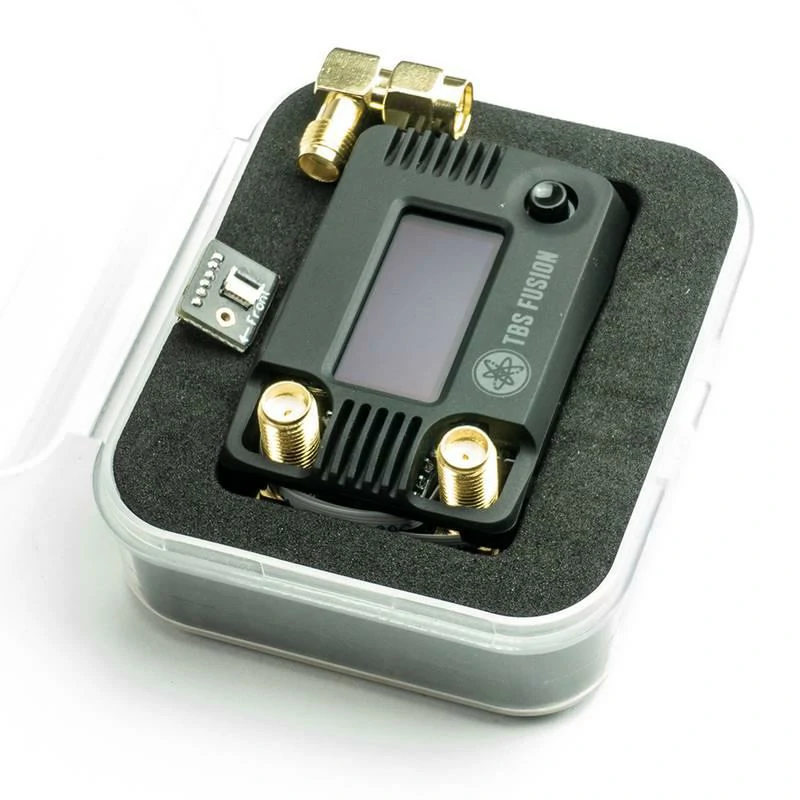
This image shows an FPV receiver module with antenna ports, matching the article’s discussion of receiver strategy before choosing a directional antenna.
This isn’t redundancy. It’s role separation.
The patch does focused work. The omni handles unpredictability.
Trying to replace both with a single antenna usually creates compromises.
If you’ve already explored how receive-side setups evolve, this fits directly into a broader ground station antenna workflow, where antenna roles are defined before hardware selection.
Read beam width before you chase dBi on a patch spec sheet
Most buying decisions focus on gain.
In practice, beam width tends to shape the experience more.
Check whether a wide beam patch fits your flying style better than a narrower one
Wide-beam patches cover more area but with less intensity.
Narrow-beam patches reach further—but require precise aiming.
Neither is “better.” They solve different constraints.
| Patch Type | Beam Width | Gain Behavior | Best Fit | Trade-off |
| Wide-beam patch | Broad | Moderate gain | Mixed or semi-predictable flying | Less maximum range |
| Narrow-beam patch | Tight | Higher peak gain | Long-range, straight routes | Requires precise aiming |
Decide when beam tolerance matters more than peak gain
Small aiming errors matter more than most pilots expect.
A slightly wider beam can absorb those errors and keep video stable.
That stability often outweighs higher peak gain on paper.
Avoid treating every high-dBi patch as an automatic upgrade
Higher gain usually means tighter beam.
Tighter beam means less tolerance.
That trade-off rarely shows up clearly in listings—but it shows immediately in flight behavior.
For reference, a patch antenna is simply a form of directional antenna. It follows the same physics as larger directional designs—just in a more compact format.
Use 5.8GHz link behavior to judge whether the patch advantage will survive the chain
A patch antenna can deliver a clean forward gain on paper. But by the time the signal reaches your receiver, that gain may already be partially gone.
Not because the antenna failed. Because the chain around it quietly ate into the advantage.
At 5.8GHz, small losses add up fast.
Check whether feedline loss is already offsetting the patch gain
A short direct-mount setup behaves very differently from a patch sitting on a tripod with a long extension cable.
Every centimeter of coax introduces attenuation. Every connector adds a small mismatch. Individually, these look negligible. Together, they start to matter.
A typical ground station build often includes:
- SMA extension cable
- One or two adapter interfaces
- Receiver input connector
That stack can easily consume 1–2 dB without much visibility.
Now compare that with a patch antenna that adds 6–9 dBi forward gain. The improvement is still there—but smaller than expected.
If you want a deeper look at how RF loss accumulates across cables and connectors, this RF coaxial cable guide walks through how attenuation behaves across frequency and length.
Decide when moving the patch higher beats buying a “stronger” model
Height often solves problems that gain cannot.
Raising the antenna improves line-of-sight. It reduces ground reflections and partial obstructions. It also stabilizes the receive angle.
In many field setups, lifting the patch by 1–2 meters produces a more noticeable improvement than switching to a higher-gain model.
That’s not obvious from specs. It becomes obvious during flights.
Avoid blaming the patch when the real problem is cable, connector, or mounting
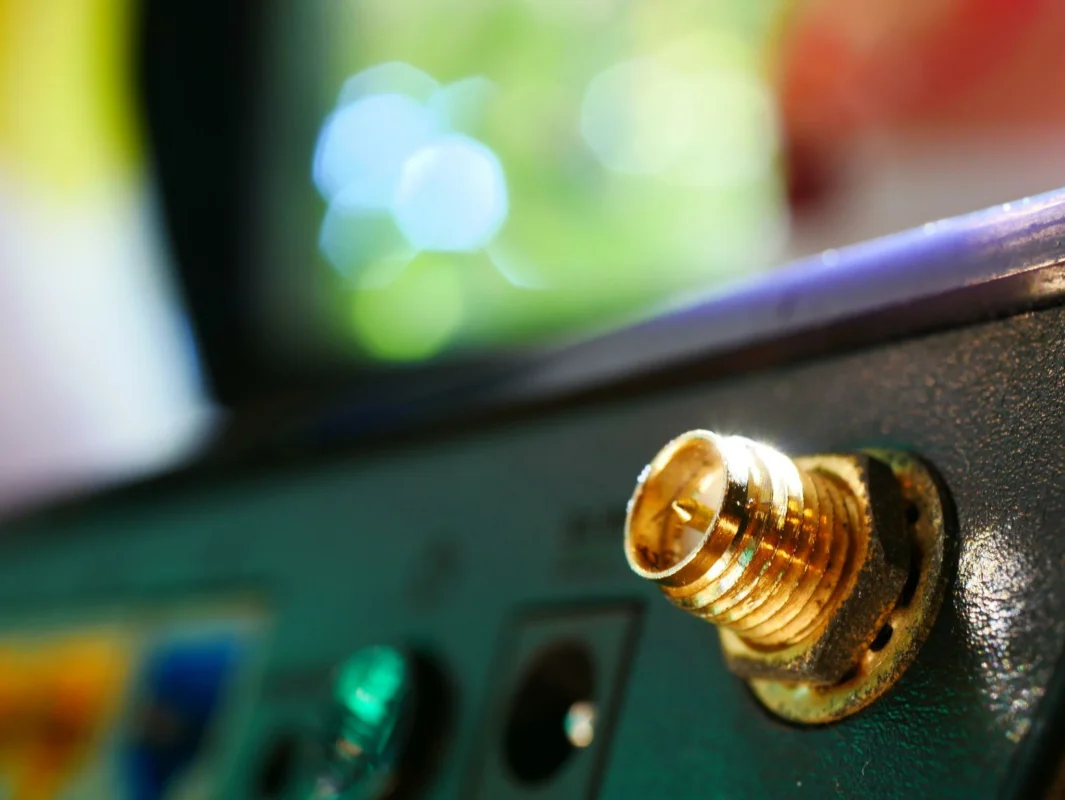
Patch antennas tend to get blamed because they are visible.
Cables and connectors fail quietly.
A slightly loose SMA interface, a bent coax near the connector, or a poorly routed extension cable can introduce instability that looks like “antenna weakness.”
In reality, the antenna is just exposing the rest of the chain.
Verify polarization before you trust the patch pattern
A well-aimed patch antenna with the wrong polarization still performs poorly.
Not slightly worse—often significantly worse.
Polarization mismatch doesn’t show up visually. It shows up in signal behavior.
Check whether the aircraft is RHCP or LHCP before choosing the patch side
FPV systems commonly use circular polarization—either RHCP or LHCP.
If the aircraft transmits RHCP and the ground station receives LHCP, part of the signal is effectively lost before directionality even matters.
That mismatch can reduce usable signal strength more than a few dB of gain ever recovers.
Decide when circular polarization matters more than another few dB on paper
A perfectly matched polarization pair—RHCP to RHCP, or LHCP to LHCP—often delivers more consistent performance than mixing types and compensating with higher gain.
This is one of the easiest mistakes to make during upgrades:
- replacing an antenna without checking polarization
- mixing old and new components without alignment
If you’ve already worked through circular polarization setups, the same rule applies here. A circular polarized antenna only delivers its expected behavior when both ends match.
Avoid receiver setups that mix a good beam with bad polarization planning
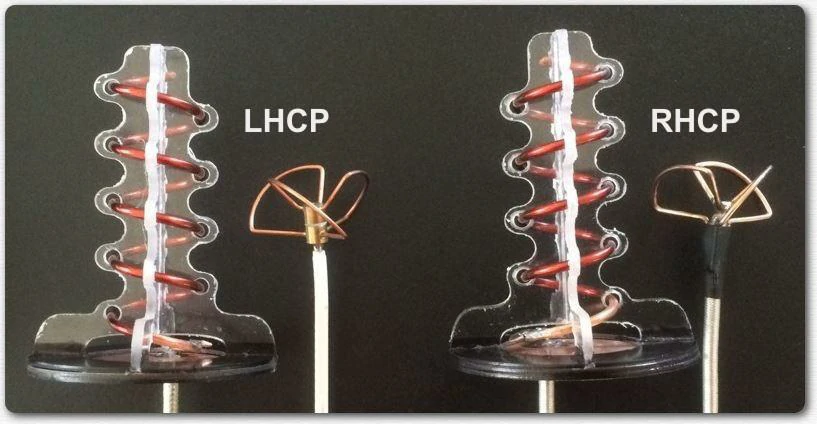
This image compares LHCP and RHCP antenna orientation, supporting the article’s point that polarization matching matters before directional gain.
A patch antenna improves directional reception.
But it cannot correct polarization errors.
A system with:
- correct beam alignment
- incorrect polarization
will still feel unstable.
Fixing polarization first usually stabilizes the system more than upgrading antennas.
Build a patch pass-fail sheet before you buy
At some point, the decision stops being theoretical.
You either deploy a patch antenna—or you don’t.
Instead of relying on isolated specs, it helps to evaluate the full system in one place.
Score the receive geometry before you score the product
The flight pattern, mounting strategy, and receiver setup define whether a patch makes sense.
The antenna itself comes later.
Apply a red-flag check before you finalize the field kit
Before committing to a patch-based setup, a few common failure points are worth checking:
- wide, unpredictable flight area
- long extension cables without loss awareness
- unknown or mismatched polarization
- low mounting height
- no diversity backup
If several of these show up, the patch may not behave as expected.
Patch FPV Ground-Station Fit Matrix
| Field | Example Input | Notes |
| Flight profile | Long-range | Corridor flights favor patch |
| Flying-area spread | Narrow | Wide spread reduces effectiveness |
| Receiver platform | Ground station | Enables better antenna placement |
| Receiver mode | Diversity | Safer than single antenna |
| Primary antenna role | Patch | Forward gain |
| Secondary antenna role | Omni | Coverage balance |
| Frequency band | 5.8GHz | Higher loss sensitivity |
| Polarization plan | RHCP | Must match aircraft |
| Aircraft-side polarization | RHCP | Critical for link stability |
| Connector family | SMA | Check compatibility |
| Feedline type | Short extension | Minimize loss |
| Feedline length | 30 cm | Longer increases attenuation |
| Beam aiming requirement | Medium | Depends on beam width |
| Mount height requirement | Medium | Higher improves line-of-sight |
| Recommendation | Use | Based on total fit |
Fit Score Formula:
Fit Score =
Flight-Sector Fit (25) +
Receiver Strategy Fit (20) +
Polarization Match (15) +
Feedline Loss Control (15) +
Beam-Tolerance Fit (15) +
Connector/Mount Fit (10)
Interpretation:
- 85–100 → Strong fit for patch deployment
- 70–84 → Usable, but requires careful setup
- <70 → Patch likely not the best default choice
This kind of evaluation avoids a common mistake—buying a patch based on gain alone, then discovering the rest of the system doesn’t support it.
If you’ve already seen how different receive strategies interact, the logic behind receiver antenna setups connects directly to this scoring approach.
Watch where FPV patch setups are moving next
There’s a noticeable shift in how pilots evaluate receive setups. The conversation has moved away from “which antenna is strongest” toward “which setup survives the actual flight.”
A patch antenna still plays a central role—but rarely as a standalone solution.
Track the move from “bigger patch” thinking to “better receive geometry” planning
Larger, higher-gain patch antennas still exist, and they still perform well in controlled environments. But they demand precision—alignment, mounting stability, and consistent flight direction.
What’s changing is how people prioritize those variables.
Instead of increasing gain first, more setups now start with:
- flight corridor planning
- antenna height and placement
- receiver positioning relative to obstacles
Only after that does antenna selection come into play.
That shift reduces the need for extreme gain. It also makes smaller patch antennas more practical.
Follow how compact patch options remain popular in portable ground stations
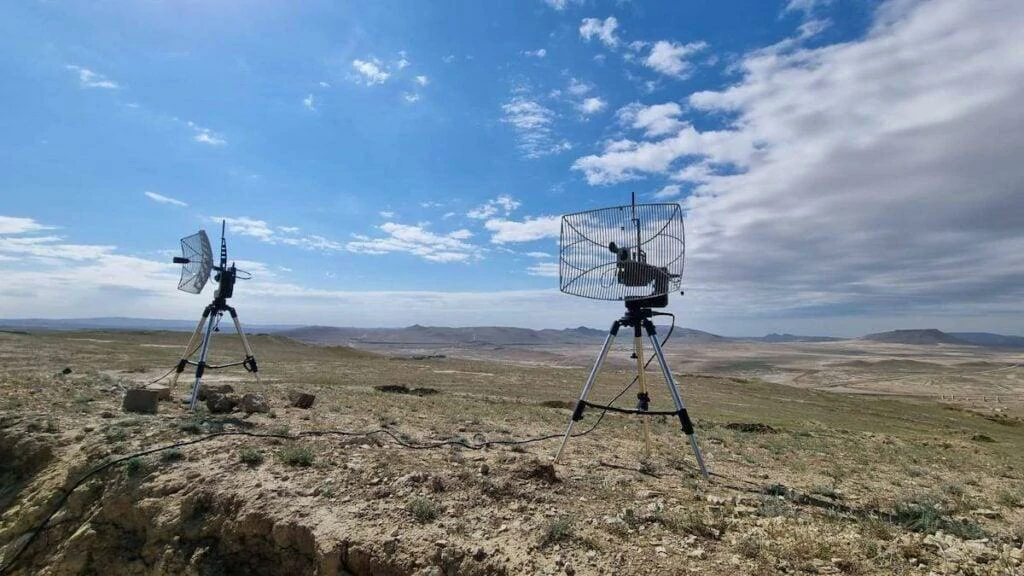
The image shows directional antennas mounted on tripods in an open field, illustrating why receiver height, placement, and stable aiming matter for FPV range.
Portability isn’t just convenience—it affects consistency.
A large directional antenna can deliver strong performance, but it’s harder to deploy quickly and align correctly in the field. A compact patch, mounted properly, often produces more repeatable results.
Especially in mobile setups:
- tripod-mounted receivers
- backpack ground stations
- quick-deploy FPV kits
Compact patch antennas remain the default directional choice.
FAQ
These aren’t theoretical questions. They usually come after something didn’t behave as expected.
Why can a patch antenna perform worse than an omni in close freestyle flying?
Because freestyle breaks directional assumptions.
The aircraft moves across angles quickly, often behind or above the pilot. A patch antenna can’t maintain alignment in that kind of movement.
An omnidirectional antenna doesn’t provide peak gain, but it maintains coverage everywhere. That consistency matters more in close, dynamic flying.
Should I move the patch higher before buying a higher-gain model?
In many cases, yes.
Increasing height improves line-of-sight and reduces obstruction effects. That change often produces a cleaner signal than switching to a higher-gain antenna.
A higher-gain patch still depends on alignment. Height improves the environment it operates in.
Can a long extension cable quietly erase the benefit of a better patch antenna?
It can reduce it more than expected.
At 5.8GHz, longer coaxial runs introduce noticeable attenuation. Add a few connectors, and the total loss starts to matter.
A stronger antenna doesn’t eliminate that loss—it just works against it.
This is the same behavior seen in RF systems where cable length affects performance, as discussed in this RF cable guide.
When is a compact patch the smarter ground-station choice than a larger directional antenna?
When deployment speed, alignment stability, and portability matter more than maximum reach.
A compact patch:
- mounts faster
- aligns more easily
- tolerates small positioning errors better
In many real-world setups, that produces more consistent results than a larger antenna that’s harder to aim correctly.
How do I know whether my patch problem is beam aiming, polarization, or feedline loss?
Break it down step by step:
- Check alignment — slowly rotate the patch and observe signal change
- Verify polarization — confirm RHCP/LHCP matches aircraft
- Inspect cable path — look for long runs, tight bends, loose connectors
If signal improves significantly with small aiming changes, it’s likely beam-related.
If signal feels consistently weak, polarization or cable loss becomes more likely.
Why do many pilots keep one omni antenna even after switching to a patch-based setup?
Because real flights aren’t perfectly directional.
Even in long-range flights, there are moments where the aircraft moves outside the forward beam:
- takeoff
- turns
- return path
An omni antenna fills those gaps. That’s why patch + omni remains more common than dual patch setups.
Can a patch antenna help if the aircraft antenna is still poorly matched?
Only to a limited extent.
If the aircraft-side antenna has poor polarization, low efficiency, or inconsistent orientation, the ground station can’t fully compensate.
A patch antenna improves reception—but it still depends on what’s being transmitted.
What gain patch antenna should I choose for 5.8GHz FPV?
It depends on how predictable your flight path is.
- 5–7 dBi → wider beam, easier to aim, better for mixed flying
- 8–10 dBi → balanced choice for most ground station setups
- 11 dBi+ → narrow beam, suited for long-range forward flights
Higher gain does not automatically mean better performance. Narrower beam width increases aiming sensitivity, which can make the system feel less stable during real flights.
Final notes from the field side of the decision
Patch antennas don’t fail randomly.
They fail in predictable ways:
- when the flight path doesn’t stay forward
- when alignment isn’t maintained
- when polarization is mismatched
- when cable loss eats into the gain
- when the ground station setup doesn’t support them
None of those show clearly on a product page.
They show up during actual flights.
If the setup matches the flight geometry, a patch antenna feels like a clean upgrade—longer reach, more stable forward signal.
If it doesn’t, the same antenna feels inconsistent.
That’s the difference.
Not in the hardware—but in how the system is built around it.