We share everything about Electronic Components OEM, ODM, or private label solutions...

We continuously share and publish original articles about electronic components and OEM/ODM/private label solutions. We hope these articles provide you with valuable insights to support your private label electronic components business.

If you don’t want to miss our article, please subscribe to our newsletter. 

Photo of an inline SMA-F to BNC-M adapter.

SMA Female to BNC Male: Direction & 50-Ω Matching

Preface Every RF engineer has faced it — that tiny SMA-female to BNC-male adapter sitting between a module and an oscilloscope. It looks harmless, yet it can make or break the entire 50-ohm chain. At TEJTE’s own RF Connector Lab we’ve seen projects fail verification simply because a connector was flipped, stacked, or mixed with a 75-Ω lead.

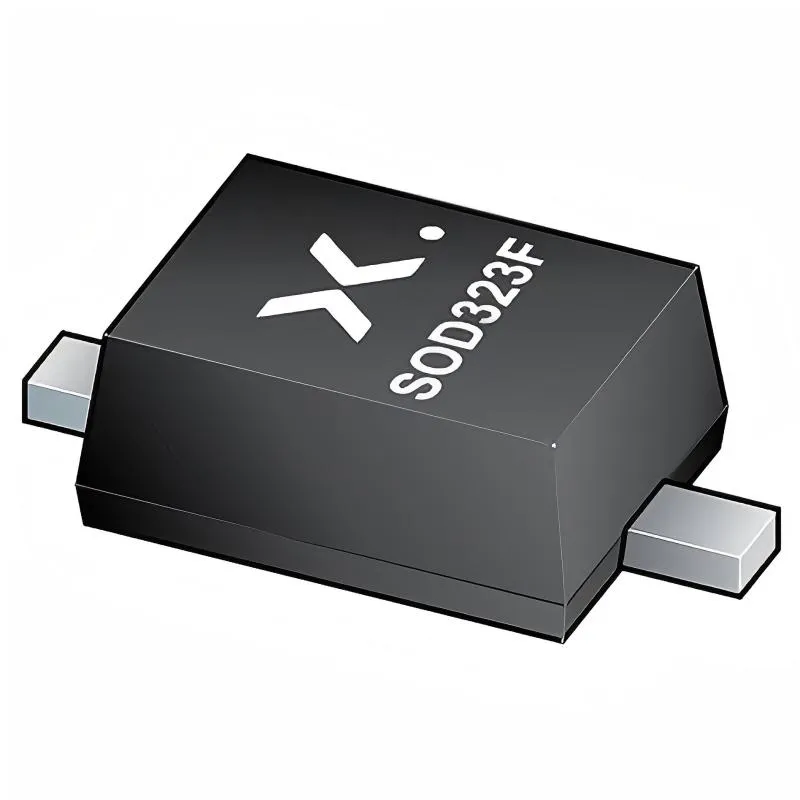
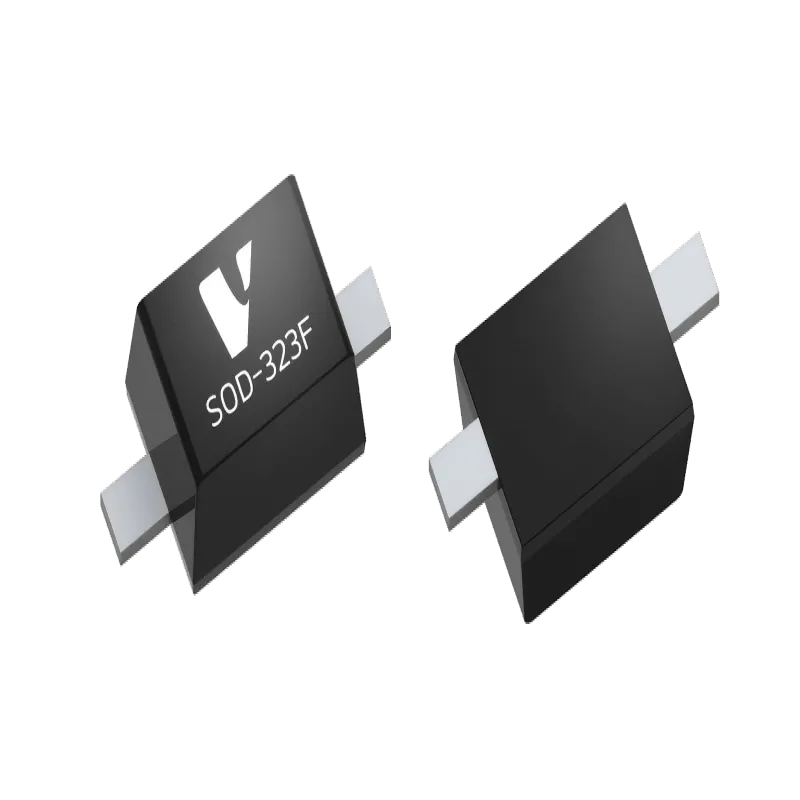
Actual soldering layout photo of a Schottky diode like PMEG6010CEJ,115 in a SOD-323F package on a compact 12V circuit board.

Flyback Diode Guide for 12 V Systems

How do you size a flyback diode for a 12 V rail? When designing a 12 V system, one small device quietly guards the entire rail — the flyback diode. It’s easy to overlook, yet it determines whether your MOSFET, relay driver, or power switch survives the next inductive kick.

A close-up product photo of the NCP1342 Quasi-Resonant flyback controller installed on an evaluation board or a repaired power board.

12V 2A Power Supply: NCP1207BDR2G Repair Guide

What fails first in a 12V 2A flyback SMPS on the bench? Every engineer who has opened a 12V 2A power supply knows that what fails first isn’t always the controller itself. In most cases, you’ll see a silent chain of degradation — one part at a time.

Illustration of a short BNC to SMA jumper cable.

50 Ohm BNC Cable: Length, Shielding & True 50-Ω Chain Integrity

Are You Really Running a True 50-Ohm BNC Chain End-to-End? Walk into any RF lab and you’ll see BNC cables everywhere — linking oscilloscopes, analyzers, and DUTs. Yet, not every bench runs a true 50-ohm chain. Hidden mismatches sneak in: a forgotten video jumper, a stacked BNC to SMA adapter, or a 75-ohm lead mislabeled as RF.

A clean 50-Ω setup isn’t just about signal aesthetics — it directly impacts return loss and measurement stability. Even a single 75-Ω link can create reflection coefficients of 0.2, corresponding to roughly −14 dB RL. That’s enough to visibly distort traces on modern high-bandwidth scopes.

Close-up product photo of a TEJTE BNC to SMA adapter, showing connector interface details.

BNC to SMA Adapter: Direction, Impedance & Oscilloscope Port

Preface In any RF lab, that small bridge between a scope’s BNC port and a module’s SMA connector often decides whether your waveform looks sharp or washed out. A BNC to SMA adapter seems trivial, yet its direction, impedance, and loss behavior shape the signal chain far more than most realize.
At TEJTE, our engineers frequently rely on the SMA/BNC-KJ (Part No. 06268) and SMA/BNC-JK (Part No. 09721) adapters — both 50 Ω, rated DC to 12 GHz, built with gold-plated center pins and nickel-plated brass shells. In high-frequency work, even a millimeter’s mismatch can ripple through a return-loss budget. Those adapters exist for one purpose: to keep precision measurements steady.

Specific model RG316D-SMA jumper assembly with clear labeling.

RG316 vs RG174: Flexibility, Loss & Lab Selection

When should you choose RG316 over RG174, and vice versa? The choice between RG316 vs RG174 often defines whether your signal chain performs like a precision instrument or a quick prototype. Both belong to the 50-ohm coaxial cable family, yet they differ sharply once you look at materials, shielding, and how they behave under real bench conditions.

NCP1207BDR2G current-mode flyback PWM controller in SOIC-8 package

NCP1207BDR2G Flyback Converter Design Guide

Introduction When you’re building a compact flyback converter, there’s often a trade-off between simplicity and precision. The NCP1207BDR2G from TEJTE remains one of those timeless controllers that strikes that balance. Even though it’s now officially labeled Obsolete / Not for New Designs, its efficiency and stability still make it useful for maintaining existing adapters and small auxiliary power modules.

An evaluation board integrated with a high-side switch, connected to diverse loads such as an RF module and a small motor.

High Side Power Switch Design Guide for Modern 5 V & 12 V Rails

Preface Anyone who has spent time around power rails knows they develop personalities of their own. Some wake up politely; others kick back the moment you hook them to real hardware. You can have a clean schematic, perfect simulations, and still get an unexpected dip or a spark when you finally bring the system to life. That’s usually when someone mutters, “Maybe a proper high-side switch would’ve saved us a headache.”

Schematic diagram illustrating the recommended length range for SMA pigtails.

SMA Pigtail: Length, Bend Rules & Routing Inside Enclosures

Preface Short internal coax runs look deceptively simple. Most engineers have seen a module connected to an SMA feedthrough with a tiny piece of RG316 cable and thought, “That should be fine.” But once you close the enclosure—especially a gasket-sealed AP, a LoRa gateway, or an industrial controller—the story can change. One bend too tight, a loop pressing into a hinge, or an unintended adapter chain can quietly raise insertion loss or shorten the connector’s mechanical life.

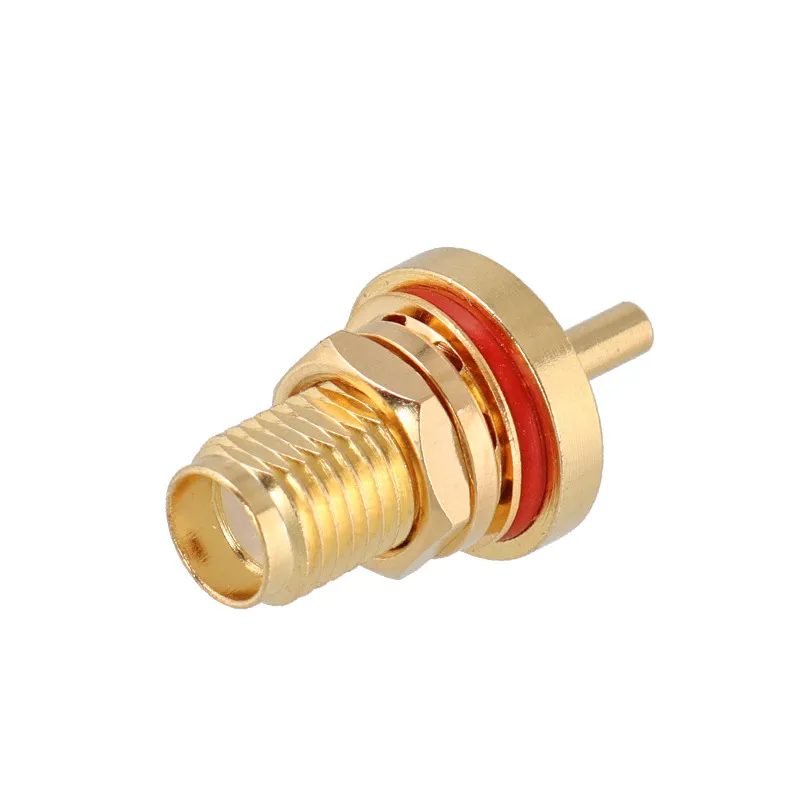
Illustration of SMA Bulkhead connector

SMA Feedthrough: Panel Mount & IP Tips

Many engineers look at an SMA feedthrough as a simple pass-through—until they start mounting hardware inside a cramped cabinet or a weather-sealed box. At that point, small details begin to matter: thread length, the way a nut bites into the panel coating, or how an extra interface shifts a 5 GHz link budget. Field technicians see this a lot. A feedthrough looks trivial, but the wrong gender or orientation often forces them to add adapters, and that’s usually when loss and mechanical stress start creeping in.

Schematic diagram for SMA extension cable length selection

SMA Extension Cable: Length, Loss & Bulkhead Tips

Preface Choosing an SMA extension cable sounds trivial until you see how much it can influence a 2.4 GHz Wi-Fi link, a 5 GHz test setup, or a GNSS front-end with only a few dB of link margin. A run that’s a little too long—or a connector pair added without thinking—can quietly erode SNR, stretch return-loss budgets, and even push small test modules into thermal derating.