We share everything about Electronic Components OEM, ODM, or private label solutions...

We continuously share and publish original articles about electronic components and OEM/ODM/private label solutions. We hope these articles provide you with valuable insights to support your private label electronic components business.

If you don’t want to miss our article, please subscribe to our newsletter. 

SMA male to female 90-degree elbow adapter diagram

SMA Right Angle Adapter: 90°, 45°, 135° & Bulkhead

Introduction RF engineers and design technicians often run into a familiar roadblock: clearance. A connector on a router, SDR board, or test instrument may sit too close to a heat sink or press against the enclosure wall. Push in a straight plug, and you risk bending the cable—or worse, stressing the port itself. In those situations, a sma right angle adapter becomes the small but critical fix, turning the connection cleanly without sacrificing reliability. The catch is that these little “elbows” aren’t as simple as they look. Details such as frequency rating, gender, and even the plating finish can decide whether the link works flawlessly or fails in the field. I’ve seen engineers lose hours because they grabbed an RP-SMA by mistake; the parts looked identical until they realized the pins didn’t match. A quick check beforehand would have saved the trouble.
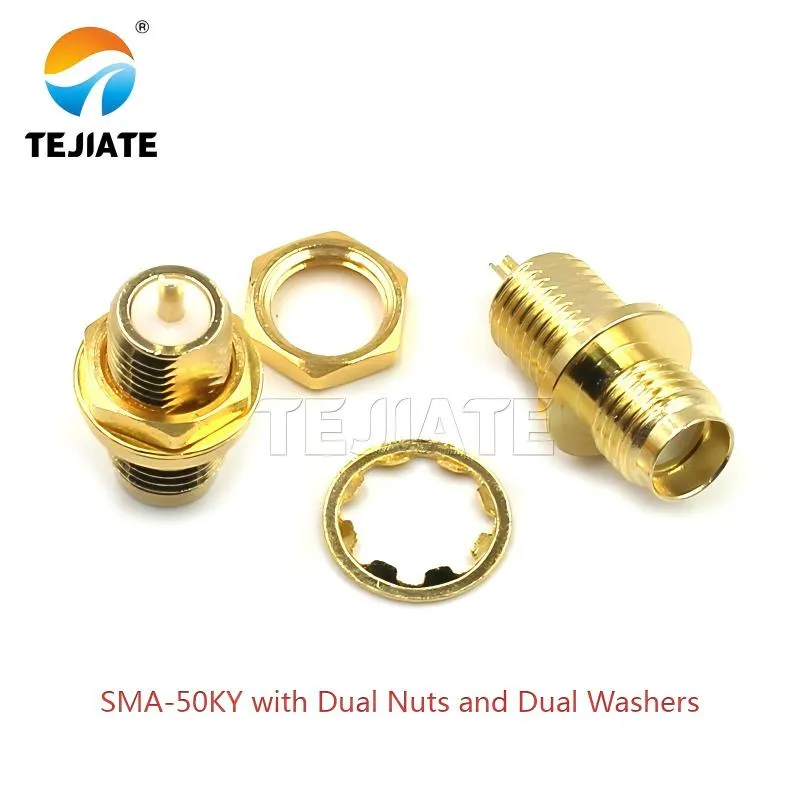
SMA-50KY bulkhead connector assembled with dual nuts and dual washers for secure mounting.

SMA Connector Dimensions: Cutouts & Thread

Introduction Getting SMA connector dimensions right from the start saves more than production time—it prevents the kind of rework that frustrates engineers and delays shipments. A connector that’s a millimeter too short in thread length, a panel cutout that’s undersized, or a nut that doesn’t match the wrench can all stall assembly. I’ve seen teams waste hours redrilling panels or swapping parts just because these details were overlooked. For both engineers and purchasing staff, the small numbers matter: 1/4–36 threads, 8 mm wrench flats, and even a 12.2 mm flange spacing. On paper they may look trivial, but in practice they decide whether the connector locks in smoothly or fights every turn.

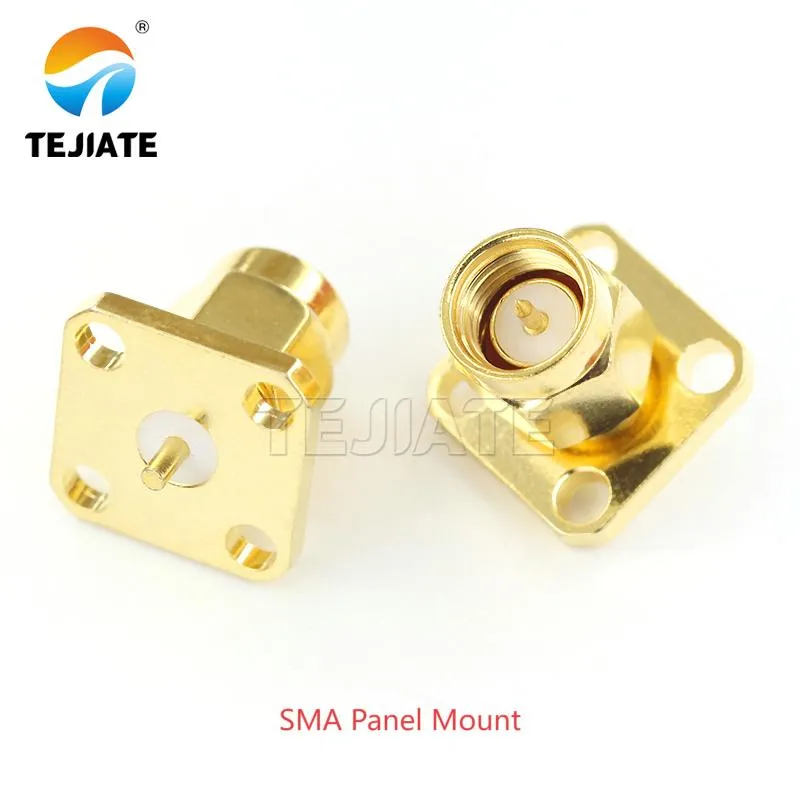
An SMA male panel mount or bulkhead connector, showing its threaded body and nut.

SMA Male Connector: Plug, Panel & PCB

Verify port type and polarity before choosing a male SMA In RF projects, one of the most common traps is mixing up sma male connectors with rp-sma male connectors. Both share the same 1/4″-36 threaded barrel, but the center interface is different: a standard SMA male carries a pin, while the RP version has a socket. Confuse them, and you’ll either end up with no signal or damage to the female jack.

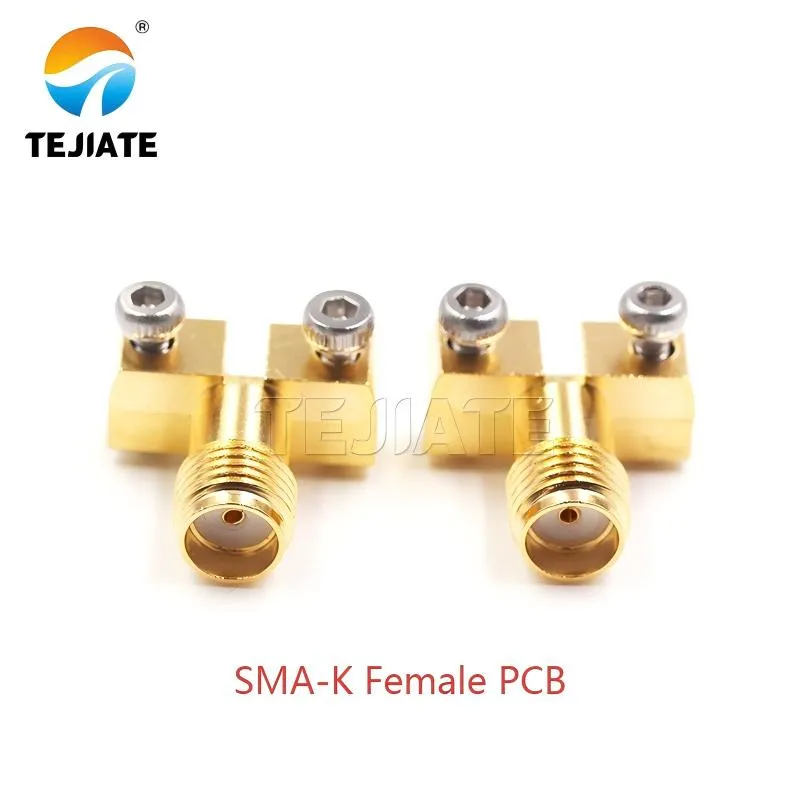
An SMA-K female connector designed for direct soldering onto a printed circuit board (PCB).

SMA Female Connector: Panel, Flange & PCB Mount

Introduction In RF design, small details often carry big consequences. One such detail is the sma female connector—choose the wrong one and you may spend days troubleshooting return-loss or stability issues. Select the right type, and the signal chain tends to stay solid across its rated band. Within TEJIATE’s portfolio, you’ll find sma panel mount connectors, flange-mount options, and PCB-mount jacks, each tuned for different applications. Brass, gold-plated models handle frequencies up to 6 GHz with flexible coax, while semi-rigid compatible versions extend performance all the way to 18 GHz.

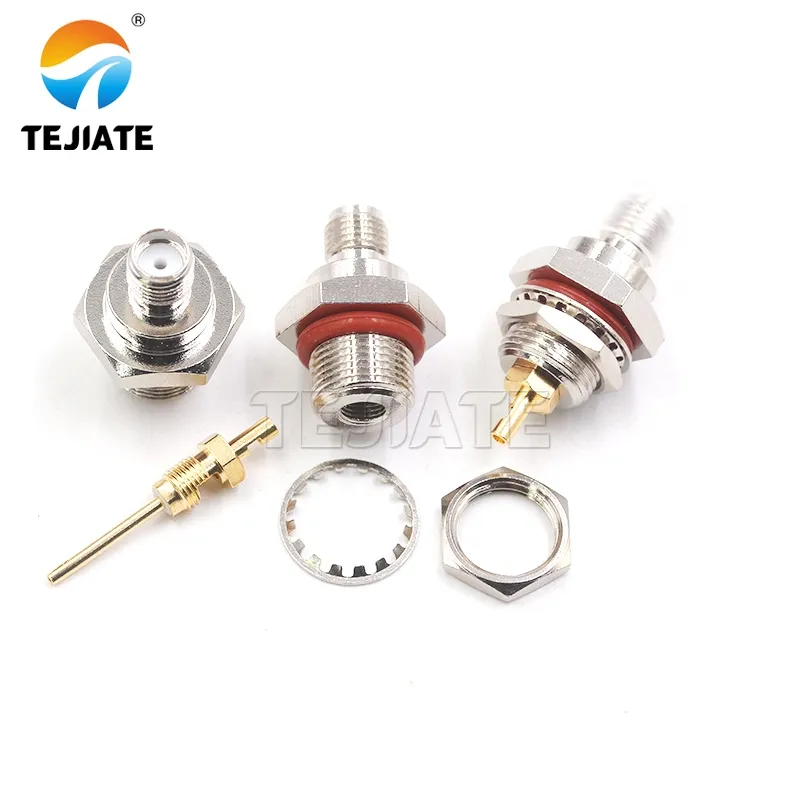
Waterproof SMA female to female bulkhead coupler with O-ring

SMA Female to Female Adapter: Inline, Bulkhead & Waterproof Guide

Introduction Finding the right sma female to female adapter is more important than it looks at first glance. Whether you’re extending coaxial runs in a WiFi setup, linking SDR modules on the bench, or sealing connections through an outdoor panel, choosing the right coupler affects both performance and reliability. These adapters, standardized under IEC 60169-15, operate on a 50Ω impedance system with fine 1/4-36 UNS threads. Depending on design, they can support frequencies up to 18 GHz or 26.5 GHz, with insertion loss typically around 0.1–0.15 dB. Housing materials also matter—brass with gold plating offers affordability, while stainless-steel adds durability and corrosion resistance.

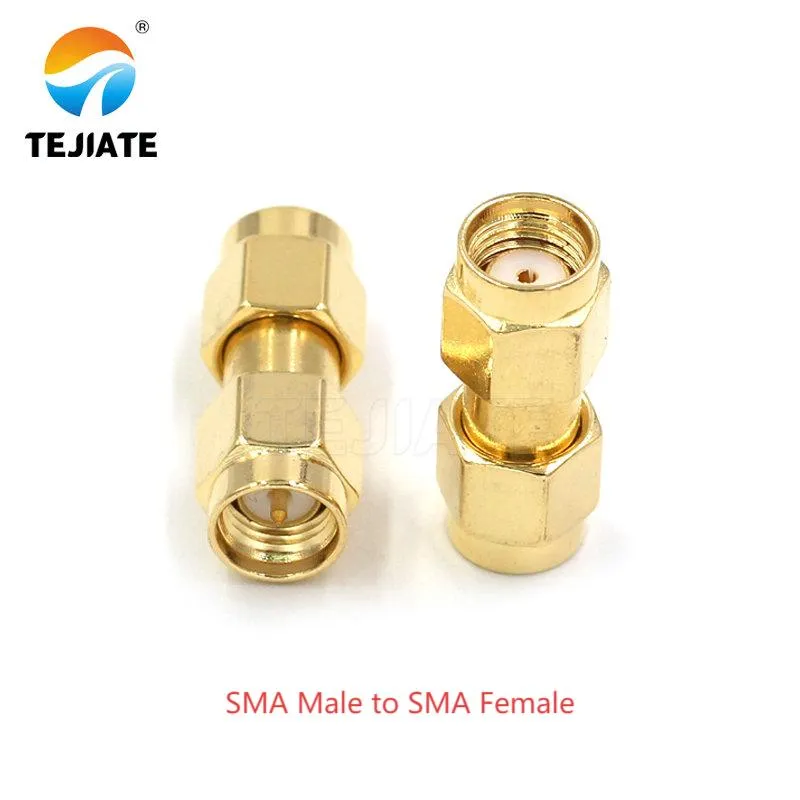
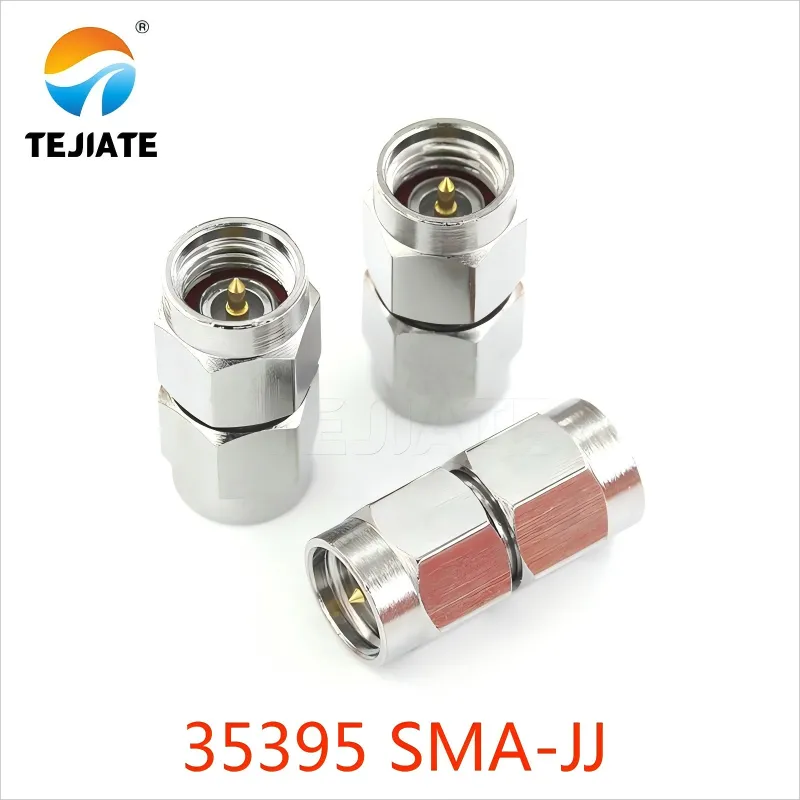
Inline SMA male to female adapter with 50Ω impedance

SMA Male to Female Adapter: Angles & Feedthroughs

Engineers and buyers often need a quick, reliable way to bridge mismatched SMA ports or relieve mechanical stress at the device connector. A sma male to sma female adapter can solve that issue—whether it’s an inline coupler, a right-angle version for tight enclosures, or a panel feedthrough for equipment housings. This guide will walk through how to identify the correct gender and polarity, when to use different form factors, and how to balance insertion loss against mechanical protection. The goal is simple: keep your RF chain clean and stable without expensive trial-and-error.

SMA bulkhead connector for panel mount with different thread lengths

SMA Bulkhead Connector: Panel Mount, Flange Types & Waterproof Use

Pick the right SMA bulkhead for your panel Selecting the right SMA bulkhead connector goes beyond thread size—it’s about ensuring the connector fits your housing securely and keeps signal integrity stable over time. Most models use the standard 1/4-36UNS-2A thread, but not all threads are created equal. A 6.8 mm version may be fine for a thin plastic panel, while thicker or painted housings often call for 13 mm or even 23 mm bulkheads. A simple coating of paint or anodizing, often just 0.1–0.3 mm, can unexpectedly reduce the available thread depth, leaving you short when tightening the nut.

WiFi antenna extension cable internal structure and impedance

WiFi Antenna Extension Cable Guide: Length, Signal & Tips

How do WiFi antenna extension cables actually work?A WiFi antenna extension cable isn’t just another wire lying around your desk. It’s built as a 50 ohm coax cable, a standard used across WiFi routers, antennas, and RF test gear because it balances low loss with reliable power handling. If you were to plug in a mismatched 75 Ω TV coax instead, you’d quickly notice weaker coverage, unstable links, or even complete drops in signal. Inside the cable, the design is more complex than it looks: a copper conductor in the center, a dielectric layer to hold spacing, braided shielding to block interference, and a protective jacket. Each layer matters. Take RG174 coax—it uses a bare copper conductor, solid PE insulation, and a PVC jacket. At 2.4 GHz, its attenuation is about 1.47 dB per meter. That’s manageable for a short indoor extension but will eat away at your signal if you go further than 2 m.

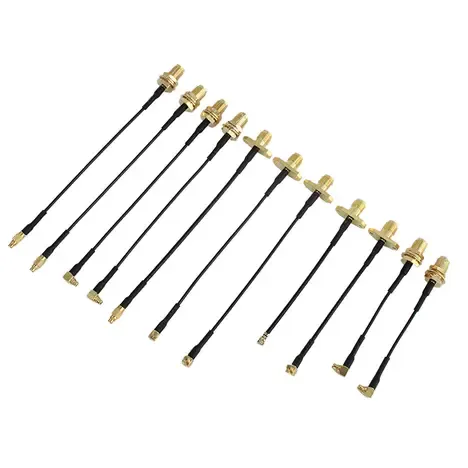
SMA extension cables for FPV ground stations with large antennas

SMA Extension Cable: Length, Signal Loss & Best Uses

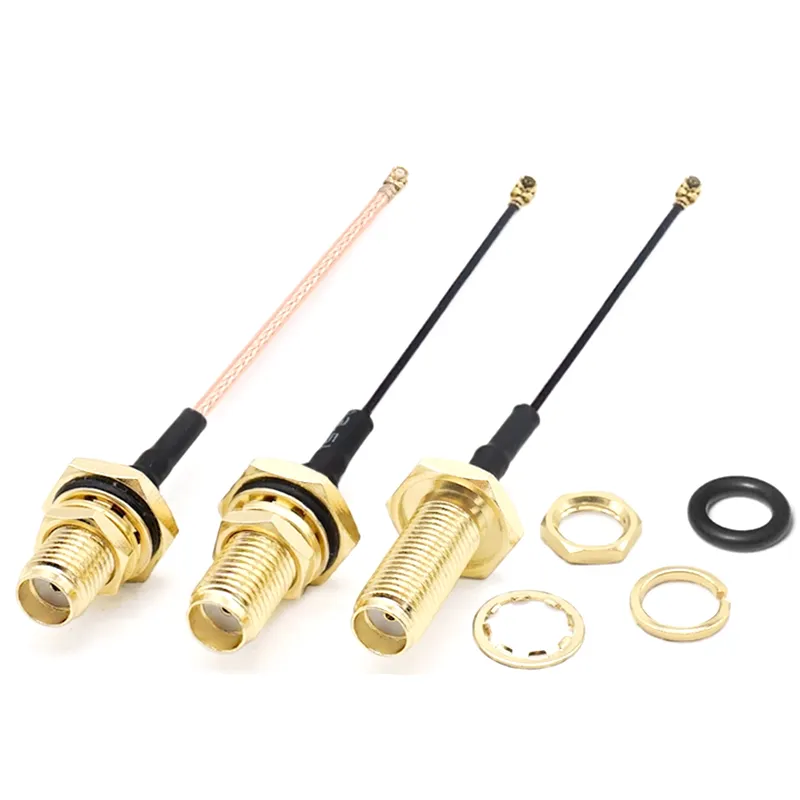
How do you choose the right SMA extension cable for your device ?Choosing the right SMA extension cable starts with a simple but often overlooked question: what kind of port are you connecting to? Many people rush to pick a length, only to find the connectors don’t even mate. Before you click “buy,” take a moment to identify whether your device uses SMA or RP-SMA, and whether you’ll need a male-to-female or male-to-male extension.

Cutaway or exploded view diagram of a waterproof SMA adapter, highlighting sealing components like O-rings and PTFE insulation.

SMA Adapter Guide: Types, Specs & Buying Tips for Engineers

If you’ve ever worked with RF equipment, you already know: picking the right SMA adapter isn’t always obvious. The mix of male and female versions, the extra twist of RP-SMA, and the choice between bulkhead or waterproof designs leave plenty of room for mistakes. It’s a common story—someone sets up a WiFi router, or plugs in an SDR, only to realize the connectors won’t mate. To cut down on trial and error, let’s look at how to identify the right adapter, how much influence these parts have on signal quality, and when bulkhead or waterproof options really pay off.

An SMA bulkhead connector properly installed and sealed through an equipment panel.

SMA Extension Cable: Length, Loss & Buying Guide

Will a right-angle or bulkhead SMA fix your mechanical limits? Every enclosure has its quirks. You plan for a straight SMA extension cable, only to find it colliding with a heat sink or pressed against the wall. In such cases, a right-angle SMA cable—often sold as a 90-degree SMA extension—becomes the practical choice. By changing the path, it relieves stress and protects delicate jacks in compact housings. But nothing is free in RF design. Each elbow adds around 0.1–0.2 dB of loss at microwave bands. That sounds small, yet in a finely tuned GPS or Wi-Fi system it can push your 50 ohm coax cable chain close to its limit. Many field installers have seen range dip or noise rise simply from a poor-quality elbow.

Labeled anatomical cross-section of a generic coaxial cable, showing the inner conductor, dielectric, shielding, and jacket.

RG316 vs RG58: Loss & Power Comparison Guide

For many RF buyers and engineers, the choice often narrows to RG316 vs RG58 when selecting a 50 ohm coax cable. Both have been widely used in telecom, antenna systems, and test labs for years, but they’re not interchangeable. RG58 cable is bulkier and supports higher power with lower attenuation, while RG316 is slimmer, easier to route, and frequently chosen for compact enclosures or high-frequency jumpers. Because both options are readily available and support customization at TEJTE, the real question isn’t about supply—it’s about fit. You’ll need to weigh loss, diameter, bend limits, power handling, and connector compatibility before making a purchase.

Tip from experience: don’t assume one cable can serve all purposes. A 5-meter GPS antenna cable leans toward RG58 to keep loss manageable, but inside a router where space is tight, RG316 is the only realistic option.