We share everything about Electronic Components OEM, ODM, or private label solutions...

We continuously share and publish original articles about electronic components and OEM/ODM/private label solutions. We hope these articles provide you with valuable insights to support your private label electronic components business.

If you don’t want to miss our article, please subscribe to our newsletter. 

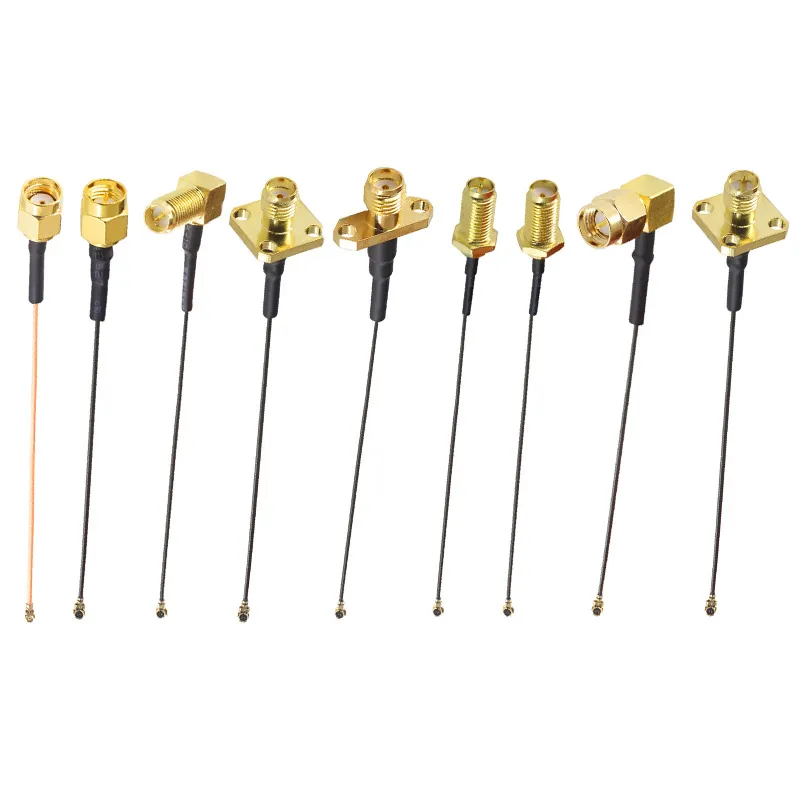
Product photo of a U.FL (IPX) to SMA pigtail cable

Outdoor Omni Antenna Selection & Ordering Guide

Choosing the right outdoor omni antenna defines whether your Wi-Fi or IoT deployment thrives or struggles against wind, rain, and cable loss. This guide walks engineers and buyers through the complete process — from class selection and weatherproof validation to cable management, placement, and final purchase order (PO) requirements.

Product photo of a rubber duck antenna with a foldable or bendable whip section

Rubber Duck Antenna Selection & Ordering Guide

When engineers talk about compact Wi-Fi or IoT builds, the rubber duck antenna is often the first image that comes to mind — that stubby black whip you see on routers, handheld sensors, or gateway nodes. You’ll find it standing on Wi-Fi routers, IoT gateways, handheld scanners, or even custom telemetry boards scattered across any modern lab bench. It’s small, durable, and oddly familiar — the sort of part that just works until you pick the wrong one.

Diagram of a U.FL to SMA pigtail cable

Omnidirectional Antenna Selection & Ordering Guide

In every Wi-Fi or IoT deployment, the humble omnidirectional antenna quietly defines whether your signal holds steady or drops off after a few meters. It’s what allows your 2.4 GHz nodes to talk seamlessly across walls, plastic housings, or rooftops. But selecting one isn’t about choosing “2 dBi or 5 dBi.” It’s a series of small but critical engineering calls — antenna form, connector, gain, cable type, and how all these fit your housing and PCB.

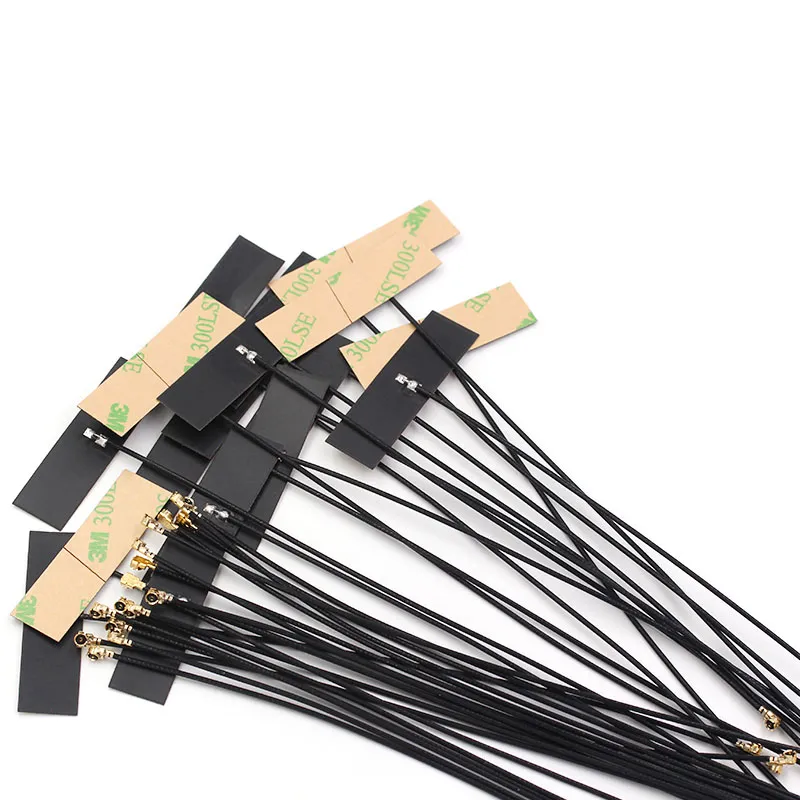
Close-up of a Flexible Printed Circuit antenna, showing its thin sheet-like structure and possibly an adhesive backing.

2.4 GHz Antenna Selection & Ordering Guide for Wi-Fi and IoT Devices

Which 2.4 GHz antenna form factor fits your device? At 2.4 GHz, the antenna isn’t just a piece of metal—it defines how your Wi-Fi or IoT product performs in the real world. The first choice is always form factor: external or internal. That single decision impacts enclosure design, cable routing, and even certification margins.

A practical test scene photo showing the validation of an RC snubber's performance on a lab bench using an oscilloscope (with a ground spring and coaxial probe).

RC Snubber for 12 V: Relay & Motor Damping

Preface In every 12 V control cabinet—whether automotive or industrial—the real enemy of longevity isn’t always heat. It’s that sharp inductive kick that comes the instant a relay or motor winding is switched off.

Comparison schematic: left shows a compact gender-changer adapter, right shows a flexible SMA male-to-female short extension cable (e.g., 0.3-0.6m RG316).

SMA Male to SMA Female: Direction Check & 50-Ω Ordering Guide

Are You Sure You Need SMA Male to SMA Female for This Chain? If you’ve ever mixed SMA connectors on a bench, you know the pain of realizing—too late—that the direction is reversed. SMA male to SMA female may sound obvious, but mis-ordering costs teams hours of rework and shipping delays. The error usually comes down to how we read “male/female” and the confusing mix of “plug/jack” labels in different datasheets. In a rush to prototype or debug, it’s easy to get one end wrong.

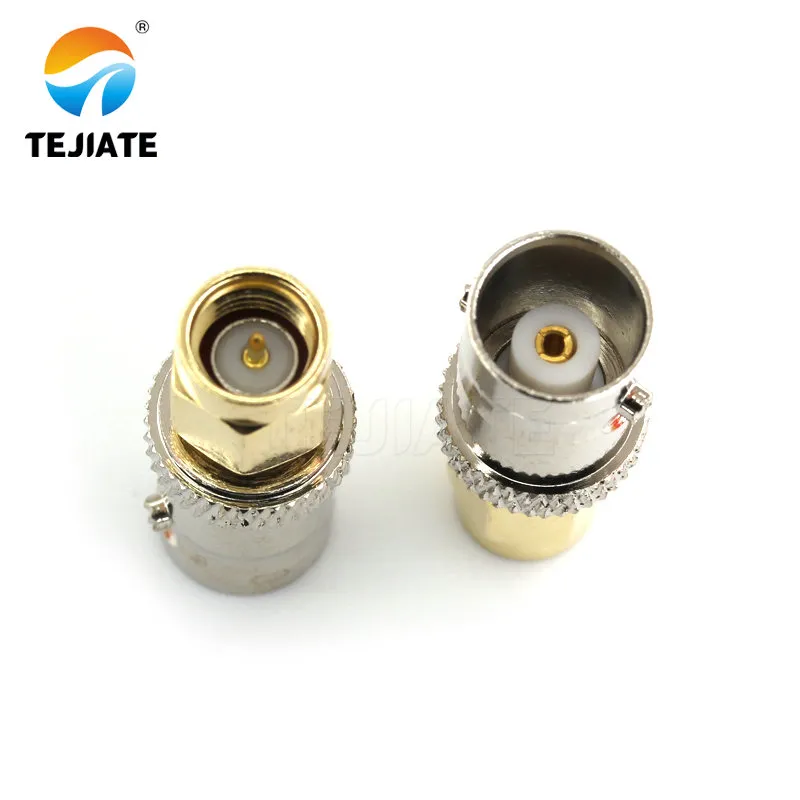
Photo of an inline SMA-F to BNC-M adapter.

SMA Female to BNC Male: Direction & 50-Ω Matching

Preface Every RF engineer has faced it — that tiny SMA-female to BNC-male adapter sitting between a module and an oscilloscope. It looks harmless, yet it can make or break the entire 50-ohm chain. At TEJTE’s own RF Connector Lab we’ve seen projects fail verification simply because a connector was flipped, stacked, or mixed with a 75-Ω lead.

Actual soldering layout photo of a Schottky diode like PMEG6010CEJ,115 in a SOD-323F package on a compact 12V circuit board.

Flyback Diode Guide for 12 V Systems

How do you size a flyback diode for a 12 V rail? When designing a 12 V system, one small device quietly guards the entire rail — the flyback diode. It’s easy to overlook, yet it determines whether your MOSFET, relay driver, or power switch survives the next inductive kick.

A close-up product photo of the NCP1342 Quasi-Resonant flyback controller installed on an evaluation board or a repaired power board.

12V 2A Power Supply: NCP1207BDR2G Repair Guide

What fails first in a 12V 2A flyback SMPS on the bench? Every engineer who has opened a 12V 2A power supply knows that what fails first isn’t always the controller itself. In most cases, you’ll see a silent chain of degradation — one part at a time.

Illustration of a short BNC to SMA jumper cable.

50 Ohm BNC Cable: Length, Shielding & True 50-Ω Chain Integrity

Are You Really Running a True 50-Ohm BNC Chain End-to-End? Walk into any RF lab and you’ll see BNC cables everywhere — linking oscilloscopes, analyzers, and DUTs. Yet, not every bench runs a true 50-ohm chain. Hidden mismatches sneak in: a forgotten video jumper, a stacked BNC to SMA adapter, or a 75-ohm lead mislabeled as RF.

A clean 50-Ω setup isn’t just about signal aesthetics — it directly impacts return loss and measurement stability. Even a single 75-Ω link can create reflection coefficients of 0.2, corresponding to roughly −14 dB RL. That’s enough to visibly distort traces on modern high-bandwidth scopes.

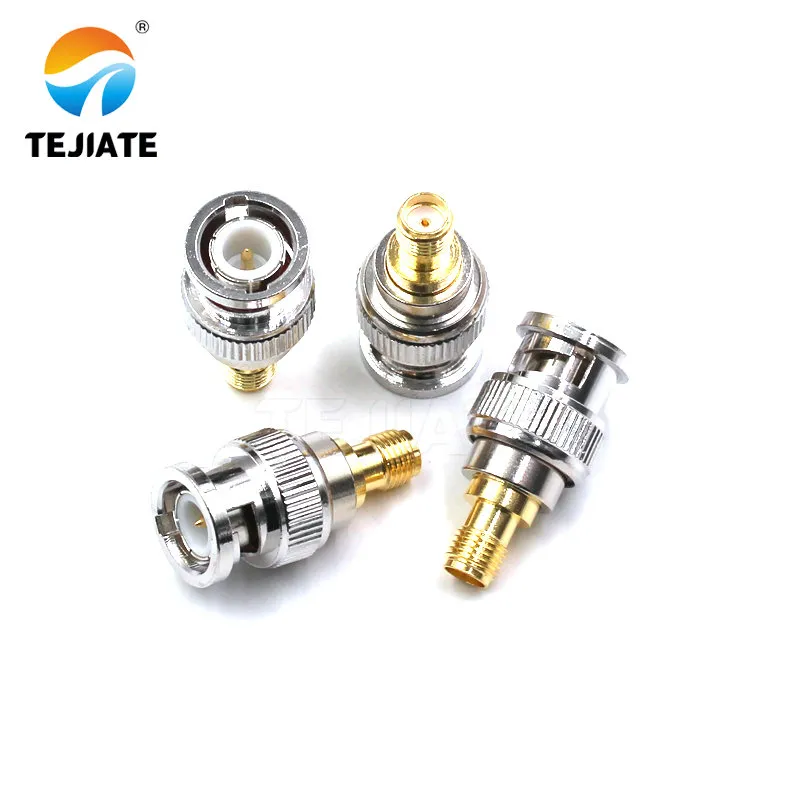
Close-up product photo of a TEJTE BNC to SMA adapter, showing connector interface details.

BNC to SMA Adapter: Direction, Impedance & Oscilloscope Port

Preface In any RF lab, that small bridge between a scope’s BNC port and a module’s SMA connector often decides whether your waveform looks sharp or washed out. A BNC to SMA adapter seems trivial, yet its direction, impedance, and loss behavior shape the signal chain far more than most realize.
At TEJTE, our engineers frequently rely on the SMA/BNC-KJ (Part No. 06268) and SMA/BNC-JK (Part No. 09721) adapters — both 50 Ω, rated DC to 12 GHz, built with gold-plated center pins and nickel-plated brass shells. In high-frequency work, even a millimeter’s mismatch can ripple through a return-loss budget. Those adapters exist for one purpose: to keep precision measurements steady.