We share everything about Electronic Components OEM, ODM, or private label solutions...

We continuously share and publish original articles about electronic components and OEM/ODM/private label solutions. We hope these articles provide you with valuable insights to support your private label electronic components business.

If you don’t want to miss our article, please subscribe to our newsletter. 

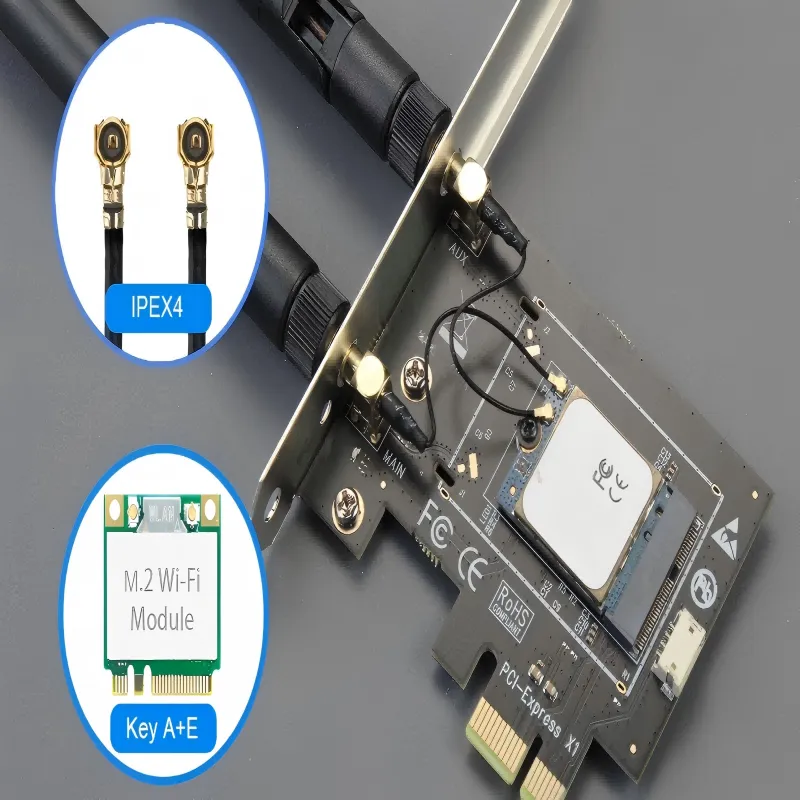
Close-up of an M.2 Wi-Fi module and its U.FL antenna connection interface.

Wi-Fi Antenna Extension Cable: Range & Loss Tips

When you extend a Wi-Fi antenna, you’re not just stretching a wire — you’re shifting the physics that control signal strength, loss, and reliability. Many installers discover this the hard way: a router that used to cover two rooms suddenly can’t hold a connection across one wall.
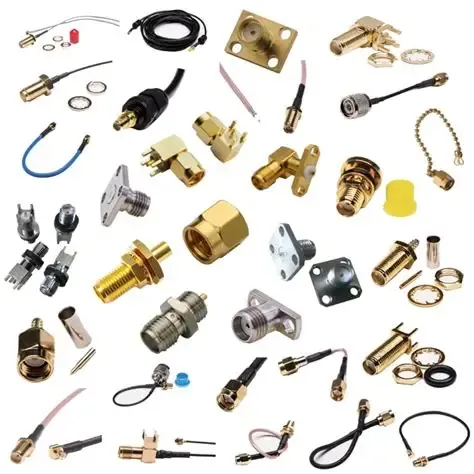
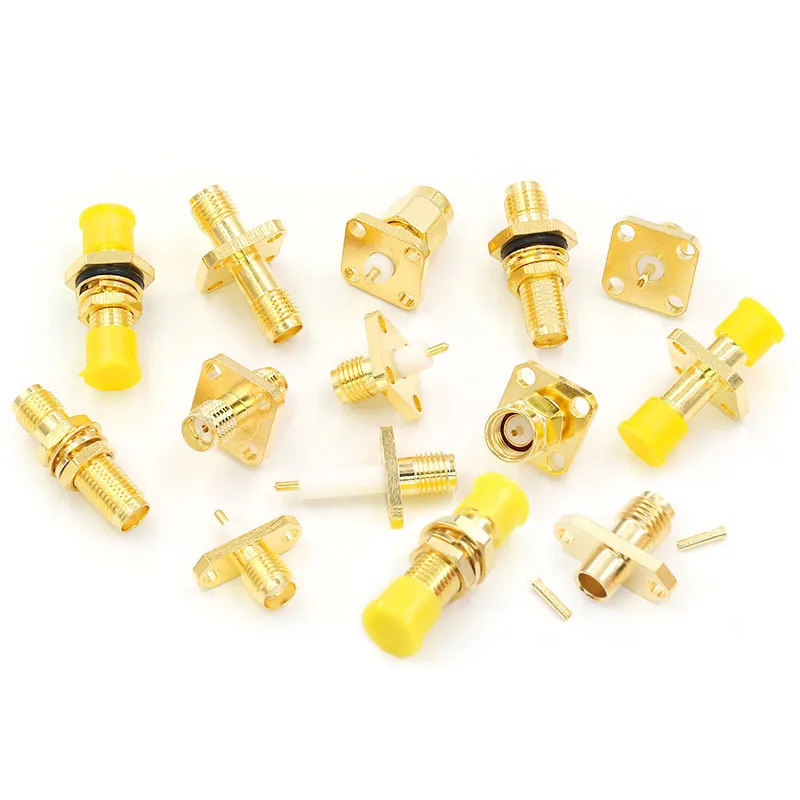
Example of a checklist form for SMA connector purchase order parameters.

SMA Connector Panel Mounting & RP-SMA ID Guide

The SMA connector may look simple, but anyone who has wired antennas for routers or IoT devices knows how quickly a tiny mismatch can cause major frustration. A single wrong gender, or an overlooked thread length, can turn an easy assembly into a product return. At TEJTE, engineers deal with these details daily, and this guide compiles what actually matters — from identifying SMA vs RP-SMA at a glance to mounting connectors correctly on a panel.

Summary of key points for RP-SMA connector selection and planning.

RP-SMA Connector Guide: Avoid Mismatch & Returns

Whether you’re wiring a Wi-Fi router, upgrading an IoT gateway, or repairing a bulkhead-mounted antenna, chances are you’ve run into the RP-SMA puzzle at least once. It looks simple—two threaded connectors that should fit—but one wrong detail can leave you twisting in frustration.

At TEJTE, our engineers see this problem weekly. Customers send back cables that “almost matched,” only to discover the pin and hole were reversed. The fix isn’t fancy equipment or calibration; it’s knowing how to read the connector by eye before you click “buy.”

WiFi antenna cable selection overview, showing connection path options from device port to external antenna.

WiFi Antenna Cable Guide: SMA, RP-SMA, Bulkhead & Length Tips

Which WiFi antenna cable do I actually need? When you start wiring a WiFi antenna cable, it’s tempting to grab anything with an SMA label. But in practice, not every cable fits — or even works. The right choice depends on what kind of device you’re dealing with and how that signal leaves your board.

Overview of rubber duck antenna indoor coverage and application matching.

Rubber Duck Antenna: Indoor Coverage & SMA Matching in Practice

Choosing the right rubber duck antenna can be deceptively tricky. What seems like a simple stubby rod often determines whether your Wi-Fi or IoT device keeps a stable link or drops out when you move five feet away. This guide walks through the real-world selection logic that engineers at TEJTE use daily — from form and gain to SMA matching, feeder loss, placement, and order validation.

Diagram illustrating mast mount antenna selection for different physical site scenarios

Mast Mount Antenna Installation & IP Sealing Field Guide

Which mast mount antenna class fits your site and spectrum? Choosing the right mast mount antenna isn’t only about frequency bands — it’s about your physical site, exposure, and how long the hardware will survive in wind and rain. In practice, every deployment has its geometry: narrow corridors, wide rooftops, open yards, or pole-top gateways. The antenna form you pick defines whether your link margin stays stable or fades after the first storm.

Decision diagram illustrating the evaluation of whether to upgrade from a rubber-duck antenna to an outdoor omni antenna in semi-outdoor corridor environments (e.g., warehouses, hotels).

Omnidirectional Wi-Fi Antenna Selection & Coverage Guide

Which omnidirectional Wi-Fi antenna form maps to your device or site? Choosing the right omnidirectional Wi-Fi antenna rarely starts with gain or frequency—it starts with the form that fits your product or site. The wrong shape can quietly waste months of validation time, even when the specs look perfect on paper.

TEJTE engineers debugging a 5V to 12V boost converter on a test bench, showing oscilloscope waveforms, test probes, and the PCB.

5V to 12V Boost Converter Design in Practice

Designing a 5V to 12V boost converter sounds straightforward until you build one and watch the waveform ripple across your scope. Real boards expose trade-offs that datasheets rarely warn about — efficiency, thermal margin, and part sourcing. From the veteran MC34063 to today’s integrated synchronous ICs, the path is full of judgment calls that decide whether your converter runs cool or cooks itself.

Quick-check flowchart for controller selection or a comparison diagram between MC34063 and modern synchronous switching regulators.

12V to 5V Buck Converter Design in Practice

Which controller and topology fit a 12V to 5V buck? Converting 12 V down to 5 V looks simple on paper, but in real boards it’s rarely that neat. You’ve got choices ranging from the classic MC34063 to today’s high-efficiency synchronous switching regulators, each carrying its own quirks. Picking the right one is more about the project’s trade-offs—heat, cost, and part availability—than about what’s newest.

Diagram illustrating the relationship between inductor peak current waveform at high duty cycles and the calculation of the sense resistor RSC.

MC34063 DC-DC Guide: Buck, Boost & Inverting

Why This Tiny DC-DC Controller Still Matters Few parts in the power-supply world have aged as gracefully as the TEJTE MC34063 DC-DC converter. It’s a modest eight-pin IC that still ships by the millions, quietly regulating everything from router boards to automotive sensors. Despite new synchronous bucks and GaN-based regulators taking the spotlight, engineers continue to trust the MC34063 because it’s predictable, accessible, and hard to kill.

Outdoor omnidirectional antenna diagram: showing its high stability and extended reach when mounted on poles or building façades.

2.4 GHz Wi-Fi Antenna Selection & Ordering Guide

Which 2.4 GHz Wi-Fi antenna form fits your device or site? Choosing a 2.4 GHz Wi-Fi antenna starts with the form factor. Most engineers default to whatever fits mechanically, but form and environment shape performance more than any datasheet can reveal. For compact routers or IoT gateways, three families dominate: rubber-duck, outdoor omni, and internal FPC/PCB antennas.

Schematic summarizing the core balancing points of FPC antenna design: coordinating mechanical constraints with electromagnetic performance, metal clearance, bend radius, feeder length, and other key factors.

FPC Antenna 2.4 GHz Layout Clearance & Tuning in Practice

FPC Antenna 2.4 GHz Layout Clearance & Tuning in Practice When you design a compact Wi-Fi or IoT device, the FPC antenna seems almost too simple — a thin flex strip with a coax tail. Yet every millimeter of placement and clearance decides whether your prototype passes FCC tests or struggles to link through a single wall.