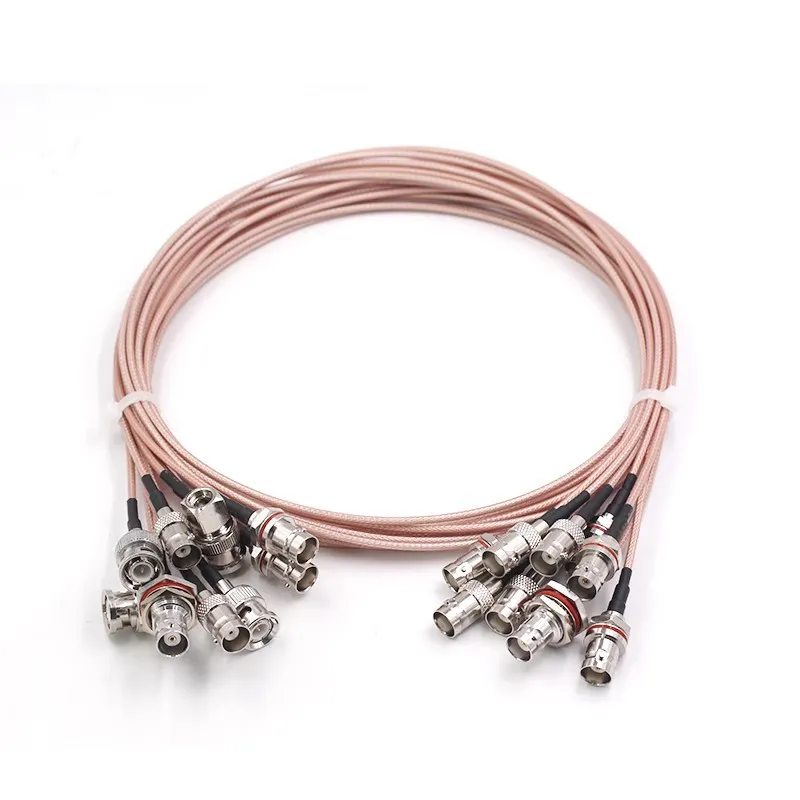
We share everything about Electronic Components OEM, ODM, or private label solutions...

We continuously share and publish original articles about electronic components and OEM/ODM/private label solutions. We hope these articles provide you with valuable insights to support your private label electronic components business.

If you don’t want to miss our article, please subscribe to our newsletter. 

Passive coax to HDMI cable compared with active converter box

Coaxial Cable to HDMI Adapter: The Ultimate Guide

Introduction Connecting older devices or antenna feeds to modern TVs can be challenging because of different signal formats. A coaxial cable carries radio frequency (RF) signals (often analog or modulated digital), whereas HDMI carries uncompressed digital video/audio. They are not directly compatible – you cannot simply plug a coax cable into an HDMI port without a coaxial to HDMI converter adapter. In this guide, we’ll explain how to convert coax to HDMI (and vice versa)

Crimping tool in use compressing a terminal

How to Use Crimp Connectors: A Complete Wire Terminal Guide

Introduction: Every time you fix an electrical appliance or wire up a car stereo, you’re likely relying on the humble crimp connector to hold things together.These small crimp wire connectors create secure electrical joins without the need for solder. They save time and ensure reliability – keeping your car’s headlights shining and your home’s appliances running safely.

RJ45 coupler for extending Ethernet cables

RJ45 Connector Guide: RJ11 vs RJ45, Shielding, Couplers & More

Imagine a world without connectors—no plugs linking your Ethernet cable connectors to your computer, no jacks to connect your home to the internet. These small components are the unsung heroes of modern networking, enabling everything from phone lines to high-speed internet. In this guide, we dive into one of

RF coaxial cable used in wireless and communication setups

RF Cable Guide: USB, SATA, and Coaxial Cable Explained

Cables are the unsung heroes connecting our devices and powering our digital world. From hooking up your TV to charging your phone, different cables serve different purposes. In this guide, we’ll explain what an RF cable is and how it’s used, and we’ll also dive into other common cable types – from coax cable for TV and internet to USB cable and SATA cable in computers. Each section answers frequently asked questions, helping you understand the uses, differences, and benefits of these cables. 

RCA analog AV connector for composite video and audio

Understanding RF Cables: The Ultimate Guide

RF cables (Radio Frequency cables) might seem technical, but we encounter them often in daily life. From connecting your TV to an antenna to linking radio transmitters, these cables carry high-frequency signals reliably. In this comprehensive guide, we’ll break down what RF cables are, the different types available, how they’re used (especially in TVs and electronics), and answer common questions. By the end, you’ll know the key differences between RF cables and other cables (like coaxial, RCA, SDI), h

SMA connector used in RF systems for high-frequency signal integrity

SMA vs BNC vs N-Type: Which RF Connector Should You Use?

In RF systems, choosing the right connector isn’t just about making a snug fit—it’s about preserving signal integrity and ensuring your system works without hidden headaches. Whether you’re designing a high-frequency board or testing communication hardware, a poorly matched connector can quietly degrade performance.

Threaded RF connector example for secure connections

Reliable Connector Cables: Types and How to Choose

Picking the right connector cable isn’t just about fit – it’s about performance. Whether you’re wiring a home studio, setting up a 5G base station, or running industrial automation lines, a poor cable choice can ruin signal integrity. Signal dropouts? Interference? Loose fits? These often come down to one thing — the wrong connector.

N-type connector used in outdoor RF environments

RF Connector Selection Guide: What You Need to Know

An example of a common RF connector (BNC) attached to a coaxial cable. Choosing the correct connector ensures optimal signal transfer and system performance.Ask any RF engineer, and they’ll tell you—choosing the wrong connector can quietly sabotage even the best-designed system. From a rooftop antenna on a rural home to a dense 5G node in a city, radio frequency connectors often become the weakest link if not properly selected.

Microchip component for electronic circuits

What is the Electronic Components Industry: Ultimate Guide

Introduction: The electronic components industry is the backbone of our modern digital world, encompassing all the small parts that make today’s electronic devices possible. From the microchips in your smartphone to the RF cables connecting communication towers, this industry produces a vast range of components that drive innovation. In simple terms, the electronic components industry covers the manufacturing, distribution, and innovation of the tiny electronic parts – like semiconductors, resistors,

RF coaxial cables for radio frequency signal transmission in telecommunications, video, and broadcasting

The Ultimate Guide to RF Coaxial Cables

RF (Radio Frequency) cables are crucial for transmitting high-frequency signals in many systems – from telecommunications and radar to cable TV and broadcast equipment . RF signals occupy roughly the 20 kHz–300 GHz range of the electromagnetic spectrum , and RF cables are specifically designed to carry these signals with minimal loss. Typically these are coaxial cables: a copper center conductor surrounded by dielectric insulation, a braided or foil shield, and an outer jacket. This coaxial structure allows RF cables to carry high-frequency signals with low attenuation . In this guide we’ll