We share everything about Electronic Components OEM, ODM, or private label solutions...

We continuously share and publish original articles about electronic components and OEM/ODM/private label solutions. We hope these articles provide you with valuable insights to support your private label electronic components business.

If you don’t want to miss our article, please subscribe to our newsletter. 

SMA to MMCX adapter connector for coaxial cables

What is MMCX Connector: Definition, Types, Uses, and Adapters

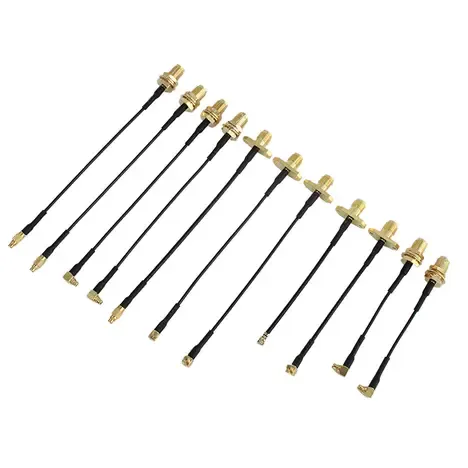
Introduction In RF design, space often decides whether a product works or fails. As devices shrink—from IoT boards to in-ear monitors—engineers need connectors that fit tight layouts without sacrificing performance. One answer is the MMCX connector. Created in the 1980s as a smaller sibling of MCX, the Micro-Miniature Coaxial connector is only 2.4 mm wide. It was designed to save space yet still carry signals for WiFi, GPS, and LTE. What makes it popular is balance: tougher than U.FL, easier to fit than SMA, and durable enough for repeated use. Whether inside a wireless module or at the end of a detachable headphone cable, the MMCX quietly does its job.

SMA to MCX adapter for connecting coaxial cables

What is MCX Connector? Definition, Uses, and Comparisons

Introduction Ever noticed the tiny round plug on a GPS receiver or a USB TV tuner stick? That little snap-on port is called an MCX connector. It doesn’t look like much at first—just another coaxial plug—but its compact size and quick-lock design make it surprisingly useful in gear where every millimeter counts. So, what is a MCX connector? The term comes from Micro Coaxial Connector, a standard that first showed up in the 1980s when engineers were desperate for something smaller than the chunky SMA and SMB connectors. Instead of threads or bulky couplings, MCX relies on a push-and-click snap-on system. No tools, no twisting—just press, and you’re connected.

U.FL and IPEX connectors for IoT and 5G modules

U.FL vs MMCX vs IPEX Connectors: IoT & 5G RF Guide

Introduction Crack open a smartwatch, drone, or 5G card and you’ll spot the same problem: there’s never enough space. Modern devices are crammed with chips, sensors, and batteries—yet they still need a way to push high-frequency signals out to an antenna. The answer? Tiny coaxial connectors like U.FL, MMCX, and IPEX. They don’t look like much. Each measures only a few millimeters across, nothing like the chunky threaded SMA connectors you see on routers or lab gear. But without them, IoT gadgets and 5G modules wouldn’t get a reliable wireless link. Think of these connectors as hidden highways—small, fast, and essential for keeping devices online.

Illustration of RF adapter bridging WiFi router RP-SMA and lab BNC port

What Is an RF Adapter? Types, Uses & Buying Guide

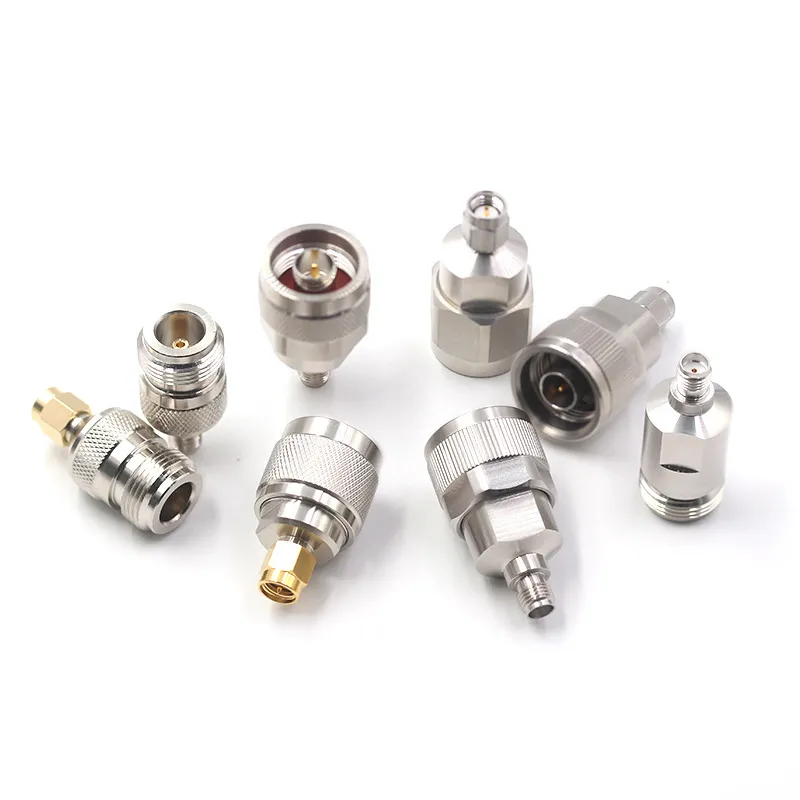
Introduction Have you ever tried plugging in a new antenna only to discover the connector doesn’t fit? Picture this: your WiFi router uses an RP-SMA jack, but the lab instrument you’re testing against expects a BNC port. Without the right bridge, the two devices might as well live on different planets. That bridge is an RF adapter. At its simplest, an RF adapter (sometimes called an RF converter) is a small but crucial piece of hardware that links incompatible coaxial connectors. Instead of replacing an expensive cable or investing in new equipment, you drop in an adapter, and suddenly everything works. It’s a cost-effective fix, but also a practical one, giving you the freedom to mix and match devices across industries, from home WiFi setups to professional broadcasting labs.

RP-SMA connectors on WiFi routers and IoT hubs

History of RF Connectors: From SMA to 5G Antenna Interfaces

Introduction Most people never think twice about the small metal fittings on their WiFi router, TV set, or even a 5G smartphone. Yet these little parts—RF connectors—quietly decide whether your signal comes through strong or fades into noise. To the untrained eye, they’re nothing more than threaded bits of metal. To engineers, they’re the handshake between systems, where performance is either made or lost. The history of RF connectors shows just how much technology has demanded from them.

Typical RP‑SMA applications in Wi‑Fi and IoT devices

What is an RP-SMA Connector? Types, Antennas & Uses

Introduction If you’ve ever tried swapping out a WiFi antenna on your home router and wondered why the new one wouldn’t screw in, you’ve likely met the puzzle of the RP-SMA connector. At first sight, it looks exactly like the standard SMA type—same diameter, same threaded shell. But when you line them up, the center contact doesn’t match. That tiny difference is what leaves so many users scratching their heads.This small twist in design isn’t an accident. RP-SMA, short for Reverse Polarity SMA, was introduced in the wireless industry to control antenna compatibility. Over the years, it became the default choice for most routers, access points, and even IoT modules. If you’ve opened the back of a WiFi-enabled device recently, chances are you’ve seen an RP-SMA female jack waiting for an antenna.

Customized SMA connectors and cables for specific RF applications

What is an SMA Connector? Male vs Female, Jack & Uses

Introduction Ever tightened an antenna onto your WiFi router? Or maybe plugged a GPS module into a dev board? Chances are, you’ve handled an SMA connector without even realizing it. They look simple—just a small threaded plug and socket—but beneath that plain appearance lies careful engineering that keeps high-frequency signals clean, often well beyond 10 GHz. The name itself tells the story. SMA stands for SubMiniature version A, a reference to its compact size and screw-on interface. Born in the 1960s, this little connector quickly won over RF engineers because it was tough, accurate, and dependable. Fast forward to today, and you’ll spot SMA everywhere: on consumer WiFi gear, GPS antennas, cellular base stations, aerospace modules—even in military radios.

Miniature RF Cables for IoT and GPS

RG Cable Explained: RG58, RG6, RG142, RG213, RG316 and More

Introduction If you’ve ever set up a TV, tuned a ham radio, or wired a satellite dish, chances are you’ve used an RG cable without giving it much thought. On the surface, these cables look like ordinary wires. In reality, they’re the backbone that keeps video signals sharp, radio calls clear, and data flowing reliably across systems. The term RG, short for Radio Guide, dates back to U.S. military standards in the 1940s. What started as a simple classification system has since become the everyday language of coaxial cabling. Today, when someone mentions an RG58 coaxial cable or an RG6 coaxial cable, they’re talking about specific designs with defined sizes, shielding, and electrical properties.

Television connected with an F-type coaxial connector

TV Coaxial Cable Connectors Guide: PAL, F-Type, BNC & SMA Compared

Introduction Hooking up a TV, wiring CCTV, or setting up a home theater all share one thing: none of it works without a solid coaxial cable. Most people don’t think twice about it—until the picture turns snowy or the feed drops mid-show. Yes, HDMI is the star of modern setups, and fiber is slowly working its way into living rooms. But the reality is, millions still rely on TV coaxial cable connectors every single day. They’re the silent heroes keeping your picture clear and your signal steady.

Coaxial cable introduction in TV, internet, and RF test systems

Coaxial Cable Ultimate Guide: Types, Uses, Adapters & Tips

Introduction Every setup—whether it’s a home theater, internet network, or RF test bench—relies on the right cable. Use the wrong one, and you’ll likely deal with grainy TV images, unstable Wi-Fi, or sound that cuts in and out. That’s why the coaxial cable has remained a backbone of communication systems for decades.Unlike ordinary wires, coaxial cables are engineered to carry high-frequency signals with minimal loss and strong resistance to interference. From TV antennas and satellite receivers to digital coaxial speaker cable connections and specialized RF equipment, coax keeps signals clear and stable.

SMA connector for handheld radios and Wi-Fi gear

Cable Coaxial CB & Ham Radio Guide: Best CB Coax Cable

Introduction For CB radio or ham radio, the choice of coaxial cable isn’t just a technical detail—it’s the lifeline of your signal. You can invest in a powerful transceiver or a perfectly tuned antenna, but if the CB radio coax cable is poor quality, your station will suffer from noise, high loss, or mismatched impedance. That’s why seasoned operators often say: a radio setup is only as good as its coax. In this guide, we’ll walk through the essentials of cable coaxial CB and coaxial cable for ham radio users. You’ll see clear comparisons such as RG58 vs RG8X, find out why many operators consider RG8X the best CB coax cable, and learn when it’s acceptable to use 75-ohm coax instead of 50-ohm.

RG58 coaxial cable used for short-run RF connections

Best Coaxial Cables 2025: RG & LMR Selection Guide

Introduction Choosing the right coaxial cable isn’t about memorizing every spec—it’s about matching your system to the right RG or LMR family with minimal friction. This guide gives you fast, practical answers: quick picks by scenario, skim-friendly tables (loss, size, bend radius), and clear head-to-head comparisons like RG8X vs RG58, RG6 vs RG11, and LMR-400 vs RG8/RG213. We follow a simple framework—impedance, loss vs. length, and flexibility/environment—so you can decide in minutes, not hours. You’ll also find focused sections on micro-coax (RG316/RG174/RG178) and semi-rigid lines (RG402/RG405) for device internals and precision fixtures.