We share everything about Electronic Components OEM, ODM, or private label solutions...

We continuously share and publish original articles about electronic components and OEM/ODM/private label solutions. We hope these articles provide you with valuable insights to support your private label electronic components business.

If you don’t want to miss our article, please subscribe to our newsletter. 

SMA bulkhead connector for panel mount with different thread lengths

SMA Bulkhead Connector: Panel Mount, Flange Types & Waterproof Use

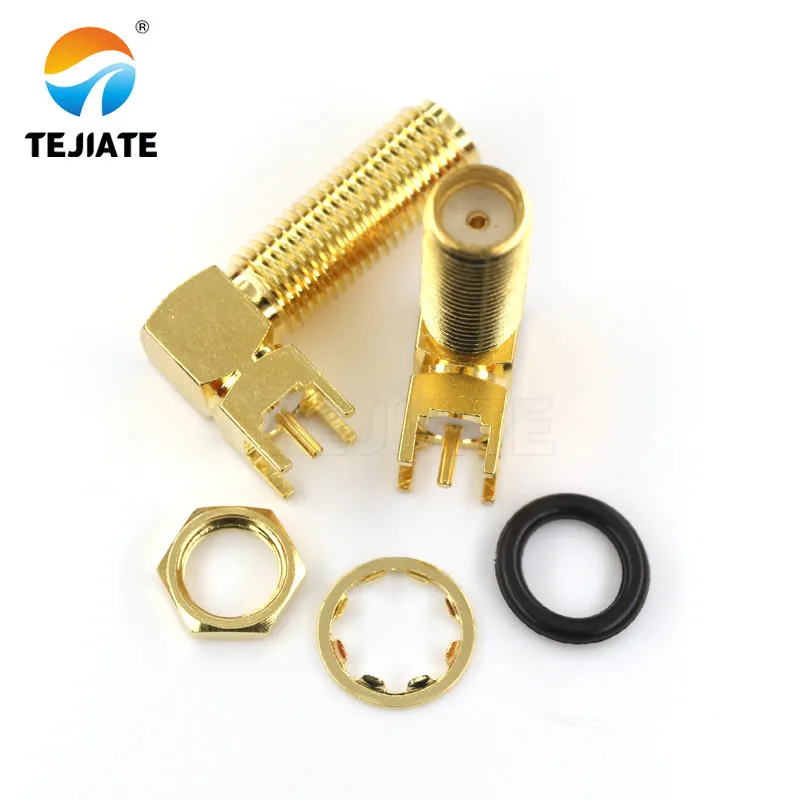
Pick the right SMA bulkhead for your panel Selecting the right SMA bulkhead connector goes beyond thread size—it’s about ensuring the connector fits your housing securely and keeps signal integrity stable over time. Most models use the standard 1/4-36UNS-2A thread, but not all threads are created equal. A 6.8 mm version may be fine for a thin plastic panel, while thicker or painted housings often call for 13 mm or even 23 mm bulkheads. A simple coating of paint or anodizing, often just 0.1–0.3 mm, can unexpectedly reduce the available thread depth, leaving you short when tightening the nut.

WiFi antenna extension cable internal structure and impedance

WiFi Antenna Extension Cable Guide: Length, Signal & Tips

How do WiFi antenna extension cables actually work?A WiFi antenna extension cable isn’t just another wire lying around your desk. It’s built as a 50 ohm coax cable, a standard used across WiFi routers, antennas, and RF test gear because it balances low loss with reliable power handling. If you were to plug in a mismatched 75 Ω TV coax instead, you’d quickly notice weaker coverage, unstable links, or even complete drops in signal. Inside the cable, the design is more complex than it looks: a copper conductor in the center, a dielectric layer to hold spacing, braided shielding to block interference, and a protective jacket. Each layer matters. Take RG174 coax—it uses a bare copper conductor, solid PE insulation, and a PVC jacket. At 2.4 GHz, its attenuation is about 1.47 dB per meter. That’s manageable for a short indoor extension but will eat away at your signal if you go further than 2 m.

SMA extension cables for FPV ground stations with large antennas

SMA Extension Cable: Length, Signal Loss & Best Uses

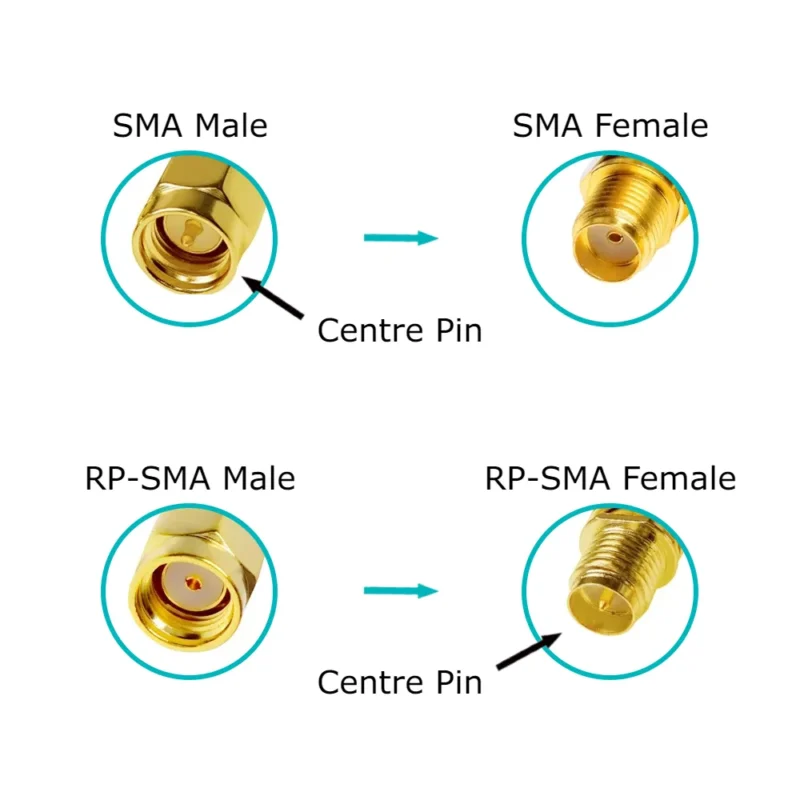
How do you choose the right SMA extension cable for your device ?Choosing the right SMA extension cable starts with a simple but often overlooked question: what kind of port are you connecting to? Many people rush to pick a length, only to find the connectors don’t even mate. Before you click “buy,” take a moment to identify whether your device uses SMA or RP-SMA, and whether you’ll need a male-to-female or male-to-male extension.

Cutaway or exploded view diagram of a waterproof SMA adapter, highlighting sealing components like O-rings and PTFE insulation.

SMA Adapter Guide: Types, Specs & Buying Tips for Engineers

If you’ve ever worked with RF equipment, you already know: picking the right SMA adapter isn’t always obvious. The mix of male and female versions, the extra twist of RP-SMA, and the choice between bulkhead or waterproof designs leave plenty of room for mistakes. It’s a common story—someone sets up a WiFi router, or plugs in an SDR, only to realize the connectors won’t mate. To cut down on trial and error, let’s look at how to identify the right adapter, how much influence these parts have on signal quality, and when bulkhead or waterproof options really pay off.

An SMA bulkhead connector properly installed and sealed through an equipment panel.

SMA Extension Cable: Length, Loss & Buying Guide

Will a right-angle or bulkhead SMA fix your mechanical limits? Every enclosure has its quirks. You plan for a straight SMA extension cable, only to find it colliding with a heat sink or pressed against the wall. In such cases, a right-angle SMA cable—often sold as a 90-degree SMA extension—becomes the practical choice. By changing the path, it relieves stress and protects delicate jacks in compact housings. But nothing is free in RF design. Each elbow adds around 0.1–0.2 dB of loss at microwave bands. That sounds small, yet in a finely tuned GPS or Wi-Fi system it can push your 50 ohm coax cable chain close to its limit. Many field installers have seen range dip or noise rise simply from a poor-quality elbow.

Labeled anatomical cross-section of a generic coaxial cable, showing the inner conductor, dielectric, shielding, and jacket.

RG316 vs RG58: Loss & Power Comparison Guide

For many RF buyers and engineers, the choice often narrows to RG316 vs RG58 when selecting a 50 ohm coax cable. Both have been widely used in telecom, antenna systems, and test labs for years, but they’re not interchangeable. RG58 cable is bulkier and supports higher power with lower attenuation, while RG316 is slimmer, easier to route, and frequently chosen for compact enclosures or high-frequency jumpers. Because both options are readily available and support customization at TEJTE, the real question isn’t about supply—it’s about fit. You’ll need to weigh loss, diameter, bend limits, power handling, and connector compatibility before making a purchase.

Tip from experience: don’t assume one cable can serve all purposes. A 5-meter GPS antenna cable leans toward RG58 to keep loss manageable, but inside a router where space is tight, RG316 is the only realistic option.

A more robust RG316 cable with an SMA connector used in an outdoor or lab setting, perhaps connecting an antenna to an SDR radio or test equipment.

RG316 vs RG174: Loss, Power & Best Uses

Which cable gives you lower loss at your frequency? When engineers compare RG316 vs RG174, the discussion usually starts with signal loss. Both belong to the 50 ohm coax cable family, but their internal design makes them behave differently. An RG174 cable uses a PVC jacket, PE insulation, and a single bare copper braid, which keeps it light and flexible. In contrast, an RG316 cable is built with PTFE dielectric, an FEP jacket, and silver-plated copper shielding—features that give it better thermal and mechanical stability. Those differences show up clearly once you push into higher frequencies.

SMB right-angle male and MMCX male connectors compatible with RG316 cable

RG316 Coaxial Cable Guide: Specs, Loss & Use

How can you identify RG316 coaxial cable specifications? At first glance, many coaxial cables look almost the same, which makes it tricky to tell them apart. So how can you identify RG316 coaxial cable specifications with certainty? The easiest way is to look at how the cable is built. Inside you’ll find a seven-strand silver-plated copper conductor, with each strand measuring about 0.175 mm. This conductor is wrapped in a PTFE dielectric layer roughly 1.53 mm thick, giving the cable excellent insulation and keeping signals stable. Over the dielectric sits a silver-plated copper braid of about 1.95 mm, which serves as the shield. Finally, everything is protected by a brown FEP jacket, bringing the overall diameter to approximately 2.50 mm and giving the cable solid resistance to heat and chemicals.

Application scenarios of SMA adapters in base stations, PCs, instrumentation, and telecommunications equipment

SMA Male to Female Adapter Buying Guide: Angles, Feedthroughs & Loss

Which SMA male-to-female do you actually need? Picking the right SMA male to female adapter isn’t only about checking labels—it’s about making sure your ports line up, your enclosure fits, and your signal chain stays clean. Many engineers waste time on trial and error when a closer look at the connector’s gender and form factor would solve the issue right away.

Examples of various SMA female-to-female adapters from TEJTE brand, including SMA-KK and other models

SMA Female to Female Adapter Guide: Types, Specs & Applications

Introduction Think about those moments when your cable falls just a little short or when you need to route a signal cleanly through a panel. In such cases, the SMA female to female adapter—often marked SMA-KK—is the quiet solution that keeps everything working. It may look like nothing more than a tiny metal coupler, yet in practice it often decides whether your system delivers a stable signal or suffers from frustrating mismatches. Engineers reach for these adapters constantly. They serve as couplers for quick cable extensions, as feedthrough connectors when passing signals through an enclosure, and as links in test setups where flexibility matters more than aesthetics. If you’ve ever scrambled in the lab because the cable didn’t quite reach, an F–F adapter probably saved the day.

SMP-KW, SMA-J, SMA-KY, SAM-KF / Examples of different types of SMA adapter cables: SMP-KW, SMA-J, SMA-KY, SAM-KF

SMA Adapter Cable Guide: Types, Length & Right Angles

Introduction In RF design, small details can decide whether a system performs flawlessly or struggles with interference. One of the most overlooked points is the short link between a device and its antenna. Instead of relying on rigid adapters, many engineers choose an SMA adapter cable (pigtail). It’s flexible, easy to route inside an enclosure, and helps keep insertion loss under control. When selecting a pigtail, focus on three essentials: the cable type—whether that’s RF0.81, RF1.13, RG178, or RG316—the length, and the connector style (straight, right-angle, bulkhead, or panel mount). A shorter jumper usually means lower loss, and the fewer adapters you add in series, the less chance of mismatch.

Standard UHF connector (SO-239/PL-259) size reference chart

SMA to UHF Adapter Guide: Types, Gender & Ham Radio Tips

Introduction Every radio operator eventually runs into the same challenge: how do you link compact SMA connectors with the bulkier UHF series? The most common piece you’ll see is the sma male to uhf female adapter, yet that’s far from the only combination you might need. Depending on the equipment, sometimes the reverse works better, and in other cases a short coax jumper outperforms a rigid block. Getting this choice right can mean the difference between a solid, low-loss connection and a setup plagued by weak joints or cracked ports. From experience, one of the easiest mistakes is overlooking stress on the SMA jack. A heavy PL-259 hanging directly off a small radio can act like a lever, gradually loosening the board-mounted connector. Using the right adapter—or even better, a short pigtail—prevents those issues before they show up.