
GPS Antenna Types, RTK vs GNSS, Signal Boost & Car Mount Tips
Aug 10,2025
Ever wonder how your phone or car knows your location? The answer partly lies in the GPS antenna. This small but crucial component receives signals from satellites, enabling devices to pinpoint their position on Earth. From vehicles to smartphones, GPS antennas are everywhere, quietly doing the heavy lifting for navigation and timing. In this complete guide, we’ll explain what a GPS antenna is used for, the different types of GPS antennas (including active vs passive and high-precision RTK antennas), how to achieve the best signal reception (with tips on boosting GPS signals), and the differences between GPS and GNSS antennas. Whether you’re troubleshooting a weak signal in your car or curious about advanced GNSS antennas, read on for answers.
What Is a GPS Antenna and What Is It Used For?

This image highlights the fundamental role of a GPS antenna in receiving radio signals from satellites, which are then processed by a GPS receiver to determine position, speed, and time.
A GPS antenna is a specialized radio antenna designed to receive signals from GPS satellites. It does not transmit; instead, it listens for the faint radio signals (at about 1.575 GHz for GPS) sent by satellites orbiting Earth. These signals carry timing and position data. The GPS antenna feeds those signals to a GPS receiver, which then calculates location, speed, and time. In essence, the GPS antenna is like the “ear” listening for satellite signals, while the receiver is the “brain” interpreting them to compute position. Both are required for GPS to work properly.
What is a GPS antenna used for? In short, it’s used to enable GPS devices to determine where they are. Without a proper antenna, a GPS receiver cannot pick up satellite signals reliably. GPS antennas are embedded in or attached to all sorts of devices that provide positioning and navigation. Some common applications include:

Internal GPS antennas are compact and hidden within smartphones or tablets, enabling mapping, ride-sharing, and fitness tracking functions without the need for external hardware.
- Smartphones and Tablets: Every modern phone has an internal GPS/GNSS antenna to help with mapping apps, ride-sharing, fitness tracking, and more.
- Vehicle Navigation Systems: Car GPS units and in-dash navigation rely on either built-in or external vehicle GPS antenna modules for route guidance, emergency locating, and tracking.
- Aviation and Marine: Airplanes, helicopters, ships, and boats use GPS antennas for navigation, ensuring they know their precise location, course, and speed.
- Surveying and Mapping Equipment: Land surveyors use high-precision GPS or GNSS antennas (often on tripods or poles) to map coordinates accurately for construction, agriculture (e.g. precision farming), and geodesy.
- Timing and Infrastructure: Communication networks, power grids, and financial systems use GPS antennas with receivers to get accurate timing signals from GPS (since the satellites carry very precise clocks).
In essence, GPS antennas allow devices across many industries to receive location and timing data from satellites. Typically, a GPS receiver needs signals from at least four satellites for a complete 3D fix (latitude, longitude, altitude, plus time). A good antenna maximizes the chance of receiving enough satellite signals for a reliable and accurate position. They are crucial for everything from getting driving directions to timestamping financial transactions.
Types of GPS Antennas (Internal vs External, Patch, Helix)
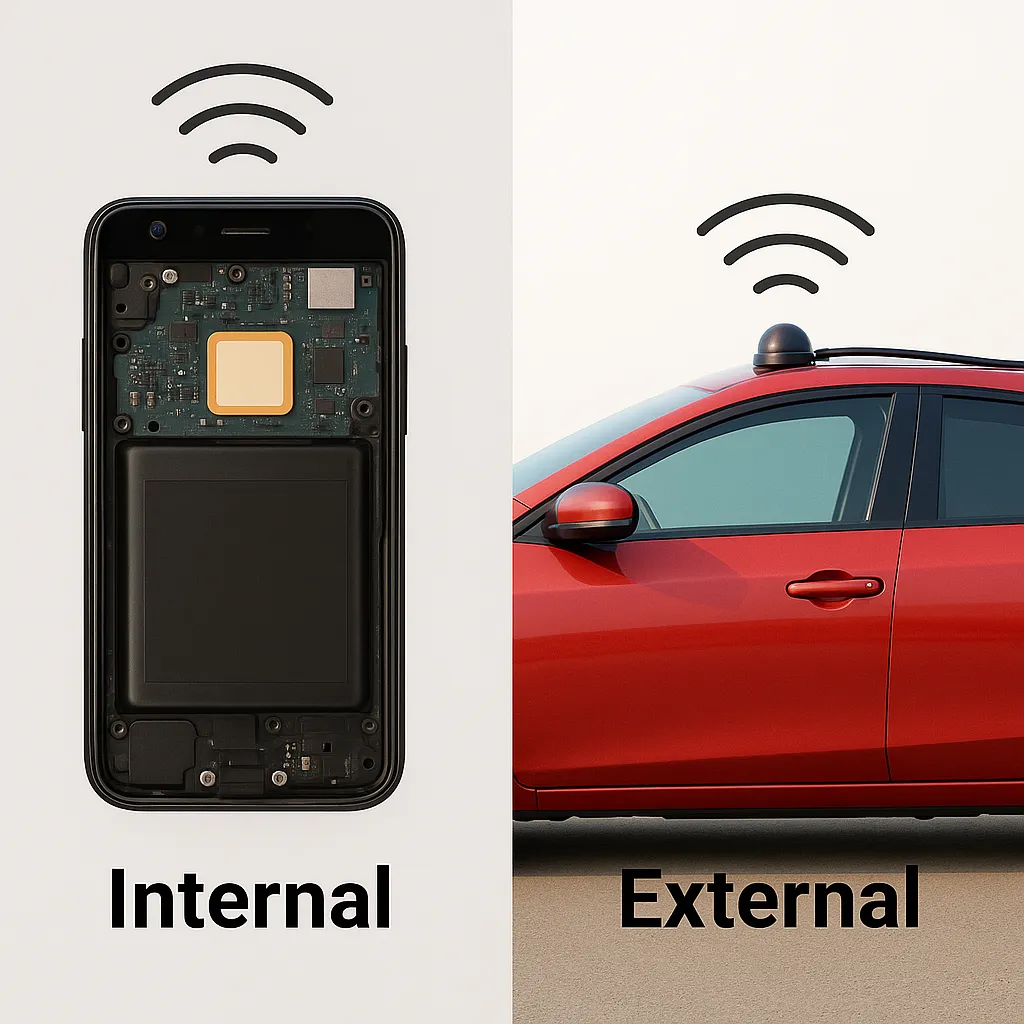
Internal antennas offer portability but may have weaker reception, while external antennas provide better signal capture by being positioned in optimal outdoor locations.
GPS antennas come in various designs and form factors, each suited for different situations. Broadly, we can categorize them as internal or external, and by their design type:
- Internal Antennas: These are built into devices (like the small antenna inside a smartphone or a handheld GPS unit). Internal antennas are usually compact patch antennas or chip antennas. They are convenient and protected inside the device’s body. However, because they are small and enclosed, they may not capture signals as strongly as larger externals. (Yes, phones do have a GPS antenna – it’s just hidden!)
- External Antennas: External GPS antennas are separate units that are connected to a GPS receiver via a cable (common connectors include SMA, MCX, or Fakra in cars). They can be placed in an optimal location (such as on a car’s roof) for better sky view. External antennas tend to be larger and often have higher gain. For example, an external car GPS antenna for a car stereo or tracker might be a small puck or magnetic mount module that you stick on the dashboard or roof for stronger reception. (For instance, many cars use a blue Fakra connector for the GPS antenna cable, while some handheld GPS receivers or drones use small SMA or MMCX connectors for their external antennas.)
- Patch Antennas: A very common type, these are flat, tile-like antennas (often a ceramic patch) tuned for GPS frequencies. Patch antennas are typically used both internally and externally due to their low profile. They work best when facing the sky (horizontally oriented).
- Helical Antennas: These antennas use a coiled wire shape (helix). They are often seen on older handheld GPS receivers and some high-end GNSS units. Helical antennas (including quadrifilar helix designs) are great at receiving signals from low on the horizon and are less sensitive to orientation. They are often used in applications where the antenna’s angle might change (like a handheld device).
- Chip Antennas: A tiny antenna used on some compact devices. They save space but generally have lower gain, meaning weaker signal reception compared to patch or helix antennas.
- Multiband GNSS Antennas: While a “GPS antenna” traditionally means one that receives the GPS satellite system, many modern antennas are designed to receive multiple satellite constellations (GNSS). These multiband antennas can pick up GPS, GLONASS, Galileo, BeiDou, etc., and often multiple frequencies (like L1, L2, L5). They are essential for high-precision applications.
Each type has its advantages. For instance, internal antennas make devices sleek and portable, whereas external antennas can drastically improve reception by being optimally placed and larger in size. In challenging environments or professional settings, external and multiband antennas are preferred for their superior performance.
Active vs. Passive GPS Antennas: What’s the Difference?
One important distinction is whether a GPS antenna is active or passive. This refers to whether the antenna has a built-in amplifier or not.
- Passive GPS Antenna: A passive antenna is just the antenna element itself with no amplification. It simply collects the satellite signals and sends them down the cable to the receiver. Passive antennas do not require power. They are simple and can work well when the antenna is very close to the receiver (such as inside a phone or on a short cable run). However, because GPS signals are extremely weak by the time they reach Earth, any loss in the cable or connectors can degrade a passive antenna’s signal. Thus, passive antennas are best used when the antenna can be very near the receiver (to minimize cable loss) and where there isn’t a lot of interference or blockage.
- Active GPS Antenna: An active antenna has an integrated low-noise amplifier (LNA) circuit. This amplifier boosts the strength of the incoming GPS signals right at the antenna before sending them to the receiver. Active antennas do require power – typically a few volts supplied through the antenna cable (a method called “bias-T” or coaxial power). Most GPS receivers in cars, drones, etc., provide a DC voltage output to power an active antenna automatically. The current draw of an active GPS antenna is usually small (on the order of 10–30 mA, which is just a tiny fraction of a watt). How do you power an active GPS antenna? Usually, the GPS receiver or device will supply power through the same cable that carries the signal. You don’t usually need a separate power cord; you just plug the antenna in, and the device powers it internally.
How much power does a GPS active antenna consume? It varies by model, but generally only around 0.1 watts or less. For example, an active antenna might use 3.3 V at 20 mA (which is 0.066 W). Some high-gain antennas might draw a bit more, but they are designed to be power-efficient since many run on battery-powered systems.
In modern designs, passive antennas are common in devices like smartphones or fitness wearables because the antenna can sit just inches away from the GPS receiver chip (minimizing any signal loss) and it draws no power. Active antennas are preferred when the antenna must be farther from the receiver or when maximum sensitivity is needed. These active units often also include built-in filters to block interference from other radio signals (like strong cell towers or Wi-Fi), which, combined with the LNA, greatly improves the signal-to-noise ratio.
The benefit of an active GPS antenna is that it can greatly improve signal quality, especially if you have a long cable run or are in a marginal signal area. By amplifying the signal at the source, it overcomes cable losses. Almost all automotive GPS antennas, marine GPS antennas, and survey-grade antennas are active.
To summarize the differences, here’s a quick comparison:
| Feature | Active GPS Antenna | Passive GPS Antenna |
|---|---|---|
| Amplifier built-in? | Yes (LNA amplifies the signal) | No (no amplification) |
| Power requirement | Yes – powered via coax cable (e.g. 3–5 V, ~10–30 mA) | None (draws no power) |
| Cable length tolerance | Longer – amplification can overcome cable loss, so can be placed farther from receiver | Short – must be near receiver to avoid signal loss |
| Typical usage | External antennas (vehicles, roof mounts, etc.), active GPS antenna in most aftermarket GPS setups | Internal antennas (phones, small modules) or very short connections |
| Advantage | Stronger signal, better in weak-signal areas or long cable runs | Simpler, no power needed, lower cost |
| Disadvantage | Requires power; slightly more complex circuitry | Weaker signal if cable is long; can’t drive long cables; more prone to noise on long runs |
As shown, active vs passive GPS antennas each have roles: passive antennas for short-range, power-sensitive uses, and active antennas for robust performance in vehicles and equipment. In practice, if you have the option, an active antenna usually provides more reliable reception.
Placement of GPS Antennas for Best Reception
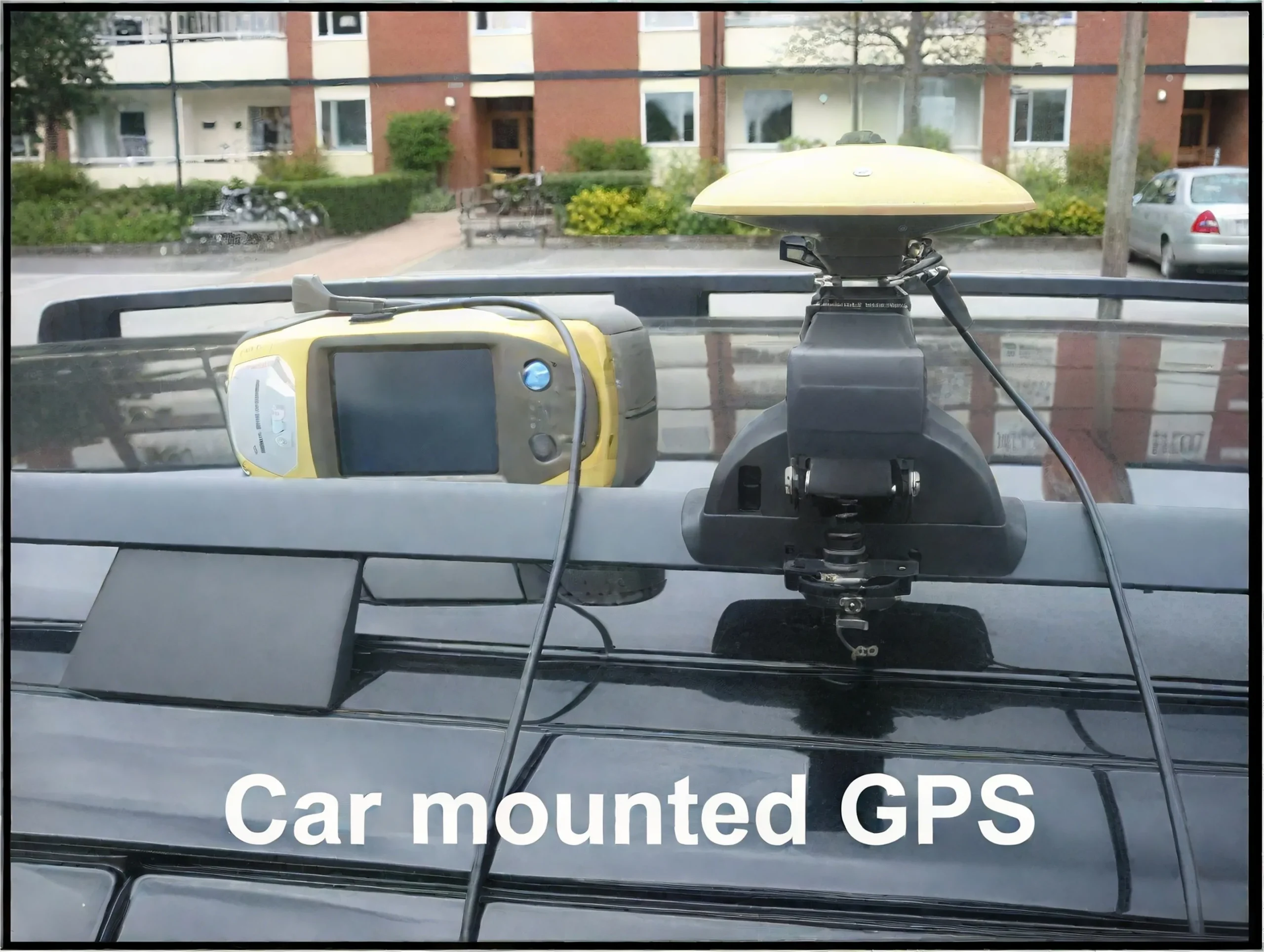
Placing a GPS antenna on the roof or near the windshield ensures a clear sky view, improving signal strength and reducing dropouts caused by obstructions.
Even the best antenna won’t perform well if it’s poorly placed. Where should I put my GPS antenna in my car? Ideally, in a location with a clear view of the sky. In vehicles, common spots include on the dashboard near the windshield or on the roof. Many external car GPS antennas have a magnetic base, allowing you to stick them on the metal roof. The roof is often the best location because it offers a 360-degree view of the sky. If roof mounting isn’t possible, placing the antenna on the front dash, as far forward (near the windshield) as possible, usually works. The windshield glass and plastic dash don’t significantly block GPS signals, but metal parts of the car will. Make sure the antenna isn’t directly under a metal roof or hood.
Where is the best place to put a GPS antenna on a car? Center of the roof is a top choice, or near the top of the windshield. Some cars have an embedded GPS antenna in the “shark fin” antenna assembly on the roof. The key is a clear view of the sky above. GPS signals come from satellites in various directions overhead, so the more sky visible, the better.
Does a GPS antenna need a line of sight? Essentially yes — the signals are line-of-sight radio waves. They don’t penetrate Earth (so underground won’t work) and are very weak inside buildings or under heavy cover. They can go through glass, plastic, and thin roofs with some loss. So while you don’t need direct eyeball visibility of a satellite, any solid obstruction (especially metal or concrete) will weaken the signal. In a car, that’s why mounting an antenna outside or at the windshield is important. Does a GPS antenna need a clear view of the sky? For optimal performance, absolutely yes. The more open sky the antenna “sees,” the more satellites it can lock onto, and the stronger the signals.
Other placement tips:
- Beware of coated windshields: Some car windshields have metallic coatings (for defrosting or sun protection) that can weaken GPS signals. In such cases, mount the antenna outside or use the designated clear section of the windshield (often near the rear-view mirror) without coating for better reception.
- Keep it upright: Most GPS antennas are designed to face the sky. If you mount one sideways or upside down, it may not receive as well.
- Avoid close proximity to other antennas or electronics: For instance, if your car has a big radio antenna or a cellular antenna, don’t place the GPS antenna right next to it. Give it some distance to reduce interference.
- Secure it: If using a magnetic mount on a car, make sure the surface is clean and flat. If placing on a dash, consider using double-sided tape or Velcro to keep it from sliding around.
By paying attention to placement, you ensure your antenna can do its job properly. Many “weak GPS signal” issues ultimately trace back to a poor antenna location.
Improving Weak GPS Signals: Boosters, Amplifiers, and Indoor Use
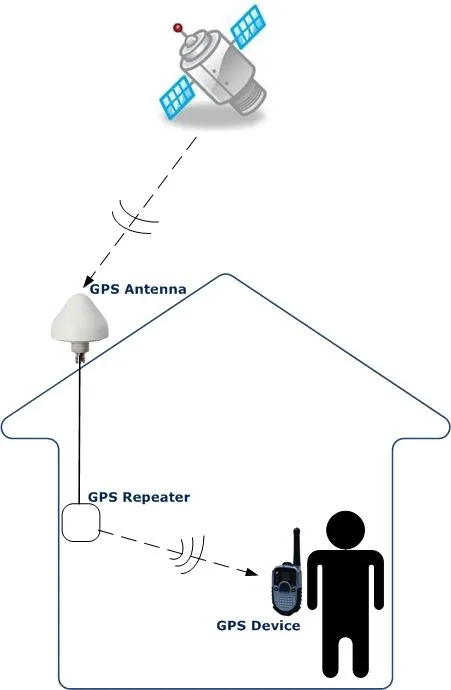
GPS boosters amplify weak signals for improved reception, especially in vehicles or indoor environments, ensuring more reliable navigation.
What if you’re still getting poor GPS reception? There are ways to boost GPS signals and fix weak reception issues.
Do GPS signal boosters work? You might have heard of GPS signal boosters or seen gadgets marketed to improve GPS reception. The concept of a “GPS signal booster” typically refers to either an amplified antenna or a GPS repeater system. In general, yes, these can work when used correctly. An active antenna, as discussed, is one form of booster (it amplifies the signal at the antenna). There are also inline amplifiers that can be added on a long antenna cable to strengthen the signal traveling to the receiver. And for specialized situations, a GPS repeater can be used to bring signals indoors.
How to amplify a GPS signal? The most straightforward way is to use an active antenna with a high gain LNA. If you already have an active antenna and need more, you could use an inline GPS amplifier (a powered device that the antenna plugs into, which then plugs into the receiver) to give extra gain, though this is uncommon for most consumers. Another approach for indoor environments is to set up a GPS repeater kit. A GPS repeater consists of an antenna placed outdoors (where it has clear sky view) that is connected via coaxial cable to an indoor re-radiating antenna. The outdoor antenna receives the satellite signals and the indoor unit rebroadcasts them inside, effectively acting like an “indoor satellite”. This can allow GPS devices to work inside a garage, tunnel, or building.
Do GPS signal boosters work for cars and phones? In a car, an external active antenna is usually the best booster – by moving the “listening point” outside the vehicle, it bypasses the signal attenuation caused by the car’s frame. Many modern dashcams or nav systems come with an optional external GPS antenna for this reason. For smartphones, you cannot directly attach an external antenna (as phones lack a port for that), but you can use a GPS re-radiator indoors or in a vehicle cradle to improve phone GPS reception. Note: some smartphone “GPS signal booster” apps claim to improve GPS performance – these can refresh your phone’s GPS data or settings, but they cannot actually amplify the radio signal from satellites. At best, they might help the phone find satellites faster (by downloading assistance data), but they won’t make signals stronger.
How do I fix a weak GPS signal? Here are a few tips:
- Reposition the device or antenna: Move to an open area if possible. If using a phone, get closer to a window or go outside. If using an external antenna, try a higher location or different spot where obstructions are minimized.
- Check connections: Ensure your external antenna (if you have one) is properly connected to the receiver and not damaged. A loose cable or broken connector can severely hurt signal quality.
- Use an external or higher-gain antenna: If you’re relying on a tiny internal antenna (like in a handheld device) and have the option to plug in an external antenna, doing so can dramatically improve signals. For example, many vehicle GPS trackers or aftermarket navigation units support an external vehicle GPS antenna – using it can fix weak reception issues inside a car.
- Use a GPS repeater for indoor coverage: If you absolutely need GPS signals inside a building (e.g., testing equipment in a warehouse or keeping a GPS lock in an underground garage), consider a GPS repeater system. Be aware that re-radiating GPS signals may require permission in some jurisdictions, as the GPS frequencies are controlled. (For instance, some countries require a license to use a GPS repeater because it rebroadcasts on the same frequencies.)
- Reduce interference: Keep the GPS device/antenna away from devices that emit radio interference. For example, some dash cameras, Bluetooth transmitters, or other electronics might interfere with GPS if placed too closely.
- Ensure updated software: If using a phone or dedicated GPS, make sure its software or firmware is up to date. Sometimes algorithm improvements can lead to better signal handling and faster fixes. Also, on a phone, toggling airplane mode or using a GPS status app to refresh satellite data (AGPS) can resolve glitches.
- Understand repeater limitations: If using a GPS repeater indoors (for example, in an aircraft hangar or large garage), remember that all receivers will effectively see the location of the repeater’s antenna (which is usually outside). This means you won’t get an actual indoor position, but the repeater allows devices to stay locked on and in sync while inside.
By following these steps, you can often turn a frustrating weak signal into a usable one. In remote or challenging environments, you might also explore specialized solutions like high-sensitivity receivers or antennas with ground planes that enhance gain, but generally the methods above suffice for common situations.
How to get GPS signal indoor? As mentioned, the practical way is to use a GPS repeater or to place an antenna outside and run a cable indoors to your receiver (if your device allows an external antenna input). Some people also position a dedicated GPS receiver at a window and then share the location via a local network – for example, a Bluetooth GPS receiver sitting by a window can feed location to a laptop deep indoors. But generally, standard GPS is not designed for indoor use, so these workaround solutions are needed for continuous indoor coverage.
Understanding RTK and Differential GPS for High Precision
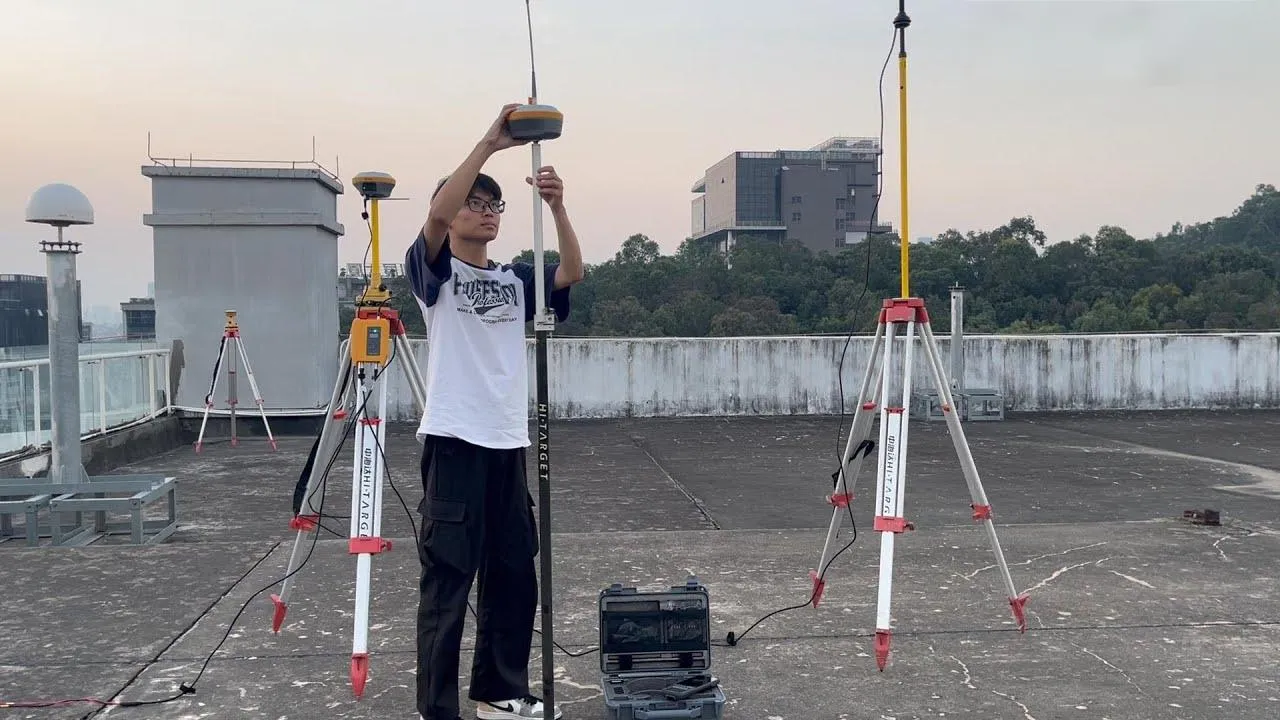
RTK antennas receive multi-frequency GNSS signals for centimeter-level accuracy, essential for surveying, precision agriculture, and machine guidance.
Standard GPS is accurate to within a few meters for civilian use, which is fine for everyday navigation. But some applications require centimeter-level accuracy. This is where RTK and other differential GPS techniques come into play.
What is an RTK antenna? RTK stands for Real-Time Kinematic, a high-precision GPS/GNSS technique. An RTK antenna is essentially a high-quality GNSS antenna used in an RTK system. These antennas are usually larger, often dome-shaped or choke-ring designs, and are capable of receiving multiple frequencies (like L1, L2, L5 for GPS and similar bands for GLONASS/Galileo). The purpose of an RTK antenna is to capture signals with minimal distortion, allowing the receiver to use carrier-phase data from the satellites. In an RTK setup, you have two units: a base station (at a known fixed location) and a rover (moving unit). Both use RTK antennas. The base sends correction data to the rover, enabling the rover’s receiver to fix errors and achieve centimeter-level accuracy in real time.
What is the difference between GPS and RTK? In casual terms, using GPS alone gives you a position that might be off by a few meters. RTK, on the other hand, can give positions accurate to a couple of centimeters or even millimeters. The difference isn’t in the satellites (they’re the same GPS satellites) but in how the signals are used. RTK uses the phase of the radio waves and corrections from a nearby base station to eliminate most errors (like atmospheric delay, satellite clock errors, etc.). So, the “RTK antenna” itself isn’t magically more accurate, but it is built to higher specs (to receive dual frequencies, to minimize signal phase center variations, etc.), and it’s part of a system that yields far greater accuracy. RTK antennas also often support not just GPS, but other constellations (making them GNSS antennas) to get as many signals as possible.
Where to mount an RTK antenna? For the base station, the antenna should be mounted on a very stable spot with an extremely clear view of the sky (no nearby trees, buildings, or anything that could block or reflect signals). Surveyors often mount base antennas on a tripod over a known survey marker, or on a building rooftop. The rover’s RTK antenna (say on a surveying pole or on a tractor for precision farming) also should be as high and unobstructed as feasible – for example, on top of a pole or vehicle roof. The idea is to minimize obstructions and multipath (signal reflections). RTK antennas sometimes have ground planes (a flat metal disc under the antenna) to block ground reflections and improve accuracy. So whether base or rover, high and open is the rule for placement.
What is the difference between RTK and differential GPS? “Differential GPS” (DGPS) is a broader term that refers to any technique where you use a second receiver at a known location to help correct errors. RTK is actually one form of differential GPS – a very precise one that uses real-time carrier-phase corrections. However, in common usage, DGPS often refers to older methods using only code-phase corrections or satellite-based augmentation. For example, WAAS in North America or EGNOS in Europe are space-based DGPS systems that improve GPS accuracy to within a meter or so by sending correction data from geostationary satellites. Traditional DGPS might also refer to using a single-frequency receiver with corrections from a reference station (yielding sub-meter accuracy). RTK typically implies using carrier-phase (requiring dual-frequency measurements) and can get the accuracy down to centimeters. It also usually requires a direct communication link (radio, internet) between base and rover to send the data in real time.
In summary:
- GPS (Standalone) – one receiver, meter-level accuracy.
- DGPS (Differential GPS) – using corrections from a base or network, can be sub-meter (or better) accuracy. This includes SBAS systems like WAAS.
- RTK – a specific high-end differential technique using carrier-phase, with a dedicated base station, achieving centimeter accuracy.
For those needing extreme precision (surveying, machine control, autonomous vehicles), RTK is the go-to solution, and it requires quality RTK-capable GNSS antennas and receivers.
RTK is commonly used in applications like land surveying (mapping property boundaries and construction sites), precision agriculture (auto-steering tractors with centimeter accuracy), drone mapping, and construction machine control. These systems require more setup and investment (including radios or cellular links for the corrections), but they deliver incredibly precise results.
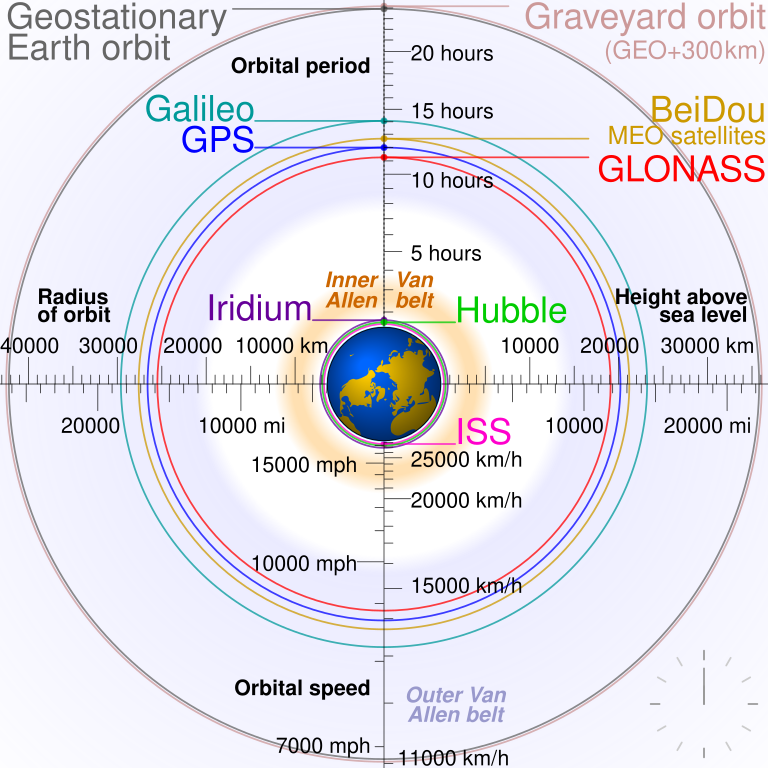
GNSS antennas capture signals from multiple satellite systems like GPS, GLONASS, Galileo, and BeiDou, improving accuracy and availability over GPS-only antennas.
You might notice we’ve been using “GPS” and “GNSS” somewhat interchangeably in discussing antennas. What is a GNSS antenna? GNSS stands for Global Navigation Satellite System, an umbrella term that includes not only GPS (the U.S. system) but also others: GLONASS (Russia), Galileo (EU), BeiDou (China), and more. A GNSS antenna is simply an antenna that can receive signals from multiple satellite systems, not just GPS. In contrast, a “GPS antenna” might be limited to the frequencies used by GPS satellites alone.
What is the difference between a GPS antenna and a GNSS antenna? Primarily the frequency range and design. GPS currently mainly uses signals at 1575 MHz (L1) and 1227 MHz (L2) and newer L5 (1176 MHz), whereas other systems have their own frequencies (many of which are close to the GPS ones, but not identical). A GNSS antenna is built to be broadband or multi-band so it can handle all these frequencies simultaneously. For instance, a GNSS antenna for surveying might receive GPS L1/L2, GLONASS G1/G2, Galileo E1/E5, and BeiDou B1/B2 signals all with one antenna. This requires a wider bandwidth design or multiple resonant elements. A simple GPS-only antenna might only focus on L1 (1575 MHz) which is fine for basic navigation but wouldn’t capture the others.
In everyday conversation, people might say “GPS antenna” to mean any antenna that picks up satellite navigation signals. In fact, most standalone antennas you buy today for cars or drones are actually GNSS antennas (they’ll specify coverage of GPS/GLONASS etc.), because using multiple constellations gives more satellites in view and better accuracy. Unless you have a very old or specialized receiver that only listens to GPS, a GNSS antenna is beneficial.
What does GNSS stand for? As noted, Global Navigation Satellite System – essentially any satellite system for navigation and timing. So GPS is one GNSS (the first and most famous one).
What is a GNSS smart antenna? This term refers to an integrated device that combines a GNSS antenna and a GNSS receiver in one unit (and often a processor, and output interface). For example, in precision agriculture or surveying, you might use a “smart antenna” device that you mount on your tractor or tripod which not only receives the satellite signals but also computes the position solution internally and maybe even stores data or outputs corrections. It’s “smart” because it’s not just a passive sensor; it’s doing the GPS/GNSS processing too. An example is a USB GPS puck for a laptop – often marketed as a “GPS antenna”, it actually contains the receiver chip inside the housing, delivering location data over USB. Many modern products like the Garmin GNSS smart antenna series or Septentrio’s smart antennas are all-in-one: just give them power and they give you position info. This simplifies setup (no separate receiver box and antenna with cable; instead one unit handles everything).
In summary, GNSS antennas are the more encompassing upgrade to GPS-only antennas, and they are critical for high accuracy and reliability (using multiple systems). If you see a spec sheet that says an antenna supports GPS/GNSS, it’s likely a good thing as it means more satellites to use.
One practical difference to mention is cost: a basic passive GPS antenna (for example, the kind used in a car or small gadget) can cost just a few dollars, whereas a survey-grade multi-band GNSS antenna with high precision can cost hundreds or even thousands of dollars. The complexity and precision engineering of GNSS antennas drive up the price, so the choice often depends on budget as well as performance needs.
FAQ
What is a GPS antenna used for?
A GPS antenna receives satellite signals and feeds them to a GPS receiver, enabling devices to calculate their position, speed, and time. It’s essential for accurate navigation, tracking, and timing in cars, phones, and industrial systems.
Where should I put my GPS antenna in my car?
For best performance, place the vehicle GPS antenna on the car roof or dashboard near the windshield. Avoid placing it under metal surfaces. A clear sky view improves signal strength and reduces GPS dropouts.
Do phones have a GPS antenna?
Yes, smartphones include a tiny internal GPS antenna, usually a patch or chip design. Though compact, it can perform well due to close proximity to the receiver chip. For better accuracy, some use external GNSS accessories via Bluetooth.
Does a GPS antenna need line of sight?
Yes. GPS signals are weak and require line-of-sight to satellites. While they pass through plastic and glass, metal or concrete can block them. Clear sky view is critical for precise positioning.
Do GPS signal boosters work?
Yes. A GPS signal booster (like an active antenna or repeater) amplifies weak signals. In vehicles, using an external active GPS antenna often boosts performance more than internal-only setups.
How to amplify a GPS signal?
Use an active GPS antenna with LNA (low noise amplifier) or a GPS inline amplifier. For indoor use, consider a GPS repeater kit, which rebroadcasts outdoor satellite signals inside.
How do I fix a weak GPS signal?
Solutions include moving to an open sky area, checking cable connections, using an external high-gain GPS antenna, or installing a signal booster or repeater if indoors or under metal structures.
What is an RTK antenna?
An RTK antenna is a high-precision GNSS antenna used in real-time kinematic systems. It receives dual-frequency signals and is designed for minimal signal distortion, supporting centimeter-level accuracy in surveying or agriculture.
What is the difference between GPS and RTK?
GPS gives ~3-5 meter accuracy. RTK uses base station corrections and dual-frequency phase data to achieve centimeter-level precision. The antenna itself must support these frequencies and stable signal reception.
What is the difference between active and passive GPS antennas?
An active GPS antenna has a built-in amplifier and requires power. A passive antenna does not. Active antennas work better over long cables or in signal-challenging environments (like vehicles).
Where is the best place to put a GPS antenna on a car?
Center of the roof is ideal, offering 360° satellite view. Alternatively, dashboard corners near the windshield can work if no metallic tint blocks signals. Always keep away from electronic noise sources.
What is a GNSS antenna?
A GNSS antenna receives signals from multiple satellite constellations (GPS, GLONASS, Galileo, BeiDou). Compared to a GPS-only antenna, it tracks more satellites for better accuracy and reliability.
What is a GNSS smart antenna?
A GNSS smart antenna integrates the antenna, receiver, and often a processor into one unit. It outputs position data directly, making it easier to deploy in vehicles, drones, or farm equipment.
Conclusion: Choosing the Right GPS/GNSS Antenna
Picking the right antenna can make or break your GPS device’s performance. We’ve seen that placement, antenna type, and features like active amplification all significantly impact the quality of the GPS signal you receive. If you’re dealing with weak signals in a vehicle, an active vehicle GPS antenna mounted correctly can be a game-changer. For professional or industrial applications, investing in a high-quality multi-band GNSS antenna (or even an RTK setup with an RTK antenna) will pay off in accuracy and reliability.
It’s also worth considering the build quality and specifications: for example, if you need an antenna for a rugged environment, look for ones with weatherproof housing and maybe even anti-jamming features to resist interference. The good news is that there are many options on the market.
Does a GPS antenna need line of sight? To reiterate, yes – maximize your antenna’s sky view and minimize obstructions for best results. And remember, the antenna is just one part of the system: a quality receiver and up-to-date software are important too.
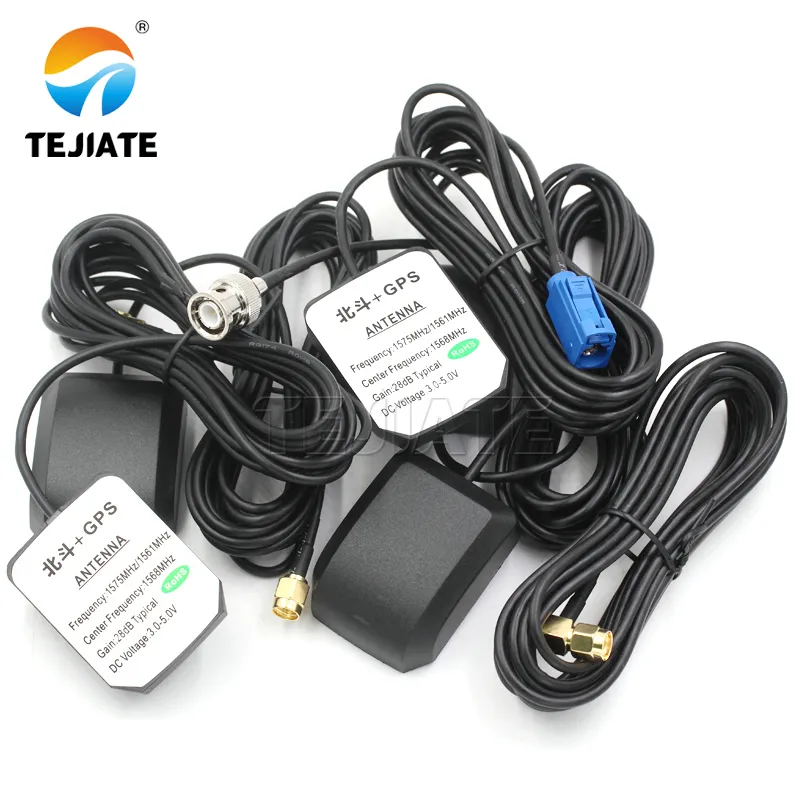
This image displays TEJTE’s GPS antenna product, highlighting its compact form factor, weather-resistant enclosure, and robust RF performance. Designed for automotive, marine, and outdoor applications, it ensures reliable signal reception even in harsh environments.
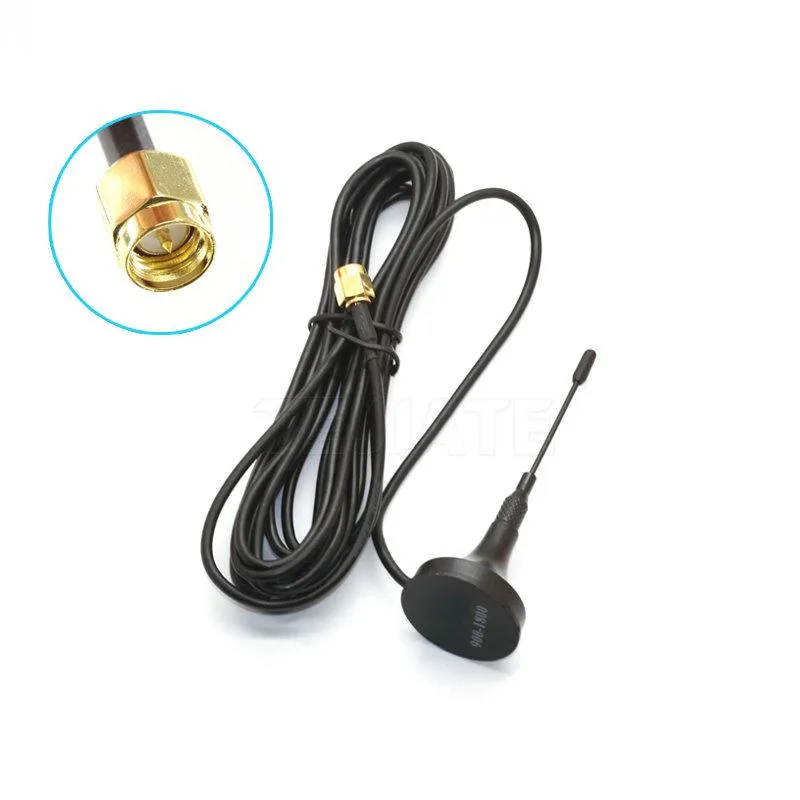
This product photo showcases TEJTE’s vehicle GPS antenna designed for reliable positioning in commercial and fleet vehicles. The rugged waterproof casing and premium RF connector ensure stable performance in outdoor environments.
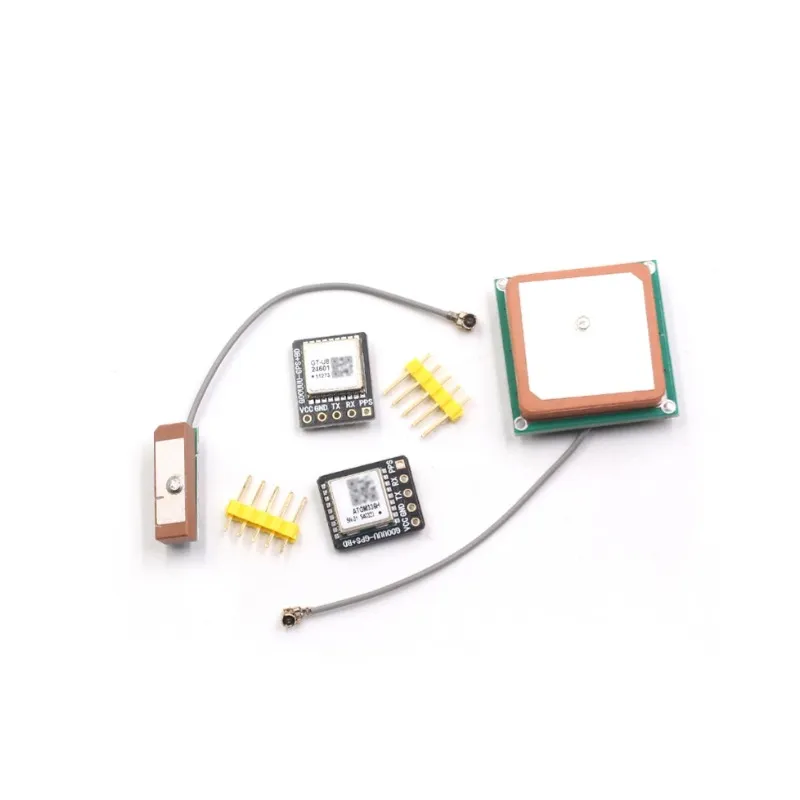
This image presents TEJTE’s GNSS smart antenna designed for high-precision positioning. The integrated design reduces installation complexity and is ideal for vehicles, UAVs, and industrial applications requiring robust GNSS performance.
Companies like TEJTE offer a comprehensive portfolio of RF and GPS/GNSS antennas engineered for diverse needs – from compact antennas for IoT devices to high-gain antennas for 5G infrastructure and precise navigation. Such providers can help customize solutions, whether you need a discreet patch for a drone or a robust external antenna for a fleet of trucks.
In conclusion, understanding your needs is key. If you only need to navigate city streets, the tiny antenna in your phone will do fine. But if you’re guiding a tractor on auto-steer or conducting a land survey, you’ll want the best antenna and setup you can get. By considering the factors we’ve discussed – active vs passive, placement, signal boosting, RTK vs standard GPS, and GNSS capabilities – you can ensure you’re getting the most out of your GPS technology. With the right GPS antenna in place, you’ll enjoy fast, accurate positioning whenever and wherever you need it.
Bonfon Office Building, Longgang District, Shenzhen City, Guangdong Province, China

A China-based OEM/ODM RF communications supplier
Table of Contents
Owning your OEM/ODM/Private Label for Electronic Devices andComponents is now easier than ever.