
A pilot sets up on the edge of a gravel pit. The quad lifts, heads out clean, and the video looks sharp. Then a normal turn causes the feed to tear apart. Nothing obvious failed. The receiver still has power, the aircraft antenna is still attached, and the video transmitter is still working. The problem is quieter: the receive pattern never matched the way the flight actually moved.
That is where a directional antenna either works exactly as intended or becomes the weak link. It is not a universal range upgrade. It is a geometry tool. Used in the right FPV receiver setup, it gives stronger forward reception. Used in the wrong setup, it can make the link feel less forgiving than a simple omni.
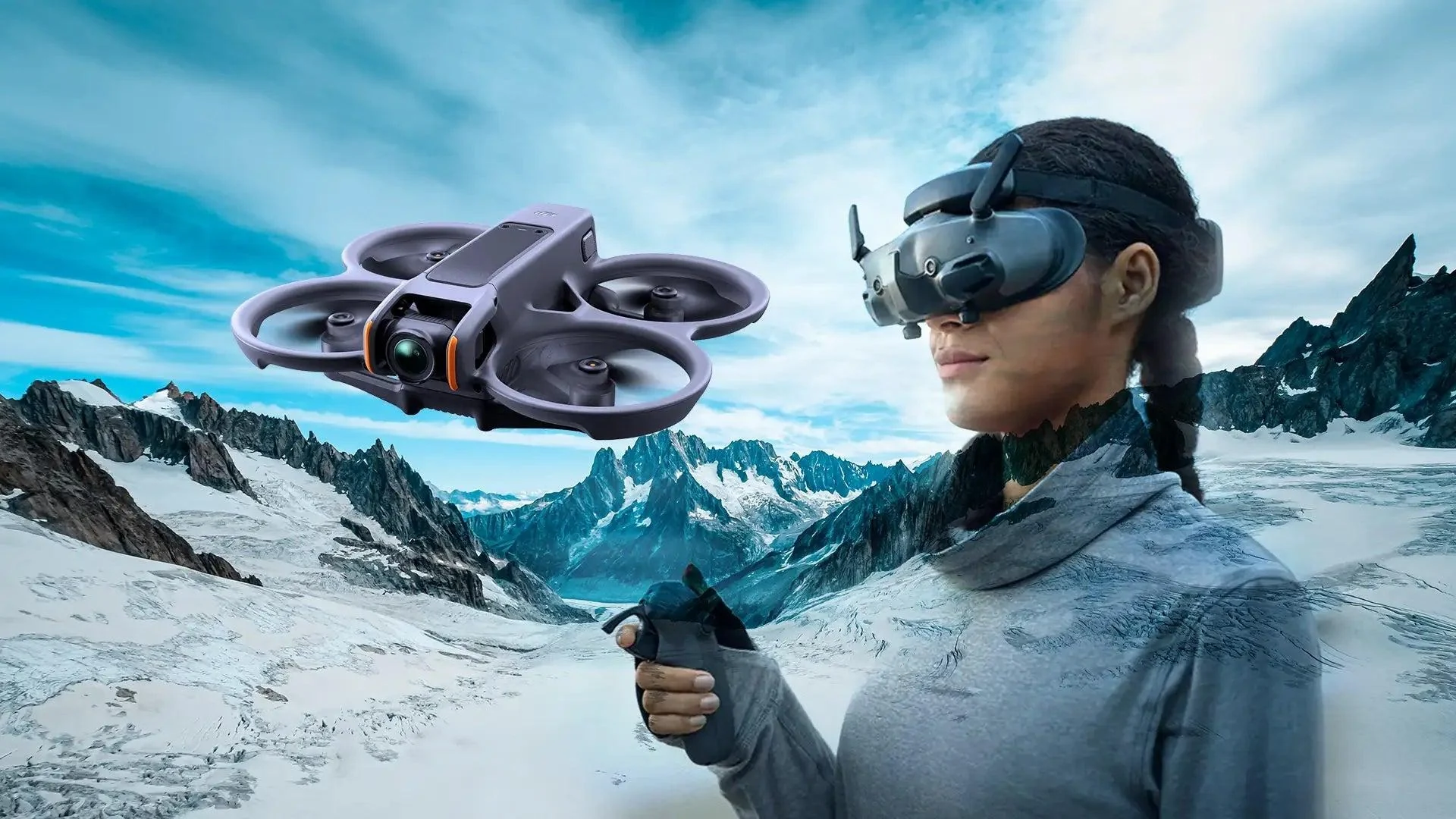
Directional antenna FPV receiver setup FPV pilot receiver setup image for directional antenna. Optimized for TEJTE product blog content and image search.
Start with the flight area, not the antenna gain
Most buying decisions start in the wrong place. Pilots compare dBi numbers, scroll product photos, and assume more gain means better video. That shortcut only works when the flight geometry already fits the antenna pattern.
In FPV, the receiver is not tracking a fixed transmitter. The aircraft moves through space, changes angle, drops behind terrain, and often returns from a different line than it left. That means the shape of the usable airspace matters more than the peak strength of the antenna. A directional antenna helps only when the aircraft spends most of its time inside the forward-facing zone.
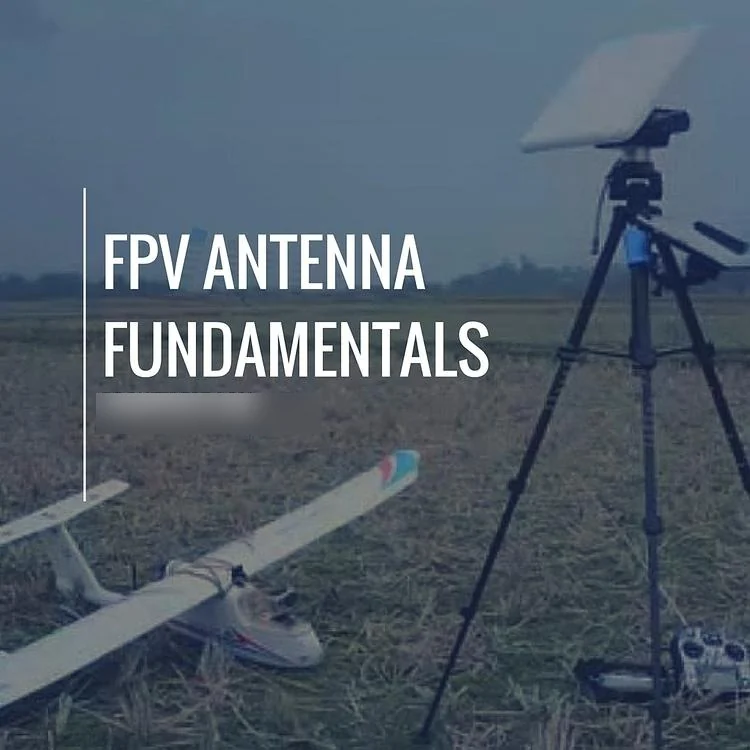
Directional antenna FPV receiver setup field antenna setup image for directional antenna. Optimized for TEJTE product blog content and image search.
Map whether the flight path is narrow, wide, or often behind you
Before choosing hardware, map the route. Ask whether the quad stays mostly in front of you, whether it swings wide left and right, and whether it regularly passes behind your body or behind nearby obstacles. If the flight stays forward, such as ridge runs, long roads, coastline routes, or certain racing layouts, a directional antenna can focus useful sensitivity into that sector.
If the flight wraps around you, the situation changes. The antenna is not failing. It is simply pointed at the wrong space for part of the flight. That is why freestyle pilots and long-range pilots can report opposite results from similar antenna hardware.
Separate freestyle roaming from corridor-style routes
Freestyle flying introduces a different kind of stress. The aircraft does not follow a predictable corridor. It dives, loops, crosses behind obstacles, and reappears from unexpected angles. Directional antennas struggle here because they expect consistency.
Corridor-style routes fit directional reception much better. The aircraft may go far, but it rarely leaves the forward sector. That difference explains why the same patch antenna can feel stable in one field and frustrating in another.
Check whether your real limit is coverage shape
A common mistake is trying to fix geometry problems with power or gain. If the aircraft frequently leaves the antenna pattern, adding gain will not solve the problem. In some cases, it makes the problem feel worse because the usable area becomes more focused.
A broader RF system perspective helps. Loss, routing, and placement matter in antenna systems just as they do in a coaxial cable guide. System behavior matters more than any single spec.
Why directional antennas help some FPV links and hurt others
Directional antennas do not improve every link in a universal sense. They reshape reception. They concentrate sensitivity in one direction and reduce it elsewhere. That trade is powerful when it aligns with the mission and risky when it does not.
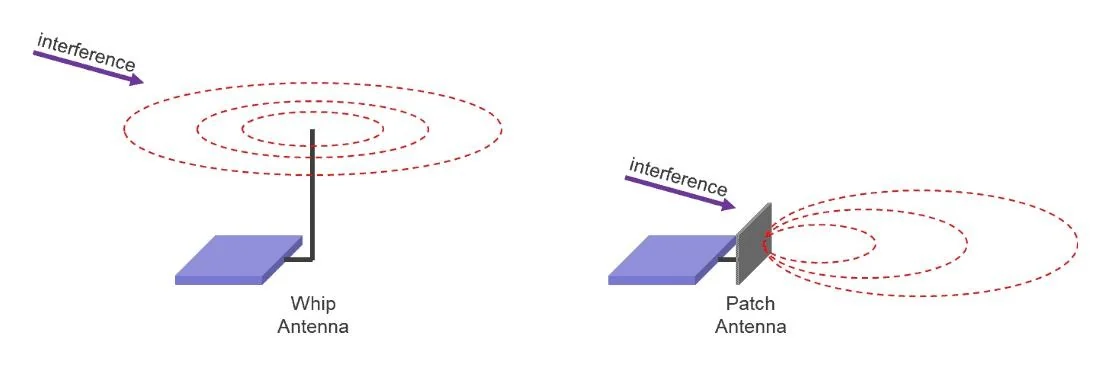
Directional antenna FPV receiver setup directional versus omnidirectional coverage diagram image for directional antenna. Optimized for TEJTE product blog content and image search.
Compare directional coverage with omnidirectional coverage
Directional and omnidirectional antennas solve different problems. A directional antenna gives focused reach and a narrower angle. An omnidirectional antenna gives wider coverage with less peak focus. Neither is automatically better.
| Antenna type | Strength | Limitation | Best use |
|---|---|---|---|
| Directional antenna | Strong forward signal and extended reach | Narrower coverage and aiming required | Long-range or corridor-style flight |
| Omnidirectional antenna | Wide coverage and forgiving positioning | Lower peak reach | Freestyle, roaming, and close-range flying |
The mistake is treating this as a hierarchy. It is a trade. Basic antenna references describe this as radiation pattern directionality, but FPV exposes the practical limit because the transmitter never stays still. For a neutral primer, see the antenna pattern basics from Antenna Theory.
Do not confuse longer reach with more forgiving reception
Longer reach means how far you can go in the right direction. Forgiving reception means how stable the link stays when the aircraft is not where you expected. Directional antennas favor the first. Omni antennas favor the second.
That is why many pilots keep an omni in the system even after adding a patch antenna. The goal is not redundancy. It is role separation: one antenna handles forward reach, and the other catches side angles and unexpected movement.
Match the receiver strategy before choosing the antenna
A directional antenna does not live alone. It only makes sense as part of a receiver strategy. The first decision is not which antenna to buy. It is what kind of receiver system you are building.
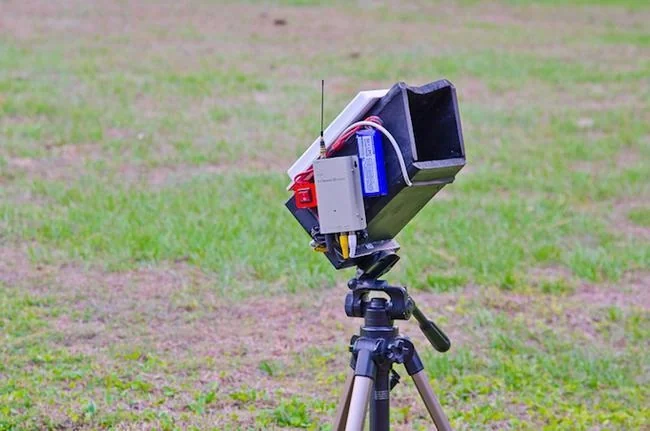
Directional antenna FPV receiver setup ground station receiver setup image for directional antenna. Optimized for TEJTE product blog content and image search.
Decide when goggles are enough and when a ground station helps
For short to mid-range flights, goggles-mounted antennas can work well. The system is simple, portable, and responsive. Once you start pushing distance or flying through structured terrain, placement starts to matter more: height above ground, clear line of sight, and a stable aiming direction.
A ground station changes the behavior of the system because it separates the antenna from head movement. A directional antenna becomes more useful when it is mounted on something stable rather than moving with the pilot.
Use diversity when one beam is not enough
A single directional receiver antenna can work when the flight stays in one sector, the pilot can maintain orientation, and the route has few surprises. Most real-world flights are not that controlled. Diversity receiver setups allow two different reception behaviors to coexist: one antenna focused forward and one antenna covering everything else.
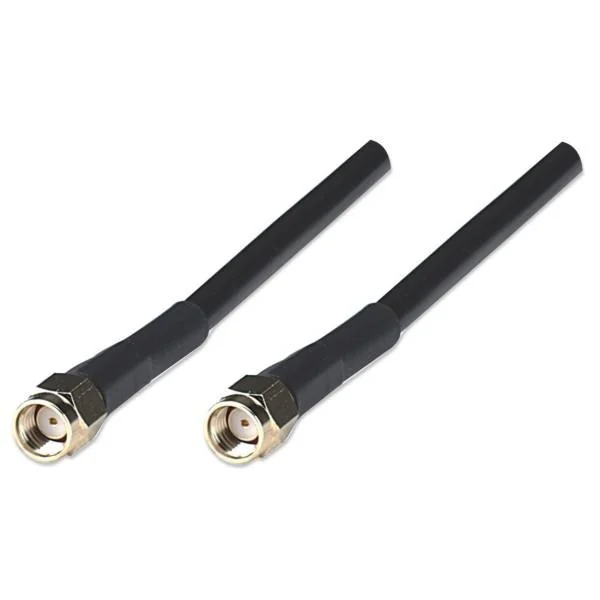
Directional antenna FPV receiver setup omnidirectional receiver antennas image for directional antenna. Optimized for TEJTE product blog content and image search.
This is also where connector and cable decisions quietly matter. A poorly chosen adapter can eat into the margin you expected the directional antenna to provide. The same signal-integrity logic discussed in SMA vs BNC vs N-Type connector comparisons applies here, only at smaller scale and higher frequency.
Read patch antenna as one directional option, not the whole category
Patch antennas appear in many FPV receiver builds because they are compact, easy to mount, and widely available. That visibility creates a shortcut: pilots often treat patch antenna and directional antenna as interchangeable terms. They are not.
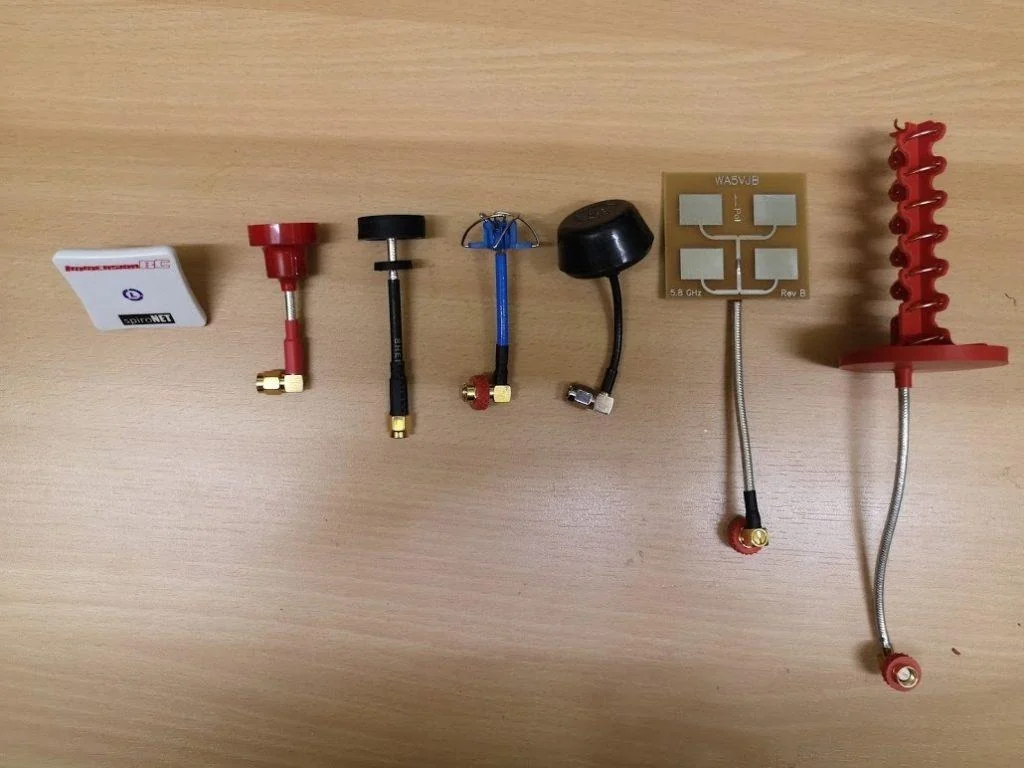
Directional antenna FPV receiver setup FPV antenna option lineup image for directional antenna. Optimized for TEJTE product blog content and image search.
A patch is one way to build directionality. It is not the only way, and it does not represent the full range of directional behavior.
Compare patch, helical, and Yagi behavior
| Directional type | Beam behavior | Practical use | Trade-off |
|---|---|---|---|
| Patch antenna | Moderate forward width | General FPV receiver use | Limited peak reach compared with narrower designs |
| Helical antenna | Narrower beam | Long-range focused flights | Requires more precise aiming |
| Yagi antenna | Very narrow beam | Extreme directional use | Bulkier and sensitive to alignment |
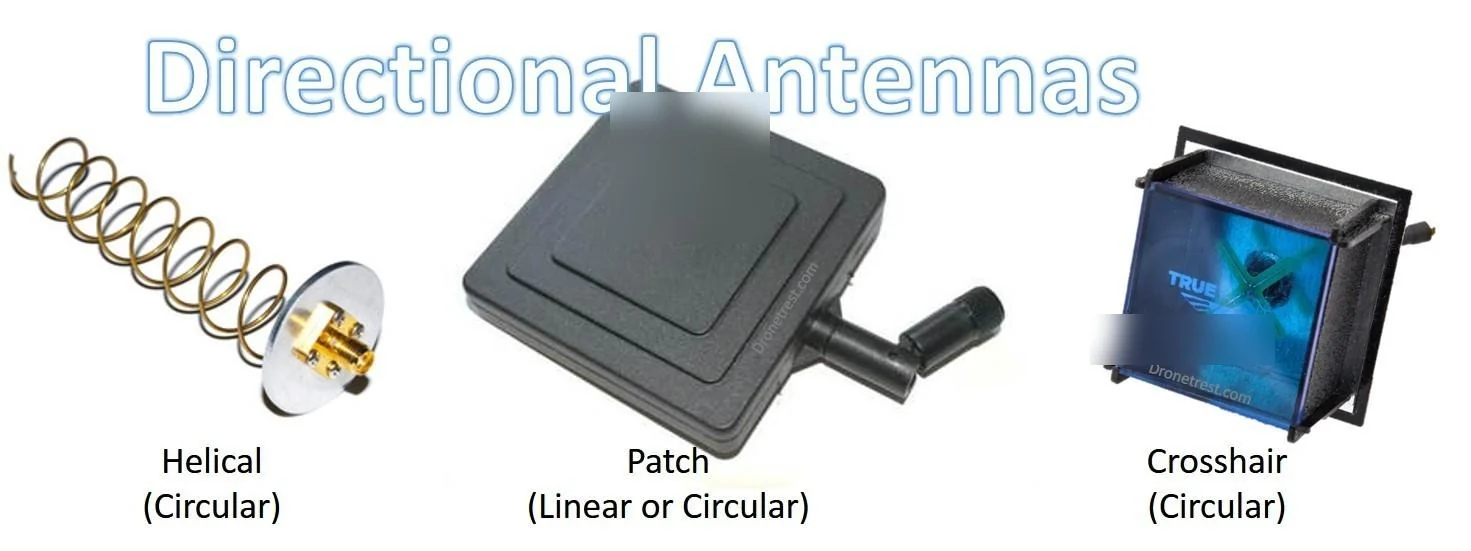
Directional antenna FPV receiver setup directional antenna form factor comparison image for directional antenna. Optimized for TEJTE product blog content and image search.
What matters is not which one is better in theory. What matters is how tightly the antenna expects you to aim. A patch gives you some room to be slightly off. A higher-gain directional design often does not.
Check beam width before chasing dBi
Spec sheets highlight gain because it is easy to compare. Beam width is less visible, but it is often more relevant in field use. A 9 dBi patch and a 13 dBi directional antenna do not just differ in reach. They differ in how much aircraft movement they tolerate before performance drops.
For many pilots, a slightly wider beam feels more stable because the aircraft spends less time outside the useful zone. That is why moderate-gain patch antennas remain popular even when higher-gain directional products are available.
Use 5.8GHz behavior to judge whether gain survives the chain
Directional gain looks clean in isolation. Real receiver systems are not isolated. At 5.8GHz, small losses add up quickly. Every connector, every extension cable, and every extra interface reduces the signal that reaches the receiver.
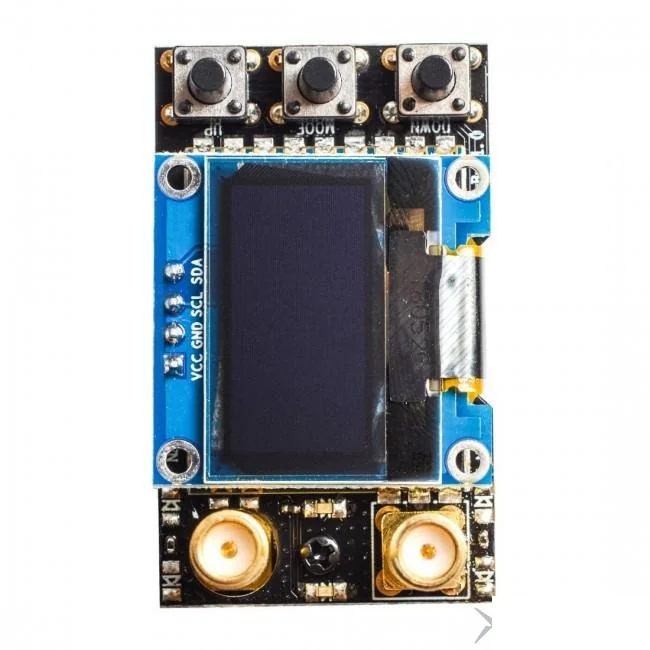
Directional antenna FPV receiver setup FPV receiver hardware chain image for directional antenna. Optimized for TEJTE product blog content and image search.
Check whether feedline loss offsets the directional advantage
A long extension cable between the antenna and receiver can seem harmless because it gives better placement flexibility. At 5.8GHz, even short lengths can introduce meaningful loss, especially with thin coax. If the cable consumes 1 to 2 dB and the new antenna adds 3 dB over the previous setup, the real gain is much smaller than expected.
This is why short, direct connections or carefully chosen coax matter. If you are not sure how cable choice affects performance, the same trade-offs described in TEJTE’s RF cable overview apply here. The only difference is that higher frequency makes the penalty more visible. For a broader technical reference on cable behavior, see Microwaves101 on coaxial cable.
Move the antenna higher before buying a stronger antenna
Elevation changes often outperform hardware upgrades. Raising the antenna can clear ground reflections, improve line of sight, and reduce obstruction loss. These gains apply in all directions, not just forward.
In many setups, moving the antenna one or two meters higher produces a more noticeable improvement than switching to a higher-gain directional model. A stronger antenna cannot compensate for poor placement as reliably as a cleaner line of sight can.
Verify polarization before trusting the beam shape
A directional antenna with perfect aiming can still underperform if polarization is wrong. This is one of the easiest mistakes to make and one of the hardest to diagnose quickly in the field.
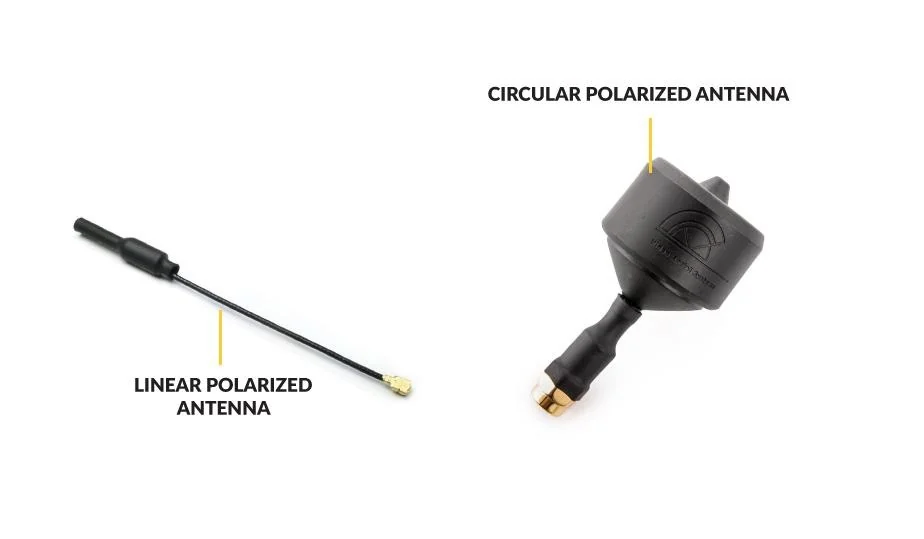
Directional antenna FPV receiver setup linear and circular polarized antenna comparison image for directional antenna. Optimized for TEJTE product blog content and image search.
Match RHCP and LHCP before tuning the setup
FPV systems commonly use circular polarization, usually RHCP or LHCP. If the transmitter and receiver do not match, signal loss happens before any directional advantage comes into play. The link starts from a weaker baseline, then the directional antenna focuses that weaker baseline.
Polarization should be planned with the same discipline as beam shape. For background on polarization concepts, see Antenna Theory’s polarization explanation. For TEJTE-specific FPV context, compare the receiver-side planning here with the LHCP antenna FPV video link guide.
Remember the regulatory side of RF operation
Receiver antenna planning is mostly about signal quality, but FPV systems still exist inside a regulated RF environment. Operators should understand the rules that apply to their transmitter, power level, and band. In the United States, the FCC Part 15 rules and the FCC’s radio-frequency safety guidance are useful starting points.
Build a directional pass-fail sheet before you buy
By this point, most mistakes are visible. Not because the antenna is wrong, but because the setup around it does not support what the antenna expects. Instead of guessing, force the decision through a practical fit check.
Directional FPV receiver fit matrix
| Field | Your setup | Notes |
|---|---|---|
| Flight profile | Define before purchase | Freestyle, racing, mid-range, or long-range |
| Flying-area spread | Estimate from the real route | Narrow, moderate, or wide |
| Receiver platform | Match the mounting plan | Goggles, external receiver, or ground station |
| Receiver mode | Choose the reception strategy | Single or diversity |
| Primary antenna role | Assign the main job | Directional or omni |
| Secondary antenna role | Add coverage if needed | Directional, omni, or none |
| Frequency band | Confirm before selecting hardware | 5.8GHz or another band |
| Polarization plan | Match aircraft and receiver | RHCP, LHCP, or linear |
| Connector family | Check every interface | SMA, RP-SMA, MMCX, or another interface |
| Feedline type | Keep loss low | Direct, short extension, or long extension |
| Beam aiming requirement | Judge field usability | Low, medium, or high |
| Recommendation | Make the final call | Use, caution, or avoid |
A practical scoring model can weight coverage geometry at 25 points, receiver strategy at 20, polarization match at 15, feedline loss control at 15, beam-aiming suitability at 15, and connector match at 10. Scores above 85 usually indicate a good real-world fit. Scores from 70 to 84 need attention to aiming, cable, or placement. Below 70, a directional antenna is probably not the right default.
Where directional FPV receiver setups are moving
FPV receiver planning has shifted away from simple “stronger antenna equals better range” thinking. More setups now start from placement and geometry: where the antenna sits, how high it is, what direction it covers, and how the aircraft actually moves.
Directional antennas still matter, but they are treated as part of that geometry rather than the center of the system. This is the same shift seen across RF design. Performance comes from alignment between components, not from pushing one parameter as high as possible.
For many pilots, directional-plus-omni remains the practical baseline. The directional antenna handles forward reach. The omni fills in everything else. That combination survives imperfect flying, uneven terrain, and real-world variability better than a purely directional receiver setup.
FAQ
Why can a directional antenna perform worse than an omni in freestyle flying?
Because freestyle flying constantly pushes the aircraft outside the antenna’s preferred direction. The issue is usually coverage mismatch, not raw signal strength.
Should I move my receiver position before upgrading the antenna?
In many cases, yes. Height and line-of-sight improvements often produce more stable gains than switching to a higher-gain antenna.
Can a long extension cable reduce the benefit of a directional antenna?
Yes. At 5.8GHz, cable loss can quietly cancel part of the gain advantage, especially with thin or long coax runs.
When is a patch antenna the right choice?
A patch antenna is a good choice when you want directional behavior without extreme aiming sensitivity. It balances reach, size, and usability.
How do I tell if the issue is aiming, polarization, or cable loss?
A sudden drop while turning usually points to aiming. A consistently weak link can point to polarization mismatch. Gradual degradation with distance or cable changes often points to connector or feedline loss.
Why keep an omni antenna in a directional setup?
Real flights are rarely perfectly aligned. The omni covers angles the directional antenna misses and makes the receiver setup more forgiving.
Will a directional antenna help if the aircraft antenna is poorly matched?
Not much. Mismatch losses happen before directionality matters, so polarization and connector compatibility should be fixed first.