
A wire can pass a quick continuity check and still fail in the field.
That is the uncomfortable part of crimp work. The meter beeps, the light turns on, and the sample looks acceptable on the bench. Then the harness is pulled through an enclosure, mounted near vibration, exposed to moisture, or handled by a different operator in batch assembly. A loose barrel, wrong die, oversized terminal, or poor insulation support starts showing itself later.
That is why crimp connectors should not be selected only by terminal shape or product photo. The real question is simpler and more useful: what wire, what load, what environment, what tool, and what inspection rule will be used?
How Should You Select Crimp Connectors for Real Wiring Jobs?
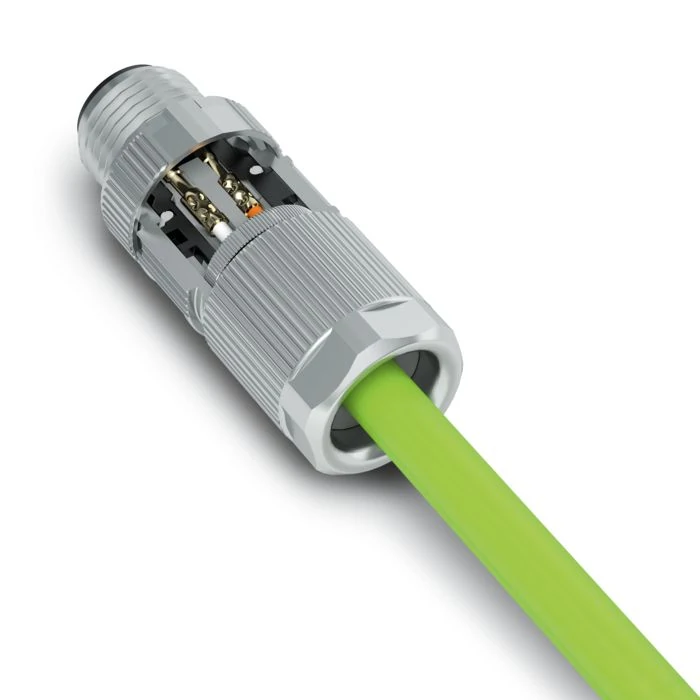
The image presents a cable crimp connector assembly with visible internal contact components. Proper crimping ensures stable electrical contact, strong mechanical retention, and improved connection reliability for cable harness applications.
A crimp connector is not just a small metal part with colored insulation. It is a mechanical joint, an electrical contact, and sometimes a strain relief point. If one of those three jobs is weak, the connection may still look normal after assembly.
Start with the circuit. A low-current signal wire, a control wire inside a machine, a vehicle accessory lead, and a grounding cable do not need the same connector even if the wire size looks close. Power circuits care more about current carrying capacity, conductor contact area, heat rise, and secure retention. Signal or control circuits may care more about repeatability, compact size, and avoiding intermittent contact. Automotive wiring adds vibration, temperature cycling, routing stress, and sometimes locking housings.
For buyers, this is where many mistakes begin. A purchase request says “red crimp terminal” or “blue butt connector,” but the supplier still does not know enough. Red, blue, and yellow usually point to common wire ranges, but color is not a full specification. The order should include wire gauge, conductor material, insulation OD, terminal shape, rated current if applicable, insulation type, and whether the assembly will be used indoors, outdoors, in a vehicle, or near heat.
Match crimp connectors to power, signal, control, and automotive circuits
For general equipment wiring, insulated crimp connectors are often enough when the voltage, current, wire size, and enclosure environment are controlled. They provide basic touch protection and make assembly faster.
For grounding points or battery-related low-voltage power wiring, ring terminal connectors are usually safer than removable fork or spade styles because the screw or stud must be removed before the terminal can come loose. That matters in vibration. A ring terminal on a chassis ground is boring in the best possible way: once tightened correctly, it stays captured.
For plug-in wiring, quick disconnect terminals make service easier. They are common in appliance wiring, control cabinets, switch terminals, and equipment where parts may need replacement. But serviceability has a price. If the mating tab is loose, plated poorly, or not protected from movement, the joint can become intermittent.
Automotive crimp connectors need closer attention. Even a simple vehicle harness can face engine-bay heat, road vibration, moisture, dust, and repeated maintenance. In that setting, a cheap open-barrel or closed-barrel terminal may work only if it is matched with the right tool, seal, cavity, and wire. “It fits” is not enough.
If you are comparing this article with a broader wire connector types guide, treat crimping as the practical branch where tool fit and inspection become part of the connector choice.
Check wire gauge, current rating, insulation, and operating temperature
Wire gauge is the first check, but it is not the last one. A terminal rated for 16–14 AWG may not behave the same on every 16 AWG wire. Stranding, conductor compactness, plating, and insulation thickness can change how the barrel fills.
A stranded copper wire usually crimps more predictably than a solid wire in many small terminal applications, but the terminal must still be approved or specified for that conductor type. Fine-stranded wire can be tricky because it may compress differently. Tinned wire can feel stiffer. Thick insulation can prevent the conductor from fully entering the barrel if the strip length is wrong or the insulation shoulder hits too early.
Current rating also needs context. The connector body, conductor size, temperature rating, contact area, and enclosure heat all matter. A terminal used inside a warm control box has less comfort margin than the same terminal in open air. In vehicle or outdoor work, sealed terminals and heat shrink crimp connectors may reduce moisture risk, but they also add assembly steps and require heat control.
The buyer’s note should be specific enough that production does not have to guess:
| Selection item | What to specify | Why it matters |
| Wire size | AWG or mm² range | Prevents loose or overfilled barrel crimps |
| Conductor type | Solid, stranded, fine-stranded, tinned copper | Affects compression and pull strength |
| Terminal shape | Ring, spade, fork, butt splice, quick disconnect | Matches the actual connection point |
| Insulation type | PVC, nylon, heat shrink, non-insulated | Controls protection, space, and sealing |
| Tool requirement | Ratchet crimper, die cavity, applicator | Keeps crimp height and deformation repeatable |
| Environment | Indoor, vehicle, marine, outdoor, high temperature | Decides sealing, strain relief, and material needs |
A useful RF or wire harness supplier will ask these questions before confirming a custom assembly. For TEJTE-style custom crimped wire assemblies, the part choice should be tied to the cable or wire, the termination point, and the inspection method, not only a catalog thumbnail.
Decide whether the connection needs repairability or permanent joining
Some wiring jobs need to be opened again. Others should never move after assembly.
A butt splice connector is usually a permanent wire-to-wire repair or extension. Once crimped correctly, it is not meant to be unplugged for service. That makes it useful for harness repair, cable length changes, and protected inline joints. In wet or outdoor wiring, a heat shrink butt splice can add sealing and strain relief around the joint.
A quick disconnect terminal is different. It exists because someone may need to unplug the circuit later. That is useful for switches, motors, heating elements, fans, and replaceable modules. But if the equipment vibrates, the mating force and locking style become important. A loose quick disconnect can create heat or intermittent operation.
Ring and spade terminal connectors sit between those two ideas. A ring terminal is more secure because it is fully captured under a screw or stud. A spade or fork terminal is faster to remove because the screw usually does not need to come all the way out. That makes fork terminals convenient for service, but less secure where vibration or careless tightening is expected.
Do not let installation speed decide everything. A faster terminal that needs rework later is not cheaper.
Which Crimp Terminal Shape Fits Each Connection Point?
Terminal shape is where many buyers feel confident too early. The front end looks obvious: ring goes to a stud, spade goes to a tab, butt splice joins two wires. The trouble is in the details: screw size, stud diameter, tab width, insulation clearance, wire angle, and whether the wire will be pulled sideways after installation.
The connector should match the connection point mechanically before anyone thinks about batch price.
Ring terminal connectors for studs, screws, and grounding points
Ring terminal connectors are the safer choice when the joint must stay attached even if the screw loosens slightly. They are widely used for grounding, battery accessories, power distribution, and chassis bonding.
Specify the stud hole size clearly. A ring terminal with a hole that is too large may tighten off-center and reduce contact area. A hole that is too small leads to last-minute drilling or substitution, which is not a production control method. The ring tongue thickness and plating also matter where current or corrosion exposure is higher.
Spade terminal connectors for removable screw terminals
Spade terminal connectors work well where the screw terminal needs periodic service. They slide under the screw head and can be removed faster than a ring terminal.
The risk is partial capture. If the fork is too wide, too thin, or installed at a bad angle, tightening pressure may be uneven. In low-vibration indoor control wiring, that may be acceptable. In a moving vehicle or machine, a ring terminal or locking terminal is usually a better conversation.
Fork terminal connectors for faster service access
Fork terminal connectors are often chosen because assembly workers can install them quickly. They are useful in panels, terminal strips, and repair work where access is limited.
Still, the fork opening must match the screw size. If the fork barely catches the screw, it may pass visual inspection but fail under movement. If service access is the main reason for choosing a fork terminal, write that into the BOM so nobody substitutes a closed ring terminal and slows down maintenance.
Quick disconnect terminals for plug-in equipment wiring
Quick disconnect terminals are practical for plug-in equipment wiring, especially where components may be replaced during service. Common examples include switches, motors, heaters, fans, and small control modules.
Check the tab size, mating force, insulation sleeve, and whether a fully insulated version is needed. A quick disconnect terminal that slides on too easily may also slide off too easily. For production, the operator should feel consistent insertion force across samples.
How Do Butt Splice Connectors Compare with Ring and Spade Terminals?
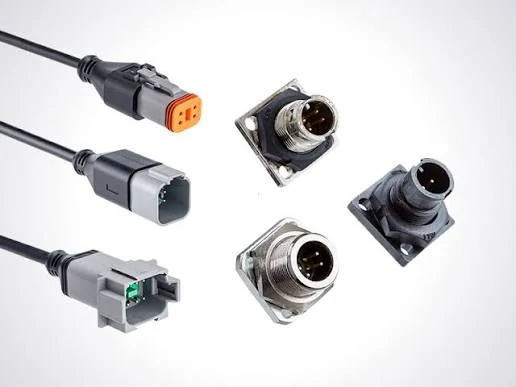
This image shows different types of crimp connectors used in automotive wiring, industrial equipment, and electrical harness applications. Various connector structures are designed for different wire sizes, connection methods, and application environments to provide reliable electrical and mechanical connections.
The wrong crimp connector often comes from asking the wrong question.
If the job is to join two wire ends, a ring terminal is not a substitute. If the job is to land a wire on a screw terminal, a butt splice connector is not useful by itself. These parts may sit in the same crimp connector box, but they solve different connection problems.
Use butt splice connectors for wire-to-wire extension or repair
Butt splice connectors are made for inline wire joining. They are common in harness repair, cable length adjustment, accessory wiring, and field maintenance where two conductor ends need to become one continuous electrical path.
A good butt splice should hold both wires with enough compression that the conductors cannot pull out under normal handling. The center stop, if present, helps prevent one wire from passing too far through the barrel. For heat shrink butt splice connectors, the adhesive-lined sleeve also adds moisture resistance and strain relief after heating.
A common mistake is using a butt splice only because it is nearby in the toolbox. If the wire must later connect to a stud, screw, switch, relay, fuse block, or terminal post, the splice solves only part of the job. The final termination still needs the correct terminal shape.
Use ring and spade terminals for wire-to-device termination
Ring and spade terminal connectors are for wire-to-device termination. They connect a conductor to a screw, stud, grounding point, terminal strip, bus bar, or equipment terminal.
A ring terminal is better where the joint should stay captured. Grounding points, battery-related wiring, vibration-prone panels, and safety-related low-voltage power connections often lean toward ring terminals. A spade terminal is faster to remove, which helps maintenance, but it gives up some capture security.
For sourcing, the screw or stud size should be part of the request. “Blue ring terminal” is not enough. A better note would be: blue insulated ring terminal, 16–14 AWG, M4 stud hole, tin-plated copper, nylon insulation, matched ratchet crimp die, pull test required.
That one line prevents several quiet substitutions.
Compare pull strength, vibration resistance, serviceability, and installation speed
The connector shape should follow the failure mode you care about most. If wires are likely to be pulled, check pull strength. If equipment vibrates, check terminal capture and strain relief. If the part must be replaced often, serviceability matters. If thousands of pieces will be assembled, installation speed and crimp repeatability matter.
| Connector style | Main connection job | Pull strength focus | Vibration behavior | Serviceability | Common risk |
| Butt splice connector | Wire-to-wire joining | Both wire ends must hold | Good if crimped and supported correctly | Low | Wrong wire size or incomplete insertion |
| Ring terminal connector | Wire-to-stud or screw | Barrel grip plus screw clamping | Strong because ring is captured | Medium | Wrong stud hole size |
| Spade terminal connector | Removable screw terminal | Barrel grip plus screw clamping | Moderate, depends on screw pressure | Good | Can loosen if screw capture is weak |
| Fork terminal connector | Fast-access screw terminal | Similar to spade | Moderate to lower in vibration | Good | Fork opening too large |
| Quick disconnect terminal | Plug-in tab connection | Barrel grip plus mating force | Depends on tab fit and lock design | Very good | Loose tab fit or weak retention |
This is also where production people and buyers sometimes talk past each other. The buyer asks for a low price terminal. The factory asks about tool model, die, wire, strip length, and packaging. Those questions are not delays; they are the controls that keep the terminal from becoming a rework problem.
For related device-side terminal choices, a separate wire terminal connectors article can go deeper into ring, fork, tab, and screw-terminal formats.
Common mismatch: using a terminal connector where a splice connector is needed
A terminal connector ends a wire at a device. A splice connector joins wires together.
That sounds obvious until a repair job is rushed. Someone cuts out a damaged section, adds a short extension, and uses two terminals plus a screw point because the correct butt splice is not available. The circuit may work, but the repair is bulky, harder to insulate, and more exposed to loosening.
In batch assembly, that kind of workaround should be rejected. Use the connector shape that matches the physical connection point first. Then check wire size, insulation, tool, and environment.
Choose Insulated, Non-Insulated, or Heat Shrink Crimp Connectors
Insulation choice is not cosmetic. It affects spacing, handling safety, moisture protection, strain relief, inspection visibility, and sometimes whether the crimp fits inside the final housing.
Insulated crimp connectors for general electrical protection
Insulated crimp connectors are common for general equipment wiring because they protect the crimp barrel and reduce accidental contact. PVC and nylon insulated terminals are widely used in control wiring, appliance wiring, low-voltage power leads, and repair work.
The insulation sleeve can also guide the operator during wire insertion, but it can hide problems. If the wire is not inserted fully, the crimp may still look neat from the outside. For this reason, strip length and conductor position should be checked during first article inspection.
Do not assume the sleeve color alone proves wire range. Color systems are common, but suppliers may vary. Always confirm AWG range on the datasheet, label, or packaging.
Non insulated crimp connectors for compact assemblies and controlled insulation
Non insulated crimp connectors are useful when space is tight or when the final insulation is applied separately with heat shrink tubing, molded housing, sleeving, or overmolding. They also make visual inspection easier because the barrel deformation and conductor position can be seen directly.
The trade-off is exposure. A non insulated terminal normally needs a planned insulation method unless it sits inside a protected housing. It also demands better process control because there is less sleeve material to hide inconsistent crimping.
In RF-adjacent cable assemblies and mixed harness work, non insulated crimps may appear near shield drain wires, grounding leads, or compact internal terminations. The principle is the same: conductor fit and tool match decide whether the crimp is acceptable.
Heat shrink crimp connectors for moisture protection and strain relief
Heat shrink crimp connectors are selected when the joint needs better sealing than a basic insulated sleeve can provide. After crimping, the sleeve is heated so it shrinks around the wire insulation. Adhesive-lined versions can help block moisture from entering the cable end.
They are useful for vehicle accessories, marine wiring, outdoor lighting, trailer wiring, and field repairs where damp conditions are expected. Still, heat shrink does not fix a bad crimp. If the metal barrel is oversized or the wrong die is used, sealing the outside only hides the defect.
Heat control also matters. Too little heat leaves gaps. Too much heat can damage nearby insulation. In production, operators should have a defined heating method, distance, time, and inspection standard.
Waterproof crimp connectors for marine, vehicle, and outdoor wiring
Waterproof crimp connectors should be used when water, dust, condensation, or washing may reach the joint. They may use heat shrink sleeves, internal adhesive, seals, or connector housings with gaskets.
The key is to protect the cable end. Moisture often enters along the strands, not only through the outside surface. If the conductor end is exposed, corrosion can travel under insulation and cause resistance changes later.
For outdoor equipment and vehicle wiring, it may also be useful to compare sealed crimp options with broader waterproof wire connectors depending on whether the connection must be permanent, removable, or housed inside a connector body.
How Do You Match Crimp Connector Sizes to Wire Gauge?
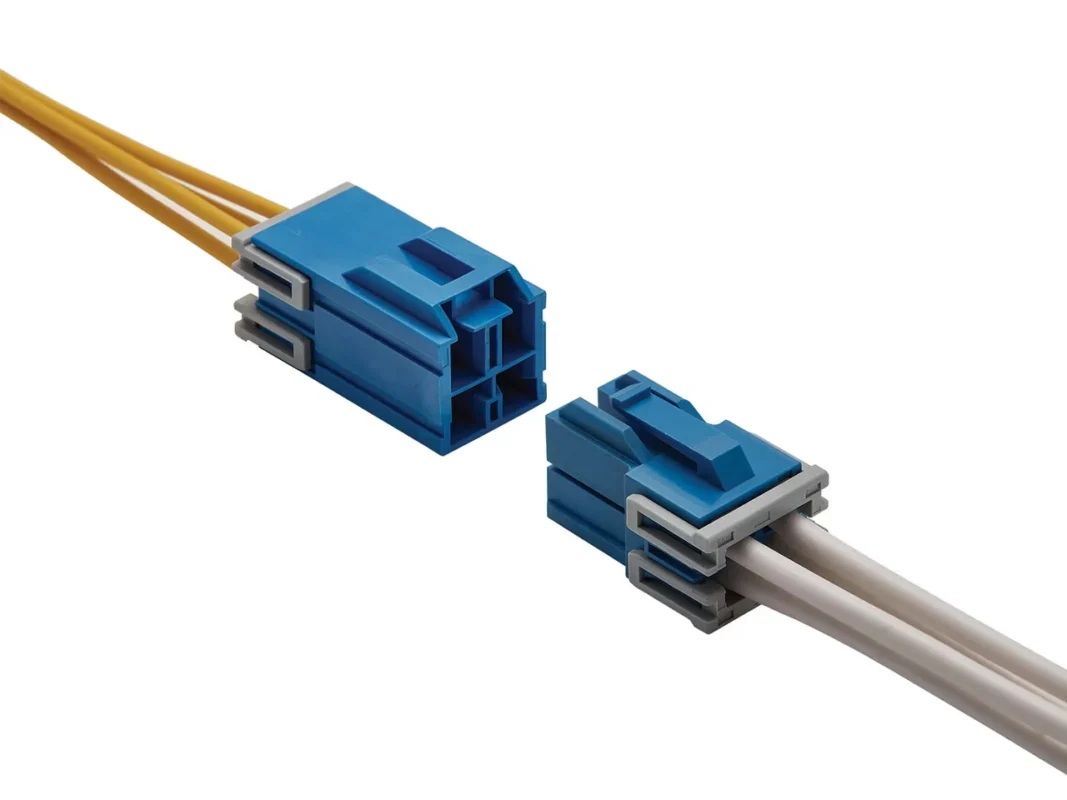
A correct crimp starts before the tool closes.
The wire must fill the barrel enough to create metal-to-metal compression, but not so much that strands are cut, folded, or forced outside the barrel. Oversize barrels make weak pullout likely. Undersize barrels create over-crimping, damaged strands, and unreliable contact area.
Read color codes, AWG ranges, and barrel diameter before crimping
Common insulated terminal colors often follow rough AWG ranges: red for smaller wires, blue for mid-range wires, and yellow for larger wires. Treat that as a quick visual guide, not a purchasing standard.
The barrel diameter and material thickness are more useful. Two terminals with the same color may crimp differently if the barrel wall thickness, seam design, plating, or insulation sleeve changes. When switching suppliers, do a first-piece crimp and pull check before releasing the batch.
Check conductor type: solid, stranded, fine-stranded, or tinned wire
Stranded wire is usually more forgiving in crimp terminals because the strands deform and compact inside the barrel. Solid wire can be less tolerant of bending after crimping. Fine-stranded wire may need a terminal and tool designed for that strand class. Tinned wire can compress differently from bare copper.
If the wire is not standard building wire, do not rely on AWG alone. Ask for conductor diameter, strand count, insulation OD, and material.
Avoid oversize barrels, loose strands, and overfilled crimps
Most bad crimps leave clues. Loose strands outside the barrel, insulation trapped inside the conductor crimp, cracked insulation sleeves, sharply folded wire, or a barrel that barely deforms are all warning signs.
Continuity testing will not catch all of these. A weak crimp can pass electrical continuity before it fails under pull, heat, vibration, or corrosion.
Crimp Connector Size Matching Table
| Connector color | AWG range | Typical wire cross-section | Terminal shape | Barrel diameter | Recommended crimp die | Common application | Risk if mismatched |
| Red | 22–18 AWG | 0.3–0.8 mm² | Ring, spade, butt splice, disconnect | Small | Red / 22–18 cavity | Small control wires, signal leads, light-duty wiring | Loose crimp if used with undersized fine wire; strand damage if overfilled |
| Blue | 16–14 AWG | 1.0–2.5 mm² | Ring, spade, fork, butt splice | Medium | Blue / 16–14 cavity | Equipment wiring, accessory power, control panels | Weak pullout if used on small wire; poor barrel fill |
| Yellow | 12–10 AWG | 4.0–6.0 mm² | Ring, butt splice, larger spade | Large | Yellow / 12–10 cavity | Higher-current low-voltage wiring, grounding, battery accessories | Heat rise and looseness if wire is below range |
| Non-insulated small barrel | Depends on terminal series | Confirm by drawing | Open barrel or closed barrel | Drawing-controlled | Matched die or applicator | Compact harnesses, internal equipment wiring | Tool mismatch can crush or under-form the barrel |
| Heat shrink butt splice | Usually color coded | Confirm by datasheet | Inline splice | Sleeve-controlled | Matched insulated crimp cavity | Outdoor, vehicle, marine repair | Sealed bad crimp if pull test is skipped |
This table should be treated as a starting point, not a substitute for the supplier drawing. For purchasing, the safer request is: terminal type, wire AWG or mm², conductor material, insulation OD, application environment, crimp tool or die, and acceptance test.
How Should You Crimp Wire Connectors Without Weak Pullout?
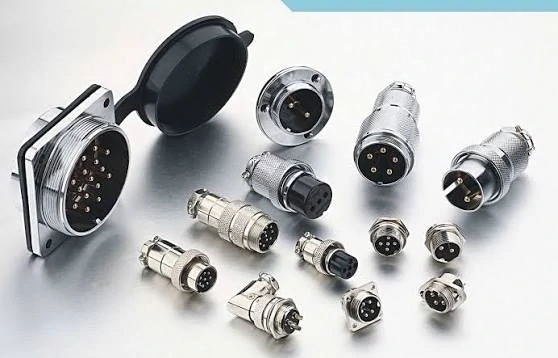
The image shows circular crimp connectors with different pin counts and mounting styles. These connectors are suitable for industrial equipment, automation systems, and applications requiring secure multi-contact electrical connections.
A weak crimp usually starts before the handle is pressed.
The wire is stripped too short, the barrel is placed in the wrong cavity, the terminal is rotated badly, or the operator uses a general plier-style tool because it “looks close enough.” The first sample may hold. The twentieth piece may not.
Strip the wire to the correct length before inserting it
Strip length should let the conductor sit fully inside the metal barrel without pushing insulation into the conductor crimp area. Too short leaves poor contact area. Too long exposes bare conductor outside the terminal and increases short-circuit risk.
For butt splice connectors, both wire ends should reach the correct depth. For ring, spade, fork, and quick disconnect terminals, the conductor should be visible where the terminal design allows inspection, but the insulation should still sit close enough for support.
Place the barrel in the correct crimping tool cavity
The die cavity must match the connector size. A red terminal in a blue cavity may look crimped but remain loose. A yellow terminal in a smaller cavity may be crushed, cutting strands or cracking insulation.
Ratchet crimpers are preferred for repeatable manual assembly because they help control closure. For larger harness production, matched applicators and documented crimp height are better than relying only on operator feel.
Crimp the conductor barrel and insulation support separately when required
Some terminals have two crimp zones: one for the conductor and one for insulation support. Treat them differently. The conductor crimp creates electrical and mechanical contact. The insulation crimp supports the wire jacket and reduces bending stress.
If both areas are crushed with the wrong profile, the crimp may either lose electrical strength or damage insulation. This is common in open-barrel automotive terminals and small equipment harnesses.
Inspect strand visibility, barrel deformation, and insulation position
Do not release a crimp just because it looks neat. Check whether strands are fully captured, the barrel is formed evenly, the terminal is not twisted, and the insulation is not trapped inside the conductor area.
A good production habit is simple: first piece inspection, then batch sampling. If the wire, terminal supplier, crimp tool, or operator changes, inspect again.
Verify Crimp Quality Before Batch Assembly
Continuity is useful, but it is not enough.
A poor crimp can pass continuity with no load and fail under pull force, vibration, heat, or moisture. Batch assembly needs an acceptance rule that can be written down and repeated.
Crimp Quality Acceptance Checklist
| Sample quantity | Wire gauge | Terminal model | Tool model | Crimp height | Pull test result | Visual defect | Continuity result | Operator | Batch decision |
| 5 pcs first article | 18 AWG | Red ring terminal M4 | Ratchet die 22–18 | Record measured value | Pass / Fail | None / defect noted | Pass / Fail | Name | Release / hold |
| 3 pcs per batch | 16 AWG | Blue butt splice | Ratchet die 16–14 | Record measured value | Pass / Fail | None / defect noted | Pass / Fail | Name | Release / rework |
| 5 pcs after tool change | 14 AWG | Quick disconnect 6.3 mm | Matched cavity | Record measured value | Pass / Fail | None / defect noted | Pass / Fail | Name | Release / reset tool |
This checklist is intentionally plain. It gives production, QC, and purchasing the same language. If a batch fails, the decision should not depend on memory or opinion.
Crimp Fit Score
Use this quick scoring model before approving substitutions:
Crimp Fit Score = Wire Gauge Match + Barrel Fit + Tool Match + Pull Strength + Insulation Support + Environment Protection – Defect Risk
Suggested scoring:
| Score | Batch decision | Practical meaning |
| 9–10 | Recommended | Connector, wire, tool, and environment fit are controlled |
| 6–8 | Use with inspection | Acceptable only with sample testing and QC notes |
| ≤5 | Reject or reselect connector | Too much risk from size, tool, environment, or visible defects |
This score is not a formal certification. It is a buying and inspection tool. It helps stop casual substitutions before they reach production.
When Should You Use Automotive or Waterproof Crimp Connectors?
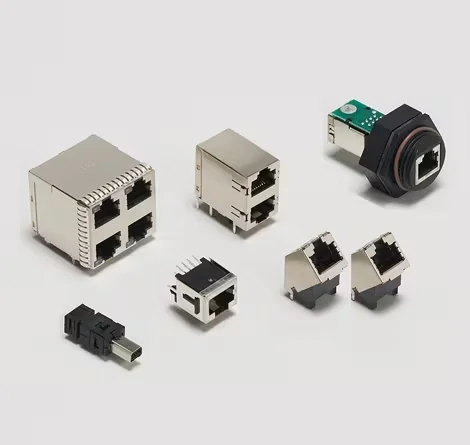
This image displays various modular crimp connector components, including network-style connectors and panel mounting structures. These connectors are commonly used for communication systems, industrial control equipment, and electronic wiring applications
Use automotive or waterproof crimp connectors when the joint is exposed to vibration, heat, moisture, dust, or repeated service.
Automotive wiring is becoming more connector-intensive as vehicles add electrified systems, sensors, safety electronics, and more complex harness routing. Market reports also point to automotive electrical connector growth through 2034, driven by higher electronic content and electrification The Insight Partners.
Automotive crimp connectors for vibration, heat, and locking requirements
Automotive terminals often need locking housings, seals, temperature-resistant insulation, and stable terminal retention. The crimp itself is only one part of the system.
If the wire is routed near a motor, battery area, fuse box, or engine-bay component, check heat, vibration, wire bend, and service access together. For related harness-side selection, see automotive electrical connectors.
Waterproof crimp connectors for wet, dusty, or outdoor wiring paths
Waterproof crimp connectors are useful for outdoor lighting, marine wiring, trailers, vehicle accessories, and equipment exposed to cleaning or condensation.
The seal must cover the cable end, not only the outside sleeve. Moisture can travel along conductor strands. If the crimp barrel is not sealed properly, corrosion may appear later as heat, resistance increase, or intermittent operation.
Use heat shrink or sealed terminals when moisture can enter the cable end
Heat shrink crimp connectors are usually the practical choice for permanent sealed repairs. For removable connections, use sealed connector housings instead of trying to make an unsealed quick disconnect “waterproof” with tape.
For custom harness purchasing, write the environment clearly: indoor dry use, outdoor splash exposure, vehicle cabin, engine bay, marine, or washdown. That one line changes the connector recommendation.
Note wet-location requirements when connectors are used in damp or outdoor areas
For conduit fittings and connectors, 2026 NEC change summaries note requirements around fittings being made tight and listed for wet locations where applicable Steel Tube Institute. Crimp terminals are not the same as conduit fittings, but the practical direction is consistent: outdoor and damp installations need listed, suitable parts rather than improvised protection.
Avoid claiming compliance unless the exact connector, tool, and wire range are tested
A connector is not automatically compliant because it resembles another connector. A tool is not automatically correct because it closes around the barrel. In production purchasing, compliance language should be tied to the exact part number, wire size, conductor material, tool, and inspection record.
For custom assemblies, send the drawing, wire specification, terminal model, crimp requirement, and test requirement before quoting. TEJTE can support sourcing and assembly discussions for custom crimped wire assemblies when those details are clear.
FAQ
Can crimp connectors be reused after removal?
Usually, no. Most crimp connectors are designed for one-time compression. Once removed, the barrel has already been deformed and may not grip the conductor correctly again. For serviceable wiring, choose quick disconnect terminals, plug housings, or screw terminals instead of planning to reuse a crimped part.
How do I know if a crimp connector is the wrong size?
Warning signs include loose wire movement, strands outside the barrel, insulation trapped in the conductor crimp, cracked sleeves, very light barrel deformation, or a wire that pulls out during a basic pull check. Size should be confirmed by AWG or mm² range, conductor type, barrel diameter, and the crimp die.
Are heat shrink crimp connectors better for outdoor wiring?
They are often better for permanent outdoor or damp-location repairs because they add sealing and strain relief. They are not automatically better for every job. If the connection must be unplugged later, a sealed connector housing may be more suitable than a heat shrink butt splice.
What is the difference between butt splice connectors and crimp terminals?
Butt splice connectors join two wires inline. Crimp terminals terminate a wire to a device, stud, screw, tab, or terminal block. Using the wrong one can create bulky repairs, weak service points, or unsafe substitutions.
Why does a wire pull out after crimping?
Common causes include oversized barrel, wrong die cavity, short strip length, incomplete wire insertion, wrong conductor type, damaged strands, or weak tool pressure. Heat shrink or insulation cannot fix a poor metal crimp underneath.
Should I choose insulated or non insulated crimp connectors?
Choose insulated crimp connectors for general protection and easier handling. Choose non insulated connectors when space is tight, inspection visibility matters, or separate insulation will be applied. For wet or outdoor use, consider heat shrink or sealed crimp connectors.
Final Buying Note
Do not buy crimp connectors by color and terminal shape alone. Specify the wire gauge, conductor type, terminal shape, stud or tab size, insulation type, environment, tool, and acceptance test.
A good crimp is boring after assembly: no loose strands, no guesswork, no surprise pullout, and no unclear substitution. That is the goal.