
A replacement fuse can look correct and still be unsafe.
That is the common problem with cartridge fuses. The body is cylindrical, the end caps fit the holder, and the ampere marking appears close enough. Then the equipment fails again, the fuse nuisance-opens during startup, or the replacement cannot safely clear a real fault. A cartridge fuse is a small component, but it carries several specifications at once: physical size, current rating, voltage rating, opening characteristic, breaking capacity, body construction, approval status, and holder compatibility.
For buyers, technicians, and maintenance teams, the safe path is not to match only the printed amp value. The safe path is to rebuild the full replacement specification before ordering. If the fuse is part of a larger protection design, it should also be coordinated with upstream or downstream protection devices. For example, power-input circuits often need both overcurrent protection and polarity protection, so it is useful to review how to coordinate overcurrent and reverse-polarity protection before increasing a fuse rating.
How do you identify the correct cartridge fuse family before replacement?
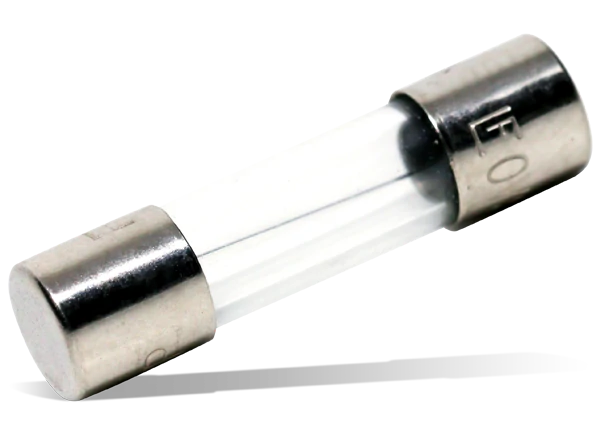
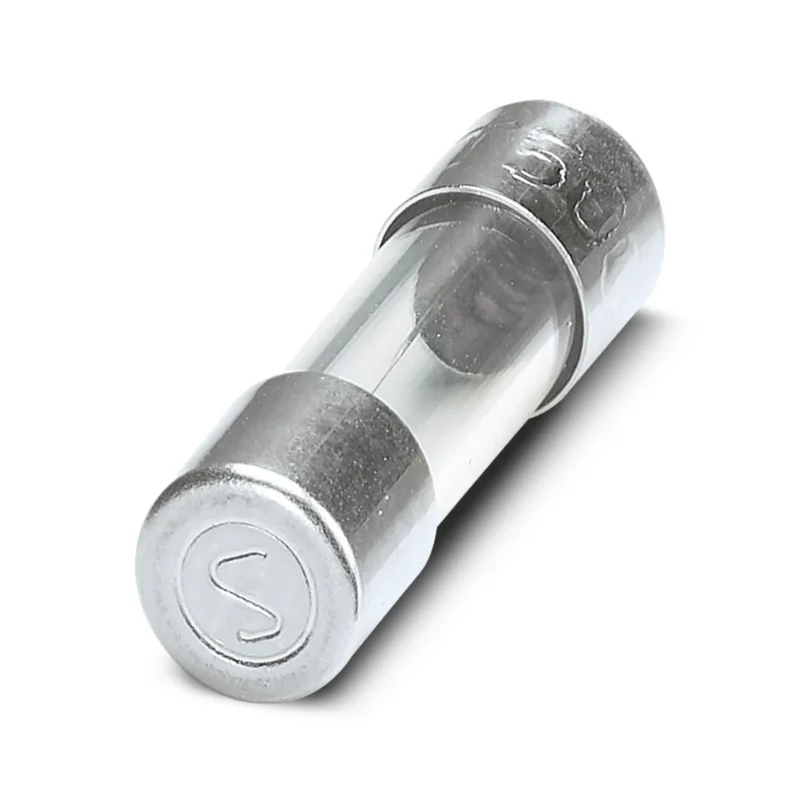
A cylindrical cartridge fuse with transparent body and metal end caps. The physical construction of cartridge fuses influences their voltage rating, breaking capacity, and protection characteristics.
Start with the markings on the installed fuse before measuring the body. A caliper can tell you the diameter and length, but it cannot tell you whether the old fuse was fast-acting, time-delay, AC rated, DC rated, high-breaking-capacity, or approved for the equipment’s market.
Record every visible detail first: ampere rating, voltage rating, fast-acting or time-delay marking, manufacturer or series, approval marks, physical dimensions, part number, and body material. This matters because “cartridge fuse” describes the package style, not the complete electrical behavior.
A ceramic cartridge fuse, for example, may be fast-acting or time-delay depending on the exact series. It may also have a different interrupting rating from another fuse with the same size and amp value. The failed fuse should be treated as evidence, not as the final design authority. Someone may already have installed the wrong replacement before you saw the equipment.
This identity card is useful for purchasing. Instead of asking a supplier for “a 5A cartridge fuse,” the buyer can request a fuse with the exact size, voltage, speed, breaking capacity, and approval requirement.
Which physical size actually fits the fuse holder?
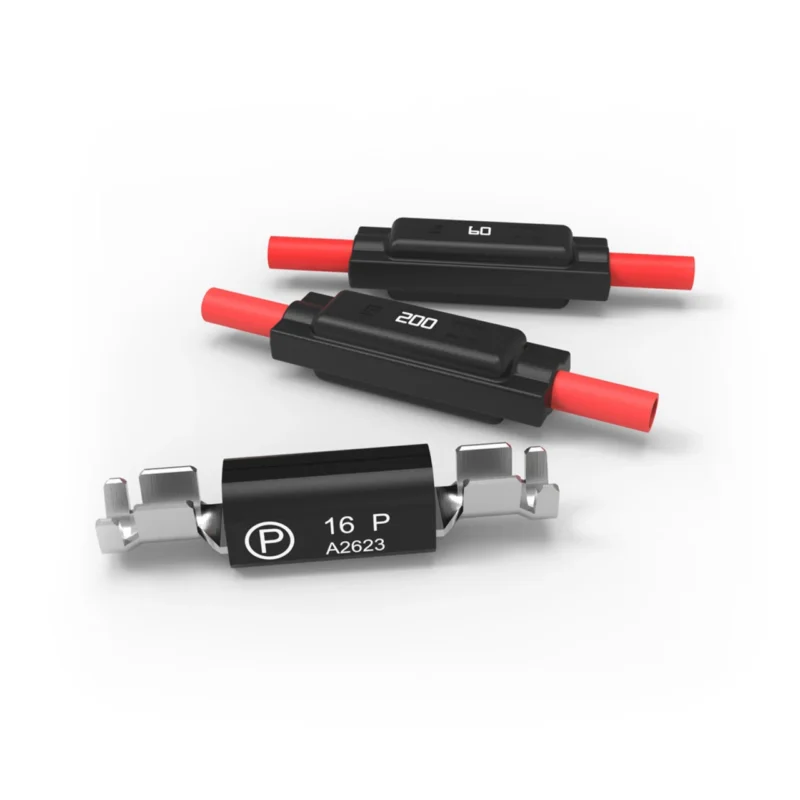
Fuse size should be written as diameter × length. For small cartridge fuses, common descriptions include 5×20 fuse, 5×20 ceramic fuse, and 6×30 fuse. These labels are useful, but they should still be verified against the actual holder and product drawing.
A 5×20 mm fuse is common in power adapters, instruments, control boards, and consumer electronics. But even within the same 5×20 mm body size, two fuses may differ completely in current rating, voltage rating, speed, breaking capacity, and certification.
Be especially careful with 6×30 mm and 6.3×32 mm descriptions. They are close enough to confuse buyers, but they should not be treated as automatic substitutes. The difference can affect clip tension, end-cap contact, installation clearance, and long-term contact reliability.
Do not use a larger fuse body as a shortcut for “better performance.” A bigger cartridge does not automatically mean higher current capacity, higher voltage capability, or higher breaking capacity.
How should current rating be chosen without nuisance opening?
The current rating should come from the circuit’s normal operating current, not from the largest value that fits the holder. A fuse must carry normal load current without opening too early, but it must still respond correctly when the circuit enters an overload or fault condition.
Before choosing the amp rating, confirm normal RMS or DC current, maximum continuous current, startup current, startup duration, ambient temperature, duty cycle, fuse series derating guidance, and time-current curve result.
Avoid using one universal derating rule for every cartridge fuse. Manufacturer guidance is not identical across fuse families. Some selection guides use 80% of rated current at 25°C as a general continuous-load guideline. Others describe a 25% derating approach, meaning the normal load is kept around 75% of the catalog rating. The correct value should come from the exact fuse series datasheet.
Temperature can also change the decision. A fuse inside a warm enclosure, near a transformer, power resistor, relay bank, or enclosed power supply may behave differently from the same fuse tested on an open bench at room temperature.
A simple approval flow works better:
Normal load check → Temperature check → Inrush check → Time-current check → Final rating
Never increase the amp rating only because the fuse keeps blowing. Repeated opening can point to a real load problem: excess current, short circuit, startup surge, failing component, wrong fuse speed, or incorrect original selection.
What does a 250 V rating allow—and what does it not allow?
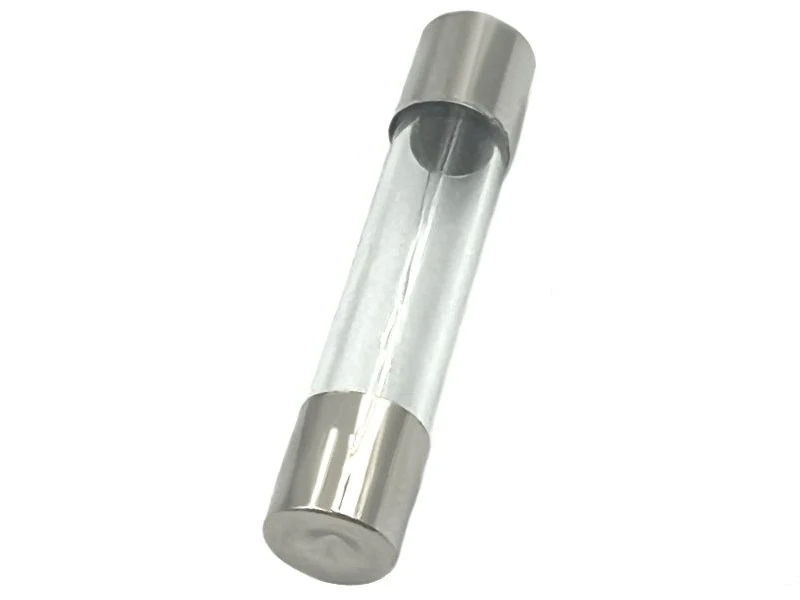
A glass cartridge fuse with cylindrical body and metal end caps. This type of fuse is commonly used in power supplies, control boards, and electronic equipment where visible fuse element inspection is useful.
A 250 V marking is often misunderstood. It does not mean the fuse supplies voltage, regulates voltage, or should only be used in a 250 V circuit. It means the fuse is designed to interrupt an overcurrent safely up to its rated voltage, under the conditions stated by the manufacturer.
That distinction matters most after the fuse element opens. At that moment, the fuse must stop current flow and prevent the arc from re-striking across the opened element. If the voltage rating is too low for the circuit, the fuse may not interrupt the fault safely.
Do not assume:
250 VAC = suitable for 250 VDC
DC circuits are often harder to interrupt because the current does not naturally cross zero as it does in AC systems. Some fuses are AC rated only, some are DC rated only, and some carry both AC and DC ratings. The actual part number must be checked.
| Question | Requirement |
| Maximum circuit voltage known? | Yes |
| AC or DC identified? | Yes |
| Fuse rated for that current type? | Yes |
| Fuse voltage ≥ applicable system voltage? | Yes |
| Breaking-capacity condition verified? | Yes |
| Approved replacement? | PASS / HOLD |
A lower-voltage circuit may be able to use a 250 V cartridge fuse if every other requirement is correct: current rating, opening speed, breaking capacity, body size, holder compatibility, and approvals. Voltage alone does not make a direct replacement.
When does ceramic construction make more sense than glass?
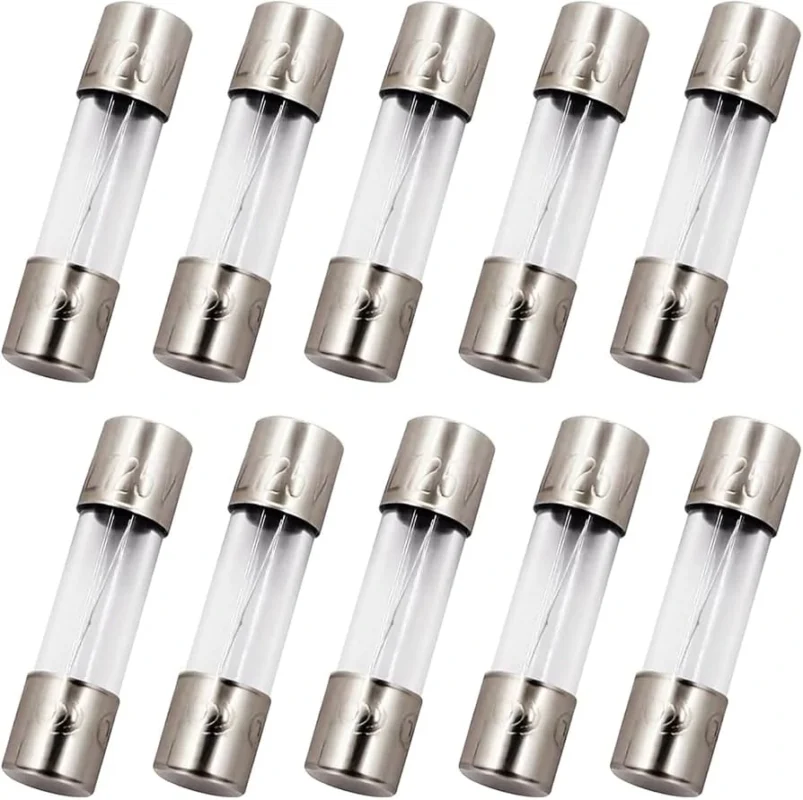
Ceramic construction is useful, but it is not a magic rating.
A ceramic fuse is often selected where the design needs stronger containment during interruption, better tolerance of fault energy, or a body construction commonly used in higher-breaking-capacity series. That does not mean every ceramic cartridge fuse has the same breaking capacity. It also does not mean a ceramic body automatically tells you whether the fuse is fast-acting or time-delay.
A glass fuse can be easy to inspect visually because the element is visible. A ceramic fuse is opaque, so you usually need a continuity or resistance check to confirm whether it has opened. But visibility is not the main selection factor. The real question is whether the construction, breaking capacity, voltage rating, and opening characteristic match the circuit.
Do not replace a ceramic fuse with a glass fuse just because both are marked 5 A. Check size, current, voltage, speed, breaking capacity, AC/DC rating, approval marks, and manufacturer series.
How do fast-acting characteristics change the replacement decision?
A fast blow fuse is designed to respond quickly under specified overcurrent conditions. That makes it useful in circuits where sensitive components need rapid protection. But fast-acting behavior can also become a problem if the equipment has a normal startup pulse.
Common inrush sources include motors, transformers, switching power supplies, large input capacitors, solenoids, and heater circuits during cold start. The equipment may be operating normally, but the startup current may briefly rise several times above steady-state current.
This is where many replacement mistakes happen. A technician sees a blown fuse, finds another fuse with the same size and amp rating, installs it, and the equipment immediately fails again at startup. The replacement may not be defective. It may simply be the wrong opening characteristic.
A fast-acting fuse should not automatically replace a time-delay fuse. A time-delay fuse should not automatically replace a fast-acting fuse either. Each choice protects the circuit differently.
Why does breaking capacity matter even when the amp rating matches?
Current rating and breaking capacity answer different questions.
A 5 A rating tells you the fuse is designed around a certain current-carrying and protection range. It does not tell you how much fault current the fuse can safely interrupt during a short circuit.
Breaking capacity, also called interrupting rating, describes the maximum available fault current the fuse can safely open at its rated voltage. This value must be high enough for the circuit. If the available short-circuit current is higher than the fuse can interrupt, the fuse may fail violently instead of clearing the fault safely.
For circuits that also use surge suppression, do not mix up the role of the fuse with the role of transient clamping parts. A fuse handles sustained overcurrent and fault clearing; TVS and MOV devices handle short voltage transients. If the circuit has surge exposure, review how to select the fuse separately from MOV and TVS protection instead of treating one device as a substitute for another.
Two fuses can both be marked 5×20 mm / 5 A / 250 V and still be different parts. They may have different breaking capacities, different time-current curves, different I²t values, different approval records, and different AC/DC suitability.
Read the time-current curve before approving inrush tolerance
Ampere rating is not a timer-free number. Fuse opening depends on both current magnitude and duration.
A cartridge fuse may survive a short startup pulse but open under a lower overload that lasts longer. That is why the time-current curve matters. If the circuit has motor startup, capacitor charging, transformer magnetizing current, or repeated pulse load, the curve should be checked before approving the replacement.
For pulse-heavy circuits, I²t may also matter. It describes thermal energy related to fuse melting or clearing behavior, depending on the datasheet term used. Do not compare It values from unrelated fuse families without checking the test condition.
Confirm the fuse series, rating, pulse waveform, peak current, pulse duration, melting I²t or clearing I²t, temperature condition, and pulse repetition rate. A bench sample that survives one power-on test is not always enough for production approval.
How can you test a ceramic cartridge fuse without seeing the element?
A ceramic fuse cannot be judged reliably by sight because the body is opaque. Before testing, de-energize the equipment and remove the fuse from any live circuit.
Use a multimeter in continuity mode or low-resistance mode:
- Beep or very low resistance: the element may still be intact
- OL or open circuit: the fuse has opened
If the fuse is still installed in the circuit, parallel paths may distort the reading. Remove at least one end from the holder when the measurement looks suspicious.
Continuity only answers one question: whether the element is open. It cannot confirm the fuse is the correct replacement. A fuse can pass continuity and still have the wrong current rating, voltage rating, speed, breaking capacity, or approval.
Build a replacement specification that prevents wrong substitutions
A direct replacement needs more than “same amps.”
Before approving a cartridge fuse replacement, verify physical size, current rating, voltage rating, AC/DC suitability, fast-acting or time-delay characteristic, breaking capacity, required approvals, and holder compatibility.
The holder should not be ignored. A fuse holder also has current and voltage limits, contact condition, clip tension, mounting method, and temperature constraints. A correct fuse installed in a damaged or underrated holder is still a risk.
For U.S.-market products, also verify the current applicable standard and certification record. ANSI/UL 248-14 Third Edition was published on March 4, 2026, for supplemental fuses. The practical point is simple: do not copy marketplace attribute text into a compliance claim. Check the exact part number, certification scope, and file or certificate record.
Replacement approval should follow this gate:
Size → Current → Voltage → AC/DC → Speed → Breaking Capacity → Required Approval → Holder
Qualify incoming fuse lots before production release
For production purchasing, fuse problems should be caught before assembly. Incoming inspection does not need to become destructive fault testing, but it should confirm that the lot matches the approved specification.
Check routine items first: body size, current marking, voltage marking, end-cap condition, ceramic or glass construction, lot label, packaging, and physical damage.
| Characteristic | Method | Sampling | Acceptance | Failure Action |
| Part / marking | Visual | 100% | Approved BOM | Quarantine |
| Body dimensions | Gauge | Sample | Drawing | Hold |
| End-cap condition | Visual | Sample | No damage | Sort |
| Continuity | Electrical | Defined plan | Pass | Investigate |
| Cold resistance | Meter | Risk-based | P/N spec | Expand sample |
| Certification documents | Document review | Lot / supplier plan | Required records | Hold |
| Final release | QA review | Lot | All critical checks pass | Release |
Use tighter verification when there is a supplier change, series change, rating change, holder change, or previous nuisance-opening complaint. For designs that also include transient voltage protection, it may help to coordinate a fuse with a TVS-protected rail so that each protection device is doing the job it was selected for.
FAQ
Can I use a 250 V cartridge fuse in a circuit below 250 V?
Potentially yes, if the exact fuse also matches current, AC/DC rating, speed, breaking capacity, size, holder, and approvals. Voltage rating alone does not prove interchangeability.
Are two 5×20 mm fuses interchangeable if both are marked 5 A?
No. They may differ in voltage rating, fast/time-delay behavior, interrupting rating, I²t, approvals, and AC/DC suitability.
Why can a fast-blow fuse open during normal startup?
The load may have an inrush pulse much higher than steady current. Check the pulse duration against the fuse time-current curve.
Can a 6×30 mm fuse replace a 6.3×32 mm fuse?
Do not assume so. Verify the holder, drawing, end-cap fit, and electrical specification.
How do I know whether a ceramic fuse is blown?
With the equipment safely de-energized, use continuity or low-resistance measurement on the isolated fuse. An open circuit usually means the element has opened.
Does ceramic automatically mean high breaking capacity?
No. Ceramic construction is common in many higher-breaking-capacity designs, but breaking capacity belongs to the exact fuse series and part number.
What must match before I call a cartridge fuse a direct replacement?
Verify physical size, current rating, voltage rating, AC/DC suitability, opening characteristic, breaking capacity, required approvals, and holder compatibility.
Final Buying Note
A cartridge fuse should be specified as a complete protective component, not as a small tube with an amp marking. For safe sourcing, send suppliers the body size, current, voltage, AC/DC rating, opening speed, breaking capacity, approval requirement, and holder condition.
That extra detail prevents the most expensive fuse mistake: a replacement that fits perfectly, works once, and fails when the circuit actually needs protection.