
BNC Camera Cable CCTV Monitoring Selection and Cabling Guide
Jan 29,2026
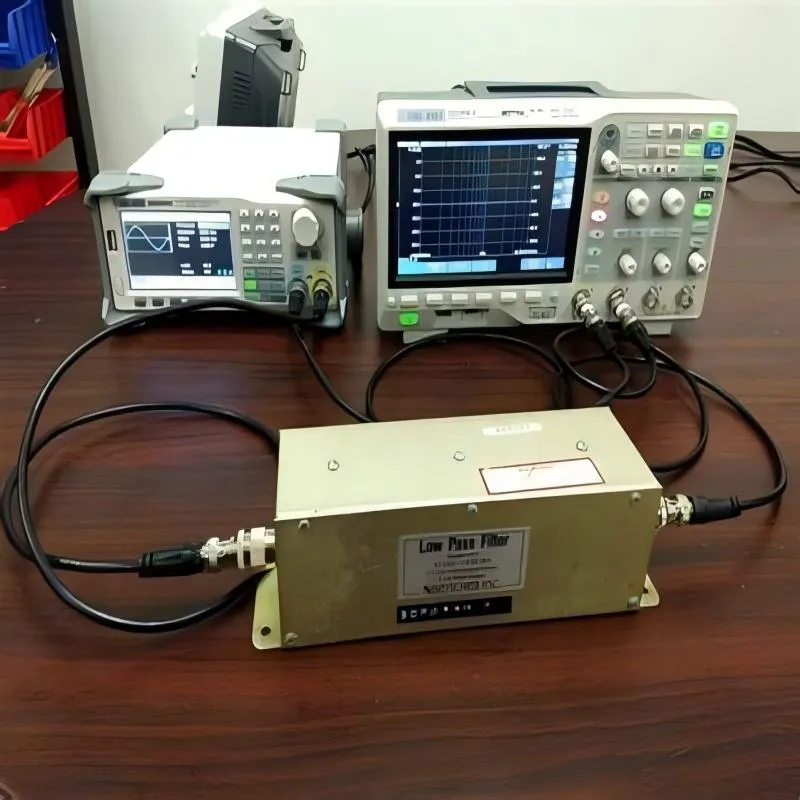
Figure 1 sets the premise for discussion, emphasizing that because BNC cables appear short and passive, their impedance matching and performance impact are often overlooked, leading to cables rarely being the first suspect when measurement results drift.
Why is the bnc camera cable the most overlooked part of a CCTV system?
Most CCTV problems don’t fail loudly.
The camera powers up. The DVR shows video. During installation, nobody complains. The system passes the “looks fine” test, which is often the only test it gets.
Weeks later, the complaints start. Night footage looks rough. One channel has more noise than the others. Someone notices faint interference that wasn’t there before. At that point, attention usually goes to the camera, the DVR, or the power supply.
The bnc camera cable almost never gets blamed first.
That’s not because it’s unimportant. It’s because it feels boring. No firmware. No settings. No menu to tweak. Once it’s in the wall, it’s treated as invisible.
In analog and HD-over-coax systems, that assumption is risky. The cable is not a neutral accessory. It is the physical path that carries the entire video signal, continuously, without regeneration or correction. Whatever happens along that path becomes part of the image.
Where does the bnc camera cable actually sit in a CCTV video chain?
On paper, the signal path looks trivial:
Camera → bnc camera cable → DVR input
That simplicity hides the real issue. Unlike IP video, analog and HD-analog signals don’t get “cleaned up” as they travel. There are no packets to resend. No buffering to smooth things out.
Every meter of bnc coaxial cable, every connector, every bend in the route shapes the waveform before it reaches the DVR. Loss, reflections, and interference don’t cause a hard failure. They quietly reduce margin.
This is why two cameras from the same box can behave differently after installation. Same model. Same settings. Different cable runs. Different results.
If you’ve ever seen one channel degrade faster than others, even though nothing “changed,” the cable path is usually where the story starts.
What is the real difference between bnc cable, bnc video cable, and bnc camera cable?
Figure 1 sets the premise for discussion, emphasizing that because BNC cables appear short and passive, their impedance matching and performance impact are often overlooked, leading to cables rarely being the first suspect when measurement results drift.
These terms get mixed together constantly, especially in online listings and project specs. That confusion causes more trouble than people expect.
BNC cable is the loosest term. It only tells you there’s a BNC connector on each end. It says nothing about impedance, shielding, or intended signal type.
BNC video cable is more specific. In most cases, it implies a 75 ohm bnc cable, designed for baseband or HD video signals. This is closer to what CCTV systems actually need.
BNC camera cable goes one step further. It’s an application label. In practice, it usually means a cable selected or assembled for CCTV use—sometimes pre-made, sometimes bulk coax meant for permanent installation.
When specifications are vague, mistakes creep in. Installers grab “BNC cables” that technically fit but electrically don’t. The system still works, just not well.
Being precise with language—especially calling out 75 ohm bnc camera cable—prevents a lot of silent problems later.
What problems show up when bnc camera cable choice is treated as an afterthought?
Cable mistakes rarely break a system outright. They make it fragile.
The most common pattern looks like this: the system works during the day, then struggles at night. Infrared LEDs turn on, gain increases, and noise that was always there becomes visible. Sometimes the image flickers. Sometimes it just looks “dirty.”
Maintenance teams chase power grounding. Cameras get swapped. DVR channels get reset. The issue lingers.
In many of those cases, the root cause is simple: too much loss, poor shielding, or inconsistent impedance in the bnc video cable run.
The frustrating part is that by the time this becomes obvious, replacing the cable is the hardest and most expensive fix.
What problems show up when bnc camera cable choice is treated as an afterthought?
What really happens when you plug a 75 ohm BNC cable into a 50 Ω port?
Nothing dramatic.
That’s the problem.
A 75 ohm bnc cable introduces an impedance step in a 50 Ω system. Part of the signal reflects. Part continues. The interaction depends on frequency and length.
At short lengths and low frequencies, the error may be small enough to ignore. As frequency increases, it stops being small. Amplitude ripple appears. Phase response changes. Measurements become length-dependent.
Because the signal still passes, the cable often avoids suspicion.
This mistake is common in shared labs where bnc video cable and RF test cables live side by side. When setups cross between those two worlds, the difference between 50 Ω and 75 Ω deserves explicit attention. That boundary is laid out more clearly in the BNC Cable Selection Guide: 50 Vs 75 Ohm For Video & RF than most people expect.
How should you map 50 ohm BNC cable use across RF test systems?
Where does a 50 ohm BNC cable sit in the RF signal chain?
In most RF benches, the 50 ohm bnc cable sits between blocks that already assume impedance matching is done.
Instrument → attenuator or coupler → DUT
Each block expects a 50 Ω environment. The cable is what maintains that assumption in practice. Swap it, and the system changes slightly, even if nothing looks broken.
This matters more once adapters enter the picture. SMA-to-BNC transitions are common. In those cases, the adapter and the cable together define the impedance behavior. Treating them separately is how small errors slip in. Engineers who work with these transitions often reference material like the SMA to BNC Adapter Selection Guide for RF Labs for that reason.
How to differentiate lab patching vs production test fixtures for BNC cabling
Lab cables live rough lives. They get bent, unplugged, borrowed, and repurposed. Flexibility matters. Convenience matters.
Production fixtures are different. Cable paths are fixed. Insertion cycles add up quickly. Mechanical fatigue becomes predictable.
A bnc cable that works perfectly on the bench can become a hidden problem on a production line. Jacket wear, strain relief, and connector crimp quality matter more than they do in casual lab use. When test yield drifts slowly, cables are rarely blamed first—but often should be.
How to keep impedance continuous when 50 ohm BNC cables meet RG316 or RG58
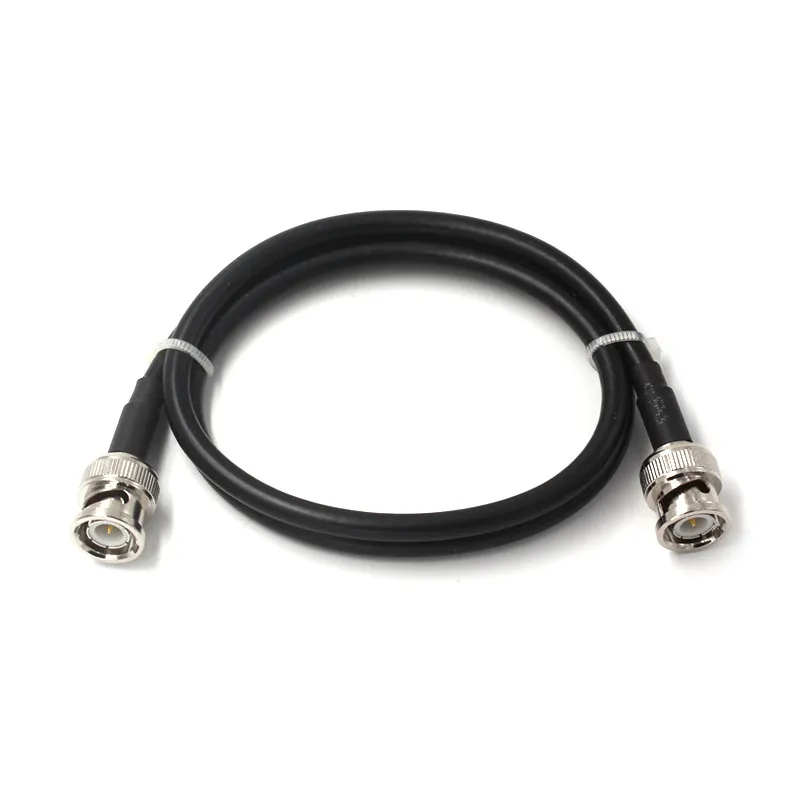
Figure 2 appears in the section discussing how to maintain impedance continuity when 50-ohm BNC cables are paired with specific coax structures like RG316 or RG58. It serves as a concrete example that the choice of cable construction (e.g., RG58) leads to divergent behavior with frequency, length, and temperature, and emphasizes that small impedance steps introduced by connector geometry, dielectric compression, and adapters are not harmless collectively.
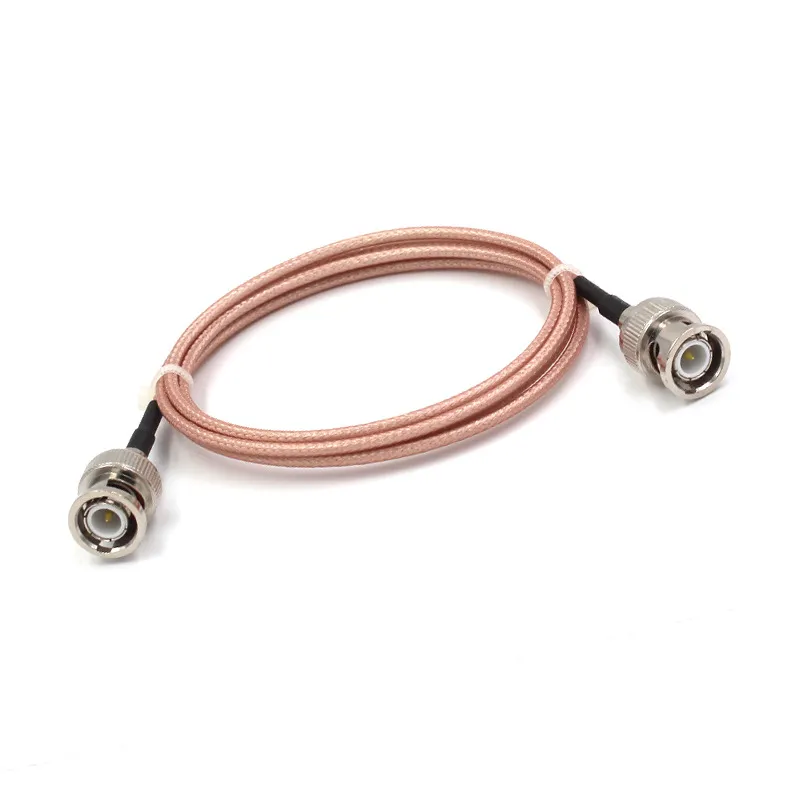
Figure 3 is a contrasting example to Figure 2, showing a BNC assembly paired with RG316 cable. It is used to illustrate the popularity of RG316 in solving many mechanical problems (like space constraints and heat), but also points out its electrical limits: loss rises quickly at higher frequencies, especially above a few hundred MHz. This prompts the need to sanity-check cable choices against frequency and length zoning before locking in the setup.
Behind every 50 ohm bnc cable is a specific coax structure. RG58, RG223, and RG316 all claim 50 Ω, but their behavior diverges with frequency, length, and temperature.
RG316 is popular for short, flexible runs and high-temperature environments. RG58 handles longer distances better at lower frequencies but becomes bulky and lossy as bandwidth increases.
What usually gets missed is the transition. Connector geometry, dielectric compression, and adapters introduce small impedance steps. Individually, they look harmless. Together, they matter.
Engineers planning to use RG316 behind BNC connectors often sanity-check loss and thermal limits using focused references like RG316 Coaxial Cable Specs, Loss & Uses before locking in the setup.
How do you separate 50 Ω RF BNC from bnc video and camera cables?
How bnc video cable and bnc camera cable relate to 75 ohm BNC cables
Most bnc video cable and bnc camera cable discussions start from the wrong place.
People focus on the connector.
In reality, the connector tells you almost nothing. The important part is what sits behind it.
Video and camera systems are built around 75 Ω coaxial transmission lines. That choice is not arbitrary. It comes from decades of broadcast and baseband video practice, where long cable runs and flat frequency response matter more than power transfer efficiency. The BNC connector was simply adapted to that environment.
This is why a 75 ohm bnc cable often looks indistinguishable from a 50 Ω version on the outside. Same bayonet lock. Same shell. Same click when it mates.
Electrically, they are not interchangeable.
If you want a neutral, non-vendor explanation of why 75 Ω dominates video systems, the background summarized in the Characteristic impedance article is actually more useful than most application notes. It explains the historical trade-offs without turning it into a sales pitch.
Why CCTV and cameras stick to 75 Ω while test systems rely on 50 Ω
CCTV, broadcast video, and camera links live in a different world than RF test benches.
They prioritize:
- Long cable runs
- Predictable reflections across wide bandwidth
- Compatibility with legacy infrastructure
RF test systems care about different things:
- Power transfer consistency
- Instrument calibration assumptions
- Interoperability with RF components
That split is why bnc camera cable almost always means 75 Ω, while a 50 ohm bnc cable shows up in labs, not control rooms.
This distinction is well established in standards bodies. Organizations like the International Electrotechnical Commission document video transmission practices very differently from RF measurement environments, even when the same connector family is involved.
Mixing the two worlds usually works electrically—until accuracy matters.
Where you must never mix 50 ohm and 75 ohm BNC cables
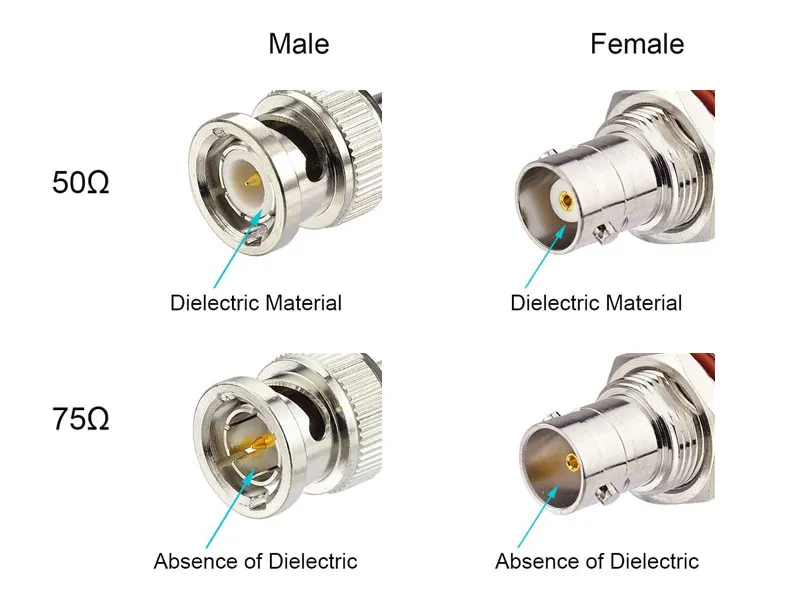
Figure 4 appears in the section emphasizing where you must never mix 50-ohm and 75-ohm BNC cables. It is used to clearly delineate the application worlds: RF test systems care about power transfer consistency, instrument calibration assumptions, and interoperability with RF components; whereas video/camera systems prioritize long cable runs, predictable reflections across wide bandwidth, and compatibility with legacy infrastructure. Mixing them may not break anything immediately but introduces impedance ambiguity in calibrated paths, production test fixtures, or swept-frequency measurements, creating technical debt.
There are cases where mixing doesn’t immediately break anything. Short adapters during troubleshooting. Temporary signal taps. Low-frequency checks.
Those are exceptions, not rules.
There are also places where mixing should be considered a hard stop:
- Between calibrated RF instruments and DUTs
- Inside production test fixtures
- In swept-frequency or phase-sensitive measurements
- Anywhere results are logged, compared, or trended
Once measurements become part of a decision loop, impedance ambiguity becomes technical debt. It may not fail today, but it will fail quietly later.
This is why engineers who move between RF and video domains often keep separate, clearly labeled cable inventories—even though everything uses BNC connectors.
How do you trade off length and loss for a 50 ohm BNC cable?
This is where decisions usually get fuzzy.
People ask, “How long can my 50 ohm bnc cable be?”
That question is too vague to answer directly.
The better question is: How much loss can this part of the system tolerate before it starts influencing decisions?
50 ohm BNC test cable length & loss quick-decision table
This table is not meant to be precise.
It’s meant to stop obviously bad choices early.
| Frequency Band | Instrument Type | Max Allowed Loss (dB) | Planned Length (m) | Recommended Cable Family | Reference Attenuation (dB/m) | Estimated Loss (dB) | Result |
|---|---|---|---|---|---|---|---|
| DC-100 MHz | Oscilloscope | 0.5 | 1.0 | RG58 | 0.05 | 0.05 | Pass |
| 100-500 MHz | Signal Generator | 0.7 | 1.5 | RG223 | 0.12 | 0.18 | Pass |
| 500 MHz-1 GHz | Spectrum Analyzer | 0.8 | 1.0 | RG316 | 0.30 | 0.30 | Risk |
| 1-3 GHz | Network Analyzer | 0.5 | 1.0 | Low-loss test cable | 0.15 | 0.15 | Pass |
Estimation rule used:
Estimated Line Loss (dB) ≈ Attenuation (dB/m) × Length (m)
No correction factors. No fancy math. Just a first-order check.
Using band + length zoning to decide when RG316 is enough
RG316 shows up everywhere because it solves a lot of mechanical problems.
It’s thin.
It’s flexible.
It survives heat better than many alternatives.
Electrically, it has limits.
At lower frequencies, RG316 is forgiving. At higher frequencies, especially above a few hundred MHz, loss rises quickly. This is where people get surprised: the cable still works, but the margin disappears faster than expected.
A simple zoning mindset helps:
- Low band + short length → RG316 is usually fine
- High band + short length → maybe acceptable, check loss
- High band + long length → wrong cable family
Engineers who want to sanity-check RG316 behavior often refer back to focused breakdowns like RG316 Coaxial Cable Specs, Loss & Uses rather than guessing from memory.
How much length margin can you afford before your readings drift?
A practical rule that holds up in labs:
If estimated cable loss exceeds 70% of your allowed measurement error, you’re no longer measuring just the DUT.
You’re measuring the DUT plus the cable.
That doesn’t mean the setup is invalid. It means comparisons over time, across benches, or between teams become unreliable.
Embedding the decision table into BOMs and fixtures
This is where teams actually see results.
When cable length and family are explicitly called out in BOMs and test fixture drawings, two things happen:
- People stop “grabbing whatever is nearby.”
- Measurement behavior becomes repeatable across benches.
It’s a small process change. It removes a surprising amount of noise from RF testing.
How do you define practical acceptance criteria for 50 ohm BNC cables?
Acceptance criteria only matter if people actually use them.
That means the checks need to be fast, repeatable, and tied to real failure modes—not idealized specs.
Visual and mechanical checks: what’s worth checking, what isn’t
Start with what fails first.
- Jacket condition: discoloration, flattening, or stiffness near the connector usually means internal stress
- Strain relief: if the cable flexes sharply right at the connector, it won’t age well
- Connector feel: a BNC that locks but rotates loosely is already on borrowed time
- Labeling: impedance and cable family should be obvious without guessing
Cosmetic scratches along the jacket usually don’t matter. Damage near the connector almost always does.
These checks take seconds. Skipping them saves no real time.
Electrical checks: simple floors that catch real problems
DC continuity and insulation tests catch gross failures.
They do not tell you whether the cable still behaves like a 50 ohm bnc cable at frequency.
A basic return loss or VSWR check at the highest frequency you actually use is far more informative. This doesn’t need lab-grade precision. You’re not certifying the cable—you’re screening it.
A practical floor many teams use:
- Return loss worse than ~15 dB at the operating band → cable goes into “non-critical use”
- Return loss drifting over time → cable flagged for retirement
The exact numbers matter less than consistency.
When should an aging BNC cable retire from your bench?
Cables don’t usually fail suddenly. They become sensitive.
If moving or lightly touching a cable changes readings, the cable is no longer transparent. At that point, it stops being a measurement tool and becomes a variable.
Good labs don’t throw these cables away immediately. They demote them.
Debug-only use. Low-frequency checks. Non-critical setups.
What matters is that they no longer end up in paths where accuracy is assumed.
How can current industry trends shape your next 50 ohm BNC test plan?
What low-loss and phase-stable test cables really teach us
Modern phase-stable and ultra-low-loss test cables exist for a reason. They reduce one source of uncertainty.
What they don’t do is fix sloppy system thinking.
Even the best cable can’t compensate for mixed impedances, unclear signal paths, or undocumented adapters. In practice, these premium cables highlight how much ordinary bnc cable behavior used to be hiding measurement issues.
The lesson isn’t “upgrade everything.”
It’s “know where the cable matters.”
How RF jumper cable market growth affects lab and production testing
RF systems keep pushing upward in frequency and downward in margin. As a result, jumper cables—once considered consumables—are getting more attention.
In production environments, this changes replacement philosophy. Instead of waiting for obvious failure, teams increasingly replace cables based on insertion cycles or drift history.
That mindset shift matters more than any specific cable upgrade.
Learning mixed connector architectures from recent designs
Recent systems increasingly mix BNC, SMA, and other interfaces deliberately. The connector choice reflects mechanical constraints, accessibility, or legacy compatibility—not electrical ignorance.
What makes these designs work is clear impedance zoning. RF paths stay RF. Video paths stay video. Transitions are explicit, not accidental.
When teams want a broader framing for these mixed systems, references like the Coaxial Cable Ultimate Guide (linked earlier in the hub) tend to be more useful than isolated connector datasheets.
How do you bake 50 ohm BNC cable rules into your team’s design standards?
Marking 50 Ω RF segments vs 75 Ω video segments early
Most cable mistakes happen after the system diagram is “finished.”
A simple habit helps: explicitly label 50 Ω RF paths and 75 Ω video paths in early block diagrams. Don’t rely on connector icons alone. Write the impedance.
This single annotation prevents a surprising number of downstream assumptions.
Adding BNC cabling checkpoints to design reviews
One review question goes a long way:
“Are all BNC paths in this design intentionally 50 Ω or 75 Ω?”
If the answer isn’t obvious, the design isn’t ready.
Teams that add this checkpoint to RF design reviews catch cable issues before hardware exists—when fixes are cheap.
Linking back to internal RG and connector knowledge
Cable decisions rarely stand alone. They connect to RG family behavior, connector transitions, and adapter choices.
That’s why many teams maintain internal links between documents like an RG cable overview, connector guides, and adapter selection notes. When a 50 ohm bnc cable choice points back to something like RG316 behavior, having that context one click away prevents guesswork.
Frequently Asked Questions
Can I use a 50 ohm BNC cable on a scope with a 1 MΩ input?
Yes. In 1 MΩ mode, the cable’s impedance is less critical. Switch the scope to 50 Ω termination, and the cable becomes part of the measurement system.
What is the practical difference between a 50 ohm BNC cable and a 75 ohm BNC video cable?
Impedance and intended system behavior. RF test systems assume 50 Ω. Video and camera systems assume 75 Ω. Mixing them introduces reflections and measurement uncertainty.
How long can a 50 ohm BNC cable be before loss becomes a problem at 1 GHz?
Often shorter than expected. Around 1 meter is a common tipping point, depending on cable family. The decision table in Part 2 provides a first-pass check.
Is it safe to mix 50 ohm and 75 ohm BNC cables in the same signal chain?
Only for temporary or low-frequency use. Avoid mixing in calibrated paths, production fixtures, or swept-frequency measurements.
Which RG cable types are most common behind 50 ohm BNC connectors?
RG58, RG223, and RG316 are the most common. Each trades flexibility, loss, and temperature tolerance differently.
Do I need low-loss or phase-stable BNC test cables for everyday lab work?
Not always. They make sense for high-frequency, long-run, or phase-sensitive measurements. Discipline in impedance control matters more than premium cables alone.
How often should 50 ohm BNC test cables be inspected or replaced in production?
Inspection should be routine. Replacement is best based on insertion cycles, visible wear, or drift history—not calendar time.
Final note
A 50 ohm BNC cable rarely causes spectacular failures.
It causes quiet ones—small shifts that feel like noise, until they stack up.
Treating the cable as part of the measurement system, rather than a disposable accessory, is usually enough to stop those problems before they start.
Bonfon Office Building, Longgang District, Shenzhen City, Guangdong Province, China

A China-based OEM/ODM RF communications supplier
Table of Contents
Owning your OEM/ODM/Private Label for Electronic Devices andComponents is now easier than ever.