
A cable assembly can pass continuity and still be the wrong RF part.
This happens more often than many buyers expect. The SMA connector mates with the device, the N Type connector fits the antenna cable, and the first bench test appears normal. The problem usually appears later — after the system moves into production, the cable route changes, or the RF path is tested closer to its operating limit.
An SMA to N adapter is not only a mechanical conversion part. It becomes part of the RF path. Connector gender, impedance, frequency range, cable type, and installation environment all affect whether the connection works as expected.
For engineers and procurement teams, the correct question is not simply “Can SMA connect to N?” The better question is: “Does this adapter match the complete RF system?”
How Should You Identify the Right SMA to N Adapter Before Selection?
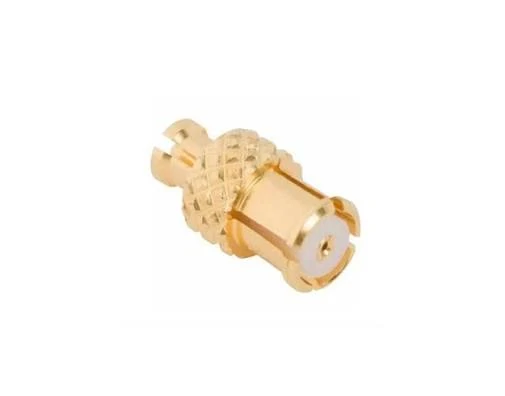
This image shows common SMA to N adapter interface configurations used for RF connection conversion. Proper selection requires checking connector gender, impedance, frequency range, and application requirements.
The first mistake in adapter sourcing is selecting from the connector name alone.
“SMA adapter” or “N adapter” describes only a connector family. It does not define the complete interface arrangement. Before placing an order, the SMA side, N side, mounting method, and electrical requirements should be confirmed.
Define the role of SMA and N interfaces in an RF system
SMA and N Type connectors are both widely used in 50Ω RF systems, but they usually appear in different parts of a system.
SMA connectors are commonly selected where space is limited:
- RF modules
- PCB interfaces
- test equipment ports
- compact communication devices
N Type connectors are often used where stronger mechanical construction is required:
- antenna systems
- outdoor RF links
- base station equipment
- longer coaxial cable connections
This difference explains why an SMA to N adapter is frequently used. A compact RF module may use an SMA interface, while the antenna cable or external RF equipment may already use an N Type connection.
The adapter provides the transition, but the surrounding system still determines whether it is suitable.
Confirm whether the adapter is SMA-to-N or N-to-SMA
Many purchasing mistakes happen because the direction is misunderstood.
An SMA to N adapter and an N to SMA adapter may use the same two connector families, but the physical arrangement is different.
Before ordering, confirm:
| Check Field | Required Confirmation |
| SMA Side | Male or Female |
| N Side | Male or Female |
| Conversion Direction | SMA → N or N → SMA |
| Application | Antenna, Test, Module |
| Impedance | 50Ω |
| Frequency Range | Required GHz Range |
| Mounting | Cable, Panel, Bulkhead |
The adapter name should describe the actual connection path.
For example:
“SMA female to N male 50Ω adapter”
is much clearer than:
“SMA adapter”
The first description tells the supplier exactly which interfaces are required.
Separate adapter selection from cable assembly selection
Another common sourcing issue is treating adapters and cable assemblies as interchangeable.
An RF adapter solves an interface conversion problem.
An RF cable assembly solves a connection routing problem.
An adapter is usually suitable when:
- equipment already exists
- temporary conversion is required
- laboratory testing requires different interfaces
- prototype systems need flexibility
A cable assembly is usually better when:
- the connection will remain installed
- cable length is fixed
- minimizing connection points matters
- production repeatability is required
Every additional interface introduces another mechanical connection point. In high-frequency systems, these points can become potential sources of mismatch, insertion loss, or long-term maintenance issues.
How Do You Match SMA and N Type Adapter Interfaces Correctly?
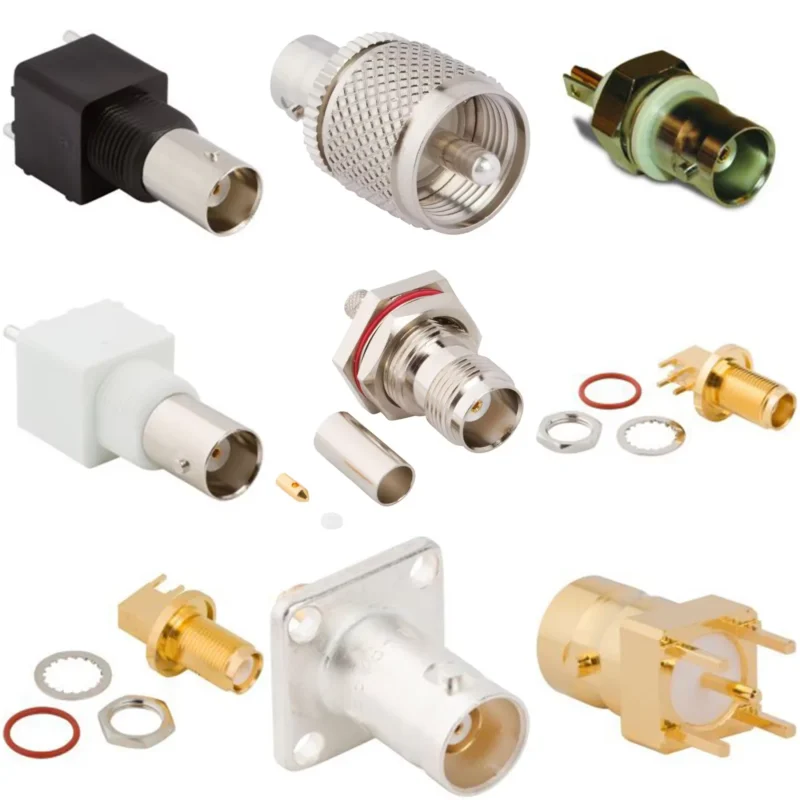
The connector may fit mechanically and still fail electrically.
RF connectors are not selected only by outside dimensions. The internal geometry controls signal transmission.
Select SMA connector gender based on the equipment port
SMA gender identification requires checking the actual mating structure.
Confirm:
- center pin or socket
- thread condition
- connector standard
- polarity type
Standard SMA and RP-SMA should not be treated as interchangeable.
A reverse polarity SMA connector may look similar from the outside, but the internal contact arrangement is different.
Avoid mixing different connector polarity standards
The connector family alone is not enough.
A complete RF interface check should include:
- SMA standard
- RP-SMA possibility
- N Type gender
- impedance
- cable compatibility
A common replacement mistake is assuming that a visually similar connector can replace the original part.
In RF systems, the front interface is only one part of the design. The rear body, dielectric structure, contact alignment, and cable termination all influence the final result.
SMA to N Adapter Identification Table
| Field | Example Check |
| SMA Interface | Male / Female |
| N Interface | Male / Female |
| Conversion Direction | SMA → N |
| System Application | Antenna / Test / Module |
| Impedance | 50Ω |
| Frequency Requirement | DC-6GHz / 18GHz / Higher |
| Installation | Cable / Panel / Bulkhead |
| Drawing Required | Yes / No |
This simple confirmation sheet helps avoid the most common purchasing error: ordering an adapter that physically connects but does not match the RF application.
How Does Impedance Affect SMA to N Adapter Selection?
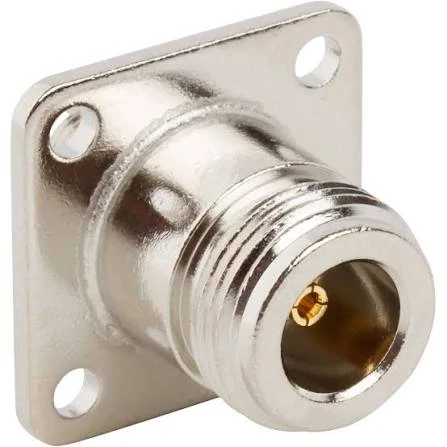
This image represents RF adapter structures used in 50Ω systems. Impedance consistency between adapter, cable, and equipment helps reduce signal reflection and transmission issues.
A replacement adapter may look correct on the bench and still create problems after it is installed into the actual RF system.
This situation is common when purchasing teams focus on connector appearance. The SMA thread matches. The N connector mates. The cable can be attached. From a mechanical perspective, everything seems fine.
The missing check is usually impedance.
For RF systems, the adapter is part of the transmission path. Any change in the path can affect how energy moves through the system.
If the equipment, cable, and adapter do not follow the same impedance standard, the result may be different from the original design.
This is why an RF request containing only “need SMA to N adapter” is usually incomplete.
A supplier still needs to know:
- SMA male or female
- N male or female
- cable or panel mounting
- operating frequency
- application environment
A small amount of missing information can lead to the wrong part being selected.
Why can impedance mismatch affect RF results?
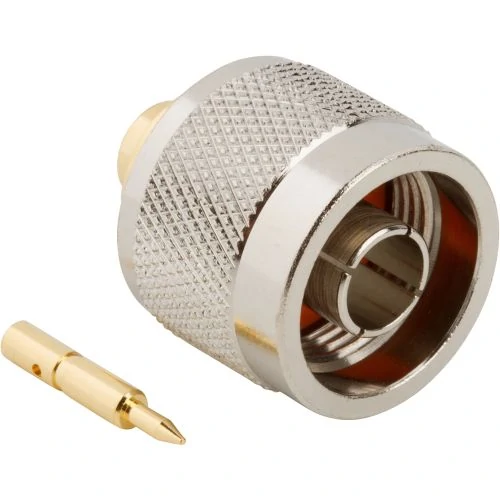
Different SMA to N adapters support different frequency ranges and applications. Checking operating frequency before selection helps ensure reliable RF performance.
At low frequencies, some problems remain unnoticed.
The system may power on. Data may transmit. The connection may appear normal.
The issue becomes more visible when:
- the frequency increases
- the cable length becomes longer
- the system requires accurate measurement
- the signal level is more sensitive
Possible effects include:
- increased VSWR
- higher reflected power
- measurement deviation
- additional insertion loss
A continuity test cannot reveal these problems.
RF testing looks at how the signal behaves across frequency.
For applications involving VNA testing or microwave measurement, engineers usually evaluate:
- return loss
- VSWR
- insertion loss
before accepting the assembly.
Do not evaluate the adapter separately from the cable
A common replacement mistake happens when the adapter is selected first and the cable is considered later.
The cable has its own electrical characteristics.
Important points include:
| Item | Check Before Selection |
| Adapter | Interface, impedance, frequency |
| Cable | 50Ω type, attenuation, diameter |
| Equipment | Port specification |
| Installation | Indoor or outdoor use |
For example, an SMA to N adapter designed for a 50Ω RF cable system should not automatically be considered suitable for another coaxial cable type.
The connectors may fit physically, but the complete RF path may change.
| Check Point | Result |
| System Application | RF / Test / Other |
| Impedance | 50Ω confirmed |
| SMA Side | Confirmed |
| N Side | Confirmed |
| Cable Type | Matched |
| RF Test | Required / Not required |
This checklist is simple, but it prevents many incorrect purchases before they become installation problems.
How Do SMA to N Adapters Support Different RF Applications?
The reason for choosing an adapter changes depending on where it is installed.
A laboratory user may care about measurement repeatability.
An antenna installer may care more about mechanical strength.
The connector combination is the same. The decision criteria are not.
Connecting compact RF devices with antenna systems
SMA to N adapters are often used when a compact RF device needs to connect to a larger coaxial antenna system.
A typical example:
A wireless module uses an SMA interface.
The external antenna cable uses an N Type connector.
The adapter creates the connection between these two interfaces.
This type of application appears in:
- GPS equipment
- wireless modules
- IoT products
- communication terminals
However, the adapter should match the installation condition.
Inside an enclosure, size and accessibility may matter more.
For an outdoor antenna connection, buyers usually pay more attention to:
- mechanical stability
- weather exposure
- cable routing
- long-term connection reliability
The same adapter style is not always suitable for both situations.
Using SMA to N adapters in RF measurement systems
Test equipment often uses different connector standards depending on the instrument and accessory.
A VNA, spectrum analyzer, or signal generator may require an adapter to connect with another device.
In these situations, the adapter becomes part of the measurement setup.
A poor connection can affect the result being measured.
For example, when measuring a low-loss cable, the adapter itself contributes to the RF path. If the adapter has unsuitable frequency characteristics, the measurement result may include errors from the connection rather than the cable.
Test applications usually pay attention to:
- frequency range
- connector repeatability
- mechanical accuracy
- VSWR performance
A general-purpose adapter may work for daily connections but may not be the right choice for calibration-related work.
Consider the installation environment before selecting the structure
SMA to N adapters are available in different structures:
- straight adapters
- right-angle versions
- panel mount types
- bulkhead designs
The choice depends on the installation.
| Application | Common Concern |
| Compact equipment | Available space |
| Outdoor antenna | Mechanical protection |
| Test bench | Connection repeatability |
| Production equipment | Assembly consistency |
A right-angle adapter may solve a space problem but introduce a different mechanical constraint.
A bulkhead adapter may simplify installation but requires correct panel dimensions.
The best choice is usually the one that fits the complete system, not simply the one with the shortest description.
How Does Frequency Range Influence SMA to N Adapter Choice?
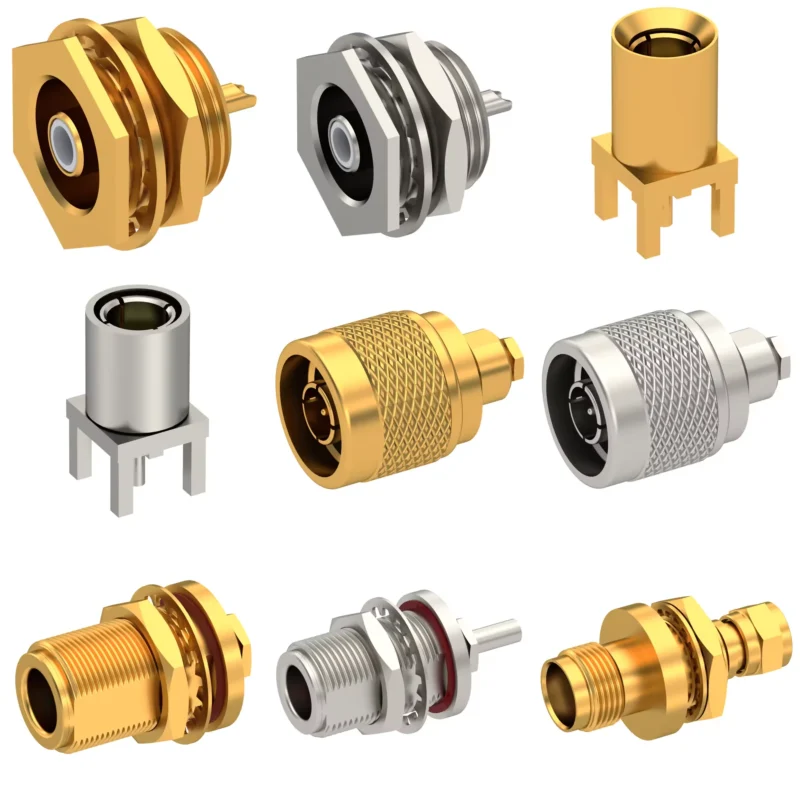
Connector appearance can be misleading.
Two adapters may have the same SMA and N interfaces but different internal designs.
One may be suitable for a basic communication link. Another may be manufactured for microwave testing.
The difference is not always visible from the outside.
Check the operating frequency instead of only the connector type
A purchase request should include the working frequency.
Examples:
- 2.4 GHz wireless application
- 6 GHz RF communication system
- 18 GHz laboratory measurement
- higher-frequency microwave testing
The adapter rating should cover the actual operating band.
A connector rated close to the operating frequency may work, but it leaves less margin for unexpected losses caused by:
- cable variation
- assembly tolerance
- repeated mating
- installation conditions
What specifications should be reviewed besides frequency?
Frequency is only one part of the selection process.
A practical RF specification usually includes:
- impedance
- VSWR
- insertion loss
- connector material
- plating
- mounting method
- cable compatibility
At higher frequencies, small manufacturing differences become more noticeable.
SMA to N Adapter RF Specification Sheet
| Parameter | Example Information |
| SMA Interface | Male / Female |
| N Type Interface | Male / Female |
| Impedance | 50Ω |
| Frequency Range | DC-6GHz / DC-18GHz |
| Application | Antenna / Test Equipment |
| Mounting | Cable / Panel / Bulkhead |
| VSWR | Required Data |
| Quantity | Sample / Production |
Providing these details before quotation helps avoid incorrect substitutions and reduces repeated communication between buyers and suppliers.
Should You Use an SMA to N Adapter or a Cable Assembly?
Many RF projects start with an adapter.
During development, this is usually the fastest way to connect equipment with different interfaces. An engineer may have an SMA port on one side and an N Type cable on the other side. Adding an adapter solves the immediate connection problem.
The situation changes when the design moves from testing into production.
A temporary connection and a permanent RF path are not always built the same way.
When does an adapter make more sense?
An SMA to N adapter works well when the two interfaces already exist and only a connection transition is needed.
Why do production systems often move toward cable assemblies?
A production design usually has different priorities.
Once the cable route, length, and installation position are fixed, an SMA to N cable assembly may become a better option.
A cable assembly removes one separate connection point and combines:
- connector A
- coaxial cable
- connector B
- required cable length
This can simplify installation.
It also makes repeat orders easier because the complete part number represents the finished connection.
Typical applications include:
- antenna installation
- communication equipment
- industrial RF systems
- repeated OEM assembly
A common mistake during purchasing is comparing only the adapter price.
The real comparison should include:
- installation time
- number of interfaces
- assembly consistency
- maintenance requirements
How many connection points exist in the RF path?
Every additional interface adds another mechanical transition.
This does not mean adapters should always be avoided.
For many applications, an adapter is the correct solution.
The point is to understand where it is being used.
| Application Situation | More Practical Choice |
| Prototype testing | SMA to N adapter |
| Temporary equipment connection | SMA to N adapter |
| Fixed antenna cable | SMA to N cable assembly |
| Repeated production installation | Cable assembly |
| Need frequent interface changes | Adapter |
The correct selection depends on the role of the connection in the final system.
How Should SMA to N Adapters Be Installed and Checked?
A new adapter can fail before the RF system is even powered on.
The problem is sometimes simple:
- damaged thread
- dirty contact surface
- incorrect mating
- excessive tightening force
These issues are easy to overlook because the connector may still appear normal.
Check the mechanical condition before connection
Before installation, inspect:
- SMA thread condition
- N Type locking surface
- center contact
- plating surface
- foreign particles
For frequently connected laboratory equipment, connector condition directly affects repeatability.
A damaged connector may still make electrical contact, but the mechanical position of the contact area may no longer be consistent.
Match the installation method to the application
Not all SMA to N adapters are installed in the same way.
Some are used as free-hanging connection parts.
Others are mounted through a panel or enclosure.
The installation type affects the required structure.
| Installation | Typical Consideration |
| Cable connection | Flexibility and strain |
| Panel mount | Hole size and fixing method |
| Bulkhead mount | Mechanical stability |
| Test bench | Easy replacement |
For outdoor equipment, environmental factors should also be considered.
An antenna connection exposed to weather conditions has different requirements from an adapter sitting inside a laboratory cabinet.
When should RF testing be performed?
The required test level depends on the application.
For basic replacement work, visual inspection and correct mating may be enough.
For sensitive RF paths, additional verification may include:
- VSWR measurement
- insertion loss test
- VNA sweep
This is especially relevant when the adapter is used near the frequency limit.
A part can pass a simple continuity check and still show unexpected RF behavior.
What Information Should Be Included in an SMA to N Adapter RF Request?
A short product name often creates unnecessary back-and-forth communication.
“SMA to N adapter”
does not tell the supplier:
- which SMA side is needed
- which N side is needed
- where it will be installed
- what frequency range is expected
A clearer request saves time for both sides.
Specify the two connector interfaces separately
Instead of writing:
“SMA adapter”
provide information such as:
“SMA female to N male 50Ω adapter”
This immediately defines the physical connection.
Important details include:
- SMA male or female
- N male or female
- standard or special polarity
- cable or panel installation
Add RF operating information
The same connector combination may be used in different systems.
The supplier should know:
- operating frequency
- impedance
- application
- quantity
- test requirements
For example, an adapter used for a 2.4GHz communication device and one used in an 18GHz measurement system should not be selected using the same criteria.
Include drawings for replacement or custom projects
Photos are useful, but dimensions are often necessary.
For replacement projects, provide:
- existing adapter photo
- mounting dimensions
- cable information
- equipment interface drawing
This avoids situations where the replacement part fits the connector but cannot be installed correctly.
SMA to N Adapter RFQ Template
| RFQ Item | Example |
| SMA Interface | SMA Female |
| N Interface | N Male |
| Conversion | SMA to N |
| Impedance | 50Ω |
| Frequency | DC-6GHz |
| Application | Antenna / Test |
| Mounting | Cable / Panel |
| Quantity | Sample / Production |
| Drawing | Required for custom design |
A complete RF request usually leads to a more accurate quotation because the supplier can evaluate the whole connection rather than guess from the connector name.
FAQ
Can an SMA to N adapter be selected only by connector size?
No.
The external size only confirms that the connectors may physically match.
Is an SMA to N adapter the same as an N to SMA adapter?
The connector families are the same, but the interface arrangement is different.
The correct choice depends on which connector is required on each side of the equipment.
Will an adapter affect RF signal quality?
It can.
An adapter adds another interface into the RF path. At higher frequencies or in measurement systems, its electrical characteristics may need to be considered.
When is a cable assembly preferred over an adapter?
A cable assembly is usually preferred when the connection length is fixed, the installation is permanent, or reducing interface points is valuable.
What should be provided when requesting an SMA to N adapter quotation?
At minimum:
- connector sides
- male/female information
- impedance
- frequency range
- application
- quantity
For custom versions, drawings and photos help avoid incorrect matching.
Final Selection Notes
An SMA to N adapter is a small component, but it sits directly inside the RF signal path.
The selection process should not stop after confirming that the connectors mate.
Before ordering, review:
- interface combination
- connector gender
- impedance
- operating frequency
- cable compatibility
- installation environment
- required inspection level
For laboratory and prototype work, an adapter often provides the flexibility needed during development.
For repeat production and fixed installations, a complete cable assembly may reduce unnecessary connection points.
A clear specification at the beginning usually prevents much larger problems later — especially when the system moves from the first sample into regular production.