
In many industrial machines, the connector is not the part that receives the most attention during the early design stage. Engineers usually focus on the controller, motor, sensor, or circuit board first. The connector is often decided later.
However, once the equipment enters long-term operation, the connector becomes a key part of daily reliability.
A loose connection can stop a machine. A wrong pin configuration can delay production. A connector that is difficult to replace can increase maintenance time.
This is where the GX16 connector is commonly considered.
The GX16 series is not selected simply because it has a 16mm mounting size. In real projects, engineers usually start from the wiring requirement:
- How many circuits need to pass through the connector?
- Is the connection carrying power or signals?
- Does the equipment need frequent maintenance?
- Is the connector installed inside a cabinet or exposed on the equipment panel?
These answers usually determine the final GX16 specification.
For engineers comparing different circular connection solutions, understanding circular connector applications helps create a better starting point before selecting a specific model.
GX16 Connector Structure Determines Connection Reliability
A GX16 connector looks simple from the outside, but several internal details affect its actual performance.
A complete connection system also depends on:
- Contact quality
- Cable assembly process
- Soldering consistency
- Correct installation
A well-designed connector can still fail if the cable termination process is incorrect.
How Should You Select a GX16 Connector for Industrial Equipment?
The selection process usually starts before the connector itself is chosen.
During product development, engineers often already know:
- The available installation space;
- The cable routing direction;
- The electrical requirements;
- The expected maintenance method.
The GX16 model should fit these conditions instead of forcing the equipment design to adapt to the connector.
Start With the Purpose of the Connection
A GX16 connector can be used for different functions depending on the circuit design.
For a simple power connection, the requirement may only include:
- Positive terminal
- Negative terminal
For a control system, more contacts may be required:
- Power supply
- Sensor feedback
- Control signals
- Communication lines
This is why two GX16 connectors with the same external size may have completely different applications.
Check Mechanical Requirements Before Production
A common issue in OEM projects is selecting a connector that fits the drawing but creates problems during assembly.
Typical problems include:
- Cable bending radius is too small;
- Connector position is difficult to access;
- Plug direction does not match installation space;
- Maintenance personnel cannot easily remove the connector.
For equipment manufacturers, these details are usually discovered during assembly testing rather than during initial purchasing.
Therefore, connector selection should consider the complete installation environment.
How Do GX16 Connector Pin Counts Change Application Selection?
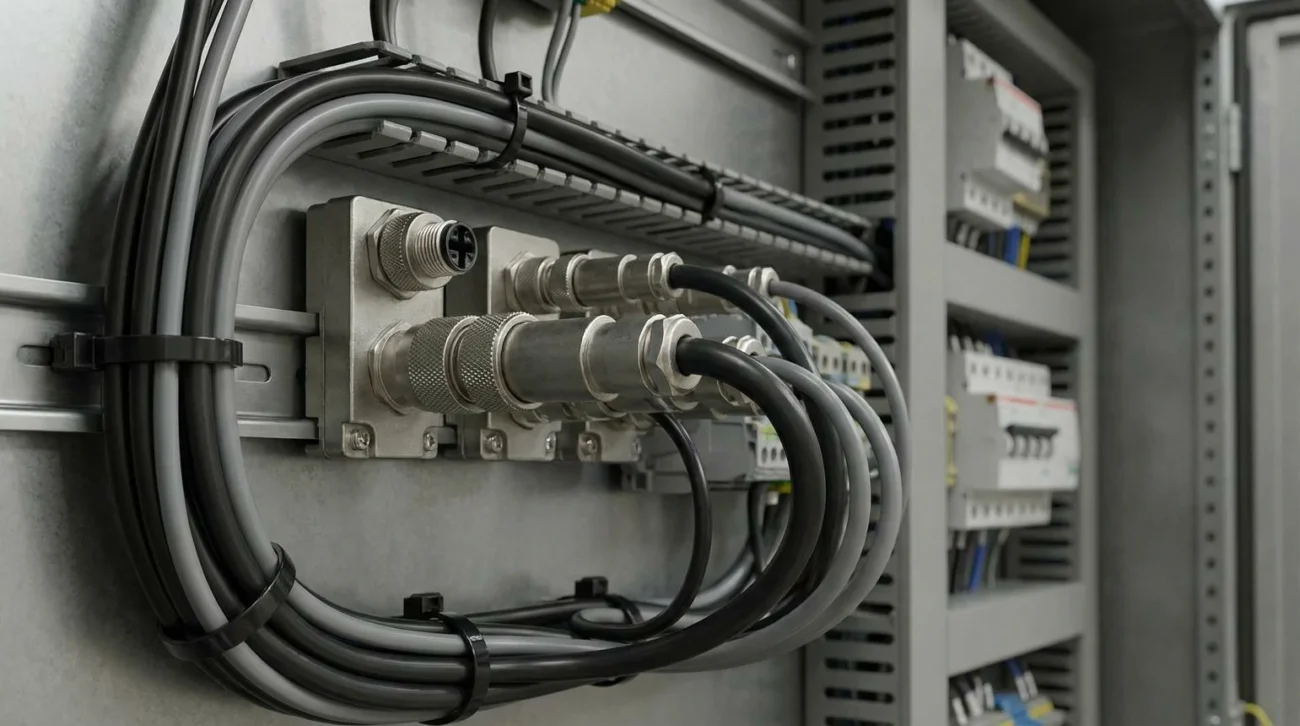
Pin count is one of the first specifications engineers confirm when selecting a GX16 connector.
Although GX16 connectors share a similar outer diameter, different pin numbers create different wiring possibilities.
The GX16 connector pinout should be confirmed before production because the internal contact arrangement directly affects the equipment wiring.
Common GX16 configurations include:
- 2 Pin
- 3 Pin
- 4 Pin
- 5 Pin
- 6 Pin
- 7 Pin
- 8 Pin
- 9 Pin
- 10 Pin
Why Should GX16 Connector Pinout Be Confirmed Before Wiring?
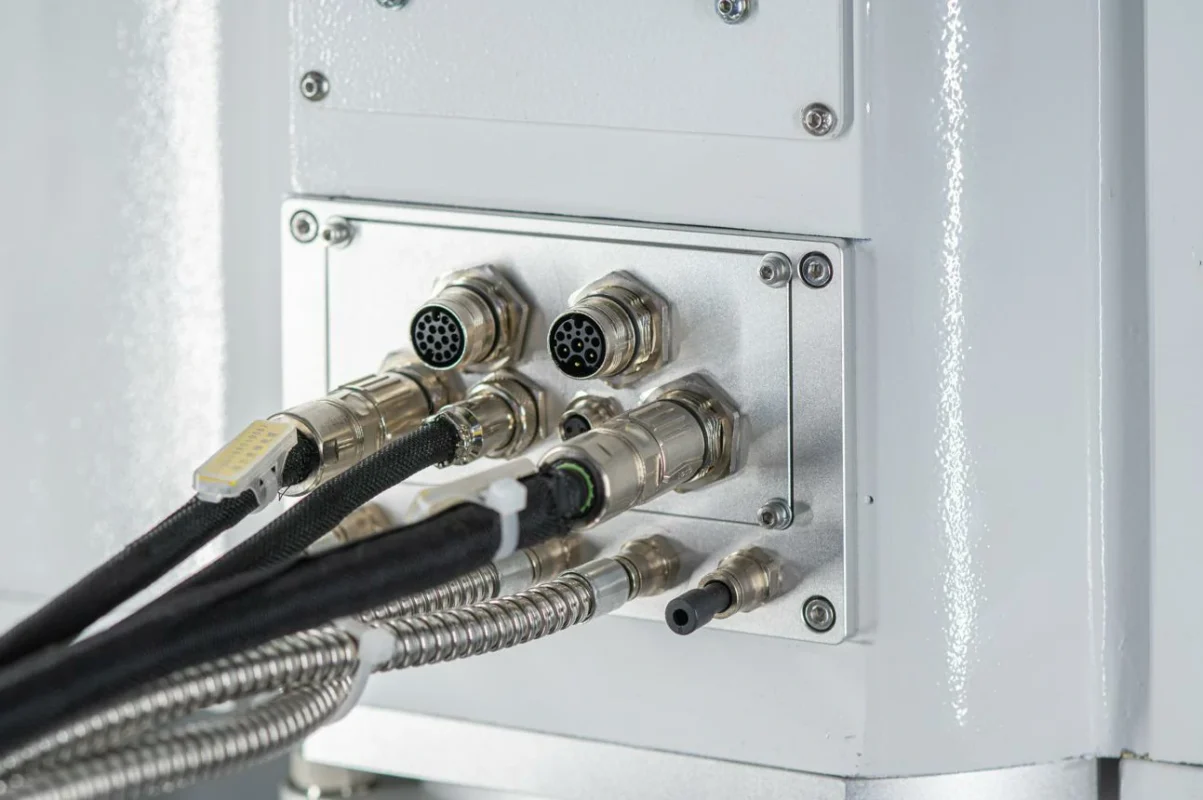
Pinout mistakes are among the most common problems during connector assembly.
Before production, the following information should be confirmed:
- Pin numbering direction
- Plug and socket matching
- Cable solder sequence
- Signal definition
- Ground connection
A connector can be mechanically assembled correctly while still being electrically wrong.
This is why OEM customers usually confirm drawings or samples before mass production.
How Should Engineers Handle GX16 Connector Wiring During Production?
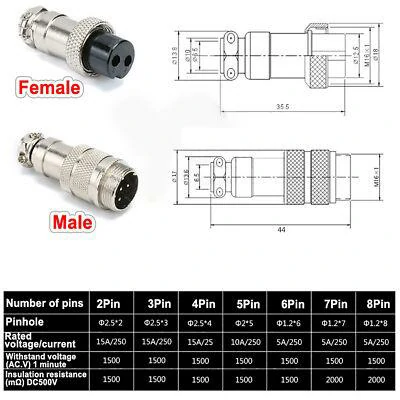
Technical reference image showing GX16 connector male and female structures, mounting dimensions, pinhole sizes, rated voltage, rated current, withstand voltage, and insulation resistance for 2-pin through 8-pin models.
In a prototype stage, GX16 connector wiring is usually easy to modify. A few wires can be moved, a connector can be replaced, and the equipment can continue testing.
The situation changes after production begins.
When dozens or hundreds of cables are assembled, a small mistake in the wiring definition can affect the entire batch. This is why GX16 wiring is usually confirmed together with the electrical drawing before cable production starts.
For a GX16 connector, the connector itself is only one part of the connection system. The final result also depends on:
- Pin assignment;
- Cable arrangement;
- Solder quality;
- Assembly process;
- Inspection method.
A connector that fits mechanically does not always mean the electrical connection is correct.
Check GX16 Connector Pinout Before Making Cable Assemblies
The first step in GX16 connector wiring is confirming the pinout.
Different GX16 models may have the same outer diameter but different internal contact arrangements.
For example, a 4-pin connector could be assigned as:
- Power positive;
- Ground;
- Signal output;
- Signal input.
Another project using the same pin number may have a completely different definition.
Before mass production, engineers usually confirm several documents together:
- Connector drawing;
- Pin definition table;
- Cable color assignment;
- Equipment wiring diagram.
This step is especially important for multi-pin GX16 connectors.
A wrong pin sequence may not be discovered until the final equipment test, which means the correction cost becomes much higher.
Separate Power and Signal Functions Inside GX16 Wiring
Many industrial devices use one connector for both power and control signals.
This design helps reduce the number of external interfaces, but it also requires better wiring planning.
A typical arrangement may look like this:
| Connection Type | Common Function |
| Power pins | Supply voltage |
| Ground pin | Electrical reference |
| Signal pins | Sensor or control data |
| Reserved pins | Future expansion |
GX16 Wiring Function Allocation Table
For example, a small automation module may receive power through GX16 while also sending feedback signals to the controller.
If the wiring is not clearly separated, problems may appear during operation:
- Sensor signal interference;
- Incorrect control response;
- Difficult troubleshooting.
In production environments, clear pin definition is usually more valuable than simply using a connector with more contacts.
Pay Attention to Soldering Quality During GX16 Assembly
GX16 connectors are often terminated by soldering.
This process is simple compared with crimp terminals, but consistency still matters.
Poor cable preparation
Incorrect stripping length may damage the conductor or reduce mechanical strength.
For OEM customers, cable assembly quality often affects the connector performance as much as the connector itself.
How Do GX16 Plug and Socket Selection Affect Equipment Installation?
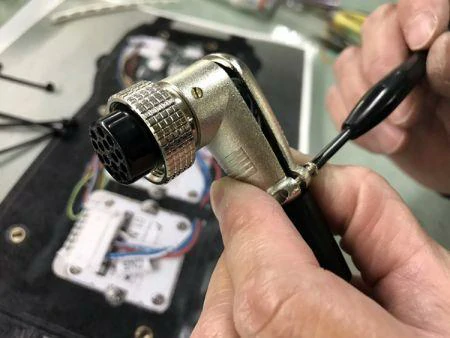
Close-up of a technician soldering cable conductors to a right-angle GX16 circular connector. Correct wire preparation, pin assignment, solder temperature, and strain relief help improve connection reliability.
The GX16 plug and socket are designed as a matching pair, but the installation position is usually different.
The plug is normally connected to the cable.
The socket is normally fixed on the equipment panel.
This arrangement allows the equipment to be disconnected without removing internal wiring.
Match GX16 Plug and Socket Before Ordering
A common purchasing mistake is ordering the plug first without confirming the socket side.
Before production, the following details should match:
- Pin number;
- Connector series;
- Mounting method;
- Cable direction;
- Installation space.
GX16 Plug and Socket Selection Guide
| Item | Confirmation Method |
| Connector Side | Cable side or equipment side |
| Interface Type | Plug or socket |
| Pin Count | Match circuit requirement |
| Mounting Style | Panel mount or cable connection |
| Cable Direction | Straight or angled |
| Application | Power, signal, or mixed |
In equipment design, the connector location also affects maintenance.
For machines that require regular inspection, a convenient plug position can save significant service time.
For enclosed equipment, the socket installation depth and cable bending space should be checked early.
How Should Engineers Evaluate GX16 Electrical Requirements?
A GX16 connector may look identical from the outside, but different applications can have different electrical requirements.
A connector used for a sensor signal is not evaluated in the same way as one used for equipment power.
The selection usually depends on:
- Operating voltage;
- Working current;
- Contact resistance;
- Insulation capability;
- Temperature conditions.
Match Current Requirements With Actual Equipment Load
Current is one of the most easily overlooked specifications.
For low-power control circuits, the electrical load may be relatively small.
For motor-related equipment or power modules, continuous current can create heat inside the connector.
This affects:
- Contact stability;
- Material selection;
- Long-term reliability.
A connector should be selected according to the real working condition rather than only the physical dimensions.
During product development, engineers often verify these parameters with prototype testing before moving to volume production.
How Does GX16 Connector Selection Change in Different Industrial Environments?
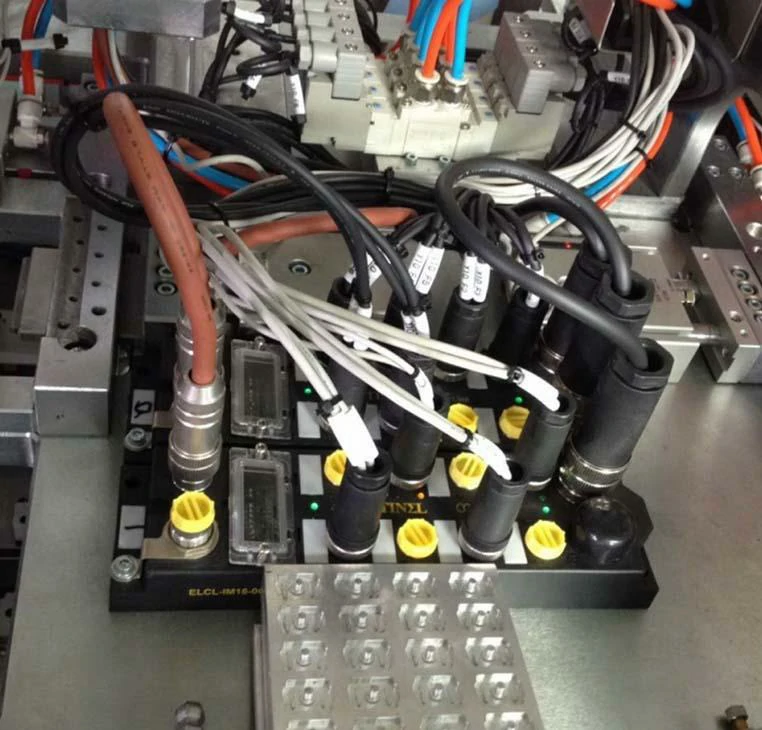
Industrial automation equipment using multiple circular cable connectors for sensor signals, control circuits, and power connections. GX16 connectors are commonly considered where removable and secure machine wiring is required.
A GX16 connector may work well in one machine but not necessarily be the best choice for another system.
The reason is simple: the connector is part of the equipment environment.
A connector installed inside a control cabinet usually faces different conditions compared with one installed near a moving mechanism.
For example:
- A control cabinet mainly requires stable wiring and easy maintenance.
- A moving machine part requires stronger mechanical fixing.
- Outdoor equipment may need additional protection against moisture and dust.
The GX16 connector itself provides a compact circular connection structure, but the final application result depends on whether the selected model matches the working conditions.
Check Mechanical Conditions Before Finalizing GX16 Selection
In industrial equipment, vibration is one of the factors that is often underestimated.
During the first few equipment tests, the connection may appear normal. Problems may only appear after long-term operation.
Common situations include:
- The connector becomes loose after repeated vibration;
- The cable is pulled during maintenance;
- The installation space makes operation difficult;
- The connector cannot be replaced quickly.
The threaded locking design of GX16 helps reduce accidental separation, but installation details still matter.
The equipment design should leave enough space for:
- Locking and unlocking;
- Cable bending;
- Future maintenance.
A connector is rarely replaced because of the connector body itself. More often, problems come from an unsuitable combination of connector, cable, and installation method.
When Is GX16 Aviation Connector Suitable for Equipment Design?
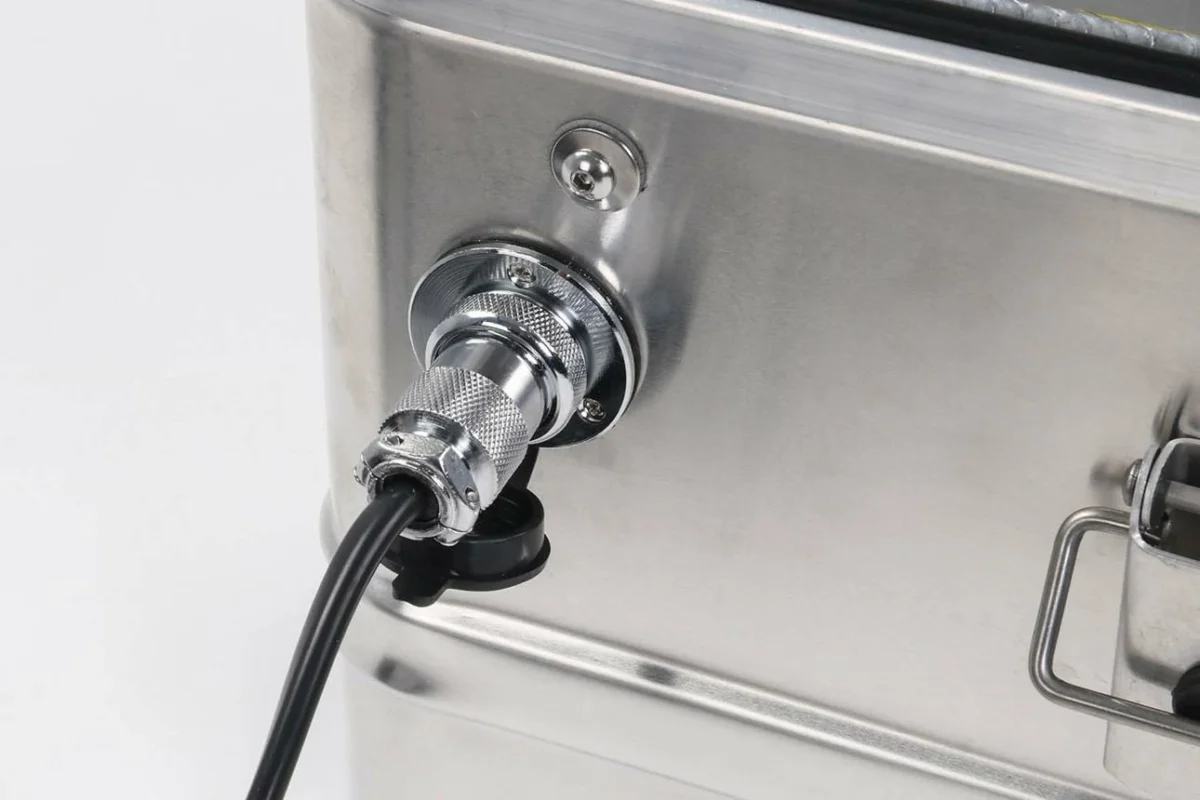
GX16 aviation connector is a common market name used for this type of circular connector.
Although the name contains “aviation”, most GX16 applications today are found in industrial and electronic equipment rather than aircraft systems.
The reason many manufacturers choose this structure is not the name, but the design characteristics:
- Compact size;
- Threaded connection;
- Multiple contact options;
- Simple solder termination.
In practical projects, GX16 aviation connectors are often found in:
- Automation equipment;
- Measuring devices;
- Electronic instruments;
- Control modules;
- Communication equipment.
Compare GX16 With Other Circular Connector Sizes Before Purchase
In many projects, GX16 is not selected alone.
Engineers may compare it with other circular connector sizes according to:
- Available installation space;
- Required number of contacts;
- Mechanical strength;
- Wiring complexity.
Circular Connector Size Selection Matrix
| Connector Series | Common Application | Selection Direction |
| GX12 | Compact electronic equipment | Small installation space |
| GX16 | General industrial equipment | Balanced size and wiring capability |
| GX20 | Larger equipment systems | Higher mechanical requirements |
| Waterproof circular connector | Outdoor or humid environments | Additional protection |
GX16 is often selected when the equipment needs more flexibility than a small connector but does not require a larger industrial interface.
This balance is one reason it remains common in automation and electronic equipment.
How Can Buyers Check GX16 Connector Quality Before Mass Production?
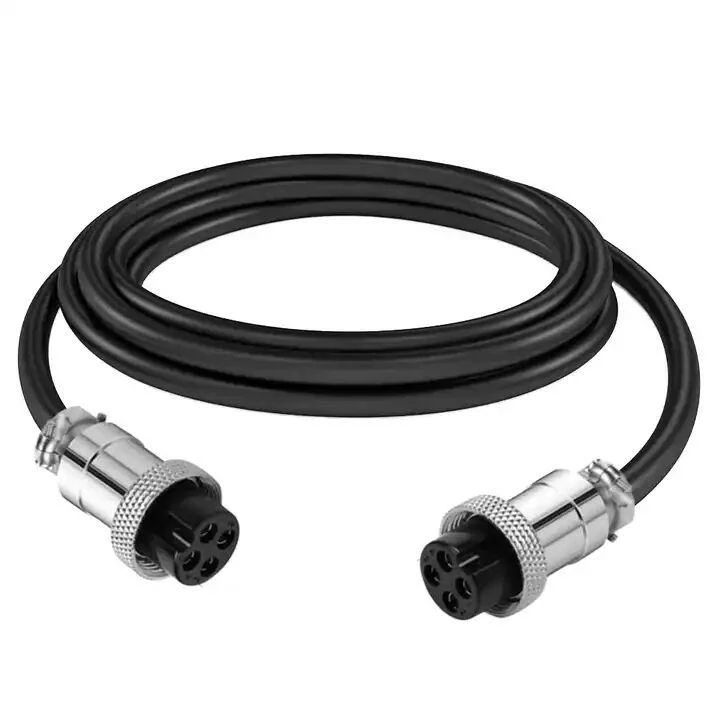
Black cable assembly fitted with circular female connectors at both ends. GX16 cable assemblies can be customized by connector type, pin count, cable length, wire gauge, and pin assignment.
Therefore, sample confirmation and inspection are important steps before bulk production.
Check Appearance and Mechanical Matching
The first inspection does not require complex equipment.
Typical checks include:
- Correct GX16 model;
- Correct pin number;
- Plug and socket matching;
- Thread condition;
- Contact appearance.
A connector that cannot be assembled smoothly may indicate a problem with matching accuracy.
Confirm Electrical Performance During Inspection
For industrial applications, electrical testing is usually included.
Common inspection items:
- Continuity;
- Contact resistance;
- Insulation resistance;
- Voltage withstand.
GX16 Connector Inspection Checklist
| Inspection Item | Verification Content |
| Model | Confirm ordered specification |
| Pin Count | Match circuit requirement |
| Plug / Socket | Confirm correct pair |
| Appearance | Check housing and contacts |
| Mechanical Fit | Verify assembly |
| Continuity | Confirm electrical path |
| Contact Resistance | Check connection stability |
| Insulation Resistance | Verify insulation |
| Voltage Test | Confirm safety requirement |
| Packaging | Prevent transportation damage |
What Information Should Buyers Provide for Custom GX16 Connector Orders?
Many GX16 requirements are not difficult technically, but incomplete information often causes unnecessary communication.
For example, a customer may only provide:
“Need GX16 connector with cable.”
This information is not enough for production.
The supplier usually needs to know:
- Which pin number?
- Plug or socket?
- Cable length?
- Cable specification?
- Working environment?
- Testing requirement?
Where Are GX16 Connectors Commonly Used Today?
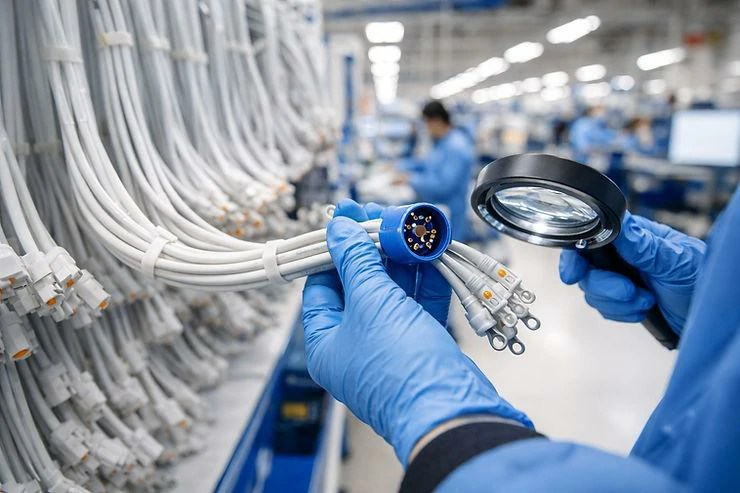
A production technician checks a multi-pin circular connector and cable assembly with a magnifying glass. Inspection may include pin position, solder quality, contact appearance, continuity, mechanical fit, and cable termination.
GX16 connectors continue to appear in equipment where a removable and reliable connection is needed.
Typical examples:
Automation Equipment
Used for:
- Control modules;
- Sensors;
- Machine interfaces.
Test Instruments
Used when:
- Connections need repeated operation;
- Cable replacement is required.
Electronic Equipment
Used for:
- External modules;
- Power interfaces;
- Control connections.
FAQ
Is GX16 a 16-pin connector?
No. GX16 describes the connector series size, not the number of contacts.
The same GX16 body size can be made with different pin options depending on the wiring requirement.
We already have a GX16 connector sample. Can we replace it directly?
It is better to check the pin layout first.
Some connectors look almost identical but have different internal wiring positions. A quick drawing comparison before replacement can prevent assembly problems.
Can GX16 connectors be supplied with cables?
Yes.
Many GX16 applications use cable assemblies instead of separate connectors. Cable length, connector side, pin number, and wire specification can be matched according to the equipment design.