
Circular Polarized Antenna for FPV Systems

Mar 31,2026

FPV drone banking around a concrete parking structure with video breakup on goggles

This figure depicts an FPV drone flying low around a concrete parking structure. The pilot's goggles screen shows static and breakup, even though the drone is relatively close. The scene highlights that the issue is not range or interference, but a mismatch in antenna polarization between the aircraft and receiver. The image sets the stage for understanding why circular polarization is used in FPV.
FPV Video Breakup from Antenna Mismatch

A quad banks hard around a concrete parking structure. The feed looks clean for a second—then breaks into noise even though the drone is still close. No obvious range issue. No obvious interference spike. Swap batteries, same result. Swap channels, still unstable.

Then someone notices the antennas.

Comparison diagram showing circular polarized antenna on one side and linear on the other, causing signal degradation

This diagram illustrates an FPV system where the aircraft uses a circular polarized antenna while the receiver uses a linear antenna. The signal path is shown with broken waves, indicating loss and instability. It explains that this mismatch doesn't kill the link completely but quietly removes margin, making video prone to breakup during tilts, reflections, or low-altitude flight.
Mismatch Between Circular and Linear Polarization

One side is running a circular polarized antenna. The other isn’t.

That mismatch doesn’t always kill the link outright. It just quietly removes the margin that keeps the picture stable when the drone tilts, reflects signals off surfaces, or flies low.

That’s usually where circular polarization enters the conversation—not as a theory, but as a fix that shows up after something fails in the air.

Start with the video link behavior, not the antenna label

Specs don’t tell you why the image broke. Flight behavior does.

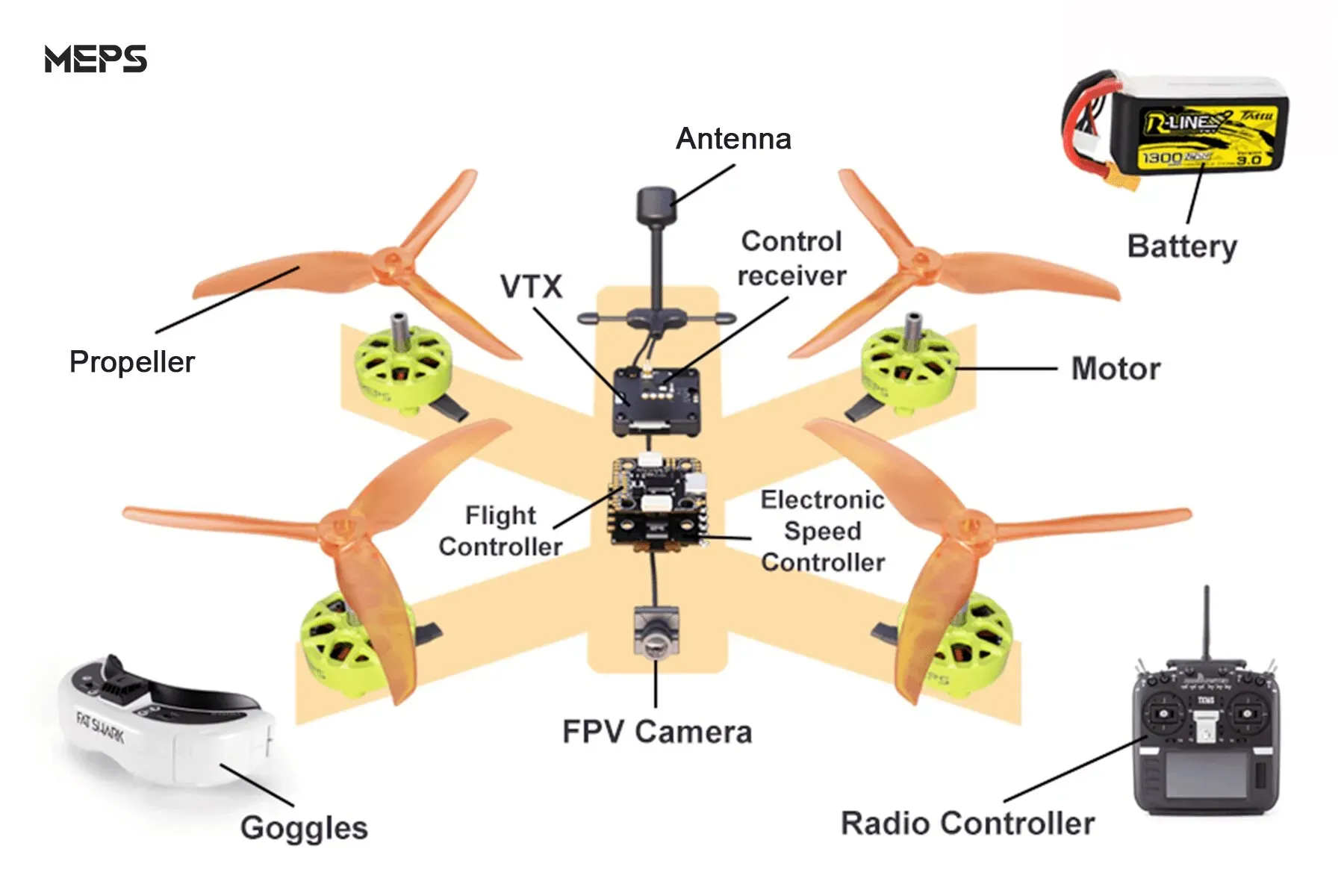
Before comparing any circular polarized antenna options, the link itself needs to be mapped. Not as a diagram on paper, but as three separate roles that behave differently once the drone is moving.

Map the aircraft side, the goggle side, and the ground receiver separately

The aircraft side is unstable by design. It tilts, spins, and changes orientation constantly. The antenna is exposed, often close to carbon fiber, motors, and batteries. It sees the worst RF environment in the entire chain.

The goggle side is more predictable. Usually stationary or at least smoother in movement. Better antenna placement. Sometimes diversity receivers or directional add-ons.

Ground receivers—especially external modules—sit somewhere in between. They can be optimized, but they still depend heavily on what the aircraft sends.

Treating these three points as one “antenna choice” leads to the same mistake: picking a product that looks compatible, but behaves inconsistently across the chain.

Separate racing, freestyle, whoop, and mid-range flight profiles

The same circular polarized antenna doesn’t behave the same way across different flight styles.

  • Racing setups care about weight and crash survivability more than perfect coverage symmetry
  • Freestyle builds deal with reflections—walls, trees, structures—more than raw distance
  • Whoops operate in tight, reflective indoor spaces where multipath dominates
  • Mid-range builds push distance, but still rely on stable orientation handling

A tall, high-gain design might look attractive on paper. On a racing quad, it becomes a liability the first time it clips a gate.

A compact stubby antenna might not “win” in a lab comparison, but it survives repeated crashes and keeps working.

Check where circular polarization solves problems that linear antennas do not

This is where the shift happens.

Linear antennas can work. They’re simple, cheap, and efficient in clean, stable links. But FPV rarely offers that environment.

Circular polarization shows up where:

  • reflections distort the signal path
  • the drone rotates constantly
  • the antenna orientation can’t be controlled

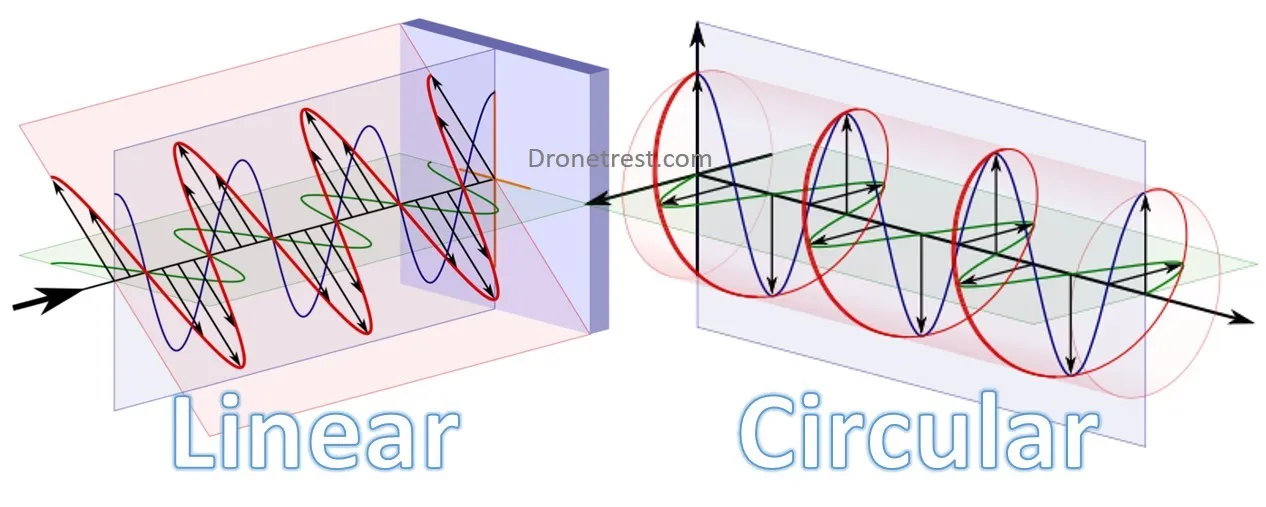
Instead of relying on alignment between transmitter and receiver, circular polarization tolerates rotation and reduces the impact of reflected signals arriving out of phase.

That’s the practical reason it shows up so often in FPV builds—not because it’s “better” in every scenario, but because it handles the kind of problems FPV creates.

Why does circular polarized antenna dominate so many FPV builds?

FPV pilot with goggles and drone, surrounded by circular polarized antenna icons

This figure shows an FPV pilot wearing goggles, with a drone in the foreground. Floating icons of circular polarized antennas surround the scene, emphasizing their prevalence. The image conveys that circular polarization became dominant not through marketing, but because it handles the messy, unpredictable RF environment of FPV—constant rotation, reflections from surfaces, and lack of controlled alignment.
Why Circular Polarization Dominates FPV

It didn’t become common by accident. It survived repeated trial-and-error across thousands of builds.

What keeps it in place isn’t a single advantage. It’s how it handles multiple small problems at once.

Compare circular and linear polarization in a drone environment

On paper, linear polarization looks efficient. In controlled conditions, it is.

In flight, the situation changes quickly.

Aspect Linear Polarization Circular Polarization
Orientation sensitivity High Low
Reflection handling Weak Stronger
Stability in motion Limited More consistent
Typical FPV usage Rare Common

The key difference is not gain or frequency coverage. It’s tolerance.

Linear antennas depend on alignment. Circular ones don’t care as much if the drone rolls or pitches.

That difference becomes visible the moment the aircraft stops flying straight.

Explain how circular polarization helps with reflections and banked turns

Low-altitude FPV flying introduces constant reflections.

Concrete, metal, water surfaces—they all bounce RF signals. Those reflections don’t arrive cleanly. They interfere with the direct signal.

Circular polarization reduces how much those reflections interfere.

It doesn’t eliminate multipath. It just makes it less destructive.

During banked turns, the antenna orientation changes continuously. A linear antenna would see its effective polarization shift relative to the receiver. That shows up as sudden signal drops.

Circular polarization maintains a more stable relationship between transmitter and receiver, even while the drone is rotating.

Separate “popular in FPV” from “always the best choice”

Circular polarization shows up everywhere in FPV. That doesn’t mean it’s mandatory.

Short, direct links with minimal reflections can still run linear antennas effectively. Some ultra-light builds prioritize weight so aggressively that circular designs become less attractive.

There are also edge cases—fixed-direction setups, certain long-range builds—where directional or hybrid approaches take over.

Circular polarization dominates because it handles the messy, unpredictable nature of FPV flying. Not because it wins every comparison.

Match RHCP and LHCP before you compare anything else

Diagram showing RHCP and LHCP antennas with crossed waves, indicating poor link performance

This figure features two antennas labeled RHCP and LHCP, with a jagged, broken wave between them. Annotations point to "reduced range," "noise," and "unstable video." It illustrates that while both are circular polarized, their opposite rotation directions cause destructive interference. The link may still work at close range, but margin drops dramatically, often mistaken for other issues.
RHCP and LHCP Are Not Interchangeable

This is where many builds quietly fail.

Not at the connector. Not at the frequency. At the polarization direction.

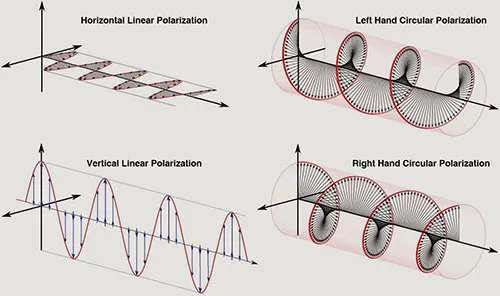
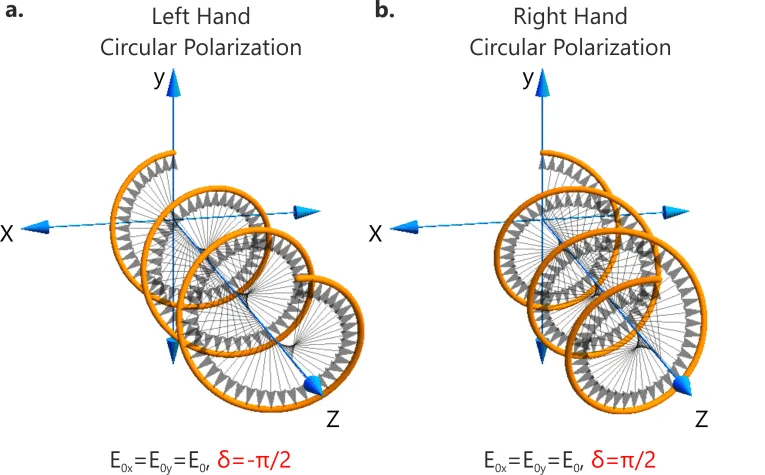
Right-hand circular polarization (RHCP) and left-hand circular polarization (LHCP) are not interchangeable. They are mirror opposites.

Mix them, and the system still works—but with a penalty that shows up as reduced range and unstable video.

Check what actually happens when RHCP meets LHCP

The failure is subtle.

You still get a signal. You still see video. That’s what makes it easy to miss.

But the link margin drops. The system becomes more sensitive to:

  • distance
  • interference
  • reflections
  • movement

What used to be a stable feed becomes unpredictable. Drops happen earlier. Noise appears sooner.

In practice, this often gets blamed on “antenna quality” or “VTX power.” The real issue sits at the polarization mismatch.

For a technical reference on how circular polarization behaves in RF systems, see circular polarization.

Decide when RHCP should stay the default in shared FPV setups

RHCP tends to dominate shared FPV environments.

Not because it performs better than LHCP, but because consistency matters when multiple pilots share receivers, goggles, or ground stations.

If most systems around you use RHCP, switching to LHCP isolates your setup unless you control both ends of the link.

That’s why RHCP often becomes the “default”—not a technical superiority, but a practical one.

Know when LHCP is a deliberate system choice, not an ordering mistake

LHCP has its place.

In controlled environments—private systems, isolated setups, or specific interference scenarios—LHCP can reduce cross-interference with RHCP-heavy surroundings.

The key is consistency across the entire chain:

  • aircraft antenna
  • receiver antenna
  • any intermediate modules

If all match, LHCP works just as well.

Problems only appear when it’s introduced unintentionally.

Read axial ratio, gain, and omni claims without overreading the spec sheet

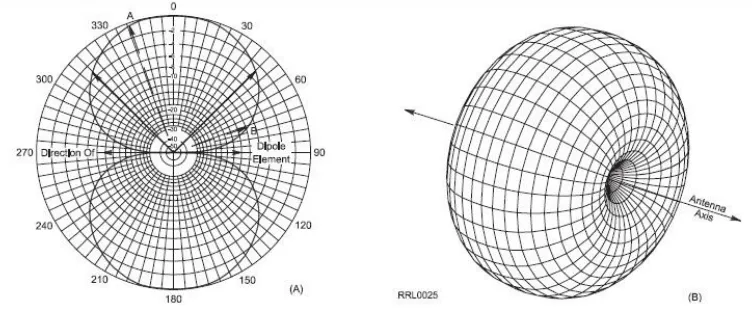
Donut-shaped radiation pattern of a circular polarized antenna, with weak spots above and below

This diagram shows a typical radiation pattern of a circular polarized antenna, visualized as a donut. The sides are highlighted as strong coverage, while the top and bottom are shown as nulls or weak zones. The image explains that "omnidirectional" does not mean uniform coverage; pilots must consider antenna orientation and flight path to avoid flying into the weak spots, especially when the drone is directly overhead.
Omnidirectional Pattern of a Circular Polarized Antenna

Specs look clean. Flight behavior rarely is.

Most FPV pilots don’t lose video because a number on the datasheet was slightly off. They lose it because a number was interpreted without context.

Axial ratio, gain, “omnidirectional”—these terms matter, but only when they actually change what happens in the air.

Use axial ratio only where it changes the buying decision

Axial ratio gets attention because it directly relates to how “circular” the polarization actually is.

Lower is better—on paper.

But here’s the practical cut:

  • If two antennas are both within a reasonable axial ratio range (say under ~3 dB), the difference rarely shows up as a deciding factor in FPV flight
  • If one antenna is clearly worse, you’ll see it in reflections and unstable image areas

The mistake is treating axial ratio like gain—chasing smaller numbers as if they automatically improve the link.

In reality, axial ratio only matters when it crosses a threshold where reflections start to behave differently. Beyond that, other factors—placement, matching, mechanical stability—take over.

Judge whether a claimed omnidirectional pattern fits real FPV flight paths

“Omnidirectional” is one of the most misunderstood claims in FPV antennas.

It does not mean uniform coverage in all directions.

Most circular polarized FPV antennas produce a donut-shaped radiation pattern:

  • Strong around the sides
  • Weak directly above and below

That matters when:

  • the drone flies directly overhead
  • the receiver is positioned below or above the aircraft
  • the antenna orientation is constrained by the frame

A build that looks perfect on paper can still drop signal in specific angles simply because the radiation pattern doesn’t align with the flight path.

This is where the broader context of an omnidirectional antenna becomes relevant—not as a marketing term, but as a geometric constraint.

Check whether 5.8GHz marketing language matches your actual video band

“5.8GHz antenna” is often treated as universally compatible.

It isn’t always that simple.

Different FPV systems operate across slightly different portions of the 5.8 GHz band. Some antennas are tuned tighter than others.

In most builds, the tolerance is wide enough that everything works.

But edge cases appear when:

  • using digital systems with narrower channel expectations
  • mixing antennas designed for slightly different center frequencies
  • pushing range where small inefficiencies accumulate

If you want a broader baseline reference for how coaxial systems behave across frequency, this overview on coaxial cable guide gives useful context on how signal loss and matching scale with frequency.

The antenna doesn’t exist in isolation—it’s part of a chain that includes cable, connector, and matching.

Verify connector details before you trust the polarization match

Close-up comparison of SMA and RP-SMA connectors, showing internal pin and socket differences

This image shows two connector types side by side: a standard SMA male (with center pin) and an RP-SMA male (with center socket). Arrows point to the internal contacts. The figure highlights that relying on product photos is unreliable; the only safe way is to check the actual hardware or specification. This common mistake leads to antennas that thread on but fail to make electrical contact.
SMA vs. RP-SMA Connector Identification

Polarization can be perfect.

Frequency can be correct.

The system can still fail to assemble properly.

Connector mismatch is where many FPV builds lose time—not because it’s complicated, but because it’s easy to assume.

Distinguish SMA from RP-SMA without relying on listing photos

The naming alone is enough to cause ordering mistakes.

SMA and RP-SMA share the same thread. They look almost identical from a distance.

The difference sits inside:

  • SMA: center pin on the male connector
  • RP-SMA: reversed center contact

Relying on product photos is unreliable. Listings often reuse images or fail to show the internal contact clearly.

This is why quick verification matters before ordering. A deeper breakdown can be found in this internal reference on SMA vs RP-SMA quick check before ordering, especially when dealing with mixed FPV and Wi-Fi hardware ecosystems.

Check center pin and socket details on VTX, goggles, and receiver modules

Connector checks should never stop at the antenna.

You need to confirm across the entire chain:

  • VTX output port
  • antenna connector
  • receiver or goggles input

It’s common to verify one side and assume the rest match. That’s where mismatches slip in—especially when combining components from different brands.

Small RF modules often use MMCX or U.FL connectors internally, then transition to SMA at the panel. Each transition adds another place where mismatch can happen.

Avoid adapters that fix the thread but worsen the mechanical load

Adapters solve compatibility quickly. They also introduce problems quietly.

A rigid adapter:

  • extends leverage on the connector
  • increases stress during crashes
  • transfers force directly into the RF port

In a static lab setup, this is manageable.

On a drone, it becomes a failure point.

If a connection needs to change format, a short flexible cable—often discussed in RF adapter cable selection—usually handles mechanical stress better than stacking rigid adapters. You can see typical configurations in this guide on RF adapter cables.

Electrical compatibility is only half the decision. Mechanical survivability matters just as much in FPV.

Choose the antenna form factor that survives your airframe

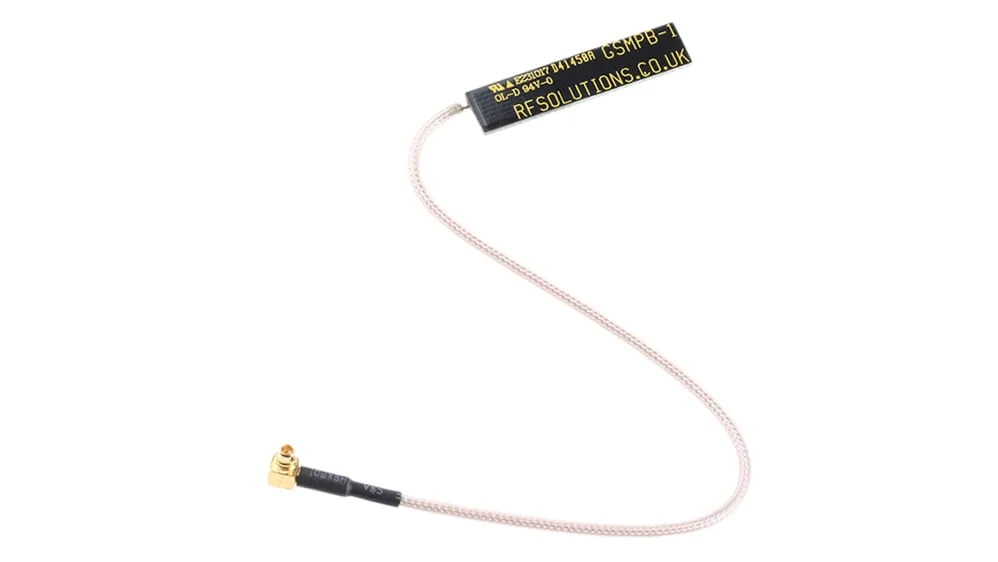
Side-by-side comparison of a stubby circular polarized antenna and a tall antenna on an FPV frame

This photograph shows an FPV drone frame with two antenna options illustrated: a short, stubby circular polarized antenna and a taller, more protruding one. The image highlights how the taller antenna extends beyond the frame, increasing crash leverage and prop strike risk, while the stubby antenna stays within the frame profile. It emphasizes that form factor can be more important than theoretical gain in crash-prone builds.
Stubby vs. Tall Antenna on an FPV Drone

Two antennas with similar specs can behave completely differently once mounted.

Not because of RF performance—but because of geometry, airflow, and impact exposure.

Decide when a stubby circularly polarized antenna beats a taller design

Diagram showing antenna placement near carbon fiber frame and propellers, with clearance issues highlighted

This figure shows an FPV drone from a side view, with the antenna mounted near the rear. Red zones indicate areas where the antenna could be too close to carbon fiber (causing signal shadowing) or in the path of propeller wash (causing vibration). The image illustrates that even a well-matched antenna will perform poorly if mounting geometry is not considered. Clearance, angle, and material interference all affect real-world performance.
Antenna Mount Clearance and Interference

Stubby antennas don’t look impressive on spec sheets.

Lower profile. Often slightly lower gain.

But in real builds:

  • they reduce leverage during crashes
  • they fit tight frames better
  • they avoid prop strikes

On racing or whoop setups, that trade-off often makes them the more reliable option—even if they don’t maximize theoretical range.

Taller antennas still make sense where:

  • clearance is available
  • range matters more than durability
  • mounting angle can be controlled

The decision is less about “better antenna” and more about which one survives long enough to keep working.

Check clearance, prop wash, and mount angle before you finalize the antenna

Mounting position changes behavior.

  • Too close to carbon fiber → signal shadowing
  • Too close to prop wash → physical instability
  • Poor angle → radiation pattern misalignment

These are not edge cases. They show up frequently in compact builds.

An antenna that performs well in isolation can behave unpredictably when mounted poorly.

Use crash exposure and replacement frequency as selection inputs

FPV antennas are consumable components in many setups.

Especially in:

  • racing
  • freestyle
  • indoor whoop flying

A design that survives ten crashes instead of three reduces downtime and replacement cost—even if its raw RF performance is slightly lower.

This is where procurement decisions shift from “best spec” to “best fit for use.”

Build a circular-polarization pass/fail sheet before you buy

Screenshot of a selection matrix with fields: use case, polarization, connector, form factor, crash exposure

This image shows a structured matrix or checklist for evaluating a circular polarized antenna before purchase. It includes rows for use case, video system, frequency, polarization match, connector type, form factor, crash exposure, and mount clearance. A scoring scale (0–100) is shown at the bottom. The matrix emphasizes that practical fit is more important than minor spec differences, and that many ordering mistakes can be caught with a simple pre-order filter.
Circular Polarization Fit Matrix

Most FPV antenna decisions don’t fail because of one wrong choice.

They fail because several “almost correct” choices stack together:

  • polarization mismatch
  • connector assumption
  • form factor that doesn’t fit the frame
  • mounting clearance ignored

Each one alone might still work. Together, they remove enough margin to make the system unreliable.

Instead of comparing antennas directly, it helps to score the fit of the link first—then decide whether a specific product actually belongs in that setup.

Score the link fit before you score the product

Start with the system, not the SKU.

A circular polarized antenna only performs as expected when the entire chain agrees:

  • same polarization direction
  • compatible connectors
  • realistic mounting conditions
  • flight profile alignment

Once those are clear, product-level differences (gain, axial ratio, brand) start to matter.

Until then, they don’t.

Apply a red-flag check before you submit the order

Before placing an order, run a quick rejection check:

  • RHCP on one side, LHCP on the other → reject
  • SMA assumed, RP-SMA delivered → reject
  • antenna height exceeds frame clearance → reject
  • multiple rigid adapters required → reject

These are not rare mistakes. They’re common enough that a simple checklist prevents more issues than spec comparison ever will.

Circular Polarization Fit Matrix

Field Example Entry Notes
Use case Freestyle Determines durability vs range priority
Video system Analog Affects tolerance to signal degradation
Frequency band 5.8GHz Must align with antenna tuning
Aircraft or receiver side Aircraft Defines mounting constraints
Polarization selected RHCP Must match entire link
Mating side polarization RHCP Mismatch reduces link margin
Connector family SMA Verify against actual hardware
Center contact Pin Critical for compatibility
Form factor Stubby Impacts crash survivability
Weight sensitivity Medium Relevant for small builds
Crash exposure High Drives durability needs
Mount clearance risk Medium Frame geometry dependent
Recommendation Use Based on total fit

Optional scoring model

Fit Score =

Polarization Match (35) +

Connector Match (20) +

Form-Factor Fit (15) +

Mount Clearance (10) +

Crash Suitability (10) +

Flight-Profile Fit (10)

Decision guidance

  • 85–100 → safe to proceed
  • 70–84 → usable, but double-check installation
  • below 70 → not worth ordering

This kind of matrix doesn’t replace judgment. It forces the right questions before money gets spent.

Watch where circularly polarized FPV antennas are moving next

Graph showing trend toward lighter, more durable circular polarized antennas for micro FPV builds

This figure is a conceptual trend graph or infographic showing the shift in FPV antenna priorities over time. Older designs focused on gain and axial ratio, while newer designs balance weight, durability, and consistent omnidirectional coverage. The image also depicts small, low-profile antennas for micro whoops. It reflects the industry's response to real-world usage: drones are smaller, crash more often, and need antennas that survive and perform reliably in tight spaces.

Future Trends in FPV Circular Polarized Antennas

The direction isn’t toward “higher gain at all costs.”

It’s toward balance.

Lighter builds. Smaller frames. More demanding environments.

Circular polarization is being reshaped around those constraints.

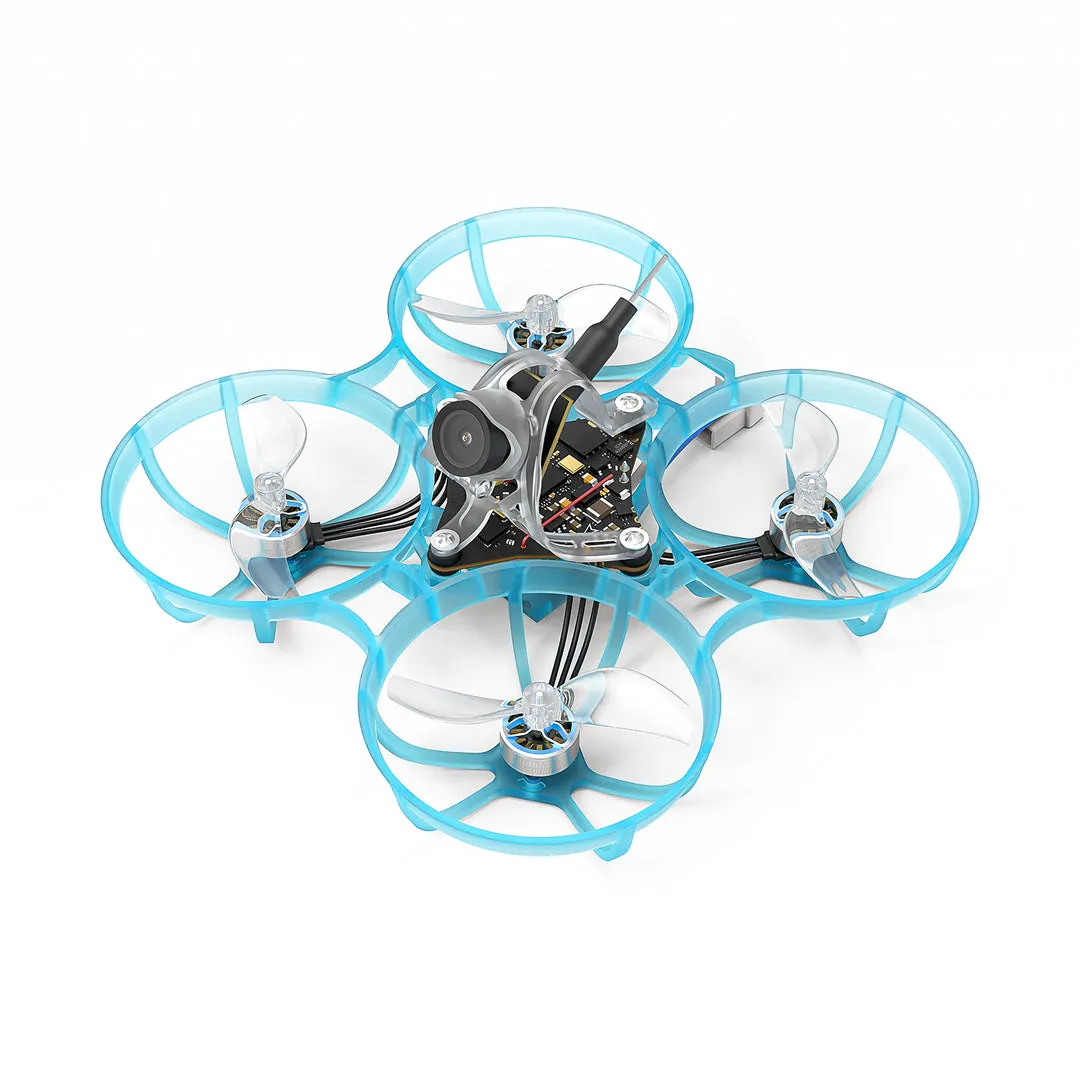
Track the push toward lighter CP antennas for micro FPV builds

Micro FPV platforms—especially whoops—have changed expectations.

Weight is no longer just a racing concern. It affects:

  • flight time
  • motor efficiency
  • indoor maneuverability

Recent designs focus on reducing antenna mass without losing circular polarization behavior. That often means:

  • simplified structures
  • integrated mounting solutions
  • shorter profiles

Products like compact 5.8GHz CP antennas for micro builds reflect this shift—less about maximizing reach, more about maintaining stability in constrained environments.

Follow compact omni-CP designs aimed at better robustness in flight

Durability is becoming part of RF design, not just mechanical design.

Antenna structures are evolving to:

  • absorb impact instead of snapping
  • maintain polarization integrity after minor deformation
  • reduce connector stress through flexible mounting

This is a response to how FPV systems are actually used—not how they’re tested on a bench.

Research trends in FPV antenna design are also moving in this direction. Work referenced in recent studies on compact circularly polarized antennas for drones highlights the same goals: smaller size, stable radiation, and resilience under movement. For a broader technical background, see circular polarization.

FAQ

Can a circular polarized antenna fix FPV video issues caused by reflections, not range?

Yes—if reflections are the main issue.

Circular polarization helps reduce how reflected signals interfere with the main signal. It won’t extend maximum range dramatically, but it often stabilizes video in environments with walls, ground reflections, or obstacles.

Why can two 5.8GHz FPV antennas feel compatible on paper but fail in the air?

Because matching frequency is only part of the system.

Mismatch can still exist in:

  • polarization direction
  • connector type
  • radiation pattern relative to flight path

Two antennas labeled “5.8GHz” can behave very differently once mounted and flown.

Should a tiny whoop use the same circularly polarized antenna style as a 5-inch freestyle quad?

Usually not.

Whoops prioritize:

  • weight
  • compactness
  • indoor reflection handling

Freestyle builds can afford larger antennas with better coverage characteristics. The same antenna rarely fits both use cases well.

When is a circular polarized antenna the wrong upgrade for a weak FPV link?

When the problem isn’t polarization.

If the issue comes from:

  • low VTX power
  • poor antenna placement
  • damaged coax or connector
  • interference on the selected channel

Switching to circular polarization won’t fix the root cause.

Can a generic omnidirectional antenna replace a dedicated FPV circular polarized antenna?

Sometimes—but with trade-offs.

Generic omnidirectional antennas (often linear) can work in stable, short-range links. In typical FPV conditions with movement and reflections, they tend to produce less consistent results.

Why do adapter-heavy antenna installs become harder to trust after a crash?

Because each adapter adds:

  • mechanical leverage
  • additional contact interfaces
  • more points of failure

After impact, even slight misalignment can degrade performance. This is why simpler connection paths—and fewer rigid adapters—are generally more reliable.

Is circular polarization still worth it if both range and weight matter on a compact drone?

Often yes—but with compromise.

Compact circular polarized designs exist specifically to balance:

  • acceptable range
  • reduced weight
  • improved durability

The goal isn’t maximum performance in one dimension. It’s maintaining usable performance across all of them.

Bonfon Office Building, Longgang District, Shenzhen City, Guangdong Province, China

customer service