
50 Ohm BNC Cable: Length, Shielding & True 50-Ω Chain Integrity

Nov 28,2025

Are You Really Running a True 50-Ohm BNC Chain End-to-End?

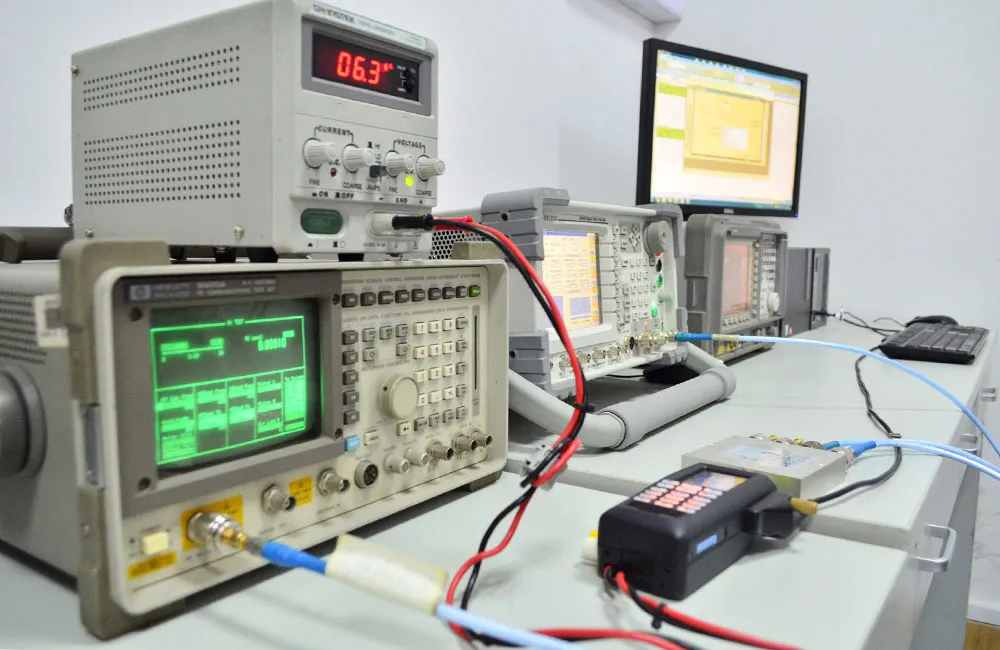
An engineer in a lab uses a Vector Network Analyzer to test the S-parameters of a 50-Ohm BNC cable.

Figure is located at the beginning of the document, and its context emphasizes the importance of true end-to-end 50-Ohm chain integrity. This figure materializes this core concept into a rigorous product testing phase. It depicts an engineer using professional equipment like a VNA to perform physical measurements on a BNC cable sample. By observing the S11 and S21 curves on the screen, the cable's impedance matching and signal transmission efficiency can be verified. This testing is the direct means to uncover "hidden mismatches" and provides data support for building pure and reliable high-frequency test links.
BNC Cable Performance Testing

Walk into any RF lab and you’ll see BNC cables everywhere — linking oscilloscopes, analyzers, and DUTs. Yet, not every bench runs a true 50-ohm chain. Hidden mismatches sneak in: a forgotten video jumper, a stacked BNC to SMA adapter, or a 75-ohm lead mislabeled as RF.

A clean 50-Ω setup isn’t just about signal aesthetics — it directly impacts return loss and measurement stability. Even a single 75-Ω link can create reflection coefficients of 0.2, corresponding to roughly −14 dB RL. That’s enough to visibly distort traces on modern high-bandwidth scopes.

To maintain consistency, start by labeling your cables, terminating unused ports, and matching the impedance throughout. It’s the first rule in building a pure 50-ohm BNC chain that actually measures what you think it does.

How Long Should a 50-Ohm BNC Cable Be on a Lab Bench?

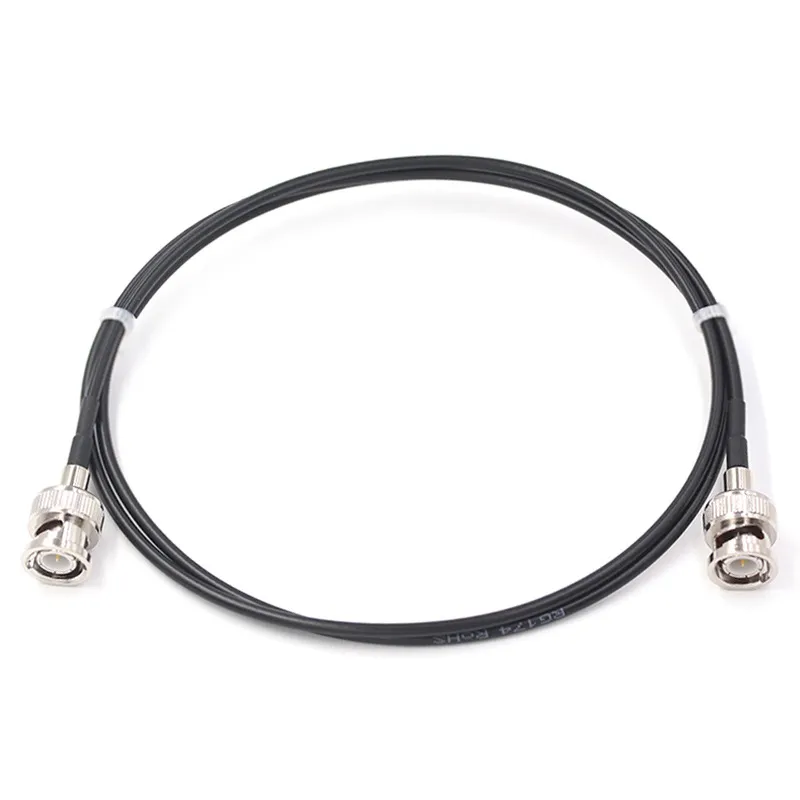
Illustration of a standard 50-Ohm BNC jumper.

The context for Figure discusses "How long should a 50-Ohm BNC cable be on a lab bench?" It states length defines signal integrity and mechanical reliability, advocating for shorter lengths (0.3-1.0 m) in short benches, avoiding coils, and ensuring natural routing. The figure shows the jumper central to this discussion.
BNC Jumper

Cable length may seem secondary, but it often defines both signal integrity and mechanical reliability. In short benches, shorter is almost always better.

Most engineers rely on 0.3–1.0 m presets — long enough to reach comfortably, short enough to minimize delay. Avoid coiling or tight loops (bend radius ≥10× OD). A good rule is: the cable should fall naturally between the scope and the DUT.

Every added connector introduces loss. That’s why pairing your BNC with a short SMA extension cable or a single adapter, not a stack, keeps ripple under control.

When a scope jack starts to loosen after years of use, it’s usually not wear — it’s stress from a heavy hanging cable. Always strain-relieve horizontally.

Which Shielding and Jacket Choices Actually Lower Noise Pickup?

Noise issues are often blamed on instruments, yet shielding tells a different story.

A single braid coax (≈85% coverage) might work for low-frequency or audio ranges, but at GHz frequencies, double braid (≈95%) or foil + braid (≥100 dB isolation) makes a measurable difference. If you’re testing Wi-Fi or cellular modules, a foil layer helps suppress ambient EMI.

Among common families:

RG58 used as antenna feeder or SMA extension cable in access points and routers

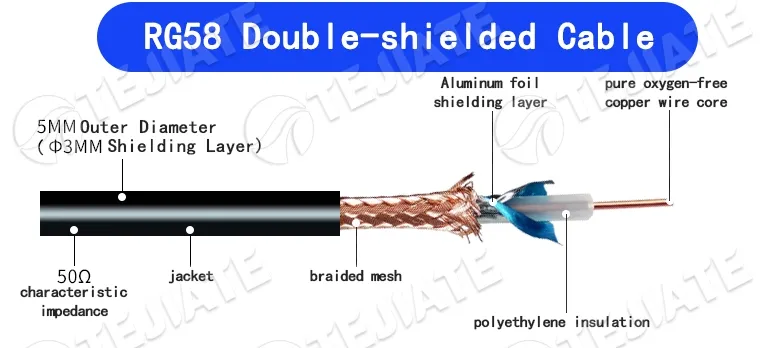
The image demonstrates RG58’s role as a medium-length feeder between routers and antennas. At 5 GHz, its 0.33 dB/m loss makes it ideal for access points requiring stable 50 Ω impedance and flexible routing.
RG58 Cable Construction
  • RG58: economical, flexible, but moderate shielding.
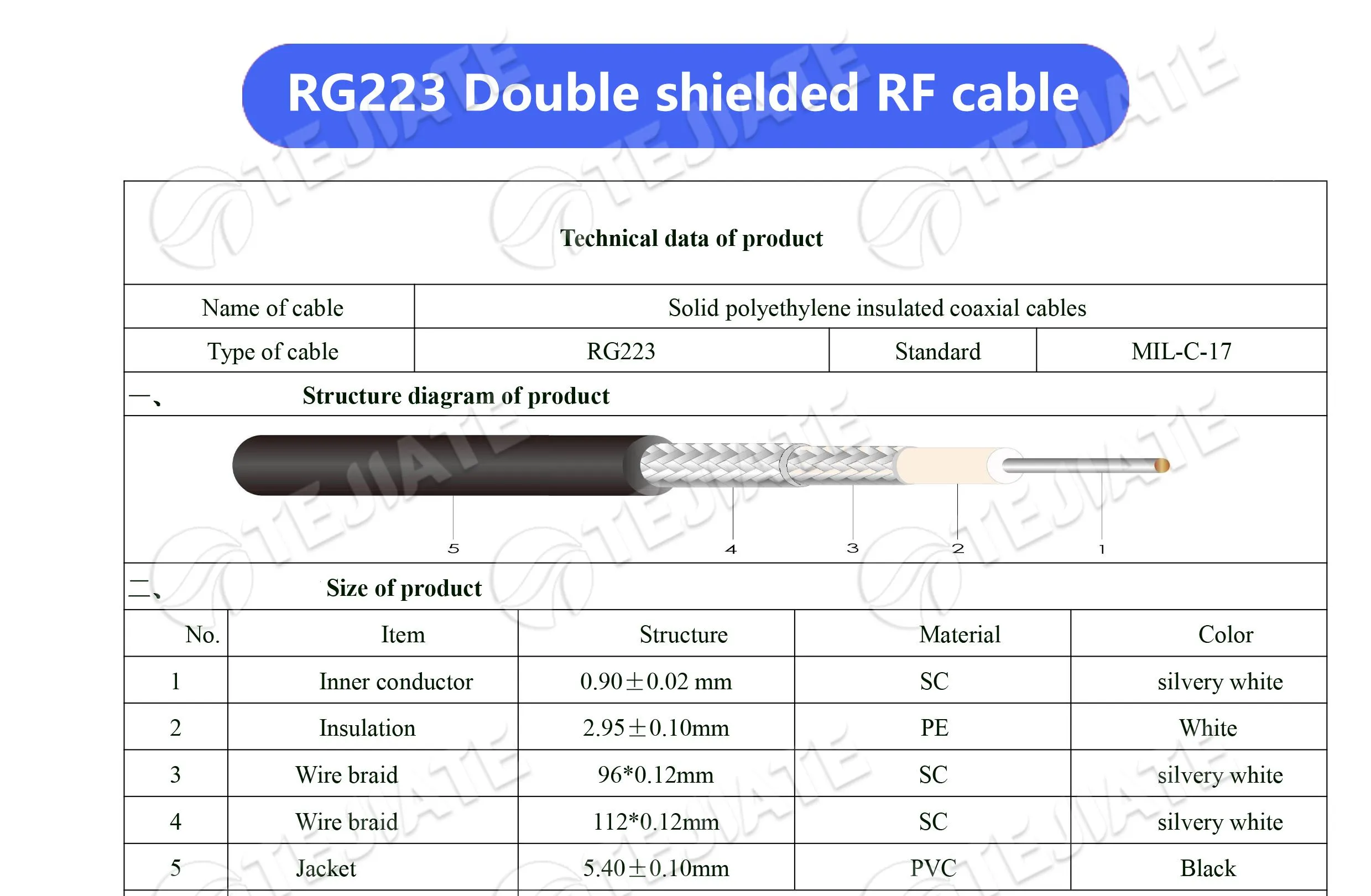
RG223 double-shielded RF coaxial cable structure breakdown and parameter table.

The context for Figure describes RG223 as having a double braid for better lab isolation. The figure provides a structural breakdown and a detailed parameter table, offering complete information on its construction (including two braid shields) and specs for engineers to evaluate.
RG223 Cable Structure & Data
  • RG223: double braid, better isolation for lab work.
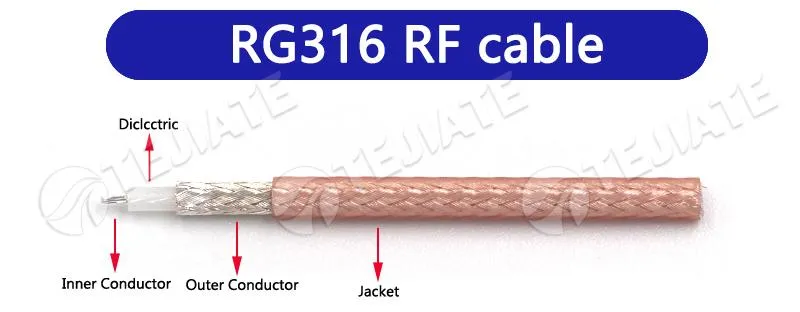
RG316 coaxial cable structure breakdown diagram.

The context for Figure contrasts RG316 with RG174, stating that RG316 cable feels slightly firmer but handles repeated motion without deformation. Its silver-plated strands and PTFE core maintain stable impedance. This figure clearly shows the physical construction of RG316, explaining why it's favored in bench jumper assemblies and modular test rigs.
RG316 coaxial cable structure breakdown diagram.
  • RG316: slim PTFE version, ideal when paired with SMA pigtails in compact enclosures.

Jackets also matter. FEP or PTFE jackets last longer in environments with constant plug/unplug cycles or temperature swings. For test setups that see daily changes, use molded boots to extend connector life.

Should You Use a Plug-In Adapter or a Short SMA to BNC Cable?

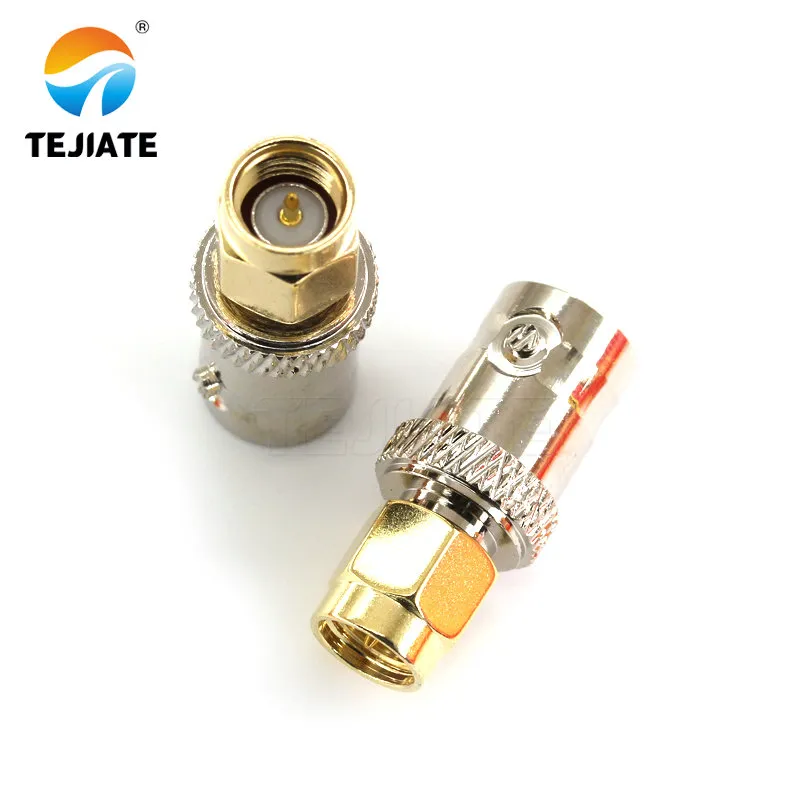
Illustration of a plug-in BNC to SMA adapter.

The context for Figure 6 warns that adapters, while looking harmless, add two reflection interfaces each, which can be significant at GHz frequencies. The figure shows the adapter, and the context contrasts it with a short jumper (Figure 7), stating the jumper usually outperforms stacked adapters, aligning with test results showing ripple reduction.
Adapter
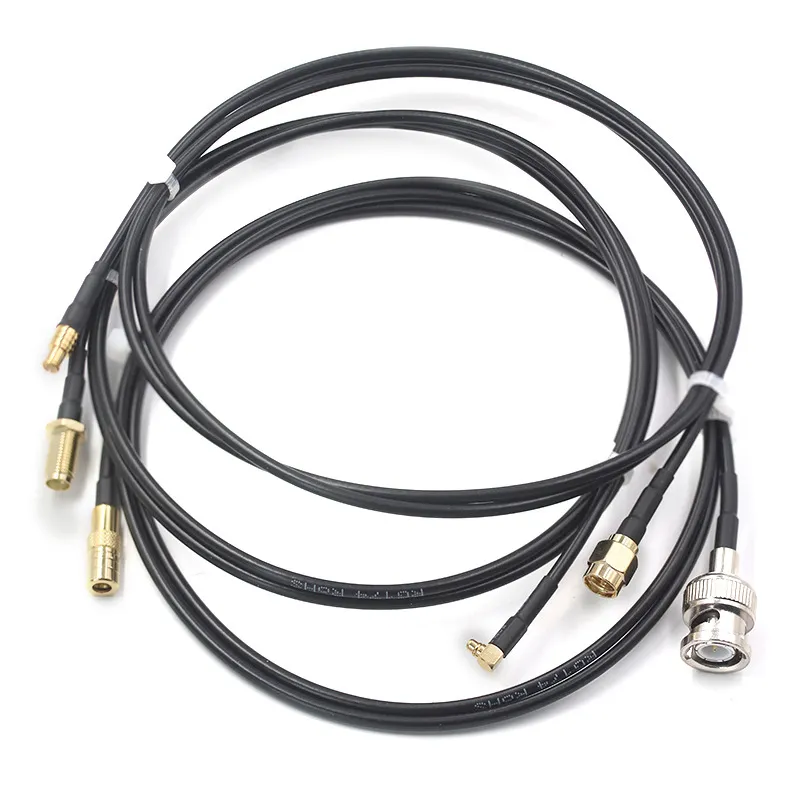
Illustration of a short BNC to SMA jumper cable.

The context following Figure proposes a better solution: a short SMA to BNC jumper typically outperforms stacked adapters. The figure shows this jumper. The context also discusses the trade-off between straight and right-angle ends. This figure represents the superior interconnect method that reduces interfaces and reflections.

Jumper

Adapters look harmless, but each adds two new reflection interfaces. At 2.4 GHz or 5 GHz, that’s enough to flatten a peak.

A short SMA to BNC jumper — for instance, TEJTE’s RG316-based 0.25 m BNCM to SMAF — usually outperforms stacked adapters. This aligns with what we outlined in the SMA to BNC: Cable vs Adapter Guide, where we showed ripple reduction from 0.8 dB to 0.2 dB simply by switching to a coax jumper.

Right-angle ends have slightly higher loss but prevent strain in tight cabinets. If your instruments sit in an open rack, stick with straight connectors — cleaner geometry, less stress.

How Do You Budget Insertion Loss & Return Loss in Two Minutes?

50-Ω BNC Cable Planner

When deadlines loom, you can’t simulate everything. This quick engineering planner helps estimate total loss and match performance within minutes.

Parameter Symbol Description / Unit
Frequency f GHz
Length L meters
Cable Family RG58 / RG223 / RG316
Shielding single / double / foil+braid
Interfaces N_if count of joins
IL per Interface IL_if 0.05-0.20 dB @ 1 GHz
VSWR standing-wave ratio
Loss Budget LB dB target
Return Loss Target RL_tgt dB target

Equations :

IL_cable = α(f)_family × L

IL_if_total = N_if × IL_if

ρ = (VSWR−1)/(VSWR+1)

IL_mismatch = −10·log10(1−ρ²)

IL_total = IL_cable + IL_if_total + IL_mismatch

RL = 20·log10((VSWR+1)/(VSWR−1))

PASS if IL_total ≤ LB and RL ≥ RL_tgt

Else → shorten, reduce interfaces, or upgrade shielding family.

You’ll find a similar principle in our 50-Ohm Terminator Guide — reflection control is cumulative, not isolated.

Will Oscilloscope/Analyzer Port Specs Change Your Cable Choice?

Yes — drastically. Modern scopes like Tektronix 7-Series DPO or Rohde & Schwarz MXO 3 capture bandwidths beyond 1 GHz, where small impedance mismatches create visible distortion.

Protect SMA and BNC ports:

  • Always cap unmated SMA connectors.
  • Avoid letting BNC barrels bear sideways load.
  • For panel-mounted setups, reroute via SMA feedthroughs to relieve stress on internal PCBs.

When defining signal flow, keep direction clear — Scope CH → Cable → Fixture → DUT. Reducing gender swaps not only simplifies routing but enhances repeatability across test teams.

What Recent Test & Measurement Updates Reinforce Clean 50-Ω Practice?

Precision instruments today reward clean cabling.

  • Rohde & Schwarz MXO 3 — compact, 4/8-ch, 1.5 GHz BW. Even slight mismatch is visible in FFT mode.
  • Tektronix 7-Series DPO — higher front-end fidelity magnifies reflections if adapters stack.
  • RIGOL RSA6000 — real-time analyzer; dynamic traces show delay ripple from mismatched jumpers.
  • PicoScope 3000E MSO — standardized on 50-Ω BNC across channels to ensure repeatability.

If you’re building multi-instrument chains, use short, matched jumpers. It’s the same best practice detailed in our RG316 vs RG174 comparison — shorter and double-shielded always wins.

Order the Exact SKU Without Back-and-Forth

Procurement delays often start with unclear specifications. A precise SKU sheet solves that.

Define the essentials clearly:

  • Length: 0.3 m / 0.5 m / 1.0 m
  • Connector type: BNCM to SMAF (50-Ω)
  • Orientation: straight / right-angle
  • Cable family: RG58 / RG223 / RG316
  • Jacket: PVC / FEP / PTFE
  • Compliance: RoHS / REACH
  • Extras: torque note, serialized QA, matched pair

Ordering by structured fields reduces mis-shipments and saves days of email loops. TEJTE’s product configurators already mirror this logic — same as we used in the SMA Pigtail Guide to minimize ordering errors.

FAQs

1. How do I choose the right length for a 50-ohm BNC cable on the bench?

Start with 0.3–1.0 m. Keep routing straight and limit adapters. If you exceed 2 m at 5 GHz, rebudget losses using the planner.

2. Can I mix a 75-ohm lead in a 50-ohm RF chain?

Only as a last resort. It introduces reflections and reduces return loss. Terminate properly if unavoidable.

3. When is a short BNC to SMA cable better than a plug-in adapter?

Always above ~2 GHz. A 0.3–0.6 m jumper maintains phase and stability better than a rigid adapter stack.

4. What does “BNC STR plug / SMA STR plug / 0.25 m” mean on a BOM?

Straight BNC M to SMA M, 0.25 m 50-Ω coax. Confirm genders before ordering.

5. Can I order BNC-M at the scope and SMA-F in the box at 0.3 m?

Yes — specify BNCM to SMAF, 50-Ω, orientation, cable family, jacket color, and compliance.

6. Does a right-angle end add meaningful loss at 5 GHz?

Slightly, but strain relief gain outweighs it for most benches.

7. Do high-performance scopes change my cable choice?

Absolutely. High-BW instruments expose tiny mismatches. Stick with short, low-loss 50-Ω chains — as we discussed in the BNC 50 Ohm vs 75 Ohm Guide.

Bonfon Office Building, Longgang District, Shenzhen City, Guangdong Province, China

customer service