
BNC to SMA Adapter: Direction, Impedance & Oscilloscope Port

Nov 27,2025

Preface

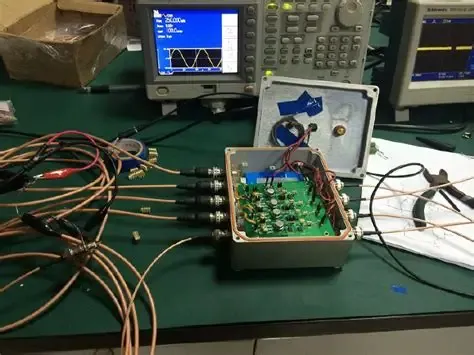
An engineer using a BNC to SMA adapter to connect an oscilloscope to an RF module on a test bench.

Figure is located in the preface, emphasizing the critical role of this small adapter in the signal chain. It states that the adapter's direction, impedance, and loss behavior shape the signal far more than most realize. The figure likely depicts an engineer using TEITE's high-quality adapters, visually conveying that even a millimeter's mismatch can ripple through a return-loss budget at high frequencies, and the purpose of such adapters is to maintain measurement precision.
BNC to SMA Adapter Application Scenario

In any RF lab, that small bridge between a scope’s BNC port and a module’s SMA connector often decides whether your waveform looks sharp or washed out. A BNC to SMA adapter seems trivial, yet its direction, impedance, and loss behavior shape the signal chain far more than most realize.
At TEJTE, our engineers frequently rely on the SMA/BNC-KJ (Part No. 06268) and SMA/BNC-JK (Part No. 09721) adapters — both 50 Ω, rated DC to 12 GHz, built with gold-plated center pins and nickel-plated brass shells. In high-frequency work, even a millimeter’s mismatch can ripple through a return-loss budget. Those adapters exist for one purpose: to keep precision measurements steady.

Do you have the correct direction for BNC to SMA?

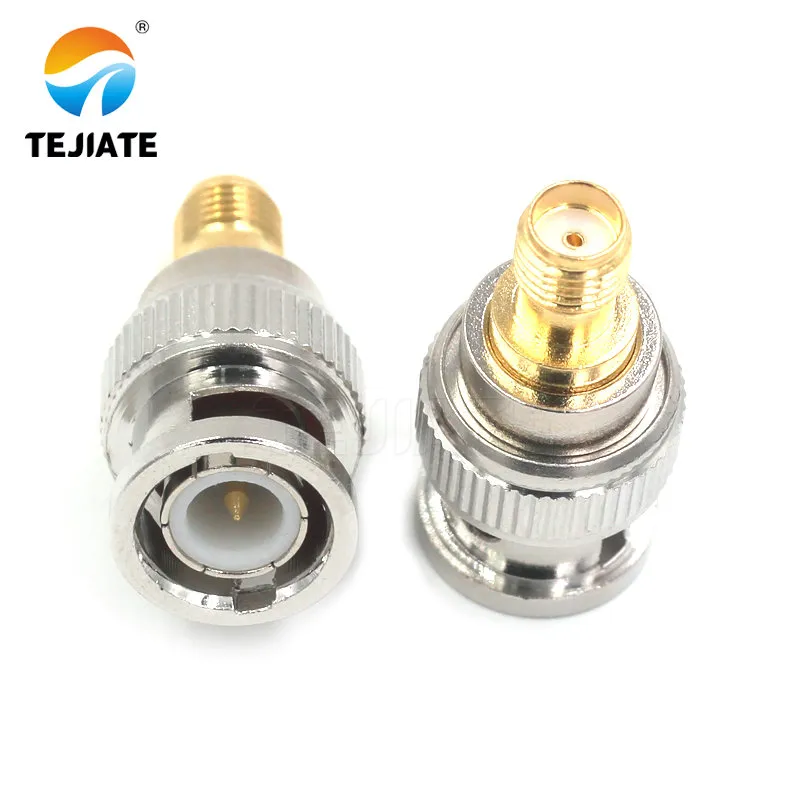
TEJTE SMA/BNC-KJ adapter (BNC Male to SMA Female).

The context for Figure states that direction errors are the top cause of bench delays. Instruments typically have BNC female ports, while DUTs use SMA female/male. The SMA/BNC-KJ adapter (BNC Male to SMA Female) fits this path best. Keeping the heavier adapter body on the instrument side prevents stress and damage.
SMA/BNC-KJ Adapter
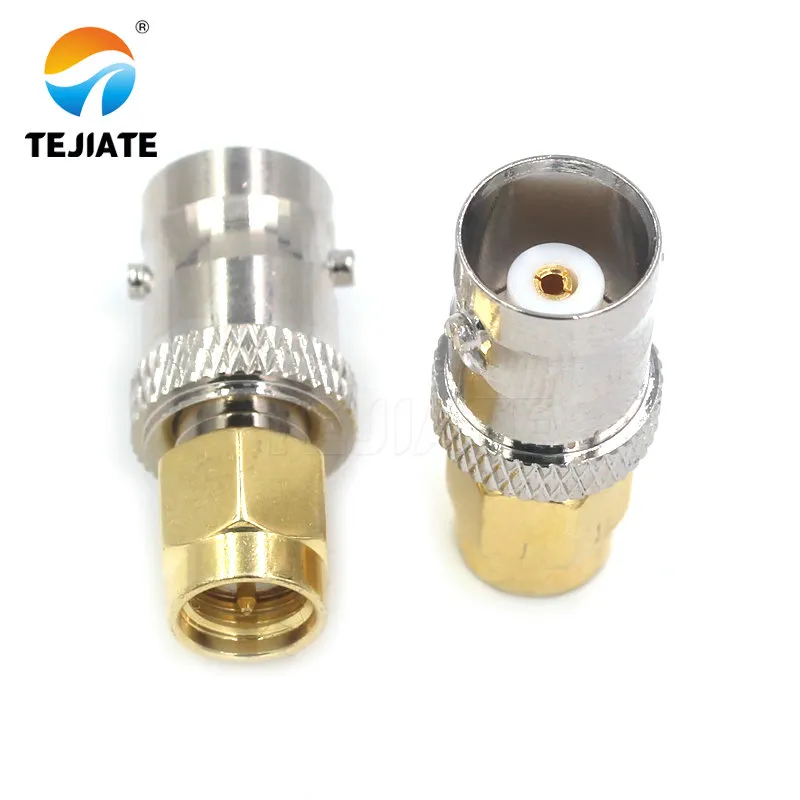
TEJTE SMA/BNC-JK adapter (BNC Female to SMA Male).

Figure contrasts with Figure 2, showing the adapter type needed for the opposite signal direction (from module to scope input). The context explains that the SMA/BNC-JK (BNC Female to SMA Male) makes the match right the first time for this direction. Using the "JK" vs "KJ" suffix as a quick gender cue is highlighted for planning test fixtures.
SMA/BNC-JK Adapter

Direction errors are the number-one cause of bench delays. Oscilloscopes and generators almost always expose BNC female connectors, while RF modules and boards tend to use SMA female or male jacks. Matching them properly saves rework later.

For typical instrument-to-DUT paths, a BNC male to SMA female adapter fits best — exactly the layout of TEJTE’s SMA/BNC-KJ, measuring 28.5 mm long and designed to maintain 50 Ω continuity. When signals travel in the opposite direction (from a module toward a scope input), the SMA male to BNC female version such as SMA/BNC-JK (24.3 mm) makes the mechanical and electrical match right the first time.

Keeping the heavier adapter body on the instrument side helps avoid side-load stress. In practice, that habit prevents worn threads and bent SMA pins — small details that matter after hundreds of connects and disconnects. If you’re mapping out test fixtures or cable sets, the suffix “KJ” vs “JK” is your quickest gender cue.

For broader connector-family guidance, see how similar adapter direction rules apply in TEJTE’s SMA to BNC cable setups.

Are you keeping the chain at 50 Ω end-to-end?

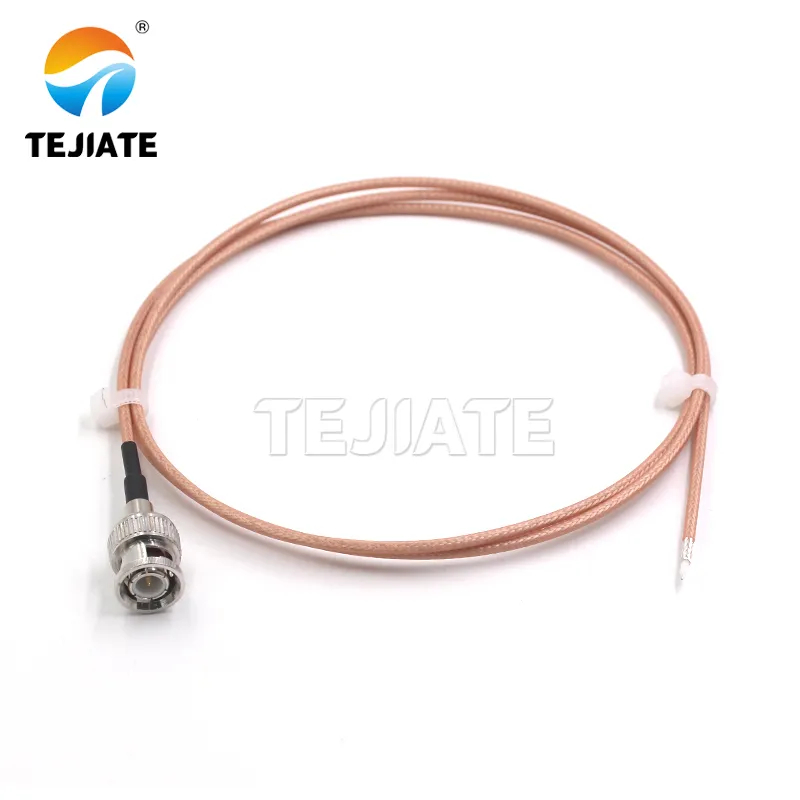
BNC connector RG316 coaxial cable jumper.

The context for Figure warns against accidentally using 75-ohm video leads in a 50-ohm RF chain, which causes ringing. The shown BNC RG316 Jumper is a 50-ohm type. The context advises checking jacket print, using terminators, and keeping runs short to avoid mismatch, citing an example where a mismatched cable caused a 0.25 dB sag.
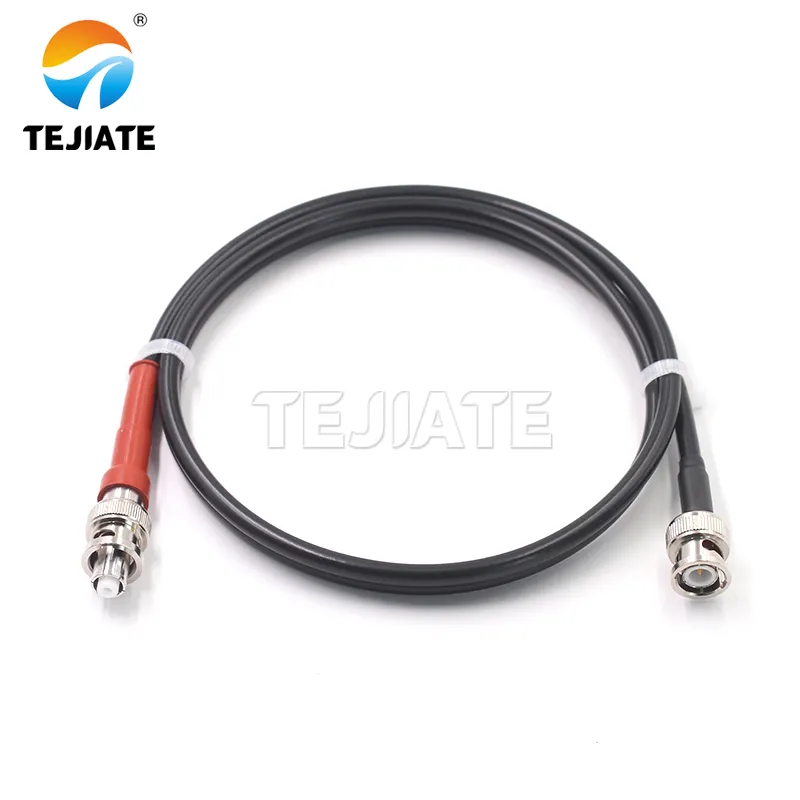
BNC RG316 Jumper
BNC connector R659 coaxial cable jumper.

Figure , alongside Figure 4, shows another specific model of a 50-ohm BNC jumper – the BNC R659 Jumper. Its context also emphasizes the importance of end-to-end impedance matching. This jumper represents another 50-ohm solution offered to prevent the use of 75-ohm video cables and the associated reflection loss and phase ripple.
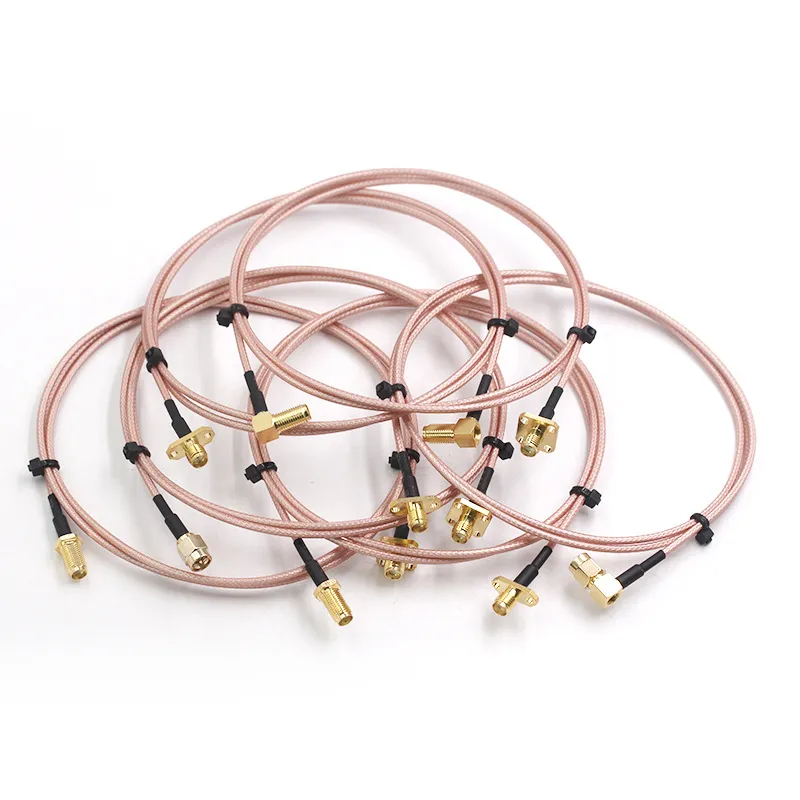
BNC R659 Jumper

It’s common to grab whatever BNC cable is nearby — until a 75-ohm video lead slips into a 50-ohm RF chain and the trace starts ringing. The mismatch quietly adds reflection loss and phase ripple, especially above 3 GHz.

A quick check keeps you safe:

  • Read the jacket print. Look for “RG-58,” “RG-316,” or “RG-174” — all 50 Ω types. Anything labeled “RG-59” or “RG-6” belongs to video, not RF.
  • Terminate outputs. When a source isn’t feeding a matched load, add a 50 Ω BNC terminator to absorb reflections.
  • Keep runs short. For reference, RG-316 coax typically loses about 0.3 dB/m @ 1 GHz, 0.5 dB/m @ 2.4 GHz, and 0.9 dB/m @ 5 GHz. Even half a meter makes a measurable difference.

Once during a 5 GHz sweep, a customer used an old CCTV jumper and saw the response sag 0.25 dB. Replacing it with a matched 50 Ω lead instantly restored flatness. These small lessons repeat across labs every week.

A deeper comparison of BNC 50 Ω vs 75 Ω behavior and why mixing them ruins return-loss margins appears in TEJTE’s bench impedance guide.

Should you use an adapter or a short SMA to BNC cable?

Every extra interface costs signal. Expect 0.05 – 0.20 dB per connection @ 1 GHz, roughly linear with frequency. Two stacked adapters can steal 0.3 – 0.4 dB @ 5 GHz, and that doesn’t include mismatch ripple.

When space allows, a 0.3 – 0.6 m jumper (for instance, a BNC male to SMA female RG316 assembly) typically beats a double-adapter setup by 0.2 dB or more at 2.4 GHz. Short cables also relieve strain on recessed SMA panels where a rigid adapter might torque the jack.

Right-angle connectors deserve a spotlight. If your instrument’s rear BNC ports sit close to a wall, a right-angle SMA side keeps routing neat without over-twisting the cable. It’s a trick many lab techs learn the hard way.

When your setup involves frequent movement or swapping DUTs, a flexible jumper is the smarter long-term choice. TEJTE’s application notes on SMA extension cables and loss control show real cases where replacing rigid adapters extended connector life by months.

Will a spectrum analyzer or oscilloscope port change your choice?

Yes—because instrument front ends aren’t all built alike. Most oscilloscopes and spectrum analyzers use BNC or SMA connectors rated for 50 Ω, but each has its quirks. Modern gear, such as the Rohde & Schwarz MXO 5 or Keysight MXR B-Series, reaches bandwidths where even a small mismatch or extra interface becomes visible.

On older 1 GHz scopes, a misaligned adapter might only add a ripple. But on 6 GHz and 8 GHz systems, it can distort phase or degrade dynamic range. TEJTE’s SMA/BNC-KJ (BNC M to SMA F, DC-12 GHz) and SMA/BNC-JK (BNC F to SMA M) both preserve the 50 Ω path across these frequencies, minimizing return-loss penalties.

Another practical tip: avoid using the BNC barrel as a lever when tightening SMA threads. Always rotate the hex nut, not the bayonet shell, or you risk loosening the instrument’s internal ground collar. For unused SMA ports on analyzers, cap them with 50 Ω dust caps—dust alone can lift VSWR beyond 1.2 : 1.

If you’re building multi-instrument benches, the direction mapping explained earlier applies again. Keep the analyzer output side BNC male, and the DUT input SMA female, as noted in TEJTE’s RF adapter direction guide. That alignment avoids excessive torque and maintains consistent cable orientation.

How much insertion loss will your adapter path add at 900 MHz / 2.4 GHz / 5 GHz?

Every link in the chain contributes to total insertion loss—adapter, jumper, mismatch, all of it. The following Info Asset helps engineers estimate the combined loss using real-world numbers from TEJTE’s test data and typical coax attenuation.

BNC to SMA Direction & Loss Checker

Parameter Example Input Formula / Reference Result / Interpretation
Instrument Port BNC Male 50 Ω Matched
DUT Port SMA Female 50 Ω Matched
Frequency (GHz) 2.4 GHz
Jumper Length (m) 0.5 m (RG316)
Interfaces Count 2 (adapters + ends)
Loss Per Interface (dB) 0.10 @ 1 GHz (→ 0.24 @ 2.4 GHz) Linear approx.
Cable Loss (dB/m) 0.3 @ 1 GHz (→ 0.72 @ 2.4 GHz) Measured TEJTE RG316
VSWR 1.2 : 1 ρ = (1.2-1)/(1.2+1) = 0.0909
Mismatch Loss (dB) −10 · log10(1 − ρ²) = 0.036 dB
Cable Loss (dB) α × L 0.72 × 0.5 = 0.36 dB
Interface Loss (dB) n × IL_if 2 × 0.24 = 0.48 dB
Total IL (dB) Cable + Interface + Mismatch ≈ 0.88 dB @ 2.4 GHz

At 900 MHz, expect around 0.4 dB total; at 5 GHz, roughly 1.2 dB.

If that exceeds your loss budget, reduce interface count—replace two rigid adapters with one short jumper. When more precision is needed, switch to low-loss RG316D or LMR-100 families for another 20–30 % improvement.

Formula summary
cable_loss = α_dB/m × length_m
interface_loss = count × IL_if
ρ = (VSWR − 1)/(VSWR + 1)
mismatch_loss = −10 · log10(1 − ρ²)
IL_total = cable_loss + interface_loss + mismatch_loss

A complete explanation of return-loss budgeting appears in TEJTE’s RG316 vs RG174 comparison, which details how line loss and connector count interact across frequency.

Do you need right-angle or straight on either side?

Comparison diagram of right-angle vs straight BNC/SMA adapters.

The context for Figure states that the debate is sometimes mechanical, not electrical. A right-angle SMA adapter saves space and reduces stress on coax leads. The slight extra loss is negligible compared to the strain prevention. The figure likely illustrates the differences in installation space and cable routing, showing how RA geometry reduces torque buildup risk.
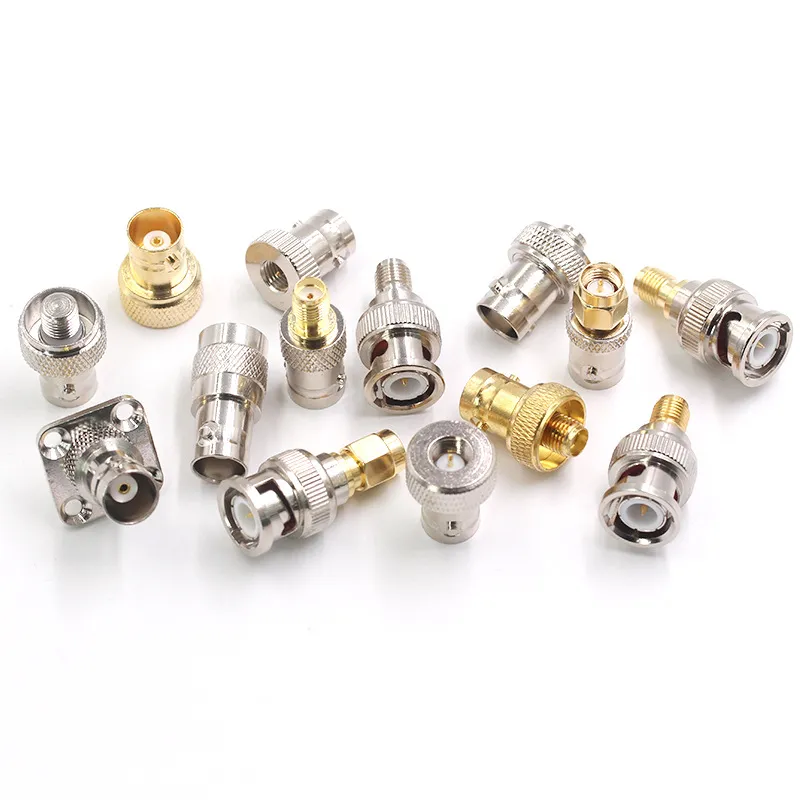
Right-Angle vs Straight Adapter Choice

Sometimes the debate isn’t electrical—it’s mechanical. If your test modules mount inside enclosures or rack panels, a right-angle SMA adapter can save space and reduce stress on coax leads. The slight extra loss (typically < 0.05 dB @ 3 GHz) is negligible compared to the strain it prevents.

Straight adapters like SMA/BNC-JK keep a shorter signal path and simpler calibration geometry, ideal for fixed benches. Right-angle versions shine where clearance is tight or cables hang vertically from instruments. When you frequently disconnect leads, use RA on the SMA side and leave the BNC bayonet unobstructed to avoid wear.

Lab note: Engineers often underestimate torque build-up. A stiff jumper hanging from a straight adapter can twist an SMA jack over time; RA geometry nearly eliminates that risk.

You’ll find similar guidance on enclosure routing and mechanical relief in TEJTE’s SMA feedthrough mounting tips, showing how to combine strain-relief and sealing without sacrificing bandwidth.

What recent lab gear news could influence BNC to SMA choices?

Bench instrumentation evolves fast—and so do connector demands. Each new generation of oscilloscopes and analyzers raises bandwidth, pushing mechanical and electrical tolerances closer to their limits.

The Rohde & Schwarz MXO 5 introduced ASIC-based zone triggering with up to 8 channels, pushing data rates where even 0.1 dB of adapter loss becomes visible in FFT noise floors. Keysight’s Infiniium MXR B-Series added hardware-accelerated analysis, and in those automation-heavy environments, any impedance error propagates through hundreds of measurements per hour.

Likewise, the Siglent SDS7000A scope family now reaches 6 – 8 GHz bandwidths, meaning that what used to be “just fine” at 1 GHz now shows up as ripple. And Anritsu’s ShockLine VNA updates, capable of 43.5 GHz simultaneous sweeps, make adapter repeatability a measurable parameter.

As frequency rises, maintaining a 50 Ω path from BNC to SMA becomes non-negotiable. That’s why adapters like TEJTE SMA/BNC-KJ and SMA/BNC-JK—tested from DC to 12 GHz with gold-plated pins—still serve as reliable transition points in modern mixed-connector benches. Engineers who’ve upgraded to these instruments often standardize on such 50 Ω interconnects to keep calibration stable across devices.

You can see how these upgrades affect adapter setups in TEJTE’s broader RF cable and connector guide, which covers link budgeting through high-frequency paths.

Order the exact SKU without back-and-forth

Close-up product photo of a TEJTE BNC to SMA adapter, showing connector interface details.

Figure is located in the "Order the exact SKU" section, serving as a visual reference for the adapter product. Its context emphasizes the need to specify key parameters for a smooth ordering process. The figure visually presents the physical adapter, likely configured as BNC Male to SMA Female, matching the recommended SMA/BNC-KJ model. The appearance suggests a nickel-plated brass shell and gold-plated center contact, which are crucial for stable performance from DC to 12 GHz. This photo helps engineers correlate written specs with the physical product, ensuring the selected model matches their test bench requirements in direction, gender, and construction.

BNC to SMA Adapter Product Photo

Once you’ve verified direction, impedance, and mechanical layout, ordering the correct adapter should be straightforward—but a few notes make the process smoother.

When submitting a part request, always specify:

  • BNC side genderMale or Female
  • SMA side genderMale or Female
  • OrientationStraight or Right-Angle
  • Impedance50 Ω standard
  • Finish & materialNickel-plated brass housing, gold-plated pin
  • Frequency rangeDC – 12 GHz

Including RoHS / REACH compliance and a brief torque note (0.36 N·m typical) helps QA teams validate assemblies faster. TEJTE adapters are serialized for traceability, ensuring consistent mechanical depth and contact retention.

For OEM or lab production lines, batch consistency matters as much as specs. TEJTE’s RF connector catalog lists matching SMA, BNC, TNC and N-type families, letting engineers build end-to-end assemblies from the same tolerance set. This reduces uncertainty when adapters, feedthroughs, and pigtails mix in a single test fixture.

FAQs

1. Which way should I orient the adapter—BNC male to SMA female or the reverse?

Match instrument and DUT ports exactly. For scopes or signal generators, choose BNC male to SMA female; for DUT outputs, SMA male to BNC female. Keep the heavier body on the instrument side to prevent lever stress.

2. Can I use a 75 Ω BNC video cable in a 50 Ω SMA chain?

Avoid it. The mismatch introduces reflection and ripple above 1 GHz. Always use 50 Ω cables or proper termination as explained in the BNC 50 Ω vs 75 Ω comparison.

3. When is a short BNC to SMA cable better than a plug-in adapter?

Whenever movement or tight space is involved. A 0.3 – 0.6 m jumper typically shows lower loss and strain than stacked adapters.

4. What does “BNC STR plug / SMA STR plug / 0.25 m” mean?

It describes a straight BNC on one end, straight SMA on the other, with a 0.25 m 50 Ω coax between—verify direction before ordering.

5. Can TEJTE build a custom jumper—SMA-F inside the box and BNC-M at the scope?

Yes. Specify BNC-M to SMA-F, 50 Ω, straight or right-angle, and exact length; add RoHS / REACH documentation for compliance.

6. Will a right-angle SMA noticeably increase loss?

Negligibly—usually < 0.05 dB @ 3 GHz—but it provides valuable strain relief that improves repeatability over time.

7. How do high-bandwidth scopes change adapter requirements?

As bandwidth climbs beyond 6 GHz, every adapter counts. Fewer interfaces and shorter jumpers preserve phase accuracy and reduce drift—especially in automated test sequences.

Bonfon Office Building, Longgang District, Shenzhen City, Guangdong Province, China

customer service