
SMA Adapter Guide: Types, Specs & Buying Tips for Engineers
Sep 18,2025
How do you identify the right SMA adapter for your setup?
The easiest way to avoid mismatched parts is to look closely at both the threads and the center contact. A standard SMA male carries outside threads and a visible pin. The SMA female, by contrast, has inside threads and a socket. If you mix them up, the connection simply won’t work—something most engineers learn the hard way.
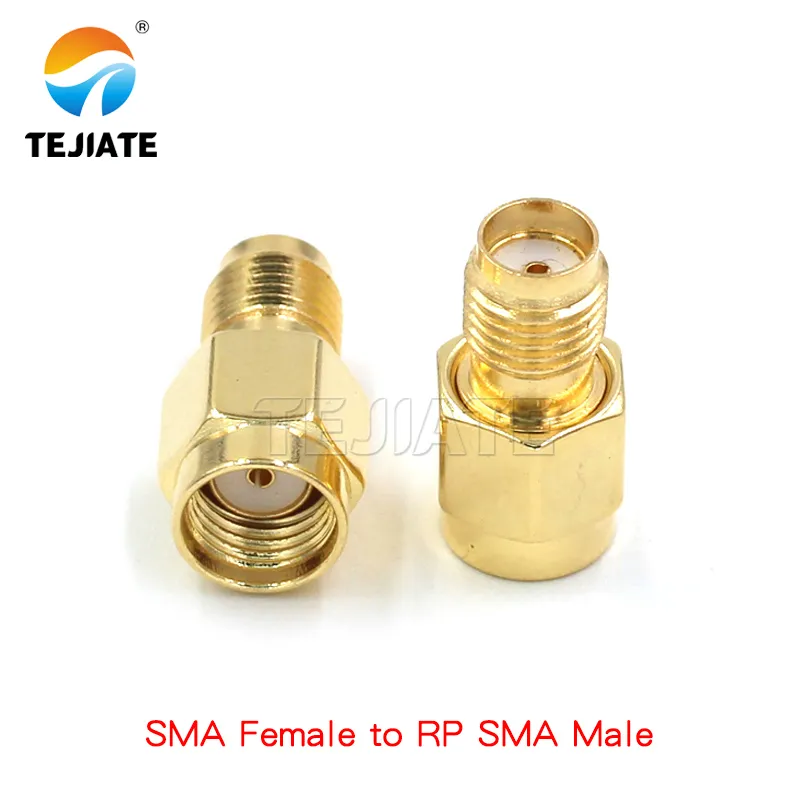
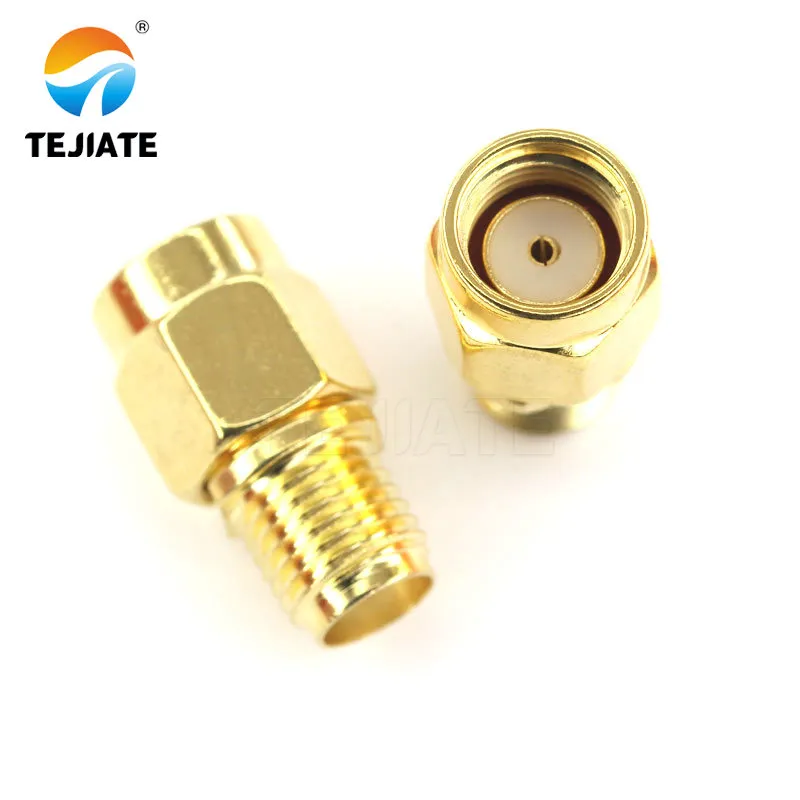
The situation gets trickier once RP-SMA adapters enter the picture. Many WiFi routers, for example, come with RP-SMA female jacks. They look almost identical to standard female connectors but have a pin inside. In that case, you’ll need an sma male to female adapter to attach a regular antenna. And when both ends of your coax cables happen to be male, an sma female to female adapter works as a coupler.
Real specs make the difference. TEJTE’s SMA-KKY coupler (Part No. 53353) is built from gold-plated brass, 22.2 mm in length with 1/4-36UNS-2A threads, and rated for DC–6 GHz with insertion loss ≤0.15 dB. The SMA-JJ (Part No. 35395–35396) handles DC–12.4 GHz and survives more than 1000 mating cycles—a spec that matters if you’re constantly swapping cables in a lab. Both are kept in stock and support custom orders, which helps avoid delays when projects scale.
Quick tip: don’t just rely on memory or datasheets—shine a flashlight into the connector. Checking whether there’s a pin or a hole saves you from ordering the wrong adapter, especially when RP-SMA is involved.
For a broader overview of connector families and their role in RF systems, see TEJTE’s RF Coaxial Cable Guide.
Do SMA and RP-SMA adapters affect signal quality?

This image depicts a specific type of gender-changing and polarity-changing adapter. It solves a common compatibility issue by allowing a cable with a standard SMA male connector (pin) to interface with a device port that is an RP-SMA female (which also has a pin, unlike a standard SMA female). This is explicitly mentioned in the text as a solution for connecting regular antennas to many WiFi routers.
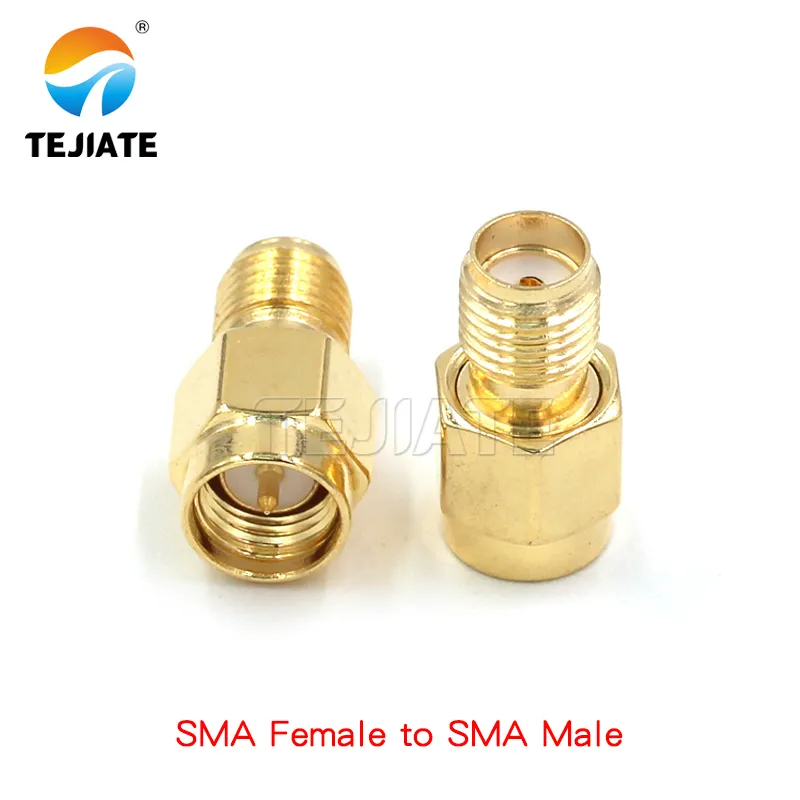
This image shows a fundamental type of SMA adapter. It would be used to convert a female SMA jack (socket) into a male SMA plug (pin), or vice versa depending on perspective. This is a versatile adapter for correcting gender mismatches in an RF chain, ensuring a cable can connect to a device port. The document context implies its importance in establishing basic connectivity.
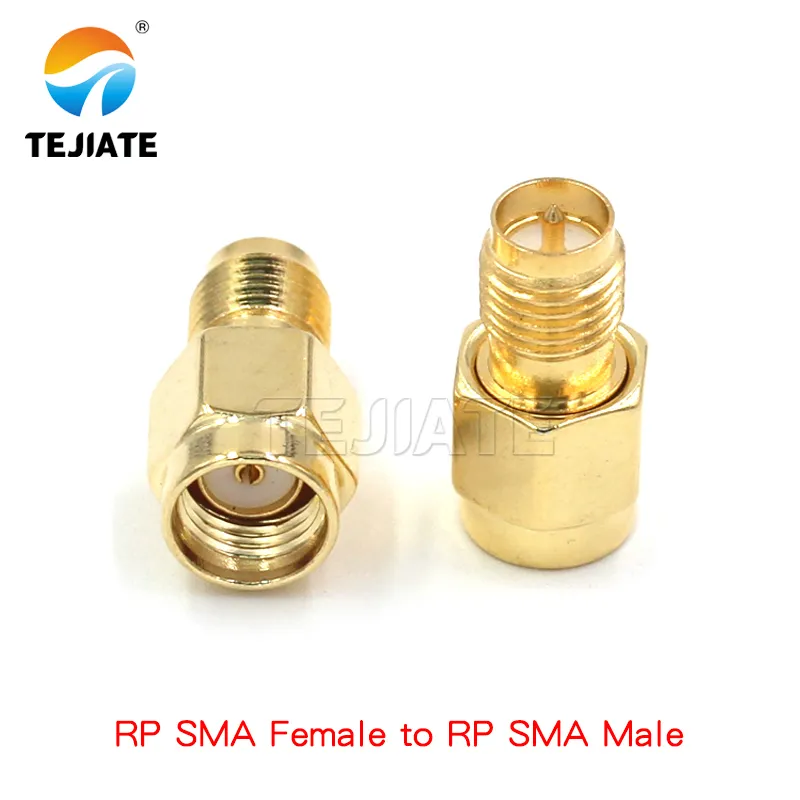
This image illustrates an adapter where both ends follow the Reverse Polarity SMA standard. An RP-SMA male has a hole in the center conductor and outer threads, while an RP-SMA female has a pin and internal threads. This adapter would be used to connect two RP-SMA cables together or to extend a connection between two RP-SMA devices, ensuring polarity consistency throughout the link.
Every extra connection in an RF chain introduces some level of insertion loss. In casual WiFi setups you might never notice, but in more demanding applications—say SDR measurements or high-frequency backhaul—fractions of a decibel can mean the difference between clean data and noisy performance.
Take TEJTE’s RP-SMA–JK adapter (Part No. 08969–08975–08974) as an example. It operates across DC–6 GHz, keeps insertion loss at or below 0.15 dB @ 6 GHz, and maintains a VSWR of ≤1.20:1. That makes it reliable not just for 2.4 GHz WiFi but also for 5 GHz networks. Lower-quality RP-SMA parts often test closer to 1.5:1, which reflects signal back and reduces efficiency.
Beyond loss and VSWR, other specs also matter. Insulation resistance above 5000 MΩ and a working voltage up to 335 V help prevent breakdown in higher-power or long-duration tests. And if you’re reusing adapters frequently, durability ratings count: TEJTE’s precision SMA couplers are tested for ≥500 cycles without degrading contact resistance (≤5 mΩ inner, ≤2 mΩ outer). From field experience, once connectors begin showing wear, reflections and random disconnects become much more common.
Tip from practice: if your system starts behaving unpredictably, check the adapters first. Swapping in a fresh, low-loss part often solves “mystery” performance drops.
For setups where signal integrity is critical, explore TEJTE’s RF Adapter Cable range, which includes low-loss designs verified for high-frequency use.
When should you use bulkhead or waterproof SMA adapters?

This image demonstrates the physical installation and purpose of an SMA bulkhead adapter. It shows the adapter threaded through a hole in an equipment panel or enclosure wall, secured firmly with a nut on the outside. This creates a robust and permanent connector interface that is part of the chassis itself, ideal for mounting antennas externally or connecting internal modules to external networks reliably, as discussed in the document's section on environmental stability.
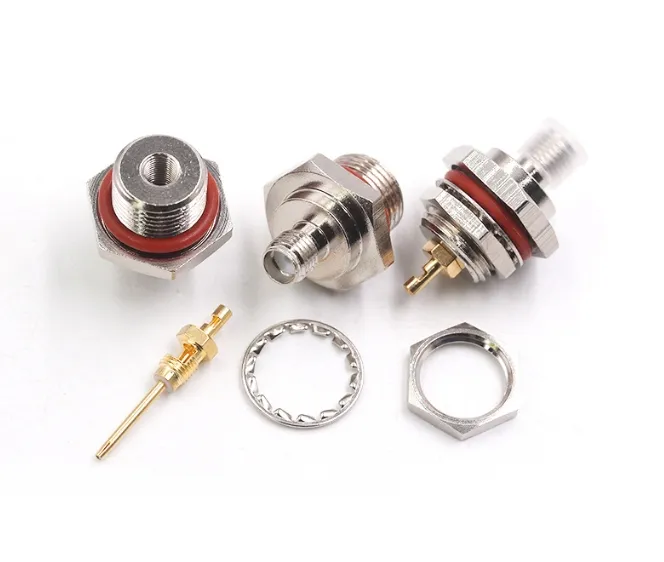
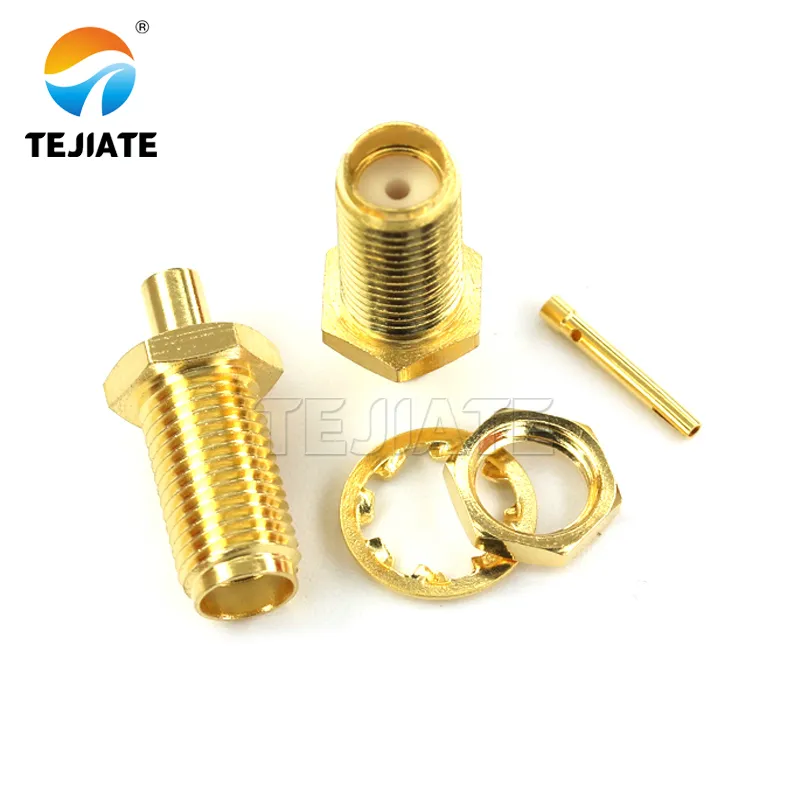
Not every decision about an sma bulkhead adapter comes down to GHz ratings—sometimes the bigger issue is the environment. A bulkhead design, with its extended threaded barrel and nut, is perfect for creating a stable pass-through on an enclosure. You’ll see them used on IoT gateways, routers with metal housings, or SDR boxes mounted in racks.
When equipment is outdoors, though, a waterproof sma adapter becomes essential. TEJTE’s stainless-steel models, insulated with PTFE and sealed with silicone O-rings, are rated from DC–18 GHz with insertion loss ≤0.2 dB @ 6 GHz. They hold VSWR to ≤1.20:1, even after 500+ mating cycles, and stay reliable across a temperature range of –65 °C to +165 °C. That kind of margin is what keeps 4G/5G antennas and smart-home hubs running through summer heat and winter frost.
Moisture is the silent killer. Once condensation finds its way into an SMA joint, corrosion follows, and performance declines fast. In field installs, most failures aren’t caused by the radio hardware—they’re caused by unsealed connectors. Having stock on hand of waterproof bulkhead adapters, or arranging a custom spec when panels have unusual thicknesses, is often the difference between a one-time install and a service call six months later.
Hands-on note: always check thread length (11 mm vs 13 mm). If the threads are too short, you won’t get a secure mount; too long, and the adapter can wobble inside thin panels.
For more details on outdoor setups and matching cable assemblies, see TEJTE’s SMA Extension Cable Guide or browse the RF Adapter Cable collection.
What are the advantages of using right-angle SMA adapters?

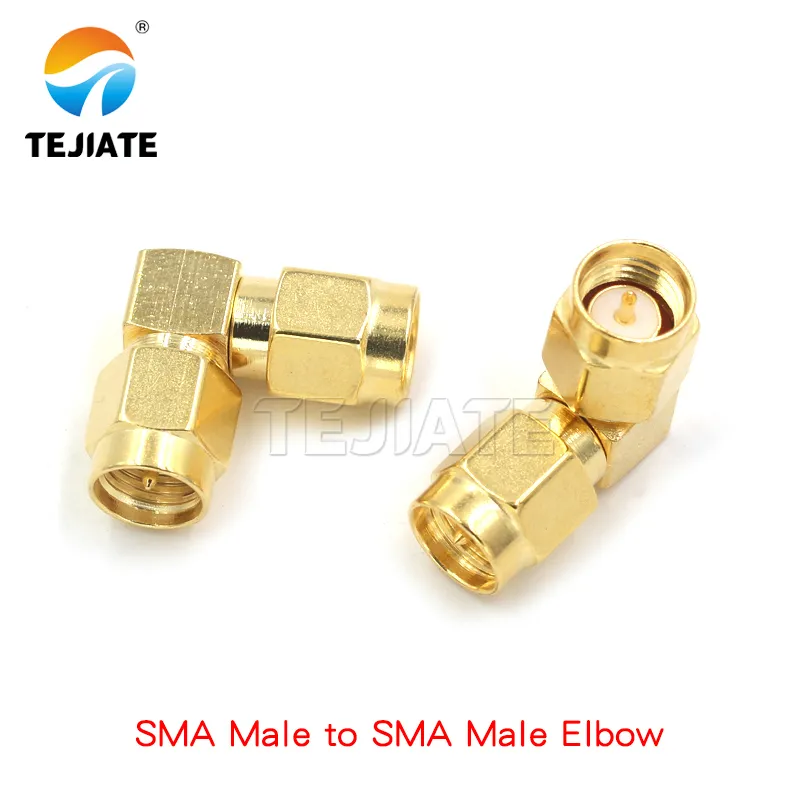
This image features a right-angle (elbow) adapter with male connectors on both ends. Its primary function is mechanical: it allows a cable to make a sharp 90-degree turn immediately at the connection point, saving space and preventing the cable from bending at a damaging radius directly at the device port. The document highlights its use in FPV drones, lab racks, and home routers to protect ports from strain and damage.
Sometimes the challenge isn’t electrical at all—it’s mechanical. In tight enclosures or when a device is pushed up against a wall, a straight connector leaves the coax cable bending at an awkward angle. Over time, that kind of strain can damage the port. A sma right angle adapter solves the problem by turning the connection 90°, giving the cable a natural path to follow.
The benefits go beyond just saving space. In FPV drones, right-angle SMA adapters help antennas stay tucked closer to the frame, reducing the chance of snapping a connector during a crash. In lab racks, they keep cables neat and prevent kinks when equipment is stacked close together. For home routers mounted near walls, a right-angle adapter can mean the difference between a stable link and a loose, overstressed jack.
Performance still matters. TEJTE’s right-angle adapters, for example, are tested to operate up to 6 GHz with insertion loss ≤0.15 dB and withstand ≥500 mating cycles. Stainless steel housings maintain their mechanical integrity under repeated use, while gold-plated brass options balance conductivity with cost. Having both types available in stock—and custom builds if you need unusual dimensions—gives engineers flexibility without sacrificing reliability.
Pro tip: if you ever see a port starting to wobble after months of use, swapping in a right-angle adapter early can extend the life of the device.
For more on installation options and mechanical considerations, the SMA Bulkhead Connector Guide dives deeper into form factors, while TEJTE’s RF Adapter Cable line provides matching assemblies.
Can SMA adapters serve as couplers or extenders?

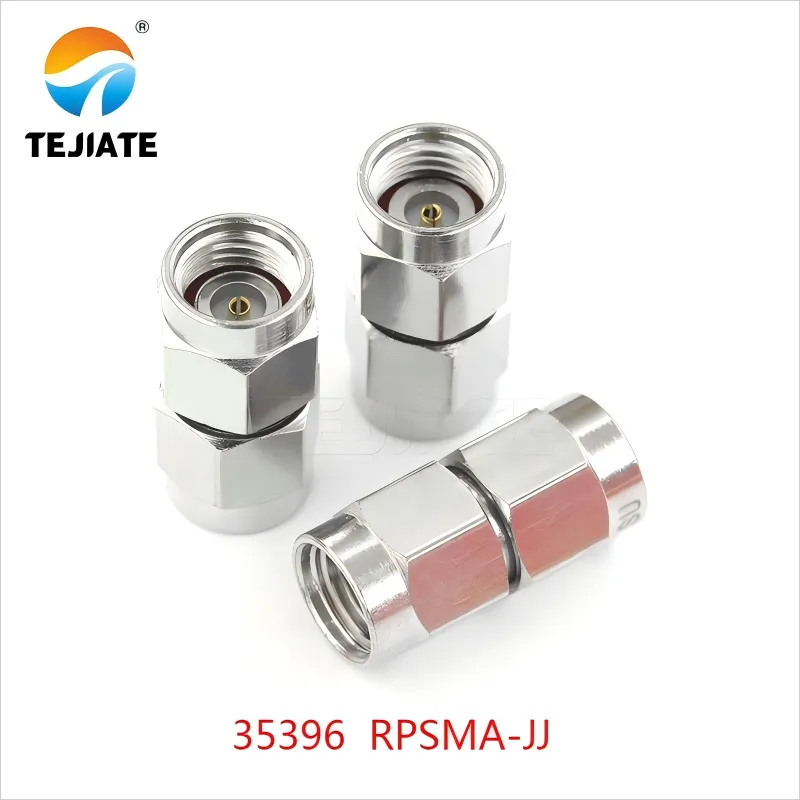
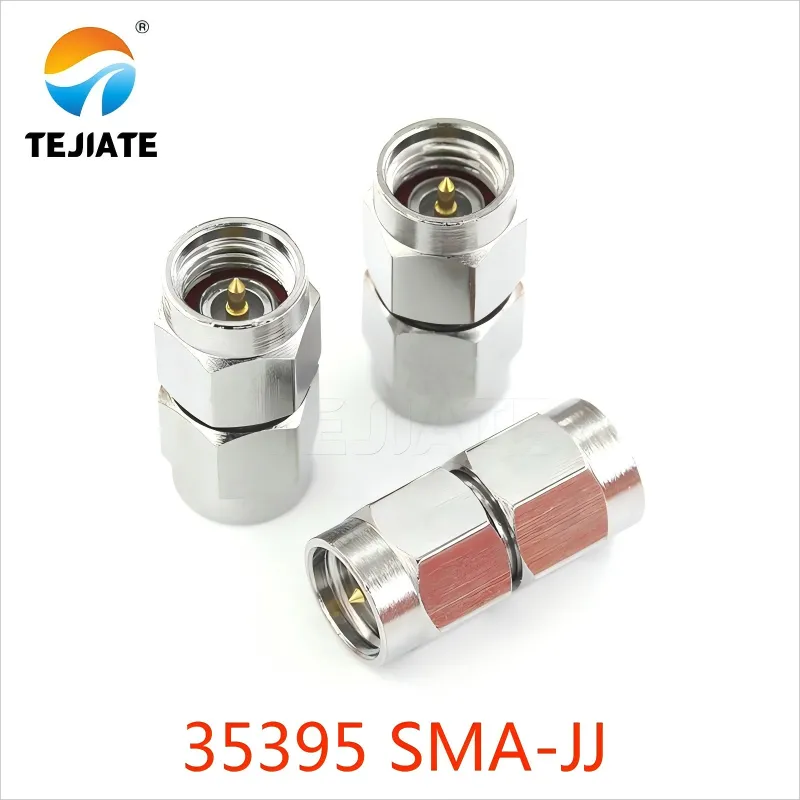
This image provides a direct visual comparison between two similar-looking but critically different couplers. The SMA-JJ coupler (Part No. 35395) has a pin in both connectors (standard SMA male). The RPSMA-JJ coupler (Part No. 35396) has a hole in both connectors (RP-SMA male). This distinction is vital because they are not interchangeable; using the wrong one will result in a failure to mate or an incorrect connection (male pin touching male pin). The document uses part numbers to specify these components, and this image serves to prevent that common error.
This technical illustration provides a detailed look inside a waterproof SMA adapter. It visually explains the key components mentioned in the text: the PTFE insulation for stable electrical properties across a wide temperature range, the silicone O-rings that create the watertight seal, and the robust stainless steel housing. This image underscores why these adapters are essential for outdoor 4G/5G antennas and IoT gateways, as they prevent moisture ingress, which is a primary cause of failure in RF connections exposed to the elements.
Yes—they often do. An sma female to female adapter, commonly referred to as an sma coupler, is the simplest way to connect two male SMA cables. It’s a small part, but it allows you to extend a cable run or patch together different assemblies without rebuilding the whole line.
In RF labs, couplers are almost as common as the cables themselves. Engineers rely on them when test setups need quick changes—linking a short coax to a longer one, or adapting gear with mismatched cable ends. In everyday networking, an sma coupler is a quick fix if your WiFi router’s antenna cable turns out to be just a little too short.
Still, every added joint introduces insertion loss. TEJTE’s SMA-JJ adapter (Part No. 35395–35396) is rated from DC–12.4 GHz, holds insertion loss to ≤0.15 dB @ 6 GHz, and maintains VSWR ≤1.20:1. With a durability rating of over 1000 mating cycles, it’s built to survive frequent use without degrading. For field engineers, having a few high-spec couplers in the toolkit avoids downtime when cables don’t line up as expected.
Tip: if you find yourself stacking multiple couplers, that’s usually a sign it’s time to order a properly sized extension cable instead.
For more on extending runs and when to choose cable vs coupler, see the SMA Extension Cable Guide, or explore ready-made assemblies in the RF Adapter Cable collection.
What makes an SMA adapter different from SO-239?
At first glance, both connectors show up in radio setups and it’s easy to assume they’re interchangeable. But the sma connector adapter family and the SO-239 standard serve very different worlds.
Start with frequency. SMA connectors are precision parts, handling signals from DC well into the microwave range—up to 18 GHz for standard versions and 26.5 GHz for precision stainless-steel builds. By contrast, SO-239, sometimes called the UHF female, was never designed for high-frequency work. It performs reliably only up to about 300 MHz, which is fine for HF and VHF ham radio but unusable for 5 GHz WiFi or 5G modules.
The construction also differs. SMA uses fine 1/4-36UNS threads, compact housings, and PTFE insulation to keep VSWR low, typically ≤1.20:1. SO-239, on the other hand, has coarse threads, a larger body, and no tight microwave tolerance. It’s rugged, yes, but not suited to GHz-level precision.
Applications naturally split along these lines. SMA dominates in SDRs, WiFi routers, LTE and 5G antennas, and test labs. SO-239 remains common on older ham rigs, HF/VHF base stations, and antennas that don’t need to pass beyond a few hundred MHz.
A common case: someone wants to connect a modern handheld SDR (with an SMA female port) to an older ham antenna using a PL-259 plug, which mates with SO-239. An adapter can make the connection, but the system’s ceiling will still be limited by the SO-239 side.
Field note: when mixing these connector types, expect the performance to follow the weaker standard. If your project needs GHz bandwidth, stick with SMA throughout.
To see how SMA compares with other RF interfaces in more detail, check the SMA vs BNC guide, which breaks down strengths and trade-offs across connector families.
How to select SMA adapters based on material and frequency?

This image serves as a visual catalog or product showcase. It likely displays a range of readily available SMA adapters as mentioned throughout the document, such as SMA female to female couplers, SMA male to female gender changers, right-angle elbows, and perhaps bulkhead versions. The purpose is to give engineers and buyers a clear, at-a-glance reference of the standard form factors and types that are typically kept in stock (as emphasized in the procurement tips) to solve common connectivity issues, such as extending cables, changing connector gender, adapting to RP-SMA, or mounting through panels.
Choosing the right sma adapter isn’t only about matching genders. Material, frequency rating, and even environmental specs decide whether a connector will last a season or a decade.
Brass with gold plating is cost-effective and works well for WiFi and SDR setups, typically up to 6–12 GHz. Stainless steel builds, though heavier, deliver far higher durability—often 500+ cycles without measurable wear—and keep VSWR steady below 1.20:1. PTFE insulation also plays a role, holding performance across a wide –65 °C to +165 °C temperature range.
Other specs to check:
- Insertion loss should stay ≤0.15 dB at 6 GHz.
- Insulation resistance above 5000 MΩ ensures long-term stability.
- Working voltage up to 335 V protects in higher-power systems.
- Durability ratings (≥1000 cycles for precision brass types) make a difference in lab work where cables are swapped daily.
Buying insight: TEJTE keeps standard couplers and bulkhead adapters in stock, while also supporting custom designs—helpful when enclosure thickness or environmental demands call for something non-standard.
For context on connector applications, you can also see TEJTE’s Coaxial Cable Connectors overview.
SMA Adapter Comparison Table
| Adapter Model | Frequency Range | Insertion Loss | VSWR (typical) | Durability | Material / Finish | Temperature Range | Typical Use Case |
|---|---|---|---|---|---|---|---|
| SMA-KKY (Part No. 53353) | DC-6 GHz | ≤0.15 dB @ 6 GHz | ≤1.20:1 | 500 cycles | Brass, gold plated | -65 °C ~ +165 °C | Panel pass-through, coupler use |
| RP-SMA-JK (Part No. 08969-08975-08974) | DC-6 GHz | ≤0.15 dB @ 6 GHz | ≤1.20:1 | 500 cycles | Brass housing, gold plated contacts | -65 °C ~ +165 °C | Wi-Fi routers, IoT devices |
| SMA-JJ (Part No. 35395-35396) | DC-12.4 GHz | ≤0.15 dB @ 6 GHz | ≤1.20:1 | 1000+ cycles | Brass, beryllium bronze contacts | -65 °C ~ +165 °C | SDR, RF lab testing |
| Waterproof SMA (Stainless) | DC-18 GHz | ≤0.2 dB @ 6 GHz | ≤1.20:1 | 500+ cycles | Stainless steel + PTFE + silicone O-ring | -65 °C ~ +165 °C | Outdoor IoT, 4G/5G antennas |
Buying tips for engineers and hobbyists

This image focuses on a key mechanical variation of the SMA bulkhead adapter: the thread length. The document contains a practical note: "always check thread length (11 mm vs 13 mm). If the threads are too short, you won’t get a secure mount; too long, and the adapter can wobble inside thin panels." This picture visually addresses this exact point. It likely compares a standard thread length adapter to one with an extended thread length or longer threaded barrel. This design is crucial for achieving a secure, rattle-free, and weatherproof installation in applications where the panel or enclosure wall is thicker than average, ensuring the nut can fully engage and tighten down properly. It underscores the attention to detail required in RF mechanical design and procurement.

Before you add an sma connector adapter to your order list, it helps to run through a quick mental checklist. Many returns happen not because the part was bad, but because the wrong type was ordered in the first place.
- Confirm gendering carefully: SMA vs RP-SMA confusion is the number one pitfall. Don’t rely on assumptions—always check pin versus hole as well as thread direction.
- Match the frequency rating: a 6 GHz adapter used in a 10 GHz test setup will cause reflections and signal loss. For SDR or 5G projects, make sure the adapter is rated up to 18 or even 26.5 GHz.
- Think about the environment: indoor routers work fine with brass couplers, but outdoor gear should use a waterproof sma adapter with O-rings.
- Durability matters: in test labs where cables are swapped daily, look for adapters rated at 1000+ cycles. For field installations, 500 cycles is usually enough.
- Plan for strain relief: cramped setups often benefit from a right-angle sma adapter, which prevents ports from loosening over time.
Practical note: TEJTE maintains ample stock of standard SMA couplers and bulkhead adapters, and also supports custom designs for special requirements—like non-standard panel thickness or outdoor sealing. This combination helps engineers avoid long lead times and keeps procurement flexible.
From a cost perspective, brass SMA adapters usually run in the $1–3 range, while stainless-steel precision versions cost more but last longer. For volume orders, buyers often balance the two: brass for general assemblies, stainless for high-frequency or outdoor gear.
To compare options side by side, explore TEJTE’s RF Adapter Cable collection and related resources such as the SMA Extension Cable Guide. Both will help narrow down the best fit for your project.
FAQ
Can I use an SMA female-to-female adapter as a signal coupler?
Yes. An sma female to female adapter—often sold as a coupler—links two male cables together. For short WiFi or SDR setups, the added loss (typically ≤0.15 dB @ 6 GHz) is hardly noticeable. But stacking multiple couplers increases insertion loss. If you need more length, the SMA Extension Cable Guide shows when it’s better to use a single extension cable instead.
What’s the difference between an SMA bulkhead and a panel-mount version?
They’re essentially the same thing. A sma bulkhead adapter is threaded through an enclosure wall and secured with a nut. “Panel-mount” just describes how it’s installed. TEJTE’s SMA-KKY bulkhead coupler (Part No. 53353) is 22.2 mm long, gold-plated brass, and tested to 500 cycles. See the SMA Bulkhead Connector Guide for detailed mounting options.
Do stainless steel SMA adapters perform better than brass ones?
Electrically, both can deliver excellent results if plated properly. The real difference is durability. A stainless steel sma adapter withstands heavy use, temperature swings from –65 °C to +165 °C, and vibration without losing its ≤0.15 dB insertion loss spec. TEJTE keeps both brass and stainless versions in stock and supports custom orders for projects that need long service life in outdoor or lab conditions.
Is it safe to use RP-SMA adapters for 5 GHz WiFi routers?
Yes. A quality rp-sma adapter rated for DC–6 GHz with VSWR ≤1.20:1 performs well on both 2.4 GHz and 5 GHz bands. Cheap untested versions often creep toward 1.5:1, causing signal reflection. For router upgrades and antenna swaps, the WiFi Antenna Guide explains the differences between SMA and RP-SMA.
How do waterproof SMA adapters prevent moisture damage?
A waterproof sma adapter uses O-rings and PTFE insulation to block condensation. TEJTE’s stainless models are rated DC–18 GHz, insertion loss ≤0.2 dB, and durability ≥500 cycles. They also handle working voltage up to 335 V and insulation resistance above 5000 MΩ. Without sealing, corrosion creeps in fast—one of the main causes of outdoor WiFi failures. More details are in the RF Coaxial Cable Guide.
Why do some SMA adapters support up to 26.5 GHz while others stop at 6 GHz?
It comes down to machining precision and material. Entry-level brass adapters are fine for WiFi and LTE, but precision sma connector adapter builds, often stainless steel, are engineered to handle 18–26.5 GHz with low VSWR. If your project involves SDR or 5G lab work, always check the frequency rating printed on the datasheet.
Can right-angle SMA adapters reduce strain on device ports?
Absolutely. A sma right angle adapter turns the connection 90°, so cables don’t bend sharply against the port. This relieves stress on PCB-mounted connectors. In FPV drones, right-angle adapters protect antennas during crashes; in lab racks, they prevent cable kinks. For other orientation solutions, see the SMA vs BNC vs N-Type comparison.
Bonfon Office Building, Longgang District, Shenzhen City, Guangdong Province, China
A China-based OEM/ODM RF communications supplier
Table of Contents
Owning your OEM/ODM/Private Label for Electronic Devices andComponents is now easier than ever.
