
SMA Female to Female Adapter Guide: Types, Specs & Applications

Sep 14,2025

Introduction

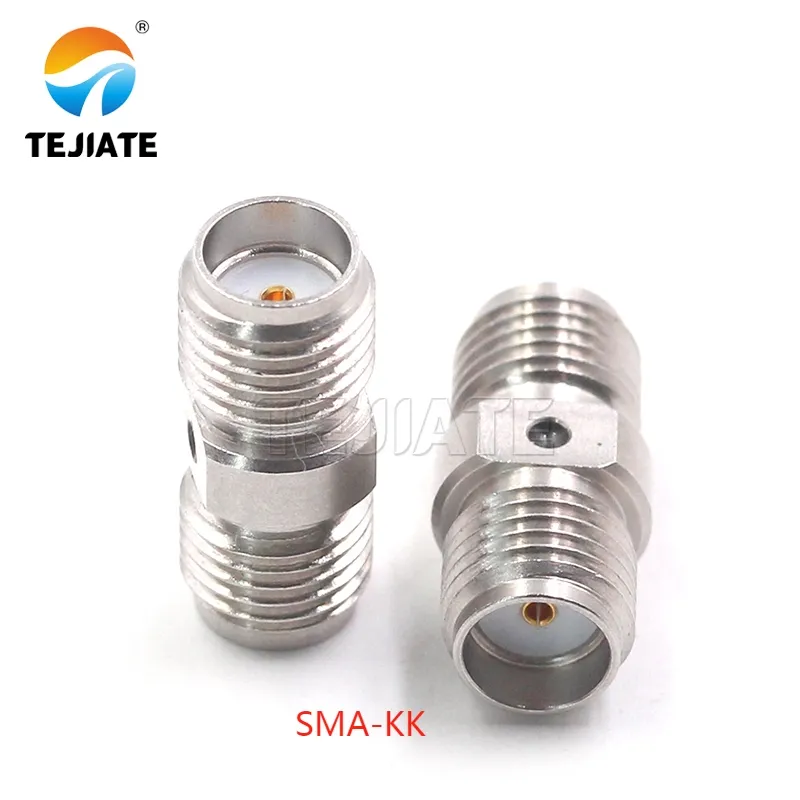
Examples of various SMA female-to-female adapters from TEJTE brand, including SMA-KK and other models

This image, located in the introduction, shows physical photos of various SMA female-to-female adapter models under the TEJTE brand, likely including standard straight couplers (SMA-KK) and others, used to visually introduce this connector type and its core role as a "quiet solution".
SMA Female-to-Female Adapter Types
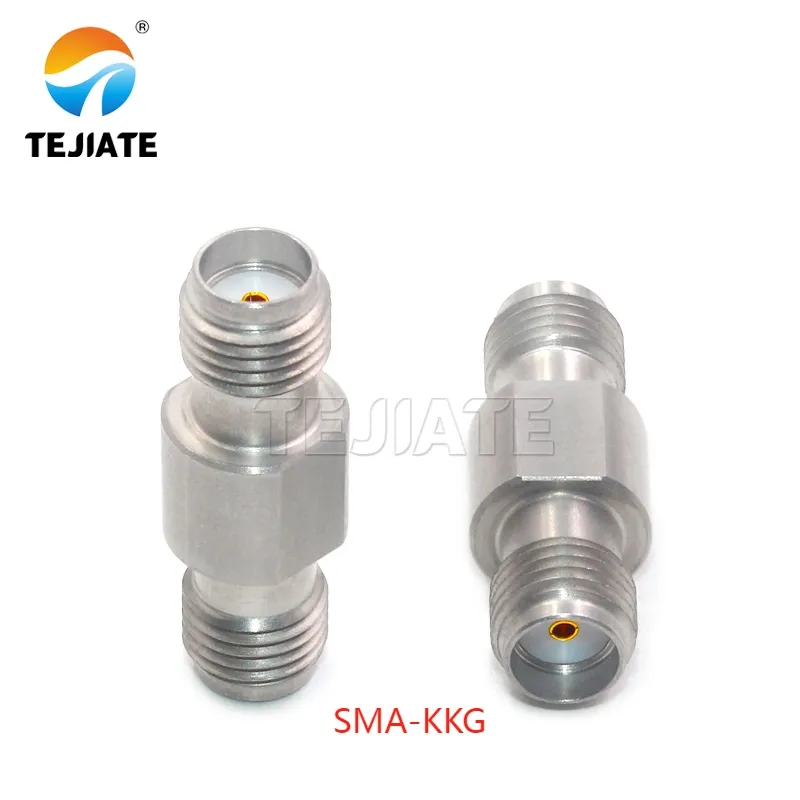
Close-up of an SMA-KKG model high-frequency SMA female-to-female adapter

This image is a close-up of the SMA-KKG model adapter, which, according to the context, supports DC–27 GHz with VSWR ≤1.2, representing a high-performance adapter option for high-frequency precision testing.
SMA-KKG Adapter

Think about those moments when your cable falls just a little short or when you need to route a signal cleanly through a panel. In such cases, the SMA female to female adapter—often marked SMA-KK—is the quiet solution that keeps everything working. It may look like nothing more than a tiny metal coupler, yet in practice it often decides whether your system delivers a stable signal or suffers from frustrating mismatches.

Engineers reach for these adapters constantly. They serve as couplers for quick cable extensions, as feedthrough connectors when passing signals through an enclosure, and as links in test setups where flexibility matters more than aesthetics. If you’ve ever scrambled in the lab because the cable didn’t quite reach, an F–F adapter probably saved the day.

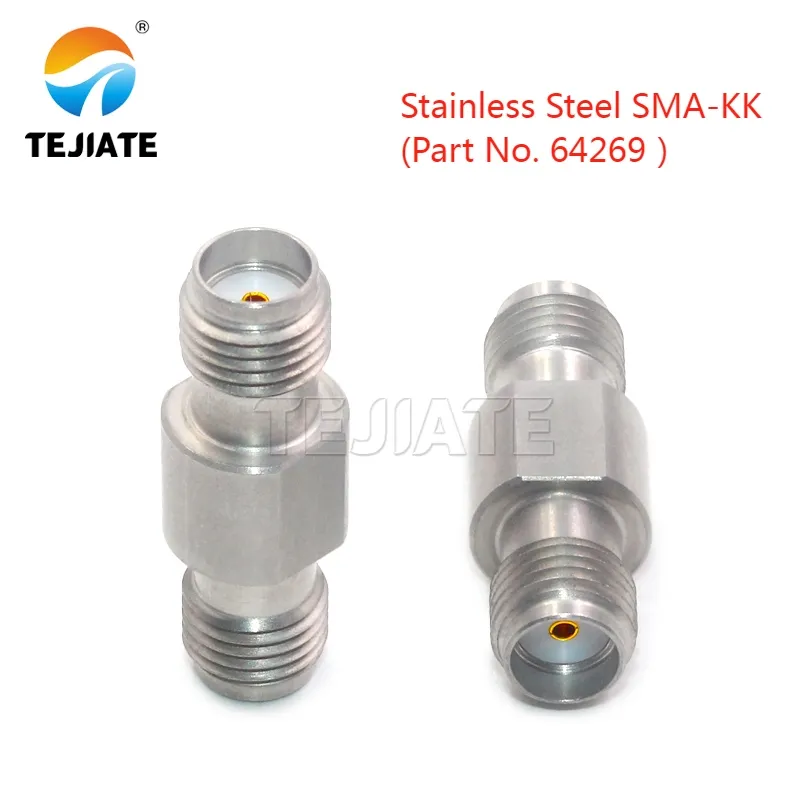
Options vary, and the right choice depends on your frequency and durability needs. Models like SMA-KKG (Part No. 55524, DC–27 GHz, VSWR ≤1.2) are designed for high-frequency precision testing, while stainless steel SMA-KK (Part No. 64269, DC–26.5 GHz, VSWR ≤1.25) offers reliability in harsher conditions such as outdoor 5G or aerospace applications. For readers who want a foundation in SMA terminology and gender recognition before diving into the details, TEJTE’s SMA connector guide is a practical starting point.

1) What Is an SMA Female-to-Female Adapter?

At its core, an SMA female-to-female adapter is nothing more than a small link—it joins two male SMA connectors. Simple as it sounds, it fills multiple roles across RF work.

  • Cable extension: Instead of buying a brand-new cable, you can just couple two SMA male leads together and gain the length you need. Many engineers keep a few of these in their toolkit for exactly this reason.
  • Lab setups: Test benches often rely on F–F couplers for quick swaps between instruments. They save time, especially when running repeated measurements.
  • Panel interface: In enclosure designs, the adapter doubles as a feedthrough, making it possible to bring a signal through a housing wall while keeping the setup neat.

How does it differ from other SMA adapters? That’s a common question.

  • A male to female SMA adapter extends or changes orientation, usually at a device port.
  • A male to male SMA adapter acts as a gender changer, letting you connect two female ends.
  • Flexible SMA adapter cables (for example, RG316 or 1.13 mm coax) are used when bending and strain relief are more important than keeping everything rigid. They also help reduce insertion loss compared with stacking multiple couplers.

Real-world specs highlight the differences. For instance, Part No. 35397–35400 SMA-KK operates from DC–12.4 GHz with insertion loss ≤0.15 dB at 6 GHz, tested for 500+ mating cycles. On the other hand, outdoor installations often turn to bulkhead feedthrough types like SMA-KKY (Part No. 35404). With an O-ring seal, 1000 Vrms withstand voltage, and durability of 1000+ cycles, it’s a dependable choice for panels in IoT gateways or telecom cabinets. If you’ve ever had to replace a failed connection in the field, you’ll appreciate why such specs matter.

2) Identify Genders & Terms

Close-up of the Stainless Steel SMA-KK adapter (Part No. 64269)

This image shows the Stainless Steel SMA-KK adapter (Part No. 64269), which, according to the text, supports DC-26.5 GHz with VSWR ≤1.25, designed for reliability in harsh conditions such as outdoor 5G or aerospace applications.
Stainless Steel SMA-KK Adapter
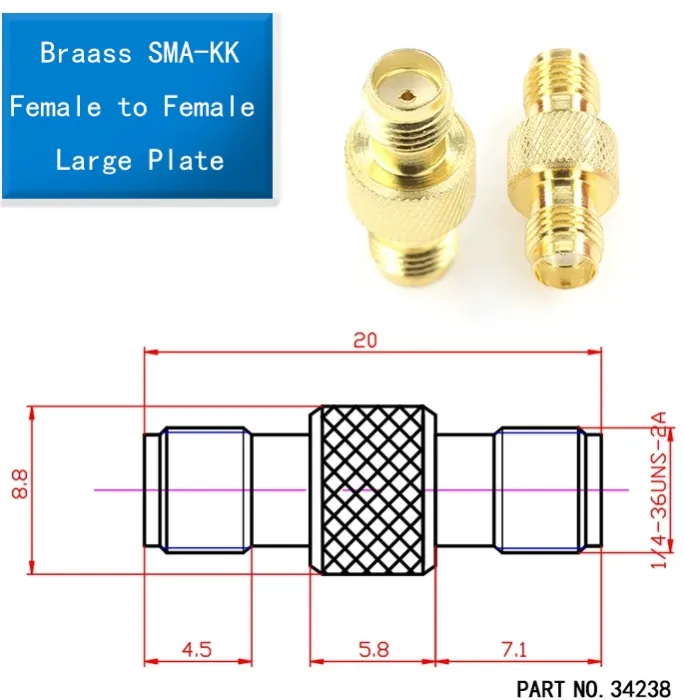
Dimensioned drawing of the Brass SMA-KK adapter (Part No. 34238)

This image is an engineering drawing of the Brass SMA-KK adapter (Part No. 34238) with its physical dimensions annotated (e.g., overall length 20mm, thread specification 1/4-36 UNS, etc.), providing detailed mechanical specification information for this adapter.
Brass SMA-KK Adapter Dimension Drawing

Connector gender is one of the easiest places to make a mistake. The rule itself is simple, but in practice, many buyers still confuse the two.

  • Male SMA → external threads with a center pin.
  • Female SMA → internal threads with a center hole.

An SMA female-to-female adapter has sockets on both ends, so it mates with two male SMA connectors. If you’re unsure, a quick check with a magnifier or just a careful look at the pin vs. hole can save you from ordering the wrong part.

You’ll also come across a handful of related terms when browsing catalogs:

  • Coupler – the straightforward inline connector that joins cables.
  • Gender changer – typically M–M or F–F, used to correct a mismatch.
  • Feedthrough / Pass-through – designed to let the SMA line cross a panel or enclosure.
  • Bulkhead – a reinforced feedthrough, shipped with nuts, washers, and often an O-ring for sealing.

Another common trap is the SMA vs. RP-SMA distinction. The two look almost identical, but their polarity is reversed. An RP-SMA female has a pin, unlike a standard SMA female which has a socket. If you mix them, they won’t mate at all. This issue shows up frequently in Wi-Fi and IoT equipment, which is why RP-SMA to SMA adapters exist.

TEJTE addresses both needs. For instance, brass SMA-KK (Part No. 34238, DC–6 GHz) is suitable for general measurement instruments, while stainless steel SMA-KK (Part No. 64269, DC–26.5 GHz) handles demanding high-frequency work, such as 5G test setups or aerospace modules. If you’re building a network system, the WiFi antenna extension cable guide explains where RP-SMA often comes into play and why picking the right type matters.

3) Types & Form Factors

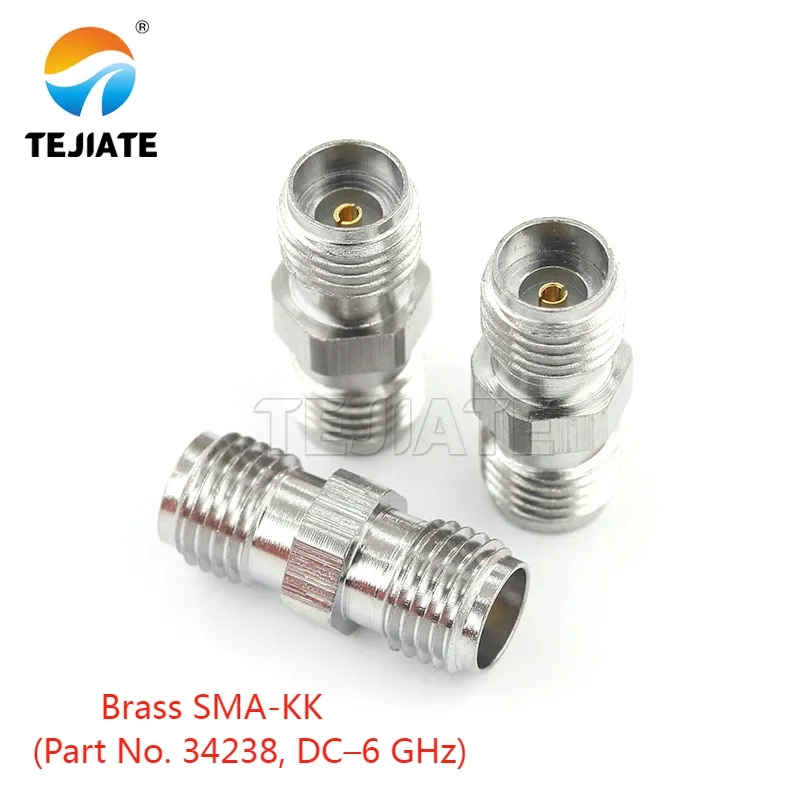
Physical photo of the Brass SMA-KK adapter (Part No. 34238)

This image shows a physical photo of the Brass SMA-KK adapter (Part No. 34238), which, according to the text, supports DC–6 GHz and is a cost-effective and reliable common coupler type suitable for lab setups or consumer RF devices.
Brass SMA-KK Adapter Physical Unit
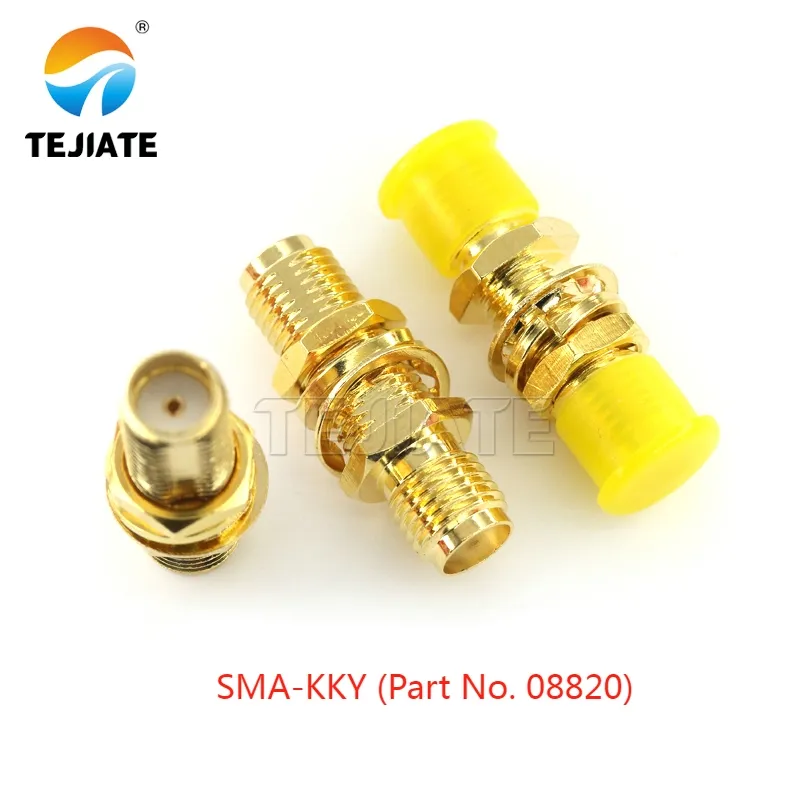
SMA-KKY bulkhead feedthrough adapter (Part No. 08820)

This image shows the SMA-KKY bulkhead feedthrough adapter (Part No. 08820), which, according to the text, is designed for mounting through enclosure panels with sealing (O-ring), rated for DC–6 GHz with insertion loss ≤0.15 dB/6 GHz, and used in routers, IoT gateways, or base stations.
SMA-KKY Bulkhead Adapter
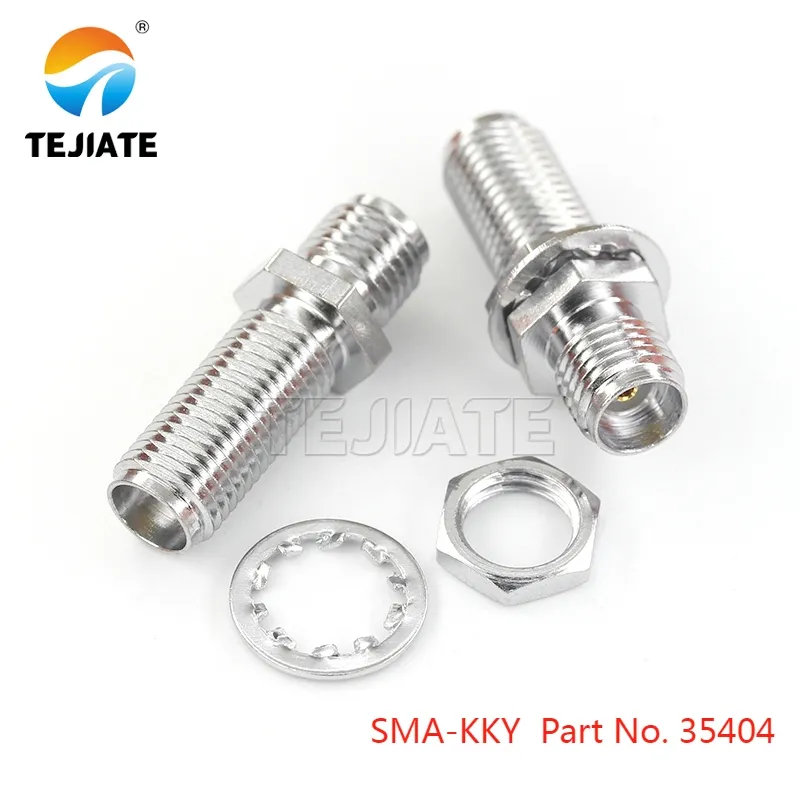
SMA-KKY bulkhead feedthrough adapter (Part No. 35404)

This image shows the SMA-KKY bulkhead adapter (Part No. 35404), which, according to the text, offers higher durability (1000+ mating cycles), withstands 1000 Vrms, has a 22 mm overall length with silicone O-ring seals, and is designed for reliable performance in applications like IoT gateways or outdoor 5G CPEs.
SMA-KKY Heavy-Duty Bulkhead Adapter

The SMA female to female adapter is not a one-size-fits-all component. Its form can shift depending on whether you’re working at a test bench, inside a router enclosure, or in a rugged outdoor box.

Inline coupler (straight F–F) is the simplest and most common type. A compact version, like the brass SMA-KK (Part No. 34238, DC–6 GHz), is just a small cylinder with two sockets. These are widely used in lab setups or consumer RF devices because they’re inexpensive and reliable. Longer-body couplers, such as Part No. 35397–35400, make handling easier when you’re swapping connections frequently. If you’ve ever fumbled with tiny connectors in a tight rack, you’ll know why the extra length matters.

For enclosures, the bulkhead feedthrough F–F is the go-to. Models like SMA-KKY (Part No. 08820) ship with nuts, washers, and O-rings for proper sealing. They’re rated DC–6 GHz with insertion loss ≤0.15 dB/6 GHz, making them dependable for routers, IoT gateways, or base stations where the connection must pass through a housing. Heavier-duty designs like Part No. 35404 push durability to 1000+ cycles and withstand 1000 Vrms, which is important when equipment has to stay sealed outdoors.

Then there’s the right-angle F–F adapter. It’s less common, but it solves a practical problem: redirecting the connection by 90° in cramped RF boxes. You trade off a small amount of extra insertion loss, but you gain stress relief for the cable. For engineers managing dense layouts, this trade-off often pays off. TEJTE also offers gold-plated variants for lower contact resistance and stainless steel versions for corrosion resistance (see RF connector catalog).

4) Performance: Impedance, Frequency & Loss

Performance is where an SMA female to female adapter proves its value—or reveals its weakness. Nearly all high-quality SMA adapters are designed for 50 Ω impedance, which matches the vast majority of RF equipment. Mixing in a 75 Ω part, often seen in broadcast hardware, can cause reflections and unnecessary signal loss. It’s a mistake that even experienced engineers have made when parts look almost identical on the shelf.

Frequency handling depends heavily on build quality and material choice:

  • Standard brass SMA-KK (Part No. 34238) → rated up to 6 GHz, cost-effective for Wi-Fi or LTE applications.
  • Mid-tier couplers such as Part No. 35397–35400 → cover DC–12.4 GHz, with insertion loss typically ≤0.15 dB at 6 GHz, good for lab test benches.
  • High-performance designs like SMA-KKG (Part No. 55524) → support DC–27 GHz, with VSWR ≤1.2:1, ideal for precision testing.
  • Stainless steel SMA-KK (Part No. 64269) → engineered for DC–26.5 GHz with VSWR ≤1.25:1, stable even in aerospace or 5G setups.

Insertion loss is always a concern. A few tenths of a dB may sound small, but across multiple adapters it adds up. That’s why RF engineers follow the principle of “less cascading.” Instead of stacking three couplers, consider using a short SMA adapter cable (like RG316 or 1.13 mm coax). It often delivers better performance while also reducing mechanical strain.

Installation practice also matters. Torqueing too hard can damage the threads or deform the center contact, increasing VSWR. A light wrench fit—around 0.6 Nm—is enough for most couplers. In the lab, some engineers mark their adapters with a torque value to remind colleagues not to overtighten. Small habits like this go a long way toward preserving both connectors and measurement accuracy. For broader context on how cables and adapters influence performance, TEJTE’s RF coaxial cable guide is a helpful reference.

5) Use Cases & Combos

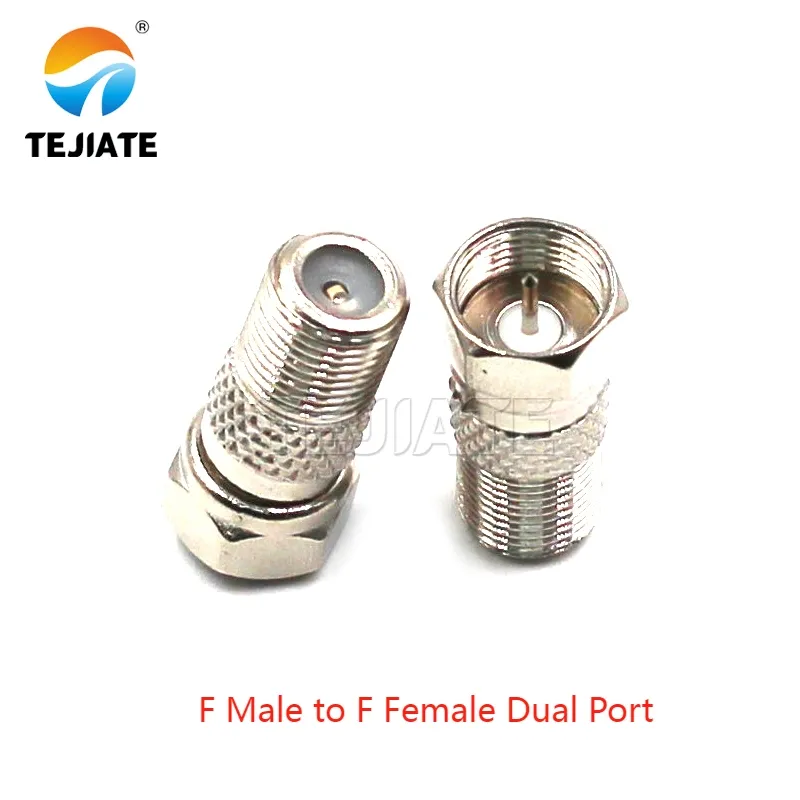
F-type male to F-type female adapter for 75-ohm RF systems

This image shows a physical photo of the F-type male to female adapter mentioned in the document. In the context of the discussion about impedance differences (Page 10), this type of adapter is commonly used in 75-ohm impedance systems such as broadcast television equipment. It differs significantly from standard 50-ohm SMA adapters in both physical interface and electrical characteristics, and mixing them can cause signal reflection and loss.
F-type Male to Female Adapter

The real strength of an SMA female to female adapter lies in how it fits into everyday setups. These couplers may be small, but their versatility shows up across labs, field installations, and repair benches.

Cable extension and repair: This is the most obvious case. Instead of waiting for a custom-length cable, you can join two SMA cables with an inline coupler. A Part No. 35397 SMA-KK can quickly restore a test system when a cable falls short. Many technicians keep spares in their kit because you never know when that extra reach will be needed.

Panel pass-through: When signals need to exit or enter an enclosure, a bulkhead feedthrough SMA adapter is the answer. Versions like Part No. 08820 or 35404 come with O-rings and nuts, ensuring a secure panel mount. Rated at ≤0.15 dB insertion loss @ 6 GHz and built for 1000+ cycles, they are widely used in outdoor routers, IoT gateways, and 4G/5G base stations. If you’ve ever sealed a box for weatherproofing, you’ll know why the O-ring detail matters.

Gender conversion chains: F–F couplers often work in combination with other adapters. For instance, pairing with an SMA male to female adapter or an SMA male to male gender changer lets you build flexible connection paths. In some cases, replacing two rigid couplers with a pigtail (RG316 or 1.13 mm coax) is smarter. It lowers insertion loss and reduces strain on device ports.

Right-angle setups: In cramped RF housings, cables can kink or bend beyond safe limits. That’s where a right angle SMA adapter or right-angle F–F coupler earns its place. Yes, there’s a slight increase in loss, but the benefit is reduced stress and cleaner routing. Engineers often accept this trade-off because protecting ports is worth more than a fraction of a dB.

For practical integration examples, TEJTE’s antenna extension cable guide shows how couplers, bulkhead feedthroughs, and jumpers work together in Wi-Fi and 4G antenna systems.

6) Bulkhead Selection

Selecting the right SMA bulkhead coupler is more than checking if the threads fit. Panel thickness, sealing requirements, and the environment where it will be installed all shape the choice.

Thread lengths usually range from 8 mm, 11 mm, 13 mm, 17 mm, 21 mm, up to 33 mm. For a thin aluminum enclosure, an 8 mm version works fine. But if you’re dealing with a thick housing or a sealed telecom box, you’ll likely need 17 mm or longer. Choosing too short a thread can leave you struggling with poor engagement, while an overly long one can complicate mounting.

Take SMA-KKY (Part No. 35404) as an example. With a 22 mm overall length, silicone O-ring seals, and insertion loss rated at ≤0.15 dB/6 GHz, it’s designed for reliable performance in IoT gateways or outdoor 5G CPEs. On the higher end, stainless steel SMA-KK (Part No. 64269, DC–26.5 GHz, VSWR ≤1.25) handles harsher conditions, resisting corrosion and maintaining stability even at +165 °C.

A few tips from the field:

  1. O-ring compression matters. If it isn’t snug, moisture creeps in.
  2. Panel hole tolerance is critical—most bulkheads require Ø6.2–6.5 mm. Too tight, and you risk stripping the thread; too loose, and sealing is compromised.
  3. Torque with care. Overtightening deforms the metal or cracks the panel. A moderate hand-tight plus a gentle wrench snug is usually enough.

For more guidance on panel-mount choices, TEJTE’s SMA bulkhead connector guide compares thread sizes, flange options, and IP67 sealing practices.

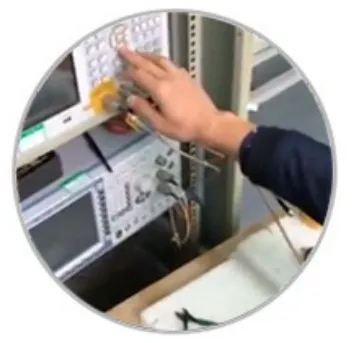
Testing VSWR and insertion loss of an SMA adapter on a Vector Network Analyzer (VNA)

This image depicts a scenario of performance testing an SMA adapter (most likely an SMA-KK or SMA-KKG) in a laboratory environment, typically using a Vector Network Analyzer (VNA). According to the context, key tested metrics include Voltage Standing Wave Ratio (VSWR) (e.g., ≤1.2 for SMA-KKG) and insertion loss (e.g., ≤0.15 dB @ 6 GHz). These tests ensure the signal integrity and reliability of the adapter in high-frequency applications such as precision testing, 5G, and aerospace.

SMA Adapter Performance Testing

7) Buying Checklist

When sourcing an SMA female to female adapter, a clear checklist helps avoid costly mistakes and wasted time. Here’s what experienced buyers and engineers usually run through:

  1. Connector gender → double-check it’s F–F. Mixing it up with M–M or M–F is more common than you think, especially when parts look similar in catalogs.
  2. Form factor → decide if you need a simple inline coupler, a right angle SMA adapter, or a bulkhead feedthrough for panel mounting.
  3. Impedance & frequency range → most are 50 Ω, but frequency support varies: from DC–6 GHz for brass couplers like Part No. 34238, up to DC–27 GHz for precision stainless steel models such as SMA-KKG (Part No. 55524).
  4. Material & plating → brass with nickel plating works for cost-sensitive builds; stainless steel offers durability; gold-plated contacts reduce resistance and improve long-term reliability.
  5. Insertion loss & VSWR → look for ≤0.15 dB @ 6 GHz and VSWR around 1.2:1 if high-frequency stability is critical.
  6. Durability → lighter models like Part No. 35397–35400 are tested for 500+ cycles, while bulkhead designs such as Part No. 35404 can handle 1000+ cycles.
  7. Packaging → single units work for quick fixes, but SMA connector adapter sets are often better value for labs that need multiple types on hand.
  8. Extras → check whether nuts, washers, and O-rings are included. If not, you might end up scrambling for small parts during installation.

From a purchasing perspective, it also helps to confirm inventory and lead time early. Standard couplers are usually in stock, but custom lengths or finishes may require a few weeks. TEJTE’s RF adapter cable product page shows how these couplers pair with flexible jumpers, which is worth reviewing if you’re planning both rigid and cable-based solutions.

8) FAQs

Q1: What is an SMA adapter / SMA female-to-female adapter used for?

An SMA female to female adapter is mainly used to couple two male SMA connectors. In practice, it’s also handy for extending a cable run or serving as a feedthrough in a panel. If you’ve ever been in the middle of a test and realized your cable was too short, this little coupler is usually the fastest fix.

Q2: Do right-angle SMA adapters affect signal?

Yes, they do. A right angle SMA adapter introduces slightly more insertion loss than a straight coupler—usually just a fraction of a dB. While that might sound minor, in sensitive RF systems or long chains, even small losses can add up. Engineers often balance the trade-off: a cleaner cable bend may be worth the tiny performance hit.

Q3: Do SMA and RP-SMA adapters affect signal?

Signal performance is generally similar if the parts are high quality, but compatibility is the key issue. An RP-SMA to SMA adapter is necessary when linking devices that use different polarity standards. Without it, the connectors simply won’t mate. This comes up often in Wi-Fi routers and IoT gear, where RP-SMA is common.

Q4: What’s the difference between an SMA feedthrough and a regular coupler?

A SMA feedthrough is designed to mount through a panel or enclosure wall. It usually comes with nuts, washers, and an O-ring for sealing. A coupler, by contrast, is just inline—ideal when you only need to link two cables without going through any housing.

Q5: When should I choose M–F or M–M instead of F–F?

  • An SMA male to female adapter is best when extending a port or changing orientation, such as on a device chassis.
  • An SMA male to male adapter bridges two female ends and works as a gender changer.
  • An SMA female-to-female coupler remains the straightforward choice when joining two male cables directly.

For more practical setups, TEJTE’s antenna extension cable guide shows how couplers, bulkhead feedthroughs, and jumpers work together in Wi-Fi and cellular systems.

Conclusion

Selecting the right SMA female to female adapter may look like a small decision, but it has an outsized effect on signal stability. Start by confirming the basics—gender and structure. Is it a straight SMA coupler for a quick join, or a bulkhead feedthrough with the right thread length for your panel? Next, check impedance and frequency range. Standard brass models, such as Part No. 34238, cover DC–6 GHz, while precision adapters like SMA-KKG (Part No. 55524) push performance up to DC–27 GHz with VSWR ≤1.2.

Don’t overlook installation details. Make sure O-rings are properly compressed in outdoor housings, and avoid overtightening, which can deform contacts. And remember the “minimal cascading” principle: fewer adapters mean lower insertion loss. Often, replacing two rigid couplers with a short SMA adapter cable is the smarter, cleaner solution.

By balancing material choice—nickel-plated brass for economy, stainless steel for harsh environments, gold plating for conductivity—with good installation practice, you’ll get a connection that lasts. It’s the kind of detail that saves engineers from headaches during both lab tests and field deployments.

Internal References for Further Reading

If you’d like to explore related topics in more depth, TEJTE offers several useful resources:

And for product sourcing:

These references bring together both theory and practice, making it easier for engineers, buyers, and integrators to make informed choices.

Bonfon Office Building, Longgang District, Shenzhen City, Guangdong Province, China

customer service